
Can You Use Any Coffee Beans for Espresso? The Full Answer
Yes, you can use any coffee beans for espresso. The official ISO 3509:2020 and European Coffee Federation definitions specify a preparation method, forcing hot water under pressure through ground coffee, not a bean type. Your success depends on matching three variables to the bean: grind size, brew temperature, and extraction time. A light roast Ethiopian needs a finer grind and higher temperature than a dark roast Italian blend.
Most people get this wrong because they treat “espresso” as a bean instead of a process. They buy a bag labeled for espresso, use their machine’s default settings, and wonder why their single-origin light roast tastes sour or their favorite dark roast turns bitter. The label is the roaster’s suggestion, not a law.
This guide walks through the technical definitions, explains why roasters label beans, and gives you the exact adjustments to make for light, medium, and dark roasts. You will also learn the one bean condition that will always fail.
Key Takeaways
- Espresso is a brewing method, not a bean. International standards define it by water pressure (9 bar), temperature (~90°C), and time (~25 seconds), with no bean restrictions.
- “Espresso” on a bag signals the roaster’s intent. It means they roasted and blended that coffee to taste balanced under high-pressure extraction, often favoring darker profiles and crema.
- Light roasts demand higher temperature and finer grind. Their dense structure resists extraction; without adjustment, shots run fast and taste sour.
- Stale beans cannot make good espresso. Oxidation degrades oils and gases needed for crema and flavor. Beans older than 3-4 weeks post-roast produce flat, hollow shots.
- Your grinder matters more than your machine. A stepless burr coffee grinder like the Eureka Mignon Specialita is non-negotiable for dialing in non-traditional beans.
The Short, Definitive Answer (And Why It’s Misleading)
The literal answer is yes. The practical answer is more interesting.
According to the ISO 3509:2020 standard, espresso coffee is defined solely as a “beverage prepared by forcing hot water under pressure through a compacted bed of ground roasted coffee.” The European Coffee Federation adds parameters like 9 bar of pressure and a 25-second extraction time, but again, specifies no bean species, origin, or roast.
This means the term “espresso beans” is a marketing and guidance label, not a botanical category. Any coffee bean. Arabica, Robusta, a blended coffee bean, or a single-origin coffee, can be used if you run it through an espresso machine. The confusion starts because the traditional benchmark for a “good” espresso, especially in Italy, was a blend of beans roasted dark to produce a thick, persistent crema and a bittersweet flavor that stands up to milk.
The label “espresso” on a bag is the roaster telling you, “We calibrated this coffee to work well under pressure with standard settings.” It is a starting point, not a finish line. Ignoring that guidance means you accept the responsibility of dialing in the variables yourself.
TL;DR: Any bean can become espresso. The “espresso” label is the roaster’s recipe for success with default machine settings.
What “Espresso Roast” Actually Means
Walk into any cafe or grocery store and you will see bags labeled for espresso. This creates the illusion of a separate product. It is not.
Roasters design espresso blends for consistency and performance. A dark roast reduces bean density, making it easier to extract soluble solids quickly under pressure. Many blends include a portion of Robusta beans, which generate more crema due to higher lipid and sugar content. The goal is a shot that tastes balanced, not too sour, not too bitter, with a generous crema, and one that steams well into milk drinks.
| Blend Characteristic | Typical Goal | What Happens If You Use a Light Roast Instead |
|---|---|---|
| Roast Level | Medium-Dark to Dark | Light roasts are denser, resisting extraction. Shots run fast and taste sour unless you grind finer and increase temperature. |
| Bean Composition | Often Arabica/Robusta blend | 100% Arabica coffee beans, especially delicate ones, may produce less crema but more complex acidity. |
| Grind Target | Coarser than for filter (relative to bean density) | Requires a significantly finer grind from a high-quality burr coffee grinder to achieve proper resistance. |
| Expected Flavor | Chocolate, caramel, nutty, low acidity | Fruity, floral, tea-like, higher acidity. Can taste underwhelming or sharp if not extracted fully. |
The label is a promise of predictability. When you buy a blonde roast bean for espresso, you are buying a promise that the roaster has tested that specific light profile under pressure and believes it will work. The problem is that home equipment and water differ from their tasting lab.
Common mistake: Assuming an “espresso” label guarantees a good shot with your machine’s default 93°C setting. That temperature is ideal for a medium-dark roast but will under-extract a light roast every time, leaving it tasting grassy and sour.
The Light Roast Challenge (And How to Beat It)

The rise of specialty light roast coffee pushed against the old rule. Forums like Home-Barista.com have threads over a decade long debating techniques. The challenge is physics.
Light roasts spend less time in the roaster. They retain more moisture and cellular structure, making them harder and denser. Think of trying to push water through packed sand versus through gravel. The sand (light roast) creates more resistance, but if the water pressure is not high enough or the grind not fine enough, the water finds a path of least resistance, channeling.
Your machine’s 9-bar pump, as specified in a La Marzocco Linea Mini manual, provides the force. Your job is to prepare the coffee to resist it evenly.
- Grind significantly finer. This is the first and most critical adjustment. If you are using a pre-ground “espresso” grind, it is calibrated for a traditional dark roast. For a light roast, you need powder almost as fine as table salt. A stepped grinder might not have the resolution; a stepless model like the Eureka Mignon Specialita is essential.
- Increase brew temperature. Dark roasts extract easily and burn bitter compounds if the water is too hot. Light roasts need more heat to pull out sweetness. Bump your machine to 94–96°C (201–205°F) if possible.
- Increase the yield. Try a 1:2.5 or even 1:3 ratio (e.g., 18g of coffee in, 45–54g of espresso out). A longer shot pulls more soluble material from the dense bean, balancing the high acidity.
- Consider pre-infusion. If your machine has it, use it. A low-pressure pre-wetting phase (3-8 seconds) allows the dense puck to swell evenly before full pressure hits, reducing channeling.
Skip step one, and the rest does not matter. The water will blast through the puck in 15 seconds, producing a weak, sour shot.
I tried pulling a modern Ethiopian natural-process light roast with my standard medium-dark settings. The shot gushed out in 14 seconds, pale and vinegary. I went three notches finer on the grinder, raised the temperature 3 degrees, and extended the yield. The next shot ran 32 seconds and tasted like blueberry jam. The bean did not change. The process did.
TL;DR: To brew light roast espresso, grind finer than you think possible, increase temperature, and pull a longer shot. Pre-infusion helps.
Why Your Dark Roast Italian Blend Works Every Time
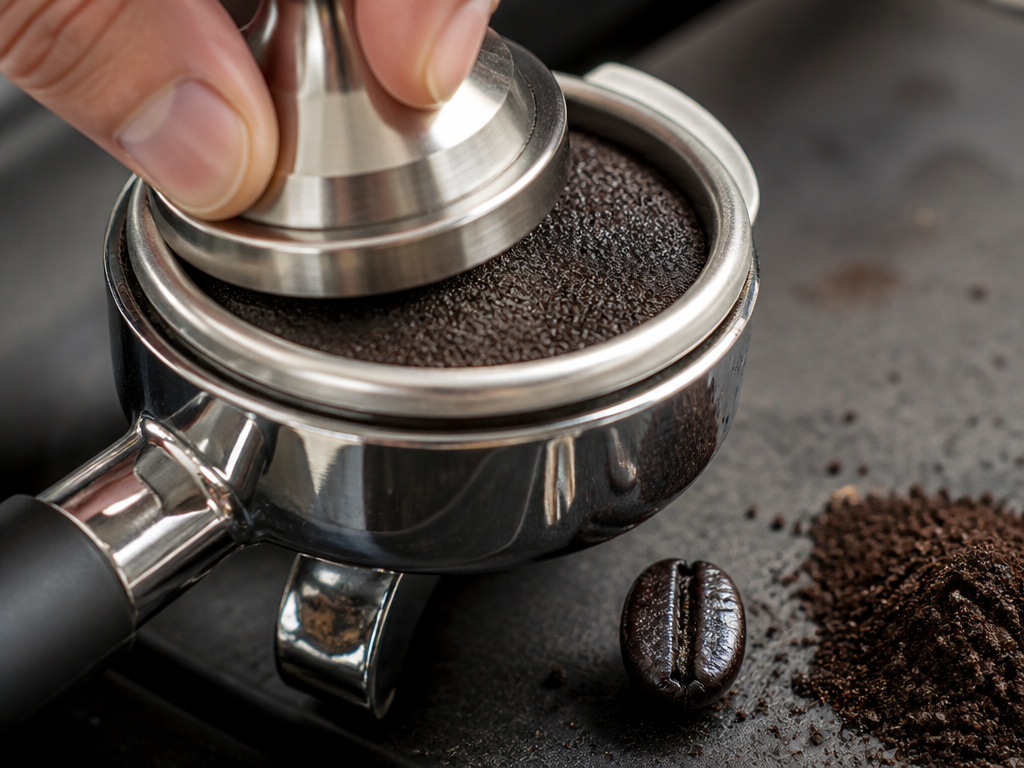
Conventional espresso blends are forgiving by design. The dark roast has already pyrolyzed the bean’s structure, creating microscopic fractures and pores. Water flows through it readily.
The oils migrating to the surface also contribute to that classic crema. This forgiving nature is why these blends became the standard, they work on a wide range of equipment, from a $200 home machine to a $20,000 commercial rig, with minimal adjustment.
The workflow is simpler:
* Grind: Start at a standard “espresso” fineness. You can often go a touch coarser than with a light roast.
* Temperature: Keep it lower, around 90–92°C (194–198°F). Too much heat on already-developed sugars and oils extracts harsh, ashy bitterness.
* Ratio: A classic 1:2 ratio (18g in, 36g out) in 25–30 seconds is usually spot-on.
* Dose: You can often dose slightly less (e.g., 17g) to prevent the puck from becoming too impermeable.
The downside of this consistency is a narrower flavor profile. You trade the bright, complex notes of a light roast for reliable chocolate, caramel, and body. For milk-based espresso drinks like a cappuccino, that trade-off is usually worth it. The strong, sweet-bitter base cuts through the milk.
The One Rule That Actually Matters: Bean Freshness

You can nail every variable, but if your beans are stale, you will get a flat, lifeless shot with little to no crema. This is the non-negotiable.
After roasting, coffee beans release carbon dioxide (CO2) and their aromatic oils begin to oxidize. CO2 is crucial for crema, it forms the bubbles. Oils carry flavor. Espresso’s high-pressure extraction magnifies staleness. A bean that tastes merely muted in a pour-over will taste like cardboard and hay as espresso.
Common mistake: Using beans older than four weeks post-roast for espresso. The CO2 is mostly gone, the oils are rancid, and the shot will blond early, run fast, and produce a thin, collapsing crema that smells like nothing.
Grinding coffee beans accelerates this decay exponentially. Whole beans might be usable for 4–5 weeks after roasting if stored well (cool, dark, airtight). Ground coffee goes stale in minutes. This is why a good grinder you use daily is the single most important piece of equipment, far more than the machine. Pre-ground “espresso” coffee is a contradiction in terms.
Setting Up Your Machine for Non-Standard Beans
Your machine’s manual gives a baseline. The Breville Barista Express manual, for example, suggests a 9 bar pressure and a 93°C default temperature. Treat this as the setting for a medium-dark, espresso blend.
To systematically adjust for any bean, follow this sequence:
- Lock in your dose. Pick a dose that fits your basket (usually 18g for a double) and stick with it for the entire dial-in session. Changing dose and grind simultaneously is a recipe for confusion.
- Set your temperature. Use the machine’s manual or control panel. Light roast: 94–96°C. Dark roast: 90–92°C. Medium roast: 93°C.
- Dial in the grind. This is the primary control. Grind, dose, tamp, pull. Time the shot from first drip. Target 25–30 seconds for a 1:2 ratio.
- If the shot runs too fast (<25s) and tastes sour, grind finer.
- If the shot runs too slow (>35s) and tastes bitter, grind coarser.
- Adjust the yield. Once the time is in range but the flavor is still off, change the yield. Sour? Let it run longer (e.g., 1:2.5). Bitter? Stop it shorter (e.g., 1:1.8).
- Fine-tune temperature. Only after grind and yield are close should you tweak temperature by 1-degree increments. This is a fine-adjustment tool, not a coarse one.
This process turns the abstract question “can I use this bean?” into a series of mechanical adjustments. It works for a peaberry Arabica from Ethiopia or a blend from Colombia.
Frequently Asked Questions
Does espresso have more caffeine than regular coffee?
Not necessarily. While espresso is more concentrated per ounce, a standard 1-ounce shot typically has 63-65mg of caffeine. A 12-ounce brewed coffee has 120-200mg. The espresso caffeine content is lower per serving, but higher per milliliter. The total caffeine in your drink depends on the number of shots.
Can I use pre-ground coffee for espresso?
You can, but you should not expect great results. Pre-ground coffee is stale by the time you open it and offers zero control over grind size, which is your main lever for dialing in extraction. It might work in a pinch with a pressurized portafilter basket, but it will never produce the quality of freshly ground beans.
Do I need a special grinder for espresso?
Yes. Espresso requires precise, fine, and consistent grind particles. A blade grinder creates a mix of dust and boulders, leading to uneven extraction. A burr coffee grinder with stepless adjustment is the minimum viable tool. The Eureka Mignon Specialita is a common benchmark for home use.
Why does my light roast espresso taste sour?
Sourness means under-extraction. The water is not pulling enough sweetness and body from the dense bean. The fix is almost always to grind finer to increase resistance and lengthen the shot time. Increasing brew temperature can also help.
Can adding salt or sugar fix a bad espresso shot?
Adding salt to coffee is an old trick to reduce perceived bitterness by blocking bitter taste receptors. A tiny pinch might mask a harsh dark roast. Brown sugar or other coffee sweeteners can balance sourness. However, these are bandaids. They do not fix the underlying extraction problem. A well-dialed shot should taste balanced on its own.
The Bottom Line
The freedom to use any coffee bean for espresso is also a responsibility. The machine does not care if you feed it a light roast Gesha or a dark roast Italian blend. It just applies pressure. You are the variable.
Start with the roaster’s suggestion on the bag as a baseline, then listen to the shot. A fast, sour shot needs a finer grind. A slow, bitter shot needs a coarser one. Remember that bean freshness is your foundation, no dial-in can resurrect stale coffee. Your grinder is your most important tool.
Now go pull a shot with that bag of single-origin beans you have been saving. It might take three or four tries to get it right. The fourth try is usually the one worth drinking.
