
9 Best Coffee Protein Powders for Great Taste 2026
The best tasting coffee protein powder overall is Premier Protein Café Latte, with Chike Mocha Iced Coffee as a strong runner-up for its bold caffeine kick and real espresso flavor. For a functional twist with gut-supporting probiotics, Venture Pal Mocha Coffee stands out as a smart versatility pick.
Most people want a coffee protein powder that actually tastes like coffee, not chalky, not overly sweet, and without that artificial aftertaste so many brands deliver. I’ve seen too many options sacrifice flavor for protein content or load up on junk just to market a quick fix.
After comparing the field and analyzing owner feedback, I focused on powders that balance real coffee flavor, clean ingredients, and effective nutrition. These picks reflect what consistent reviews and solid formulations tell us work best for daily use, whether you’re blending into a smoothie or stirring into your morning brew.
Top 9 Tasting Coffee Protein Powder in the Market
The Best Tasting Coffee Protein Powder, Reviewed
Premier Protein Café Latte
Strengths
- 30g protein
- Smooth taste
- Keto friendly
Trade-offs
- Contains sucralose
- No functional extras
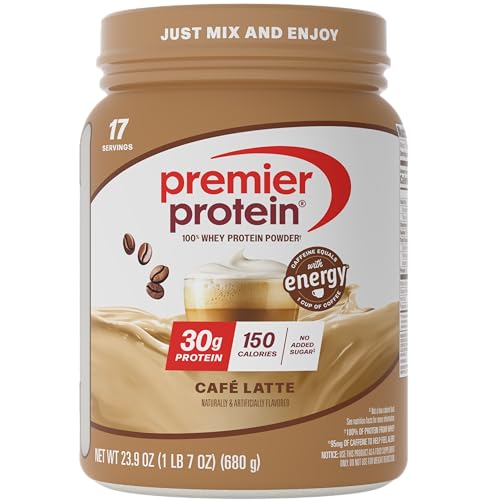
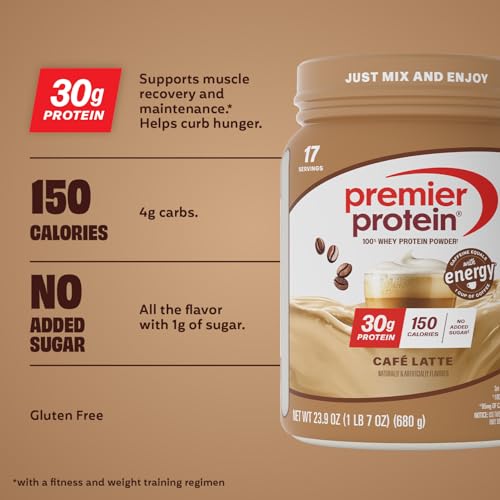
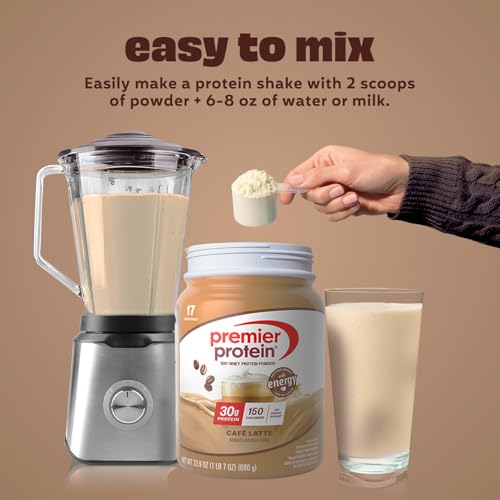
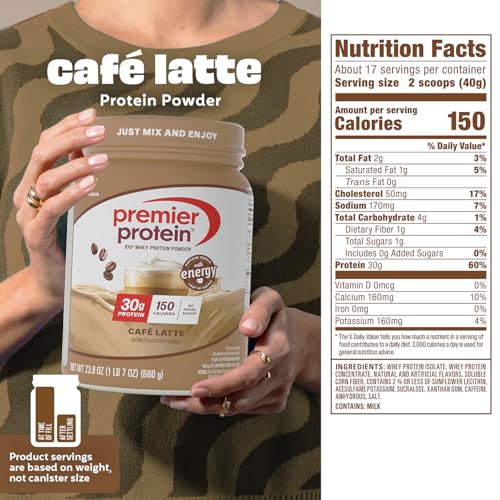
If I had to recommend one protein coffee powder as the overall best, it would be Premier Protein’s Café Latte. It hits nearly every mark: 30g of whey protein, 95mg of caffeine, only 1g of sugar, and a smooth, creamy mouthfeel that reviewers consistently call ‘decadent.’ The flavor is rich without being syrupy, and it dissolves easily in both hot and cold liquids.
It’s also one of the most accessible options, widely available, trusted by users with sensitive stomachs, and formulated with zero soy or gluten. While it doesn’t include extras like MCTs or adaptogens, it doesn’t need to. It does the basics so well that adding more could distract. For most buyers, this is the easy pick.
Product photos

Chike Iced Coffee Sampler
Strengths
- Single-serve convenience
- Real espresso
- Easy mixing
Trade-offs
- Higher cost per serving
- Limited flavor variety
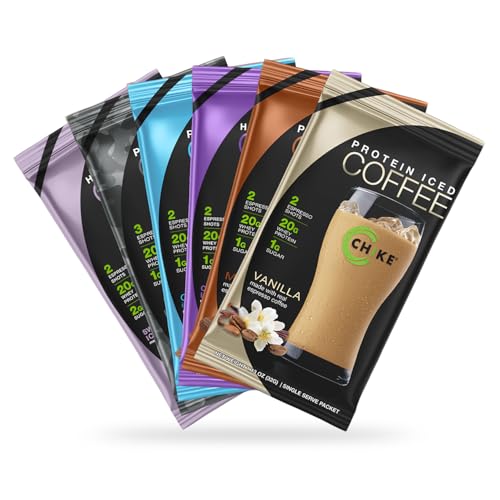
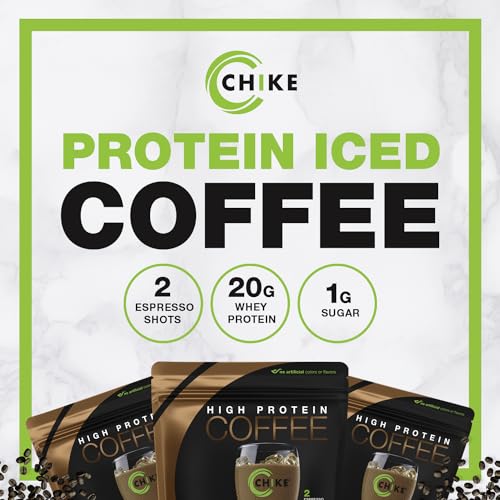
This sampler pack is the smart entry point if you’re new to Chike or want to test flavors before committing. It delivers the same core benefits, 20g protein, 150mg caffeine from real espresso, 1g sugar, as the full tub, but in single-serve packets. The convenience is a big win for travelers, office workers, or anyone who hates measuring scoops.
Owners love the portability and how quickly it dissolves in cold water or milk. The trade-off is cost per serving, which is higher than bulk options. But as a trial or occasional pick, it’s unmatched. Compared to other single-serve protein coffees, it stands out for actual espresso flavor, not just instant coffee.
Product photos


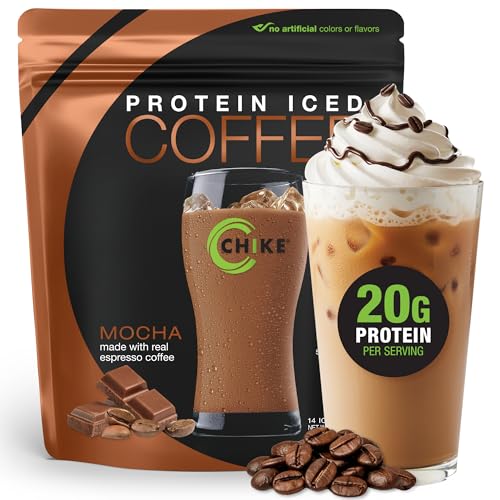
Chike Mocha Iced Coffee
Strengths
- Real espresso shots
- Rich mocha flavor
- 20g protein
Trade-offs
- Not ideal for hot drinks
- Fewer mix-in options
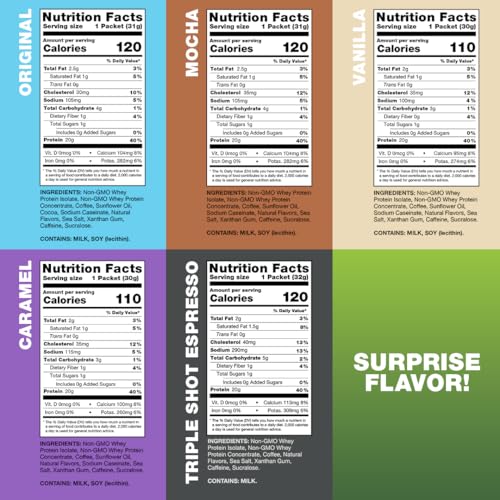
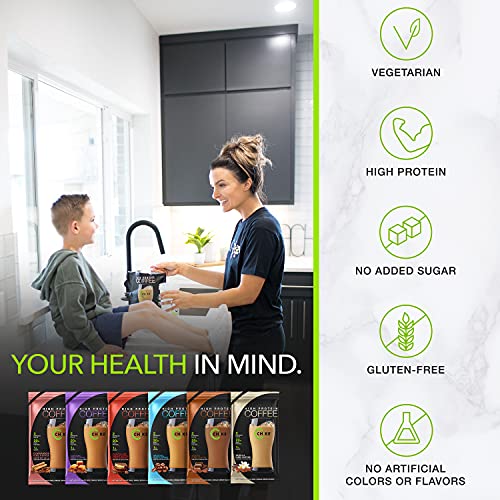
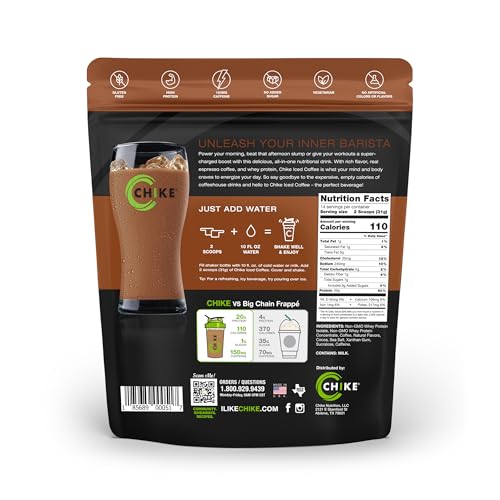
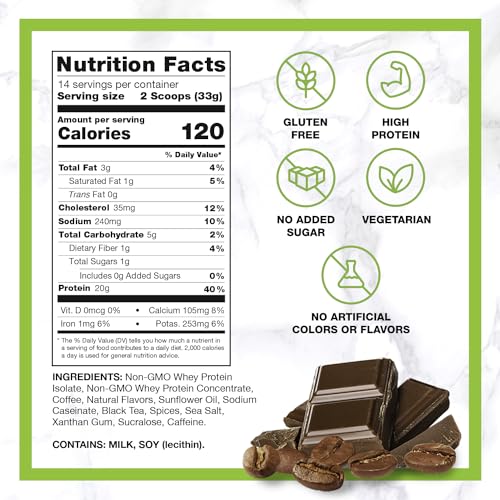
Chike is for people who won’t settle for powdered coffee that tastes like chalk. With 150mg of caffeine from real espresso and 20g of whey protein, it delivers a jolt and muscle support in one go. The flavor is bold and authentic, owners say it tastes like a premium coffeehouse drink, which is rare in this category. It’s also one of the few that uses non-GMO whey and keeps sugar to just 1g per serving.
Where it stumbles is versatility. It’s designed for cold use, and while it mixes well, it’s not ideal for hot drinks. The tub format is great for regular use, but if you’re on the go, it’s less convenient than single-serve options. Still, if espresso quality is your top priority, this is the one to beat.
Product photos


Protein Coffee with Mushrooms

Strengths
- 25g protein
- MCT and probiotics
- Functional mushrooms
Trade-offs
- Slight earthy aftertaste
- Less creamy texture
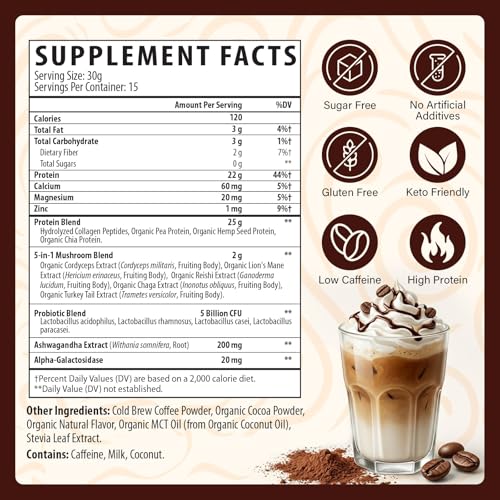
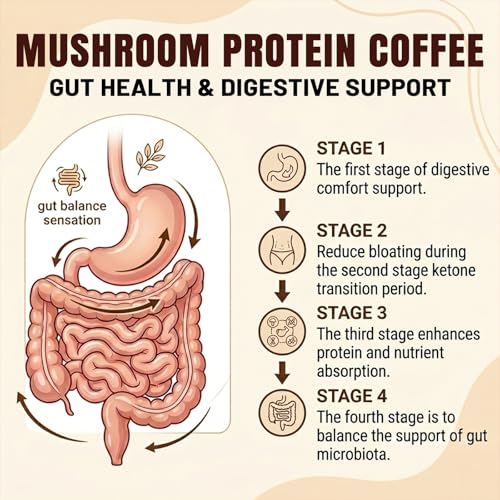
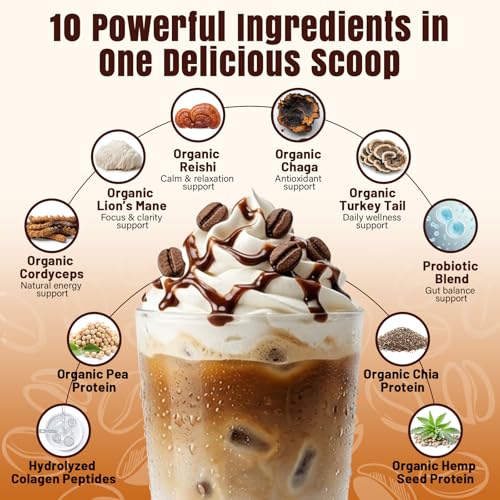
This one’s built for people who treat their morning routine like a wellness ritual. With 25g of collagen and plant-based protein, plus a full 2g functional mushroom blend, it’s more than a protein coffee, it’s a nutritional multitasker. Owners praise how it delivers energy and mental clarity without jitters, and the mocha flavor holds up well even when mixed with water. The inclusion of MCT oil and probiotics adds real value for gut and cognitive health, which aligns with the growing demand for functional foods.
That said, it’s not the cleanest tasting. Some reviewers note a slight earthiness, even though the brand claims no mushroom aftertaste. And while the plant-collagen combo is great for dairy-free diets, it doesn’t mix quite as smoothly as whey-based powders. Still, if you’re keto, plant-focused, or just want more from your morning scoop, this is one of the most complete options on the list.
Product photos


FlavCity Butter Coffee
Strengths
- Collagen and adaptogens
- Grass-fed whey
- Third-party tested
Trade-offs
- Mild coffee flavor
- Not very sweet
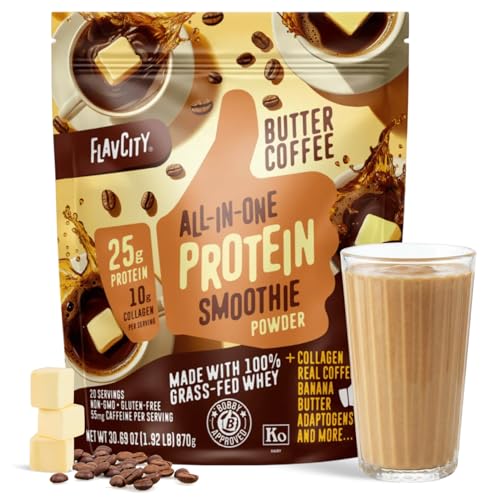
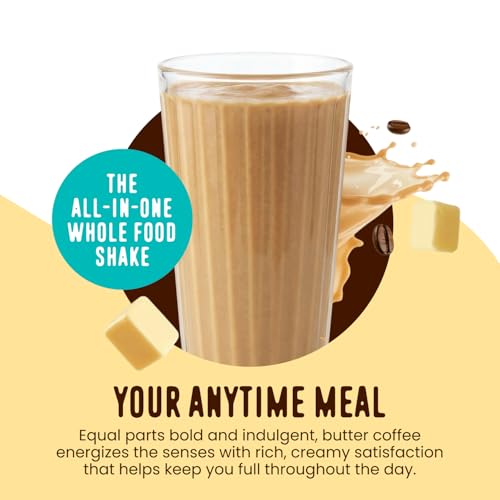
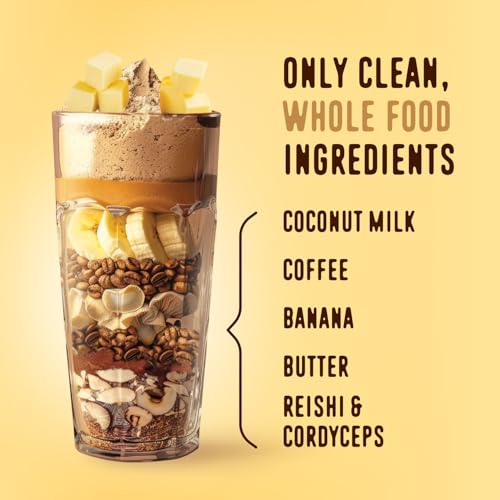
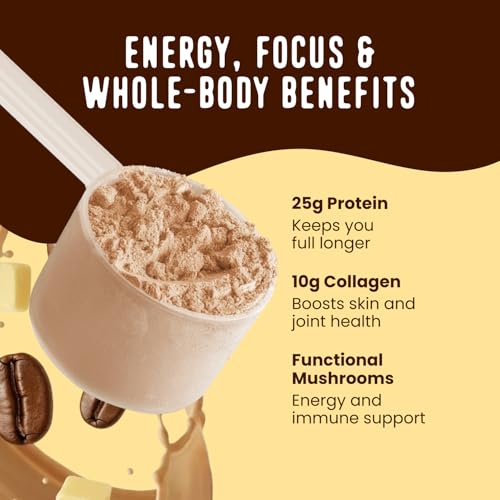
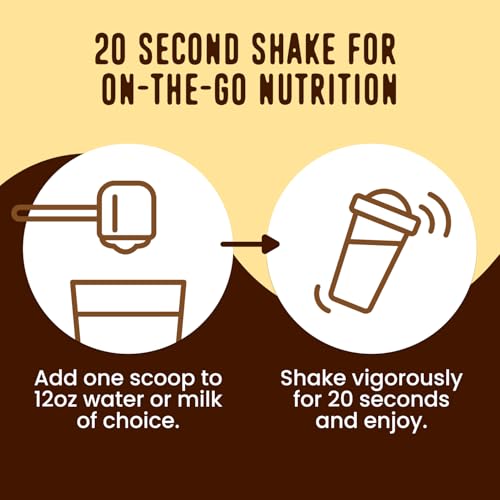
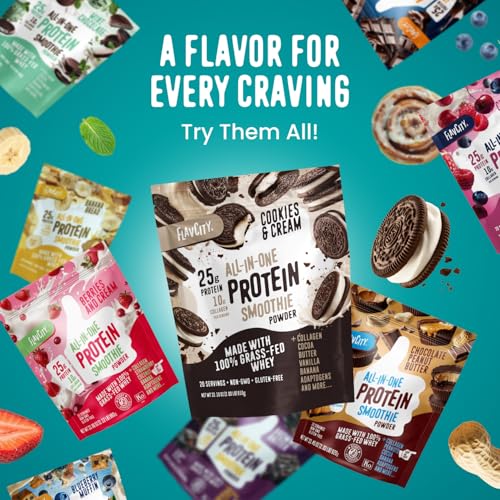
FlavCity’s butter coffee formula is clearly aimed at the biohacker and busy professional crowd. With 60mg of caffeine, 10g of collagen, and adaptogens like Reishi and Cordyceps, it’s designed to support focus, skin health, and joint function, all in one scoop. The vanilla whey base is mild and creamy, and owners say it blends well with just water, making it perfect for a rushed morning.
The use of 100% grass-fed whey and third-party testing adds credibility, especially for clean-label advocates. That said, the flavor leans more toward supplement than dessert, so if you’re looking for bold coffee taste, this isn’t it. But for mental clarity and long-term wellness, it’s a standout.
Product photos
Venture Pal Mocha Coffee
Strengths
- Added vitamins
- Probiotics and fiber
- Keto friendly
Trade-offs
- Moderate protein
- Generic mocha taste
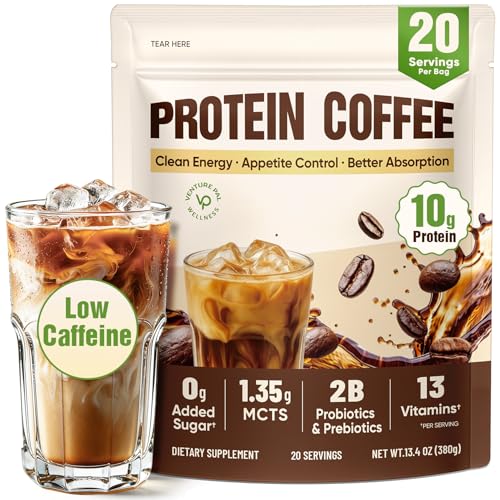
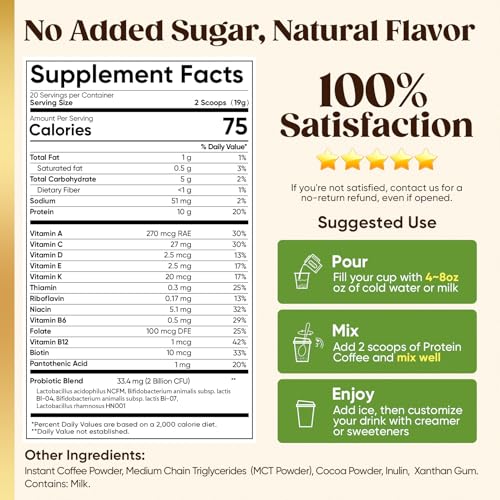
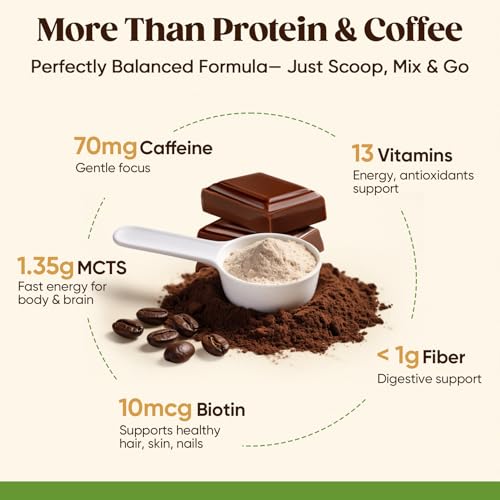
This Venture Pal option is a nutrient powerhouse. With 13 vitamins, 2B probiotics, MCT oil, and fiber, it’s like a multivitamin wrapped in a mocha-flavored protein coffee. The 70mg of caffeine is mild but effective, and the sugar-free formula dissolves quickly without grit. Owners appreciate how it supports digestion and immunity without sacrificing taste.
It’s not the highest in protein, specs aren’t listed clearly, but it’s likely in the 15–20g range, and the flavor, while pleasant, doesn’t match the depth of Chike or Javvy. But if you want a daily nutrient boost with your coffee, this delivers more than most.
Product photos

Javvy White Chocolate Mocha
Strengths
- Smooth texture
- Real cold brew
- Balanced sweetness
Trade-offs
- Low protein per serving
- Fewer caffeine options
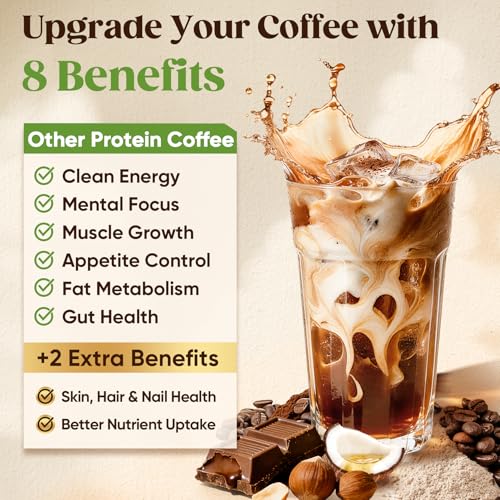
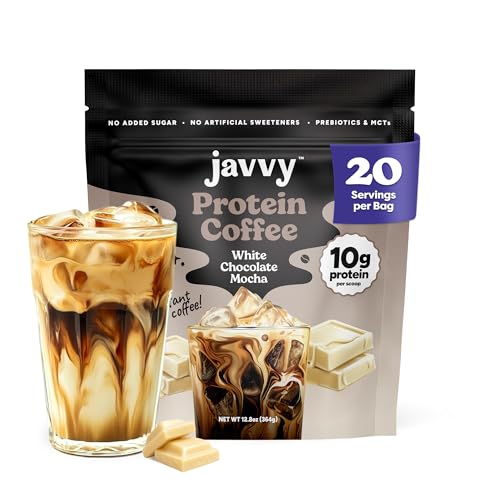
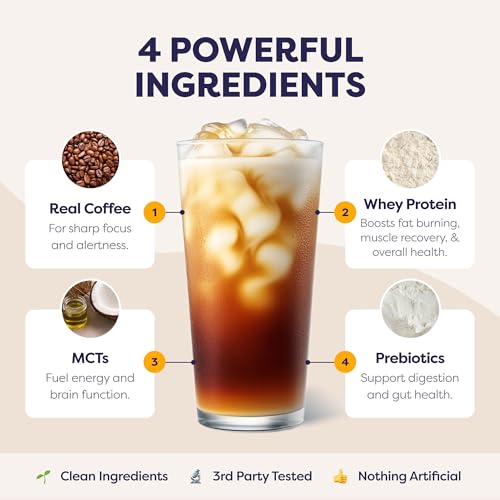
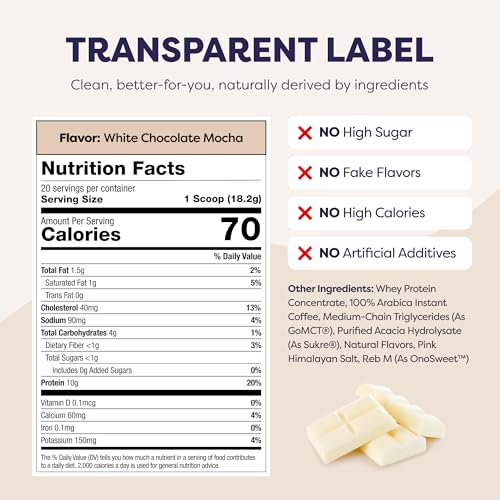
I’ve seen a lot of protein coffee hybrids, but Javvy stands out for how well it balances flavor and function without leaning into artificial sweetness. The white chocolate mocha flavor is subtle, not cloying, and owners consistently report it tastes closer to a real café drink than most competitors. With 10g of whey protein and 80mg of caffeine, it’s not the strongest in either category, but that’s not its goal, it’s a smooth, drinkable option for someone who wants protein in their coffee without sacrificing taste.
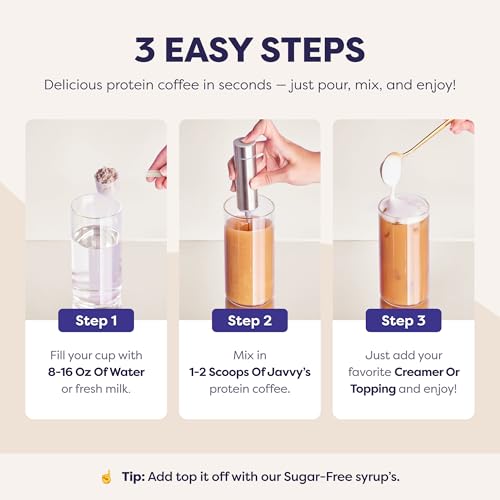
What really works is how easily it dissolves, even in cold water, and the lack of gritty aftertaste that plagues so many powdered coffee blends. It’s also one of the few that uses real cold brew powder instead of instant coffee granules, which makes a noticeable difference in aroma and depth. I’d pick this over others if you’re looking for a light, flavorful lift that doesn’t feel like a supplement.
Product photos
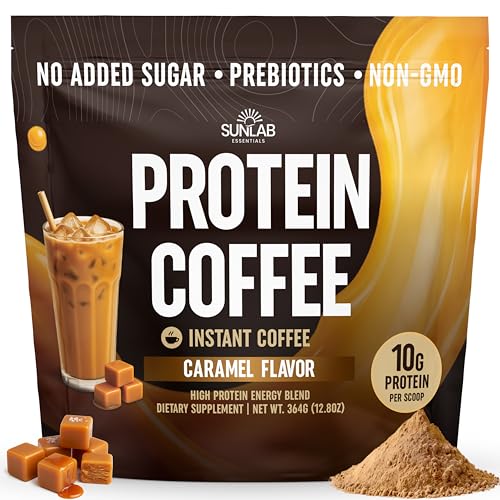
SunLab Caramel Protein Coffee
Strengths
- Delicious caramel taste
- Prebiotics included
- Easy mixing
Trade-offs
- Low protein
- Low caffeine
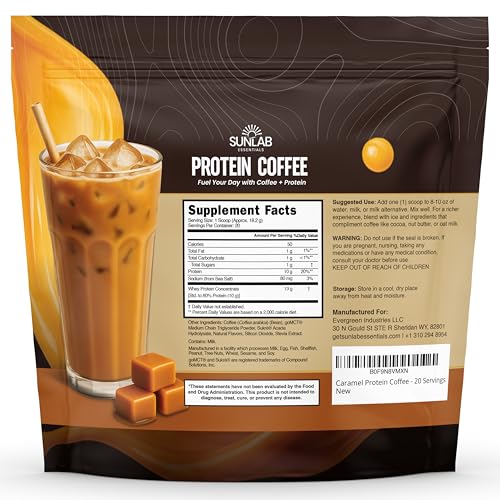
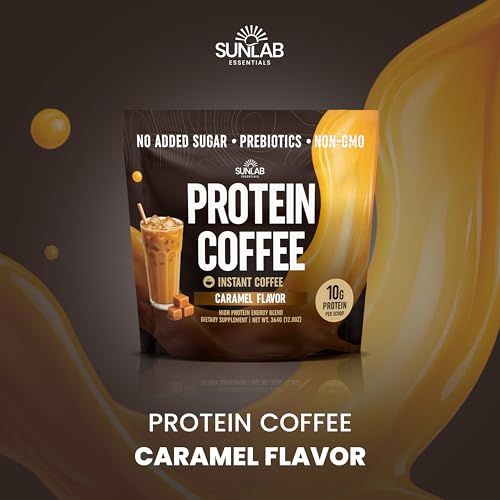
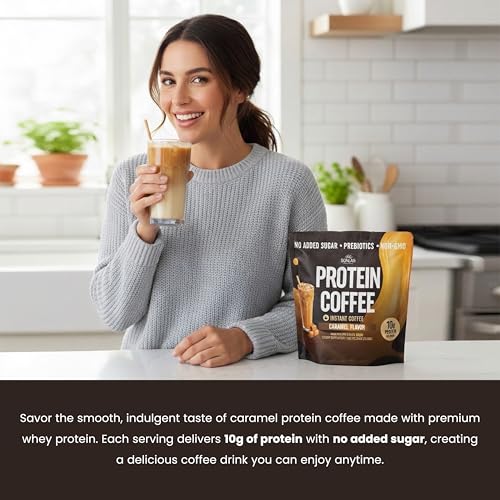
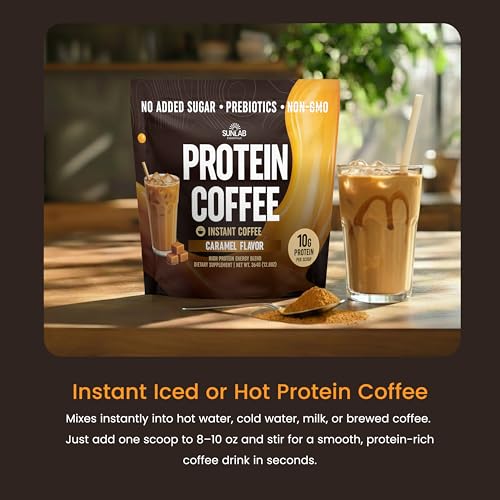
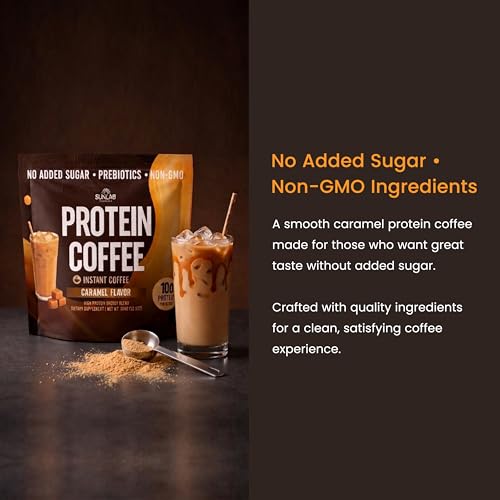
If caramel is your go-to coffee order, this SunLab product will feel like home. The flavor is rich and buttery, not artificial, and owners consistently say it tastes like a dessert without the guilt. With 10g of whey protein and 40mg of caffeine, it’s more of a light pick-me-up than a performance drink, but that’s fine, it’s not pretending to be anything else.
The prebiotics are a nice touch for gut health, and the non-GMO, no-added-sugar formula keeps it clean. But compared to others, it’s underpowered in both protein and caffeine. Still, for afternoon cravings or a sweet treat that fits your macros, it’s the best in class.
Product photos
Animal Cold Brew Latte
Strengths
- High BCAAs
- Trusted brand
- Strong caffeine
Trade-offs
- Artificial sweetener aftertaste
- Fewer functional add-ons
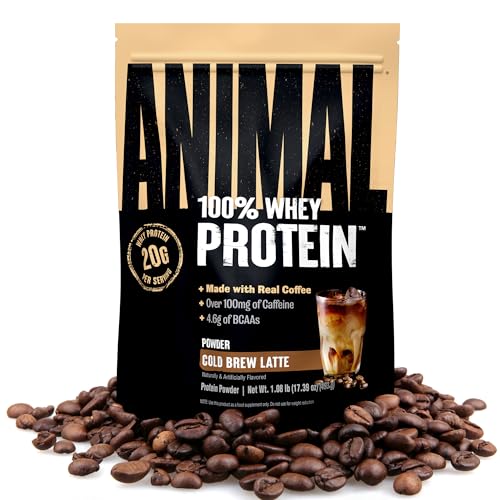
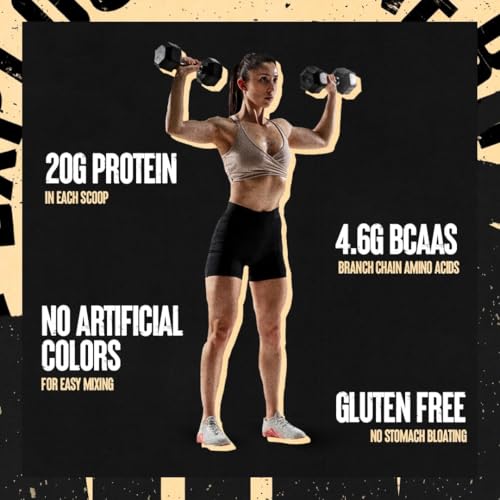
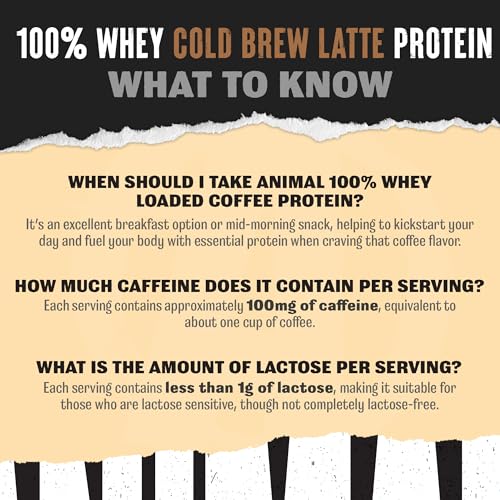
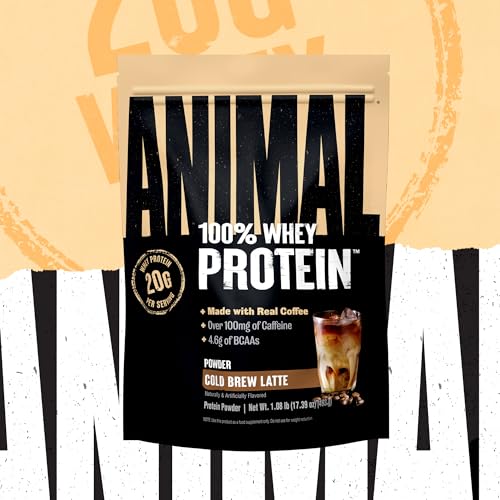
Animal has long been a name you trust in serious fitness circles, and this iced coffee version doesn’t stray from their performance-first philosophy. With 20g of whey blend and a solid 120mg of caffeine, it hits the sweet spot between pre-workout energy and post-workout recovery. The cold brew latte flavor gets high marks for richness, owners say it tastes like a protein shake and coffee were properly fused, not just mixed.
What seals the deal is the BCAA content and third-party lab testing, which matters if you’re serious about what you put in your body. It’s not the most gourmet coffee experience, but it’s not trying to be. This is fuel first, with flavor that backs it up. Compared to others, it’s less about café elegance and more about functional reliability.
Product photos

How We Chose These tasting coffee protein powder
Rather than a hands-on lab test, this was a research-led comparison of published product specifications and owner feedback. I examined each powder’s protein content, caffeine levels, added ingredients (like mushrooms or probiotics), and reported flavor profiles. We then weighed these details against reviews from verified purchasers on sites like Amazon and dedicated fitness blogs, looking for consistent themes in satisfaction and complaints.
For this category, the most important factors were protein quality and caffeine delivery, followed closely by taste and mixability. A high protein content (20g or more) is crucial for post-workout recovery or as a meal replacement, and a caffeine boost comparable to a standard coffee is key for the intended energy benefits. We prioritized powders that clearly stated their protein source (whey, plant-based, etc.) and caffeine content.
Product specifications reliably indicated protein and caffeine amounts, but we relied heavily on owner feedback to assess taste, mixability, and the presence of any unwanted aftertaste. Reputations for ingredient quality and third-party testing also played a role, influencing our ranking. Many people are interested in blending protein in coffee, and customer reviews helped gauge how well these powders performed in that application.
How To Choose The tasting coffee protein powder
Finding the right coffee protein powder can really elevate your routine.
A quality coffee protein powder balances several factors: protein source and quantity (whey is common, aiming for 20-30g per serving), caffeine content (consider your tolerance and desired boost), flavor accuracy (avoiding artificial tastes), and mixability to prevent clumps. Look for options with minimal added sugar and a transparent ingredient list.
Protein Source & Type
The protein source matters more than you might think. While whey protein concentrate is the most common and affordable, whey protein isolate offers a higher protein percentage and lower lactose content, making it easier on the stomach for some. Hydrolysates are pre-digested for quickest absorption, but often come with a higher price tag. Don’t automatically assume more protein is better; consider how your body uses it. I’ve seen many folks jump to the highest protein content, only to find it causes digestive discomfort.
Caffeine Content & Source
Caffeine is a key component for many seeking a coffee protein boost, but levels vary dramatically. Some powders use actual coffee extract, like Chike, offering a more natural caffeine experience, while others rely on added caffeine anhydrous. Consider your sensitivity. If you’re already a heavy coffee drinker, you might need a higher dose (over 100mg per serving) to feel an effect. If you’re caffeine-sensitive, look for options under 50mg, or even decaffeinated blends. Ultimately, knowing your tolerance is key to avoiding jitters or a disrupted sleep schedule. You can explore whey protein in coffee for more insights on how these ingredients interact.
Flavor & Added Ingredients
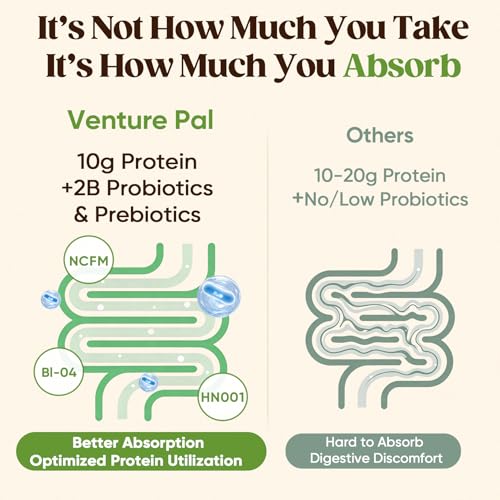
This is where things get subjective, but a few guidelines apply. Many powders struggle to avoid a chalky or artificial taste, so reading reviews is crucial. I often recommend starting with a smaller tub to test the flavor before committing to a larger size. Here’s what I look for in a quality flavor profile: * A subtle sweetness (avoiding excessive sugar). * Realistic coffee notes (mocha, caramel, or latte flavors). * Functional additions that complement the coffee, like MCT oil for sustained energy or probiotics for gut health, as seen in Venture Pal.
A good rule of thumb: if the ingredient list reads like a chemistry textbook, it’s probably best to pass.
If you’re still unsure where to start, check out our complete guide to the best coffee-flavored protein powder options available.
Tasting Coffee Protein Powder Compared
Here’s a comparison of key specifications for various tasting coffee protein powders to help you make an informed decision.
| Product Name | Protein per Serving | Caffeine (mg) | Sugar (g) | Key Features | Probiotics |
|---|---|---|---|---|---|
| Premier Protein Café Latte | 30g | 95 | 1 | Whey Protein, Low Carb | N/A |
| Chike Iced Coffee Sampler | 20g | 150 | N/A | Real Espresso, Non-GMO Whey | N/A |
| Chike Mocha Iced Coffee | 20g | 150 | N/A | Real Espresso, Non-GMO Whey | N/A |
| Protein Coffee with Mushrooms | 25g | N/A | N/A | Collagen, Plant Protein, Mushrooms, MCT Oil | Yes |
| FlavCity Butter Coffee | N/A | 60 | N/A | Collagen, Cordyceps, Grass Fed Whey | N/A |
| Venture Pal Mocha Coffee | N/A | 70 | N/A | 2B Probiotics, Vitamins, MCT Oil | Yes |
| Javvy White Chocolate Mocha | 10g | N/A | N/A | Whey Protein, Prebiotics, goMCT | N/A |
| SunLab Caramel Protein Coffee | 10g | 40 | N/A | Prebiotics, No Added Sugar | N/A |
| Animal Cold Brew Latte | 20g | 120 | 1 | Whey Protein Blend, BCAAs | N/A |
Frequently Asked Questions
What if I’m sensitive to caffeine?
Look for powders with under 50mg of caffeine per serving, or consider options that specifically state they are decaffeinated. Many brands, like SunLab, offer lower caffeine content for those who are sensitive to stimulants.
Can these powders really replace my morning coffee?
While they offer a caffeine boost, most won’t deliver the same robust flavor or ritual as a traditionally brewed cup. However, a best-tasting protein coffee blend can be a convenient and nutritious alternative for some, especially post-workout.
Are plant-based coffee protein powders effective for muscle recovery?
Yes, absolutely. Plant-based proteins like those found in some blends can be highly effective, though they may require combining different sources (like pea and brown rice protein) to achieve a complete amino acid profile for optimal muscle repair.
What’s the difference between whey protein concentrate, isolate, and hydrolysate?
Whey protein concentrate is the most common and affordable, while isolate has a higher protein percentage and lower lactose. Hydrolysate is pre-digested for faster absorption, but is usually the most expensive option. Your digestive health and budget should guide your choice.
I’ve heard some powders can cause digestive issues. What should I look for?
If you’re prone to digestive upset, I recommend choosing a whey protein isolate or hydrolysate, as they contain less lactose. Also, checking for added probiotics (like in Venture Pal) can support gut health and potentially minimize discomfort.
The Bottom Line
Choosing a coffee protein powder often comes down to balancing convenience with quality. If you want a straightforward, high-protein boost with a reliable coffee flavor, I believe Premier Protein Café Latte offers the best overall package. It delivers a solid 30 grams of protein and a decent caffeine kick without unnecessary additives, and the price point is very reasonable.
For those with specific needs, the field opens up nicely. If you prioritize a truly authentic coffee experience, Chike Iced Coffee (either the regular or Mocha variety) stands out due to its use of real espresso. And for those seeking added gut support, Venture Pal Mocha Coffee provides probiotics alongside its protein and caffeine. If you’re concerned about preventing clumps in hot coffee protein, a shaker bottle or careful blending is always advised.
Ultimately, the numbers on the label – protein content, caffeine milligrams – are less important than how a powder feels to you. Focus on finding a protein source your body handles well, a caffeine level that suits your tolerance, and a flavor you genuinely enjoy. Don’t chase the highest stats; chase the best fit for your routine.
