
Stop Clumps: Mixing Protein Powder in Hot Coffee Correctly
You can put protein powder in hot coffee, but you must pre-mix it with a cold liquid first to avoid clumps. The heat denatures the protein, changing its texture, but does not destroy its nutritional value. Dairy-based powders like whey isolate handle heat better than plant-based options like pea or soy protein.
Most people dump the powder straight into the mug. That’s a mistake. The protein hits the hot water and seizes up into rubbery globs before it can dissolve. You end up with a gritty, chunky drink that feels like swallowing wet sand.
This guide covers the science behind the clumping, the exact temperature thresholds from dairy industry research, and the step-by-step method that actually works. We’ll also look at which powders survive the heat and which turn into a mess.
Key Takeaways
- Pre-mix with cold liquid. Always dissolve protein powder in cold water, milk, or a dairy-free alternative before adding it to hot coffee. Skipping this step guarantees clumps.
- Temperature matters. Dairy industry guides show whey protein begins to gel around 70°C (158°F). Keeping your coffee below 90°C (194°F) gives you a mixing window.
- Choose whey isolate. Whey protein isolate has less fat and lactose, which makes it mix more cleanly with heat than concentrate or plant-based blends.
- Never use a blender with hot liquid. The steam pressure can blow the lid off. A sealed blender bottle is safer.
- Drink it fast. The texture continues to thicken as it sits. A drink that was smooth at minute one can become pudding-like by minute ten.
What Happens to Protein Powder in Hot Liquid?
The proteins unfold. This process is called denaturation. Imagine a tightly coiled spring suddenly released and tangling with its neighbors. That’s your powder in hot coffee.
Denaturation is not bad. Your body still digests and uses the amino acids. The problem is physical, not nutritional. The tangled proteins trap water and air, forming a sticky, rubbery gel. In your mug, that gel manifests as clumps.
Technical Snippet: In dairy protein powder production, a tubular heat exchanger (like a Tetra Pak system) treats concentrates at 74°C for 30 seconds. For formulations with a high whey protein ratio, the temperature is lowered to 70°C to stay below the whey gelling point and prevent texture issues in the final powder.
This is why industrial protein drinks are processed with precise timing. Your kitchen lacks that control.
TL;DR: Heat causes proteins to unfold and stick together, creating clumps. Nutrition remains intact, but texture suffers.
Whey vs. Casein vs. Plant: Which Powders Survive the Heat?
Not all proteins react the same way. Your choice of powder dictates your success.
Whey Protein Isolate
Whey isolate is your best bet for hot coffee. It’s processed to remove most of the fat and lactose. That purity means fewer elements to interfere with the protein’s ability to stay suspended. It still denatures, but it does so more gracefully, forming a thinner gel that you can mix through.
Whey concentrate contains more milk solids. Those extra fats and sugars scorch in high heat and amplify clumping. The drink gets a chalky, grainy mouthfeel.
Casein Protein
Casein is the slow-digesting milk protein. It’s inherently thick and gloopy when hydrated. Add heat, and that gloop turns into a pudding-like consistency almost instantly. Casein is famous for making “proats” – protein oats – because it thickens so well. In coffee, it turns your mug into a sludge cup. Avoid it for hot drinks.
Plant-Based Proteins (Pea, Soy, Brown Rice)
These are the most challenging. Plant proteins are less soluble to begin with. Heat accelerates their tendency to become gritty and dry. A 2023 industry guide from the California Dairy Innovation Center explicitly notes plant-based powders are better suited for cold brew and iced recipes due to these textural issues.
They also carry stronger flavors that can clash with coffee. A pea protein’s earthy note can overwhelm a light roast.
| Protein Type | Heat Tolerance | Best Use Case | Biggest Risk in Hot Coffee |
|---|---|---|---|
| Whey Isolate | High | Hot or iced coffee, smoothies | Slight thickening, minimal clumping |
| Whey Concentrate | Medium | Cold shakes, baking | Chalky, grainy texture from scorched solids |
| Casein | Low | Overnight oats, pudding, baking | Turns to thick sludge |
| Plant-Based (Pea/Soy) | Very Low | Cold brew, iced lattes, smoothies | Gritty, dry mouthfeel and flavor clash |
TL;DR: For hot coffee, whey protein isolate wins. Casein turns to sludge, plant-based powders get gritty, and whey concentrate can scorch.
The Industrial Secret: Hydration Before Heat
Commercial ready-to-drink protein beverages aren’t magic. They follow a strict protocol that you can mimic at home.
The Dairy Research Institute’s technical report on whey protein heat stability spells it out. For optimal performance, whey protein must be fully hydrated in water below 60°C (140°F) for at least 30 minutes before any heat processing. High-speed mixing helps initially, but after that, you need slow or no agitation. Continuous high-shear mixing before heating introduces air, causes foaming, and can actually denature the protein early, leading to a cloudy or chalky texture.
You don’t have 30 minutes for your morning coffee. But the principle is the same: hydrate the powder in a cold medium first. That’s your two-ounce buffer of cold milk or water in the blender bottle. It gives the protein molecules a chance to dissolve and separate before the hot coffee shocks them into clumping together.
Common mistake: Dumping dry powder directly into hot coffee — the outer layer of each granule hydrates and denatures instantly, forming a gluey shell that seals dry powder inside. You get a wet lump with a dry core that no amount of stirring will break apart.
The Right Way to Mix Protein Powder Into Hot Coffee
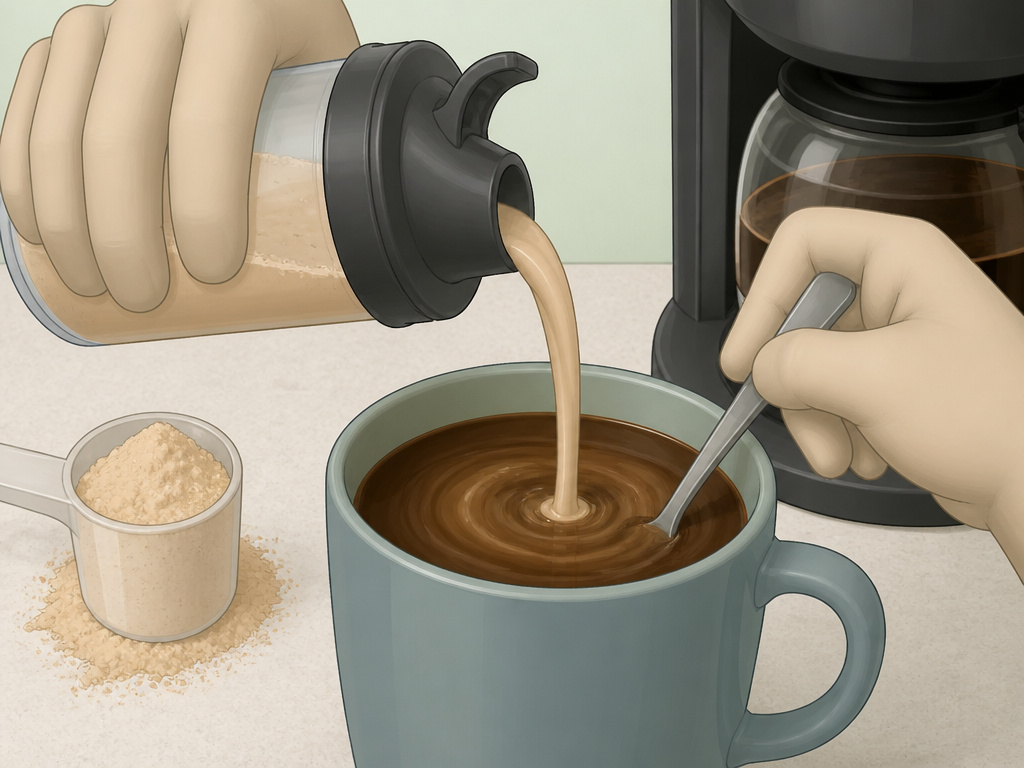
This method bypasses the clumping by controlling the order of operations. It adds one extra dish but saves you from a ruined drink.
You need a blender bottle or a small whisk, a liquid ounce or two of something cold, and your brewed coffee.
- Pre-mix in cold liquid. Pour 2–3 ounces of cold milk, water, or almond milk into your blender bottle. Add one scoop of protein powder. Seal and shake hard for 15–20 seconds. Look for complete dissolution. Any dry pockets left now will become permanent clumps later.
- Brew your coffee hot, but not boiling. The ideal range is 85–90°C (185–194°F). Water straight from a boil is around 100°C (212°F) – that extra 10–15 degrees pushes the protein harder toward immediate gelling. Let it sit off the boil for 30 seconds.
- Combine with steady stirring. Pour your hot coffee into a large mug. While stirring the coffee with one hand, slowly pour the pre-mixed protein slurry from the blender bottle into the center of the vortex. The continuous agitation helps distribute the protein evenly as it encounters the heat.
- Give it a final shake. If you used a blender bottle, you can pour most of the coffee in, seal it, and give it one or two gentle shakes to fully incorporate. Do not do this if the bottle is more than two-thirds full, as steam pressure can build.
- Drink immediately. The denaturation and thickening process continues as the drink sits. The smooth texture you achieve at minute one will be noticeably thicker by minute five. This is normal.
Before you start: Steam pressure in a sealed blender bottle can launch the lid with enough force to cause burns. Never fill a sealed container with hot liquid more than halfway. A whisk and a large mug is the safer, if less convenient, method.
Why Your “Hot Fill” Coffee Drink is Smoother Than Your Kitchen Attempt
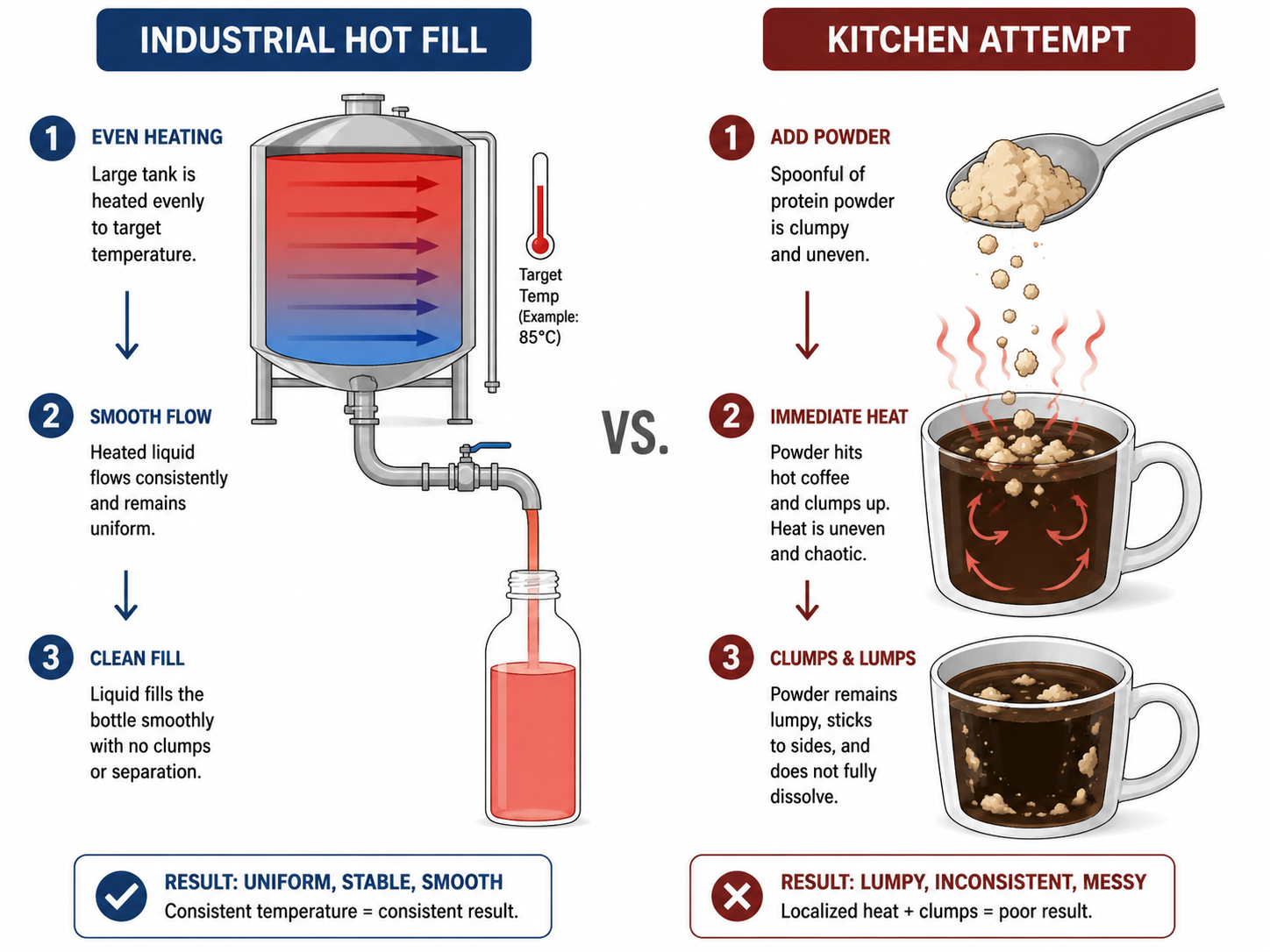
Walk into any convenience store and grab a bottled protein coffee. It’s smooth. No clumps. That’s the “Hot Fill” process at work, described in the California Dairy Innovation Center’s RTD beverage guide.
These drinks are mixed cold, then flash-heated to between 79.4°C and 96.1°C (175–205°F) for 15–30 seconds to sterilize them, and immediately poured into sterile bottles. The entire mixture is heated uniformly, and the time at high temperature is extremely short. This controlled, rapid heating minimizes the protein’s opportunity to form large, undesirable gels.
Your kitchen method is the opposite: you’re introducing a cold, hydrated protein into a locally very hot environment. The temperature gradient is steep and uneven. Without the industrial equipment to manage that gradient, you need the pre-mixing step to act as your buffer.
Will Hot Coffee Destroy the Protein’s Benefits?
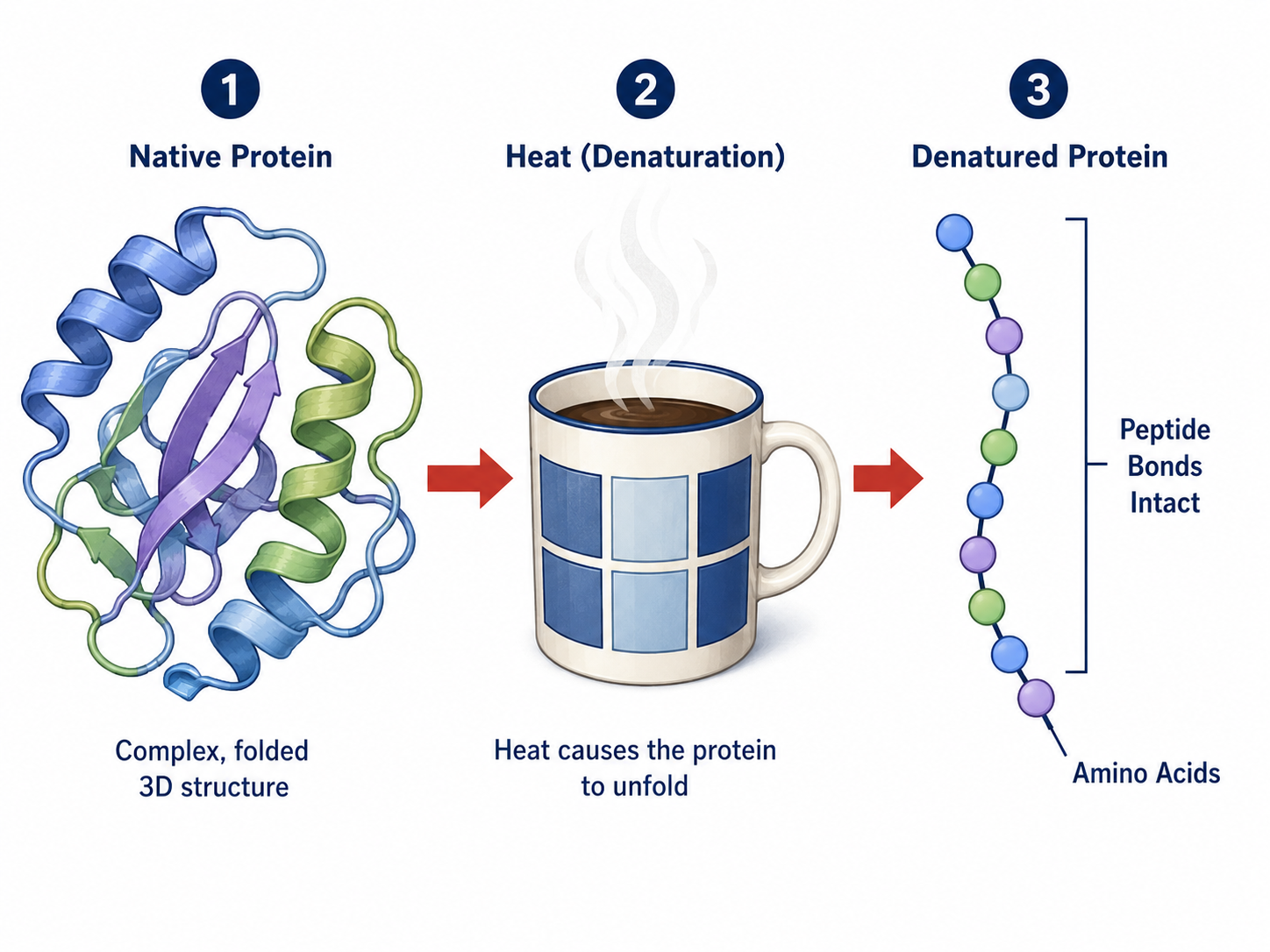
No. This is the most persistent myth. Denaturation does not equal destruction.
Heating protein unfolds its complex structure, but it does not break the peptide bonds that make up the amino acids. Your digestive system is going to denature and break down these proteins anyway. A 2023 study in the journal Foods that tracked dairy protein powders stored for 12 months found that heat treatment during processing did not degrade the protein’s nutritional quality – it primarily affected physical characteristics like solubility and browning.
The amino acid profile remains intact. Your muscles get the same building blocks. The trade-off is purely sensory: you might get a thicker, less smooth drink, but you are not wasting your money or your macros.
TL;DR: Heat changes protein texture, not its nutritional value. Your body absorbs the amino acids regardless.
The Plant-Based Powder Problem
You follow the pre-mix method with your pea protein. It still feels gritty. This isn’t user error.
Plant proteins have different solubility profiles and particle sizes than dairy proteins. They lack casein’s smooth, creamy texture and whey’s clean solubility. When heat is applied, these inherent qualities are exaggerated. The result is a dry, sandy mouthfeel that no amount of blending fully eliminates.
The workaround is to avoid heat altogether. Use cold brew coffee or iced coffee as your base. The cold temperature keeps the plant proteins more stable and suspended. If you must have a hot drink, consider using a dairy-based creamer alongside a smaller dose of plant protein, or switch to a ready-to-drink plant-based protein coffee product that has been professionally formulated and processed.
I tried to make a hot pea protein mocha for a month. Every morning was a disappointment – either clumps or grit. Switching to a whey isolate for hot drinks and saving the plant powder for post-workout cold shakes solved it. The flavor of pea protein also clashes with acidic light roasts, amplifying bitterness.
Frequently Asked Questions
Does protein powder dissolve better in hot or cold coffee?
It dissolves more easily in cold coffee. Cold liquids don’t trigger immediate denaturation, giving the powder time to fully hydrate and separate. For hot coffee, you must dissolve the powder in a cold liquid first, then add the hot coffee.
What is the best protein powder for hot coffee?
Whey protein isolate is the best choice. It has the highest protein purity and lowest lactose content, which allows it to mix more cleanly and resist clumping better than whey concentrate or casein. Avoid plant-based powders for hot drinks.
Can you put protein powder in boiling water?
Technically yes, but the results are terrible. Boiling water (100°C/212°F) causes extreme, instantaneous denaturation. The protein will seize into tough, rubbery curds that are nearly impossible to blend smooth. Always let boiling water cool for a minute before adding any protein mixture.
Why does my protein coffee get frothy?
The froth comes from two sources. First, shaking or blending incorporates air. Second, as whey proteins denature, they can trap air bubbles, creating a stable foam. Using a whisk instead of a shaker minimizes froth. A little froth is normal and harmless.
Can I make protein coffee ahead of time?
Not recommended. The denaturation and thickening process continues over time. A smooth drink at 8 AM will have a pudding-like consistency by 10 AM. The texture becomes increasingly unappealing. For the best experience, mix and drink immediately.
Does protein powder kill the caffeine effect?
No. There is no chemical interaction between caffeine and protein that would negate caffeine’s stimulant effects. The protein may slow the rate of gastric emptying slightly, which could delay the feeling of the caffeine kick by a few minutes, but the overall effect is not diminished.
The Bottom Line
You can have your protein and your hot coffee too. The method is non-negotiable: always pre-dissolve the powder in a cold liquid. Whey protein isolate is the most forgiving powder for the job. Plant-based proteins and casein will fight you every time.
The industrial data gives you the rules: whey starts to gel at 70°C, and hydration before heat is mandatory. Your kitchen version is just a scaled-down, less precise application of the same science. Skip the pre-mix step and you get a cup full of rubbery blobs. Follow it, and you get a creamy, boosted morning drink.
That first sip should taste like coffee, not a science experiment.
{
“@context”: “https://schema.org”,
“@type”: “HowTo”,
“name”: “How to Mix Protein Powder in Hot Coffee Without Clumps”,
“totalTime”: “PT5M”,
“tool”: [
{
“@type”: “HowToTool”,
“name”: “Blender bottle or small whisk”
},
{
“@type”: “HowToTool”,
“name”: “Measuring scoop”
},
{
“@type”: “HowToTool”,
“name”: “Separate cold liquid (milk or water)”
}
],
“step”: [
{
“@type”: “HowToStep”,
“name”: “Pre-dissolve the powder”,
“text”: “Mix one scoop of protein powder with 2-3 ounces of cold milk or water in a blender bottle. Shake vigorously until completely smooth with no dry clumps.”
},
{
“@type”: “HowToStep”,
“name”: “Brew your coffee separately”,
“text”: “Prepare your hot coffee as usual. Aim for a temperature just below boiling, around 85-90°C (185-194°F), to minimize immediate protein denaturation.”
},
{
“@type”: “HowToStep”,
“name”: “Combine slowly”,
“text”: “Pour the pre-mixed protein slurry slowly into your hot coffee while stirring continuously. Do not dump dry powder directly into the hot liquid.”
},
{
“@type”: “HowToStep”,
“name”: “Final blend and serve”,
“text”: “Give the combined drink a final stir or a quick shake in the sealed blender bottle. Drink immediately for the best texture.”
}
]
}
{
“@context”: “https://schema.org”,
“@type”: “FAQPage”,
“mainEntity”: [
{
“@type”: “Question”,
“name”: “Does protein powder dissolve better in hot or cold coffee?”,
“acceptedAnswer”: {
“@type”: “Answer”,
“text”: “It dissolves more easily in cold coffee. Cold liquids don’t trigger immediate denaturation, giving the powder time to fully hydrate and separate. For hot coffee, you must dissolve the powder in a cold liquid first, then add the hot coffee.”
}
},
{
“@type”: “Question”,
“name”: “What is the best protein powder for hot coffee?”,
“acceptedAnswer”: {
“@type”: “Answer”,
“text”: “Whey protein isolate is the best choice. It has the highest protein purity and lowest lactose content, which allows it to mix more cleanly and resist clumping better than whey concentrate or casein. Avoid plant-based powders for hot drinks.”
}
},
{
“@type”: “Question”,
“name”: “Can you put protein powder in boiling water?”,
“acceptedAnswer”: {
“@type”: “Answer”,
“text”: “Technically yes, but the results are terrible. Boiling water (100°C/212°F) causes extreme, instantaneous denaturation. The protein will seize into tough, rubbery curds that are nearly impossible to blend smooth. Always let boiling water cool for a minute before adding any protein mixture.”
}
},
{
“@type”: “Question”,
“name”: “Why does my protein coffee get frothy?”,
“acceptedAnswer”: {
“@type”: “Answer”,
“text”: “The froth comes from two sources. First, shaking or blending incorporates air. Second, as whey proteins denature, they can trap air bubbles, creating a stable foam. Using a whisk instead of a shaker minimizes froth. A little froth is normal and harmless.”
}
},
{
“@type”: “Question”,
“name”: “Can I make protein coffee ahead of time?”,
“acceptedAnswer”: {
“@type”: “Answer”,
“text”: “Not recommended. The denaturation and thickening process continues over time. A smooth drink at 8 AM will have a pudding-like consistency by 10 AM. The texture becomes increasingly unappealing. For the best experience, mix and drink immediately.”
}
},
{
“@type”: “Question”,
“name”: “Does protein powder kill the caffeine effect?”,
“acceptedAnswer”: {
“@type”: “Answer”,
“text”: “No. There is no chemical interaction between caffeine and protein that would negate caffeine’s stimulant effects. The protein may slow the rate of gastric emptying slightly, which could delay the feeling of the caffeine kick by a few minutes, but the overall effect is not diminished.”
}
}
]
}
