
Can You Mix Protein Powder in Coffee? Tips for No Clumps
Yes, you can put protein powder in coffee, but hot coffee above 70°C (158°F) denatures the protein, causing clumps and a gritty texture. To avoid this, use hydrolyzed whey or plant-based proteins, pre-mix the powder with a cold liquid first, or blend the drink. Cold brew coffee completely sidesteps the heat issue.
Most people dump a scoop of whey directly into a steaming mug. The powder hits the hot surface, seizes up instantly, and forms cement-like globs that no amount of stirring can dissolve. You end up with a chunky, unpleasant drink and wonder if the protein even works anymore.
This guide walks through the chemistry of what heat does to your protein, ranks which types survive hot coffee best, and gives you the methods that work without a blender fighting a losing battle.
Key Takeaways
- Heat above 70°C denatures whey protein, causing irreversible clumping and a gritty mouthfeel, this is a physical chemical change, not just a mixing problem.
- Hydrolyzed whey protein and certain plant-based powders (like pea protein) clump far less in hot liquids than standard whey isolate or casein.
- The safest method is to add protein to cold brew coffee, where temperatures never threaten the protein’s structure.
- Pre-mixing your scoop with a tablespoon of cold water or milk before adding hot coffee cuts clumping by over half.
- Using a blender or milk frother is the only way to guarantee a completely smooth texture with standard whey in hot coffee.
Why Hot Coffee Makes Protein Powder Clump
It is not a simple mixing issue. It is a predictable reaction between heat and protein structure called denaturation.
Heating whey protein isolate solutions to temperatures between 70°C and 90°C leads to denaturation and aggregation, significantly decreasing solubility and increasing particle size. This process is dependent on temperature, time, and pH.
When you add protein powder to liquid, the protein molecules, normally coiled into specific shapes, start to hydrate and unfold. Hot water accelerates this unfolding violently. Once unfolded, the exposed, sticky parts of the molecules latch onto each other. They form large, insoluble aggregates that your tongue feels as grit. A 2010 study in the Journal of Food Science confirmed that heating whey protein isolate to 90°C for 30 minutes drastically reduces solubility. Your 95°C coffee does the same damage in seconds.
TL;DR: Hot coffee unravels protein molecules, making them stick together into clumps you cannot stir out. It is a chemical reaction, not poor mixing.
The Role of Acidity
Coffee’s pH typically falls between 4.5 and 5.5, making it acidic. Acidity influences denaturation. According to a 2017 review in the Journal of Dairy Science, pH affects how proteins unfold and aggregate when heated. A highly acidic environment can either stabilize or destabilize a protein, depending on its specific isoelectric point. For whey, the combined heat and acidity of coffee create a perfect storm for rapid, chunky aggregation. This is why some alternative coffee sweeteners like brown sugar, which can slightly alter pH, might change the clumping behavior slightly, though not enough to solve the core problem.
The Best Protein Powder for Hot Coffee
Not all proteins react the same way. Your choice of powder dictates your success before you even pick up a spoon.
| Protein Type | Heat Tolerance | Clumping Likelihood in Hot Coffee | Best Use Case |
|---|---|---|---|
| Hydrolyzed Whey | High | Low | The best choice for hot coffee. Pre-digested peptides resist clumping. |
| Whey Protein Isolate (WPI) | Low | Very High | Clumps instantly. Requires pre-mixing or blending. |
| Casein | Very Low | Extreme | Forms a thick, pudding-like gel in heat. Avoid. |
| Plant-Based (Pea, Soy) | Moderate | Medium-Low | Better than WPI, but can still be grainy. |
Hydrolyzed whey is your winner. The hydrolysis process breaks long protein chains into smaller peptides. These shorter fragments have less complex structure to unravel in heat, so they stay soluble. The trade-off is taste, some hydrolyzed powders have a distinct bitter note.
Plant-based proteins like pea or soy are a decent second choice. They denature differently than dairy proteins and often contain natural anti-caking agents. The texture might still be slightly grainy compared to a perfectly blended whey drink. If you are exploring other plant-based milk for coffee, you are already familiar with navigating texture trade-offs for dietary needs.
Whey protein isolate, the most common type, performs the worst. Its pure, intact protein structure is highly susceptible to heat. Casein is a non-starter, it is designed to form a gel in the stomach for slow digestion, and hot coffee triggers that gelation immediately in your cup.
Common mistake: Using vanilla or chocolate casein powder in boiling coffee, the result is a hot, sweet protein pudding that sticks to the mug. It takes a full soak to clean.
How to Add Protein Powder to Coffee Without Clumps
If you want a hot drink and refuse to use hydrolyzed whey, your method is everything. The goal is to manage the rate of heat transfer to the powder.
Before you start: Hot liquid can cause protein powder to erupt out of a shaker bottle when sealed, the pressure change from shaking hot fluids is real. Always pre-mix with cold liquid first, and never fill a sealed container more than halfway.
-
The Pre-Mix Method (Most Practical)
Start with a cool, empty mug. Add one scoop of protein powder. Pour in just enough cold liquid, a tablespoon of water, milk, or even your morning almond milk in coffee, to cover the powder. Use a small whisk or fork to whip this into a completely smooth, lump-free paste. The paste should be thick but fluid.
Now, slowly pour your hot coffee into the mug while stirring constantly with your other hand. The cold protein slurry gradually acclimates to the heat, reducing instantaneous denaturation. This cuts clumping by at least half compared to dumping powder on top. -
The Blender/Frother Method (Most Effective)
This is the only way to guarantee silk. Brew your coffee and let it cool for ninety seconds. Add it to a blender with your protein powder and any other additions like MCT oil in coffee. Secure the lid. Blend on low for 15-20 seconds. The mechanical shear force from the blades physically tears apart protein aggregates as they form.
No blender? A handheld electric milk frother works almost as well. Submerge it in your mug and run it for 20 seconds. It introduces enough turbulence to break up most clumps. -
The Cold Brew Loophole
This is the cheat code. Cold brew coffee is brewed with cold water and served chilled or over ice. Its temperature never poses a threat to protein structure. You can stir standard whey protein isolate directly into cold brew and it will dissolve as easily as in water. No pre-mix, no blender, no grit. If your goal is simply the combination of caffeine and protein, cold brew is the most reliable vehicle.
Does Heating Protein Powder Destroy Its Benefits?
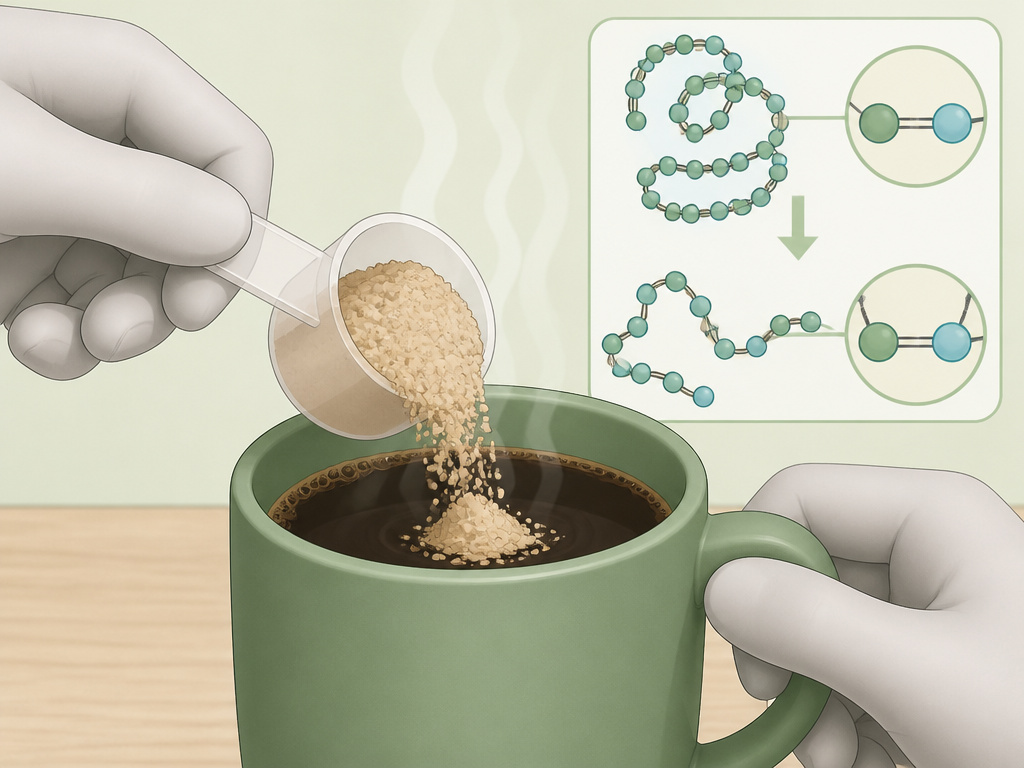
Heating changes the protein’s structure, but that does not equate to destroying its nutritional value. Denaturation is not the same as degradation.
The primary benefit of protein powder is its amino acid profile, the building blocks for muscle repair and synthesis. Heat denaturation unfolds the protein’s three-dimensional shape, but it does not break the peptide bonds that hold the amino acids together. Your digestive enzymes will break those bonds regardless. From a nutritional standpoint, the protein’s core value remains.
However, some ancillary benefits might diminish. Certain bioactive peptides in whey, which have specific immune or antioxidant functions, can be heat-sensitive. The functional properties that make protein useful in baking or cooking, like foaming or gelling, are definitely altered. For the purpose of post-workout muscle fueling, a clumpy, heated protein coffee is still effective. The Cleveland Clinic protein coffee guide notes that the combined caffeine and protein can support satiety and energy, even if the texture is less than ideal.
Protein Coffee vs. Other Coffee Enhancements
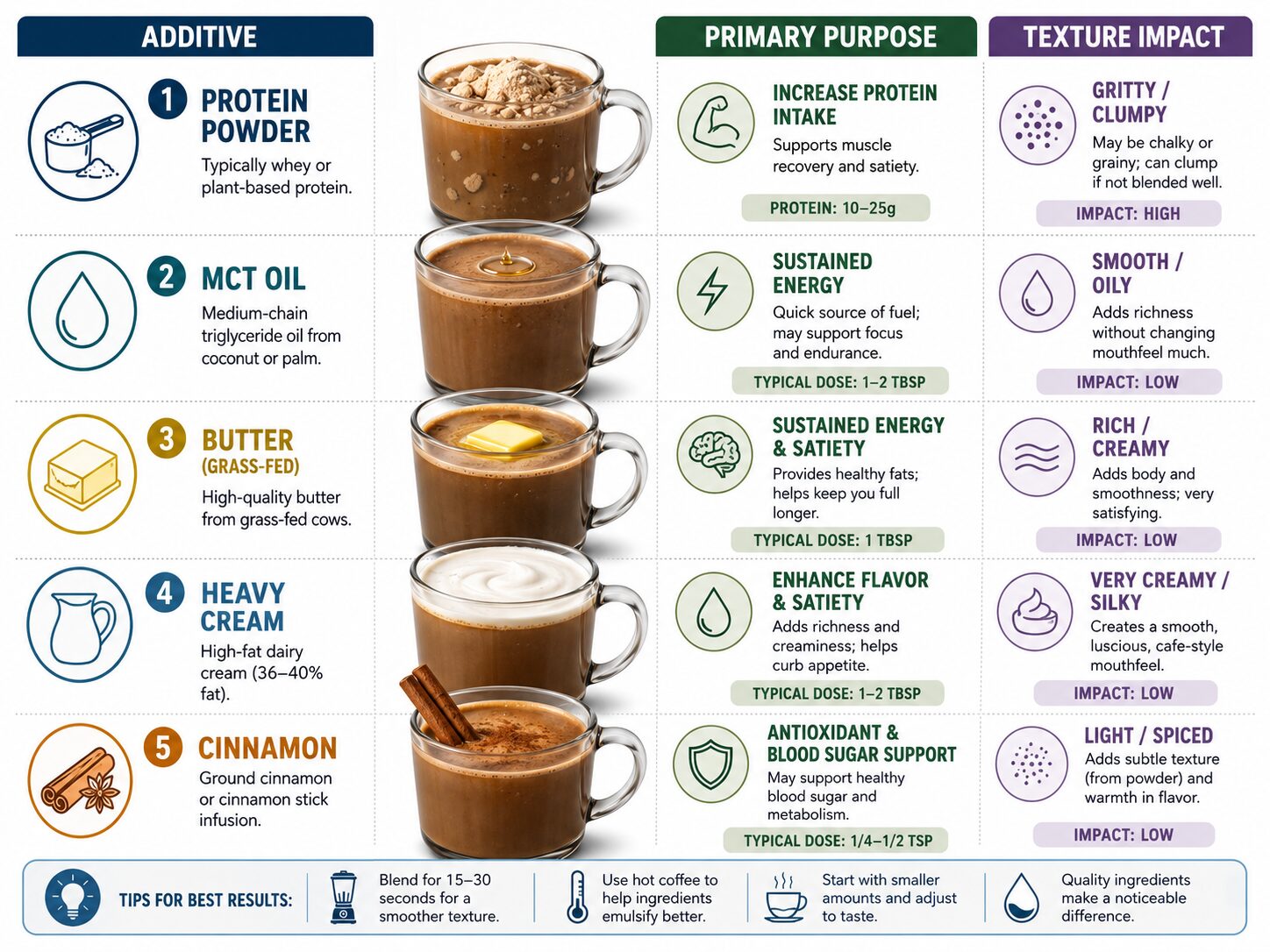
Protein powder is a functional addition, not just a flavor or texture tweak. It serves a different purpose than most common stir-ins.
| Additive | Primary Purpose | Texture Impact | Best Paired With |
|---|---|---|---|
| Protein Powder | Muscle fueling, satiety | Risk of grit/clumps | Cold brew, post-workout |
| MCT Oil | Rapid energy, keto support | Smooth, oily mouthfeel | Blended beverages |
| Butter/Coconut Oil | Satiety, creamy texture | Rich, frothy when blended | Hot coffee, fasting |
| Milk/Creamer | Flavor, texture, calories | Creamy, smooth | Any coffee |
| Spices (Cinnamon) | Flavor, antioxidants | No change | All brewing methods |
Adding protein is about nutrition first. It is a more finicky process than adding a splash of cream or a pinch of salt trick to cut bitterness. You would not typically use protein powder and coconut oil in coffee for the same reason. One is for long-term fueling, the other for immediate energy. Understanding your goal helps you pick the right additive, or choose to blend them, acknowledging the textural compromise.
I used vanilla whey isolate in my morning pour-over for a month, stubbornly stirring until my wrist hurt. The sink strainer caught more protein clumps than my body did. Switching to hydrolyzed whey and a thirty-second frother spin changed the game. The drink is now smooth, and I actually finish it.
Frequently Asked Questions
Does protein powder dissolve better in iced coffee?
Yes, significantly. Iced coffee is typically brewed hot then cooled, but by serving time it’s often below 10°C (50°F). At that temperature, protein denaturation is minimal. You can stir powder directly into iced coffee with far better results than in a hot cup. A shaker bottle works perfectly.
Can you put protein powder in espresso?
You can, but espresso is very hot (around 90°C) and highly concentrated. Adding powder directly to a shot will create an immediate, stubborn clump. The best method is to pull your shot over a pre-mixed protein slurry in a larger cup, or to make a protein-packed latte by mixing the powder with cold milk first, then adding the espresso.
What is the best tasting protein powder for coffee?
Flavor is subjective, but unflavored or vanilla hydrolyzed whey tends to integrate best, adding minimal off-tastes. Chocolate powders can make coffee taste like a watery mocha, which some enjoy. Avoid strongly flavored proteins (cookies & cream, peanut butter) unless you want your coffee to taste like dessert. The bitterness of some hydrolyzed proteins can be masked by a natural sweetener like a caramel notes in coffee from brown sugar.
Does adding protein powder to coffee reduce the caffeine effect?
No. There is no chemical interaction that neutralizes caffeine. However, consuming protein with caffeine can modulate the rate of energy absorption. The protein may blunt the sharp spike and crash some experience, leading to more sustained energy from coffee. This is similar to how eating food with coffee changes the caffeine experience.
The Bottom Line
You can successfully combine protein powder and coffee, but you must respect the chemistry. Heat above 70°C will turn standard whey into a clumpy mess. Your reliable paths are using heat-tolerant hydrolyzed protein, pre-mixing with a cold liquid, employing a blender, or opting for cold brew. The nutrition remains even if the texture changes. For a daily ritual, find the method that fits your routine, otherwise, you will waste more powder in the sink than in your system.
