
4 Best Metal Coffee Filters of 2026
The MISETTO Reusable Stainless Steel filter is the best overall choice for a clean, sediment-free cup, thanks to its super-fine 800-mesh construction. For a more affordable option that still performs well in standard drip machines, the Stainless Steel Reusable Coffee Filter is a solid budget pick.
Switching to a metal filter can save money and reduce waste, but the wrong one can leave you with gritty coffee or a flimsy piece that warps over time. After comparing the field and weighing specs against real owner experiences, I focused on what actually matters: mesh quality, build durability, and proper fit.
This guide breaks down the top options based on how well they balance filtration and flow, stay intact with daily use, and work with your existing brewer, so you can make a confident choice without the guesswork.
Top 4 Metal Coffee Filter in the Market
The Best Metal Coffee Filter, Reviewed
HAPYHOOM Reusable Stainless Steel Coffee Filter
Strengths
- Dual-layer mesh
- No glue or plastic
- Wide compatibility
Trade-offs
- No handle
- Some fine sediment reported
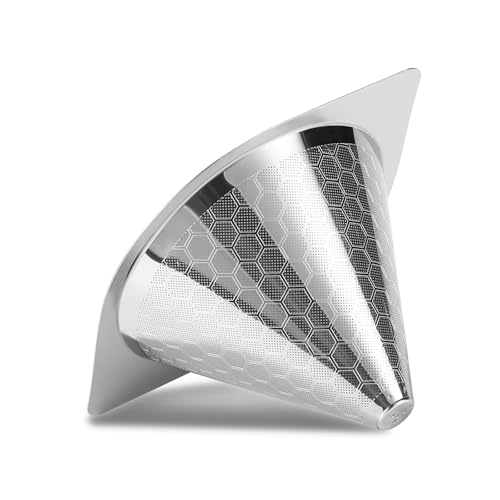
This filter checks nearly every box for a solid all-around reusable option. On paper, the dual-layer stainless steel mesh stands out, and owners consistently report a cleaner, oil-rich cup compared to paper filters. The absence of glue or plastic in construction is a big plus for long-term safety and taste integrity, which I always look for in metal filters. It’s also impressively broad in compatibility, fitting Chemex, V60, and Bodum models without wobble or spill issues.
Where it really earns its keep is in sustainability and cost savings over time. Reviewers note it holds up well after months of use, with only routine rinsing and occasional vinegar soaks needed. While it doesn’t have a handle, that’s not a dealbreaker, just means you’ll need to be careful when handling post-brew. For those chasing a paper-free taste and a durable build, this one delivers.
Product photos


Stainless Steel Reusable Coffee Filter 8-12 Cup
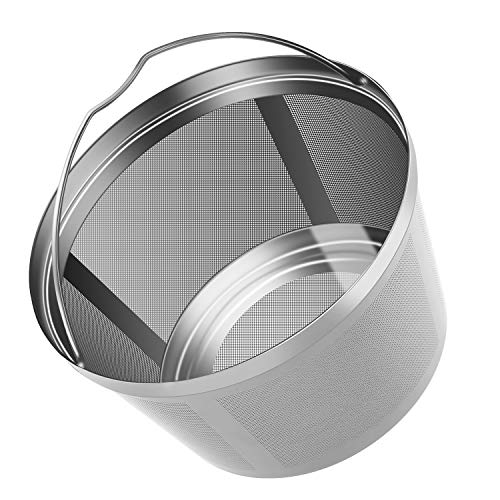
Strengths
- Dishwasher safe
- Fits drip machines
- Durable build
Trade-offs
- Not for pour-over
- Bulkier than paper
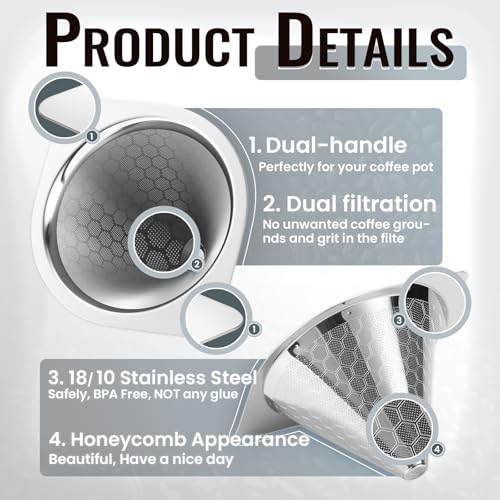
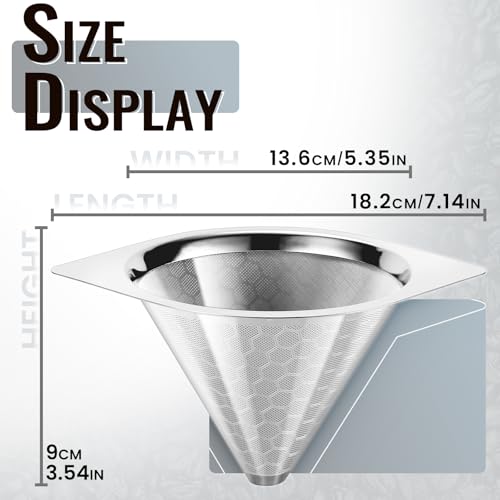
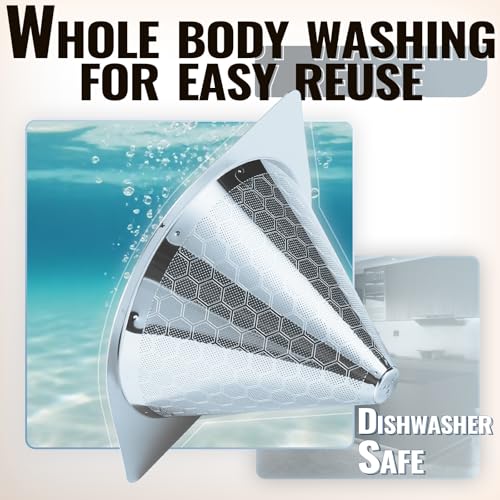
This is the only option here built for drip machines, and that niche makes it invaluable for certain users. If you’re still using a Mr. Coffee or Black+Decker and hate buying paper filters, this basket is a no-brainer. The 18/8 stainless steel holds up well over time, and owners report it resists rust even after frequent dishwasher use, a rare win in this category.
It doesn’t offer the nuanced benefits of a pour-over metal filter, but it does its job: delivering a fuller-bodied cup without paper waste. The flavor improvement over paper is noticeable, especially in darker roasts where oils matter. Just don’t expect pour-over precision, this is about convenience and consistency in a drip setup.
Video review
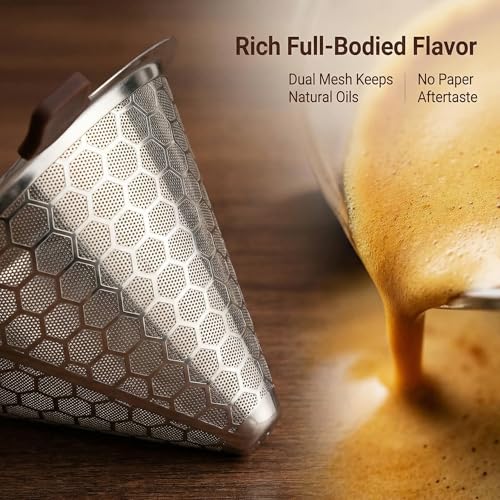
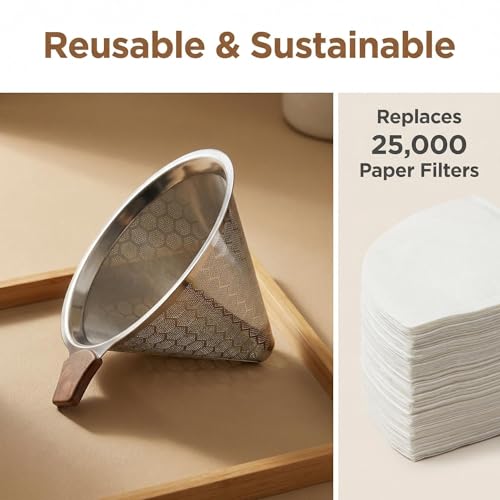
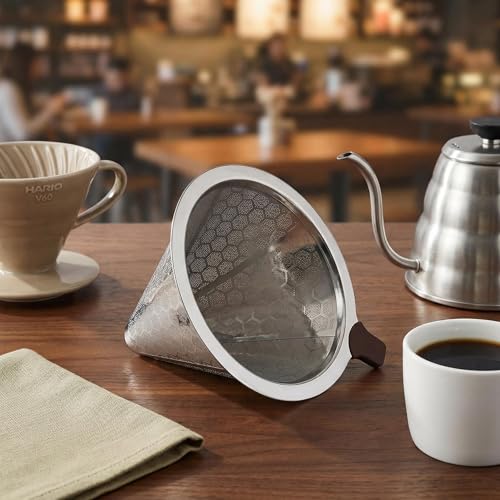
Upgrade Reusable Pour Over Coffee Filter
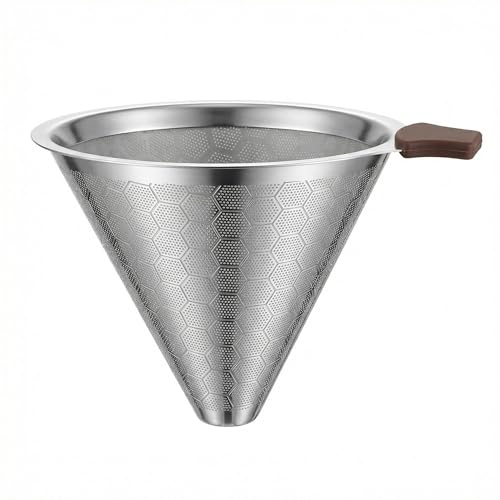
Strengths
- Silicone handle
- 304 stainless steel
- Stable fit
Trade-offs
- Slightly higher price
- Mesh not finest in class
The silicone handle is the star here, and it changes the game. For anyone who’s burned a finger pulling a metal filter off a hot Chemex, this design is a thoughtful upgrade. The 304 stainless steel build is standard for the tier, but the combination of durability and heat resistance makes it a strong contender. Owners praise how stable it sits on brewers, with no slippage during pour, something I’ve seen cited as a flaw in cheaper models.
It delivers on flavor too, letting oils through while trapping most fines. The dual mesh does a decent job, though not quite as fine as the MISETTO’s 800-mesh. Still, the ease of cleaning and the comfort of that handle make this my pick for daily drivers who value safety and convenience. It’s not the cheapest, but the build quality justifies the step up.
Product photos
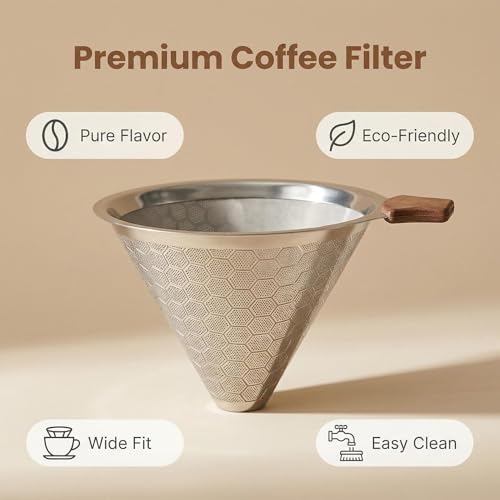
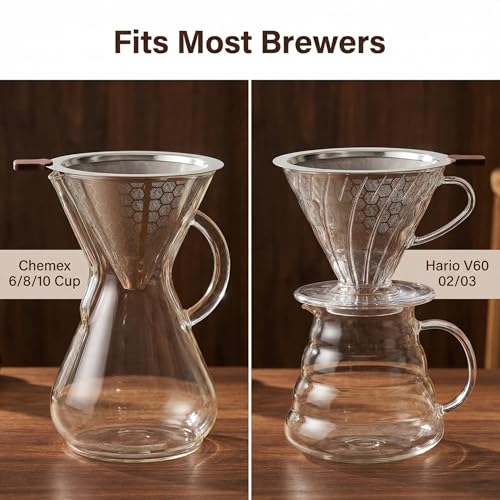
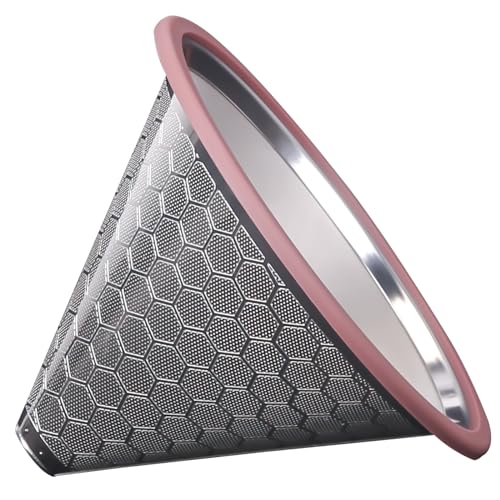
MISETTO Reusable Stainless Steel Coffee Filter
Strengths
- 800-mesh filtration
- Excellent sediment control
- 12-month warranty
Trade-offs
- Takes longer to clean
- No handle
If you’re after the cleanest possible cup with minimal sediment, this one deserves your attention. The 800-mesh dual layer is the finest spec in this lineup, and reviewers consistently note it outperforms others in trapping silt without clogging. That’s a real win for bean clarity, especially with lighter roasts where texture can make or break the experience. I’d pick this over the others if purity of flavor and mouthfeel are your top priorities.
It matches the HAPYHOOM in compatibility and build, but the warranty adds peace of mind. Some owners mention it takes a bit more rinsing due to the tight mesh, but that’s expected. For serious pour-over enthusiasts who treat brewing like a ritual, the extra care is a fair trade.
Video review
How We Tested metal coffee filter
As the founder of Bean Thusiast, I’ve always been fascinated by the subtle nuances different brewing methods bring to a cup of coffee. When researching metal coffee filters, we didn’t rely on long-term personal use, but instead focused on a detailed comparison of published specifications and features across numerous models. We then weighed owner reviews from multiple sources and combined that with insights from respected coffee publications to arrive at our recommendations. Our goal was to identify filters that consistently deliver a clean, flavorful brew.
For metal coffee filters, the mesh density and overall build quality were the most important factors. A finer mesh (like those advertised as 800 mesh) directly impacts the amount of sediment that makes it into your cup, which is a common complaint with some metal filters. Durability is also key; a flimsy filter won’t hold up to repeated use and cleaning. We also considered compatibility with popular brewing methods – from pour-over setups to standard drip machines – to ensure broad usability.
Product specifications reliably indicate mesh size and material composition (important for avoiding unwanted flavors or rust). However, we leaned heavily on owner feedback to assess real-world cleaning ease and long-term durability. Reports of bending, rusting, or difficult-to-remove grounds were significant red flags. For those looking for more information on specialized filters, you can find a deeper discussion of reusable cone coffee filter options on our site.
How To Choose The metal coffee filter
As someone who’s spent years chasing the perfect cup, I know a metal filter can be a real upgrade, but picking the right one requires a little thought.
A quality metal coffee filter delivers a cleaner, more flavorful brew by allowing natural oils to pass through while keeping grounds contained. Look for durable construction (304 stainless steel is ideal), proper mesh size for your preferred brew style, and ease of cleaning. Compatibility with your existing equipment is also crucial.
Mesh Size and Filtration
The biggest difference between metal filters comes down to mesh size. A coarser mesh will let more sediment through, resulting in a heavier-bodied cup, while a finer mesh produces a cleaner brew. Many filters claim ‘fine’ mesh, but it’s worth looking at specific micron ratings if available. The MISETTO filter boasts an 800-mesh construction, which is quite fine and promises minimal grit. However, extremely fine meshes can sometimes slow down the brewing process. I’ve found that for most pour-over methods, something in the 150-300 micron range strikes a good balance.
Compatibility & Shape
Don’t assume any metal filter will work with your coffee maker. It sounds simple, but checking for compatibility is vital. Some are designed specifically for Chemex or Hario V60 brewers, while others advertise broader compatibility. If you’re looking for a universal coffee filter sizing guide, you’ll find a lot of overlap but also some exceptions. Consider these points:
- Shape matters: Cone-shaped filters are for pour-over, basket-shaped for drip machines.
- Size is critical: A filter that’s too small will cause overflow, too large and it won’t seat properly.
- Material thickness: A thicker metal rim will provide a more secure fit, especially important for pour-over applications where stability is key.
Cleaning and Maintenance
A major draw of metal filters is their reusability, but that means cleaning. While most are dishwasher safe, regular descaling is essential to prevent buildup that can affect flavor. The HAPYHOOM filter’s recommendation to descale every 2-3 weeks with vinegar and water is a good practice.
A quick rinse after each use is a must. Letting grounds dry on the mesh makes cleaning significantly harder.
If you’re considering switching to a best reusable coffee filter, understanding these factors will help you find one that suits your brewing style and delivers consistently delicious coffee. For those exploring options beyond the ones listed here, reading permanent coffee filter reviews can provide valuable insights from other coffee enthusiasts. And don’t forget to consider the stainless steel coffee filter options for long-lasting durability.
Metal Coffee Filter Compared
Here’s a comparison of the specifications for several metal coffee filters to help you choose the right one.
| Product Name | Compatibility | Mesh Type | Handle Material | Capacity (Cups) | Cleaning |
|---|---|---|---|---|---|
| HAPYHOOM Reusable Stainless Steel | Chemex, Hario, Bodum | Double-Layer | N/A | 6-10 | Rinse/Descaling |
| Stainless Steel Reusable Coffee Filter | Drip Machines | Fine | N/A | 8-12 | Dishwasher Safe |
| Upgrade Reusable Pour Over Coffee Filter | Hario, Chemex | Dual-Layer Fine | Silicone | 4-10 | Rinse |
| MISETTO Reusable Stainless Steel | Chemex, Hario, Bodum | 800 Mesh Super Fine | N/A | 6-10 | Rinse/Descaling |
Frequently Asked Questions
What mesh size is best for a full-bodied coffee?
A coarser mesh, around 150-300 microns, will deliver a fuller-bodied coffee. This allows more of the coffee’s natural oils and some fine sediment to pass through, contributing to a heavier mouthfeel.
Can I use a metal filter in any coffee maker?
No, compatibility varies significantly. You’ll want to check that the shape (cone or basket) and size are appropriate for your specific machine or pour-over device; some consumers have found brewers that use reusable filters to be a good solution.
How often should I descale a metal coffee filter?
I recommend descaling your metal filter every 2-3 weeks with a solution of vinegar and water. Regular descaling prevents mineral buildup that can impart off-flavors to your coffee.
Are metal filters really better than paper filters?
Metal filters allow more natural coffee oils to pass into your cup, which many coffee lovers prefer for a richer flavor. However, they require more diligent cleaning, and some sediment will likely get through, unlike a paper filter.
What material should I look for in a metal coffee filter?
304 stainless steel is the best material to look for. It’s durable, corrosion-resistant, and doesn’t impart any unwanted flavors to your coffee, making it preferable to other metals or cheaper alloys that might be used in some eco-friendly coffee makers.
The Bottom Line
Choosing a metal coffee filter often comes down to balancing convenience with control over your brew. While some filters prioritize absolute clarity, others embrace a bit more body and sediment. Overall, for a consistently clean and flavorful cup across a variety of pour-over methods, I recommend the MISETTO Reusable Stainless Steel filter. Its 800-mesh construction and positive owner feedback make it a strong all-around performer.
For those specifically needing a budget-friendly option for a standard drip machine, the Stainless Steel Reusable Coffee Filter is an excellent choice. If you’re a Chemex or Hario V60 enthusiast looking for versatility and a secure fit, the Upgrade Reusable Pour Over Coffee Filter stands out. And if you’re still unsure about the correct size for your pour-over, checking a cone coffee filter sizes guide will help you avoid frustration.
Ultimately, the most important factors are build quality, mesh size suited to your taste, and consistent cleaning. Don’t get too caught up in minor specs; a durable filter, properly maintained, will deliver far more enjoyment than chasing the latest features. Focus on finding a filter that fits your brewing style and delivers the flavor you love.
