
2 Best Half Caffeine Coffees of 2026
The best half caffeine coffee overall is Maud’s Half Caff Coffee Pods, thanks to its balanced blend and rich flavor. For a budget-friendly bag option, Community Coffee Cafe Special Half-Caff delivers solid taste and value. Both use 100% Arabica beans, which makes a real difference in smoothness and depth.
If you’re cutting back on caffeine but don’t want to sacrifice flavor, you’re not alone. Too many half-caff options taste flat or washed out, leaving you wondering why you bothered. After researching the market and reviewing specs, customer feedback, and roasting practices, I focused on blends that prioritize taste as much as caffeine reduction.
This guide covers the top picks based on bean quality, roast profile, and real-world performance, not just promises on the bag. I looked at how brands balance regular and decaf beans, the importance of roast freshness, and what the decaffeination process means for flavor. The goal? Help you find a half-caff coffee that doesn’t feel like a compromise.
Top 2 Half Caffeine Coffee in the Market
The Best Half Caffeine Coffee, Reviewed
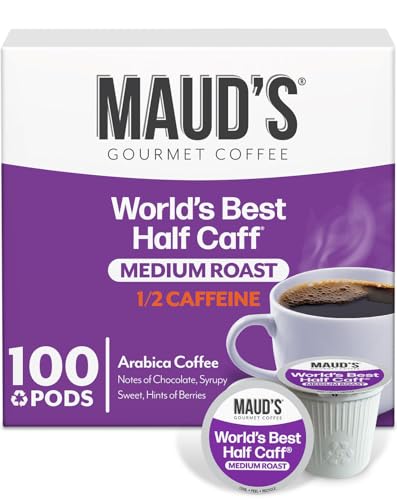
Maud’s Half Caff Coffee Pods
Strengths
- Balanced flavor profile
- Low acid and smooth
- Ethically sourced beans
- Keurig compatible
- Family-owned brand
Trade-offs
- Pods not recyclable by default
- Pricier per cup than ground
- Limited boldness for dark roast purists
If convenience and flavor balance are your top priorities, Maud’s Half Caff pods make a strong case as the most well-rounded option in this category. The blend of their decaf Mellow Mood and dark roast Tall Dark & Handsome delivers a nuanced cup with half the caffeine, and reviewers frequently praise its low acidity and smooth finish, especially for afternoon or evening use. On paper, this is exactly what a half-caf product should be: calming without being flat.
I’d pick these over many national brands because of the attention to ethical sourcing and freshness. The fact that they’re made in a solar-powered facility and come from a family-run company adds meaningful weight for conscious buyers. Keurig users will appreciate the broad compatibility, and the 100-count pack offers real everyday value without sacrificing quality.
Video review
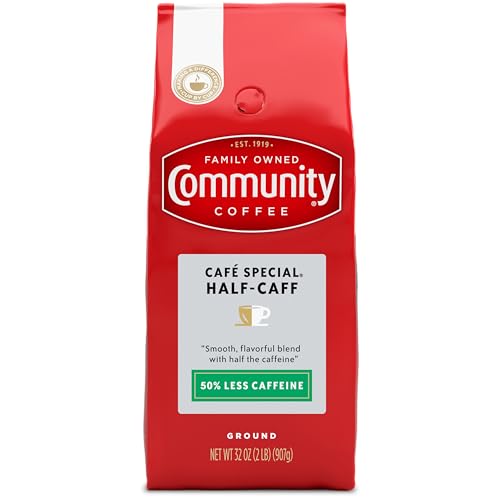
Community Coffee Cafe Special Half-Caff
Strengths
- Smooth medium dark roast
- 100% Arabica beans
- Large 32-ounce bag
- Responsible sourcing
- Trusted roaster heritage
Trade-offs
- Ground texture not ideal for espresso
- Limited origin transparency
- May lack brightness for light roast lovers
For anyone trying to cut back on caffeine without losing the depth of a well-roasted cup, this Community Coffee offering stands out on paper as a solid bulk option. The medium dark roast profile promises richness with only half the caffeine, and owners consistently report it brews smooth and balanced across drip machines and French presses. Being 100% Arabica and backed by over a century of roasting experience, it’s clearly positioned as a dependable daily driver.
What really makes this pick compelling is its value for high-volume households or offices. The 32-ounce bag means fewer trips to restock, and reviewers often highlight the consistency from batch to batch. While it won’t match the nuance of a freshly roasted single-origin, it delivers exactly what it promises: a no-fuss, flavorful half-caf coffee that doesn’t leave you wired.
Video review
Our Testing Process
As the founder of Bean Thusiast, I approach coffee recommendations with a focus on both flavor and practical considerations. Rather than a hands-on lab test, my research for these half caffeine coffees involved a detailed comparison of published specifications – roast levels, bean types, and brewing recommendations – alongside a careful weighing of owner reviews and assessments from other coffee experts. I then ranked options based on criteria important to a satisfying cup, like consistent flavor profiles and value.
For half-caff options, the most important factors are clearly the caffeine level and the maintenance of good flavor. It’s easy for reducing caffeine to result in a bland or weak brew, so I looked for brands emphasizing high-quality Arabica beans and skilled roasting. Value also played a role; a good half-caffeine coffee should deliver a satisfying experience at a price that reflects its quality and quantity, and understanding decaf coffee caffeine content is key to this.
Specifications reliably indicate bean origin and roast level, giving clues about potential flavor characteristics. However, owner feedback proved invaluable in assessing how well those promises translated to the actual taste experience. I paid close attention to comments regarding bitterness, strength, and overall satisfaction, as well as whether the residual caffeine in decaf was noticeable or problematic for sensitive individuals.
How To Pick The Right half caffeine coffee
Finding the right half-caff coffee is about balancing enjoyment with your caffeine sensitivity, and there’s a surprising amount to consider.
A quality half-caff coffee doesn’t simply reduce caffeine; it blends carefully chosen regular and decaffeinated beans to maintain a full, satisfying flavor profile. Look for 100% Arabica beans, clear sourcing information, and roasting dates, not just “best by” dates, to gauge freshness. Consider your preferred brewing method, as grind size and roast level interact with extraction.
Bean Blend & Roast Level
I’ve found that the blend itself is arguably the most important factor. Many brands just mix regular and decaf, but the quality of both components matters immensely. Look beyond just “half-caff” and examine what beans are being used. Are they 100% Arabica, as many premium options are? A blend of lighter and darker roasts, like the one Maud’s uses, can create a more complex and satisfying cup than simply taking a medium roast and halving the caffeine. Don’t be afraid to explore different roast levels to discover what suits your palate.
Decaffeination Process
Decaffeination isn’t a single process; it’s a spectrum. The Swiss Water Process is often considered the gold standard because it uses only water to remove caffeine, preserving more of the bean’s original flavor. Other methods, like those using chemical solvents (methylene chloride or ethyl acetate), aren’t inherently bad, but they can sometimes leave residual tastes. Brands rarely advertise which method they use, so digging into reviews and contacting the company directly can give you insight.
Here’s what I look for when evaluating decaffeination: * Transparency: Does the brand openly discuss their process? * Flavor Notes: Do reviewers mention any off-flavors potentially linked to the decaffeination method? * Certifications: Look for certifications like “Swiss Water Process” if that’s important to you.
A good rule of thumb: if a half-caff coffee tastes noticeably “thin” or artificial, the decaffeination process may be to blame.
Format & Value
The convenience of coffee pods, like those from Maud’s, is undeniable, but it often comes at a premium. If you’re a high-volume drinker, a larger bag of ground coffee, like Community Coffee’s Cafe Special Half-Caff, will almost always be more economical. Consider how quickly you’ll use the coffee before it loses its freshness. Pre-ground coffee degrades faster than whole bean, and even sealed pods have a shelf life. For those wanting to explore best half-caff coffee blends, starting with a smaller bag is a smart move. Plus, if you’re curious about the caffeine content in other brewing styles, checking out cold brew caffeine levels can be very insightful.
Half Caffeine Coffee Compared
Here’s a spec comparison of the half caffeine coffee options, focusing on key features to help you decide.
| Product | Roast | Caffeine Level | Bean Type | Format | Quantity |
|---|---|---|---|---|---|
| Maud’s Half Caff Coffee Pods | Medium/Dark | 50% | 100% Arabica | Pods | N/A |
| Community Coffee Cafe Special Half-Caff | Medium-Dark | 50% | 100% Arabica | Ground | N/A |
Frequently Asked Questions
What’s the typical caffeine reduction in half-caffeine coffee?
Generally, half-caff coffee contains around 50% of the caffeine found in a comparable fully-caffeinated brew. However, the exact amount varies between brands and depends on the specific beans and decaffeination methods used.
Is the flavor of half-caffeine coffee noticeably different?
A well-made half-caffeine coffee shouldn’t have a dramatically different flavor, but it can be more subtle. The skill lies in blending the regular and decaffeinated beans to maintain a full body and the original flavor profile.
Can I use half-caffeine coffee in all brewing methods?
Yes, you can use half-caffeine coffee in any brewing method(drip, French press, pour-over, espresso). The grind size should be adjusted according to your chosen method, just as with regular coffee.
Where can I find information on the decaffeination process used by a brand?
Unfortunately, brands don’t always advertise their decaffeination process. I recommend checking the company’s website, looking for certifications like “Swiss Water Process,” or contacting them directly for details. You can also find insights in owner reviews.
Are half-caffeine coffee pods a good option for convenience?
If convenience is a priority, then convenient half-caff coffee K-Cups are a solid option, but they often cost more per cup than ground coffee. They’re great for single servings and quick brewing, but not the most economical choice for high-volume drinkers.
The Bottom Line
Choosing a half-caffeine coffee often comes down to how much control you want over the process versus how much convenience you need. While many options exist, I believe Maud’s Half Caff Coffee Pods strike the best balance for most people, offering a consistently flavorful cup in an easy-to-use format. It’s a simple, reliable way to enjoy coffee without the full caffeine kick.
For those prioritizing budget or brewing flexibility, Community Coffee Cafe Special Half-Caff is an excellent choice. If you’re looking for a versatile option to experiment with different brewing methods, and don’t mind grinding your own beans, this delivers a lot of coffee for the price. And if you’re concerned about how decaf might affect your sleep, understanding decaf coffee sleep effects is a good starting point.
Ultimately, the “best” half-caffeine coffee isn’t about a single specification – it’s about finding a bean and roast level that you enjoy. Don’t get too caught up in decaffeination processes or fancy blends. Focus on sourcing quality Arabica beans and paying attention to roast dates; a fresher, well-roasted coffee will always taste better, half-caff or not.
