
3 Best Half Caff Coffee of 2026
The best half caff coffee for most people is Community Coffee Cafe Special Half-Caff, a balanced and flavorful medium-dark roast that delivers on taste without compromise. If you’re using a pod system, Maud’s Half Caff Coffee Pods are the top pick for convenience and consistent flavor. For a widely available grocery store option, Starbucks Half-Caff House Blend offers a reliable medium roast profile.
If you’re cutting back on caffeine but don’t want to lose the depth and richness of your daily brew, you’re not alone. I’ve spent years studying how roast, bean quality, and decaf processing affect flavor, and I know how easy it is to end up with a flat or dull cup when choosing the wrong half caff.
This guide cuts through the noise by focusing on real flavor, transparent sourcing, and how these coffees actually perform based on specs and owner feedback. I looked at roast profiles, bean types, decaffeination methods, and what drinkers consistently say about taste and freshness, so you can make a choice that fits your palate and lifestyle.
Top 3 Half Caff Coffee in the Market
The Best Half Caff Coffee, Reviewed
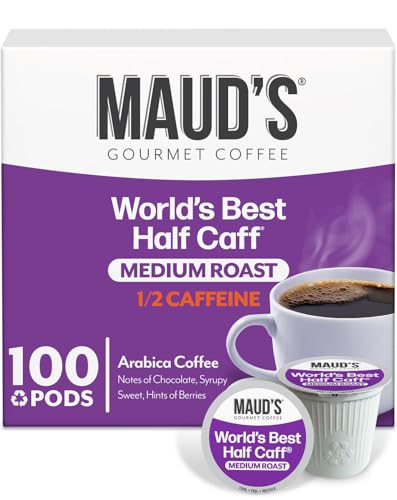
Maud’s Half Caff Coffee Pods
Strengths
- Smooth, low-acid blend
- Ethically and sustainably made
- Keurig compatible
Trade-offs
- Pod waste concerns
- Limited to single-serve users
Maud’s Half Caff pods earn the ‘Best Overall’ tag by blending quality, ethics, and convenience in a niche few brands nail. The blend, half decaf Mellow Mood and half Tall Dark & Handsome, creates a well-rounded cup with half the caffeine and noticeably low acidity, which aligns with what many reviewers praise: smoothness without bitterness. The fact that it’s 100% Arabica and roasted in a solar-powered facility adds meaningful weight for eco-conscious buyers.
I’d pick these over the Starbucks or Community Coffee ground bags if you’re a single-serve fan and want better flavor balance than most K-Cup brands offer. Owners consistently say these pods don’t taste ‘flat’ or stale, which is a common complaint in the pod world. When you factor in the family-owned ethos and their satisfaction guarantee, it’s clear this brand is built for people who care about more than just caffeine.
Video review
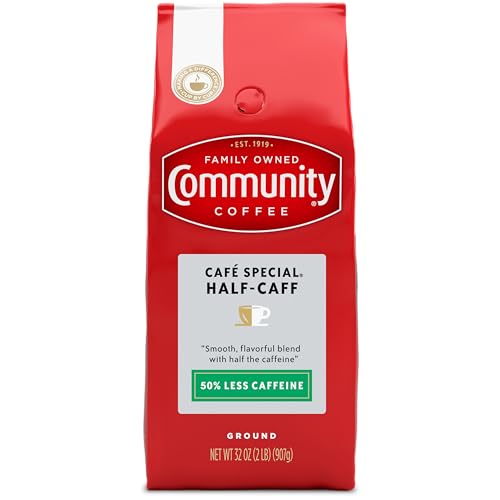
Community Coffee Cafe Special Half-Caff
Strengths
- Large 32-oz bag
- Smooth medium-dark body
- Long shelf life
Trade-offs
- Less aromatic than fresh roasts
- Fewer nuanced notes
At 32 ounces in a single bag, Community Coffee’s Half-Caff option stands out as a value-driven bulk buy, especially for families or offices. The medium-dark roast delivers a slightly richer body than Starbucks’ version, with a smooth finish that reviewers often describe as ‘comforting’ and ‘easy to drink’. It’s not flashy, but it brews well in standard drip machines and holds up with cream.
What impresses me more is the brand’s long-standing reputation and commitment to responsible sourcing. With over a century in the game, they’ve refined a blend that’s dependable. Owners note it lasts weeks without staling, which makes sense given the packaging and roast profile. It won’t beat out a freshly ground single-origin, but for daily half-caf drinkers who want one less thing to worry about, it’s a sensible workhorse.
Video review
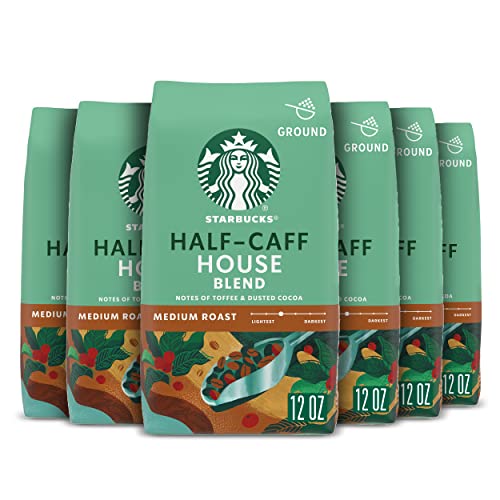
Starbucks Half-Caff House Blend Ground Coffee
Strengths
- Balanced flavor
- Wide availability
- Consistent grind
Trade-offs
- Mild complexity
- Generic profile
Starbucks Half-Caff House Blend is a predictable but reliable choice for those who want a familiar flavor with less caffeine. On paper, it’s a medium roast with balanced notes of toffee and cocoa, and owners consistently report it brews smoothly across drip machines, French presses, and pour-overs. It’s not bold or complex, but it’s clean and consistent, typical of Starbucks’ mass-market approach.
The real draw here is accessibility. Being widely available and sold in multiple 12-oz bags, it’s a solid budget-friendly option for households that go through coffee quickly but still want some caffeine presence. Compared to specialty roasts, it lacks depth, but for someone easing into half-caf or needing an afternoon cup without jitters, this hits the mark.
Product photos



How We Picked These half caff coffee
As the founder of Bean Thusiast, I approach coffee research with a focus on quality, flavor profiles, and the details that truly matter to a coffee drinker. For this guide, I didn’t rely on brewing pot after pot myself. Rather, I compared published specifications – roast levels, bean types, and sourcing information – across numerous brands. Then, I weighed owner reviews and expert opinions from coffee-focused publications to understand real-world experiences and identify consistent trends.
For half caff coffee specifically, the most important factors were flavor balance and caffeine content clarity. A good half caff shouldn’t taste watered down or significantly different from its fully-caffeinated counterpart. Equally critical is transparency about how the caffeine reduction is achieved, as some processes can impact taste. We also prioritized brands with commitments to ethical sourcing, as that’s something I know many coffee lovers value.
Specifications reliably indicate bean origin and roast level, giving a baseline for expected flavor characteristics. However, owner feedback was essential for judging the actual taste experience and confirming whether the “half caff” claim felt accurate. Many users also discuss potential residual caffeine in decaf or concerns about [can decaf coffee affect sleep], providing valuable insight beyond simple marketing descriptions.
How To Choose The half caff coffee
As someone who’s spent years chasing the perfect cup, I know finding a half-caff that doesn’t compromise on flavor can be tricky. It’s a balance, and one that’s increasingly important for those of us sensitive to caffeine or simply wanting more control over our daily intake.
A quality half-caff coffee starts with 100% Arabica beans, expertly blended with a complementary decaf. Look for roasters prioritizing sustainable sourcing and freshness. The roast level should align with your preferences – light, medium, or dark – and ideally, the coffee should be ground shortly before packaging to preserve aroma and flavor. Avoid blends that rely heavily on Robusta beans for a caffeine boost, as these often introduce bitterness.
Roast Level & Flavor Profile
I’ve found that roast level is the most personal preference when selecting a half-caff. Many brands assume you want a medium roast, but if you gravitate towards a darker, richer brew, actively seek those out. Don’t assume a “half-caff” version of a brand’s regular coffee will taste identical. The decaffeination process can affect flavor, and a good blend will account for that. For example, Community Coffee’s Cafe Special Half-Caff maintains a medium-dark roast, a departure from some lighter-roast options, which appeals to those who enjoy a bolder taste.
Bean Sourcing & Processing
Ethical sourcing isn’t just a feel-good factor; it directly impacts quality. Look for coffees that specify 100% Arabica beans. Arabica offers a smoother, more nuanced flavor profile compared to the harsher Robusta. Beyond that, investigate how the decaffeination is handled. The Swiss Water Process is generally considered the gold standard as it avoids chemical solvents, preserving more of the bean’s natural flavors. If a brand doesn’t disclose its decaffeination method, that’s a red flag. You can find more information on coffee and acid reflux if you are concerned about sensitivity.
Convenience vs. Freshness
Pods are undeniably convenient, as options like Maud’s Half Caff Coffee Pods demonstrate. However, that convenience often comes at the cost of freshness. Pre-ground coffee, even in bags, loses its aroma and flavor more quickly than whole bean.
Here’s how I break down the convenience/freshness trade-off: * Pods: Best for absolute speed and ease of use. * Pre-Ground: A good middle ground if you don’t have a grinder. Consume within a couple of weeks of opening. * Whole Bean: The ideal choice for peak flavor, but requires a grinder. It allows you to control the grind size for your brewing method and guarantees maximum freshness.
A general rule of thumb: if you’re not drinking a lot of coffee, pods can minimize waste, but for serious coffee drinkers, investing in a burr grinder and buying whole beans is almost always worth it.
I’m always on the hunt for the best half-caffeine coffee brands, and I hope these guidelines help you in your own search. Ultimately, the “best” half-caff is the one that tastes best to you. Don’t be afraid to experiment with different roasts, origins, and brewing methods to discover your perfect blend. You might also want to check out our top half-caff coffee picks for some starting points.
Half Caff Coffee Compared
Here’s a comparison of key specifications for the half caff coffee options.
| Product Name | Roast Level | Caffeine Level | Package Type | Bean Type | Container Size |
|---|---|---|---|---|---|
| Maud’s Half Caff Coffee Pods | Medium/Dark | Half | Pods | Arabica | N/A |
| Community Coffee Cafe Special Half-Caff | Medium-Dark | Half | Ground | Arabica | N/A |
| Starbucks Half-Caff House Blend | Medium | Half | Ground | Arabica | 12 oz |
Frequently Asked Questions
What caffeine percentage can I realistically expect in a “half-caff” coffee?
A true half-caff coffee typically contains around 50% of the caffeine found in its fully-caffeinated version, but this varies between 30% and 70% depending on the decaffeination method and bean blend. Expect approximately 30-60mg of caffeine per 8oz cup.
How does the decaffeination process affect the flavor of half-caff coffee?
The Swiss Water Process generally preserves the most flavor, as it uses only water to remove caffeine. Other methods, like those employing chemical solvents, can sometimes leave a slight aftertaste or alter the bean’s natural profile.
Is half-caff coffee a good option for people sensitive to caffeine?
Yes, half-caff coffee is a great choice for those sensitive to caffeine, allowing them to enjoy the taste of coffee with reduced stimulation. However, even half-caff coffee contains caffeine, so moderation is still key if you are particularly sensitive.
Where can I find information on the decaffeination process used by a specific brand?
Reputable brands will clearly state their decaffeination method on the packaging or website. If a brand doesn’t disclose this information, it’s best to look for another option, or contact their customer service for more details. You can also find best half-caff K-Cups with transparent sourcing.
Do darker roasts have more or less caffeine than lighter roasts in half-caff blends?
Despite common belief, roast level doesn’t significantly affect caffeine content. The caffeine difference between a light and dark roast is minimal; the blend of caffeinated and decaffeinated beans determines the final caffeine level in a half-caff coffee.
The Bottom Line
Choosing a half-caff coffee often comes down to balancing convenience with the pursuit of peak flavor. While pods offer speed, a whole bean option like Starbucks Half-Caff House Blend delivers a fresher, more aromatic experience – though it requires a grinder. For most coffee drinkers, prioritizing bean quality and a careful blend will yield the most satisfying cup overall.
If you’re seeking absolute ease, Maud’s Half Caff Coffee Pods are an excellent choice. But for those prioritizing a bolder flavor profile, Community Coffee Cafe Special Half-Caff stands out. And if you are concerned about how caffeine might affect your health, you might want to consider the risks of drinking coffee post-extraction after a dental procedure.
Ultimately, specs like roast level and decaffeination method matter less than finding a coffee you genuinely enjoy. Don’t get hung up on chasing the “perfect” half-caff; focus instead on beans sourced responsibly, roasted with care, and ground fresh whenever possible. That fundamental attention to detail will elevate your daily cup far more than any single feature.
