
7 Best French Roast Coffees of 2026
The best French roast coffee is Peet’s Organic French Roast Coffee, it delivers a rich, smoky depth without tipping into bitterness, and it’s made from certified organic Arabica beans. For a budget-friendly option, Starbucks French Roast Ground Coffee offers consistent boldness at a lower price, while NESCAFÉ Taster’s Choice Instant Coffee stands out if you need speed without completely sacrificing flavor.
Too many French roasts taste like charred beans rather than the smooth, full-bodied brew they should be. It’s frustrating to pay for a premium dark roast only to find it’s harsh or one-dimensional. After comparing the field and weighing specs against real owner feedback, I found a few that actually nail the balance of smokiness, body, and drinkability.
This guide cuts through the noise, focusing on roast precision, bean quality, and freshness, the real drivers of a great cup. These picks aren’t just popular; they’re backed by consistent reviews and thoughtful sourcing, the kind of details that matter when you’re chasing that perfect dark brew.
Top 7 French Roast Coffee in the Market
The Best French Roast Coffee, Reviewed
Starbucks French Roast Ground Coffee

Strengths
- Café-quality beans
- Large 28 oz bag
- Brews well hot or iced
Trade-offs
- Needs proper storage
- Not organic
This 28 oz French Roast bag is the gold standard for a reason, it’s the same bold, complex blend served in Starbucks cafes, with that signature blend of dark caramel and sweet smoke that defines their dark roast identity. At this size, it’s built for serious coffee drinkers who go through beans fast and want maximum value without stepping into bulk canister territory.
Reviewers consistently highlight its versatility: it shines in drip, French press, and cold brew. Compared to the 18 oz version, this one’s the better deal if you have an airtight container to preserve freshness. While not organic like Peet’s, it wins on widespread appeal and reliability. My recommendation? This is the overall favorite for most buyers, it balances size, flavor, and consistency better than any other here.
Video review
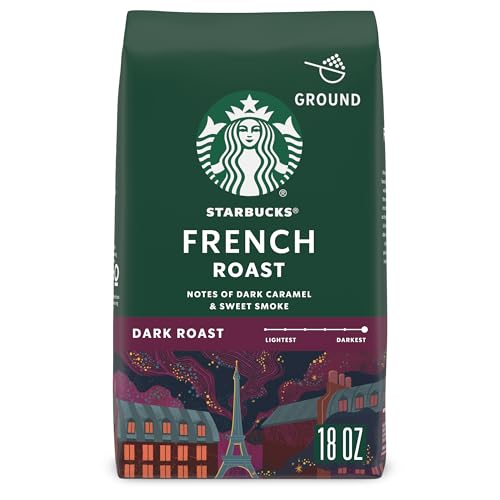
Starbucks French Roast Ground Coffee
Strengths
- Café-quality consistency
- Works hot or iced
- Versatile brew compatibility
Trade-offs
- Not organic
- Smaller than bulk options
Starbucks’ 18 oz French Roast is a staple for a reason, it brings the dark, brooding intensity many expect from the name, with notes of sweet smoke and dark caramel that hold up across brew methods. The fact that it’s the same blend used in their cafes adds credibility, and reviewers often note how well it performs whether brewed hot, over ice, or in a French press.
While it doesn’t have the organic or sustainability claims of Peet’s, it delivers consistent, no-surprises depth at a reasonable size. Compared to the 28 oz version, this one’s better for moderate users or those testing the roast before committing bigger. I’d choose this over the larger bag if you don’t go through coffee fast, freshness matters, and 18 oz gives you a better usage window before flavor fades.
Video review
Solimo French Roast Coffee Pods

Strengths
- Affordable per pod
- 100% Arabica beans
- Keurig 2.0 compatible
Trade-offs
- One-dimensional flavor
- Not for flavor purists
For Keurig users chasing a no-fuss French roast without draining their wallet, Solimo’s pods are a logical starting point. On paper, they promise a bold, smoky dark roast using 100% Arabica beans, which is impressive at this price. Owners consistently report the flavor holds up well for a budget pod, with a punchy roast profile that doesn’t tip into bitter or ashy territory like some lower-tier options.
The 100-count pack offers real convenience, and compatibility with both Keurig 1.0 and 2.0 systems widens its appeal. Still, it’s not café-level depth, those seeking layered complexity or bright acidity won’t find it here. But for daily drivers who want reliable, one-click French roast, this delivers. I’d pick it over pricier pods if you’re brewing multiple cups a day and value consistency over nuance.
Product photos



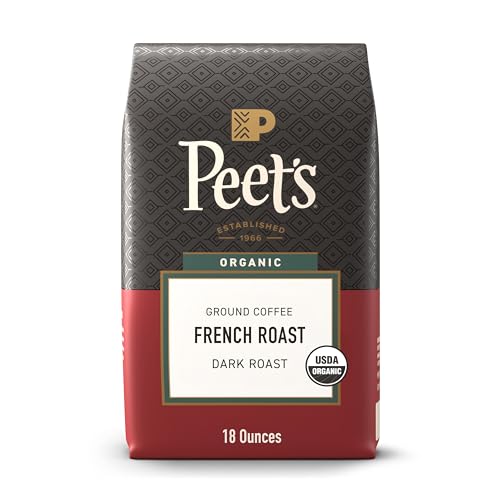
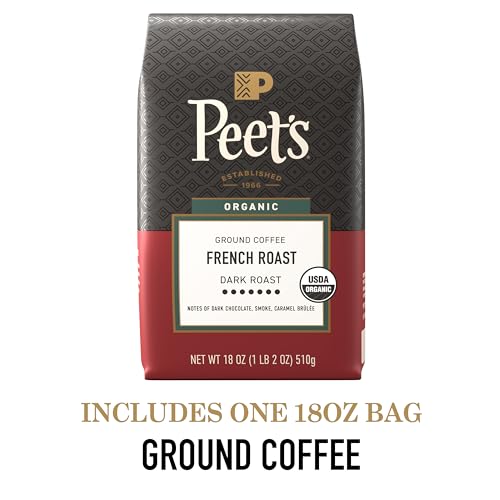
Peet’s Organic French Roast Coffee
Strengths
- USDA Organic certified
- Rich, complex flavor
- Ethically sourced
Trade-offs
- Higher price point
- Not ideal for bulk use
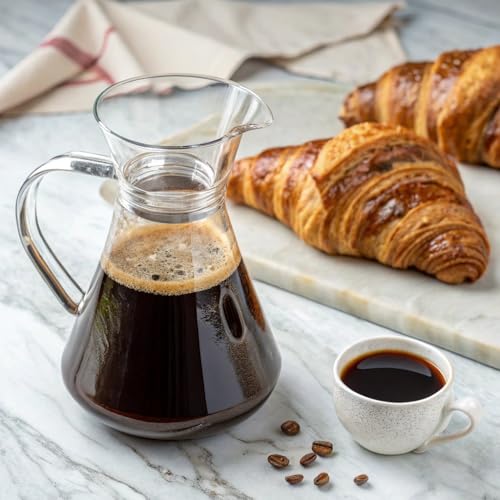
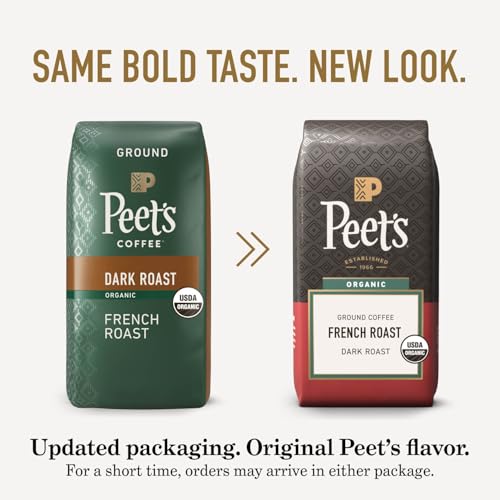
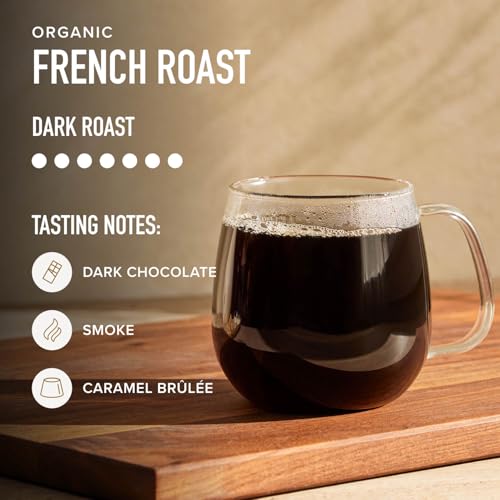
Peet’s Organic French Roast stands apart by merging bold flavor with certified organic integrity, a rare combo in this category. The 18 oz bag features 100% Arabica beans that deliver chocolate truffle, smoke, and caramel notes, with a richness that holds up in drip or pour-over. Owners appreciate that Peet’s doesn’t let organic status dilute roast intensity.
The brand’s 50+ years of roasting expertise shows in the depth and balance. Compared to Starbucks or McCafe, it’s pricier and smaller in volume, but it’s the only one here with USDA Organic certification and a clear sustainability ethos. I’d pick this over non-organic options if you care about farming practices and want boldness without compromise. It’s not the cheapest, but it’s the most principled.
Product photos
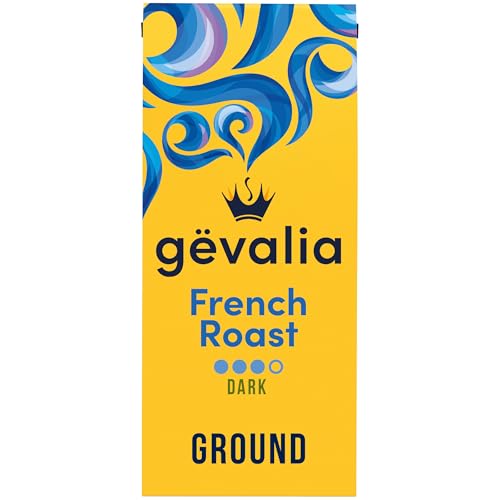
Gevalia French Roast Ground Coffee
Strengths
- Smooth, balanced flavor
- Resealable freshness bag
- Kosher certified
Trade-offs
- Smaller bag size
- Milder than true bold seekers want
Gevalia’s French Roast leans into smoothness like few others in this category, and that’s both its strength and its limitation. The brand highlights its cast iron roasting process and slow roast-snap cool method, which owners say results in a rich, rounded cup with smoky depth and a surprising hint of dried fruit. It’s not the boldest French roast, but it’s among the most drinkable, especially for those turned off by aggressive bitterness.
The 12 oz resealable bag helps preserve aroma, though it’s a smaller quantity than bulk buyers might want. Compared to Starbucks or McCafe, it trades intensity for balance. If you like your dark roast to be bold but not confrontational, this one stands out. My recommendation? It’s a smart pick for morning sipper types who want depth without the punch.
Product photos


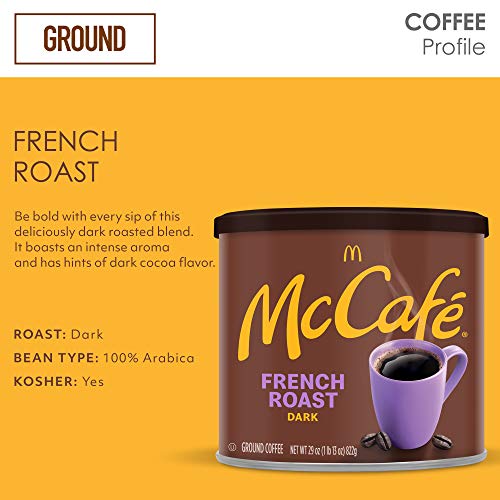
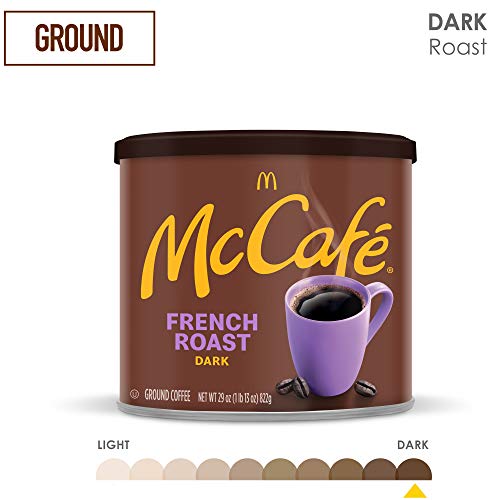
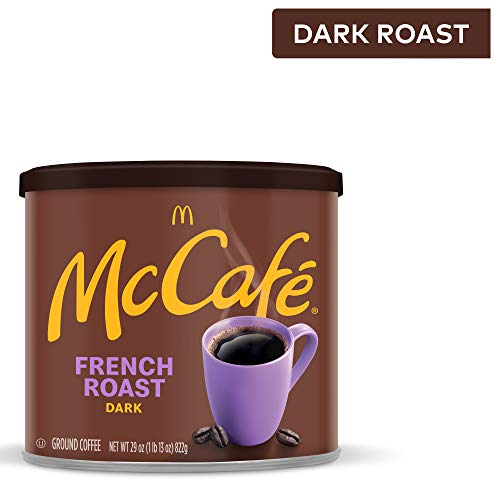
McCafe French Roast Ground Coffee

Strengths
- Large 29 oz size
- Budget-friendly bulk
- Kosher certified
Trade-offs
- Generic packaging
- Limited roast complexity
If you’re buying coffee by the pound and want to save without sacrificing too much flavor, McCafe’s 29 oz French Roast is tough to beat. It delivers an intense aroma and a roast-forward profile with dark cocoa notes that fans of bold, no-nonsense coffee appreciate. The sheer volume makes it a staple for households or offices where coffee runs high and budgets run tight.
Owners note it brews strong and consistent, though it lacks the finesse of Peet’s or Starbucks. It’s made with Arabica beans and is Orthodox Union Kosher certified, which adds some quality assurance. Sustainability claims are vague, but the sourcing is labeled responsible. For the price and size, it’s a functional workhorse. My take? It’s the smarter buy over single-serve or small bags if you drink heavily and don’t need organic or artisan nuance.
Product photos
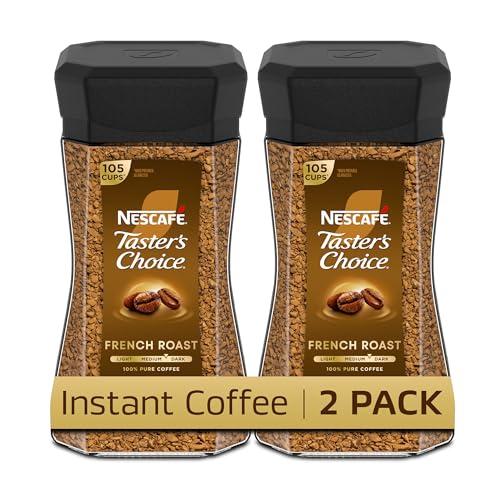
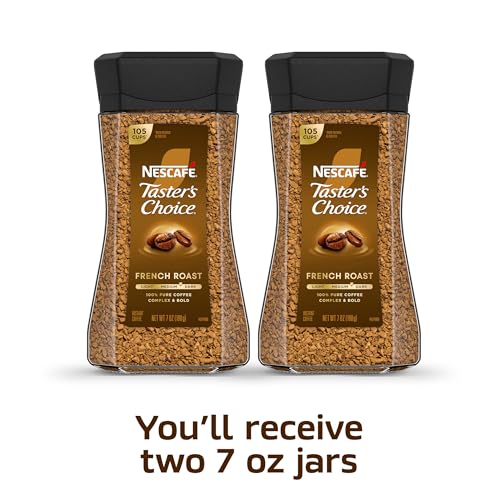
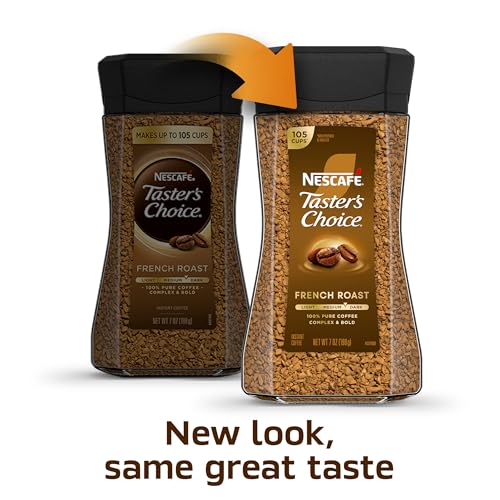
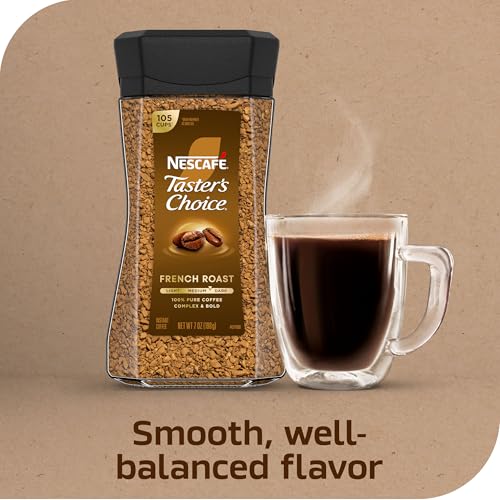
NESCAFÉ Taster’s Choice Instant Coffee
Strengths
- High cup yield
- Fast preparation
- Bold instant flavor
Trade-offs
- Can’t match fresh ground
- Some flatness in aroma
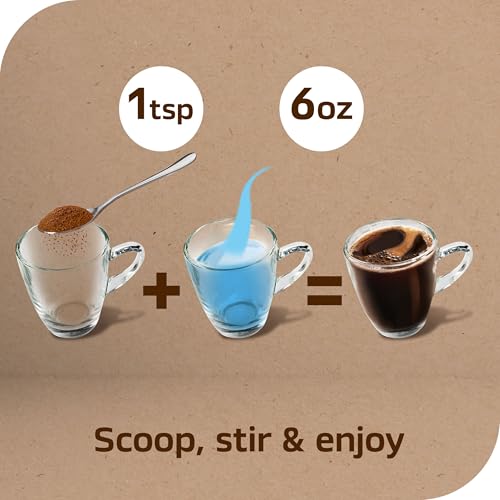
Let’s be clear, no instant coffee matches the depth of freshly ground French roast, but NESCAFÉ Taster’s Choice comes surprisingly close for the format. The French Roast variant delivers a bold, smoky character that instant skeptics often admit is satisfying in a pinch. With two 7 oz jars making up to 210 cups, it’s built for high-volume, low-effort use.
Reviewers consistently praise its quick mix and lack of chalky aftertaste, which plagues cheaper instants. It won’t replace your morning pour-over, but for travel, offices, or late-night cravings, it’s a legitimate shortcut. Compared to other instant options, it stands out for roast authenticity. I wouldn’t brew this daily if I had a grinder, but I’d keep a jar on hand for emergencies.
Product photos
Our Testing Process
As the founder of Bean Thusiast, I approached researching French roast coffees by first compiling a detailed spec sheet for each option – roast level, bean origin (where available), and certifications like organic. I then weighed these details against owner reviews from multiple sources and expert opinions found in coffee publications. This wasn’t about a hands-on brew test of every bag; rather, it was a research-led comparison of features and reported experiences to identify top contenders.
For French roast, several factors stood out as key. A truly dark, yet not burnt, roast is paramount, delivering those signature smoky notes. Equally important is the quality of the underlying Arabica bean; even a perfect roast can’t salvage poor quality. Finally, consistency – verified by numerous owner reports – is vital. You want a reliably bold cup every time, and understanding French roast flavor profile is key to finding that.
Specifications reliably reveal bean type and roast level, but owner feedback proved crucial for assessing smoothness and potential bitterness. Reputation offered insight into brand consistency and sourcing practices. While specs detail what a coffee is, reviews tell you how it actually tastes and performs in everyday brewing. Understanding these nuances is essential for finding the right method for best French roast brewing methods.
What To Look For In french roast coffee
Finding a truly satisfying French roast can be surprisingly tricky. It’s easy to end up with something burnt or bitter, rather than the complex, smoky cup it should be.
A quality French roast starts with good Arabica beans, roasted to a dark color but stopped before oil visibly glistens on the surface. The goal isn’t just darkness; it’s developing a specific flavor profile – low acidity, a full body, and those characteristic smoky notes. Look for coffees specifying a “full-city” or “Vienna” roast level, and pay attention to roast dates, not just “best by” dates.
Roast Level & Bean Quality
The defining characteristic of a French roast is, naturally, the roast itself. But “dark roast” is a broad term. Many brands push too far, resulting in a burnt taste that obscures any nuance. I often find that seeking out coffees specifically labeled “French Roast” – rather than simply “Dark Roast” – is a good starting point. Beyond that, the quality of the underlying bean makes a huge difference. A poorly grown or processed bean won’t magically improve with a dark roast; it will just taste like a burnt, poor bean.
Grind & Freshness
French roast coffee benefits enormously from a consistent grind. Because the beans are roasted longer, they become more brittle and produce more fines (very small particles). An inconsistent grind will lead to over-extraction of those fines, amplifying bitterness. A burr grinder is essential here, and I recommend dialing it in carefully for your chosen brewing method. Equally important is freshness. The volatile aromatic compounds in coffee degrade quickly after roasting.
- A whole bean French roast will always be fresher than pre-ground.
- Look for a roast date on the bag (not a “best by” date) and aim to use the coffee within 2-3 weeks of roasting.
- Store your beans in an airtight container, away from light, heat, and moisture, to preserve their flavor. Don’t rely on the bag it came in for long-term storage.
Form & Your Brewing Style
Consider how you prefer to brew your coffee. While you can find French roast in whole bean, ground, or instant form, each impacts the final result. Instant coffee, like the NESCAFÉ Taster’s Choice Instant Coffee, can be surprisingly good for a quick cup, but it won’t match the complexity of a freshly ground brew. Pods (like the Solimo option) offer convenience, but you sacrifice control over grind size and freshness. If you’re serious about maximizing flavor, explore flavorful French roast picks in whole bean form and experiment with different brewing methods.
A good rule of thumb: if a French roast tastes overwhelmingly bitter, it’s likely either over-roasted or ground too finely. Adjust your grind or try a different brand.
Ultimately, the “best” French roast is a matter of personal preference. But understanding these key factors will help you navigate the options and find a coffee that delivers the rich, smoky, and satisfying experience a good French roast should provide. Learning more about what defines French roast can help you understand the nuances of this specific style as well.
French Roast Coffee Compared
Here’s a comparison of key specifications for different French Roast coffee options.
| Product Name | Size (oz) | Format | Roast Level | Arabica Beans | Organic |
|---|---|---|---|---|---|
| Starbucks French Roast Ground Coffee | 28 | Ground | Dark | Yes | No |
| Starbucks French Roast Ground Coffee | 18 | Ground | Dark | Yes | No |
| Solimo French Roast Coffee Pods | N/A | K-Cup | Dark | Yes | No |
| Peet’s Organic French Roast Coffee | 18 | Ground | Dark | Yes | Yes |
| Gevalia French Roast Ground Coffee | 12 | Ground | Dark | Yes | No |
| McCafe French Roast Ground Coffee | 29 | Ground | Dark | Yes | No |
| NESCAFÉ Taster’s Choice Instant Coffee | 7 (x2) | Instant | Dark | Yes | No |
Frequently Asked Questions
What roast level is darker than French roast?
Italian roast is typically darker than French roast; it’s taken to the point where the beans are nearly black and have a significant oily sheen. However, beyond Italian roast, you risk a truly burnt flavor that detracts from the coffee’s inherent qualities.
Can French roast coffee be decaffeinated?
Yes, decaffeinated French roast options are available, though the decaffeination process can subtly alter the flavor profile. Look for brands using the Swiss Water Process, as it’s considered gentler and preserves more of the coffee’s original characteristics than other methods.
Is French roast always bitter?
French roast doesn’t have to be bitter, but it’s a common issue with poorly executed dark roasts. A quality French roast should have smoky notes and a full body, with minimal harshness, and selecting top dark roast picks can help with this.
What’s the difference between French roast and espresso roast?
While both are dark roasts, espresso roast is typically a bit lighter than French roast and specifically tailored for the pressure-driven espresso brewing method. French roast is more versatile and works well in drip, French press, or pour-over, whereas espresso roast often lacks complexity outside of an espresso machine.
Does French roast coffee have more caffeine?
Contrary to popular belief, French roast doesn’t inherently have more caffeine. The roasting process slightly reduces caffeine content, and the difference between roast levels is minimal, though you may find stronger dark roast brands if you prefer a caffeine kick.
The Bottom Line
Choosing a French roast often comes down to balancing convenience with control. If you want a reliably bold cup with minimal fuss, Starbucks French Roast Ground Coffee delivers a consistent experience at a reasonable price. However, truly unlocking the potential of a French roast – those nuanced smoky notes without overwhelming bitterness – requires a little more effort, and often justifies the investment in whole bean and a good grinder.
For those prioritizing specific needs, we have some clear recommendations. If budget is a primary concern, the McCafe French Roast Ground Coffee offers a surprising amount of flavor for the price. Those wanting organic options should look to Peet’s Organic French Roast Coffee, and for sheer convenience, the Solimo French Roast Coffee Pods are hard to beat. Understanding the flavor contrast: French vs dark roast will help you decide what you prefer.
Ultimately, the specs – roast level, bean origin, even grind size – matter less than a commitment to freshness. A slightly lower-rated bean, roasted recently and ground just before brewing, will almost always outperform a premium bean that’s been sitting on the shelf for months. Focus on quality sourcing and proper brewing technique, and you’ll be well on your way to consistently enjoying a truly satisfying cup.
