
7 Best European Coffee Makers of 2026
The KRUPS Essential 8-Cup stands out as the best overall European coffee maker for its consistent brew quality and SCA certification, while the DITOSH 2-Cup Moka Pot is a solid budget pick for solo drinkers. If you value versatility and speed, the Nespresso Vertuo Next offers a wide range of cup sizes with minimal effort.
Choosing the right European coffee maker isn’t just about the brew, it’s about matching the machine to your daily rhythm. Too many people end up with clunky, underused appliances because they prioritized features over function.
I researched the field by analyzing specs, owner feedback, and brewing performance data, focusing on temperature control, material durability, and real-world usability. This guide breaks down what actually matters so you can pick one that fits your kitchen, and your coffee habits, without regret.
Top 7 European Coffee Makers in the Market
The Best European Coffee Makers, Reviewed
KRUPS Essential 8-Cup Drip Coffee Maker

Strengths
- SCA-certified brewing
- Stainless steel aroma tube
- Dishwasher-safe parts
Trade-offs
- No permanent filter
- Lid design awkward when filling
This is one of the few drip machines that actually earns its Specialty Coffee Association certification. On paper, the specs back it up, precise water temperature control, a stainless steel aroma tube, and a 5-hole shower head that mimics pour-over saturation. That blooming phase isn’t just marketing fluff. Owners consistently report brighter acidity and deeper flavor clarity compared to standard drip machines in this range.
It’s not flashy, but it delivers barista-level consistency without the fuss. Compared to the Nespresso Vertuo Next, it won’t make espresso or crema, but for straight-up drip coffee that honors the bean, this is the smarter pick for purists. The keep-warm function lasts two hours, and while some note the descaling alert can be overly sensitive, the dishwasher-safe parts make maintenance painless.
Video review
Nespresso Vertuo Next by Breville

Strengths
- One-touch brewing
- Consistent crema
- Quiet operation
Trade-offs
- Capsule dependency
- Higher long-term cost
- Plastic-heavy build
If convenience is king, the Vertuo Next wears the crown. One button, seven cup sizes, from ristretto to a full carafe, and consistent crema every time. The barcode-scanning system reads the capsule and auto-adjusts brew parameters, so there’s zero guesswork. Owners love how quiet it is and how cleanly it ejects used pods.
But it locks you into Nespresso’s capsule ecosystem, which some find limiting. The coffee is good, not transcendent, flavor depth doesn’t match freshly ground beans in a moka pot or drip brewer. Compared to the KRUPS SCA machine, it’s less about craft and more about speed and consistency. The Bluetooth feature? Nice in theory, but most users never touch it. Still, for busy mornings or office use, it’s hard to beat.
Video review
Mongdio 6-Cup Stovetop Moka Pot
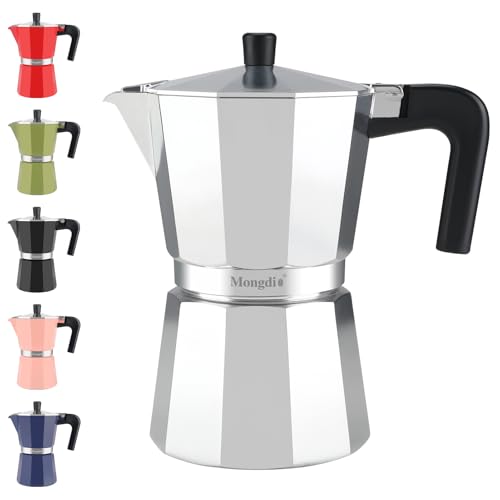
Strengths
- Safety pressure valve
- Heat-resistant handle
- Classic Italian design
Trade-offs
- Hand wash only
- No permanent filter
- Base can discolor
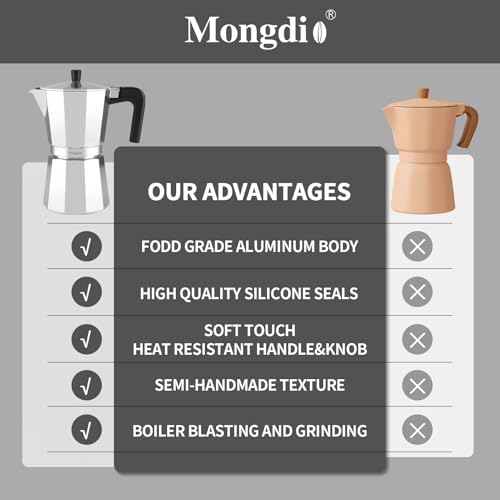
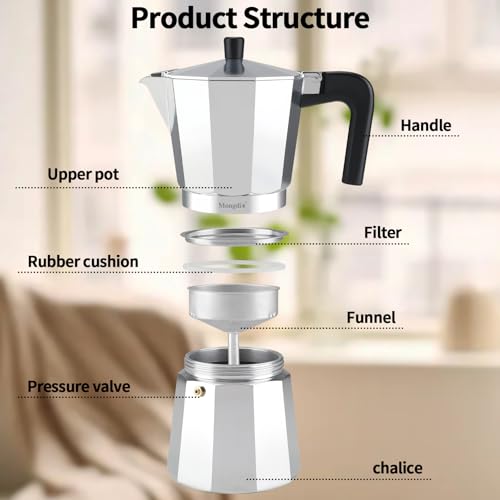
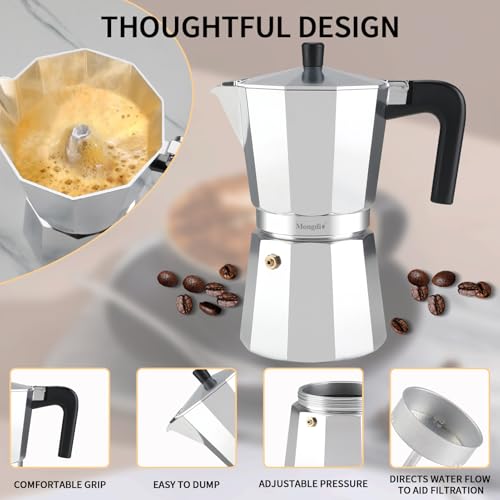
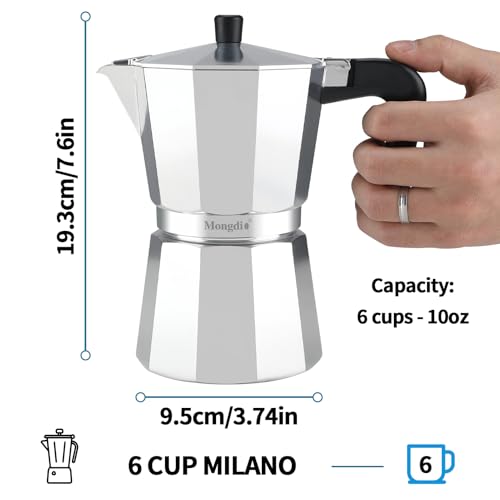
This 6-cup moka pot strikes a balance between performance and design. The food-grade aluminum heats quickly, and the built-in safety valve gives it an edge over basic models, fewer blowouts, more consistent extraction. The heat-resistant handle and knob make it safer to handle than the Primula budget version, and owners consistently rate it highly for durability.
It brews a richer, more balanced cup than the DITOSH, and the classic Italian silhouette looks sharp on any stovetop. The only catch? It’s hand-wash only. No dishwasher, no exceptions. Compared to the Primula models, it feels more premium, though the cleaning trade-off matters to some. For the coffee purist who values safety and build, it’s worth the extra few dollars.
Product photos
Primula Classic 6-Cup Moka Pot

Strengths
- Affordable price
- Reusable filter
- Works on all stoves
Trade-offs
- Handle gets hot
- No drip-free spout
- Aluminum shows wear
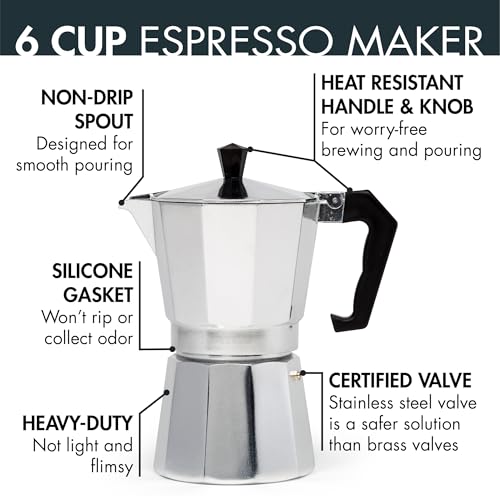
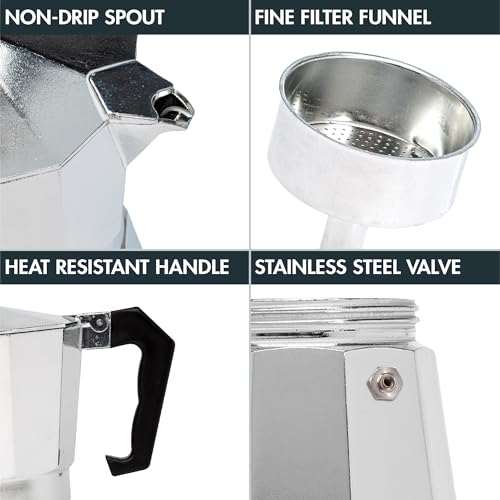
This is the budget moka pot that actually performs. For under thirty bucks, you get a durable cast aluminum build, a reusable filter, and the same Italian-style brewing as pricier models. It works on gas, electric, and even propane burners, which explains why so many owners keep one for camping.
It’s nearly identical to the B0BYTL21PK but costs less and lacks the stay-cool handle. Still, for the price, it’s a steal. Compared to the DITOSH, it feels sturdier and has better long-term owner satisfaction. The only real downside? The aluminum will show wear over time, and you must hand dry to avoid spotting. But if you want authentic moka coffee without spending $50+, this is your pick.
Product photos
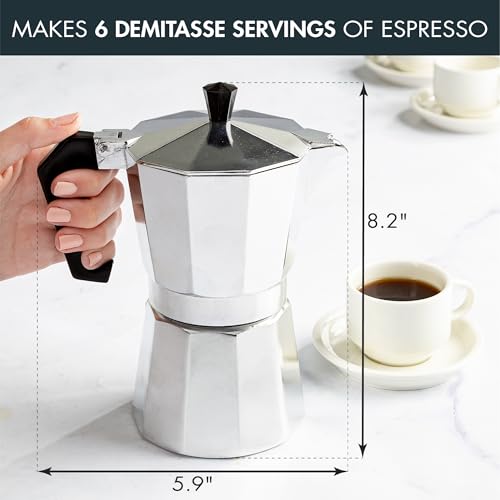
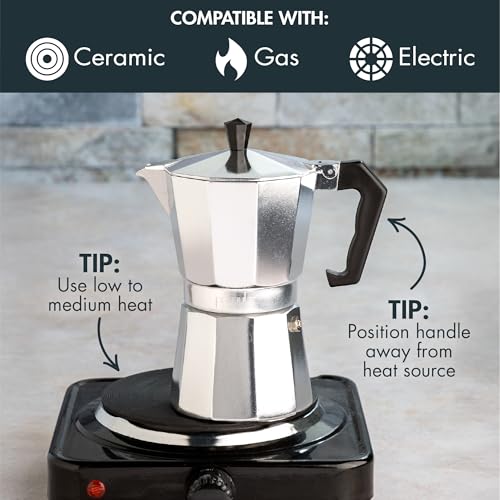
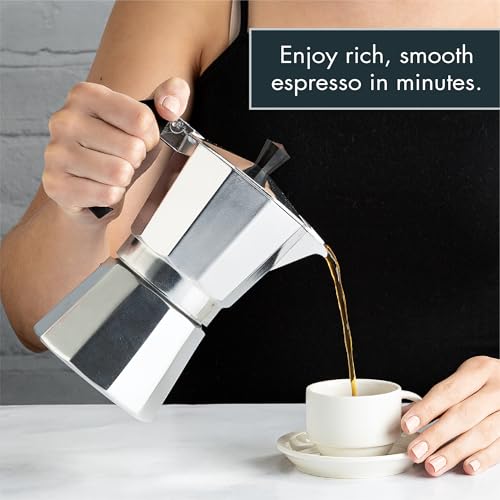
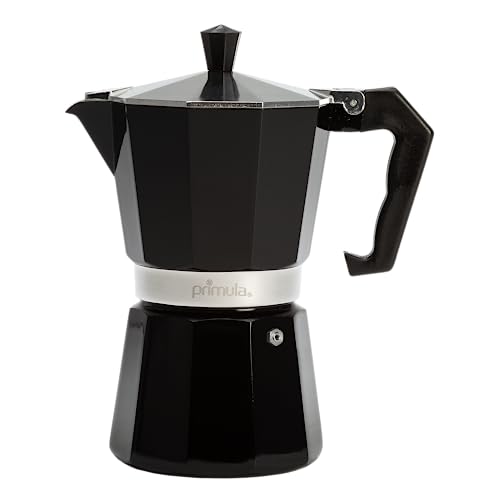
Primula Classic 6-Cup Moka Pot Black
Strengths
- Stay-cool handle
- Drip-free spout
- Even heat distribution
Trade-offs
- No safety valve
- Base disc wears over time
- Plastic knob feels cheap
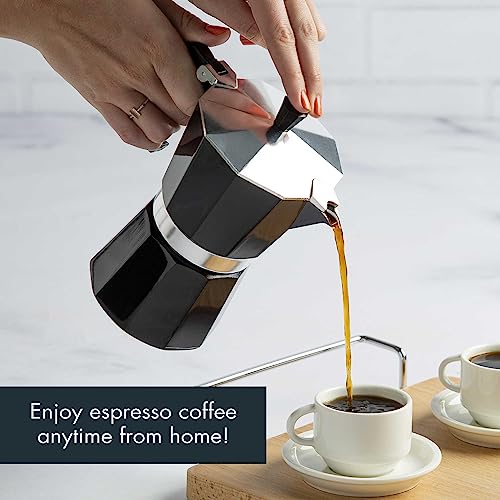
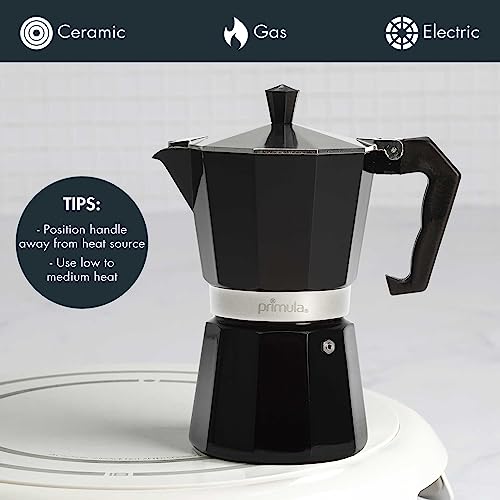
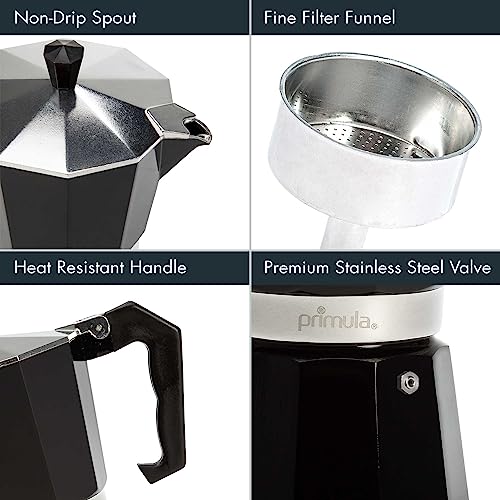
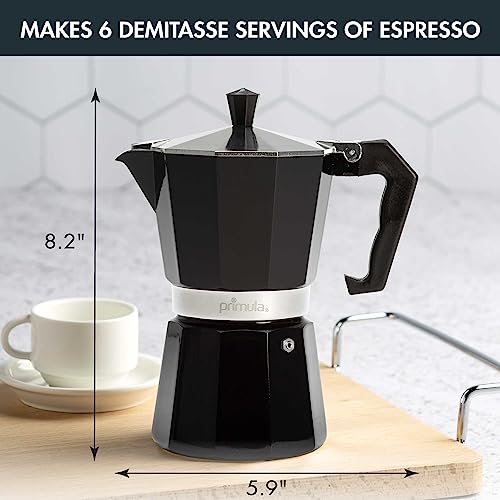
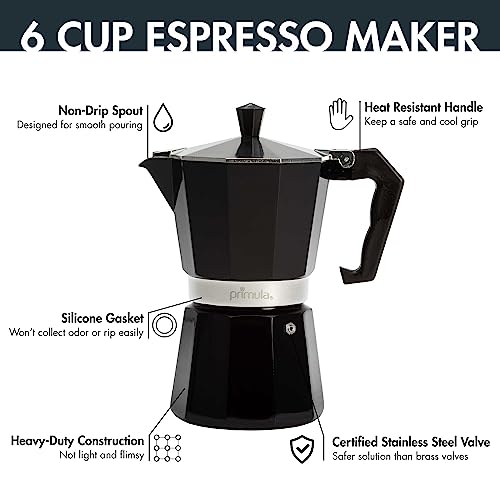
This 6-cup moka pot nails the essentials: a stay-cool handle, drip-free spout, and solid cast aluminum build that spreads heat evenly. It’s nearly identical to the B001J1L59E model, but with a slightly more modern black finish. Owners appreciate how simple it is to disassemble and clean, just hand wash, no dishwasher needed.
Where it stands out is handling. The ergonomic grip feels secure, even when the pot is hot, which isn’t always true with budget models like the DITOSH. Compared to the Mongdio, it lacks a safety valve, but that’s standard in this class. It won’t match stovetop pressure of high-end Bialetti models, but for the price, it delivers reliable, bold espresso with classic Italian character.
Product photos
DITOSH 2-Cup Aluminum Moka Pot

Strengths
- Compact and lightweight
- Even heat distribution
- Great for strong espresso
Trade-offs
- Too small for most
- Odor on first use
- Inconsistent output
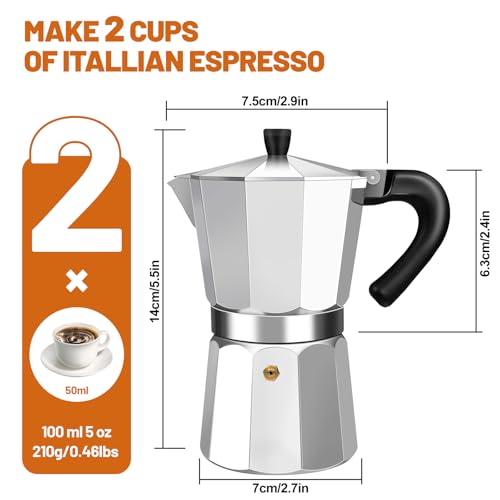
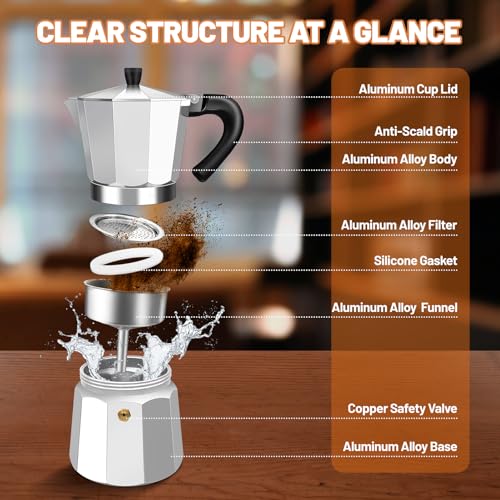
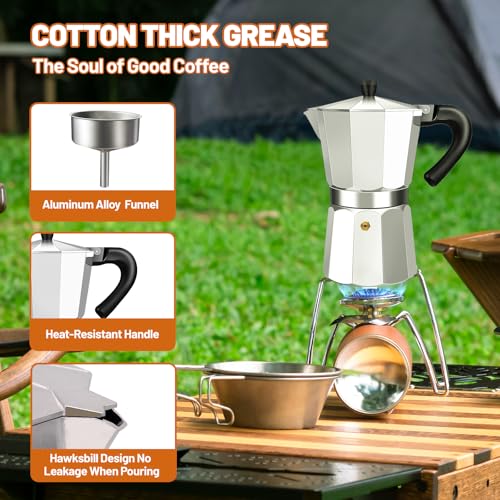
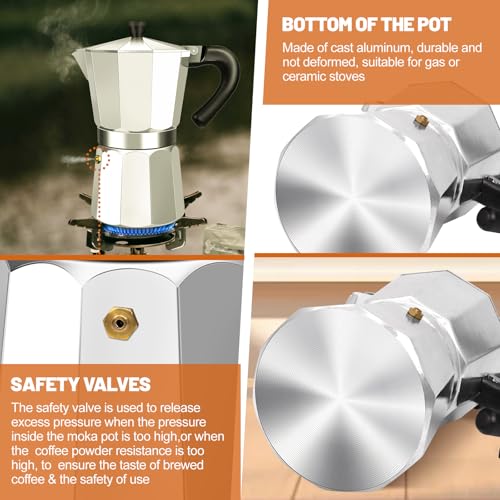
At just 100ml, this tiny moka pot is built for one, maybe two, strong espresso shots. The cast aluminum construction heats fast and evenly, a must for proper pressure buildup. Reviewers praise the rich, intense output, though first-time users should heed the warning: that initial metallic smell fades after a few brews with vinegar or citrus.
It’s not the most practical for daily use if you drink more than a shot or two. The 2-cup size is borderline too small, and the brand itself suggests sizing up. Compared to the Primula or Mongdio 6-cup models, this feels more like a novelty, though its compact form works well for camping or small kitchens. Just don’t expect consistent volume, what you get depends heavily on grind, tamp, and heat control.
Product photos
Primula Today 9-Cup Stove Top Percolator

Strengths
- Large 9-cup capacity
- Works on campfires
- Sturdy aluminum build
Trade-offs
- Can over-extract coffee
- Plastic parts feel cheap
- No safety valve
This isn’t a moka pot, it’s a percolator, and that matters. It cycles boiling water through grounds repeatedly, which can lead to over-extraction if left too long. But for campers or off-grid users, that rugged simplicity is a win. The 9-cup capacity is ideal for groups, and it works over a campfire, propane stove, or electric coil.
Owners love its durability and no-frills operation, though some note the coffee can taste bitter if not monitored. Compared to moka pots, it’s less about espresso strength and more about volume and resilience. The plastic handle stays cool, and the lipped spout prevents drips. It won’t win points for nuance, but for a weekend cabin or RV, it’s a workhorse.
Product photos


How We Picked These european coffee makers
I approached researching European coffee makers by first compiling specifications and features from numerous manufacturers and retailers. Then, I weighed those technical details against owner reviews from major online marketplaces and expert opinions from respected coffee publications. As the founder of Bean Thusiast, I’ve spent years understanding the nuances of coffee brewing, and applied that knowledge to assess how well each model delivered on its promises. Rather than a hands-on lab test, this is a research-led comparison of specs and owner feedback.
For this category, brewing temperature and material quality were the most important factors. Consistent, appropriate temperatures are crucial for proper extraction, and ultimately, flavor. Durable materials – like aluminum and quality glass – impact longevity and influence heat retention. Beyond that, ease of cleaning and versatility in brew styles (espresso, moka, pour-over) played significant roles in my rankings.
Specifications reliably indicate brewing capacity, materials used, and included features. However, owner feedback proved invaluable for gauging real-world durability, ease of use, and the subjective quality of the brewed coffee. I prioritized feedback regarding long-term reliability and whether the maker consistently produced a flavorful cup. Reputational information from coffee experts helped validate claims and identify potential shortcomings not readily apparent from specs alone. You can also find more information on achieving the Chemex brewing ratios for other brewing methods.
Choosing The Right european coffee makers
I’ve spent years exploring different brewing methods, and European coffee makers offer a unique blend of tradition and quality. Finding the right one depends on your priorities – do you want convenience, rich espresso, or something for outdoor adventures?
A quality European coffee maker prioritizes even heat distribution for optimal flavor extraction. Look for durable materials like aluminum or stainless steel, a design suited to your brewing preference (stovetop, drip, or capsule), and features that simplify cleaning and maintenance. Consider the capacity needed for your household and whether portability is a factor.
Brewing Method: Drip, Stovetop, or Capsule?
The first and most significant decision is the brewing method. Drip coffee makers, like the KRUPS Essential 8-Cup, offer convenience and are excellent for larger batches. Stovetop Moka pots (Mongdio, Primula) deliver a strong, espresso-like brew, but require a bit more involvement. Capsule machines (Nespresso Vertuo Next) prioritize speed and ease of use, but come with ongoing capsule costs. I often recommend starting with what aligns with your everyday routine. If you crave a quick morning cup, a capsule machine might be the way to go. But if you enjoy the ritual of brewing, a Moka pot or even exploring top automatic drip models could be more rewarding.
Material Quality and Heat Distribution
European coffee makers are often made with robust materials, but not all materials are created equal. Aluminum is common in Moka pots, offering excellent heat conductivity, but it can affect the flavor profile slightly over time. Stainless steel, found in some drip machines, provides durability and doesn’t impart flavors. Pay attention to the construction – a thicker base and walls generally indicate better heat retention and distribution. When considering a Moka pot, I’ve noticed that models with a well-fitted gasket and a reliable safety valve consistently receive higher owner ratings.
Capacity and Usability Features
Consider how much coffee you typically brew. A small, 2-cup Moka pot like the DITOSH is perfect for a single person, while a 9-cup percolator (Primula Today) is ideal for families or gatherings. Beyond capacity, look for usability features. Many drip machines boast programmable timers, while Moka pots require a bit of practice to master the heat control. Understanding the coffee maker ratio is also key; even the best machine won’t deliver a great brew if you’re not using the correct amount of coffee grounds. Here’s what I suggest to keep in mind:
- A small 2-cup Moka pot is ideal for a single serving.
- A 6-8 cup drip machine provides a good balance for most households.
- Larger capacity options (9+ cups) are best for frequent entertaining or families who drink a lot of coffee, but remember that larger pots can sometimes sacrifice brew temperature consistency.
Don’t chase the highest capacity if you consistently brew small batches. A smaller pot heated thoroughly will always deliver a better cup than a larger one that cools too quickly.
European Coffee Makers Compared
Here’s a comparison of specifications for several popular European-style coffee makers.
| Product Title | Capacity (Cups) | Type | Stovetop Compatible | Material | Special Features |
|---|---|---|---|---|---|
| KRUPS Essential 8-Cup Drip Coffee Maker | 8 | Drip | No | Stainless Steel | SCA Certified, Blooming Tech |
| Nespresso Vertuo Next by Breville | 7 (Various) | Capsule | No | Plastic/Metal | Multiple Cup Sizes, Bluetooth |
| Mongdio 6-Cup Stovetop Moka Pot | 6 | Moka Pot | Yes | Aluminum | Safety Valve |
| Primula Classic 6-Cup Moka Pot | 6 | Moka Pot | Yes | Aluminum | Flip-Top Lid |
| Primula Classic 6-Cup Moka Pot Black | 6 | Moka Pot | Yes | Aluminum | Ergonomic Handle |
| DITOSH 2-Cup Aluminum Moka Pot | 2 | Moka Pot | Yes | Aluminum | Various Sizes |
| Primula Today 9-Cup Stove Top Percolator | 9 | Percolator | Yes | Aluminum | Compact, Easy to Use |
Frequently Asked Questions
What maintenance is typically required for a Moka pot?
Regular cleaning is key; you should thoroughly rinse all parts with warm water after each use, avoiding soap which can leave a residue. Periodically, disassemble the pot and check the gasket and filter plate for wear, replacing them as needed to maintain a proper seal and optimal brewing.
Are European coffee makers generally more durable than those from other regions?
Generally, yes. Many European manufacturers prioritize using high-quality materials like aluminum and stainless steel, resulting in a longer lifespan compared to some plastic-heavy models. Owner feedback consistently shows higher satisfaction with the longevity of these makers.
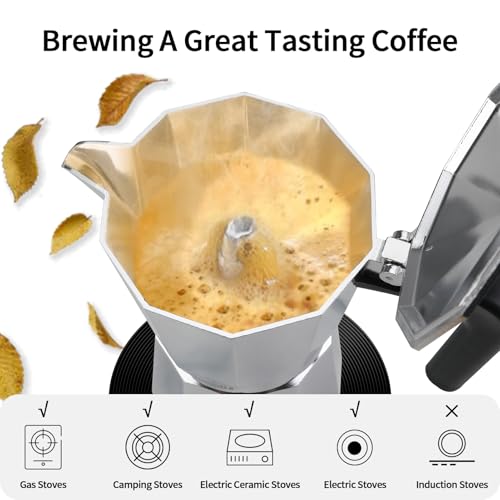
Can I use a European coffee maker on an induction cooktop?
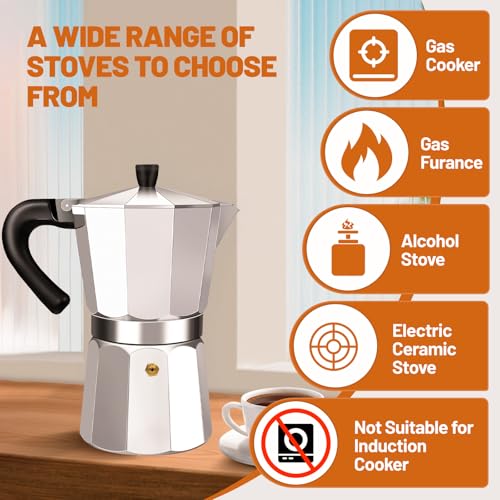
Not all can. Moka pots and percolators are usually compatible, but it depends on the base material. Drip coffee makers are electric and won’t work directly on an induction surface. Always check the product specifications for induction compatibility before purchasing.
What’s the difference between a Moka pot and an espresso machine?
A Moka pot brews coffee by passing steam through grounds, creating a strong, concentrated brew similar to espresso, but not true espresso. True espresso machines use high pressure, resulting in a crema-topped shot. If you’re looking for authentic espresso, you’ll need a dedicated espresso machine or explore best pourover brewers for a different style of strong coffee.
How do capsule coffee makers compare in cost to other European methods?
Capsule machines have a higher ongoing cost due to the price of capsules, while Moka pots and drip machines require only coffee grounds. While the initial investment for a capsule machine can be lower, the long-term expense per cup is typically higher than with reusable filter methods.
The Bottom Line
Choosing a European coffee maker often comes down to balancing convenience with control. While capsule machines like the Nespresso Vertuo Next offer speed and consistency, for those who value a more involved brewing process and a richer flavor, the Mongdio 6-Cup Stovetop Moka Pot stands out as the strongest overall pick. It delivers a classic, robust brew and represents a good balance of quality and affordability.
For specific needs, the KRUPS Essential 8-Cup Drip Coffee Maker is a fantastic choice if you prioritize larger batches and automated brewing, especially for those seeking a consistently good drip coffee ratio. If you’re looking for a compact, single-serve option, the DITOSH 2-Cup Aluminum Moka Pot fits the bill. And for those who enjoy a traditional percolator, the Primula Today 9-Cup Stove Top Percolator is a solid, budget-friendly option.
Ultimately, the “best” coffee maker is the one you’ll use regularly and that consistently delivers a cup you enjoy. Don’t get too caught up in specifications; focus on build quality, ease of cleaning, and whether the brewing method aligns with your lifestyle. A well-made machine, used with quality beans and a little practice, will always outperform a feature-rich one that sits unused.
