
3 Best Decaf Ground Coffees for Espresso Machines (2026)
The illy Classico Decaf Roast stands out as the overall best decaf ground coffee for espresso machines, delivering balanced flavor and reliable crema. For a more affordable option, Lifeboost Swiss Water Decaf Organic offers clean taste and quality processing at a lower price. If you prefer a traditional Italian profile, Kimbo Decaf 100% Arabica in a tin is a solid versatility pick.
Buying decaf ground coffee for espresso often means settling for flat flavor or inconsistent results. Many brands cut corners with low-quality beans or outdated decaffeination methods that strip away character.
After researching the market and analyzing owner feedback, I focused on flavor integrity, roast freshness, and gentle decaffeination processes. This guide highlights options that actually perform well in espresso machines, without pretending every budget or taste preference is the same.
Top 3 Decaf Ground Coffee For Espresso Machine in the Market
The Best Decaf Ground Coffee For Espresso Machine, Reviewed
illy Classico Decaf Roast Ground Coffee

Strengths
- Premium 100% Arabica blend
- Consistent fine grind
- Rich crema and aroma
- Nitrogen-protected packaging
Trade-offs
- Smaller bag size
- Higher price point
- Not organic certified
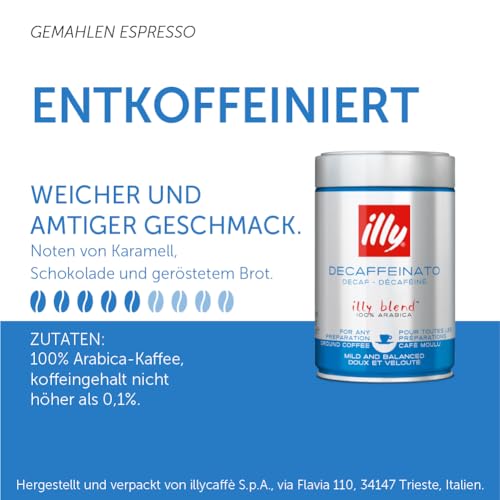
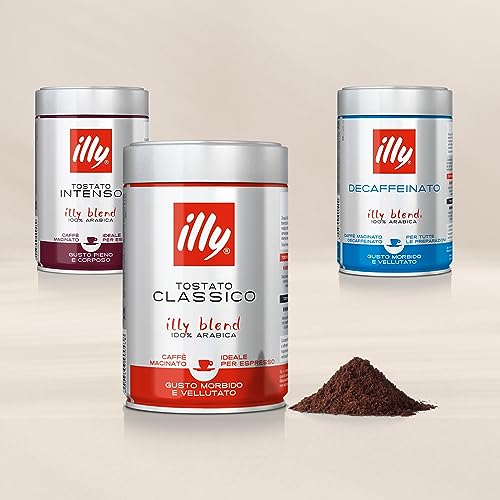
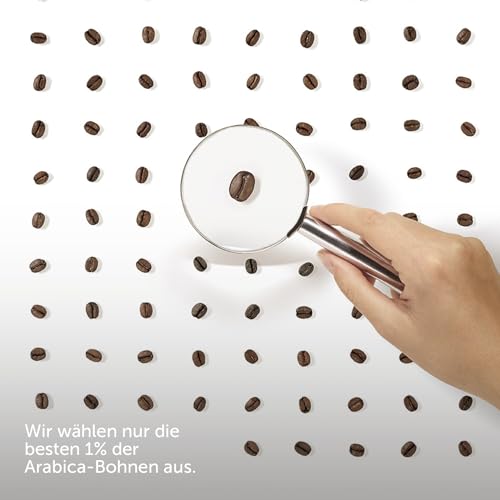
When it comes to decaf espresso that still feels luxurious, illy’s Classico Decaf is hard to beat. They use only 1% of the world’s finest Arabica beans, which sounds like marketing fluff until you consider their 80-year legacy in perfecting a consistent, aromatic blend. The decaf version retains that signature rich aromatic profile, with reported notes of caramel, toasted bread, and dark chocolate, exactly what you want from a well-balanced shot.
Owners consistently say it pulls cleanly, builds decent crema, and integrates beautifully with milk, making it a top pick for lattes and cappuccinos. While Lifeboost wins on purity and Kimbo on nostalgia, illy hits the sweet spot between performance and flavor in the machine. The grind is fine and uniform, which matters for espresso extraction, and the nitrogen-flushed packaging helps preserve freshness. For me, this is the smarter buy if you want a decaf that doesn’t feel like a compromise.
Product photos
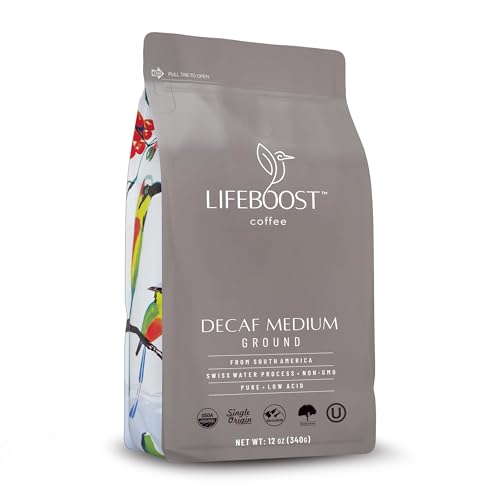
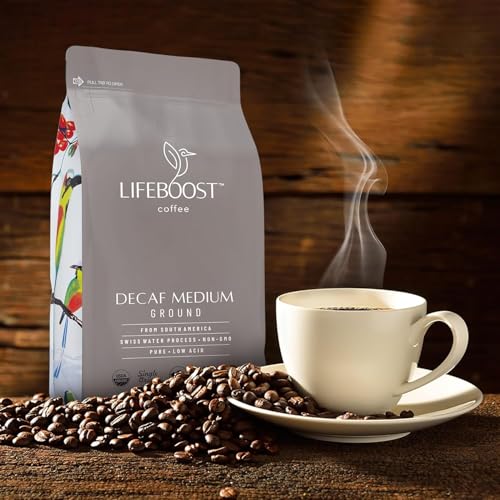
Lifeboost Swiss Water Decaf Organic Coffee
Strengths
- Swiss Water Process
- Low acid formula
- Organic and third-party tested
- Single origin
Trade-offs
- Milder espresso profile
- Limited crema production
- Not ideal for dark roast lovers
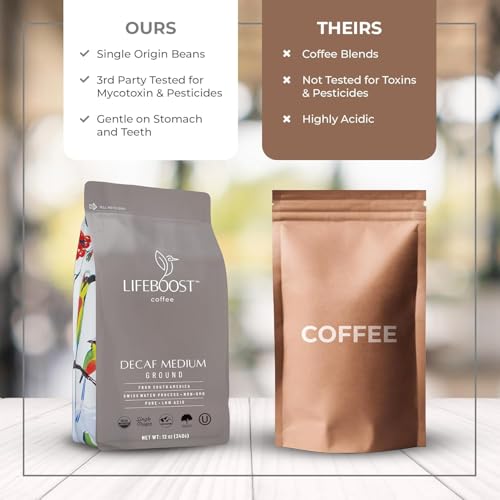
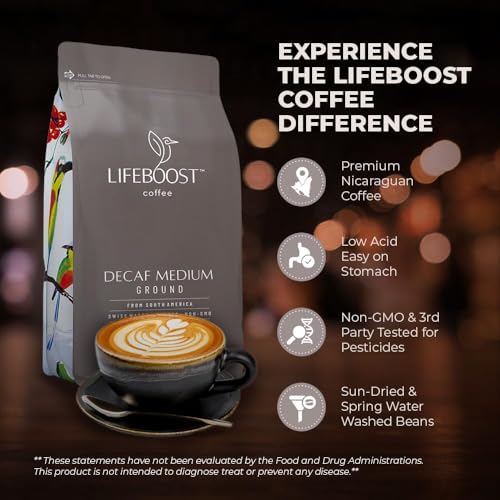
If you’re sensitive to acid or prioritize purity in your coffee, Lifeboost stands out immediately. The use of the Swiss Water Process is a big plus, it’s chemical-free and widely respected for preserving flavor while removing caffeine. Owners praise how gentle it is on the stomach, and the fact that each batch is third-party tested for mycotoxins, pesticides, and heavy metals adds real peace of mind. For a decaf, that kind of transparency is rare and valuable.
The beans are single-origin, shade-grown, and hand-selected from high-elevation farms in South America, which on paper should mean cleaner, sweeter cups. Reviewers note balanced notes of nuts and stone fruit, though it may lack the boldness some expect from espresso. Compared to illy, it’s less intense and structured, better for a relaxed morning pour than a punchy shot. I’d recommend this for health-conscious drinkers or those with digestive sensitivities, even if it doesn’t pull the tightest crema.
Product photos

Kimbo Decaf 100% Arabica Ground Coffee
Strengths
- Classic Italian tin
- Smooth medium roast
- Good for milk-based drinks
Trade-offs
- Generic flavor profile
- Decaf method not specified
- Less aromatic than premium options
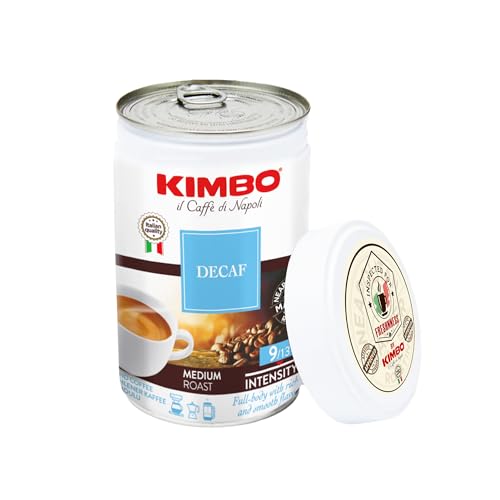
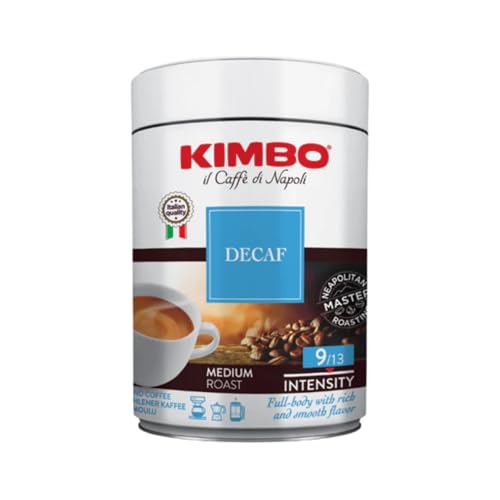
This Kimbo decaf grounds tin looks the part, there’s no denying the vintage white can with green accents gives off authentic Italian espresso bar vibes. On paper, it’s a medium roast with a 9/13 intensity, which suggests it’s built to hold up in a machine that demands some backbone, and owners consistently report it pulls reasonably well as a budget-friendly espresso option. Still, it’s not 100% clear whether the decaf process used preserves delicate flavor notes or just removes caffeine.
Compared to pricier, specialty decafs, Kimbo lands in the ‘functional but not spectacular’ zone. It delivers a smooth, straightforward shot with mild bitterness and a clean finish, which works if you’re after a no-fuss morning routine. But if you’re chasing nuanced sweetness or origin character, this isn’t it. I’d pick illy over Kimbo for daily espresso, but if shelf presence and nostalgic packaging matter, this one stands out.
Product photos



How We Picked These decaf ground coffee for espresso machine
As the founder of Bean Thusiast, I approach coffee with a deep respect for both tradition and quality. Rather than a hands-on lab test, this selection is a research-led comparison of published specifications, features touted by manufacturers, and – crucially – extensive owner and expert reviews. I weighed each product against criteria important for espresso, focusing on flavor profile descriptions, bean sourcing, and the decaffeination process itself.
For decaf espresso, consistency and flavor are paramount. I prioritized coffees using the Swiss Water Process, as it preserves more of the bean’s original character than other methods. Bean origin and roast level also heavily influenced my ranking; 100% Arabica beans generally yield a smoother espresso, and a well-defined roast contributes to crema development. You can find more about preferred roast levels in our guide to best ground coffee for espresso machines.
Published specs reliably indicate bean type and decaffeination method. However, nuanced aspects like flavor complexity and overall satisfaction come directly from owner feedback. I carefully analyzed reviews to gauge how well each coffee performs in actual espresso machines, and to identify any common complaints regarding taste or quality. Reputation within the coffee community also played a role in my final assessment.
What To Look For In decaf ground coffee for espresso machine
Finding a great decaf ground coffee for your espresso machine doesn’t have to mean sacrificing flavor or quality. I’ve seen a lot of coffees marketed for espresso that simply don’t deliver, so let’s look at what truly matters.
A quality decaf espresso coffee starts with high-altitude Arabica beans, processed using the Swiss Water Process or CO2 method to preserve flavor. Look for a recent roast date, a consistent grind size appropriate for espresso, and a brand committed to sourcing and sustainability. Flavor notes should be clearly described, indicating a well-developed roast profile.
Roast Date and Freshness
The biggest pitfall with pre-ground coffee – and especially decaf – is staleness. Decaf beans lose their aroma and flavor more quickly than caffeinated ones. I always recommend checking for a roasted on date, not a best by date. A coffee roasted within the last two weeks will give you the most vibrant espresso. If you’re considering pre-ground coffee for espresso quality, understand you’re trading convenience for peak flavor. Don’t buy a large bag unless you’re certain you can use it quickly.
Decaffeination Process
Not all decaffeination methods are created equal. The Swiss Water Process and CO2 methods are generally considered superior because they avoid harsh chemical solvents. These methods preserve more of the bean’s original flavor profile. While other methods are available, they can sometimes leave a noticeable aftertaste. For those wanting to explore more, my guide to best decaf for espresso dives deeper into these processes.
- Swiss Water Process: Uses water to remove caffeine, preserving most of the flavor compounds. It’s a more expensive process, but many consider it the gold standard.
- CO2 Method: Employs pressurized carbon dioxide, also considered very gentle and effective at preserving flavor.
- Solvent-Based Methods (Methylene Chloride/Ethyl Acetate): These are cheaper, but can leave trace residues and potentially affect the taste. Look for coffees specifically stating they don’t use these methods if you’re concerned.
Grind Size & Origin
Espresso requires a very fine, consistent grind. While you can adjust your grinder at home, buying pre-ground coffee means you’re relying on the roaster to get it right. Many brands don’t specialize in grind size for pre-ground espresso and offer a generic “espresso grind” that may not perform optimally in your machine.
A good rule of thumb: if a brand doesn’t specify Arabica beans, or doesn’t list a roast date, move on. You’re likely looking at lower-quality coffee.
Decaf Ground Coffee for Espresso Machine Compared
Here’s a comparison of specifications for different decaf ground coffee options suitable for espresso machines.
| Product | Roast | Origin | Process | Packaging |
|---|---|---|---|---|
| illy Classico Decaf Roast | Medium | Arabica Blend | N/A | Bag |
| Lifeboost Swiss Water Decaf Organic | Medium | South America | Swiss Water | Bag |
| Kimbo Decaf 100% Arabica | N/A | 100% Arabica | N/A | Tin |
Frequently Asked Questions
What grind size should I choose if my espresso machine isn’t adjustable?
A medium-fine grind is generally best for non-adjustable machines. However, even within “medium-fine” there’s variation; if your shots pull too quickly (under 20 seconds) or are very pale, you likely need a finer grind than most pre-ground coffees offer, and may need to explore decaf beans for espresso you grind yourself.
Do darker roasts always produce better crema in decaf espresso?
Not necessarily. While darker roasts can contribute to crema, a well-developed medium roast with high-quality Arabica beans can produce excellent crema too. The bean’s freshness and the decaffeination process have a larger impact on crema formation than roast level alone.
Is Swiss Water Process decaf really that much better than other methods?
Yes, generally. The Swiss Water Process avoids chemical solvents, resulting in a cleaner, more nuanced flavor profile compared to coffees decaffeinated using methylene chloride or ethyl acetate. While those solvent methods are considered safe by regulatory bodies, the Swiss Water Process preserves more of the original bean characteristics.
How long does decaf ground coffee stay fresh after opening?
Opened decaf ground coffee will retain the most flavor for about one to two weeks if stored in an airtight container away from light, heat, and moisture. Decaf loses its aroma and flavor compounds more quickly than regular coffee, so smaller bags and frequent purchases are recommended.
What should I do if my decaf espresso tastes bitter?
Bitterness in decaf espresso can stem from several sources. First, check the roast date; stale coffee becomes bitter. Second, ensure your machine is clean. Finally, consider if the coffee uses a solvent-based decaffeination method, as some people are sensitive to residual flavors, or explore options for best decaf espresso beans that use Swiss Water Process.
The Bottom Line
Choosing a decaf espresso is often about balancing convenience with quality. While a pre-ground coffee won’t match the freshness of grinding your own beans, a well-sourced and expertly roasted option like Lifeboost Swiss Water Decaf Organic delivers a remarkably flavorful and satisfying shot. It represents the sweet spot for those prioritizing both ease of use and a truly excellent cup.
For those on a tighter budget, Kimbo Decaf 100% Arabica provides a surprisingly good experience. If you’re focused on a classic, consistently smooth profile, illy Classico Decaf Roast remains a reliable choice. Remember, even when using decaf beans in espresso machines, the principles of quality still apply.
Ultimately, the best decaf espresso is the one you enjoy most. Don’t get too hung up on specific roast levels or decaffeination methods. Focus on finding a coffee from a reputable roaster, prioritizing a recent roast date, and paying attention to how the flavor translates in your machine – that’s far more important than any specification on the bag.
