
7 Best Cuban Coffee Makers of 2026
The Bialetti Moka Express 6-Cup is the overall best Cuban coffee maker for its consistent brew quality and iconic design, the IMUSA 6-Cup Electric Espresso stands out as the top budget-friendly pick, and the IMUSA Stainless Steel 6-Cup offers excellent durability for those who want a stovetop model that lasts.
Buying a Cuban coffee maker often means choosing the right Moka pot, one that delivers a strong, rich brew without hassle or breakdowns. Too many models leak, warp, or produce weak coffee because of poor heat distribution or flimsy seals.
As the founder of Bean Thusiast, I focused on models that real users praise for reliability and flavor, backed by solid materials and smart design. This guide cuts through the noise, highlighting picks based on how well they perform in real kitchens, not just on spec sheets.
Top 7 Cuban Coffee Maker in the Market
The Best Cuban Coffee Maker, Reviewed
Bialetti Moka Express 6-Cup

Strengths
- Iconic design
- Consistent extraction
- Made in Italy
Trade-offs
- Not induction compatible without adapter
- Aluminum requires careful cleaning
I’ve spent years evaluating moka pots, and the Bialetti Moka Express remains the gold standard for a reason. On paper, it’s simple: aluminum construction, 6-cup capacity, and that unmistakable octagonal shape. But what owners consistently report is how reliably it delivers rich, aromatic coffee that captures the soul of Italian espresso culture. The patented safety valve isn’t just a gimmick, it contributes to consistent pressure and easier maintenance, which seasoned users appreciate.
It’s not induction-ready out of the box, but with the optional adapter plate, it covers nearly every stovetop. Reviewers note its performance holds up over time, though you must follow the ‘rinse only, no soap’ rule to preserve flavor integrity. Compared to newer electric models, it demands more attention, but that’s part of the ritual many of us cherish.
Product photos


IMUSA Stainless Steel 6-Cup

Strengths
- Stainless steel build
- Cool-touch handle
- Side pour spout
Trade-offs
- Less even heat distribution
- Slightly harsher brew
- Not induction compatible
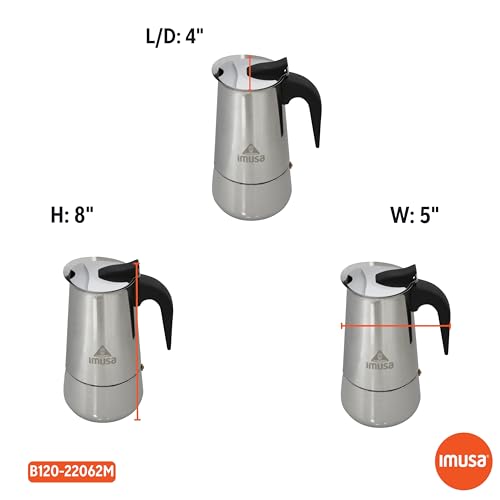
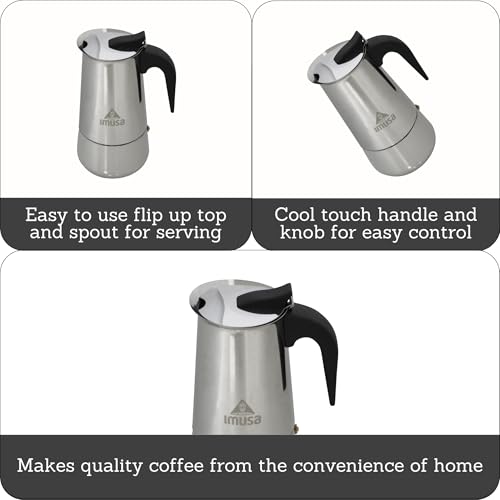
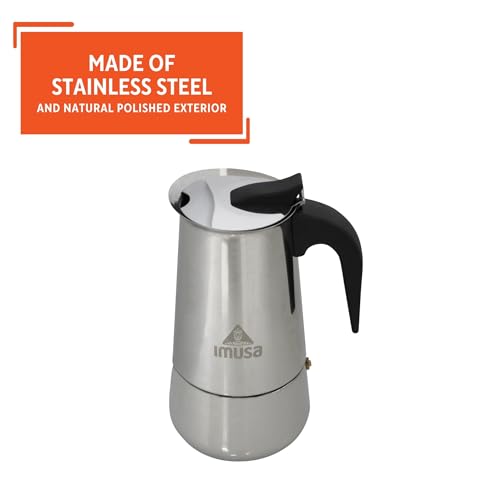
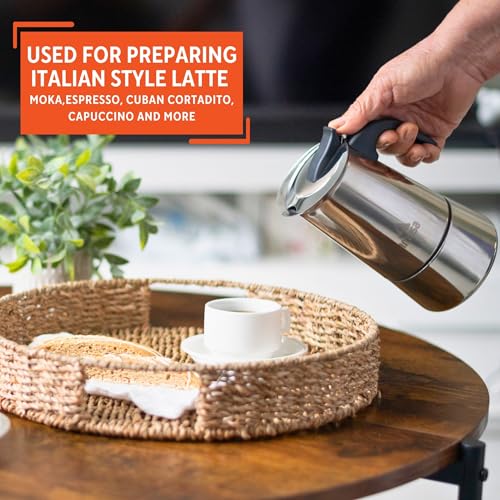
Stainless steel moka pots are rare, and the IMUSA USA model stands out for durability over flavor purity. Owners praise its resilience, no warping, no pitting, and it survives frequent dishwasher runs (though hand washing is still better). The flip-top lid and side spout make pouring cleaner than most, and the cool-touch handle adds real usability.
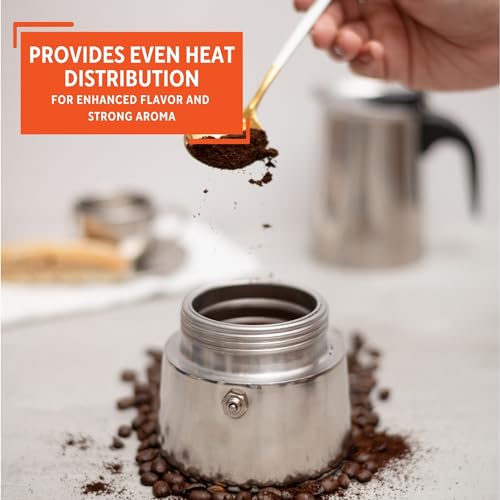
But here’s the trade-off: stainless steel doesn’t conduct heat as evenly as aluminum, and some reviewers note a slightly more bitter edge to the brew, especially if left on the flame too long. It works on gas, electric, and ceramic, but not induction. Against the Bialetti, it loses points on authenticity and heat response, but wins for longevity.
Product photos
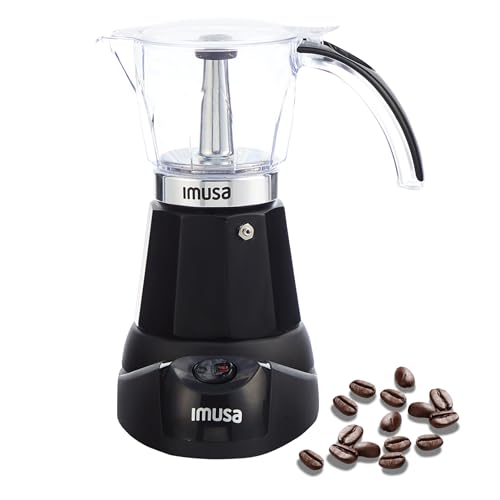
IMUSA 6-Cup Electric Espresso
Strengths
- Visual brewing window
- Dual capacity
- Cool-touch handle
Trade-offs
- Milder flavor than stovetop
- No auto shut-off
- Aluminum base stains
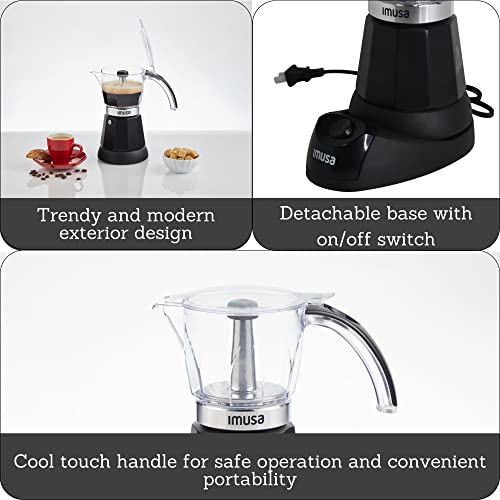
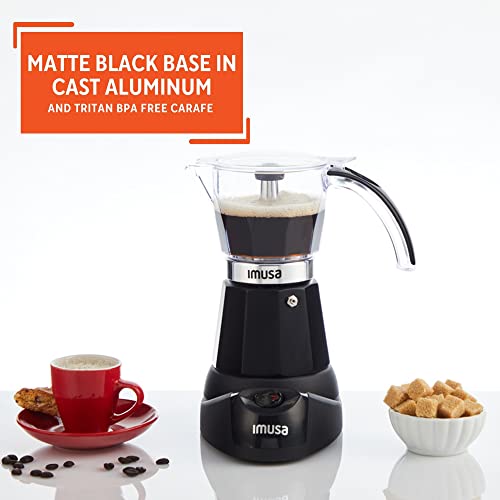
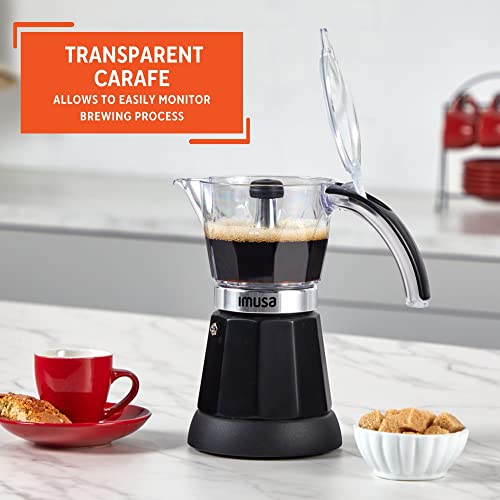
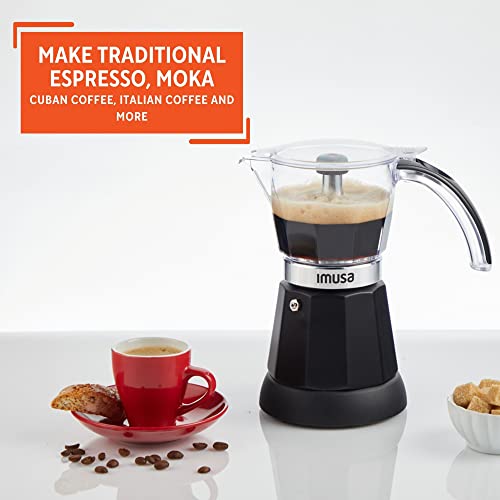
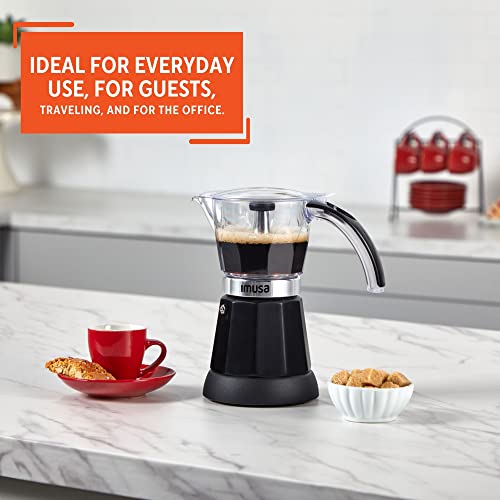
This IMUSA electric model is the most refined of the plug-in moka pots. The dual capacity, 3 or 6 cups, is genuinely useful, and the visual brewing indicator lets you track progress in real time. Owners love the cool-touch handle and detachable base, which makes storage and cleaning simpler. The brown-tinted carafe gives it a retro-modern look that stands out on a countertop.
But like all electric moka makers, it can’t match the depth of flavor from stovetop models. The heating cycle is less aggressive, sometimes leading to flatter-tasting coffee. Still, for office use or a secondary brewer where convenience rules, it’s the best electric option here, more polished than the KITfanz and better designed than most.
Product photos
IMUSA 9-Cup Cast Aluminum
Strengths
- Large 9-cup capacity
- Even brewing at scale
- Cool-touch knob
Trade-offs
- Bulky for small kitchens
- Requires large burner
- Longer heat-up time
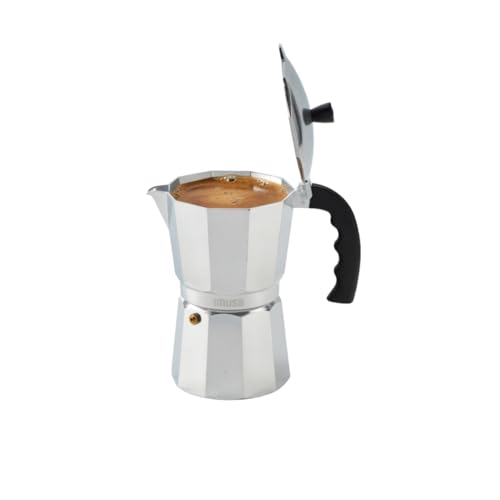
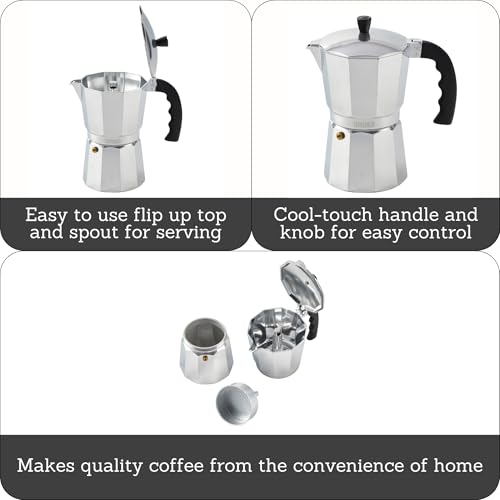
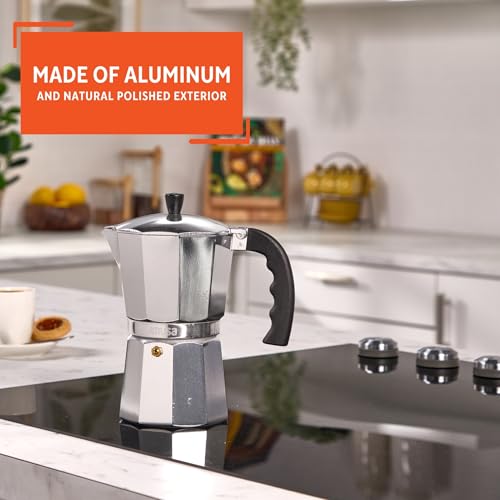
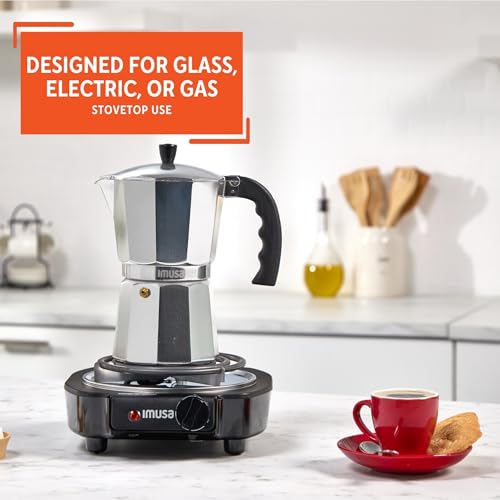
If you’re brewing for a crowd, the 9-cup IMUSA aluminum moka pot is one of the few large-capacity options that actually works. Owners confirm it scales well, no weak coffee or pressure drops when fully loaded. The flip-top lid and side spout make serving easier than twisting open a hot top, and the cool-touch knob is a thoughtful touch.
But size brings downsides. It’s too big for small stoves or single servings, and heat distribution can get uneven on smaller burners. Compared to the Bialetti 6-cup, it’s less precise and a bit clunkier, but that’s expected at this volume. For Cuban-style brewing where volume matters, like serving family at breakfast, it’s hard to beat.
Product photos

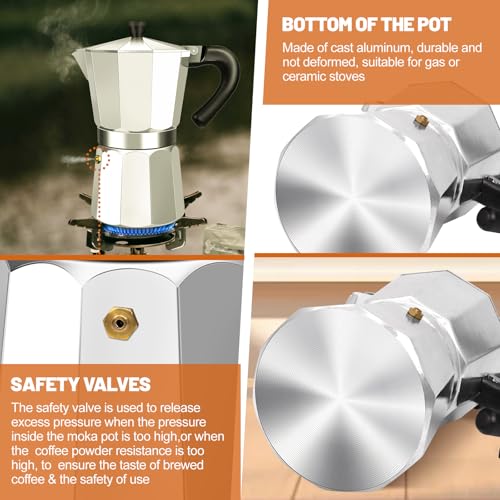
DITOSH 3-Cup Aluminum Moka

Strengths
- Ultra-portable
- Fast heating
- Durable cast aluminum
Trade-offs
- Very small capacity
- Initial odor
- Not for groups
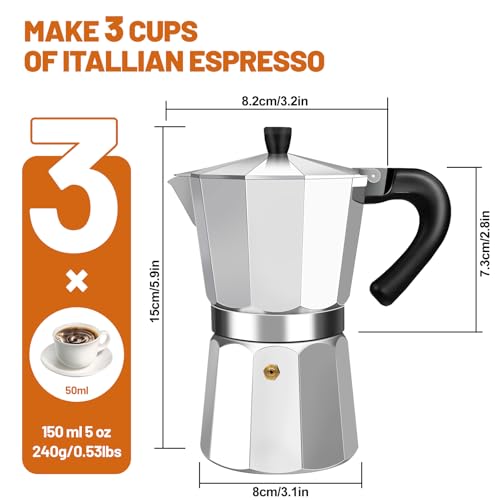
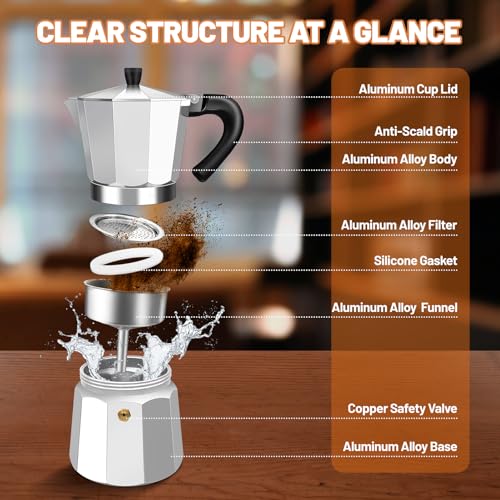
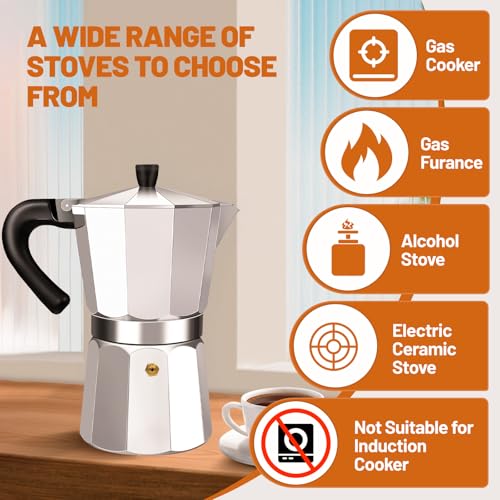
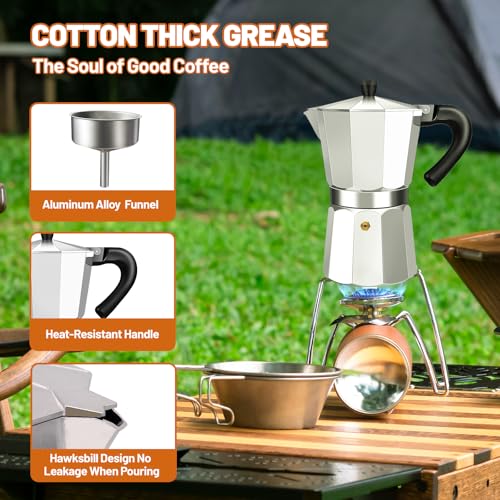
The DITOSH 3-cup moka pot is built for portability, and it shows. At just 150ml, it’s ideal for camping, travel, or tight kitchens. Owners love how quickly it heats and how compact it is, easy to toss in a bag without worry. The cast aluminum ensures solid heat transfer, and the flip-top lid with heat-resistant knob adds safety.
But small size means zero room for error. Too much coffee or too fine a grind and you risk pressure issues. First-time users report an odd smell at first, but that fades after a few brews. Compared to the Primula 6-cup, it’s less versatile daily, but wins for on-the-go use. Just don’t expect to share.
Product photos
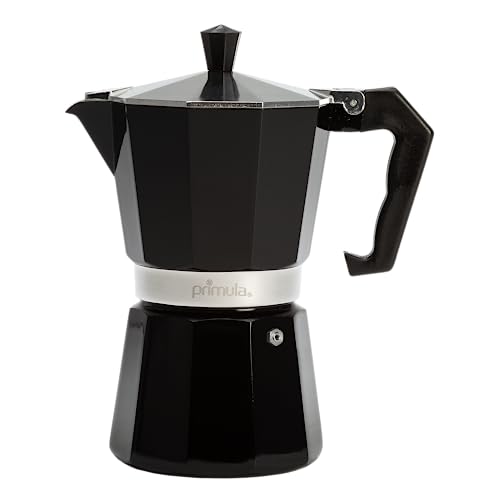
Primula Classic 6-Cup Black
Strengths
- Ergonomic handle
- Drip-free spout
- Even heating
Trade-offs
- Generic design
- Limited size options
- No induction compatibility
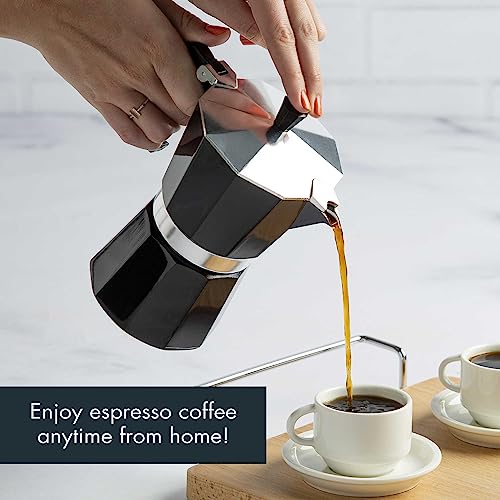
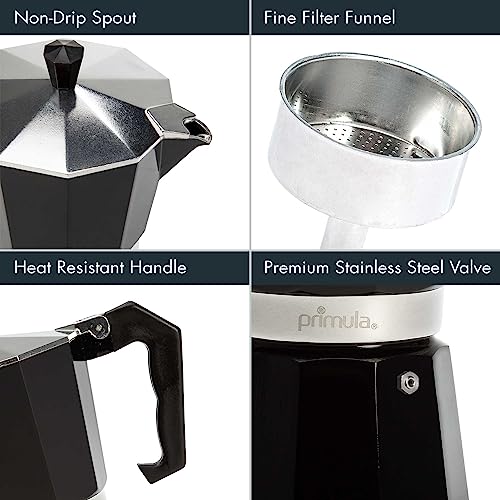
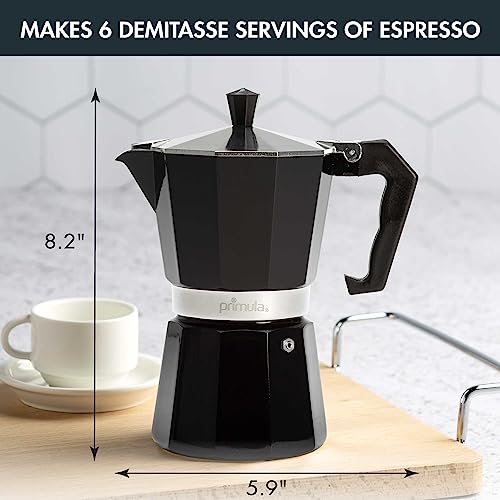
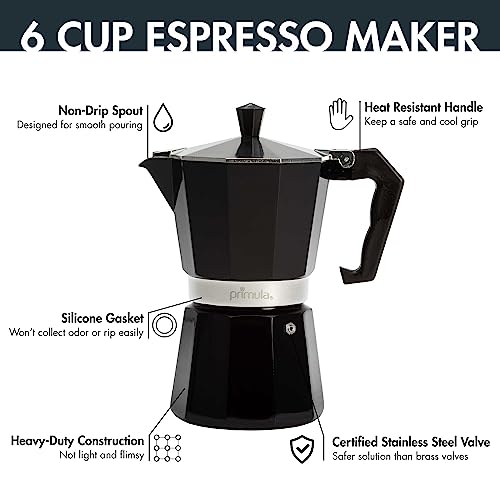
The Primula stands out for comfort and usability. The ergonomic handle stays cool, and the drip-free spout makes pouring precise, something many moka pots get wrong. Owners consistently highlight how comfortable it feels in hand, especially compared to the Bialetti’s thinner grip. The 6-cup capacity hits the sweet spot for couples or solo drinkers who want leftovers.
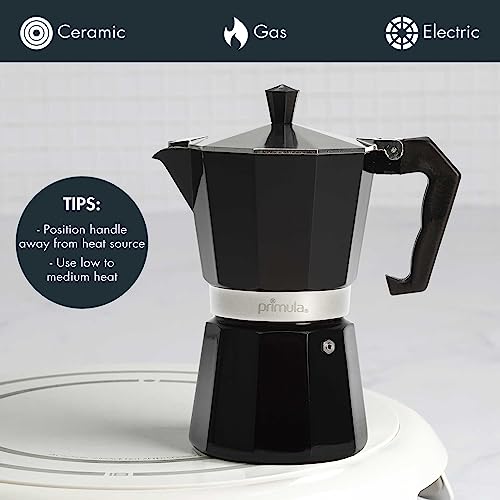
It’s made of cast aluminum, so heat distribution is solid, and it works on gas, electric, and ceramic. But it lacks the heritage design cues that fans love in the Bialetti. It also doesn’t come in a wider range of sizes. Still, if ease of use and comfort are top priorities, this is a strong contender.
Product photos
KITfanz Electric 3 or 6 Cup

Strengths
- Electric convenience
- Non-stick interior
- Detachable base
Trade-offs
- No auto shut-off
- Less precise extraction
- Plastic-like finish
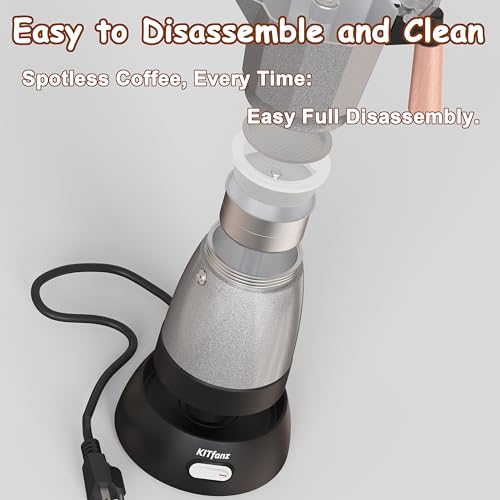
Electric moka pots aim to simplify the ritual, and this KITfanz model delivers solid performance for the price. With a detachable base and boil-dry protection, it’s clearly designed for convenience, plug it in, press a button, and walk away. Owners appreciate the non-stick interior and how easy it is to clean, especially compared to traditional stovetop versions.
But convenience comes with compromises. The thermostat cycles on and off, which can interrupt extraction and lead to underdeveloped flavor. Compared to the IMUSA electric model, it lacks a visual brewing indicator, so you’re guessing when it’s done. Still, for dorm rooms, offices, or small kitchens without a stove, this is a smart, affordable option that gets decent coffee without fuss.
Product photos



How We Picked These cuban coffee maker
As the founder of Bean Thusiast, I approach coffee equipment with a focus on how well it delivers a flavorful, authentic experience. Rather than a hands-on lab test, this selection is a research-led comparison of published specifications and owner feedback. I examined features, materials, and capacity, then weighed those against what real users are saying about ease of use, durability, and – most importantly – the quality of the coffee produced. My goal was to identify models that consistently deliver a satisfying cup, whether you’re aiming for a quick morning brew or a more involved ritual.
For Cuban coffee makers specifically, I prioritized stainless steel construction and ease of cleaning, alongside brewing capacity. The ability to produce a strong, concentrated brew is key, as is the overall build quality to withstand frequent use. A stable base and a well-sealing design were also heavily weighted, as these directly impact the extraction process and prevent messes. These factors consistently surfaced as important to owners seeking an authentic experience.
Specifications reliably indicate capacity and materials used, but owner feedback provided crucial insight into long-term durability and the nuances of brewing. I paid close attention to comments regarding ease of cleaning, the quality of the seal, and whether the maker consistently produced a strong brew. Learning the traditional Cuban coffee method also informed my assessment of whether a particular model would be suitable for achieving that specific flavor profile.
Choosing The Right cuban coffee maker
As someone who’s spent years exploring the nuances of coffee, I know a truly great Cuban coffee experience starts with the right equipment. It’s not just about getting caffeine; it’s about replicating a tradition.
A quality Cuban coffee maker, typically a Moka pot, should prioritize even heat distribution for a rich, concentrated brew. Look for durable materials like aluminum or stainless steel, a secure seal to maintain pressure, and a design that simplifies both brewing and cleaning. Consistent results rely on proper grind size and water levels, so consider models with clear fill lines and reliable safety features.
Material & Durability
The foundation of any good Moka pot is its construction. While aluminum is the traditional material and heats quickly, stainless steel offers superior durability and resistance to rust. I’ve seen many folks gravitate towards stainless steel for longevity, especially if you plan on using your maker frequently. Don’t discount aluminum entirely; a well-maintained aluminum pot can last for years, but it requires a bit more care. Consider where you’ll be using it – aluminum isn’t induction compatible without a special plate, while stainless steel often is.
Capacity & Heat Source
Think about how much coffee you typically brew. A 3-cup Moka pot is ideal for a single person, while a 6-cup or 9-cup version is better for multiple drinkers. Don’t be fooled by the “cup” designation – these refer to demitasse (espresso-sized) cups. If you’re making cafecito for a crowd, a larger capacity is essential. Beyond that, consider your stovetop. Most Moka pots are designed for gas and electric, but electric models, like the KITfanz Electric 3 or 6 Cup, offer a convenient alternative, especially if you lack a stovetop or want more precise temperature control.
Ergonomics & Ease of Use
A Moka pot should be straightforward to use and clean. Look for features like a cool-touch handle and a spout designed to prevent drips. Some models, like the Primula Classic 6-Cup Black, are specifically praised for their ergonomic design. This is particularly important if you have any hand strength limitations or simply want a more comfortable brewing experience.
Here’s a quick guide to features that matter:
- Handle Material: Plastic is common, but bakelite offers better heat resistance.
- Spout Design: A well-designed spout minimizes drips and allows for controlled pouring.
- Disassembly: Easy disassembly is crucial for thorough cleaning and maintenance. A model that’s simple to take apart will encourage you to clean it properly after each use.
A consistent grind is the key to a great brew. Aim for something finer than drip coffee, but not as fine as espresso. Experiment to find what works best with your chosen coffee and Moka pot.
If you’re new to making Cuban coffee, you might find a detailed guide on using a stovetop espresso maker helpful as you get started. And, of course, sourcing quality Cuban coffee grounds and beans is just as important as the maker itself!
Cuban Coffee Maker Compared
Here’s a comparison of features for popular Cuban coffee makers.
| Product Title | Capacity | Material | Stovetop Compatible | Electric | Special Features |
|---|---|---|---|---|---|
| Bialetti Moka Express 6-Cup | 6 Cups | Aluminum | Yes | No | Patented Safety Valve |
| IMUSA Stainless Steel 6-Cup | 6 Cups | Stainless Steel | Yes | No | Flip-up Top, Cool Touch |
| IMUSA 6-Cup Electric Espresso | 6 Cups | Aluminum | No | Yes | Visual Brewing Indicator |
| IMUSA 9-Cup Cast Aluminum | 9 Cups | Aluminum | Yes | No | Flip-up Top, Cool Touch |
| DITOSH 3-Cup Aluminum Moka | 3 Cups | Aluminum | Yes | No | Portable Size |
| Primula Classic 6-Cup Black | 6 Cups | Aluminum | Yes | No | Ergonomic Handle |
| KITfanz Electric 3 or 6 Cup | 3/6 Cups | Aluminum | No | Yes | Boil-Dry Protection |
Frequently Asked Questions
What size Cuban coffee maker should I buy?
A 3-cup Moka pot is generally sufficient for a single person, but if you regularly brew for more than one, a 6-cup or even a 9-cup model is better. Remember that “cups” refer to demitasse sizes, much smaller than standard coffee mugs.
Are aluminum Moka pots safe to use?
Yes, aluminum Moka pots are safe when used correctly, though some prefer stainless steel for its durability and lack of reactivity. Ensure the pot isn’t damaged and avoid abrasive cleaners to maintain its protective oxide layer.
Can I use pre-ground coffee in a Cuban coffee maker?
While possible, freshly grinding your beans just before brewing is highly recommended for the best flavor. A consistent, fine grind is crucial for proper extraction in a Moka pot, and pre-ground coffee can lose its potency quickly.
How do I clean a Moka pot effectively?
Disassemble the Moka pot and wash all parts with warm water and a soft sponge; avoid soap as it can leave a residue. Thorough drying is essential to prevent corrosion, especially for aluminum models. You can find more detailed cleaning tips when researching best moka coffee makers.
What’s the difference between a Moka pot and an espresso machine?
A Moka pot produces a strong, concentrated brew similar to espresso, but it relies on steam pressure rather than high-pressure pumping. While it won’t create true espresso with crema, it’s a fantastic way to make an espresso-like stovetop brewer at a lower cost, and many find the flavor profile comparable.
The Bottom Line
Choosing a Cuban coffee maker often comes down to balancing convenience with tradition. While aluminum models like the Bialetti Moka Express 6-Cup offer that classic experience and are incredibly reliable, for overall value and durability, I recommend the IMUSA Stainless Steel 6-Cup. It provides the same rich brew, but with the added benefit of long-term resistance to wear and tear.
For those on a tighter budget or needing a smaller footprint, the DITOSH 3-Cup Aluminum Moka pot is a fantastic option. And if you’re looking for consistent results without being tethered to the stovetop, the KITfanz Electric 3 or 6 Cup delivers that convenience. If you want to explore other methods, you can find information about making espuma for Cuban coffee as well.
Ultimately, the best Cuban coffee maker isn’t about fancy features or high price tags. It’s about consistently delivering a strong, flavorful brew that honors the tradition. Focus on quality materials, a good seal, and – most importantly – a willingness to experiment with your grind size and water levels to find what works best for your palate.
