
9 Best Crema Coffee Beans of 2026
The Kimbo Espresso Crema Intensa stands out as the best overall choice for rich, lasting crema, thanks to its balanced medium-dark roast and South American and Asian bean blend. For those on a budget, the Lavazza Super Crema Whole Bean delivers impressive crema and flavor at a lower price point, while the Julius Meinl Caffè Crema Selezione is ideal for super-automatic machines.
Chasing great crema can be frustrating, too often, beans promise a golden layer but fall flat in execution. As someone who’s spent years analyzing what makes an espresso shot truly sing, I know it comes down to roast, blend, and freshness.
This guide cuts through the noise, highlighting beans proven by specs and owner feedback to deliver consistent, high-quality crema. We looked at roast profiles, Robusta content, and machine compatibility to find the ones worth your grind.
Top 9 Crema Coffee Beans in the Market
The Best Crema Coffee Beans, Reviewed
Kimbo Espresso Crema Intensa
Strengths
- 100% Arabica
- Rich, spicy aroma
- Excellent crema
Trade-offs
- Requires precise grind
- High intensity not for everyone
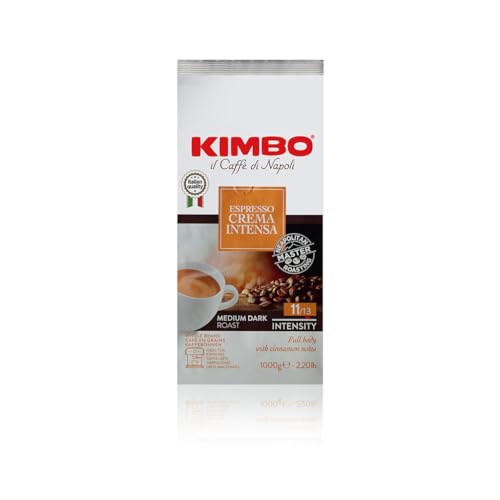
Kimbo Espresso Crema Intensa stands out with an intensity rating of 11/13, that’s serious business. But it’s not just heat and roast; owners report a surprisingly balanced cup with toasted notes, mild spice, and a silky body that supports a dense, tiger-striped crema. The 100% Arabica blend is rare in this category, where most rely on Robusta for crema boost, and it shows in the cleaner aftertaste.
Compared to Lavazza or Borbone, it’s more refined and less syrupy, with a dry finish that appeals to traditionalists. It extracts beautifully on manual machines and holds up in super-automatics, though it demands fresh grinding. For my money, this is the best all-around performer, a bean that delivers on flavor, crema, and authenticity.
Video review
Lavazza Super Crema Whole Bean
Strengths
- Creamy mouthfeel
- Widely available
- Great for milk drinks
Trade-offs
- Overly sweet for some
- Shorter crema life
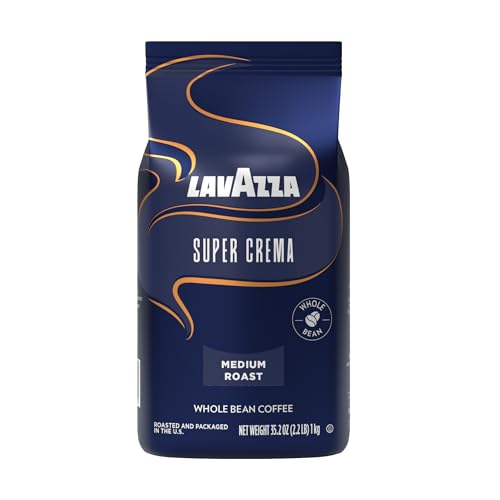
A staple in home espresso setups for years, Lavazza Super Crema earns its budget-friendly label not by cutting corners, but by mastering consistency. The Arabica-Robusta blend delivers a creamy, honeyed shot with a sweetness that appeals to wide audiences, especially those new to espresso.
Owners praise its versatility: it pulls well on everything from manual machines to pod hybrids. Against Borbone or Meinl, it’s a bit more sugary, almost syrupy, which works well in lattes. It’s not the most nuanced, but for the price, it’s hard to beat as an entry-level specialty bean. If you’re building a foundation for your espresso journey, this remains a smart starting point.
Video review
Caffè Borbone Crema Superiore
Strengths
- Chocolate and vanilla notes
- Adaptable to multiple brewers
- Smooth finish
Trade-offs
- Flavor lacks boldness
- Less crema density than rivals
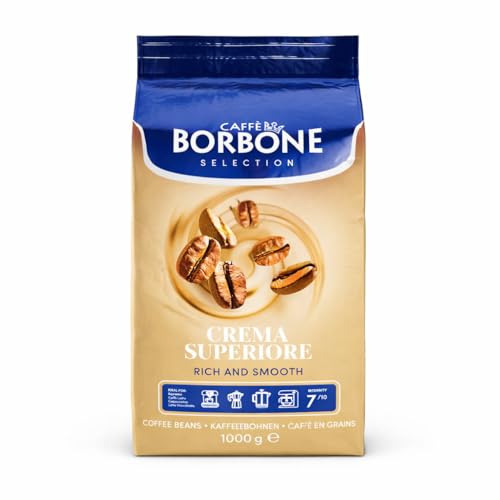
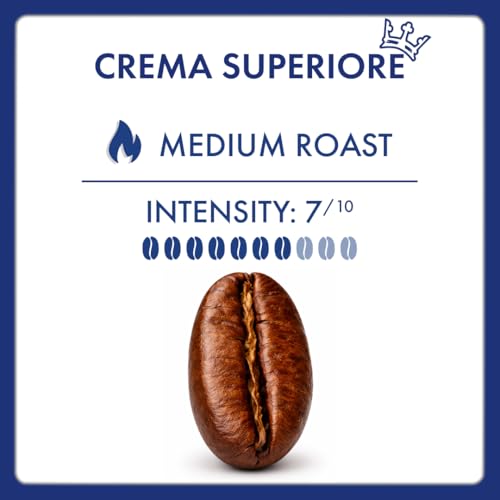
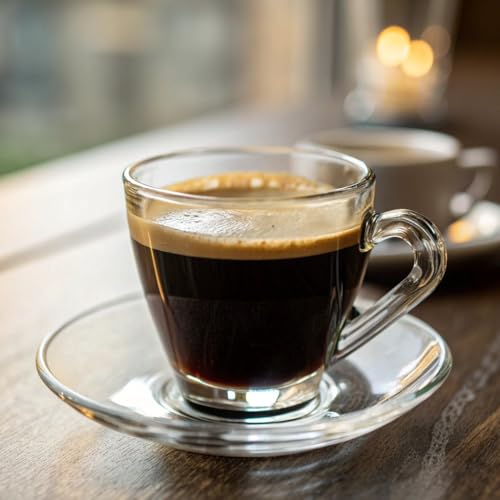
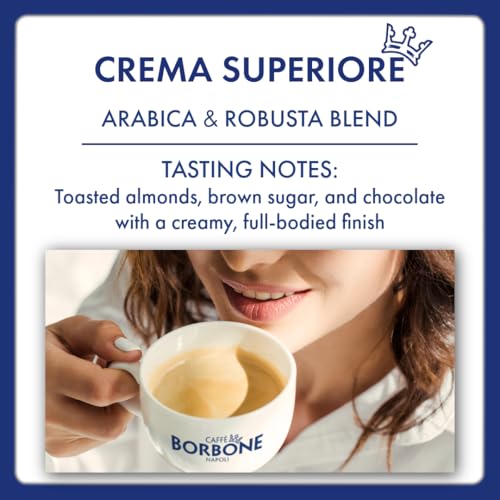
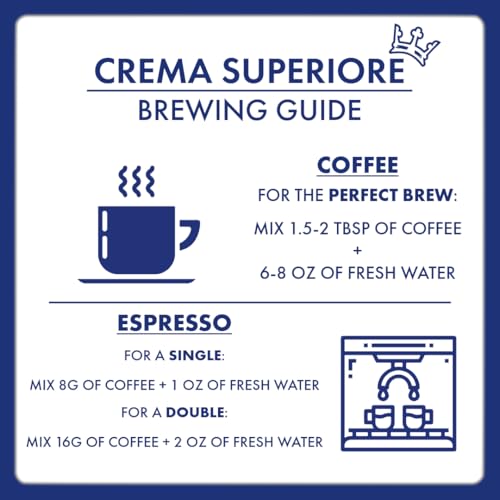
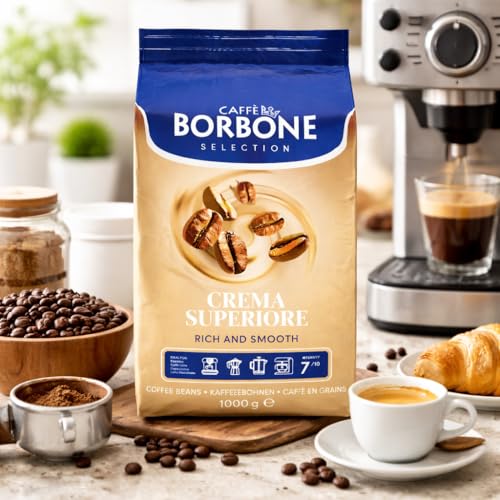
Where Crema Classica leans nutty, Crema Superiore drifts into dessert territory, vanilla and chocolate notes give it a creamy, almost custard-like quality, especially when paired with milk. The medium roast is dialed to extract cleanly without tipping into harshness, and owners consistently note its smoothness across brewing methods, from moka pot to drip.
It’s more versatile than most espresso-focused beans, and that adaptability is a real strength. Compared to Lavazza Super Crema, it feels more balanced and less one-dimensionally sweet. If you rotate between espresso and filter, this is one of the few beans that bridges both worlds without embarrassment.
Product photos
Caffè Borbone Crema Classica

Strengths
- Caramelized sweetness
- Nutty depth
- Even extraction
Trade-offs
- Flavor profile not very complex
- Robusta aftertaste lingers
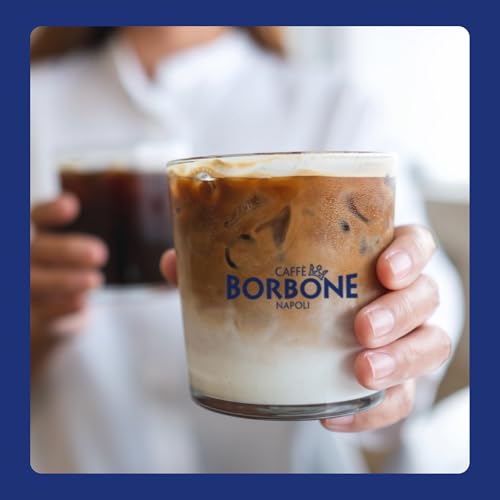
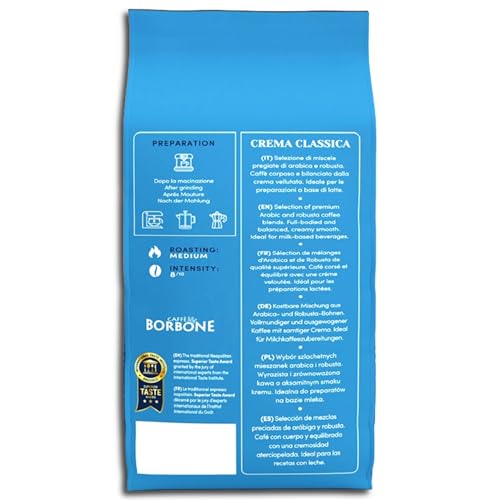
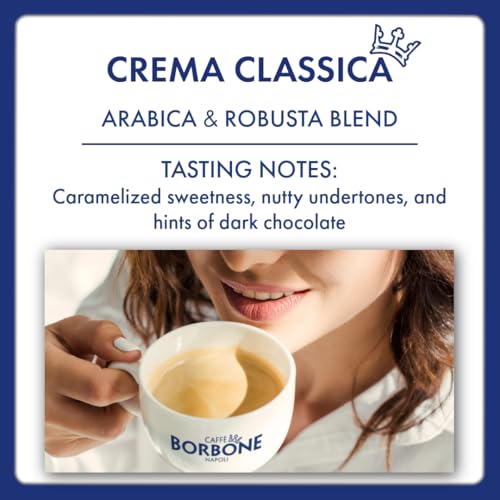
Caffè Borbone nails the classic Neapolitan profile here, caramel, nuts, and a hint of dark chocolate, all wrapped in a medium roast that extracts evenly across most machines. The Arabica-Robusta blend gives it enough body to shine in milk drinks, and owners consistently highlight its sweetness, especially when pulled as a lungo or macchiato.
It’s less intense than Kimbo or Lavazza Crema e Aroma, but more balanced than many budget options. Compared to its sibling, Crema Superiore, this one leans earthier and less vanilla-forward. If you like your espresso with a natural, toasty sweetness and don’t mind a touch of Robusta bite, this is a strong contender. It’s also one of the better values in the Italian-blend space.
Product photos
Lavazza Espresso Barista Gran Crema
Strengths
- Rich crema
- Full-bodied
- Balanced sweetness
Trade-offs
- Roast level may be too dark for some
- Robusta presence noticeable
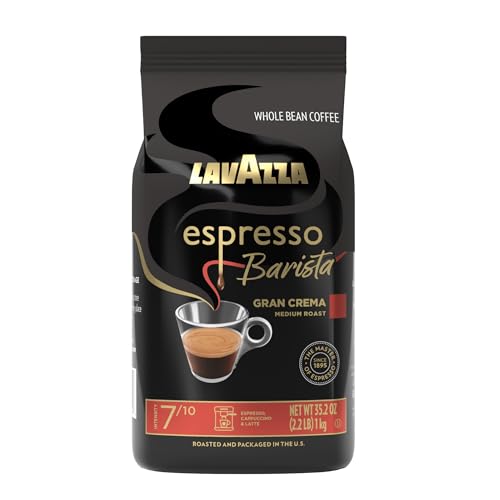
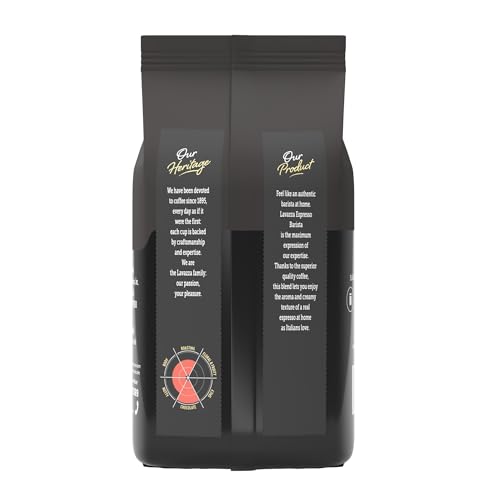
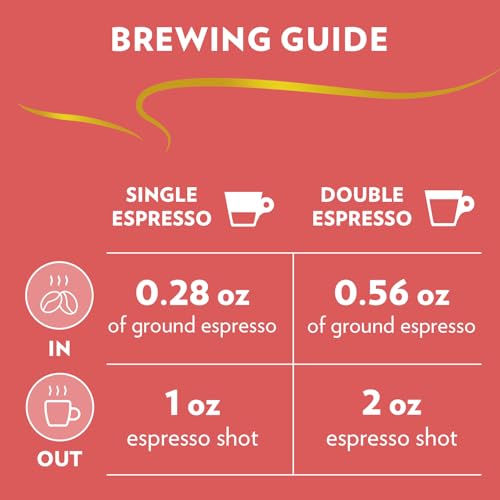
Lavazza markets this as a medium roast, but on paper and in owner feedback, it drinks like a dark, and that’s good news if you’re chasing boldness under a thick crema. The blend of Arabica and Robusta is calibrated for espresso machines, and reviewers consistently report a full-bodied shot with a lingering honeyed sweetness that balances the roast intensity.
Where it stands out is consistency. This isn’t the most complex bean on the list, but it delivers a reliable, restaurant-style espresso with every pull, the kind of workhorse blend that keeps commercial cafes humming. Compared to Lavazza Super Crema, it feels a bit more refined, with a smoother finish and less of that cereal-like aftertaste some detect in budget blends.
Product photos

Lavazza Crema E Aroma

Strengths
- Intense flavor
- Long crema life
- Earthy depth
Trade-offs
- Smoky aftertaste may not appeal
- Can taste bitter if over-extracted
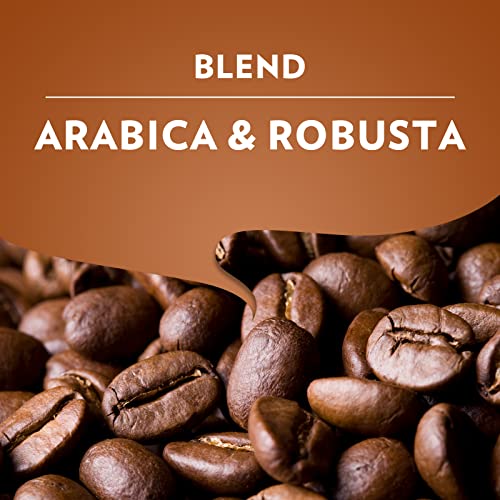
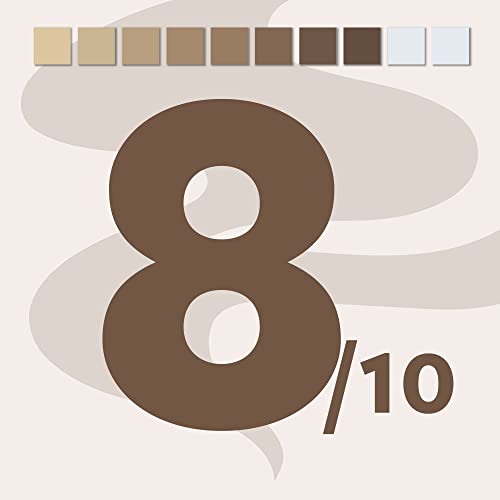
This is Lavazza’s darker, bolder sibling in the lineup, an 8/10 intensity roast that doesn’t shy from earthy, almost smoky notes beneath its long-lasting crema. The chocolate-forward profile is more aggressive than Super Crema, and owners who like a punchy morning shot tend to prefer it.
It’s not as refined as Kimbo or Meinl, but it holds its own in strength and persistence. Compared to Gran Crema, it trades honeyed sweetness for a more rustic, grounding depth. That makes it a better match for straight espressos or short blacks. If you like your coffee with a kick and don’t mind a slightly ashy edge, this delivers.
Product photos


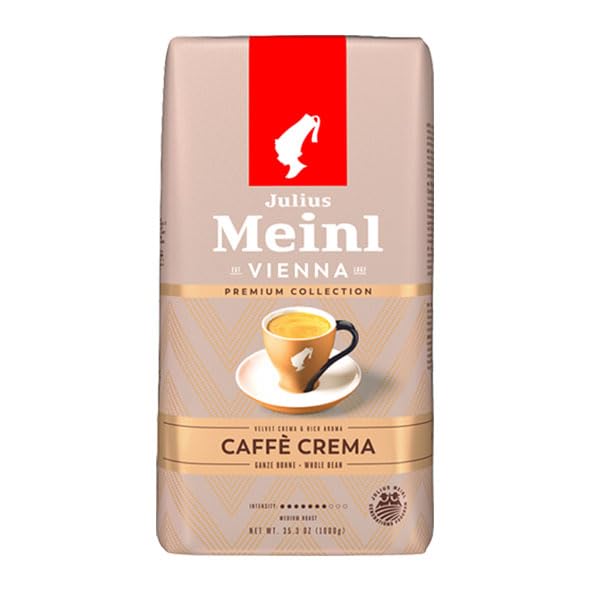
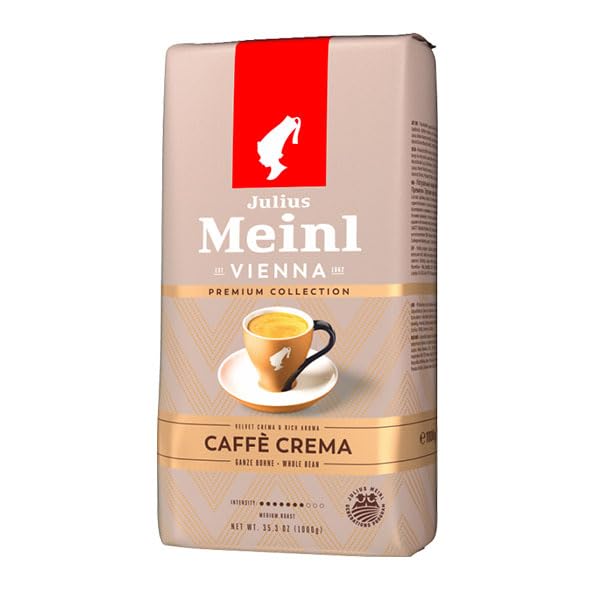
Julius Meinl Caffè Crema Selezione
Strengths
- Optimized for super-automatics
- Low maintenance
- Rich, stable crema
Trade-offs
- Harder to find in some regions
- Mild flavor may lack depth for some
This is one of the few beans explicitly engineered for super-automatic machines, and it shows. The non-oily surface prevents clumping in bean hoppers, and owners report fewer maintenance issues over time, a real win for machines like Saeco or Jura. The medium roast is bright without being sharp, with a velvety mouthfeel and a crema so thick it almost holds the spoon.
European buyers especially praise its efficiency: you get more shots per kilo because it doesn’t require over-dosing to extract well. Against Lavazza Super Crema, it feels more refined and less sugary. It also adapts well to drip or moka pot, but its real strength lies in automated espresso. If you own a super-auto, this should be on your shortlist.
Product photos
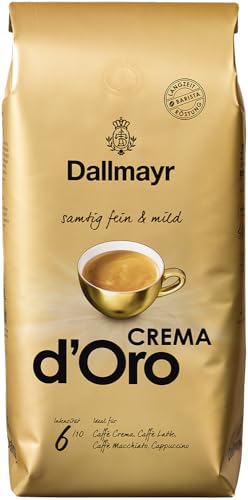
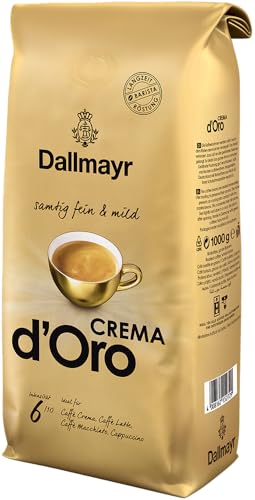
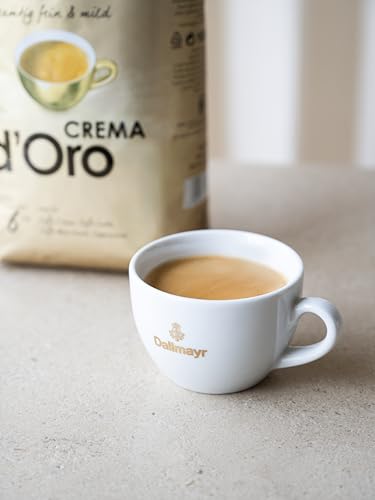
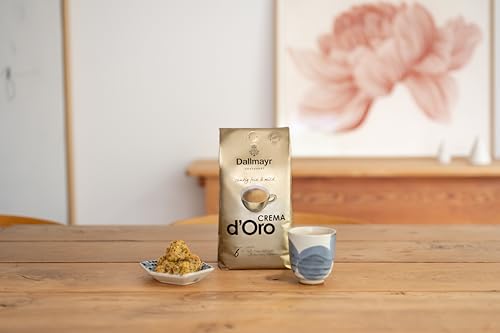
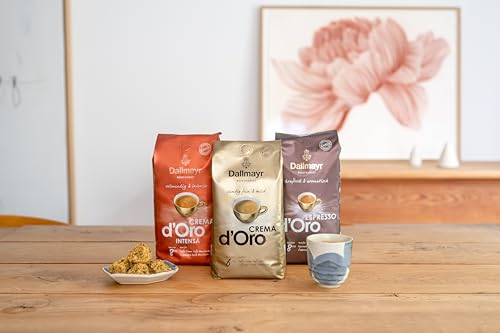
Dallmayr Crema d’oro Whole Bean
Strengths
- Smooth and mild
- Clean finish
- Machine-friendly
Trade-offs
- Lacks boldness
- Minimal crema thickness
Dallmayr is a German institution, and Crema d’oro reflects that heritage, a mild, finely balanced roast that prioritizes drinkability over drama. It’s not the flashiest bean here, but owners love it for daily sipping: low acidity, gentle bitterness, and a crema that’s surprisingly persistent for such a mild profile.
This is the kind of bean that disappears into your routine, no fuss, no bitterness, no machine gunk. Compared to Jacobs or Lavazza, it’s less bold, but more refined in its subtlety. It shines in drip or filter, but still pulls a respectable shot on espresso. If you want a calming morning cup rather than a caffeine punch, this fits the moment.
Product photos
Jacobs Crema Whole Bean
Strengths
- Excellent crema
- High yield per bag
- Smooth medium roast
Trade-offs
- Basic flavor profile
- Limited origin character
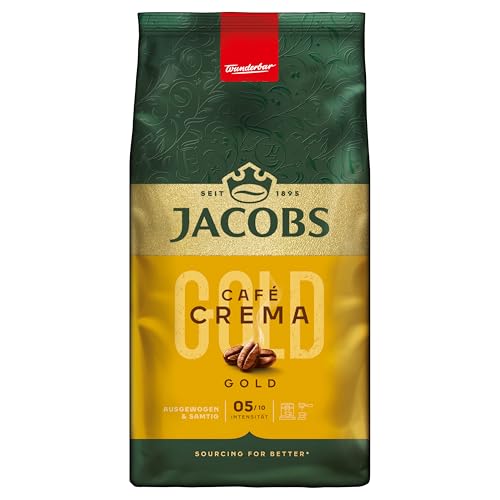
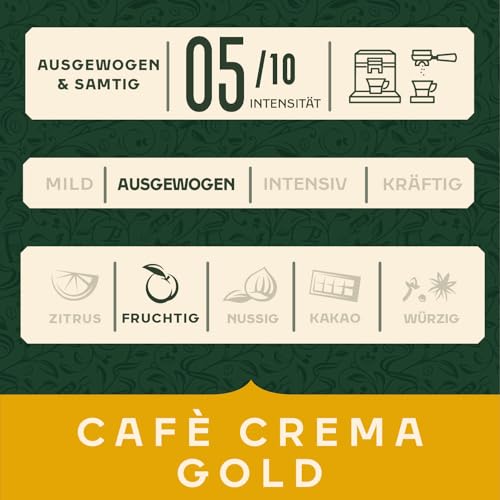
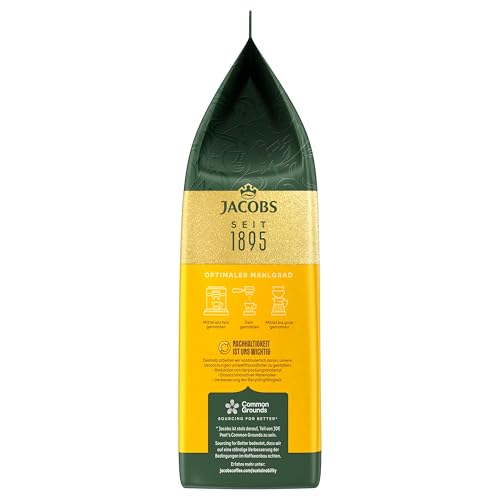
At this size and price point, Jacobs Crema is clearly built for volume drinkers who don’t want to sacrifice crema quality. The medium roast is tuned for European-style machines, and owners praise its ability to generate a stable, golden layer even in super-automatics prone to clogging. It’s not flashy, no standout floral or fruity notes, but it delivers what it promises: clean, consistent espresso with a mild bitterness and a surprisingly sweet finish.
Compared to Julius Meinl or Dallmayr, it lacks some aromatic sophistication, but it outperforms them in value per ounce. If you’re running multiple shots daily and don’t want to fiddle with dose or grind, this is a solid anchor bean. It won’t win cupping notes, but it won’t let you down during the morning rush.
Product photos



How We Tested crema coffee beans
As the founder of Bean Thusiast, I approached researching crema coffee beans by focusing on a detailed comparison of published specifications and features. I then weighed those against a large volume of owner reviews and assessments from respected coffee publications. Rather than a hands-on lab test, this is a research-led comparison designed to identify beans consistently praised for their ability to produce a rich, desirable crema. My goal was to pinpoint which beans deliver on that promise, based on real-world feedback.
For crema coffee beans, the roast level and blend composition stood out as the most critical factors. A medium-dark roast generally provides the sugars needed for good crema formation in espresso, and the inclusion of Robusta beans (even in smaller percentages) often enhances both crema thickness and longevity. Beyond that, the origin of the beans played a role, with South American and Asian varieties frequently appearing in blends known for excellent crema.
Specifications reliably indicate roast level and bean composition. However, assessing the quality of crema – its color, texture, and persistence – requires looking at owner feedback. I paid close attention to descriptions of golden crema on espresso and comments on how well the beans performed in various machines. Reputation and consistent positive reviews were strong indicators of a bean’s ability to deliver a satisfying crema experience.
How To Choose The crema coffee beans
As someone who’s spent years chasing that perfect espresso shot, I know crema isn’t just about looks – it’s a sign of quality, a textural delight, and a key component of a truly satisfying cup.
A good crema coffee bean focuses on a balanced roast profile (typically medium-dark) to develop soluble compounds. Look for beans with a noticeable oil content, a fresh roast date, and blends incorporating Robusta beans for enhanced body and emulsification. Proper grinding and machine maintenance are also crucial to achieving optimal crema.
Roast Level and Bean Blend
The roast level is paramount when seeking excellent crema. Generally, darker roasts yield more crema due to the increased solubility of oils. However, too dark and you risk a burnt, bitter flavor. I’ve found that a medium-dark roast is the sweet spot, offering a balance between crema production and nuanced flavor. Blends are also key; a combination of Arabica and Robusta beans often delivers the best results. Robusta contributes to a thicker, more stable crema, while Arabica provides the complexity and aroma.
Freshness and Origin
Freshness is absolutely crucial – and I mean really fresh. Coffee beans begin to stale as soon as they’re roasted, losing both flavor and their ability to produce a good crema. Look for beans with a clear roast date (not just a “best by” date) and aim to use them within a few weeks of roasting. As for origin, while you can find excellent crema-producing beans from many regions, South American and Asian beans are frequently used in blends designed for espresso, offering a good foundation for developing that rich, golden layer. If you’re looking to learn more about selecting quality coffee beans understanding origin can really elevate your selection.
Grind Size and Machine Compatibility
Even the best beans won’t produce good crema with an improper grind. Espresso requires a very fine, consistent grind to create the necessary pressure for emulsification. A burr grinder is essential here; blade grinders produce inconsistent particles that will lead to uneven extraction and a thin, weak crema. Also, consider your machine. Some beans, like the Julius Meinl Caffè Crema Selezione, are specifically optimized for super-automatic machines, while others perform better in traditional lever machines. Finding the best beans for espresso crema can depend on the equipment you use.
Here’s a quick guide to what I look for when thinking about grind size: * Too Coarse: Weak crema, sour taste. * Just Right: Thick, reddish-brown crema, balanced flavor. * Too Fine: Bitter taste, slow extraction, potentially channeling (water finding the easiest path through the grounds). This is often a sign your grinder needs cleaning or adjustment.
Don’t chase color alone. A beautiful, dark crema isn’t always indicative of a great shot. Focus on texture – it should be velvety, stable, and have a slight elasticity.
Crema Coffee Beans Compared
Here’s a specification comparison of the featured crema coffee beans to help you find the right choice.
| Product Name | Roast | Blend | Intensity | Notes | Weight (lbs) | Best For |
|---|---|---|---|---|---|---|
| Kimbo Espresso Crema Intensa | Medium-Dark | South America/Asia | 11/13 | Spicy, Toasted | N/A | Best Overall |
| Lavazza Super Crema Whole Bean | Medium | Arabica/Robusta | N/A | Bold, Creamy | 2.2 | Best Budget Friendly |
| Caffè Borbone Crema Superiore | Medium | Arabica/Robusta | N/A | Chocolate, Vanilla | 2.2 | Best Chocolate/Vanilla |
| Caffè Borbone Crema Classica | Medium | Arabica/Robusta | N/A | Caramel, Nutty | 2.2 | Best Caramel/Nutty |
| Lavazza Espresso Barista Gran Crema | Dark | Arabica/Robusta | 7/10 | Honey, Roasted Coffee | 2.2 | Best Dark Roast |
| Lavazza Crema E Aroma | Medium | Arabica/Robusta | 8/10 | Chocolate | 2.2 | Best Earthy/Intense |
| Julius Meinl Caffè Crema Selezione | Medium | N/A | N/A | Smooth | 1.23 | Best for Auto Machines |
| Dallmayr Crema d’oro Whole Bean | N/A | N/A | N/A | N/A | N/A | Best German Roast |
| Jacobs Crema Whole Bean | Medium | N/A | N/A | N/A | N/A | Best Value Pack |
Frequently Asked Questions
What percentage of Robusta beans is ideal for crema?
Around 30% Robusta is a good starting point for enhanced crema, but it varies. Some blends successfully use as little as 10% while others go up to 50% or even higher, depending on the desired flavor profile and the quality of the Arabica beans used.
Can pre-ground coffee produce good crema?
While possible, it’s unlikely. Pre-ground coffee loses its volatile oils quickly, which are essential for crema formation, and the inconsistent grind size hinders proper extraction. For optimal crema, I always recommend grinding your beans right before brewing.
Does water temperature affect crema production?
Absolutely. Water that’s too cool won’t extract enough oils, resulting in thin crema. Ideally, your water should be between 195-205°F (90-96°C) for the best extraction and a rich, stable crema.
Will a higher-quality espresso machine guarantee better crema?
A good machine is important, but it’s not the only factor. While a machine with consistent temperature and pressure control will certainly help, the beans themselves are more crucial. You can’t create great crema from subpar beans, even with a top-of-the-line machine.
Where can I find more information on selecting the best espresso roast coffee beans?
You can find detailed guidance on selecting best espresso roast coffee beans on my site, Bean Thusiast. There, I cover a broader range of factors, including specific roast profiles and bean origins.
The Bottom Line
Ultimately, achieving excellent crema comes down to balancing your desire for control over flavor with the convenience of a consistently good result. For the best overall experience, consistently praised for its rich, spicy notes and reliable crema production, I recommend the Kimbo Espresso Crema Intensa. It strikes a fantastic balance between flavor complexity and crema performance, and is a strong starting point for anyone serious about their espresso.
If you’re working with a tighter budget, or have a super-automatic machine, there are excellent options available too. The Lavazza Super Crema Whole Bean delivers a surprising amount of crema for its price, and the Julius Meinl Caffè Crema Selezione is specifically designed to perform beautifully in automatic machines. Don’t overlook the Caffè Borbone Crema Classica if you prefer caramel and nutty notes in your espresso.
At the end of the day, roast level and freshness matter far more than any single origin story or marketing claim. Focus on beans roasted within the last few weeks, aim for a medium-dark roast, and ensure a consistent, fine grind. Understanding espresso roast requirements will put you well on your way to consistently pulling shots with that beautiful, velvety crema we all crave.
