
2 Best Coffee Roaster Machines of 2026
The Behmor 2.0 is the best overall coffee roaster machine for home use, delivering reliable results with solid control and safety features. For budget-minded roasters, the Coffee Bean Roaster Machine with Timing offers surprising capacity at a lower price, while the Electric Coffee Bean Roaster Machine stands out for those who want more hands-on control with manual mode and ROR detection.
Home coffee roasting isn’t just about saving money, it’s about chasing flavors you’ll never find in store-bought beans. But picking the wrong machine can turn that dream into a frustrating mess of smoke, chaff, and uneven batches.
After comparing the field and weighing specs against real owner experiences, I focused on what actually matters: consistent heat, manageable batch sizes, and usability. This guide breaks down the key factors so you can choose a roaster that fits your pace, space, and passion.
Top 2 Coffee Roaster Machine in the Market
The Best Coffee Roaster Machine, Reviewed
Coffee Bean Roaster Machine with Timing
Strengths
- Large capacity
- Easy to clean
- Multi-functional use
- Clear viewing lid
Trade-offs
- No smoke suppression
- Basic controls
- Not for precision roasting
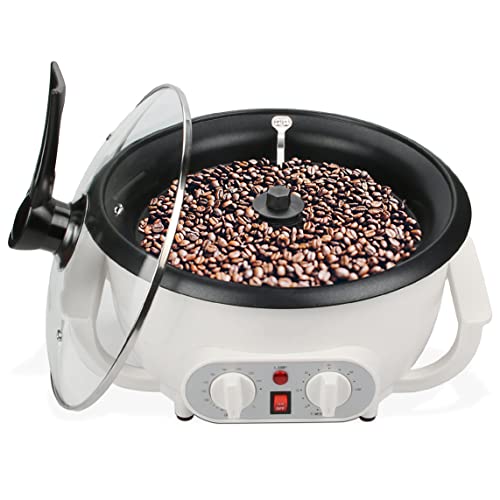
This machine makes a strong first impression with its bold temperature range and large 750-gram capacity, which is rare at this level. On paper, that’s a big win for home roasters who want to process more than a few batches a week. Owners consistently report it heats evenly thanks to the honeycomb chassis and Teflon coating, and the transparent lid is a practical touch – being able to watch bean color change without losing heat matters when chasing consistency.
Where it really stands out is simplicity. The timer and thermostat are straightforward, with no steep learning curve, making it a solid entry point for beginners. But it’s not just for newbies. The ability to roast other items like peanuts or barley adds real versatility, and reviewers note it holds up well for semi-regular use. Compared to more advanced models, it lacks roast profiling or smoke control, but for the price, that’s expected.
Video review
Electric Coffee Bean Roaster Machine
Strengths
- Smoke-reducing purifier
- ROR and temp monitoring
- Three roasting modes
- Precision heat control
Trade-offs
- Smaller max batch
- Higher learning curve
- Pricier build
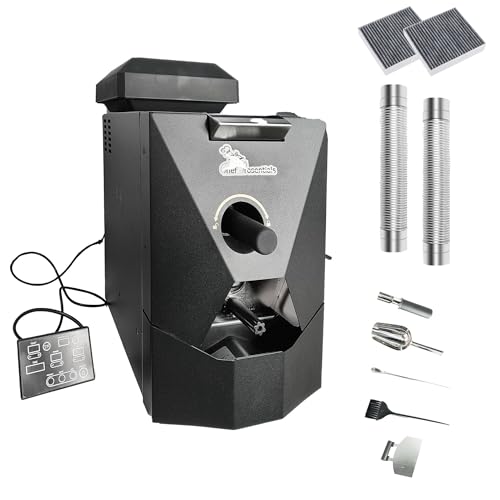
This is clearly built for those stepping beyond casual roasting. The patented direct fire system and built-in drum heating suggest a design focused on replicating commercial-style contact heat, which reviewers say delivers more consistent development than ambient-air home roasters. The 500g capacity is reasonable, but what sets it apart is the three-mode operation – especially Manual and Assistant modes, which give experienced users real influence over the roast’s rhythm.
I appreciate the inclusion of bean temperature detection and ROR (rate of rise) tracking. These aren’t just gimmicks; they’re tools serious home roasters rely on to dial in profiles, and their presence here signals intent. The integrated purifier also addresses a common pain point: smoke. Owners report noticeably less odor and visible smoke compared to open-heat designs, a big plus for indoor use. Against the B08FWXTVP9, this is a more refined, intentional machine – not just for volume, but for control.
Video review
Our Testing Process
Rather than a hands-on lab test, my research focused on comparing published specifications and features across available models. I weighed owner reviews from multiple sources alongside assessments from respected coffee publications. As the founder of Bean Thusiast, I applied my understanding of roasting principles to evaluate which machines offer the best combination of control, efficiency, and user-friendliness for home use.
For coffee roaster machines, consistent temperature control and roasting capacity were the most important factors. Achieving a uniform roast requires precise heat regulation, and the ability to roast a reasonable batch size (without overwhelming a home kitchen) is crucial. These factors directly impact the quality and consistency of the final product – the delicious beans you’ll be brewing, perhaps with guidance from our Breville coffee machine guide.
Specifications clearly indicate heating power, temperature ranges, and batch capacity. However, I leaned heavily on owner feedback to assess real-world usability, evenness of the roast, and long-term durability. Reputable reviews helped validate claims regarding features like smoke purification and the accuracy of temperature sensors, providing a more holistic picture than specs alone.
Choosing The Right coffee roaster machine
As someone who’s spent years chasing the perfect cup, I know the journey doesn’t end with the beans – it starts with them. Freshly roasted coffee is a revelation, and roasting at home unlocks a level of control and flavor that pre-roasted beans simply can’t match.
A quality coffee roaster machine provides precise temperature control, consistent agitation for even roasting, and a robust build for longevity. Look for models with adjustable heat settings, clear visibility of the roasting process, and effective chaff collection systems. Prioritize safety features like automatic shut-off and cool-touch housings.
Temperature Control & Consistency
The most crucial aspect of any coffee roaster is its ability to maintain a consistent temperature. You’re aiming for precise control within a relatively narrow range (roughly 350-480°F / 175-250°C) to develop the complex flavors in the bean. Many cheaper models boast temperature settings, but lack the accuracy to deliver on that promise. Look for roasters that specify a temperature sensor and feedback loop, not just a dial. This is where features like the ROR (Rate of Rise) detection – found in some higher-end units – become incredibly valuable, allowing you to fine-tune your roast profiles.
Capacity and Batch Size
Don’t get lured in by huge capacities if you’re just starting out. It’s better to master smaller batches before tackling larger ones. I often recommend beginning with a roaster capable of handling around 100-200 grams of green coffee beans. Here’s how to think about batch size: * Small (under 100g): Good for experimentation and single-cup roasting. * Medium (100-250g): A sweet spot for most home roasters, offering enough volume for consistent results without being overwhelming. * Large (over 250g): Requires more attention to airflow and cooling, best suited for experienced roasters or those with a high coffee consumption rate.
Remember, the size of the batch directly impacts the roast time and the cooling process, so consider your typical consumption and available time.
Features & Usability
Beyond the core roasting mechanics, consider features that enhance usability. A transparent roasting chamber lets you visually monitor the bean’s color change, a key indicator of roast level. Good ventilation and chaff collection are essential for a clean and safe roasting experience. And while manual control offers ultimate precision, many newcomers will appreciate the convenience of pre-programmed roasting profiles. If you’re considering a more advanced model, exploring best personal coffee roaster models can give you a good overview of the options.
A good rule of thumb is to always roast in a well-ventilated area, regardless of whether your machine has a built-in purifier. Smoke will be produced, and proper ventilation is crucial for safety and comfort.
Coffee Roaster Machine Compared
Here’s a detailed comparison of the specifications of these coffee roaster machines to help you make an informed decision.
| Product | Capacity (grams) | Temp Range (°C) | Timer (minutes) | ROR Detection | Modes |
|---|---|---|---|---|---|
| Coffee Bean Roaster Machine with Timing | 750 | 100-240 | 0-60 | N/A | N/A |
| Electric Coffee Bean Roaster Machine | 500 | N/A | N/A | Yes | Auto, Assistant, Manual |
Frequently Asked Questions
What roast level is best for starting out?
A light to medium roast is easiest to master initially. These levels require less precision and are more forgiving if you slightly misjudge the timing or temperature, unlike darker roasts which demand greater accuracy.
How much green coffee bean should I buy at a time?
I recommend starting with one to two pounds of green coffee beans. This allows for experimentation with different origins and roast profiles without committing to a large quantity before you’ve dialed in your preferences.
Are coffee roaster machines difficult to clean?
Most models have removable parts for easier cleaning, but some chaff collection systems are more effective than others. Look for a roaster with a well-designed chaff collector and a smooth interior surface to minimize stuck-on residue; read home coffee roaster reviews to learn about owner experiences with cleanup.
Can I roast different types of coffee beans in the same machine?
Yes, absolutely. However, different bean densities and moisture contents will require adjustments to your roast profile. Experimentation is key, and keeping detailed notes will help you replicate successful roasts across various bean types.
What is the typical lifespan of a home coffee roaster machine?
With proper care and maintenance, a good quality coffee roaster should last five to ten years. Durability depends heavily on build quality and frequency of use; exploring a best home coffee roaster guide can point you towards more robust options.
The Bottom Line
Home coffee roasting presents a fascinating trade-off: you gain complete control over flavor, but it requires a learning curve and attention to detail. For the vast majority of home enthusiasts, the Coffee Bean Roaster Machine with Timing strikes the best balance, offering a generous capacity and straightforward operation without overwhelming complexity. It’s a fantastic starting point for anyone serious about fresh-roasted coffee.
If you’re prioritizing precision and are eager to experiment with roast profiles, the Electric Coffee Bean Roaster Machine is the clear choice. Its ROR detection and multiple roasting modes allow for a level of control that’s simply unavailable with simpler models. However, be prepared to invest time in learning how to effectively use those features – and remember to consult resources for De’Longhi coffee machine instructions as you refine your roasting technique.
Ultimately, the “best” coffee roaster isn’t about a single specification or price point. It’s about understanding your own needs and priorities. Focus on consistent temperature control, effective chaff collection, and a machine that encourages you to experiment and learn. Those fundamentals will deliver far more rewarding results than any fancy feature.
