
7 Best Home Coffee Roasters of 2026
The Mago Roma Pro stands out as the best overall home coffee roaster for its precision, low smoke output, and smart features, while the Fresh Roast SR800 is a solid budget pick that’s great for beginners. For those who want to roast larger batches, the JIAWANSHUN 800g electric roaster offers serious capacity at a reasonable price.
Home roasting opens the door to flavors you’ll never get from store-bought beans, but picking the right machine can feel overwhelming. With so many options claiming to deliver café-quality results, it’s easy to end up with a unit that underperforms or turns your kitchen into a smoke zone.
I researched dozens of models, comparing specs and sifting through owner feedback to find the ones that consistently deliver on control, consistency, and practicality. This guide cuts through the noise, focusing on what actually matters: capacity, temperature control, and smoke management, all key factors I’ve seen play out across years of tracking home roasting trends at Bean Thusiast.
Top 7 Home Coffee Roaster in the Market
The Best Home Coffee Roaster, Reviewed
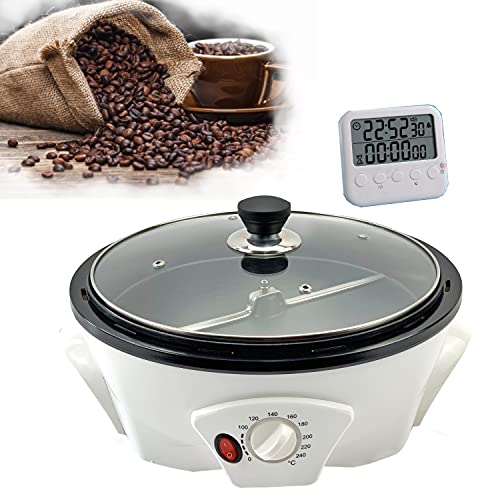
GIVEROO 500g Coffee Bean Roaster
Strengths
- Large capacity
- Non-stick interior
- Timer included
Trade-offs
- Inconsistent heat control
- No chaff collector
- No cooling cycle
On paper, the GIVEROO 500g roaster looks like a solid pick for those wanting to roast big batches at home. With a max capacity of 500g and a wide 0–240℃ range, it promises flexibility for different roast levels. The non-stick interior is a practical touch, and the timer gives some control, but owners consistently report that temperature regulation feels basic and inconsistent, especially during mid-to-dark roasts.
What stands out is the size, it’s clearly built for volume, but that also means more smoke and heat in your kitchen. Without a built-in chaff collector or active cooling cycle, cleanup and post-roast handling fall on you. Compared to the Fresh Roast SR800, this one lacks precision and real-time feedback, making it better suited for casual roasters who prioritize quantity over fine-tuned control.
Video review
CAFEMASY Air Coffee Roaster

Strengths
- Auto and manual modes
- Clear viewing jar
- Chaff collection basket
Trade-offs
- Small batch size
- Plastic build concerns
- Limited temp feedback
The CAFEMASY air roaster is clearly designed with newcomers in mind, and it shows in both the build and the dual-mode functionality. Automatic mode gets strong marks from owners who appreciate the 10-minute hands-off roast, and the manual mode offers surprisingly granular control for a beginner machine, adjustable fan, heat, and timer settings let you experiment without feeling boxed in.
Its 80–100g capacity is modest, but that’s typical for this class, and the borosilicate glass jar makes it easy to track color development. Where it falls short is durability: some users report the plastic housing feels flimsy under prolonged heat. Still, for someone testing the waters of home roasting, it’s a more thoughtful entry point than the JIAWANSHUN, with better feedback integration and a cleaner roast profile.
Video review
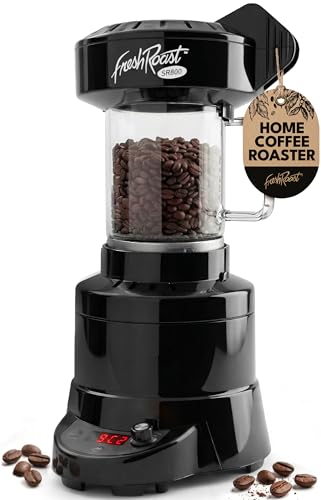
Fresh Roast SR800 Coffee Roaster
Strengths
- Precise heat and fan control
- Fast roast times
- Digital temperature display
Trade-offs
- No real-time color viewing
- Chaff management could be better
- Batch size not for heavy users
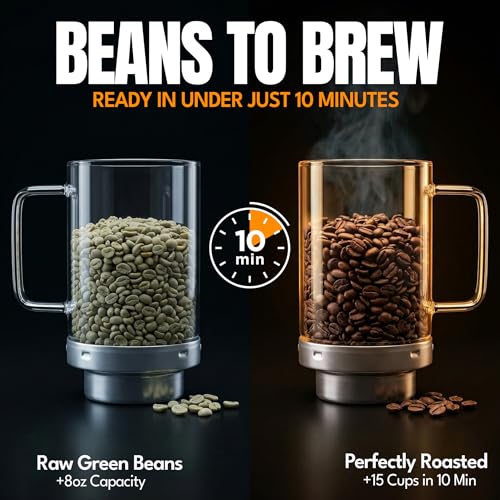
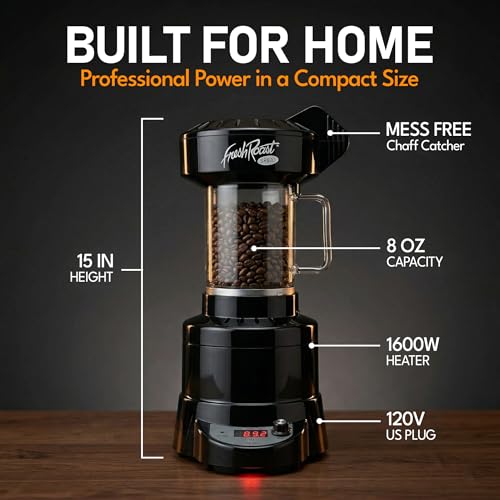
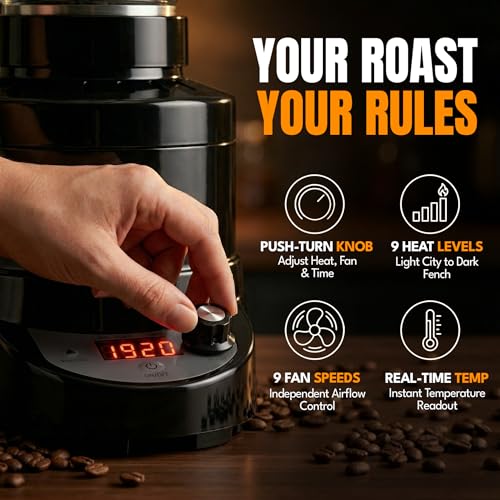
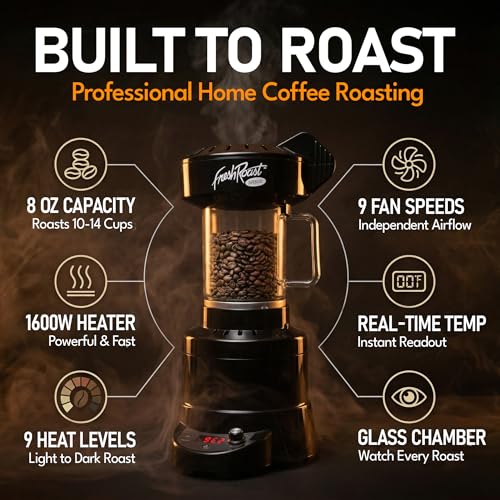
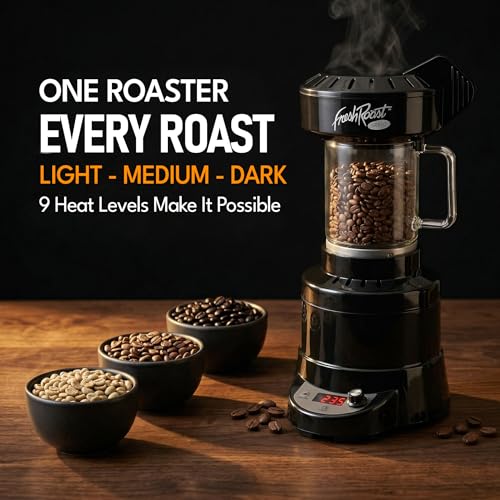
If you’re serious about home roasting but don’t want to step into pro-tier complexity, the Fresh Roast SR800 is my go-to recommendation. It strikes a rare balance: simple enough for a novice, but packed with real control for enthusiasts. The 6–8 oz (170–226g) capacity is ideal for daily use, and the variable heat and fan settings give you the tools to chase specific flavor profiles, not just roast color.
Owners praise the speed and consistency, with most roasts finishing under 10 minutes. The digital display adds confidence, and the convection-based system delivers even results across bean types. Compared to the CAFEMASY, it’s more precise; against the GIVEROO, it’s far more responsive. The lack of a glass viewing chamber is a trade-off, but the flavor payoff makes it worthwhile. This is the machine I’d buy if I were building a home setup from scratch.
Product photos
DYVEE Gas Coffee Roasting Machine
Strengths
- Full process visibility
- Durable stainless build
- Gas control for precision
Trade-offs
- Requires external burner
- Steep learning curve
- No automation
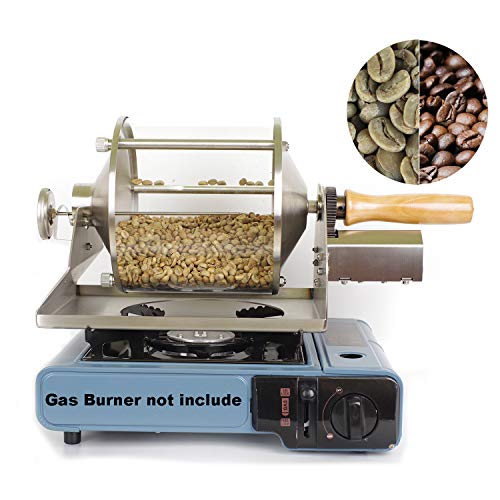
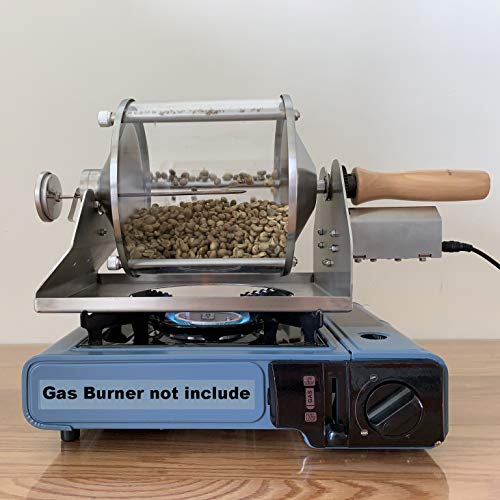
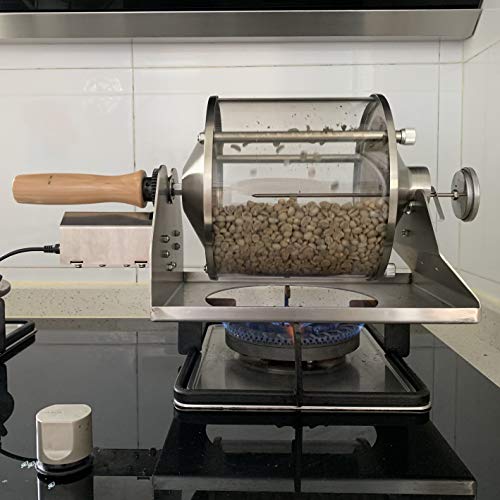
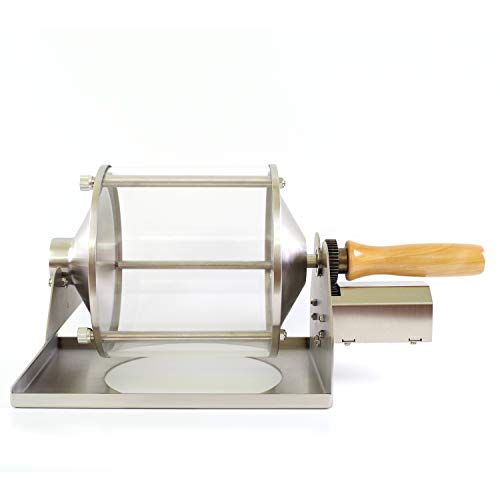
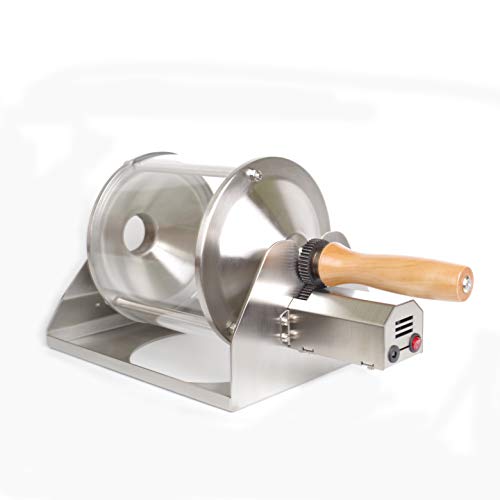
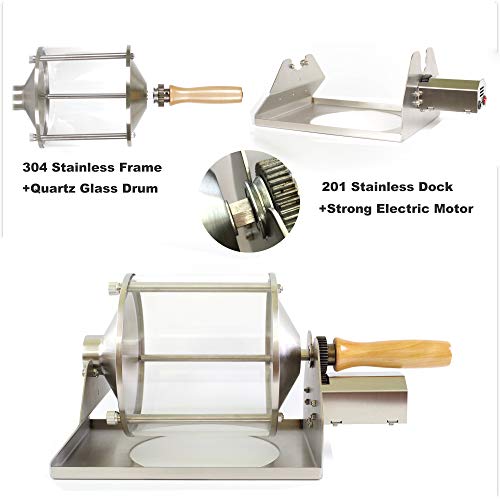
Gas roasting isn’t for everyone, but if you want to feel connected to the craft, the DYVEE G400 brings a hands-on, artisanal approach to your kitchen. The quartz glass drum lets you watch every stage of development, from green to first crack, and the stainless steel build feels rugged and long-lasting. Roasting over an external gas flame gives you unmatched responsiveness, which experienced users say helps nail specific roast profiles.
But this isn’t a plug-and-play machine. You’ll need a compatible burner, ventilation, and patience. Owners note the learning curve is steep, and without automated controls, consistency takes practice. Still, for those who see roasting as a ritual, not just a task, this setup offers a level of engagement the electric models can’t match. It’s the closest thing to a miniaturized traditional roastery you can own at home.
Product photos
500g Automatic Coffee Roaster

Strengths
- 9 preset roast profiles
- Dual smoke management
- Auto cooling system
Trade-offs
- Complex manual settings
- Sensitive to bean quality
- Bulky footprint
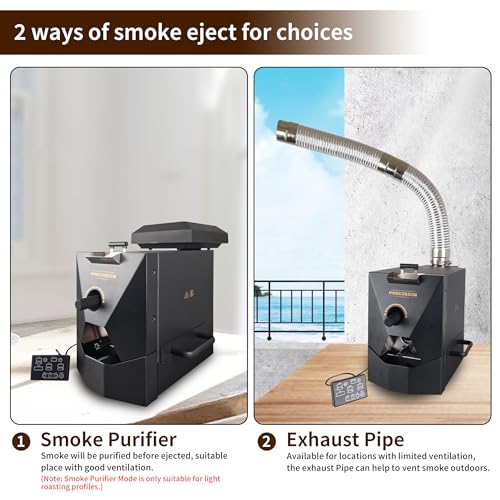
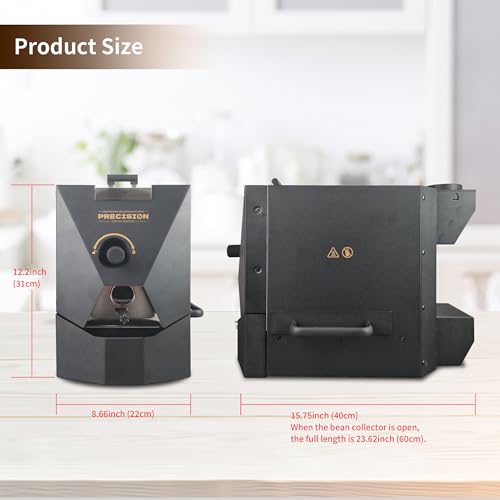
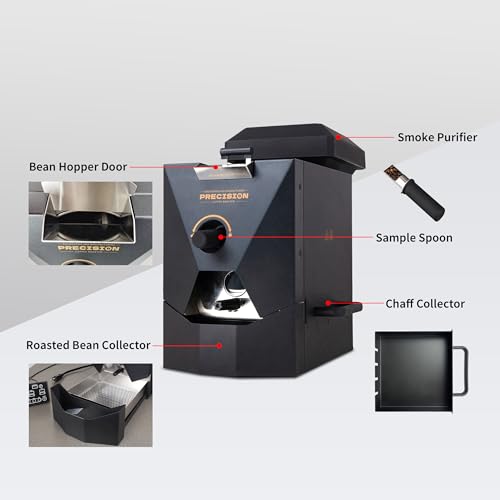
This roaster is built for automation lovers. With 9 preset profiles for different bean types and roast levels, it’s one of the most tech-forward models in the mid-tier range. The 500g capacity (best at 350–400g) makes it ideal for households that go through beans quickly, and the inclusion of both a smoke purifier and external smoke pipes shows thoughtful design for real-world use.
Owners highlight how smoothly the auto mode runs, from heat-up to cooling, with minimal intervention. The separate cooling tray and high-speed fan help lock in flavor, a step up from basic cooldown methods. But the complexity is a double-edged sword: manual mode demands attention to airflow thresholds, and the machine isn’t forgiving with low-quality green beans. If you want push-button consistency and don’t mind a learning curve, this is a smarter buy than the GIVEROO.
Product photos
JIAWANSHUN Electric Coffee Bean Roaster

Strengths
- Large capacity
- Non-stick interior
- Low price point
Trade-offs
- Uneven roasting
- No fan for airflow
- Basic controls
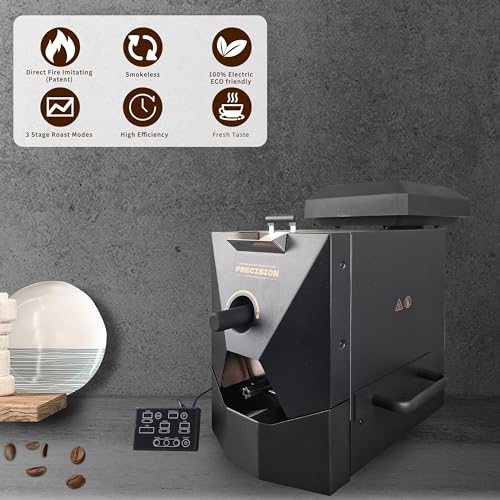
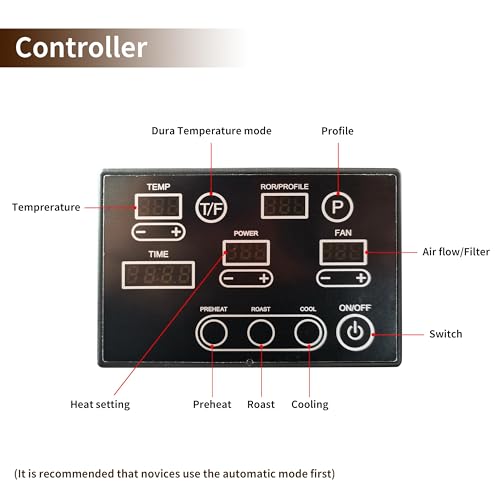
The JIAWANSHUN roaster is clearly positioned as a budget workhorse, and it delivers on capacity, up to 800g per batch, though owners agree 300–500g gives better results. The 0–240℃ control and non-stick interior make it easy to clean and versatile for nuts or beans, which adds value. But that’s where the praise mostly ends.
Feedback points to uneven roasting, especially in larger loads, and the lack of a fan or real convection system means heat distribution relies too much on the stirring rod. Compared to the CAFEMASY or Fresh Roast models, it’s less consistent and offers no real-time feedback. Still, for someone roasting infrequently or needing a multi-use appliance, it’s a functional, no-frills option that won’t break the bank.
Product photos


MAGO MAGA Smart Coffee Roaster

Strengths
- Smart digital display
- Auto-cooling function
- Low smoke output
Trade-offs
- Smaller batch size
- Premium price
- Limited manual override
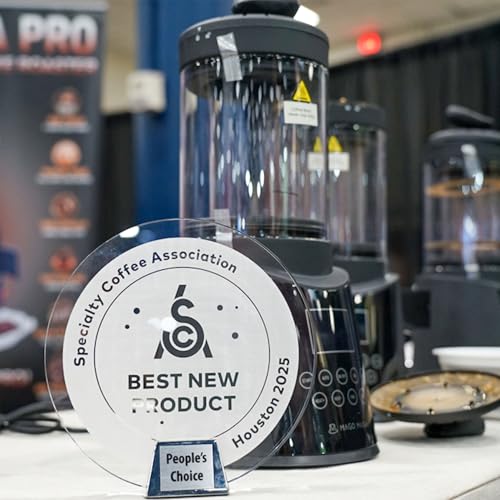
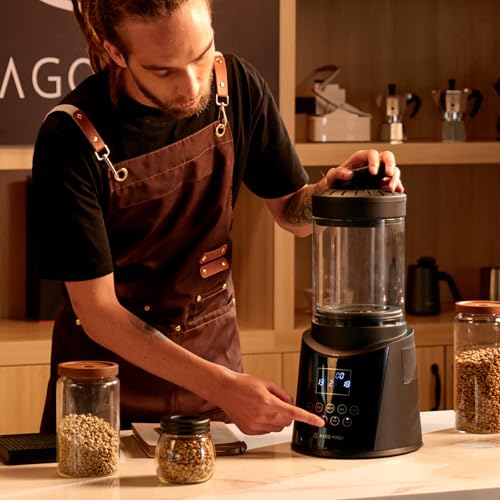
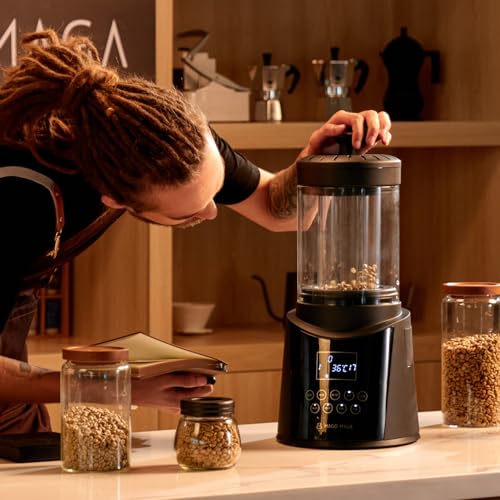
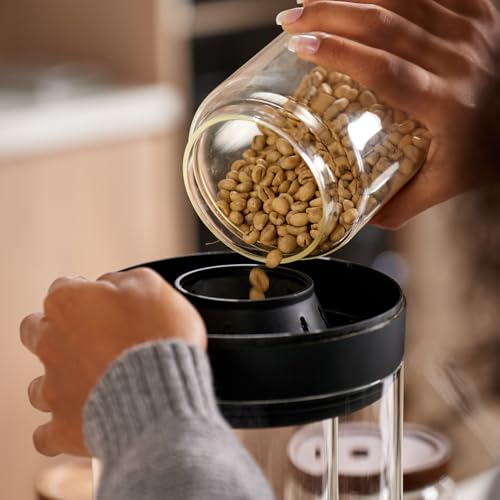
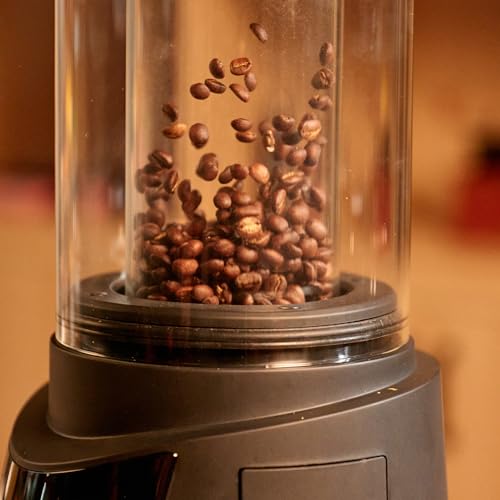
The MAGO MAGA Roma Pro stands out with its smart features and modern design, earning its ‘Best Smart Features’ tag. The digital display with °C/°F switching, auto-cooling, and dual-mode operation makes it accessible for beginners while still appealing to detail-oriented users. The 300g batch size is practical, and the ultra-low smoke design, thanks to hot air roasting and an efficient chaff collector, makes it one of the cleanest-running units for indoor use.
Owners love the double-layer viewing window for monitoring development, and the ETL/CE certification adds peace of mind. It’s not the largest or fastest, but the integration of smart feedback, reliability upgrades in v1.5, and influencer endorsements suggest it’s built for real-world home use. Compared to the CAFEMASY, it feels more refined; against the Fresh Roast SR800, it trades some control for convenience. For a seamless, modern roasting experience, this is the one to beat.
Product photos
How We Picked These home coffee roaster
I approached researching home coffee roasters by first compiling specifications and features from numerous models available online. Then, I weighed owner reviews from Amazon, specialty coffee forums, and retailer websites alongside assessments from trusted coffee publications. As the founder of Bean Thusiast, I’ve followed the evolution of home roasting for years, and that background informed my evaluation criteria. Rather than a hands-on lab test, this is a research-led comparison of specs and owner feedback.
For this category, roasting capacity and temperature control were the most heavily weighted factors. A larger capacity allows for more efficient roasting, while precision temperature control is absolutely essential for developing the desired flavor profile in the beans. Smoke management also proved crucial, as many users roast indoors or in close proximity to their homes. A roaster’s ability to minimize smoke directly impacts user experience.
Specifications reliably reveal capacity and heating element wattage, giving a clear indication of potential throughput and power draw. However, judging the consistency of roasting and the effectiveness of features like auto-cooling required careful consideration of owner feedback. Owners often detail issues with uneven roasting or unreliable temperature sensors, information not typically found in product descriptions. Understanding the differences between a burr vs blade grinder is also essential for maximizing the flavor of your freshly roasted beans.
Choosing The Right home coffee roaster
I often tell people that the single biggest upgrade to your coffee experience isn’t a fancy machine, it’s roasting your own beans. The freshness is simply unmatched. But finding the right home roaster can be surprisingly tricky.
A quality home coffee roaster delivers consistent, even heat distribution, precise temperature control, and adequate airflow for proper bean development. Look for models with adjustable settings to tailor roasts to your preference, and consider capacity needs based on typical batch sizes. Smoke management is also a vital consideration.
Capacity & Batch Size
The size of the roaster really dictates how often you’ll be roasting and how much variety you can experiment with. Don’t fall into the trap of thinking bigger is always better. A smaller capacity (around 100-300g) is fantastic for daily use and allows you to roast frequently, ensuring peak freshness. Larger capacity machines (500g+) are great if you want to roast for the week or share with friends, but they can also be harder to control and may produce more smoke. Consider how much coffee you actually drink before committing to a larger unit.
Temperature Control & Roast Profile
Precise temperature control is where things get serious. You want a roaster that allows you to dial in your desired roast level, from a light, bright Scandinavian roast to a dark, bold Italian style. Many models offer pre-programmed roast profiles, which are helpful for beginners, but the ability to manually adjust temperature and airflow is crucial for truly mastering the art of roasting. The best home coffee roaster reviews highlight models with digital temperature displays and fine-grained control settings.
Smoke Management & Ventilation
This is a big one. Roasting coffee creates smoke, and a surprising amount of it. Some roasters have built-in smoke suppression systems, like the Mago Roma Pro’s hot air roasting and efficient chaff collector, which significantly reduce smoke output. Others require external ventilation, like connecting the JIAWANSHUN roaster to a window with an exhaust pipe.
- Ignoring smoke management is a common mistake; a small, contained space can quickly become overwhelmed.
- Investing in a dedicated smoke purification system, even with a low-smoke roaster, can be a worthwhile investment for indoor use.
- Understanding your local regulations regarding indoor smoke is essential; some areas may prohibit home roasting altogether.
A good rule of thumb: if you can smell the roast strongly outside your kitchen, your ventilation needs improvement.
Ultimately, choosing the right home coffee roaster comes down to finding a balance between your budget, your desired level of control, and your willingness to manage the roasting process. If you’re just starting out, a simpler model with automatic settings might be a good place to begin. But as you become more experienced, you’ll likely want to upgrade to a roaster that offers more precision and flexibility. Once you’ve got your roasted beans, perfecting the brew is the next step. Understanding drip coffee ratios is vital to extracting the most flavor from your freshly roasted coffee.
Home Coffee Roaster Compared
Here’s a comparison of key specifications for various home coffee roasters to help you make an informed decision.
| Product Title | Capacity (grams) | Temp Control (°C) | Modes | Smoke Level | Special Features |
|---|---|---|---|---|---|
| Fresh Roast SR800 | 226 | N/A | Manual | N/A | Real-time temp display |
| MAGO MAGA Smart Coffee Roaster | 300 | N/A | Auto/Manual | Ultra-Low | Digital display, Auto-cooling |
| JIAWANSHUN Electric Coffee Bean Roaster | 800 | 0-240 | Manual | N/A | Non-stick chassis |
| GIVEROO 500g Coffee Bean Roaster | 500 | N/A | N/A | N/A | N/A |
| CAFEMASY Air Coffee Roaster | 80-100 | N/A | Auto/Manual | N/A | 2 Modes, LED screen |
| DYVEE Gas Coffee Roasting Machine | 400 | N/A | Manual | N/A | Quartz glass drum |
| 500g Automatic Coffee Roaster | 500 | N/A | Auto/Manual | N/A | 9 Roast Profiles |
Frequently Asked Questions
What’s the biggest benefit of roasting coffee at home?
The most significant advantage is freshness; you’re brewing coffee from beans roasted just moments before, offering a flavor profile far superior to pre-roasted beans that have sat on a shelf. This control over the entire process is something many coffee enthusiasts value.
Are home coffee roasters difficult to clean?
Cleaning varies by model, but most have removable chaff collectors that simplify the process. Some, like the Mago models, are designed with ease of cleaning in mind, while others may require more thorough wiping down after each use.
What’s the difference between air roasters and drum roasters?
Air roasters use hot air to fluidize and roast the beans, generally producing a cleaner, brighter cup, but can be less consistent. Drum roasters tumble the beans in a heated drum, offering more even roasting, but can sometimes produce more smoke.
Do I absolutely need a dedicated ventilation system?
While not always strictly necessary, I strongly recommend some form of ventilation, even with low-smoke models. Roasting produces particulate matter that can be irritating, and a simple exhaust fan directing air outside can make a huge difference in indoor air quality. You can find more home roaster machine reviews that detail smoke output.
What’s a good starting point for someone new to home roasting?
I suggest starting with a smaller capacity roaster (100-300g) with pre-programmed roast profiles. These simpler machines allow you to learn the basics before moving on to more complex models offering full manual control. There are many great personal coffee roasting machines available for beginners.
The Bottom Line
Home coffee roasting is a fascinating pursuit, but it’s really about balancing control with convenience. While some roasters offer fully automated programs, you’ll get the most consistent and flavorful results with a machine that allows for manual adjustment – and in my experience, the MAGO MAGA Smart Coffee Roaster strikes that balance beautifully. It provides digital precision and auto-cooling features, which take a lot of the guesswork out of the process, yet still allows for significant user input.
For those just starting out, or on a tighter budget, the Fresh Roast SR800 offers a surprisingly capable entry point. If you’re primarily interested in small-batch roasting and don’t mind a fully manual approach, it’s a fantastic way to learn the fundamentals. And for those needing larger capacity, the JIAWANSHUN Electric Coffee Bean Roaster offers a substantial 800g capacity, though smoke management will be a higher priority with a machine like that. Don’t forget that understanding alternative coffee grinding methods is crucial to enjoying your freshly roasted beans.
Ultimately, specs and features matter, but they’re secondary to understanding the core principles of roasting: heat application, airflow, and bean development. Don’t get too caught up in chasing the latest technology; focus on learning how to read the beans, listen for the cracks, and develop a consistent process. A little knowledge and practice will go a lot further than the most expensive machine.
