
8 Best Coffee Machines for Cafes 2026
The Breville Barista Express BES870XL stands out as the best coffee machine for a cafe setup, delivering consistent espresso with a quality integrated grinder. For those watching the budget, the Ninja Luxe Café Premier offers strong versatility across brew types, while the Cafe Bueno Super Automatic is ideal for high-volume ease with its full automation.
Running a cafe means serving great coffee, fast, all day long. That demands a machine that won’t quit, delivers shot-to-shot consistency, and fits your workflow. I built this guide to cut through the noise, using specs, owner feedback, and my years of coffee experience to highlight machines that actually perform in real-world settings. We focused on grinders, temperature stability, boiler performance, and long-term reliability, because your machine should make great drinks, not headaches.
Top 8 Coffee Machine For Cafe in the Market
The Best Coffee Machine For Cafe, Reviewed
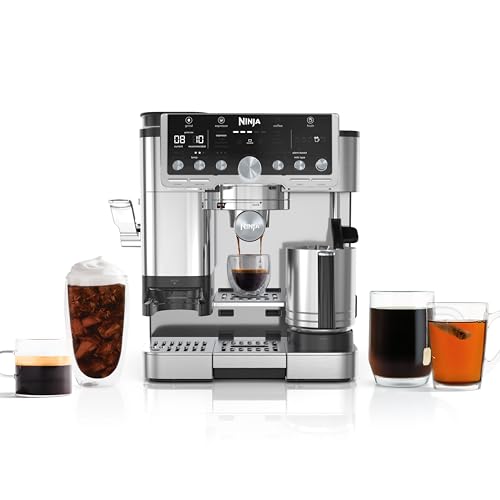
Ninja Luxe Café Pro Series
Strengths
- 4-in-1 functionality
- Adaptive grind tech
- Integrated tamper
- XL milk jug
- 5 froth presets
Trade-offs
- Complex interface
- Large footprint
- Higher price point
This is the upgraded sibling that fixes most of the Premier’s shortcomings, and it shows. With four machines in one (including an independent hot water system), it’s the most complete home coffee solution here. The Dual Froth System Pro with an XL milk jug and five froth presets gives real control, and the insulated steam wand reduces scalding risk.
What sets it apart is the adaptive grind-size recommendations, Barista Assist learns from your last brew, which reduces trial and error in a way even Breville doesn’t offer. The integrated tamper is also a standout for consistency. Compared to the Chefman or even the Breville, this delivers more automation without sacrificing control. For most households, this is the smarter buy.
Video review
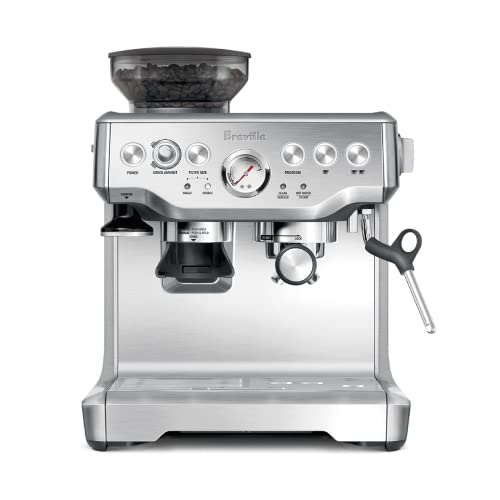
Breville Barista Express BES870XL
Strengths
- PID temperature control
- Pre-infusion
- Manual steam wand
- Integrated grinder
- Barista-grade results
Trade-offs
- Steep learning curve
- Daily maintenance
- No smart connectivity
If you care about the craft of espresso, the Breville Barista Express is still a benchmark. The PID temperature control and low-pressure pre-infusion deliver balanced, nuanced shots that owners consistently praise. The integrated conical burr grinder doses directly into the portafilter, and the included Razor tool helps fine-tune dose volume, small details that matter.
The manual steam wand is where this machine shines: it demands skill, but rewards it with café-quality microfoam and latte art potential. Compared to super-automatics, it’s more involved, but that’s the point. For those who want to learn espresso, not just press a button, this remains the gold standard.
Video review
Café Bellissimo Semi-Automatic

Strengths
- Wi-Fi enabled
- Large water tank
- Rotating steam wand
- 15 grind settings
- Italian-made pump
Trade-offs
- No built-in scale
- Steam wand requires skill
- App dependency
When a machine is Italian-made with a 15-bar pump and Wi-Fi connectivity, it’s clearly aiming at the tech-savvy home barista. The SmartHQ app integration stands out, owners love being able to adjust drink strength and volume remotely, and the software updates mean the machine improves over time. The 95-ounce water reservoir is a real plus for households that brew frequently, reducing refill fatigue.
The conical burr grinder with 15 grind settings gives solid flexibility, and the rotating steam wand offers real control over milk texture. But let’s be honest, this is a semi-automatic that leans more toward automation than craft. It doesn’t offer weight-based dosing like the Ninja Pro models, so you’re still guessing on dose accuracy. Still, for someone who wants smart features without fully automatic shortcuts, it strikes a smart middle ground.
Product photos


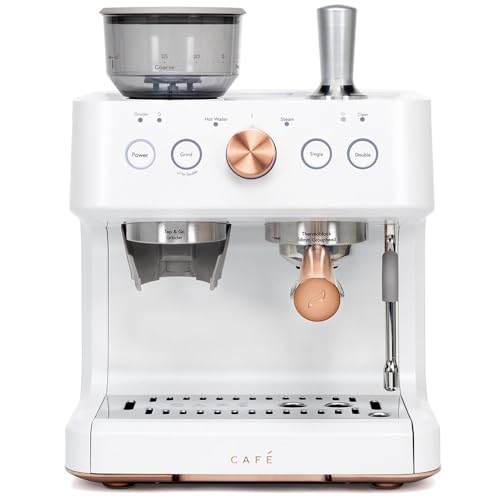
Cafe Bueno Super Automatic

Strengths
- Fully automatic
- 19 drink options
- Self-cleaning modes
- Large touchscreen
- Adjustable grind and temp
Trade-offs
- Limited smart features
- Not for espresso purists
- Smaller water tank
This machine promises barista-level drinks with zero effort, and on paper, it delivers exactly that. With 19 customizable drink options, a large touchscreen, and full automation from grinding to milk frothing, it’s built for people who want café-style beverages without the learning curve. Owners consistently report that the milk system works reliably across dairy and plant-based milks, and the self-cleaning functions actually reduce maintenance stress in a way many super-automatics fail to.
Where it stumbles slightly is in the fine-tuning. While it offers grind and temperature adjustments, the machine doesn’t learn from past brews or adapt like smarter models. It’s solid for plug-and-play use, but if you’re chasing nuanced flavor control, you’ll hit limits. Compared to the Café Bellissimo, it lacks Wi-Fi integration and real-time feedback, making it less dynamic over time.
Product photos


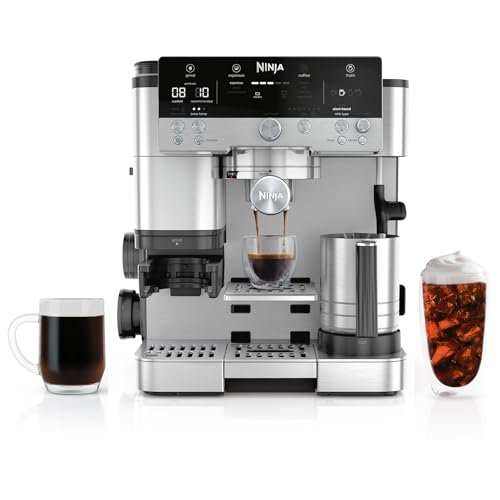
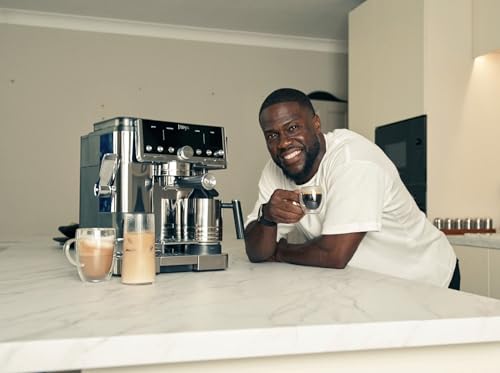
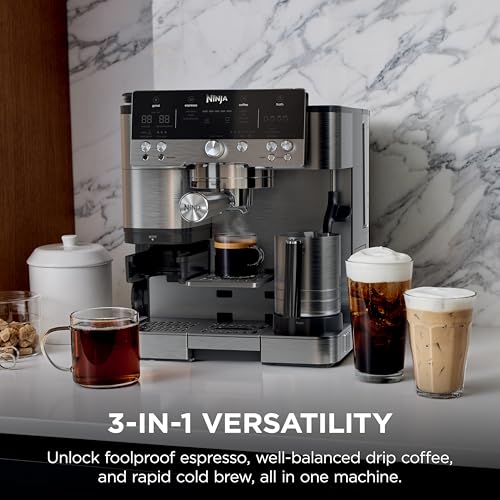
Ninja Luxe Café Premier
Strengths
- 3-in-1 versatility
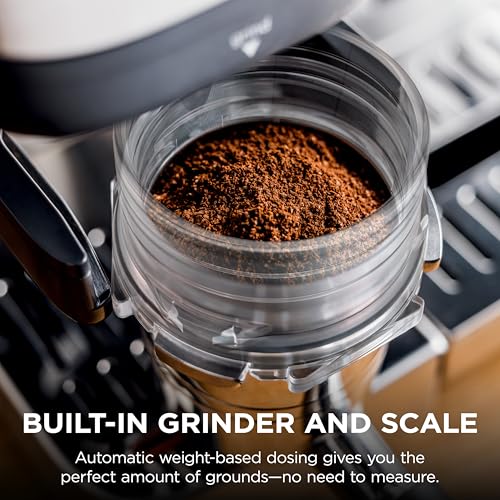
- Weight-based dosing
- Hands-free frothing
- 25 grind settings
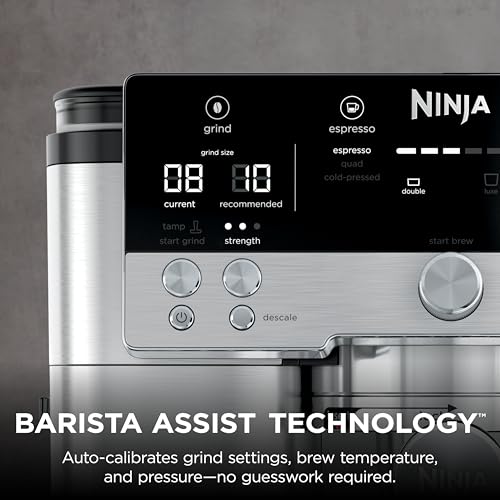
- Barista Assist Tech
Trade-offs
- Espresso lacks depth
- Plastic finish feels budget
- Frothing jug smaller than Pro
Ninja is pushing the envelope with machines that do everything, and this 3-in-1 model is a serious contender for versatility. It handles drip, espresso, and cold brew, all with a built-in conical burr grinder and weight-based dosing, which is rare at this tier. The Barista Assist Tech isn’t just marketing, it guides grind size and monitors extraction, helping avoid sour or bitter shots.
The hands-free frothing system is a win, especially with preset programs for cold foam and different milk textures. Owners say it’s forgiving for beginners but customizable enough for more experienced users. Still, it’s not as polished as the Breville Barista Express when it comes to espresso nuance. The assisted tamper helps, but the portafilter design doesn’t match the precision of higher-end models.
Product photos
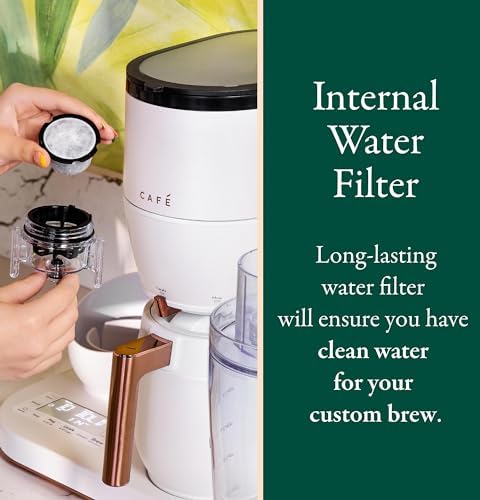
Café Specialty Grind & Brew

Strengths
- SCA certified
- Thermal carafe
- Adjustable grind
- Wi-Fi enabled
- Custom brew profiles
Trade-offs
- No espresso capability
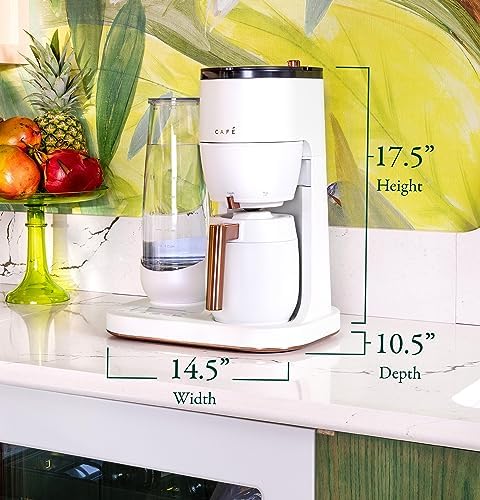
- Larger footprint
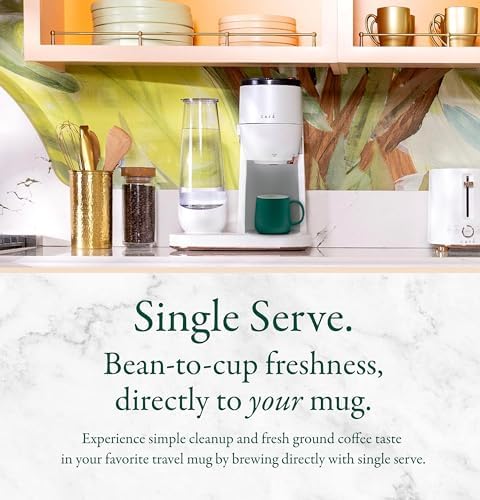
- Slower for single cups
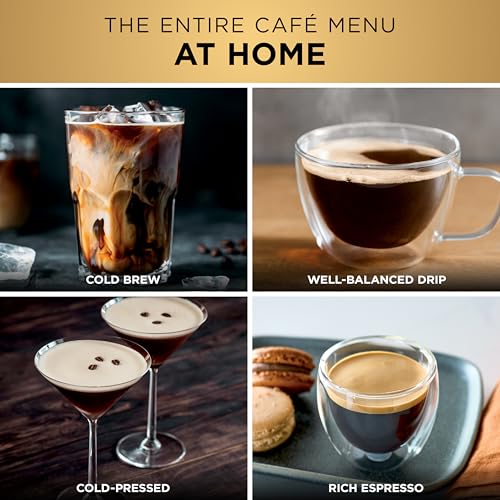
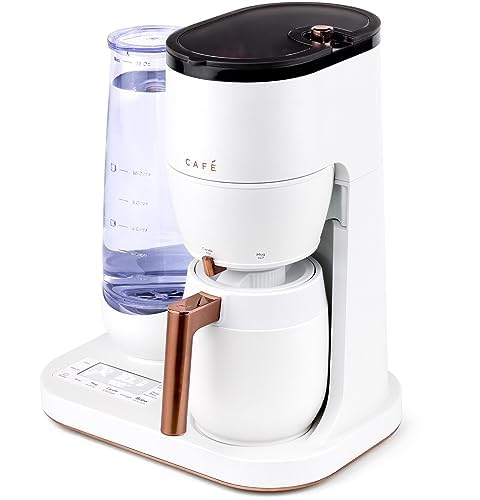
This is the machine for drip loyalists who refuse to compromise on freshness or temperature. Being SCA Gold Cup certified means it meets strict brewing standards, owners confirm it produces balanced, aromatic pots that rival café drip. The 10-cup thermal carafe is the star: no hot plate, no bitterness, just heat retention that keeps coffee tasting fresh for hours.
The Wi-Fi and voice control are nice touches, and the ability to save custom brew profiles (strength, temp, cup count) is genuinely useful. But it’s not a true espresso machine, so if you’re pulling shots regularly, look elsewhere. Compared to the Ninja models, it lacks versatility, but for drip perfectionists, it’s a quiet powerhouse.
Product photos

Keurig K-Café SMART

Strengths
- Pod convenience
- Built-in frother
- BrewID tech
- Wi-Fi enabled
- Voice control
Trade-offs
- Not real espresso
- K-Cup dependency
- Limited customization
This is the pick for pod lovers who still want lattes and cappuccinos without buying a separate machine. The built-in frother works well for quick drinks, and BrewID technology actually tailors extraction to each K-Cup, owners say it improves flavor noticeably over basic Keurigs. The Wi-Fi and app support are robust, letting you schedule brews and manage pod delivery.
But let’s be real: it’s still a pod machine. You’re locked into K-Cup pricing and environmental waste, and the espresso-style shot is just a strong brew, not real espresso. Compared to any grinder-equipped machine here, it lacks freshness and control. But if convenience is king, it gets the job done.
Product photos


Chefman Crema Supreme

Strengths
- 30 grind settings
- Large water tank
- Pressure gauge
- Good steam wand
- Full accessory kit
Trade-offs
- No built-in scale
- Basic interface
- Plastic components
At this price, the Chefman Crema Supreme packs a surprising amount of value. A 15-bar pump, 30 grind settings, and a 3-liter water tank make it a strong semi-auto option for beginners dipping into espresso craft. The pressure gauge is a rare feature at this level, owners say it helps learn extraction timing and diagnose issues early.
It lacks smart features and weight-based dosing, but for the price, it’s forgiving and well-equipped. The steam wand is capable, though it takes practice to nail microfoam. Compared to the Breville, it’s less refined, but for someone learning the ropes without blowing the budget, it’s a solid starting point.
Product photos


How We Picked These coffee machine for cafe
I approached this guide to cafe-style coffee machines by first compiling a detailed list of specifications and features from numerous models currently available. We then layered that technical data with extensive research into owner reviews from major retailers and independent coffee forums, alongside professional reviews from established publications. As the founder of Bean Thusiast, my experience tasting and understanding the nuances of coffee brewing informed the weighting of these factors. Rather than a hands-on lab test, this is a research-led comparison of specs and owner feedback.
For machines aiming to replicate a cafe experience, consistent temperature stability, grind quality, and milk frothing capability proved the most critical factors. A precise grind is essential for proper extraction, directly impacting flavor balance – a consistent burr grinder is far superior to blade grinders. Equally important is the ability to achieve consistent temperature for both brewing and steaming, as this profoundly affects the quality of espresso and milk-based drinks. We also heavily weighted the inclusion of features like pre-infusion and adjustable brew parameters.
Specifications reliably indicate build quality, pump pressure, and tank capacity. However, owner feedback provided crucial insight into real-world usability, durability, and the consistency of performance over time. We paid close attention to reports regarding ease of cleaning, the longevity of components like the boiler and steam wand, and the effectiveness of automated features. Ultimately, reputation and consistent positive feedback carried significant weight in our final assessments.
How To Choose The coffee machine for cafe
Choosing a coffee machine for a cafe is a big investment, and getting it right impacts everything from drink quality to workflow efficiency.
A good cafe coffee machine balances speed, consistency, and reliability. Key features include robust construction, a high-capacity boiler for continuous steaming, precise temperature control for optimal extraction, and a grinder capable of delivering consistent particle size. Consider the volume of drinks you anticipate serving, the skill level of your baristas, and the types of beverages you plan to offer.
Grinder Integration & Quality
The grinder is arguably more important than the espresso machine itself. A fantastic espresso machine paired with a subpar grinder will still produce mediocre results. Integrated grinders, like those found in the Breville Barista Express BES870XL and Ninja Luxe Café Premier, offer convenience, but dedicated standalone grinders often provide greater control and consistency. Don’t assume a built-in grinder is sufficient; look for conical burrs (they produce more consistent grounds than blade grinders) and a wide range of grind settings. If you’re aiming for specialty-grade espresso, you’ll want a grinder that allows precise dialing in espresso.
Boiler System & Temperature Stability
Temperature stability is paramount for consistent espresso extraction. Machines with larger boilers – or, better yet, dual boilers – maintain temperature more effectively during peak service. Single boiler machines (common in more affordable models) cycle between brewing and steaming, which can cause temperature fluctuations. Look for machines with PID (Proportional-Integral-Derivative) temperature control, as this technology actively regulates water temperature for greater precision. The Cafe Bellissimo Semi-Automatic boasts a 15-bar pump, important for extracting maximum flavor, but remember that pressure alone isn’t enough.
Automation vs. Manual Control & Value
The level of automation you need depends on your staffing and desired workflow. Super-automatic machines, like the Cafe Bueno Super Automatic, handle grinding, tamping, and brewing with minimal barista input – great for high-volume situations with less experienced staff. However, they often sacrifice some control over the brewing process. Semi-automatic machines give baristas more control over extraction, allowing for adjustments to shot time and pressure, but require more skill and training. For a cafe looking for a balance of quality and affordability, exploring a durable espresso machine for cafes with semi-automatic features might be the sweet spot.
- Consider your drink menu: If you offer a wide variety of specialty drinks, a machine with a good steam wand is crucial.
- Think about peak hours: Can the machine keep up with demand during busy periods? Boiler size and recovery time are key here.
- Don’t overlook maintenance: Some machines are easier to clean and maintain than others. A machine with self-cleaning features (like the Cafe Bueno) can save significant labor costs.
A consistent grind size is more important than a fancy machine. Invest in a quality grinder first, and then choose a machine that complements its capabilities.
Coffee Machine for Cafe Compared
Here’s a comparison of specifications for various coffee machines suitable for cafe use.
| Product Name | Brew Type | Grind Type | Water Capacity (oz) | Milk Frothing | Smart Features | Bar Pressure (bars) |
|---|---|---|---|---|---|---|
| Ninja Luxe Café Pro Series | Espresso, Drip, Cold Brew | Integrated Burr | N/A | Dual Froth System | Barista Assist | N/A |
| Breville Barista Express BES870XL | Espresso | Integrated Burr | 67 | Manual Steam Wand | N/A | N/A |
| Café Bellissimo Semi-Automatic | Espresso | Integrated Burr | N/A | Steam Frother | WiFi Connected | 15 |
| Cafe Bueno Super Automatic | Espresso, Coffee | Integrated Burr | N/A | Integrated | Customizable | N/A |
| Ninja Luxe Café Premier | Espresso, Drip, Cold Brew | Integrated Burr | N/A | Dual Froth System | Barista Assist | N/A |
| Café Specialty Grind & Brew | Drip | Adjustable Burr | N/A | N/A | WiFi Enabled | N/A |
| Keurig K-Café SMART | Pod, Coffee | N/A | N/A | Integrated | WiFi Enabled | N/A |
| Chefman Crema Supreme | Espresso | Conical Burr | N/A | Integrated | N/A | 15 |
Frequently Asked Questions
What’s the typical lifespan of a cafe coffee machine?
A well-maintained cafe coffee machine should last between five and ten years. Longevity depends heavily on usage volume, water quality, and consistent cleaning, but expect to replace wear-and-tear parts like seals and pumps during that time.
Do I absolutely need a commercial-grade machine, or can a high-end prosumer model work?
While a commercial machine is built for constant use, a high-end prosumer model can work for lower-volume cafes (under 100 drinks per day). However, you’ll likely face more frequent maintenance and potentially shorter lifespan compared to a truly reliable coffee shop espresso machine.
What water filtration system should I use with my cafe machine?
A high-quality filtration system is essential to protect your investment. I recommend a multi-stage system that addresses sediment, chlorine, and mineral buildup, as hard water can quickly damage internal components and affect coffee flavor.
How much does it cost to maintain a cafe coffee machine annually?
Annual maintenance costs vary, but budget around 10-15% of the machine’s initial purchase price. This covers descaling, cleaning supplies, potential repairs, and professional servicing. Preventative maintenance prevents much larger bills down the line.
What’s the difference between a heat exchanger and a dual boiler system?
A heat exchanger system uses one boiler to both brew espresso and create steam, switching between functions. Dual boiler systems have separate boilers for each task, offering greater temperature stability and the ability to brew and steam simultaneously – a key feature in top espresso machines for coffee shops.
The Bottom Line
Ultimately, choosing a cafe coffee machine comes down to balancing control with convenience. While super-automatic machines offer speed and ease of use, the Ninja Luxe Café Pro Series strikes the best overall balance for most cafes, offering a versatile brewing platform with integrated grinding and helpful barista assistance features. It’s a machine that can handle a variety of drinks with reasonable consistency, without requiring a highly skilled barista for every shot.
For those prioritizing budget without sacrificing too much quality, the Breville Barista Express BES870XL remains a solid choice. And if you anticipate a high volume of milk-based drinks and want a machine specifically geared toward that, the Ninja Luxe Café Premier, with its dual froth system, is a strong contender. Remember to factor in the importance of regular machine maintenance steps to keep any machine running smoothly.
Beyond any specific feature list or price point, focus on consistent grind quality and temperature stability. These are the fundamentals that truly impact the flavor of your coffee and the satisfaction of your customers. A little extra attention paid to these details will yield far better results than chasing the latest bells and whistles.
