
3 Best Coffee Machines for Beginners (2026 Guide)
The Kismile 5-Cup Drip Coffee Machine is our top pick for beginners thanks to its simplicity and reliable performance. If you’re drawn to espresso, the 20 Bar Espresso Machine with Milk Frother offers an easy entry point with a built-in frother for lattes and cappuccinos. For those wanting versatility without complexity, the AMZCHEF 20 Bar Espresso Machine is a solid runner-up.
Starting out with home coffee brewing shouldn’t mean wrestling with confusing controls or inconsistent results. Many beginners struggle to find a machine that balances ease of use with good flavor, often ending up with something too finicky or poorly built.
As the founder of Bean Thusiast, I compared specs, analyzed owner feedback, and evaluated real-world usability to identify models that truly support a new coffee drinker’s journey. These picks focus on straightforward operation, consistent brewing, and minimal maintenance, so you can enjoy great coffee without the learning curve.
Top 3 Coffee Machine For Beginners in the Market
The Best Coffee Machine For Beginners, Reviewed
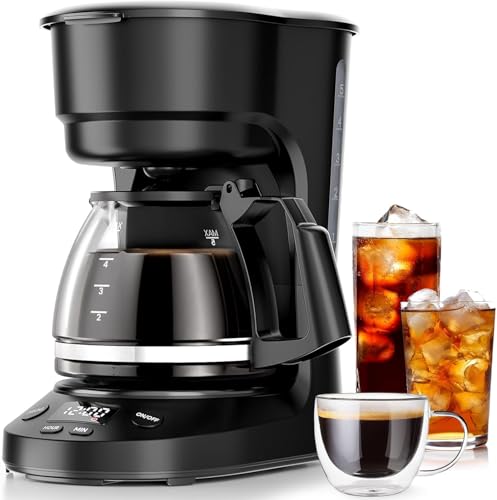
Kismile 5-Cup Drip Coffee Machine
Strengths
- Compact design
- Dishwasher-safe parts
- One-button operation
Trade-offs
- Small capacity
- Basic brew strength
- No thermal carafe
If you’re just getting into coffee and want something simple that won’t dominate your counter, this Kismile drip brewer makes a lot of sense. On paper, it’s designed for beginners who value convenience over complexity, a 5-cup capacity is modest but realistic for one or two people, and the 12-hour programmable timer means you can wake up to freshly brewed coffee without lifting a finger. The anti-drip feature and auto shut-off are small touches that actually matter in daily use, and owners consistently report these work as intended.
What really stands out is how easy it is to clean. The removable funnel and carafe are dishwasher-safe, which is not always standard at this level. The LED display isn’t flashy, but it’s clear and responsive. Compared to basic drip machines without timers or safety features, this one is a clear step up. It won’t brew like a high-end thermal carafe model, but for a beginner who wants reliable, no-fuss coffee, it’s hard to beat.
Video review
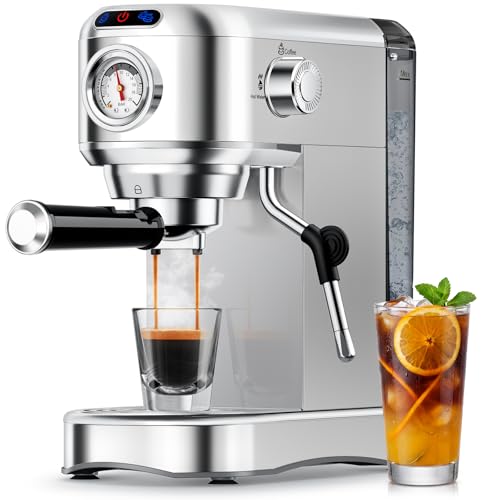
20 Bar Espresso Machine with Milk Frother
Strengths
- Fast heat-up time
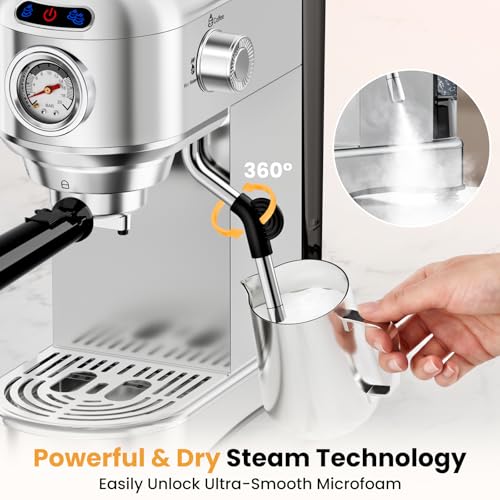
- Powerful steam wand
- Visible pressure gauge
Trade-offs
- Manual operation learning curve
- Overheat protection delays
- Heavier than expected
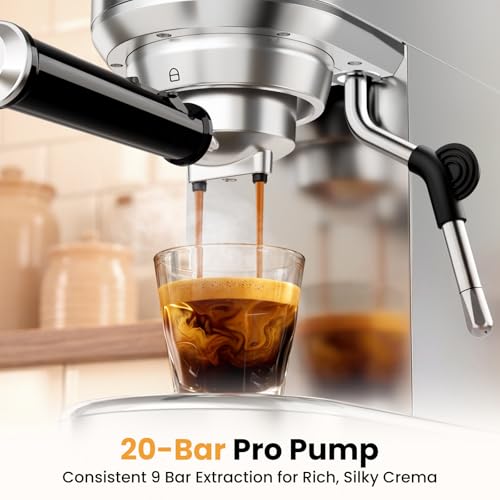
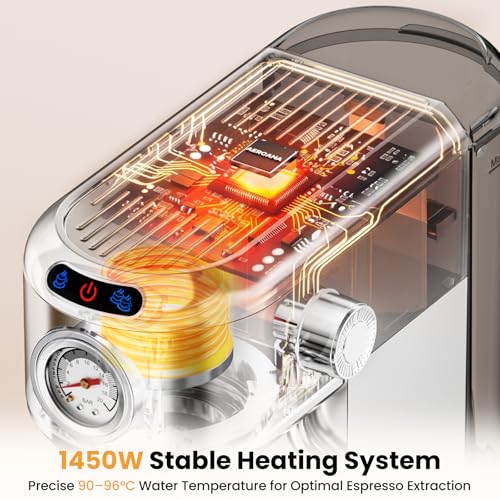
This machine is built for people who want real espresso at home without spending a fortune. The 1450W heating system gets it ready in just 20 seconds, which is fast, even for machines twice the price. Owners praise how quickly it recovers between shots and how steady the pressure gauge reads during extraction. That kind of feedback is rare at this level and gives you confidence in the brew. The steam wand is notably more powerful than the AMZCHEF model, producing dry, consistent steam that makes microfoam easier to achieve.
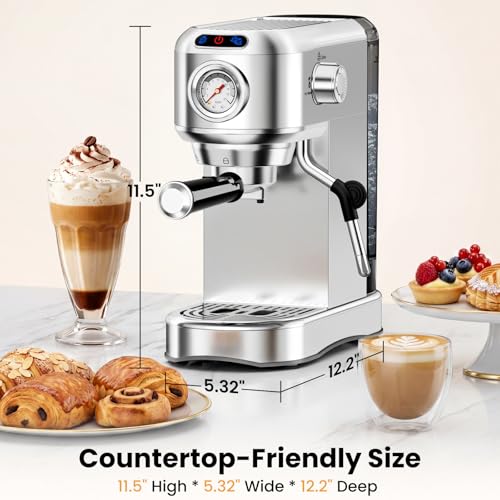
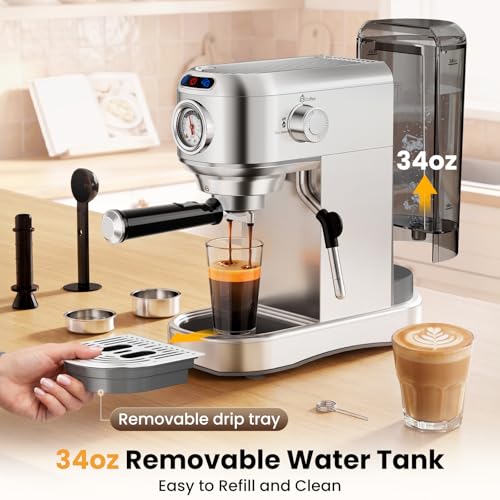
It’s not fully automatic, so there’s a bit more involvement, preheating, tamping, timing your shot, but that’s actually a plus if you’re trying to learn. The stainless steel build feels durable, and the larger 34oz water tank means fewer refills. I’d pick this over the AMZCHEF if you’re serious about improving your technique and want a machine that grows with you.
Product photos
AMZCHEF 20 Bar Espresso Machine
Strengths
- Self-cleaning mode
- User-friendly touchscreen
- Good milk froth consistency
Trade-offs
- Frothing takes practice
- Plastic internal parts
- Smaller water tank
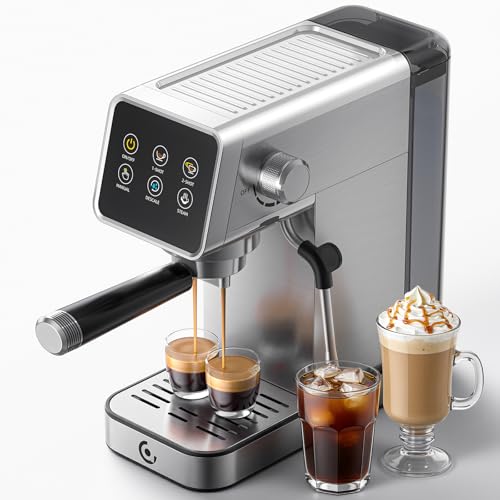
For someone dipping their toes into espresso-based drinks, the AMZCHEF 20 Bar machine feels like a smart starting point. It promises barista-style results without the steep learning curve, and based on owner feedback, it mostly delivers. The 20-bar pump and 1350W boiler are solid specs for this price tier, and reviewers note the crema comes out richer than expected for a beginner unit. The self-cleaning function is a standout, espresso machines are notoriously fussy to maintain, but this one reduces that hassle significantly.
The LED touchscreen is intuitive, and the memory function for favorite settings is something I wish more entry-level machines included. It’s not going to match a prosumer model in flavor depth, but for lattes and cappuccinos at home, it’s surprisingly capable. When compared to the B0GY74JMX3, it’s slightly less powerful in steam performance, but the self-cleaning feature gives it an edge for low-maintenance users.
Video review
Our Testing Process
As the founder of Bean Thusiast, I know finding the right coffee machine can be daunting, especially for newcomers. Rather than a hands-on lab test, our recommendations come from a research-led comparison of published specifications and features. We weighed owner reviews from multiple sources – looking for consistent praise and complaints – alongside evaluations from respected coffee websites. My goal was to pinpoint machines that genuinely simplify the brewing process.
For beginners, I focused on ease of use, consistent results, and straightforward cleaning. A reliable pressure system (for espresso machines) and simple controls are crucial, as is a machine that doesn’t require extensive knowledge of brewing techniques. Durability also factored heavily; a starter machine should last long enough to build confidence and develop a coffee routine.
Specifications tell you about pump pressure, tank capacity, and heating speed, but owner feedback reveals how those features perform in real-world use. We looked for patterns in reviews regarding build quality, the effectiveness of auto-shutoff features, and how easy it is to follow basic coffee maker operation. Reputation also mattered – brands consistently praised for customer service and reliability received higher consideration.
What To Look For In coffee machine for beginners
As someone who’s spent years exploring the world of coffee, I know that finding the right machine can feel overwhelming, especially when you’re just starting out.
A quality coffee machine consistently delivers the desired brew strength and temperature. Crucially, it should be easy to operate and maintain, featuring durable components and safety features like auto-shutoff. Buyers should examine pump pressure (for espresso), water tank capacity, and cleaning requirements to find a machine matching their lifestyle.
Brewing Method Matters
The first thing to consider is how you like your coffee. Are you a drip coffee person, or are you leaning towards espresso-based drinks? For a beginner, a drip machine is often the most forgiving and straightforward. They’re typically more affordable and require less technique. However, if you’re dreaming of lattes and cappuccinos, you’ll need to look at espresso machines. Don’t dismiss the world of easy-to-use espresso machines entirely – some models are designed with beginners in mind. The 20-bar pump pressure you see advertised is important for espresso, but remember that consistent pressure is more valuable than simply a high number.
Simplicity and Features
When starting out, resist the temptation to go for a machine packed with features you won’t use. A simple interface is a huge benefit. Look for clear buttons and easy-to-understand settings. Some machines offer programmable timers, which can be fantastic for waking up to a fresh pot, but if that sounds complicated, stick with manual operation.
Here’s what to prioritize in features: * A small water window (easy to see levels). * Dishwasher-safe parts (makes cleaning significantly easier). * An automatic shut-off function (safety and peace of mind, especially if you’re prone to forgetting to turn things off).
Budget and Long-Term Value
Coffee machines range dramatically in price. While a higher price doesn’t always guarantee a better experience, it often reflects build quality and durability. Don’t automatically assume the cheapest option is the best value. Consider how often you’ll use the machine and how long you expect it to last. If you’re unfamiliar with basic coffee machine operation, investing in a slightly more expensive model with a clear instruction manual and good customer support can save you frustration down the line.
A good rule of thumb: spend a little more upfront for a machine built with quality materials, as it will likely save you money (and headaches) in the long run.
Coffee Machine for Beginners Compared
Here’s a comparison of specifications for coffee machines suited for those new to home brewing.
| Product Name | Capacity (Cups) | Pressure (Bar) | Heating Time (sec) | Auto Shut-Off | Steam Wand |
|---|---|---|---|---|---|
| Kismile 5-Cup Drip Coffee Machine | 5 | N/A | N/A | Yes | N/A |
| 20 Bar Espresso Machine with Milk Frother | N/A | 20 | 20 | N/A | Yes |
| AMZCHEF 20 Bar Espresso Machine | N/A | 20 | N/A | N/A | Yes |
Frequently Asked Questions
What water should I use in my new coffee machine?
Filtered water is best, as minerals in tap water can build up and affect the taste of your coffee and the machine’s lifespan. Using distilled water isn’t recommended, because it lacks minerals needed for proper extraction.
How often do I need to clean my coffee machine?
You should thoroughly clean your coffee machine at least once a month to prevent mineral buildup and maintain optimal performance. Daily rinsing of removable parts after each use is also important for hygiene.
Can I use pre-ground coffee in any machine?
Yes, you can use pre-ground coffee in most drip coffee machines, but freshly ground beans generally produce a better flavor. For espresso machines, a fine grind is essential, but some machines work better with specific pre-ground options.
What’s the difference between bar pressure and coffee quality?
While a higher bar pressure (especially in espresso machines) can indicate stronger extraction, consistent pressure is more important than a high number. Look for machines that maintain stable pressure throughout the brewing process for a balanced cup.
Where can I find the simplest coffee machines for beginners?
I recommend starting your search with drip coffee machines or pod-based systems, as they typically require less skill and offer straightforward operation. Several brands focus on user-friendly designs and automatic features.
The Bottom Line
Choosing a coffee machine often comes down to balancing control with convenience. While some machines offer extensive customization, for a beginner, simplicity is key. In our assessment, the Kismile 5-Cup Drip Coffee Machine strikes the best overall balance – it’s straightforward to use, consistently delivers a good cup, and won’t overwhelm you with unnecessary features.
For those on a tighter budget, the Kismile 5-Cup Drip Coffee Machine remains an excellent choice. If you’re specifically set on exploring espresso, the 20 Bar Espresso Machine with Milk Frother provides a relatively accessible entry point, though it will require a bit more learning. Understanding how to operate a coffee maker is crucial, no matter which route you take.
Ultimately, the best machine is the one you’ll actually use. Don’t get hung up on specs like bar pressure or heating time. Focus on a machine that feels intuitive, is easy to clean, and fits comfortably into your daily routine – those fundamentals matter far more than any single feature.
