
Your Guide on How to Use a Mr. Coffee Machine Effectively
To use a Mr. Coffee machine, you prime it with two water cycles if it’s new or stored, fill the reservoir to the cup marking, add a filter and grounds to the basket, place the correct carafe on the plate, and press brew. The machine’s auto shut-off activates after two hours.
Most people unpack the box, add water and coffee, and hit brew. That first pot tastes like hot water and plastic because the internal lines and heating element have manufacturing oils and dust. You skip the priming step exactly once.
This guide walks through the setup, daily operation, and maintenance that keeps a Mr. Coffee running for years. We’ll cover the model-specific quirks, the one carafe mistake that causes overflows, and how to tell when your water hardness demands more frequent descaling.
Key Takeaways
- Run two full water cycles through a new or stored Mr. Coffee before brewing coffee to purge internal residues.
- Always use the carafe designed for your specific model; a mismatched carafe disables the Pause ‘n Serve feature and can cause overflows.
- The spray arm must swing freely over the basket; if it’s stuck, water channels in one spot and washes a hole through your coffee grounds.
- Descale every 30 brewing cycles as the manual says, but in hard water areas, do it every 20 cycles or at the first sign of slower brewing.
- Never leave coffee in the thermal carafe for more than four hours; the oils solidify on the stainless steel and impart a rancid note to the next batch.
The Critical First Step Everyone Skips
Open the box, set it on the counter, and pour water straight into the reservoir. That’s the instinct. The Mr. Coffee BVMC-ECX40CP manual explicitly says otherwise on page six. It instructs you to run two full cycles of plain water through the machine before first use or after extended storage.
The Mr. Coffee BVMC-ECX40CP user manual states: “Before brewing your first pot of coffee, we recommend that you clean the inside of your coffeemaker by operating it through two brewing cycles using only fresh water (no coffee).” This removes any dust or residues from manufacturing and storage.
I learned this the hard way with a BVMC-SJX33GT I pulled from a closet after a summer. I was in a hurry and skipped the water cycles. The first pot had a faint chemical tang and left a slick film on the inside of the glass carafe. That film is mineral oil or mold-release agent from the internal plastic tubing. It takes those two boiling-water flushes to clear it out.
TL;DR: Always run two water-only brew cycles with a new or stored machine. The first pot of coffee will taste clean, not like the factory floor.
Matching Water to Grounds: The Basic Brew Cycle
Your machine has a water reservoir marked with cup lines. A “cup” in Mr. Coffee terms is 5 ounces, not 8. Fill to the line matching your desired servings. Exceeding the MAX line risks overflow into the internal electronics.
| Brew Strength | Coffee Grounds per 5-oz Cup | Result If You Skip |
|---|---|---|
| Standard | 1 tablespoon | Balanced flavor for most palates |
| Strong | 1.5 tablespoons | Weak, under-extracted coffee that tastes sour |
| Bold | 2 tablespoons | Over-extracted, bitter coffee that can clog the filter |
The type of filter matters. Paper coffee filters absorb some oils, producing a cleaner cup. Unbleached coffee filters avoid chemical processing but can impart a slight papery taste to the first few batches. A permanent mesh filter lets more oils through for a heavier body, but it requires immediate, thorough cleaning after each use, coffee oils turn rancid in the mesh within hours.
For the best flavor, start with a medium grind consistency from a burr grinder. Blade grinders produce uneven particles that extract poorly in a drip machine. Fine dust clogs the filter and slows brewing; large chunks under-extract and make weak coffee.
- Insert the filter. Seat it flat in the brew basket. A crumpled paper filter can fold over during brewing and spill grounds into the carafe.
- Add the grounds. Level them gently. Do not tamp or pack.
- Place the empty carafe. Ensure it’s centered on the warming plate. The lid must be closed to activate the brew basket’s drip-stop mechanism on most models.
- Press ‘Brew’. The machine will heat the water and pump it over the grounds. A full 12-cup cycle takes about 10 minutes.
Common mistake: Measuring coffee with the carafe’s cup markings, those are for water output, not coffee input. Using the carafe to scoop grounds leads to a wildly inconsistent dose and bitter coffee every other day.
Daily Use and the Spray Arm
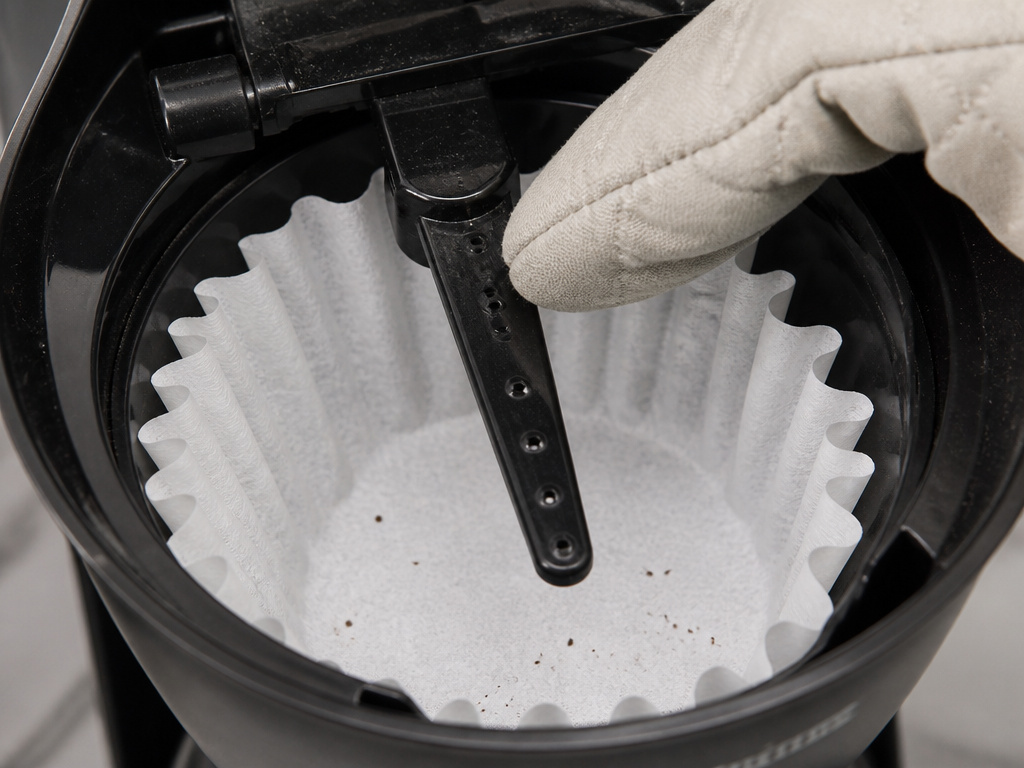
Lift the lid. The black plastic arm with small holes is the spray arm. Its job is to distribute hot water evenly over the coffee bed. If it’s stuck to one side, water pours in a single stream, drilling a hole through the grounds. The extraction becomes uneven, some coffee over-extracts, some under-extracts.
The YouTube transcript gets it right: “this thingy here is the sprayer it oops ouch it’s hot it can move out of the way.” Before you add the filter, nudge the arm to ensure it swings freely. After brewing, wipe it with a damp cloth. Dried coffee residue glues it in place over a week.
The Pause ‘n Serve feature lets you sneak a cup before brewing finishes. Pull the carafe out slowly. The brew basket has a small flap that closes to stop drips. Slide the carafe back in smoothly. Jerking it causes the flap to bounce and spray hot coffee onto the warming plate.
Why the carafe design is non-negotiable: The height of the carafe lid triggers the drip-stop flap. Using a generic carafe or one from a different Mr. Coffee model often leaves a gap. The flap doesn’t close, and coffee drips onto the hot plate while you pour. It smokes, smells awful, and is a pain to clean.
Maintenance That Actually Matters
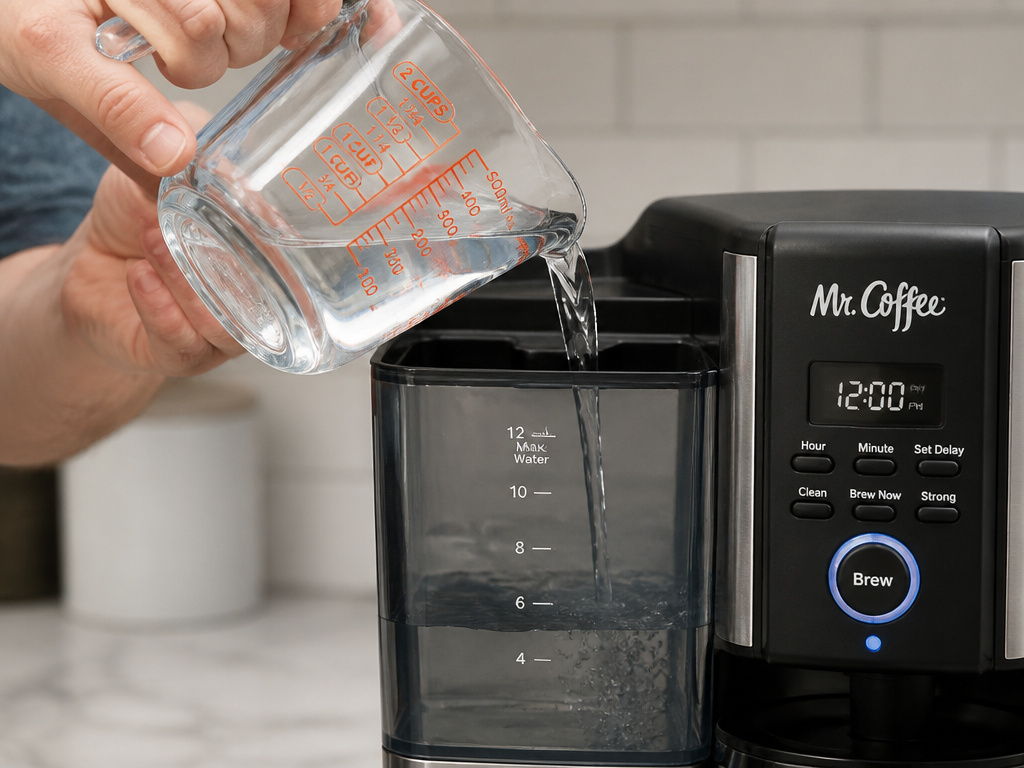
The manual says to descale every 30 days or 30 brewing cycles. That’s a baseline for average water. If you see white, crusty scale around the spray arm holes or the brewing time slows noticeably, descale immediately.
| Water Hardness Clue | Descaling Frequency | Sign You’ve Waited Too Long |
|---|---|---|
| No film on showerheads | Every 30-40 cycles | Brew time increases by 2+ minutes |
| Light film, easy to wipe | Every 20-25 cycles | Spray arm output becomes a weak trickle |
| Heavy scale on fixtures | Every 15 cycles | Machine makes gurgling sounds, produces less coffee |
For descaling, use a 50/50 mix of white vinegar and water. Run a full cycle, then run two cycles with fresh water to rinse. Commercial descaling solution works faster on severe scale but costs more.
The cleaning cycle is different. This usually involves running a solution to clean the internal tubing of coffee oils. Do this monthly. Coffee oils build up inside the machine and go rancid, giving every pot a stale, bitter background note no amount of fresh beans can overcome.
After each use, pull the brew basket and filter. Dump the grounds. Rinse both components. A quick rinse now prevents baked-on, cement-like grounds later. Wipe the warming plate with a damp paper towel while it’s still warm, not hot. Spilled sugar caramelizes into a clear, hard glaze that only a razor blade can remove.
Troubleshooting Weak Coffee or Spills
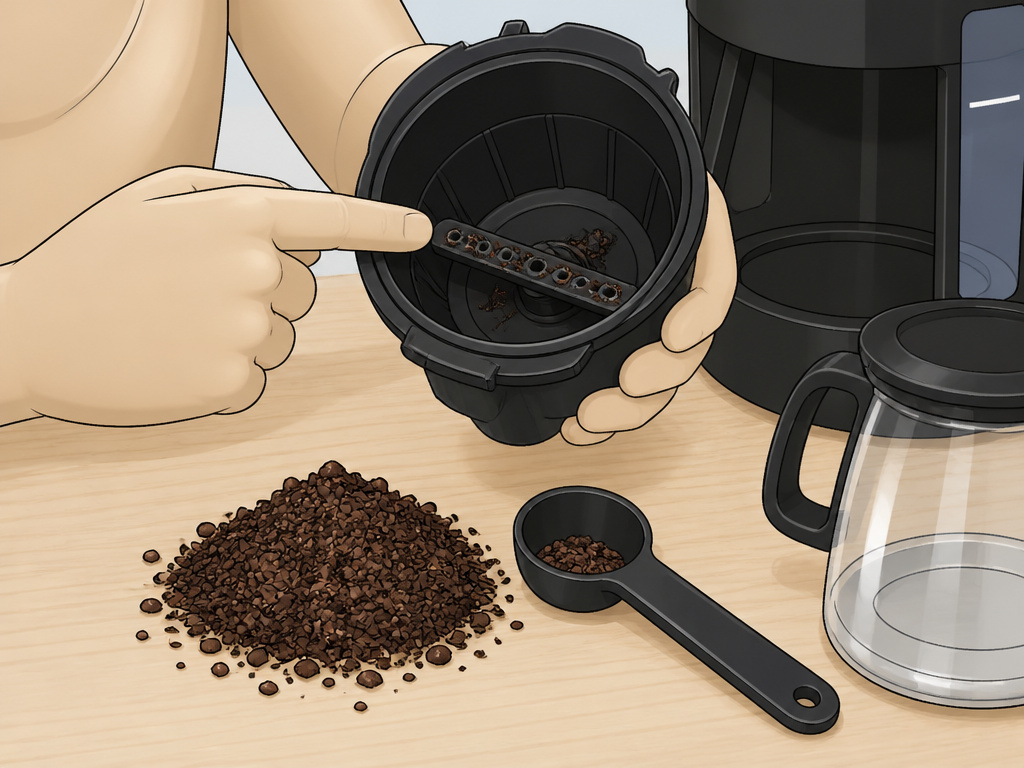
Weak coffee usually points to three issues. First, the grind is too coarse. Second, you’re using the wrong ratio, re-measure your tablespoons. Third, and most common, the spray arm is blocked or stuck, causing channeling.
Overflows typically happen at the carafe. The most likely culprit is a mismatched carafe that doesn’t seat correctly. The second is overfilling the water reservoir past the MAX line. The third is a clogged or misaligned drip-stop flap in the brew basket. Inspect it for trapped grounds.
The auto shut-off feature turns the warming plate off after two hours. This is a safety and energy-saving function. It does not turn off the clock or programmable settings. If your coffee is cold sooner, the thermal carafe model (BVMC-ECX40CP) is the solution, it insulates coffee without a heating plate.
I left a glass carafe on the warming plate for four hours once. The coffee reduced to a thick, tar-like syrup at the bottom. It took a soak with baking soda and vinegar to get the glass clean. The smell lingered in the kitchen for a day. Now I set a timer on my phone for 90 minutes.
Safety and Longevity Notes
That 2012 CPSC recall for the Mr. Coffee Single Cup Brewing Systems (models BVMC-KG5-001 and BVMC-KG5-002) happened because the brewing chamber overfilled. Hot water and grounds sprayed out, causing burns. While that affected a specific line, the principle is universal: these machines use boiling water under pressure.
Before you start: The spray arm and metal warming plate remain hot for at least 30 minutes after brewing. Use a towel to handle the carafe lid. Never operate the machine without the carafe in place, scalding water will pour onto the counter.
Always plug the machine directly into a wall outlet, not a power strip. The heating element draws a consistent, high current. A power strip can overheat. For detailed machine troubleshooting, your model’s coffee maker manual is the first resource. Keep it.
TL;DR: Weak coffee means check the grind and spray arm. Overflows mean check the carafe fit. Longevity means monthly cleaning and descaling based on your water, not just the calendar.
Frequently Asked Questions
Why does my Mr. Coffee machine take so long to brew?
Mineral scale has built up inside the heating element or tubes. The machine works harder to heat water, slowing the entire process. Descale the machine immediately. If the problem persists after descaling, the heating element may be failing.
Can I use pre-ground coffee from the store?
Yes, but it’s optimized for a generic drip grind and often stale. For noticeably better coffee, buy whole beans and grind them yourself just before brewing. A consistent grind from a burr grinder makes the biggest flavor difference in automatic drip machines.
What’s the difference between the thermal carafe and glass carafe models?
The thermal carafe (like the BVMC-ECX40CP) is stainless steel and insulated. It keeps coffee hot for hours without a warming plate, which prevents that burnt, cooked flavor. The glass carafe model sits on a heated plate, which is convenient but can degrade coffee quality after about 90 minutes.
How do I clean the outside of my Mr. Coffee machine?
Unplug it and let it cool. Wipe the housing with a soft, damp cloth. Do not use abrasive cleaners or submerge any part of the machine in water. For the warming plate, a paste of baking soda and water can gently scrub off residue when the plate is completely cool.
My machine is leaking water from the bottom. What should I do?
Unplug it immediately. Do not use it. The internal water tank or a hose connection has likely cracked. This is a repair issue, not a user fix. Contact Mr. Coffee customer support or consult your appliance user guide for service information.
Is it okay to leave water in the reservoir overnight?
It’s not ideal. Stagnant water can promote mineral buildup and microbial growth. For best results, empty the reservoir if you won’t use the machine for more than a day. Start with fresh, cold water each morning.
The Bottom Line
Using a Mr. Coffee machine correctly boils down to a handful of specific habits. Prime it first. Keep the spray arm moving. Match the carafe to the model. Listen to your water hardness for the descaling schedule. These steps prevent most problems.
The goal is reliable, good-tasting drip coffee with minimal fuss. The machine is a tool, not a magic box. Give it clean water, fresh grounds, and basic care. It will return the favor with a hot pot of coffee, day after day, for years. Ignore the priming step, neglect the spray arm, or use the wrong carafe, and you’ll be troubleshooting instead of drinking.
