
9 Best Coffee Grinders Under $200 (2026 Guide)
The Baratza Encore is the best coffee grinder under 200 for most people, delivering consistent grinds and solid build quality. If you’re on a tighter budget, the Amazon Basics offers basic functionality at a low price, while the OXO Brew Conical Burr Grinder stands out for its precision and ease of use.
I’ve spent years studying coffee gear, and one thing stands clear: your grinder makes or breaks your brew. Too many people waste good beans with an inconsistent or poorly designed grinder, ending up with bitter or weak coffee.
That’s why I researched the most reliable models under $200, focusing on grind consistency, burr quality, and what actual owners report about durability and performance. This guide cuts through the noise to show you which grinders truly deliver on their promise.
Top 9 Coffee Grinder Under 200 in the Market
The Best Coffee Grinder Under 200, Reviewed
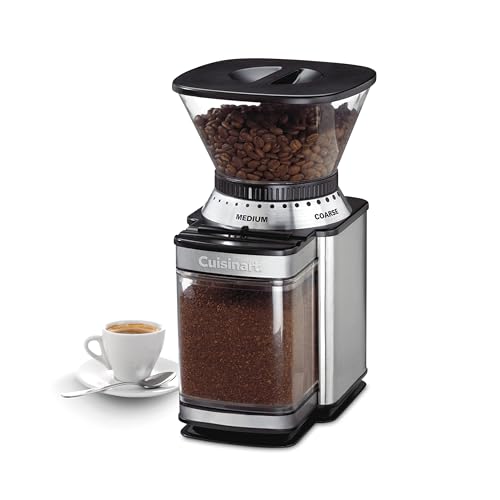
Cuisinart Burr Coffee Grinder
Strengths
- One-touch automatic grind
- Cup size selector
- Large grind chamber
Trade-offs
- Flat burrs less consistent
- No micro-adjustments
- Some clumping reported
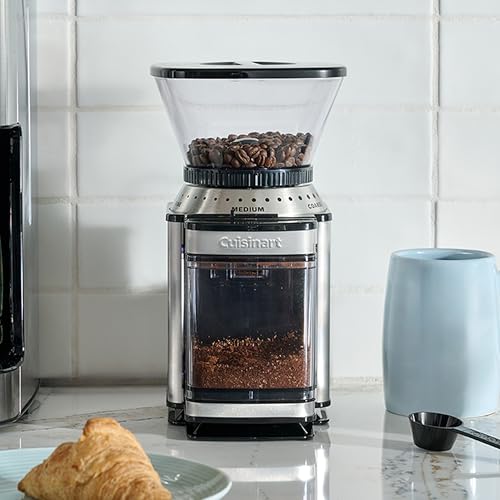
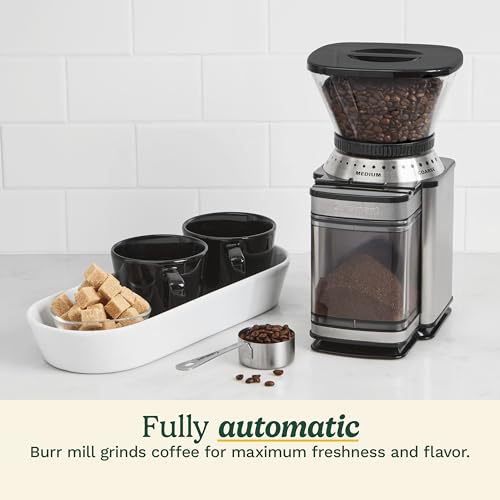
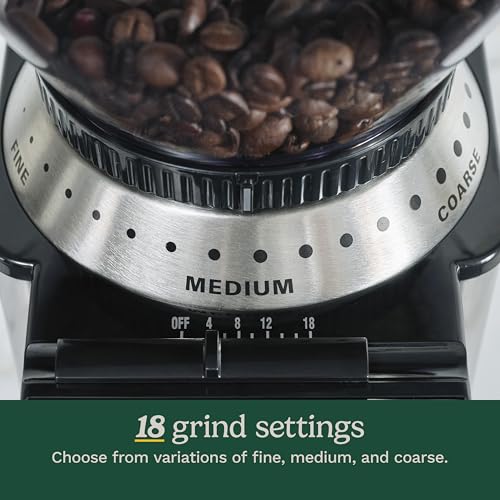
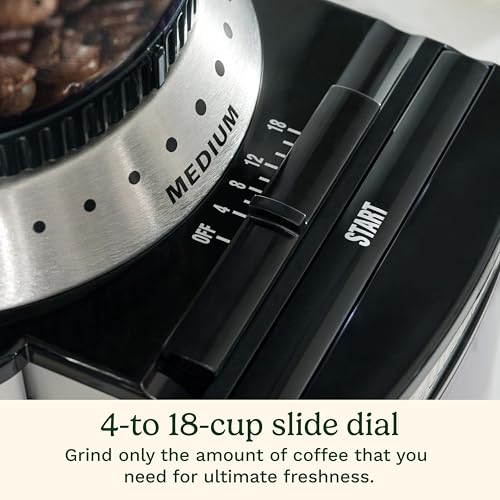
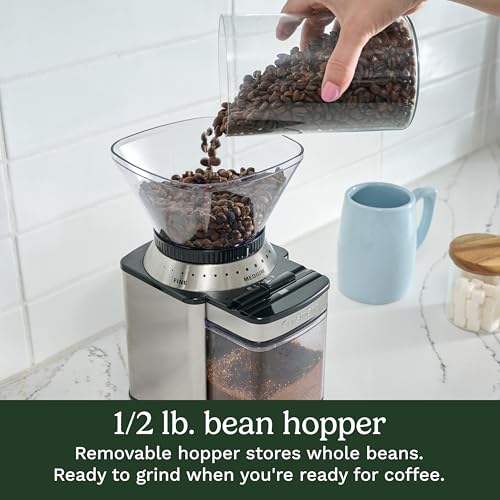
This flat-burr grinder offers an 18-position grind selector and a one-touch automatic cycle with an internal timer, meaning you set the cup size and it grinds that amount every time. That makes it one of the most user-friendly models here, especially for households that want consistency without fiddling with timing. The 8 oz hopper holds enough for up to 18 cups, which is generous. Owners say it’s great for drip machines and French press, though the flat burrs don’t match conical ones in uniformity.
It lacks micro-adjustments, and the grind quality isn’t as refined as the Baratza or OXO models. But for someone who wants set-it-and-forget-it grinding with decent results, this is a strong all-rounder. I’d recommend it over blade grinders any day, and it’s a solid alternative if programmable timing matters more than absolute grind finesse.
Product photos
KRUPS Electric Coffee Grinder

Strengths
- Large 3 oz capacity
- One-touch operation
- Good for batch grinding
Trade-offs
- Blade inconsistency
- Not suitable for espresso
- No grind settings
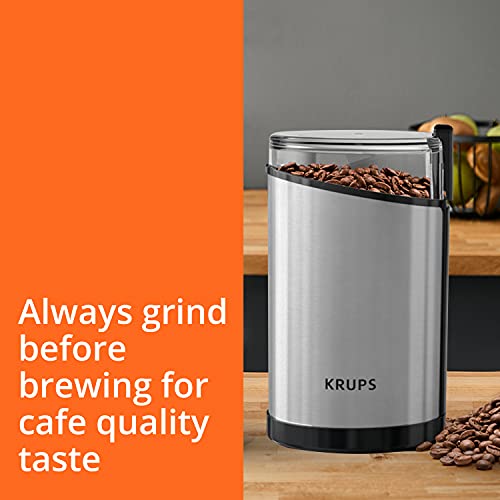
With a 3 oz capacity and 200W motor, this KRUPS model is one of the more capable blade grinders in this list. It’s marketed for espresso and French press, but blade grinders can’t deliver the narrow particle distribution either method needs. Owners say it’s fast and loud, with decent power for the price. The one-touch operation and clear lid make it easy to use, and the larger hopper is useful if you’re grinding for groups.
Still, it’s a blade grinder, so flavor will suffer compared to burr models. It’s better built than the Amazon Basics version, but not by much. If you’re set on electric and under $200, you’re better off stretching to a burr grinder. This is only worth considering if you need capacity and simplicity over quality.
Product photos


Wancle Electric Coffee Grinder
Strengths
- Quiet operation
- Compact design
- Includes cleaning brush
Trade-offs
- 150W motor underpowered
- Blade inconsistency
- Not for precision brewing
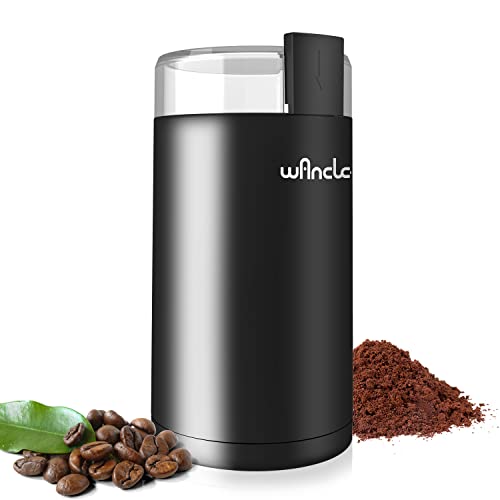
This 150W blade grinder markets itself on “fresh flavor,” but the reality is limited by its design. The pure copper motor and stainless steel blade help reduce heat, which is good in theory, but blade grinders inherently create uneven particles and friction heat. Owners say it’s quiet and compact, with a decent one-button operation. The included cleaning brush is a nice touch.
Still, it can’t compete with burr grinders in consistency. Compared to the OVENTE or KRUPS, it has less power and capacity. The emphasis on aroma and flavor feels misleading, grind quality matters more than motor material. It’s fine for drip or French press if you’re on a budget, but don’t expect a flavor upgrade beyond basic blade performance.
Product photos


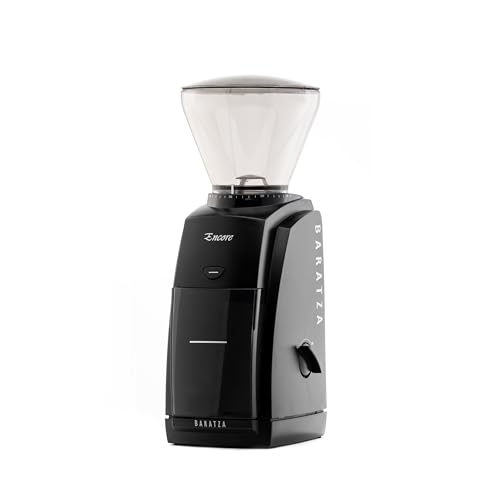
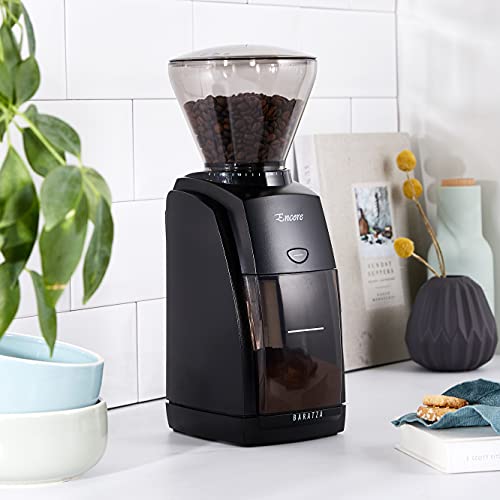
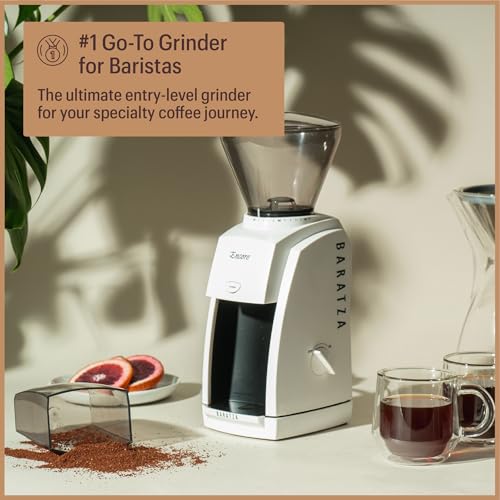
Baratza Encore Coffee Grinder
Strengths
- 40 precise grind settings
- Commercial-grade burrs
- Excellent consistency
Trade-offs
- No built-in timer
- Hopper not removable
- Slight static issues
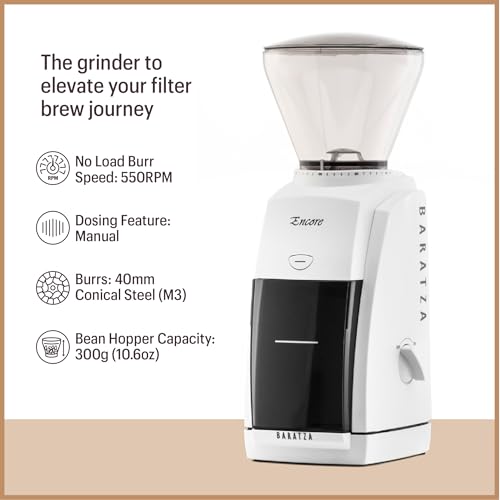
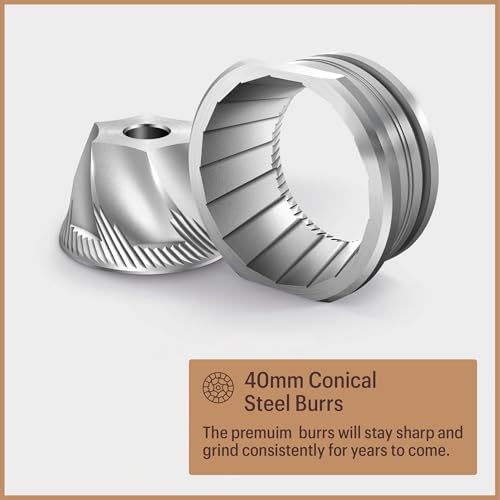
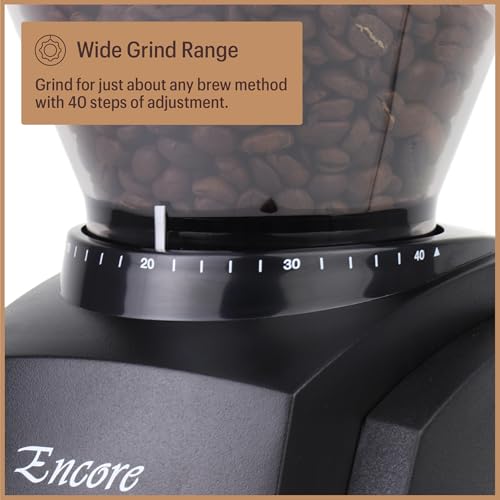
The Encore is a benchmark in entry-level burr grinders for a reason. With 40 grind settings and commercial-grade 40mm conical burrs, it covers everything from espresso to cold brew with real precision. Reviewers consistently note how much better their coffee tastes after switching from a blade grinder. The front-mounted pulse button is intuitive, and the build quality feels durable. It’s not programmable in the sense of timed grinding, but the consistency and range make it a favorite among home baristas.
Compared to the Cuisinart or Aromaster, it doesn’t have a timer, but the grind quality is superior. Baratza’s customer support and repairability add long-term value. I’d pick this over nearly every other grinder under $200 if you’re serious about improving your brew. It’s the one that actually lets you experiment with extraction.
Product photos
Aromaster Conical Coffee Bean Grinder
Strengths
- 48 grind settings
- Anti-static design
- Large capacity
Trade-offs
- Timer can be inconsistent
- Build quality average
- Adjustments less precise
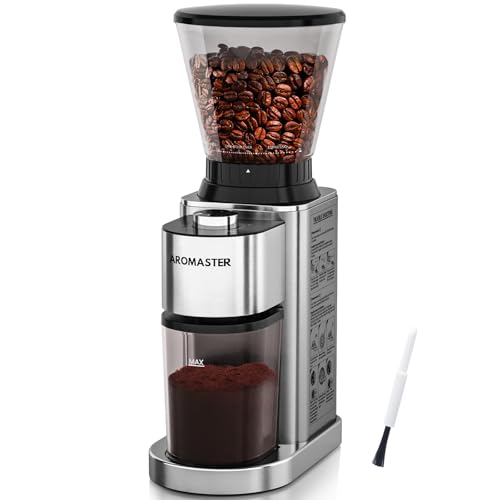
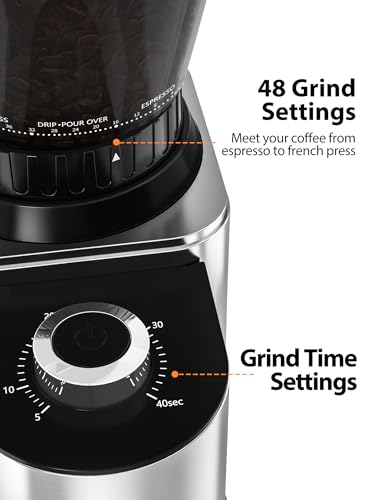
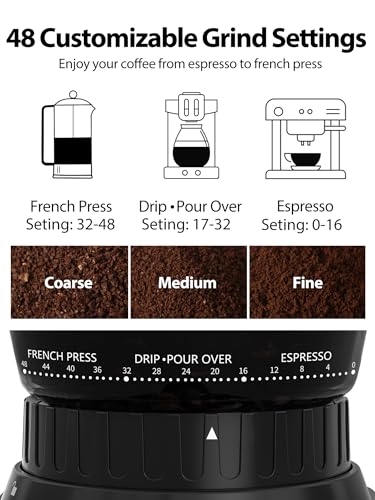
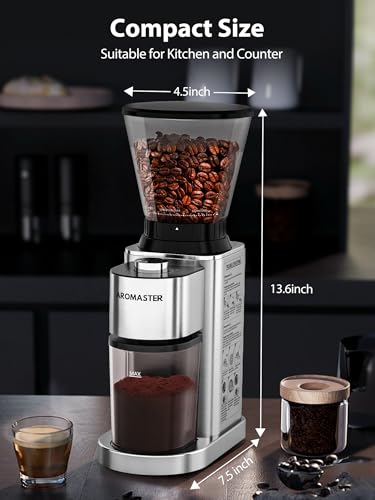
With 48 grind settings and a 40-second timer, this Aromaster grinder aims to be a high-value burr option. The stainless steel conical burrs deliver better consistency than most in this range, and the anti-static design helps reduce mess, a real pain point on many grinders. Owners report it handles everything from espresso to French press well, and the large 3.9 oz chamber suits families or offices.
It’s not as refined as the Baratza or OXO models in build or adjustability, but for the price, it packs features. The micro-adjustments aren’t as smooth, and the timer can be finicky. But if you want a lot of settings and capacity without breaking $200, this is a strong contender. I’d pick it over the Cuisinart for better burr quality, especially if you brew multiple methods.
Product photos

OVENTE Electric Coffee Grinder

Strengths
- 200W motor
- Dishwasher-safe bowl
- Transparent lid
Trade-offs
- Inconsistent grind
- Blade design limits precision
- Not for espresso
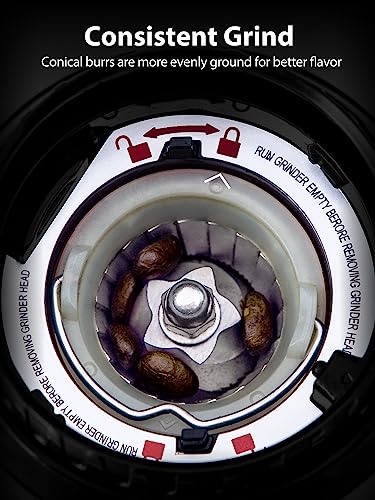
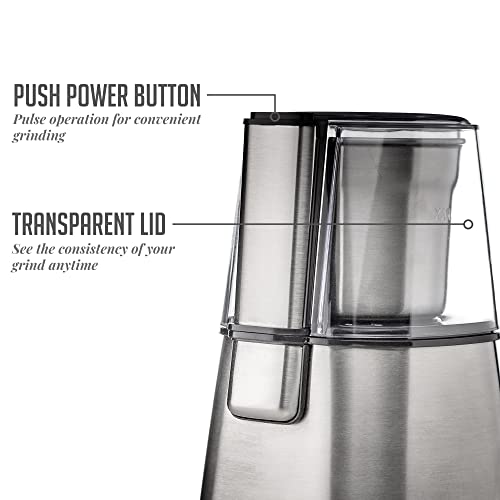
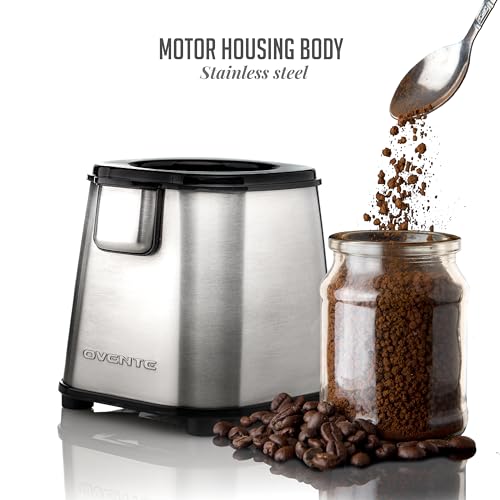
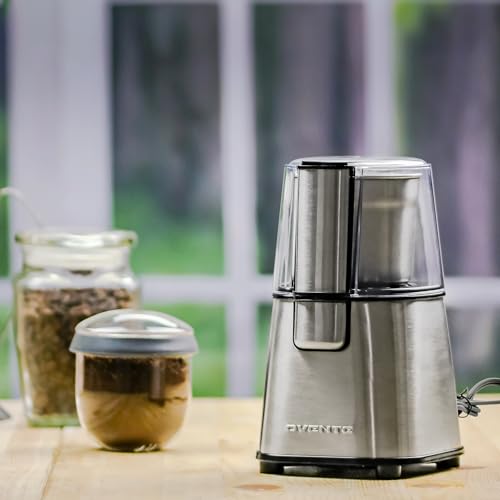
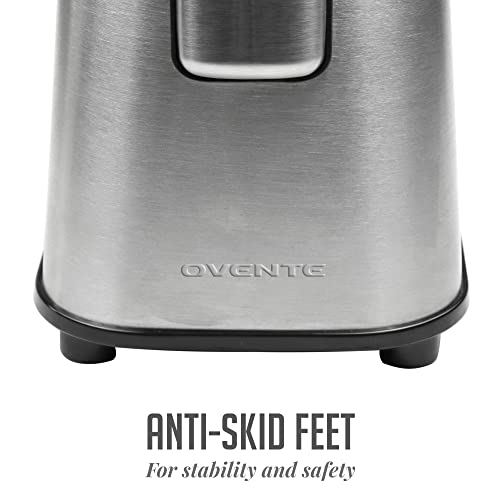
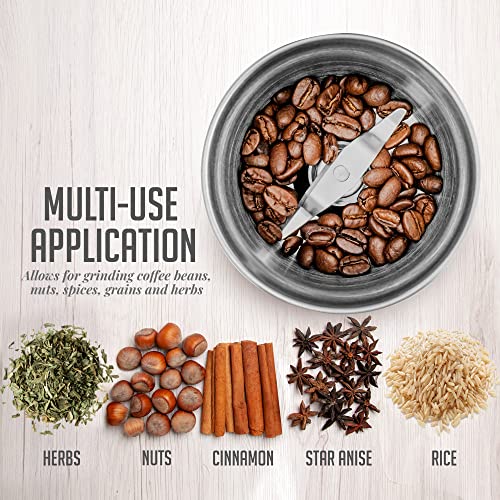
This is a blade grinder with a 200W motor and a 2.1 oz capacity, which puts it squarely in the entry-level electric category. On paper, it’s built for simplicity, press the lid to grind, monitor through the transparent cover, and remove the bowl for cleaning. Owners consistently report it works fine for drip or French press, but don’t expect precision. Blade grinders by nature produce an inconsistent grind, which hurts flavor extraction, especially for pour-over or espresso. That said, it’s versatile enough for spices and herbs, and the dishwasher-safe bowl is a real perk for people who hate cleanup.
Compared to other budget picks, it’s solid for the price if you’re not picky about grind quality. But if you care about repeatable results or brewing methods that demand consistency, this isn’t the tool. It’s a basic workhorse, not a craft instrument.
Product photos
Amazon Basics Fast Electric Grinder
Strengths
- Ultra-affordable
- Fast operation
- Simple one-button use
Trade-offs
- Inconsistent grind
- No settings or timer
- Plastic build feels flimsy
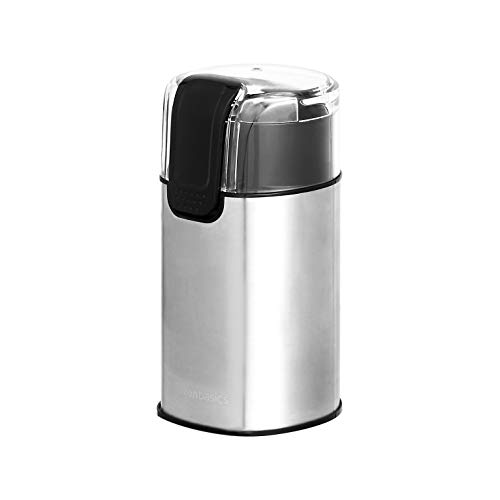
This is the bare-bones blade grinder: 30g capacity, 10-second grind time, and a heavy-duty stainless blade. It does the job if you’re making drip coffee and don’t mind inconsistency. The clear lid helps you eyeball the texture, but without settings, every grind is a game of guesswork. It’s cheap, simple, and widely available, exactly what you’d expect from Amazon Basics.
It won’t compete with burr grinders in flavor clarity, but for under $20, it’s a decent stopgap. Compared to the OVENTE or KRUPS models, it lacks power and capacity. If you’re upgrading from pre-ground and want something just to crack beans open, this works. But don’t expect it to elevate your brew.
Product photos


OXO Brew Conical Burr Grinder
Strengths
- One-touch memory
- Large 12 oz hopper
- UV-blocking hopper
Trade-offs
- Fewer total settings than Baratza
- Higher price point
- No removable burrs
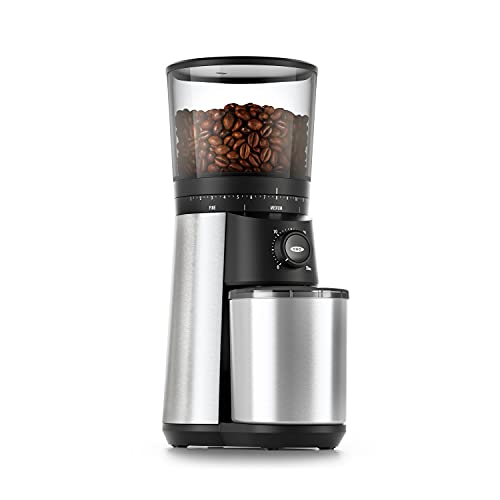
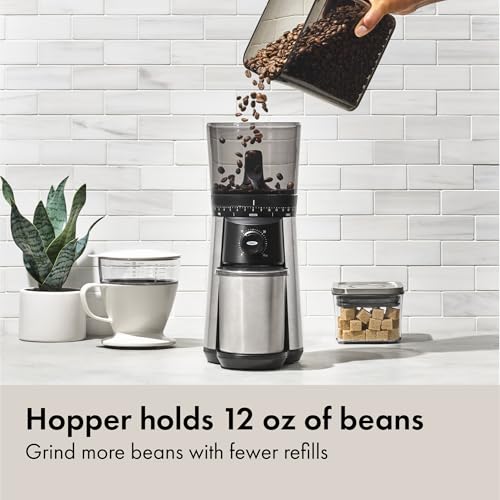
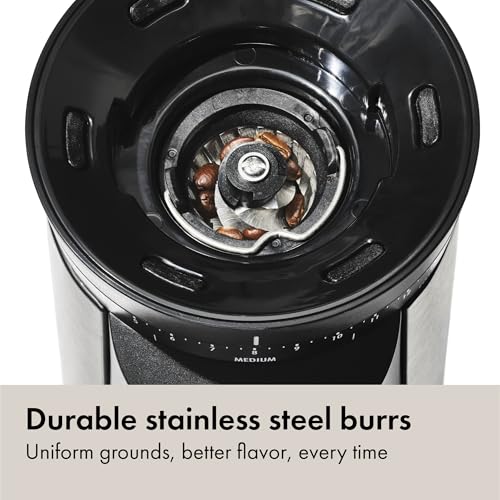
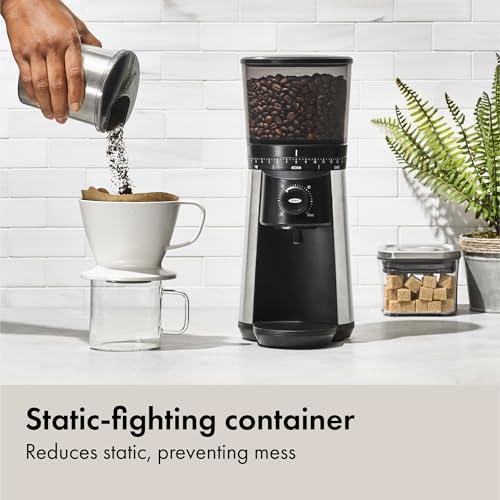
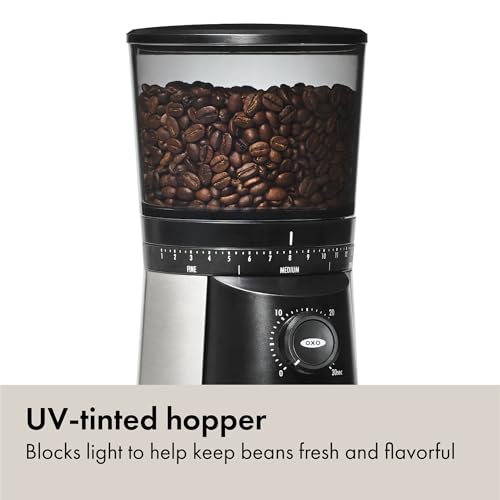
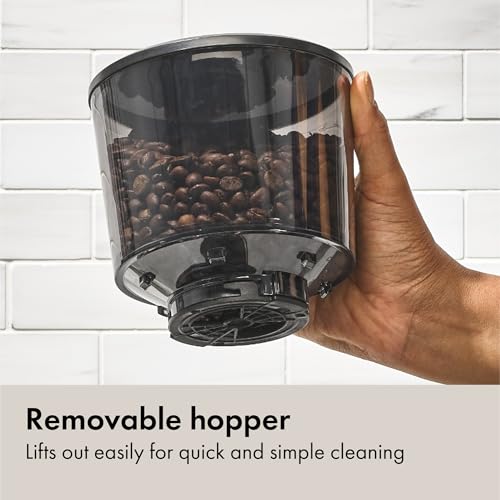
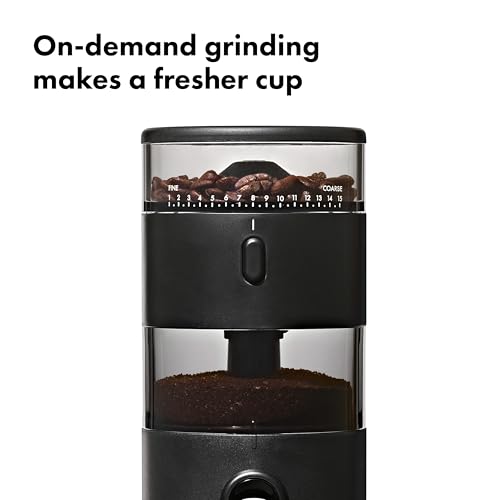
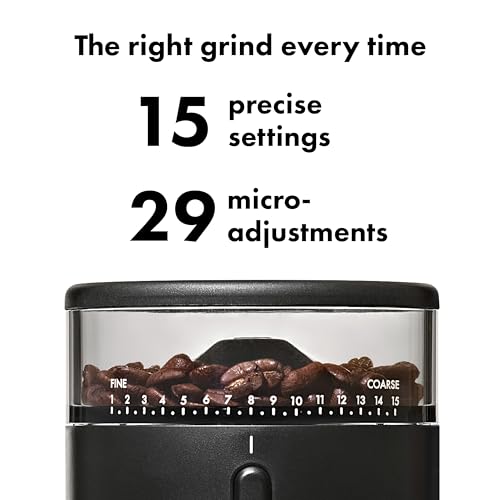
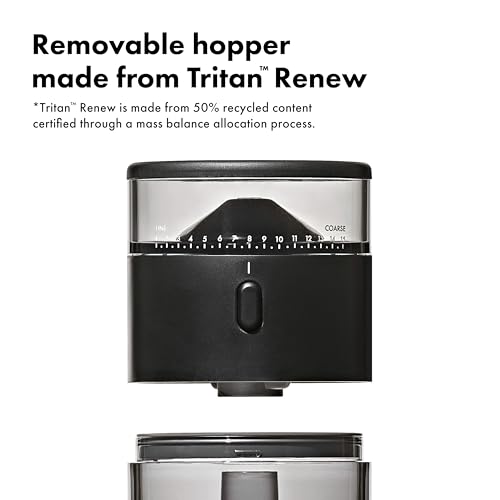
This is the premium pick for a reason. Stainless steel conical burrs, 15 settings with micro-adjustments, and a one-touch auto-start that remembers your last setting, it’s designed for convenience and consistency. The large 12 oz hopper is great for daily use, and the UV-blocking tint keeps beans fresh in bright kitchens. Owners love the static-fighting container and trap door that prevents spills. It’s also Wirecutter’s 2025 top pick, which speaks to its reliability.
Compared to the Baratza Encore, it’s more user-friendly with auto memory and a larger hopper, though it has fewer total settings. But the grind quality is excellent across drip, pour-over, and French press. It’s the most polished daily driver here. If you want a “just works” burr grinder with premium touches, this is it.
Product photos
OXO Brew Compact Burr Grinder

Strengths
- Extremely compact
- Removable burrs
- Consistent grind
Trade-offs
- No timer or auto-shutoff
- Smaller hopper capacity
- Manual grind timing
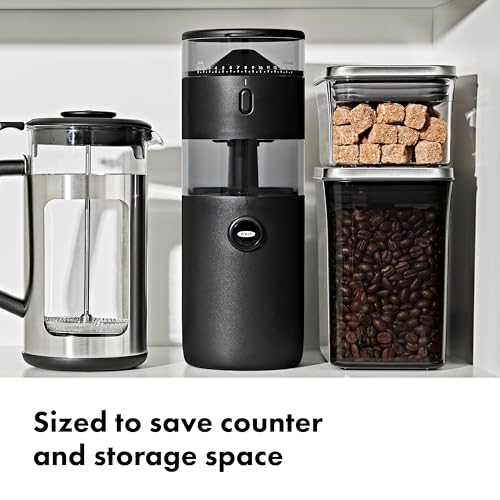
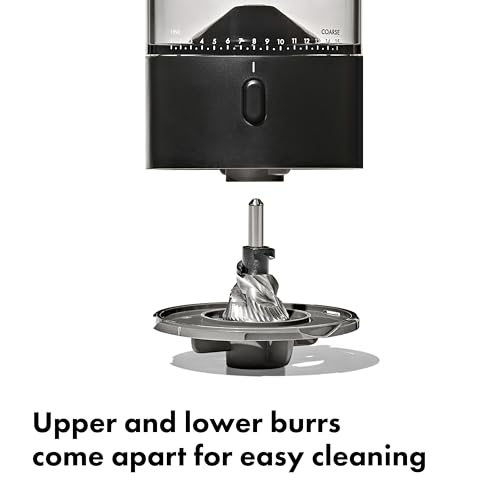
This grinder stands out by packing conical burrs into a tiny footprint, just 4 inches wide. That makes it ideal for small kitchens or minimalist setups where space is tight. The 15 grind settings with micro-adjustments deliver solid consistency, and the removable burrs make cleaning significantly easier than on many competitors. Owners praise how well it performs for its size, especially for drip, Chemex, or French press. The hopper holds 50g, enough for about 6 cups, which is practical for solo or duo use.
It doesn’t have programmable dosing or a timer, so you’ll need to time your grinds manually. But given its compact design and burr quality, I’d pick this over the larger OXO model if counter space is your main constraint. It’s a smart compromise between performance and footprint.
Product photos
How We Picked These coffee grinder under 200
As a longtime coffee enthusiast and founder of Bean Thusiast, I’ve followed coffee grinder technology closely for years. Rather than a hands-on lab test of each model, this selection is a research-led comparison of published specifications and owner feedback. I compared features, grind settings, motor power, and capacity across numerous options, then weighed those against what current owners are saying about performance and durability. We aimed to identify grinders offering the best balance of quality and value within the $200 price point.
For coffee grinders in this price range, consistent grind size and ease of cleaning were the most heavily weighted factors. A consistent grind is crucial for even extraction, directly impacting flavor, and it’s a key reason to choose a burr grinder over a blade grinder. Equally important is how easy it is to disassemble and clean the grinder; regular cleaning maintains performance and prevents stale coffee oils from building up. Durability also played a role, as nobody wants a grinder to fail after just a few months of use.
Specifications reliably reveal motor power, hopper capacity, and the range of grind settings. However, owner feedback was essential for gauging real-world performance – how consistently the grinder actually delivers those settings, how loud it is, and how well it holds up over time. I also looked at reviews from respected coffee publications to assess reputation and identify any common issues. Understanding the burr vs blade grinder differences was also key in evaluating these models.
How To Choose The coffee grinder under 200
Finding the right coffee grinder is crucial for unlocking the full potential of your beans.
A quality coffee grinder prioritizes consistency in particle size, burr type (conical or flat), and grind adjustability. Look for a grinder with minimal retention – meaning grounds don’t linger inside after grinding – and consider the motor’s power and durability. Features like static control and ease of cleaning are also important indicators of overall quality.
Burr Type: Conical vs. Flat
The core of any grinder is its burr set, and choosing between conical and flat burrs is a fundamental decision. Flat burrs, generally found in commercial settings, tend to produce a very uniform grind size, favored by espresso enthusiasts who demand precision. Conical burrs, on the other hand, are slower and create less heat, preserving more of the coffee’s delicate aromas. For most home brewers, a conical burr grinder like the Baratza Encore strikes a good balance between performance and price.
Grind Consistency and Adjustment
Consistency is king when it comes to coffee grinding. Inconsistent grind size leads to uneven extraction, resulting in a muddy or bitter brew. While blade grinders chop beans (resulting in dust and boulders), burr grinders crush them between two rotating abrasive surfaces. Beyond just having burrs, look for a grinder with a wide range of grind settings. The more granular the adjustment, the better you can adjust grind size properly to perfectly match your brewing method – from coarse French press to fine espresso.
- A grinder with fewer settings (like the Amazon Basics) might suffice if you primarily brew drip coffee.
- Mid-range grinders, such as the Cuisinart, generally offer enough settings for most brewing methods, but lack the fine-tuning of premium models.
- High-end grinders (like the OXO Brew Conical Burr Grinder) provide a massive number of settings and micro-adjustments, giving you absolute control over your grind. This level of control is particularly valuable for dialing in espresso.
A good rule of thumb: if you’re willing to spend a little more upfront, you’ll likely save money in the long run by avoiding wasted coffee from poor extraction.
Features and Value
Beyond the core grinding function, several features can significantly impact usability. A large bean hopper, like the one on the Aromaster, is convenient for batch grinding, but can also reduce freshness if you don’t use beans quickly. Static cling is a common issue with grinders, causing grounds to stick to the container; look for models with anti-static features or stainless steel containers. Finally, consider ease of cleaning. Removable burrs and accessible grind chambers, as found on the OVENTE, make maintenance much simpler. If you’re looking for a more budget-friendly electric grinder, you might need to compromise on some of these convenience features.
Coffee Grinder Under 200 Compared
Here’s a comparison of key specifications for coffee grinders priced under $200.
| Product Name | Grind Settings | Capacity (oz) | Burr Type | Motor Power (Watts) | Special Features |
|---|---|---|---|---|---|
| Cuisinart Burr Coffee Grinder | 18 | 8 | Burr | N/A | Removable Parts |
| KRUPS Electric Coffee Grinder | N/A | 3 | Blade | 200 | Multi-Purpose |
| Wancle Electric Coffee Grinder | N/A | 2.1 | Blade | 150 | One-Button Operation |
| Baratza Encore Coffee Grinder | 40 | N/A | Burr | N/A | Programmable |
| Aromaster Conical Coffee Grinder | 48 | 3.9 | Burr | N/A | Anti-Static Tech |
| OVENTE Electric Coffee Grinder | N/A | 2.1 | Blade | 200 | Easy Cleaning |
| Amazon Basics Fast Electric Grinder | N/A | 1 | Blade | N/A | Fast Grind |
| OXO Brew Conical Burr Grinder | 15 + Micro | 12 | Burr | N/A | UV-Blocking Hopper |
| OXO Brew Compact Burr Grinder | 15 + Micro | 50g (approx. 1.7oz) | Burr | N/A | Compact Size |
Frequently Asked Questions
What grind size should I use for a French press?
A coarse grind is best for a French press; aim for the largest setting on your grinder. This prevents grounds from slipping through the filter and creating a muddy cup, and it’s a setting most grinders under $200 can easily achieve.
Will a blade grinder work if I’m on a tight budget?
Yes, a blade grinder will work, but the consistency will be significantly lower than with a burr grinder. While you can get a functional grind, expect more inconsistencies that affect flavor, and consider upgrading to a best burr grinder under $100 when possible.
How often should I clean my coffee grinder?
You should aim to clean your grinder at least once a month, or more often if you use it daily. Regular cleaning removes stale coffee oils and prevents buildup that can impact grind quality and flavor, and it’s especially important with grinders that don’t have easily removable burrs.
What does “retention” mean, and why is it important?
Retention refers to the amount of ground coffee that stays inside the grinder after it stops running. Lower retention is preferable, as it means you’re getting a more accurate dose of freshly ground coffee each time, and it minimizes wasted coffee.
Are more expensive grinders always better?
Not necessarily. While higher-priced grinders often have more features and potentially more precise adjustments, a well-chosen grinder under $200 can deliver excellent results. Many models offer a sufficient range of settings and consistent performance for most home brewing methods, and it’s a great starting point before investing in a more premium, high-value electric burr grinder.
The Bottom Line
Choosing a coffee grinder under $200 often comes down to balancing control with convenience. You can spend less and get acceptable results, but for consistently excellent coffee, the Baratza Encore really stands out as the best overall choice. It delivers a consistent grind, has ample settings for various brew methods, and enjoys strong support from the coffee community.
If you’re on a tighter budget, the Amazon Basics Fast Electric Grinder will get the job done, and for those prioritizing versatility, the OXO Brew Compact Burr Grinder provides a good balance of features in a smaller footprint. However, remember that a grinder is an investment in the quality of your daily cup, and spending a bit more can yield significant improvements in flavor.
Ultimately, the specs matter less than establishing good habits. Consistent grind size is important, of course, but it’s equally vital to store your beans properly and to follow clean coffee grinder steps to maintain peak performance. A well-maintained grinder, even a simpler model, will consistently outperform a high-end grinder that’s neglected.
