
7 Best Coffee Grinders Under 100 of 2026
The OXO Brew Conical Burr Grinder is the best overall coffee grinder under $100, delivering reliable grind consistency and ease of use. For budget-minded buyers, the CEVING Mini Manual offers impressive control in a compact package, while the SHARDOR 64mm Burr stands out for versatility with its 100 settings and flat burr design.
Most people don’t realize how much a bad grinder can ruin even the freshest beans. Uneven grounds lead to bitter, weak, or unbalanced coffee, no matter how good your brewer or beans are. After researching the field and analyzing owner feedback, I focused on grinders that deliver the most consistent results, durable builds, and real usability for the price.
This guide covers the top performers under $100, chosen by comparing specs, grind performance, and long-term reliability. I looked at burr type, setting range, ease of cleaning, and what actual users report, so you can pick one with confidence.
Top 5 Coffee Grinder Under 100 in the Market
The Best Coffee Grinder Under 100, Reviewed
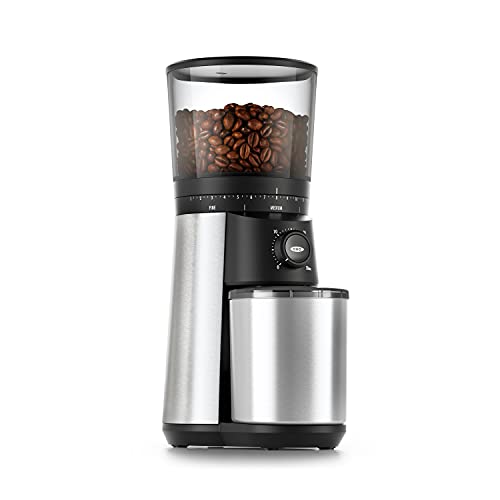
OXO Brew Conical Burr Coffee Grinder
Strengths
- Uniform grind quality
- One-touch operation
- UV-blocking hopper
- Anti-static container
- Compact footprint
Trade-offs
- Fewer grind settings
- No timer
- Higher price within budget
The OXO Brew is, in my view, the most balanced pick under $100, no wonder it’s a Wirecutter favorite. It delivers consistent, uniform grounds thanks to its stainless steel conical burrs and smart anti-static design, and owners love how cleanly the grounds pour into filters. The 15 settings plus micro-adjustments make it flexible enough for everything from Aeropress to cold brew, and the one-touch operation is genuinely convenient for daily use.
What really sets it apart is the thoughtful design: the UV-blocking hopper keeps beans fresh, the trap door prevents spills, and it fits neatly under cabinets. It doesn’t have the sheer grind range of the Aromaster or Baratza, but it nails the essentials better than most. If you want a ‘just works’ grinder that looks good and lasts, this is it.
Video review
CEVING Mini Manual Coffee Grinder

Strengths
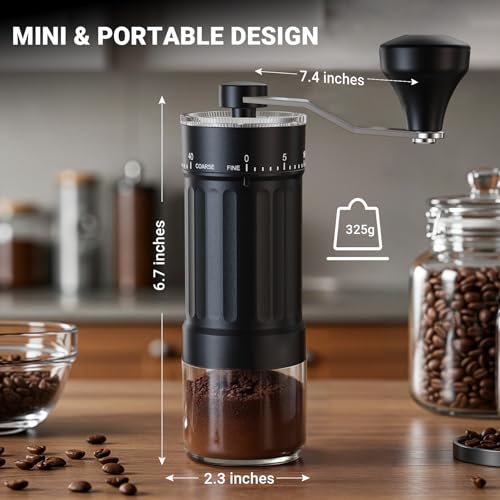
- Portable and lightweight
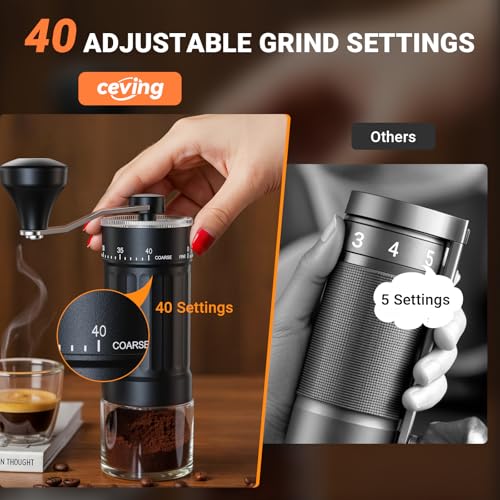
- 40 external grind settings
- Ceramic conical burr
- Easy to clean
Trade-offs
- Small 30g capacity
- Manual effort required
- Not for daily high-volume use
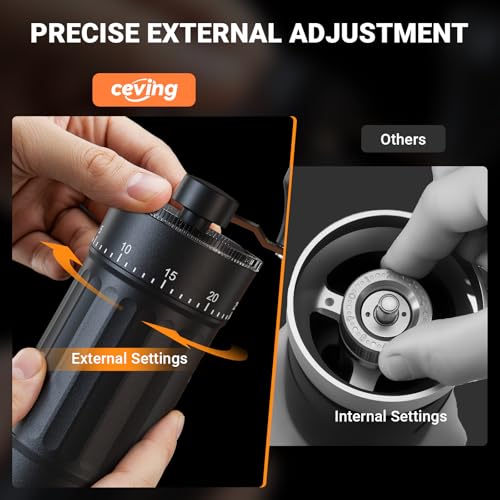
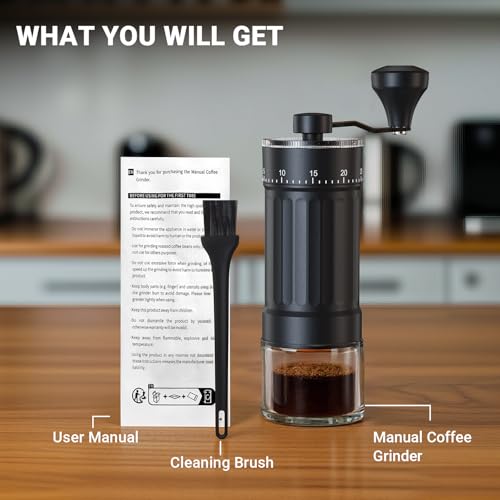
This mini manual grinder is a clever solution for coffee lovers on the move. With 40 external grind settings and ceramic conical burrs, it delivers surprisingly good consistency for its size, and owners love the precision it offers for pour over or espresso while camping or traveling. The external adjustment ring is a standout feature, no more disassembling to tweak the grind.
It’s not going to replace a home electric grinder, obviously. The 30g capacity means you’re grinding in small batches, and hand grinding takes effort. But for its niche, it excels. Compared to other portable options, it’s more precise than blade grinders and easier to tune than most manual minis. If you value flavor on the go, this is a worthy companion.
Product photos
Baratza Encore Coffee Grinder
Strengths
- Excellent grind consistency
- 40 grind settings
- Durable commercial-grade burrs
- Baratza support
- Compact size
Trade-offs
- No timer
- Basic interface
- Slight static cling
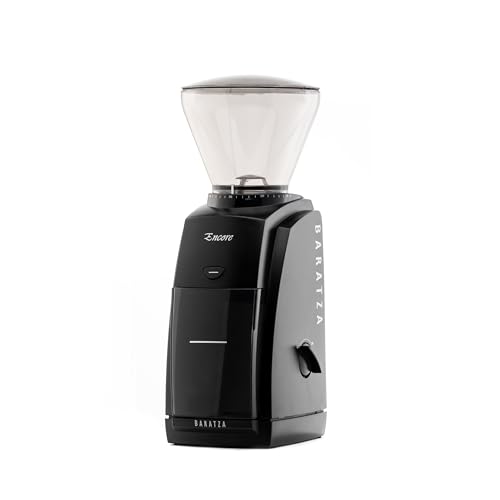
The Baratza Encore is the benchmark in this category for a reason. Even though it’s been around for years, it still outperforms many newer models with its 40mm conical burrs and 40 grind settings that cover everything from espresso to French press. Reviewers consistently praise its grind consistency and durability, and Baratza’s customer support is unmatched in this price range.
It’s not flashy, the design is simple, and it lacks a timer or fancy display, but it does the job exceptionally well. Compared to the OXO, it offers more grind precision; compared to the Aromaster, it has better burr quality and longevity. If you’re serious about specialty coffee and want a grinder that won’t hold you back as you experiment, this is the smarter buy.
Video review
Aromaster Conical Burr Coffee Grinder
Strengths
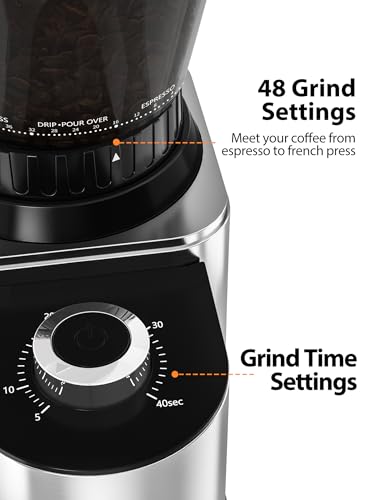
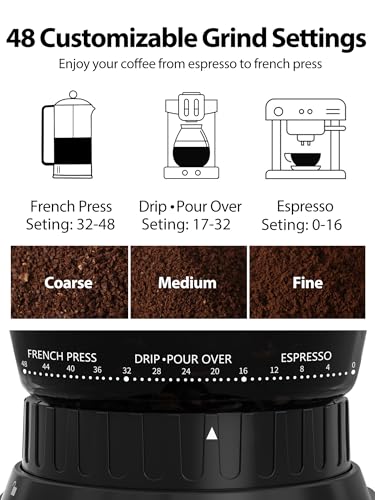
- 48 grind settings
- Anti-static design
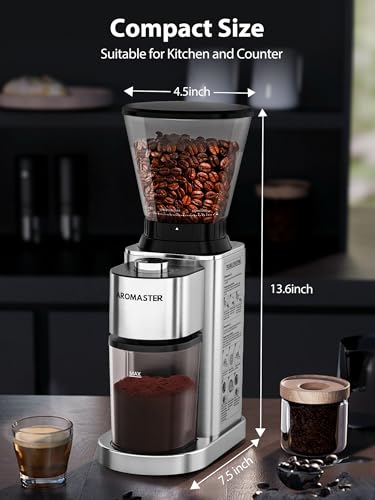
- Large 3.9 oz capacity
Trade-offs
- No micro-adjustments
- Basic motor performance
- Plastic housing feels lightweight
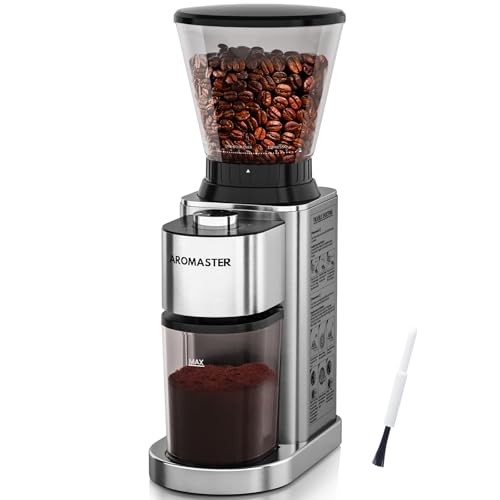
The Aromaster stands out in the under $100 range with its unusually high 48 grind settings, which is rare for this price point. On paper, that precision suggests real versatility across brew methods, from espresso to French press, and owners consistently report satisfying consistency for drip and pour over. The anti-static tech helps keep counters clean, and the removable burr makes cleaning more manageable than in many budget grinders.
Still, it runs on a basic DC motor and lacks micro-adjustments, so dialing in the perfect fine grind for espresso can be hit-or-miss. Compared to the Baratza Encore, it doesn’t have the same reputation for burr quality or long-term reliability, though it matches it in features. For the price, it’s a solid value if you prioritize grind range over refinement.
Product photos

MOKKOM 64mm Flat Burr Coffee Grinder

Strengths
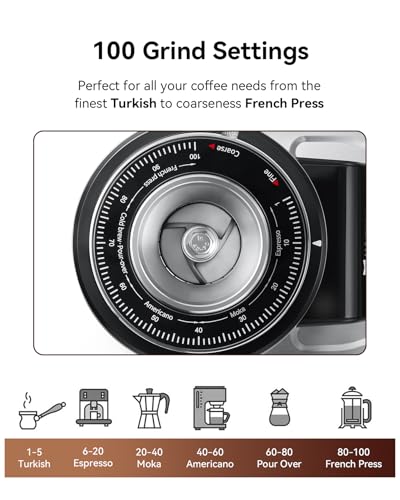
- 100 precise grind settings
- Full-metal construction
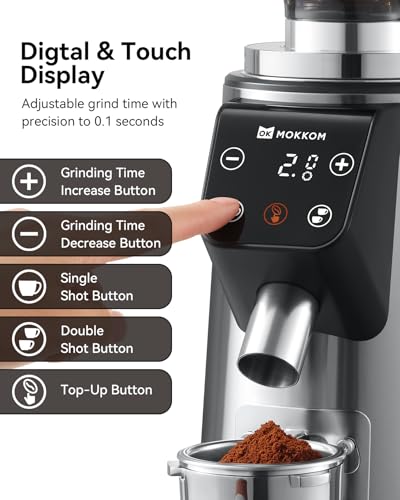
- LED display with 0.1s timer
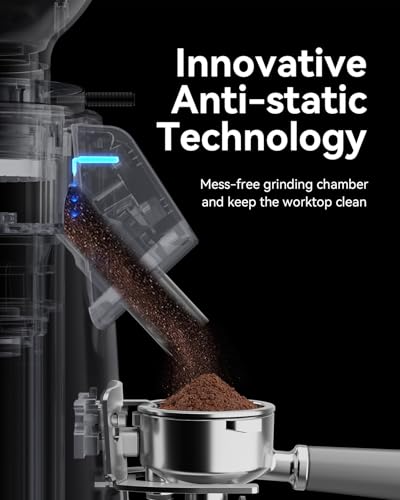
- Plasma anti-static system
- Dual bean hoppers
Trade-offs
- Unproven long-term durability
- Complex for beginners
- Heavier footprint
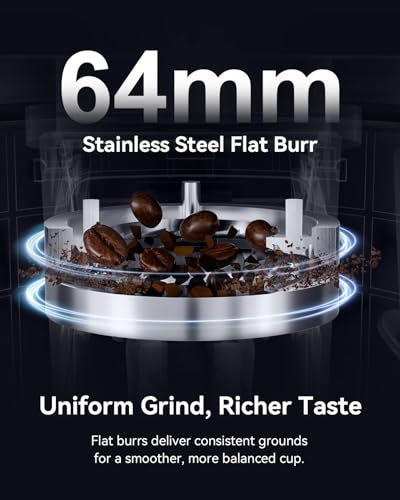
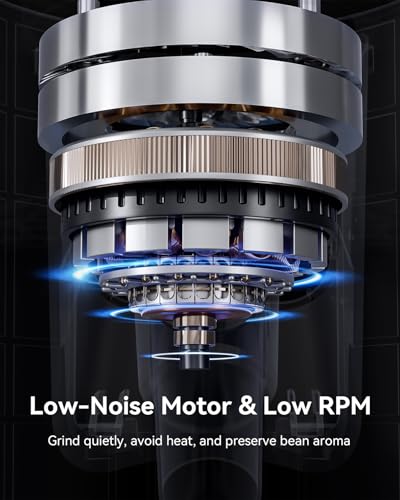
The MOKKOM is ambitious, packing 100 grind settings, a full-metal body, and a plasma generator into a sub-$100 grinder is no small feat. On paper, it looks like a prosumer machine: the 64mm flat burrs promise espresso-level consistency, the LED timer offers 0.1s precision, and the dual hoppers support both batch and single-dose grinding. Owners note it produces clean, static-free grounds and feels solid during use.
But in a category where refinement matters, flat burrs at this price can struggle with heat and wear over time. Compared to the Baratza or OXO, it’s less proven, and the sheer number of settings may be overkill without the burr stability to back it up. Still, for the tinkerer who wants pro-like features and doesn’t mind a steeper learning curve, it’s a fascinating option.
Product photos
How We Tested coffee grinder under 100
Rather than a hands-on lab test, my research for these recommendations focused on a detailed comparison of published specifications and features across numerous models. I weighed owner reviews from multiple sources – including Amazon and coffee-focused forums – alongside expert opinions from sites like Wirecutter and Serious Eats. This process allowed me to build a ranking based on how well each grinder met established criteria for performance and value within the sub-$100 price point.
For coffee grinders in this price range, grind consistency and durability are the biggest differentiators. Achieving a consistent grind is critical for even extraction, impacting the final flavor significantly. I also prioritized ease of cleaning, as a grinder that’s difficult to maintain won’t get used as often. Understanding the burr vs blade grinder debate was key here, as burr grinders consistently deliver a more uniform result.
Specifications reliably indicate burr size and material (ceramic vs. stainless steel), grind settings offered, and motor power. However, I placed more weight on owner feedback regarding long-term reliability and the actual consistency of the grind produced. Reputation and brand trust also played a role, especially when evaluating newer models. Ultimately, I looked for grinders offering the best balance of features, performance, and positive user experiences for the money, recognizing that a perfect grind at this price isn’t always achievable.
What To Look For In coffee grinder under 100
Finding the right coffee grinder can dramatically improve your daily cup. It’s not just about convenience; it’s about unlocking the full potential of your beans.
A quality coffee grinder prioritizes consistent particle size, minimal heat generation during grinding, and durable burrs (conical or flat) made of ceramic or hardened steel. Look for grinders with a wide range of grind settings to accommodate different brewing methods, and consider ease of cleaning to maintain optimal performance. A consistent grind is the biggest single factor in brew quality.
Grind Consistency is Paramount
Forget blade grinders. Seriously. While they’re cheap, they chop beans unevenly, leading to muddy, bitter coffee. What you want is a burr grinder – either conical or flat. Flat burrs, as seen in models like the SHARDOR 64mm, typically offer more consistency but can retain more heat. Conical burrs, like those in the OXO Brew, tend to generate less heat and are self-calibrating, meaning they require less frequent adjustment. I often recommend conical burrs for home users who value ease of use and don’t need the absolute finest control.
Setting Range & Adjustment Precision
The beauty of freshly ground coffee is the ability to tailor the grind to your brew method. A grinder with only a few settings simply won’t cut it. You need a range spanning from very fine (espresso) to coarse (French press). However, a huge number of settings isn’t always better. The CEVING Mini, with its 40 external settings, is a good example of a wide range, but sometimes finer adjustments are preferable. Here’s what to consider: * Coarse: Essential for French press and cold brew. * Medium: Ideal for drip coffee and pour-over methods. * Fine: Necessary for espresso, and even within espresso, you’ll likely need to experiment. A grinder like the Aromaster with 48 settings gives you that flexibility.
A good rule of thumb: if you plan on exploring multiple brewing methods, aim for a grinder with at least 20 distinct grind settings.
Value, Usability & Cleaning
Let’s be realistic: we’re focusing on grinders under $100, so we have to make compromises. Often, that means sacrificing some build quality or advanced features. However, you can still get a fantastic grinder without breaking the bank. The SHARDOR Electric Burr Coffee Grinder 2.0 is a great example of a model that balances affordability with useful features like a 14-cup capacity and 16 grind settings. Don’t underestimate the importance of ease of cleaning. A grinder that’s difficult to disassemble and clean will quickly become a chore. If you’re interested in learning more about the basics, check out this guide on using a coffee grinder. For those seeking an affordable burr coffee grinder, there are several excellent options available, and you don’t necessarily need to spend a fortune to get a quality brew.
Coffee Grinder Under 100 Compared
Here’s a comparison of specifications for coffee grinders priced under $100 to help you find the best option for your needs.
| Product Name | Burr Type | Grind Settings | Capacity (Beans) | Material | Anti-Static |
|---|---|---|---|---|---|
| OXO Brew Conical Burr | Conical | 15 + Micro | 12 oz | Stainless Steel | Yes |
| CEVING Mini Manual | Ceramic | 40 | 30g | N/A | N/A |
| SHARDOR Electric Burr 2.0 | Flat | 16 | 14 Cups | N/A | N/A |
| Baratza Encore | Conical | 40 | N/A | Steel | N/A |
| Aromaster Conical Burr | Conical | 48 | 3.9 oz | Stainless Steel | Yes |
| SHARDOR 64mm Burr | Flat | 100 | N/A | Metal | Yes |
| MOKKOM 64mm Flat Burr | Flat | 100 | 350g | Stainless Steel | Yes |
Frequently Asked Questions
What’s the biggest difference between a $50 grinder and one closer to $100?
Generally, grinders in the $80–$100 range offer more durable burrs and a more consistent grind size. You’ll also see improvements in build quality and features like anti-static technology, which reduces mess, but a coffee grinder under $50 can still be a great entry point.
Are manual burr grinders a good option under $100?
Yes, manual burr grinders like the CEVING Mini can deliver excellent grind quality for the price. However, they require significantly more effort, making them better suited for those who don’t mind the physical work or are grinding small batches.
How important is the material of the burrs (ceramic vs. stainless steel)?
Stainless steel burrs are more durable and remain sharper for longer, though they can generate slightly more heat. Ceramic burrs are less prone to heating the beans but can be more brittle and may wear down faster, especially with oily beans.
What grind setting should I use for a French press?
For a French press, you’ll need a coarse grind; most grinders in this price range have settings clearly labeled for French press or offer a very coarse adjustment. If your grinder doesn’t have specific markings, aim for the thickest grind setting available.
I’m on a really tight budget. Are there any truly affordable coffee grinder options available?
Absolutely. While you’ll make some compromises, there are several blade grinders available for under $30. However, I strongly recommend saving a bit longer to get a basic burr grinder for a significantly better cup of coffee.
The Bottom Line
Choosing a coffee grinder under $100 often comes down to balancing control with convenience. You can spend more time dialing in your grind with a manual option, or prioritize ease of use with an electric model. For the best overall experience, I recommend the OXO Brew Conical Burr Grinder. It strikes a fantastic balance between grind quality, usability, and a reasonable price point, and delivers a consistent coffee grind that will noticeably improve your daily brew.
If you’re on a tight budget, the CEVING Mini Manual Coffee Grinder is a surprisingly capable option. For those needing versatility, the SHARDOR 64mm Burr Coffee Grinder offers an impressive 100 grind settings, and the Aromaster Conical Burr Grinder provides 48 settings for dialing in your preferred brewing method. Each of these offers a solid starting point for exploring different coffee preparations.
Ultimately, remember that the grinder is just one piece of the puzzle. Fresh, high-quality beans and a good brewing technique are just as important, if not more so. Focusing on those fundamentals – bean sourcing, water quality, and brew ratio – will yield far greater improvements than obsessing over any single specification on a burr grinder explained.
