
7 Best Coffee Grinders for Espresso and Pour Over 2026
The OXO Brew Conical Burr Grinder is our top pick for most people, delivering reliable, consistent grinds for both espresso and pour over. For a budget-friendly, cordless option that’s great for travel, the AAOBOSI Cordless Burr Coffee Grinder stands out. If you prefer manual grinding with precision, the TIMEMORE C5 ESP PRO Manual Grinder offers excellent control and build quality.
Every coffee lover reaches a point where pre-ground just won’t cut it anymore. The difference a good grinder makes is immediate, brighter notes, cleaner cups, and no more bitterness. I’ve seen how the right grind unlocks what beans were meant to express.
This guide cuts through the noise. We ranked grinders based on consistency, adjustability, and real-world feedback from owners and experts. These are the ones that deliver where it matters most.
Top 7 Coffee Grinder For Espresso And Pour Over in the Market
The Best Coffee Grinder For Espresso And Pour Over, Reviewed
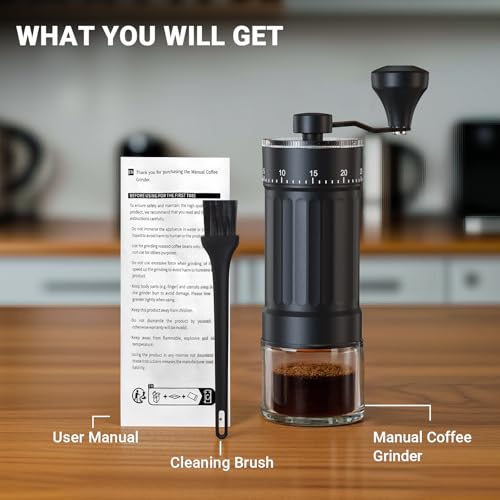
Mini Manual Coffee Grinder

Strengths
- Ultra-portable
- External grind dial
- Ceramic burr
Trade-offs
- Plastic construction
- Small capacity
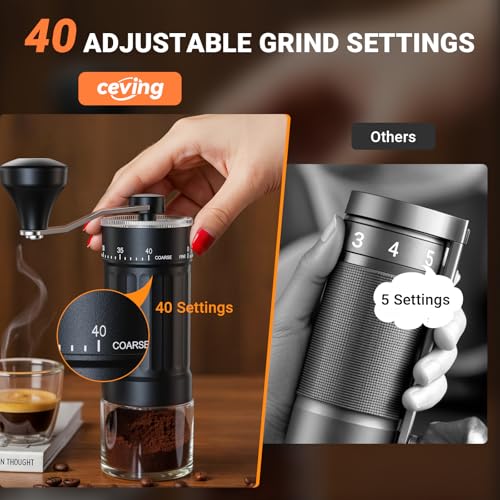
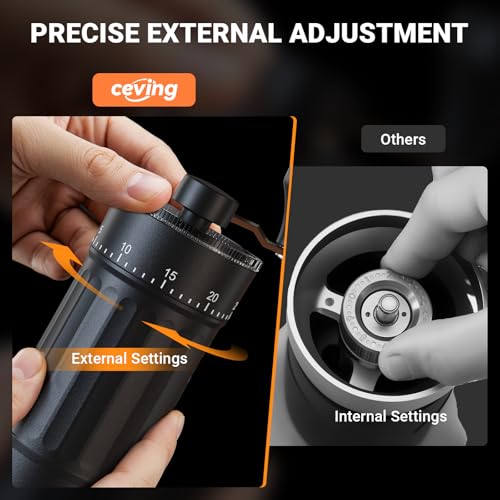
Manual grinders live or die by grind quality and usability, and this CEVING model punches above its weight. The 40 external grind settings are a standout, no more guessing with internal dials. You can dial in espresso or pour over with real precision, and the ceramic burr keeps heat low, preserving delicate flavors. Owners love how clean the grind is, especially for a sub-$50 unit.
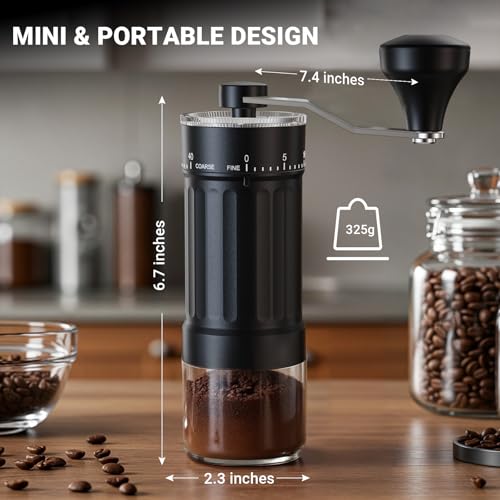
At just 325g, it’s featherlight and perfect for slipping into a backpack. The 30g capacity limits it to 1–2 cups, but that’s expected at this size. Compared to the TIMEMORE C5 ESP PRO, it’s less durable (plastic body vs. all-metal) and lacks the same refinement, but for travelers or occasional users, it’s a smarter buy. My recommendation? Keep this in your travel kit and leave the electric grinder at home.
Product photos
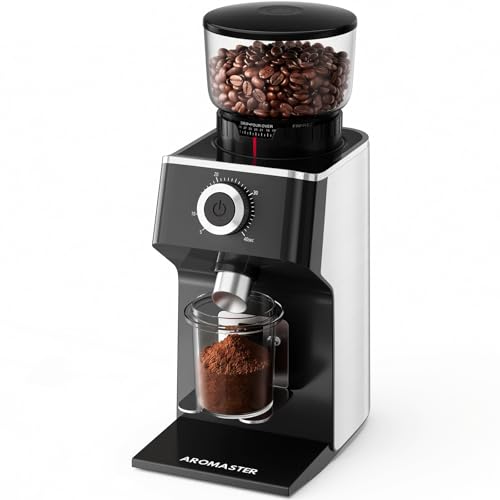
Aromaster Burr Coffee Grinder
Strengths
- Very quiet motor
- Solid build
- Anti-static design
Trade-offs
- Bulky design
- No micro-adjustments
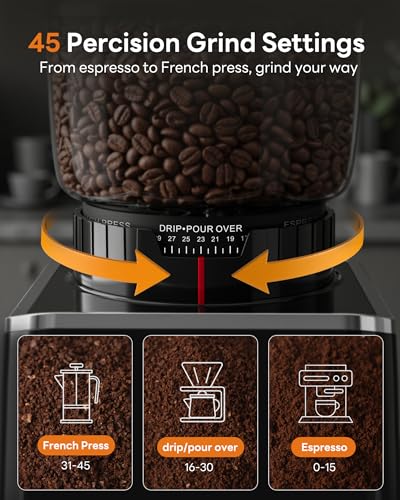
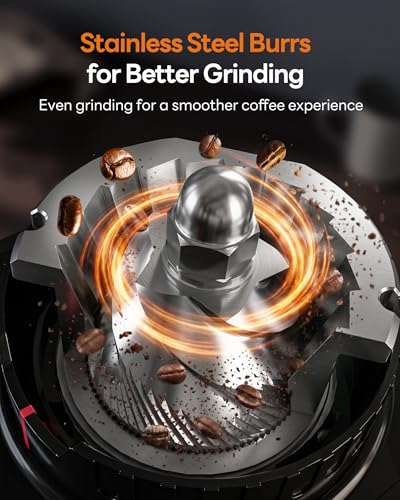
Quiet operation is rare in electric grinders, but the Aromaster delivers, owners consistently praise how unobtrusive it is at 6 AM. That alone makes it a standout for shared homes or apartments. The 45 grind settings cover all bases, and the anti-static tech actually reduces mess, which is not always the case in this class. The stainless steel body looks clean and resists fingerprints better than most.
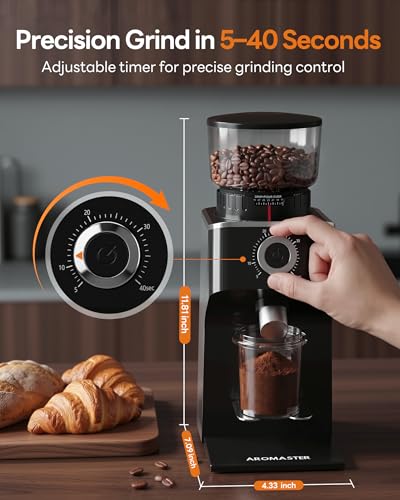
It doesn’t have the largest hopper or the most advanced timer, but the 5–40s range is sufficient for most brews. Where it beats the OXO Compact is noise; where it loses is footprint, it’s taller and wider. If you value peace and quiet over space savings, this is the one. For pour over lovers who hate waking the household, it’s a quiet win.
Product photos
AAOBOSI Cordless Burr Coffee Grinder
Strengths
- True cordless freedom
- Excellent anti-static
- 60 micro-settings
Trade-offs
- Slower grind speed
- Plastic-heavy build
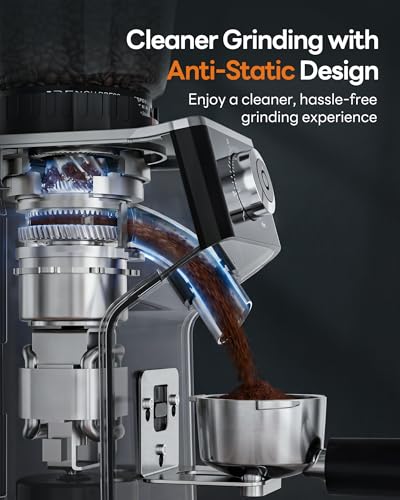
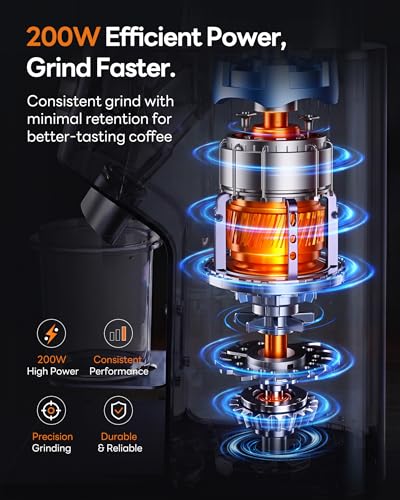
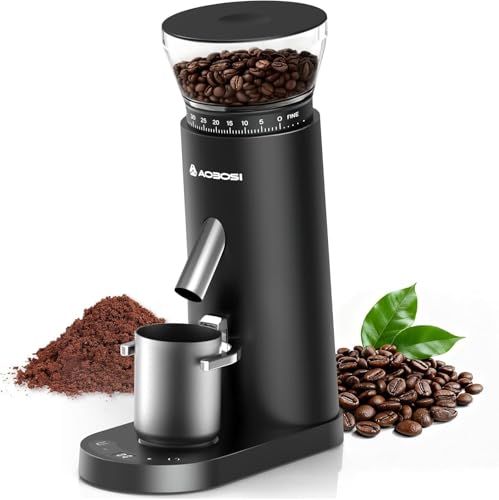
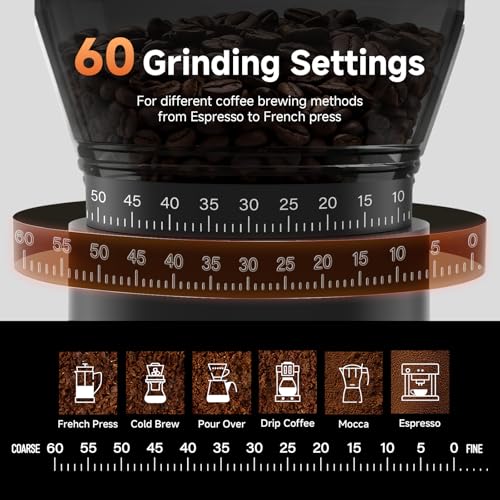
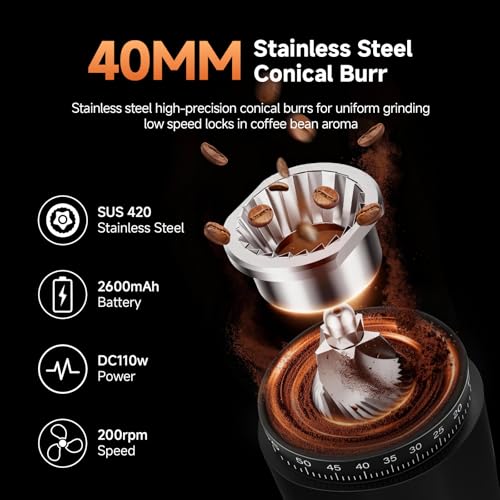
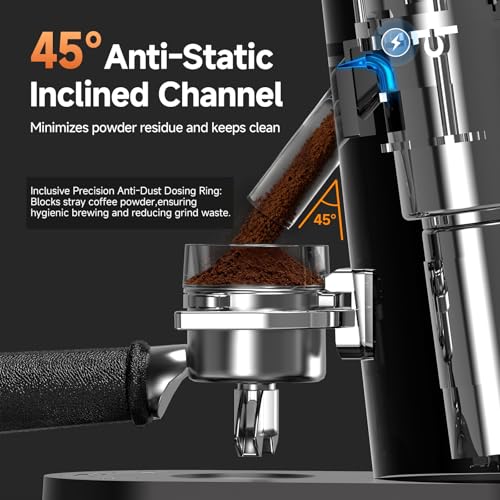
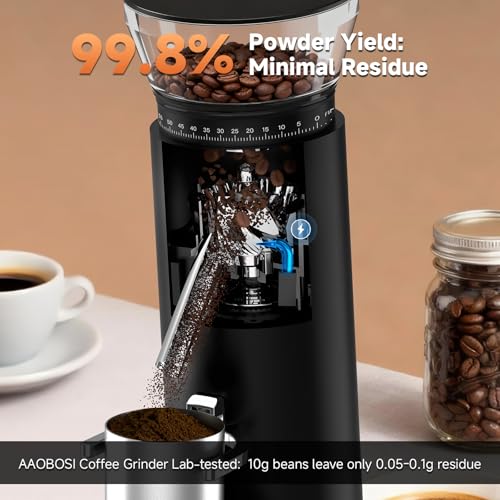
Battery-powered grinders are still a niche, but the AAOBOSI makes a strong case for when portability matters. With 60 grind settings and a low-RPM motor, it promises precision on the go, and owners say it delivers, especially for pour over and espresso. The real win here is the anti-static tech, which reviewers note keeps nearly all grounds in the chamber, a rarity in cordless models. The 8000mAh battery lasts through multiple trips, and USB-C charging means you’re never stranded.
It’s not perfect. The build feels more utilitarian than premium, and the grind speed isn’t fast. But for campers, RV travelers, or anyone who hates outlet-hunting, this eliminates a real pain point. Next to the AMZCHEF or Aromaster, it’s less of a daily driver and more of a specialty tool, but for that role, it’s hard to beat.
Product photos

AMZCHEF Conical Burr Coffee Grinder
Strengths
- Large bean hopper
- Precise timer
- True anti-static
Trade-offs
- Noisy motor
- Less premium feel
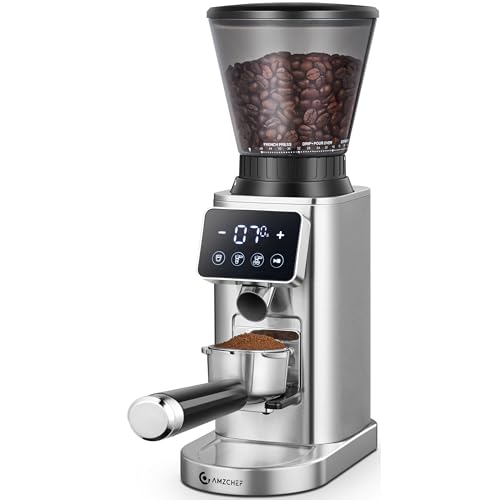
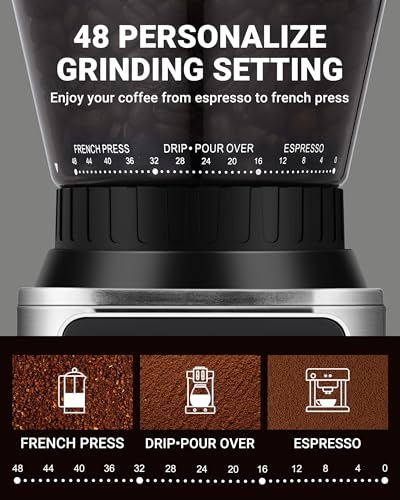
If you want near-premium performance without the premium price, the AMZCHEF hits a sweet spot. Its 48 grind settings offer real range, and the 40mm stainless steel burrs turn out grounds that owners say are consistent across pour over and espresso. The touchscreen interface is surprisingly responsive, and the precision timer (down to 0.5 seconds) helps dial in repeatable results. I’d pick this over the Aromaster for value, it offers more features at a similar price point.
The large 10.6-ounce hopper with UV-blocking tint is a thoughtful touch for bean freshness, and the anti-static design actually works, according to long-term reviewers. It’s not the quietest, but for the price, that’s a fair trade. Where it falls short is build refinement, the finish feels a bit plasticky next to OXO’s metal body. But for most home users, that won’t matter if the coffee tastes good.
Product photos


OXO Brew Conical Burr Grinder
Strengths
- Large bean hopper
- One-touch operation
- Spill-proof trap door
Trade-offs
- Takes up counter space
- No built-in timer
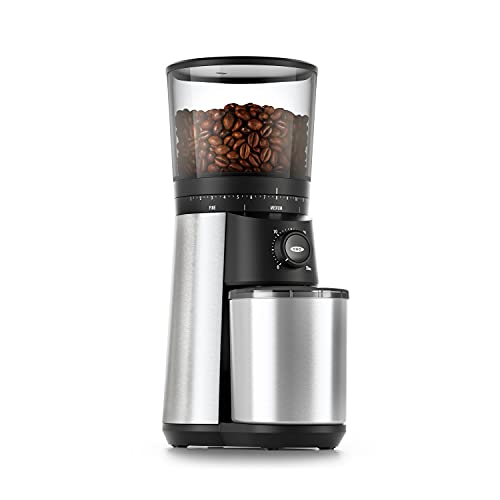
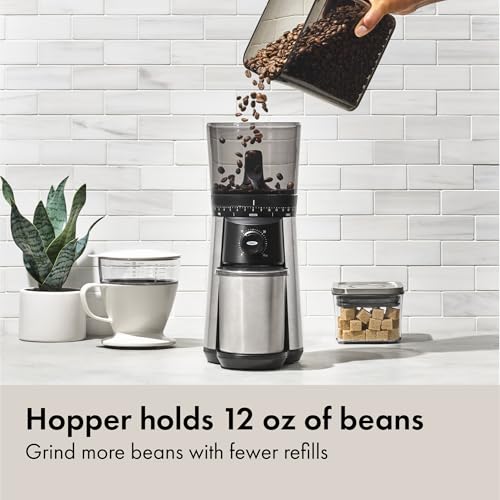
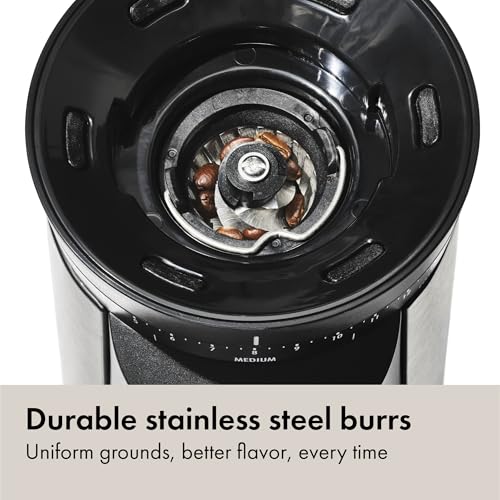
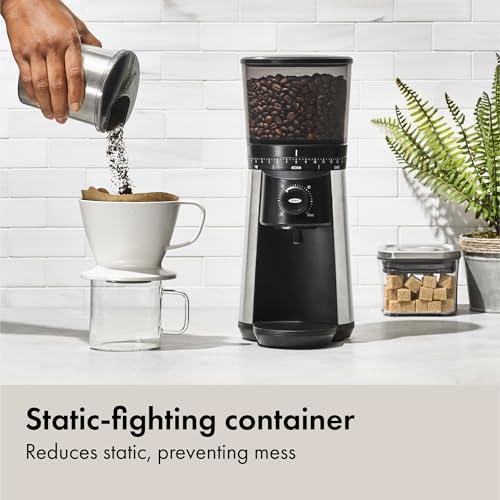
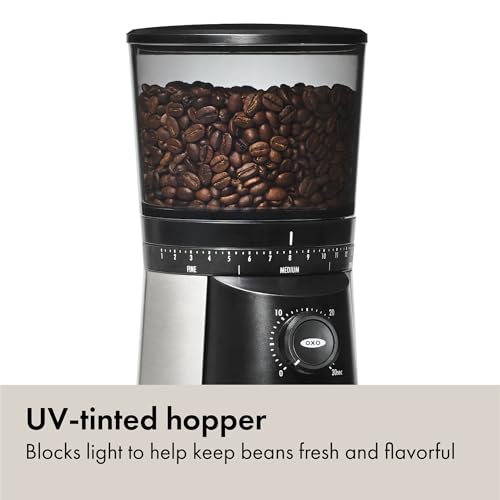
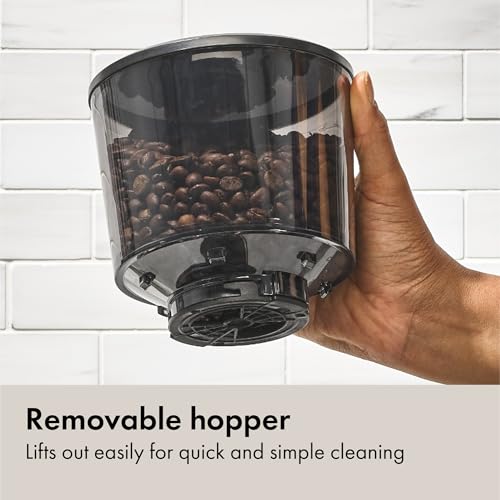
This full-size OXO grinder is the gold standard for many home baristas, and for good reason. It combines consistent grind quality, a large 12-ounce hopper, and a smart trap-door system that prevents spills when refilling. The stainless steel conical burrs produce even grounds, and the 15 settings with micro-adjustments give real control. Owners love the one-touch start, after dialing in your grind, you don’t have to reselect every time.
It’s not as quiet as the Aromaster, nor as compact as its sibling, but it’s a workhorse. Compared to the AMZCHEF, it feels more refined and durable. The UV-blocking hopper and anti-static container are small touches that add up. If you brew multiple cups daily and want reliability without fuss, this is the smarter buy.
Product photos
OXO Brew Compact Burr Grinder

Strengths
- Compact footprint
- Stainless steel burrs
- Easy to clean
Trade-offs
- Smaller hopper
- No timer
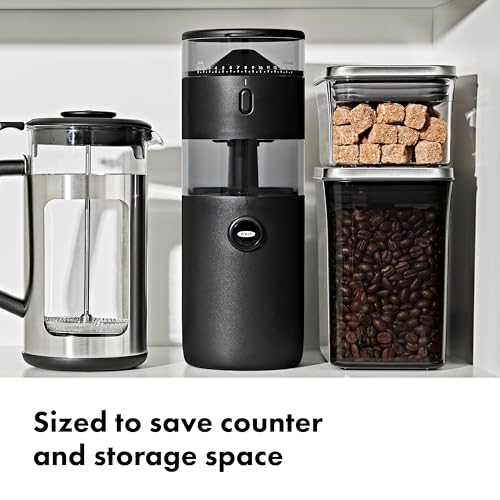
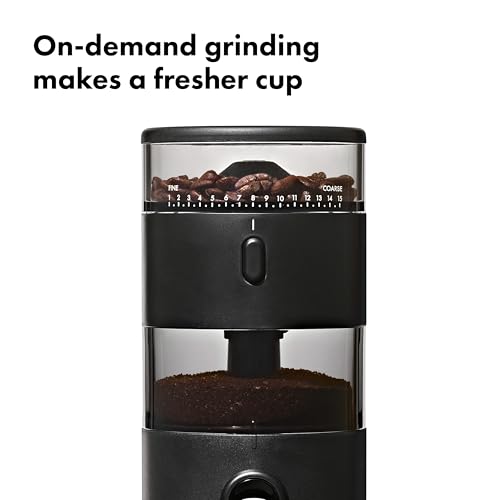
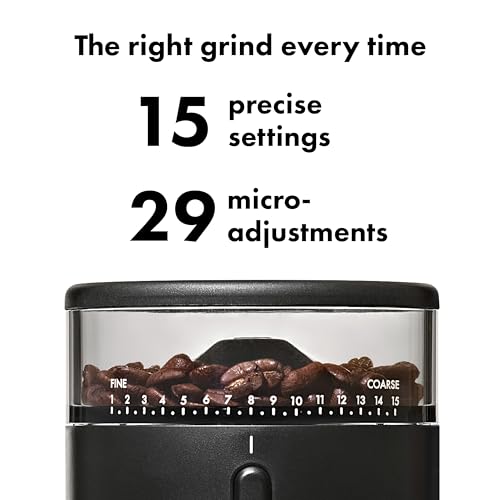
The OXO Brew Compact stands out in a crowded field by delivering high grind consistency in a footprint small enough to live on even the tiniest kitchen counter. Its 15 macro settings with 29 micro-adjustments give real control, and owners consistently report grounds uniform enough for pour over and clean espresso shots. The stainless steel conical burrs do their job well, and the anti-static design keeps the stainless steel grounds container relatively clean, something many grinders in this range struggle with.
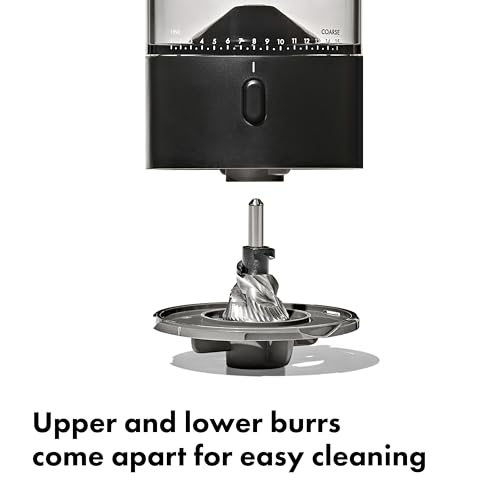
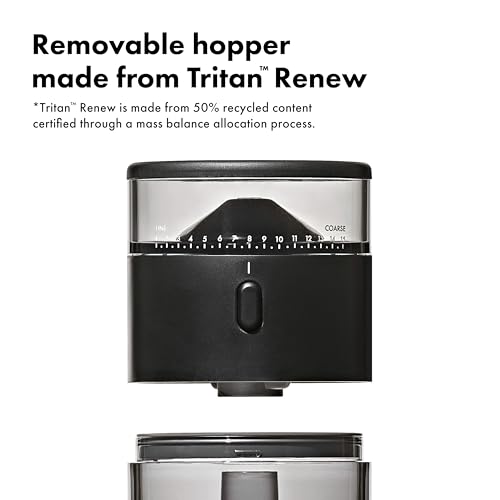
What really sets it apart is the thoughtful build: the removable burrs make cleaning manageable, and the use of Tritan Renew in the hopper is a quiet nod to sustainability without sacrificing durability. Compared to the larger OXO model, this one sacrifices bean capacity but gains serious space-saving appeal. For those tight on counter real estate, this is a smart compromise.
Product photos
TIMEMORE C5 ESP PRO Manual Grinder
Strengths
- All-metal build
- 50 precise settings
- Stainless steel burr
Trade-offs
- Heavy for travel
- High price for manual
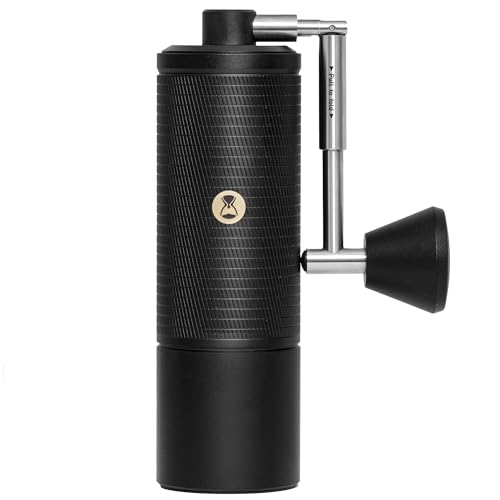
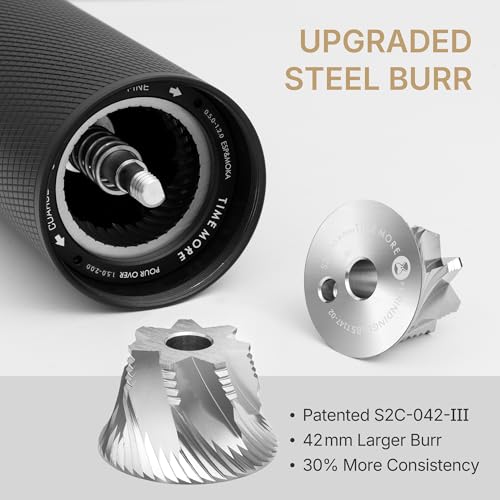
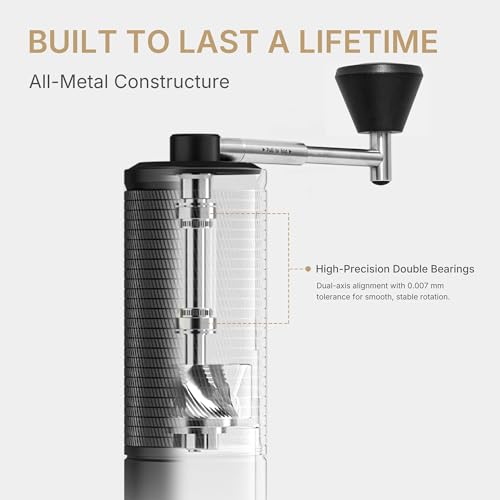
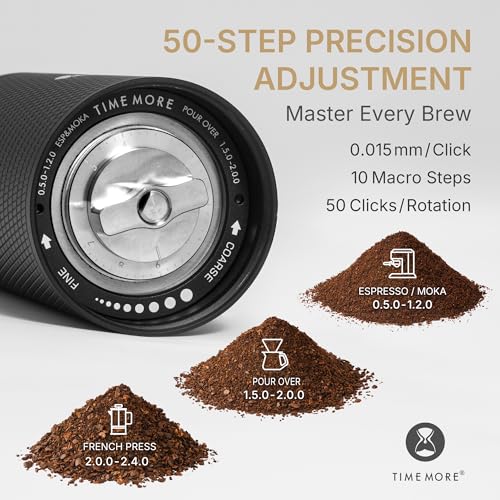
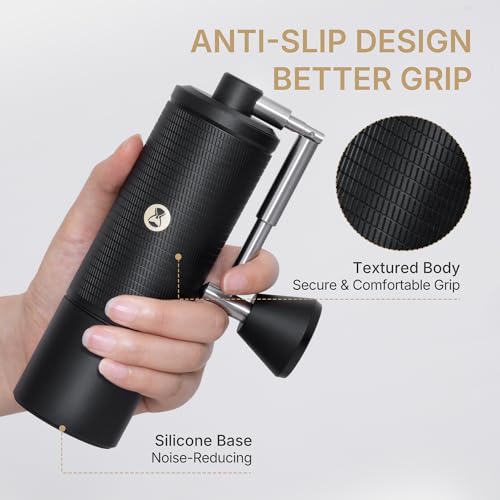
The TIMEMORE C5 ESP PRO is what happens when manual grinding gets serious. Its 42mm S2C stainless steel burr delivers grind consistency that rivals some entry-level electrics, and the 50 click settings let you fine-tune for espresso with real precision. Owners report clean, clump-free grounds and noticeably better extraction. The all-metal body feels durable, and the 53mm ergonomic grip reduces hand fatigue, important for daily use.
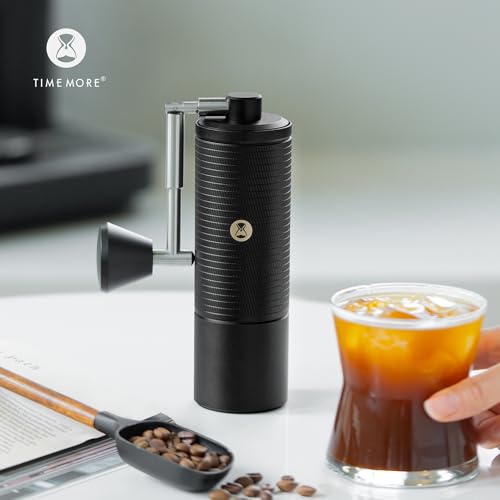
It’s not the lightest or cheapest, but it’s built to last. Next to the CEVING mini grinder, this is the clear choice for home use. The 30g capacity suits solo or duo brewing, and the stability during grinding is excellent. If you’re serious about manual brewing and want one grinder for everything from espresso to French press, this is the one I’d keep in a typical setup.
Product photos
How We Picked These coffee grinder for espresso and pour over
As a coffee enthusiast, I know that the grinder is just as important – if not more so – than the brewing method itself. To recommend the best options, we didn’t rely on personal, hands-on testing of every model. Instead, we focused on a research-led comparison of published specifications, features, and a careful weighing of owner and expert reviews. We then ranked these grinders against criteria specifically relevant to both espresso and pour-over brewing.
For this category, consistency and grind adjustability were paramount. Achieving a consistent espresso grind is crucial for proper extraction, and a wide range of settings allows for experimentation with different brew methods. We also heavily weighted build quality and ease of cleaning, as these factors impact long-term usability and enjoyment.
Specifications tell you about burr material (ceramic vs. steel) and the number of grind settings. However, owner feedback provided crucial insight into real-world performance – things like static, noise levels, and durability. We also considered the reputation of the brand and any independent testing data available to help us assess overall grind quality comparison and the tangible burr grinder benefits over blade grinders.
Choosing The Right coffee grinder for espresso and pour over
Finding the right coffee grinder is absolutely essential for unlocking the full potential of your beans, whether you’re making espresso or enjoying a delicate pour-over.
A quality coffee grinder prioritizes consistency in particle size. Burr grinders (conical or flat) are preferred over blade grinders for their ability to deliver a uniform grind, minimizing fines and maximizing flavor extraction. Consider grind settings, capacity, ease of cleaning, and build quality when evaluating options.
Grind Consistency is Paramount
For both espresso and pour-over, grind consistency is king. Inconsistent particle sizes lead to uneven extraction – some grounds over-extracted (bitter) and others under-extracted (sour). This is where burr grinders truly shine. While stainless steel burrs are common, ceramic burrs often generate less heat during grinding, which can preserve delicate coffee aromas. Don’t assume more settings automatically mean better control; a smaller number of precise and well-defined settings is preferable to a huge range of indistinguishable clicks. Look for grinders that allow for micro-adjustments, especially if you plan on frequently switching between espresso and pour-over.
Capacity & Workflow Considerations
The size of the bean hopper and grounds container matter, but not always in the way people think. A huge hopper isn’t necessarily better if you only brew a few cups at a time; stale grounds degrade quickly. For single-dose grinding – weighing out each shot individually – a smaller hopper is perfectly fine, and even preferable. The ease of transferring grounds into your portafilter or brewer is also important. Some grinders generate static, causing grounds to cling to everything. Anti-static features, like those found in the AAOBOSI Cordless Burr Coffee Grinder, can make a significant difference in reducing mess and improving workflow. If you’re looking for more information on achieving the best results, check out this grinder operation guide.
Balancing Features and Value
It’s easy to get caught up in the bells and whistles, but remember to prioritize what genuinely impacts your coffee. Cordless convenience, as offered by the AAOBOSI, is fantastic for travel or limited counter space, but it comes at a price. Similarly, digital timers and touchscreens (as seen on the AMZCHEF) can be convenient, but aren’t essential. Here’s a quick guide to help prioritize your spending:
- Essential: Burr grinder (conical or flat), a reasonable range of grind settings.
- Nice to have: Stepless adjustment, anti-static features, a removable hopper.
- Luxury: Digital timer, touchscreen controls, built-in scale (often adds unnecessary cost).
A grinder that delivers consistent results, is easy to clean, and fits your brewing habits is far more valuable than one packed with features you won’t use.
Ultimately, a well-chosen grinder will elevate your brewing experience. If you’re focused solely on pour-over, you might find a best pour-over coffee grinder specifically tailored to those needs. Don’t underestimate the importance of learning dialing in grind size for your particular beans and brewing method.
Coffee Grinder for Espresso and Pour Over Compared
Here’s a comparison of the specifications for various coffee grinders suitable for espresso and pour-over brewing.
| Product Name | Grind Settings | Burr Material | Capacity (Beans) | Cordless | Anti-Static |
|---|---|---|---|---|---|
| Mini Manual Coffee Grinder | 40 | Ceramic | 30g | No | N/A |
| Aromaster Burr Coffee Grinder | 45 | Conical Burr | N/A | No | Yes |
| AAOBOSI Cordless Burr Coffee Grinder | 60 | Conical Burr | N/A | Yes | Yes |
| AMZCHEF Conical Burr Coffee Grinder | 48 | Stainless Steel | 10.6oz | No | Yes |
| OXO Brew Conical Burr Grinder | 15 + Micro | Stainless Steel | 12oz | No | Yes |
| OXO Brew Compact Burr Grinder | 15 + Micro | Stainless Steel | 50g | No | N/A |
| TIMEMORE C5 ESP PRO Manual Grinder | 50 | S2C Stainless | 30g | No | N/A |
Frequently Asked Questions
What grind setting number should I start with for espresso?
Generally, you should begin around the 15-20 mark on most grinders with numbered settings, but this is highly dependent on the specific grinder and your beans. Dialing in your grind size is crucial, and you’ll likely need to make small adjustments from there to achieve the proper extraction for a balanced espresso shot.
Are manual grinders suitable for daily use?
Yes, a manual grinder can be excellent for daily use, especially if you value portability or enjoy the process of grinding as part of your coffee ritual. Models like the TIMEMORE C5 ESP PRO Manual Grinder offer consistent results, but require more physical effort than electric options.
Do ceramic burrs really preserve flavor better than steel?
While both burr materials are capable of producing excellent results, ceramic burrs generate less heat during the grinding process, which may help preserve more of the coffee’s delicate aromatic compounds. However, the difference in flavor preservation is often subtle and may not be noticeable to all palates.
How important is an anti-static feature, really?
An anti-static feature is surprisingly impactful, particularly if you live in a dry climate. It minimizes mess and clumping, making it much easier to transfer grounds into your portafilter or pour-over device without losing any precious coffee. The AAOBOSI Cordless Burr Coffee Grinder includes this feature.
I’m mainly making pour-over; should I still consider a grinder marketed for espresso too?
Absolutely. A grinder capable of fine espresso adjustments will also excel at coarser settings needed for pour-over. In fact, a versatile grinder like the OXO Brew Conical Burr Grinder will give you the flexibility to experiment with many brewing methods, and a best espresso coffee grinder often offers that range.
The Bottom Line
Choosing a coffee grinder often comes down to balancing control with convenience, or investing in quality versus saving money. For the best overall experience, consistently delivering excellent results for both espresso and pour-over, I recommend the OXO Brew Conical Burr Grinder. It strikes a fantastic balance between features, usability, and price, offering those crucial micro-adjustments for dialing in your grind.
If you’re on a tighter budget, the Aromaster Burr Coffee Grinder is a solid choice, providing a good starting point for consistent grinding with its conical burr and anti-static features. For those prioritizing portability or limited space, the AAOBOSI Cordless Burr Coffee Grinder offers a unique level of freedom, though you’ll be making some trade-offs in terms of absolute grind precision.
Ultimately, remember that the most expensive grinder won’t magically make great coffee. Focusing on the fundamentals – fresh, high-quality beans and uniform grind size – will have a far greater impact on your daily cup than any single specification or fancy feature.
