
7 Best Coffee Grinders for Pour Over 2026, Analyzed
The OXO Brew Conical Burr Grinder stands out as the best overall pick for pour over, delivering consistent grinds and micro-adjustments in a user-friendly package. For those on a tighter budget, the OXO Brew Compact offers solid performance in a smaller form. If you’re looking for versatility and don’t mind a learning curve, the RIOSKY with 60 digital settings gives precise control across brew methods.
Pour over brewing rewards precision, and nothing undermines a great technique faster than an inconsistent grind. Too many grinders promise even particle size but deliver a mix of fines and boulders, muddying your cup.
This guide cuts through the noise by focusing on grinders that deliver real-world consistency, based on specs, owner feedback, and the kind of grind control serious pour over demands. I looked at burr quality, adjustment range, and long-term usability, so you can brew with confidence.
Top 7 Coffee Grinder For Pour Over in the Market
The Best Coffee Grinder For Pour Over, Reviewed
Mini Manual Coffee Grinder

Strengths
- 40 external settings
- Ultra-portable
- Ceramic burr
Trade-offs
- Small 30g capacity
- Limited for multiple servings
- Not ideal for daily heavy use
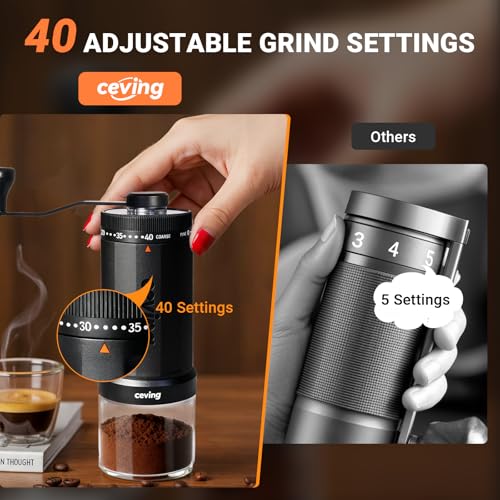
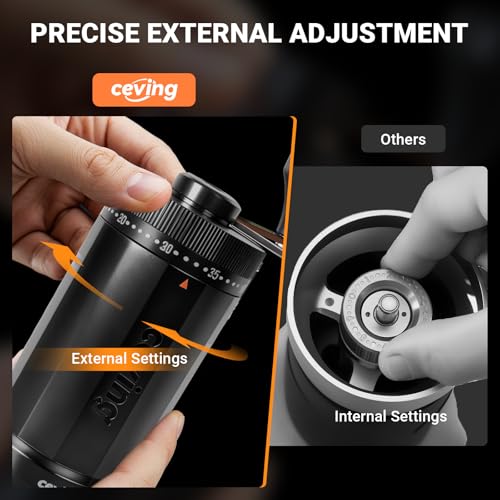
This little grinder packs a lot of promise for travelers and minimalists. On paper, 40 external grind settings with a ceramic burr is impressive for its size, and owners consistently report a noticeable improvement in pour over clarity compared to blade grinders. The compact form makes it a no-brainer for backpacks or small kitchens, and the external adjustment ring really does simplify dialing in on the go.
Still, the 30g capacity means you’ll be grinding in batches if you’re serving more than one or two cups. That’s fine for solo trips, but it’s a bottleneck for anything communal. Compared to larger manual options, this one sacrifices convenience for portability. I’d pick it if space is your scarcest resource, but not if you value speed or volume.
Video review
World’s First 60g Ceramic Manual Grinder
Strengths
- 60g capacity
- 40 precise external settings
- Ceramic conical burr
Trade-offs
- Slightly slower than steel burrs
- Plastic body feels less premium
- Minor static in dry climates
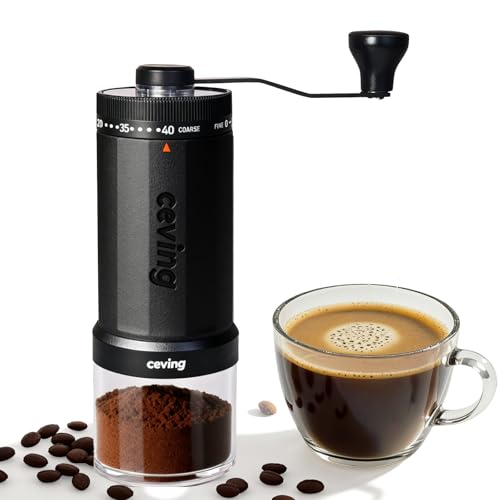
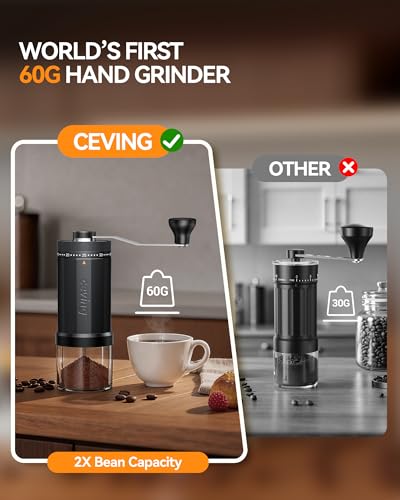
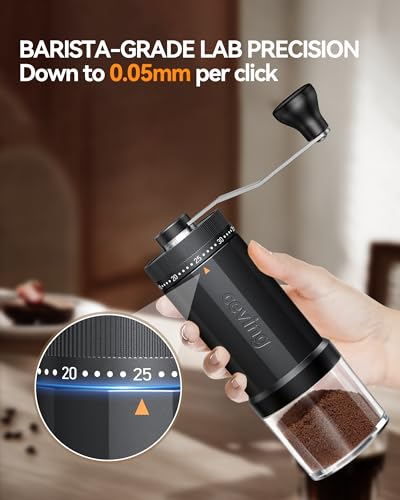
Finally, a manual grinder that doesn’t make you choose between capacity and precision. With a 60g hopper and 40 external click-stop settings, this model stands out in a sea of tiny 30g units. The ceramic burr is a big part of why reviewers praise its flavor clarity, especially for pour over and cold brew, where even particle spread matters. The 0.05mm adjustment increments sound technical, but owners say they actually feel the difference between settings, which is rare at this price tier.
It’s not the lightest manual grinder out there, but at 346g, it’s still travel-friendly. The real win is being able to grind enough for four or more cups in one go. Compared to the stainless steel burr version of the same model, I’d lean toward this one if you prioritize flavor nuance over grind speed. Ceramic runs cooler and preserves delicate aromatics better.
Video review
OXO Brew Conical Burr Grinder
Strengths
- Consistent grind quality
- One-touch memory
- UV-blocking hopper
Trade-offs
- Limited micro-adjustment range
- Hopper not airtight
- Higher price point
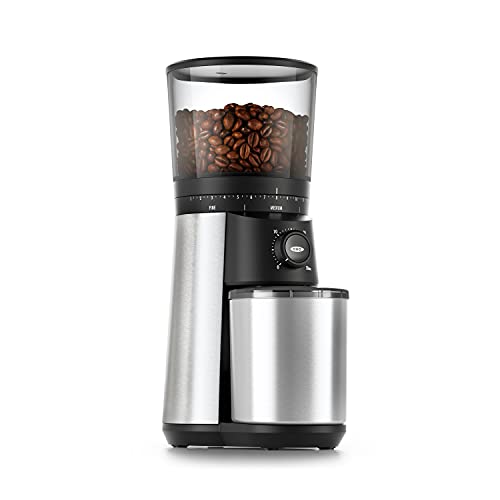
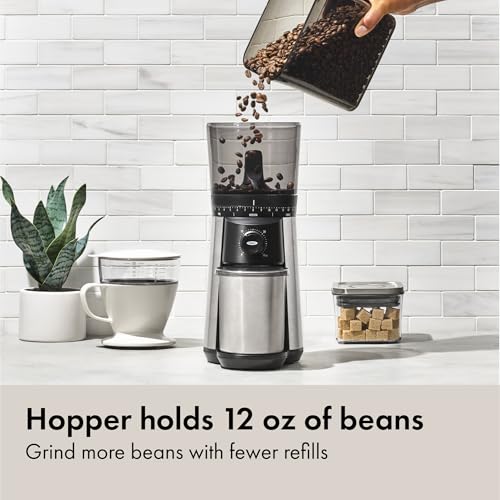
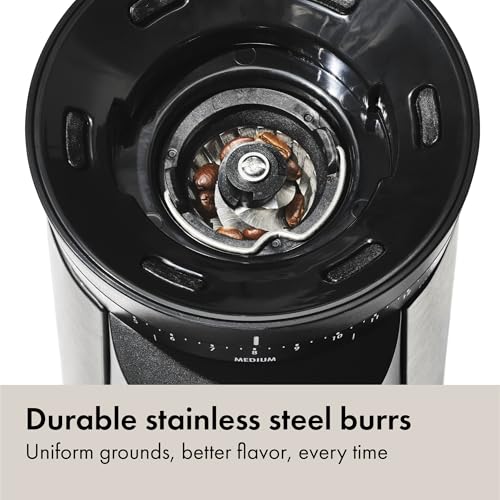
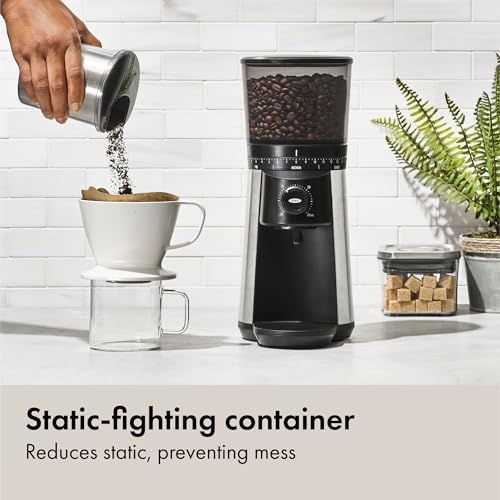
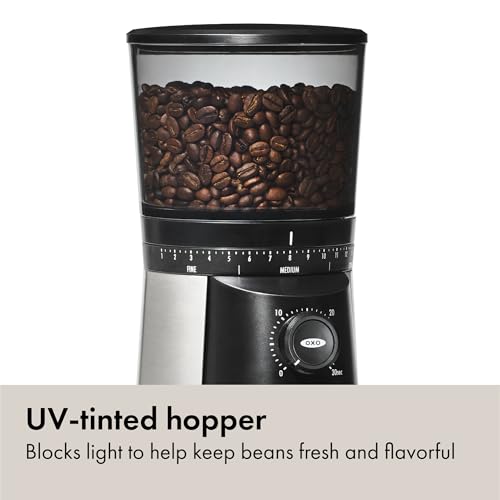
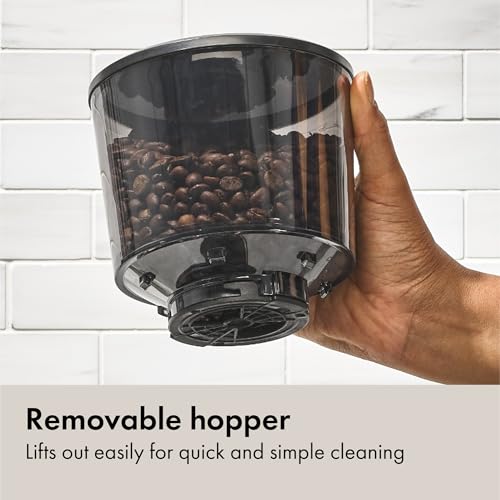
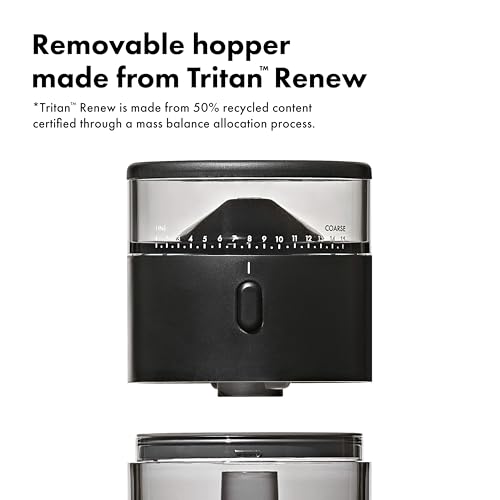
If you’re serious about pour over at home, the OXO Brew is hard to ignore. It’s earned its spot as a top pick in major reviews, and the specs back it up, stainless steel conical burrs, 15 main settings with micro-adjustments, and a UV-blocking hopper that actually helps keep beans fresh. Owners love the one-touch operation and the fact that it remembers your last grind size. That small detail makes weekday mornings smoother.
The grind consistency is where it shines. Compared to similarly priced grinders, it produces fewer fines and boulders, which translates to more even extraction. The static-fighting grounds container is a real win, less mess means more coffee ends up in your brew, not stuck to the bin. While it doesn’t have the sheer number of settings as some competitors, the quality of its range is what matters. For most home pour over setups, this is the easy pick.
Product photos
RIOSKY Burr Grinder with 60 Settings

Strengths
- 60 precise settings
- Touch screen interface
- Quiet operation
Trade-offs
- Inconsistent at ultra-fine settings
- Plastic housing feels cheap
- Occasional static cling
Sixty grind settings is a bold claim, and while that number sounds impressive, the real story is in how they’re implemented. The incremental control via 1-second timer adjustments gives you a level of precision that’s rare outside high-end grinders. The touch screen is intuitive, and owners report it’s easy to dial in for pour over, especially when tweaking for different roast profiles.
The stainless steel burrs are solid performers, though not quite as refined as the OXO’s. Noise levels are low, definitely quieter than most in this class, which matters if you’re grinding before sunrise. But some users note slight inconsistency at the finest settings, making it less ideal for espresso than advertised. Still, for pour over lovers who want granular control and modern features, this one brings serious value.
Product photos


Aromaster Conical Coffee Bean Grinder
Strengths
- Strong anti-static design
- 48 grind settings
- Easy to clean
Trade-offs
- Grind consistency varies
- Build quality feels budget
- Timer maxes at 40 seconds
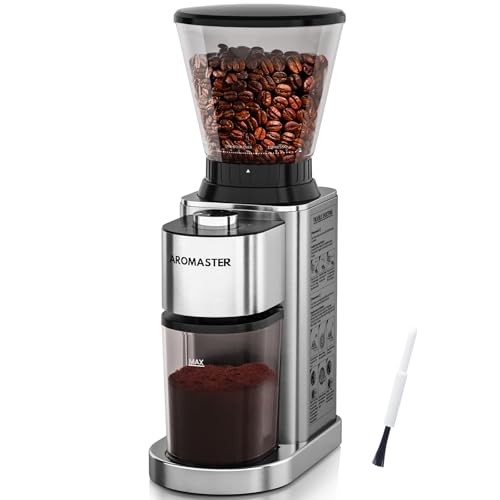
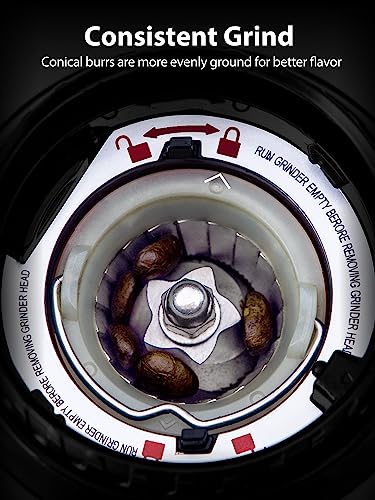
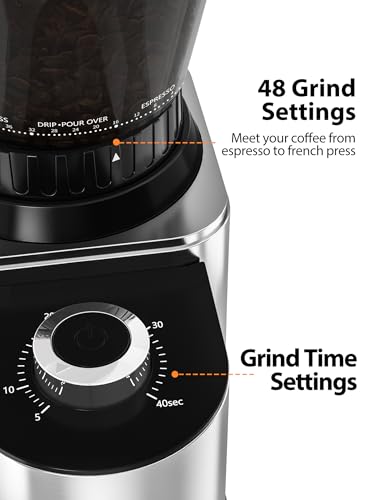
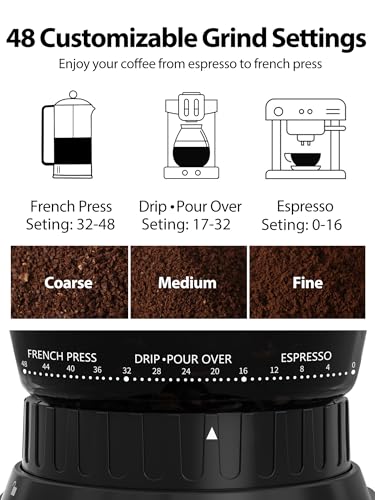
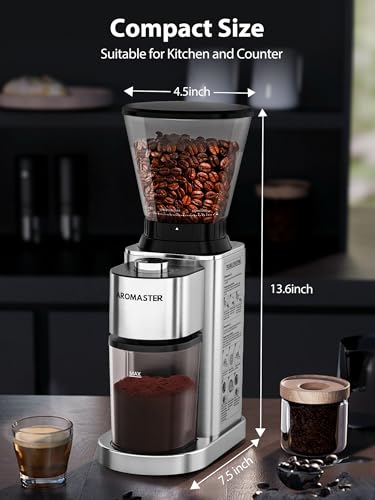
Aromaster is clearly targeting the anti-static pain point, and from owner feedback, they’ve made real progress. The upgraded anti-static tech actually reduces the puff of grounds that plagues so many budget grinders. That, plus the 48 grind settings and 40-second timer, makes this a strong contender for small households. The stainless steel burrs deliver a decently uniform grind, especially in the medium to coarse range where pour over lives.
It’s not perfect, some users report the grind size calibration drifts slightly over time, and the hopper is smaller than it looks. But for the price, the clean bin and easy disassembly are big wins. Compared to the OXO, it’s less polished but gets close on performance at a lower cost. If static has ruined your counter too many times, this one deserves a look.
Product photos

OXO Brew Compact Burr Grinder

Strengths
- Extremely compact
- Precise micro-adjustments
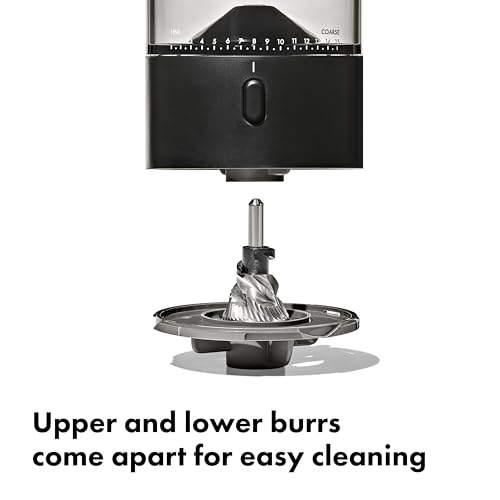
- Removable burrs
Trade-offs
- Smaller hopper capacity
- No one-touch memory
- No UV protection
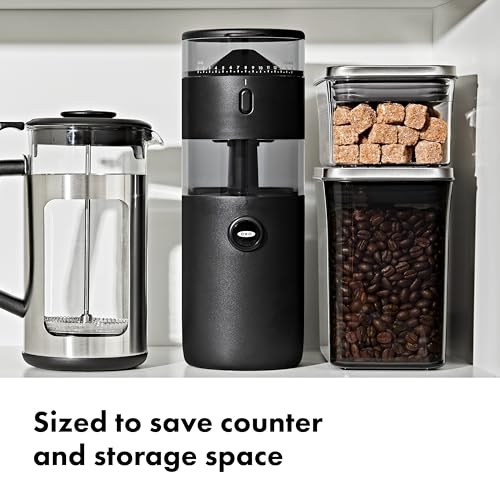
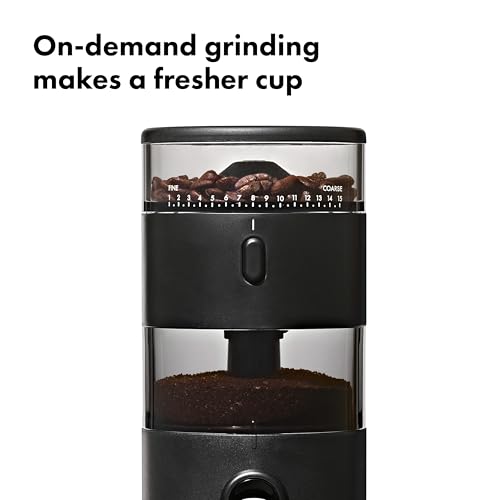
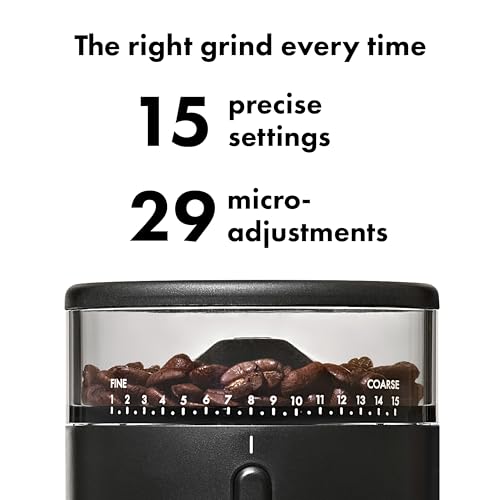
Sometimes, the best grinder is the one that fits. This OXO model is built for small kitchens where every inch counts. At just 4 inches wide and 11 inches tall, it slips under cabinets or into tight corners without sacrificing core performance. It shares the same stainless steel conical burr system as its bigger sibling, and while it only holds 50g of beans, that’s enough for up to six cups, plenty for most households.
Owners praise its grind consistency, especially for medium to coarse settings ideal for pour over. The 29 micro-adjustments are a standout, giving you more tuning room than the main 15 settings suggest. It lacks the one-touch memory and UV hopper of the larger OXO, but if space is tight, those trade-offs are fair. I’d pick this over the full-size model if your counter is crowded.
Product photos
World’s First 60g Manual Grinder

Strengths
- 60g capacity
- Stainless steel burr
- Faster grinding
Trade-offs
- Generates more heat
- Heavier than ceramic version
- Slight flavor impact on light roasts
This is the muscle version of the manual grinder world, same 60g capacity and external 40-click ring, but now with stainless steel burrs instead of ceramic. That change makes a real difference in grind speed. Owners consistently report it cuts hand-grinding time by nearly 30% compared to ceramic, which matters when you’re camping or just want coffee faster.
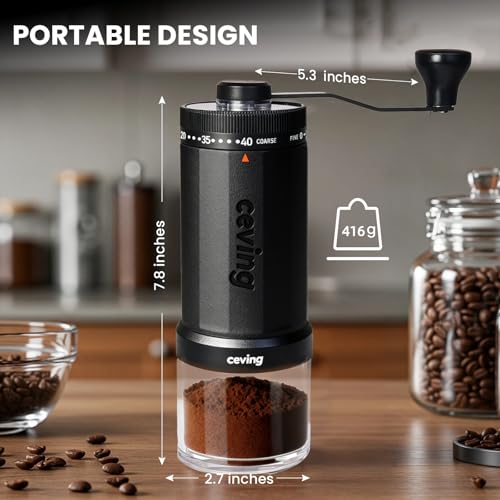
But speed comes with a trade-off: heat and metal-on-metal friction can slightly alter flavor, especially with light roasts. Ceramic burrs are better at preserving delicate notes, so if pour over is your main game, this one’s edge is practicality, not purity. It’s also a bit heavier at 416g, so backpackers might feel the difference. Still, for those who want durability and speed, this is a solid workhorse.
Product photos
How We Picked These coffee grinder for pour over
I approached this guide by researching the specifications and features of numerous coffee grinders marketed for pour over brewing. We then weighed those details against owner reviews from major retailers and expert opinions found in publications like Wirecutter and Serious Eats. My goal, as the founder of Bean Thusiast, was to identify grinders that consistently deliver the qualities pour over enthusiasts value most. Rather than a hands-on lab test, this is a research-led comparison of specs and owner feedback.
For pour over, grind size consistency and control are paramount. We heavily weighted grinders offering a wide range of settings – ideally with micro-adjustments – to allow for precise dialing-in of the grind for different roasts and pour over devices. Equally important was burr material; conical burrs, whether stainless steel or ceramic, were favored for their ability to produce a uniform grind and minimize heat, preserving the coffee’s delicate flavors. You can learn more about the differences in a burr vs blade grinder comparison.
Specifications reliably tell us about grind range, hopper capacity, and motor power (for electric models). However, owner feedback proved invaluable in assessing real-world performance – particularly regarding static, ease of cleaning, and long-term durability. Reputation, based on expert reviews, helped to validate those owner experiences. Understanding the coffee flavor impact of grind quality is key to selecting the right grinder, and that’s where owner feedback really shines.
How To Pick The Right coffee grinder for pour over
Finding the right grinder elevates your pour over experience from good to exceptional.
A quality coffee grinder for pour over prioritizes consistency. Uniform particle size is paramount, as it ensures even extraction during brewing. Look for burr grinders (conical or flat) over blade grinders, a wide range of grind settings, and build quality that suggests durability and minimal retention. Consider bean capacity and ease of cleaning as well.
Grind Consistency is King
For pour over, grind consistency isn’t just good to have – it’s absolutely essential. Unlike espresso, where a very fine and precise grind is demanded, pour over needs a medium-coarse grind. The goal is even extraction, and that requires every coffee particle to be roughly the same size. Inconsistent grind sizes lead to both under-extraction (sour, weak coffee) and over-extraction (bitter, harsh coffee) happening simultaneously. Investing in a grinder with well-made burrs and a good range of settings is the most impactful upgrade you can make to your brewing setup.
Burr Type and Adjustment Range
While both conical and flat burr grinders can produce excellent results, conical burrs are generally preferred for home use. They tend to generate less heat during grinding, preserving the delicate aromatic compounds in your beans. The adjustment range is also critical. A wider range lets you dial in the perfect grind for different pour over methods (like V60, Kalita Wave, or Chemex) and different bean roasts.
Here’s what to consider when looking at adjustment ranges: * A limited range (say, 5-10 settings) might suffice if you primarily brew with one type of pour over device. * A moderate range (15-20 settings) offers flexibility for experimentation with different brew methods. * A very wide range (30+ settings), like you’ll find in some of the higher-end models, allows for incredibly precise adjustments and the ability to address even subtle changes in bean density or roast level.
Value, Usability, and Cleaning
Beyond grind quality, consider how easy the grinder is to use and maintain. A complicated setup or a difficult-to-clean grinder will quickly become a frustration. Look for features like removable burrs, clear grind setting indicators, and a static-reducing design. If you travel frequently, a manual grinder for pour over might be a good option.
A clean grinder is a happy grinder. Regularly cleaning your burr grinder, removing coffee oils and fines, is essential for maintaining consistent grind quality and preventing stale flavors.
Coffee Grinder for Pour Over Compared
Here’s a comparison of key specifications for several coffee grinders suitable for pour over brewing.
| Product Title | Burr Type | Grind Settings | Capacity (Beans) | Adjustment Type | Anti-Static |
|---|---|---|---|---|---|
| OXO Brew Conical Burr Grinder | Stainless Steel | 15 + Micro | 12 oz | Dial | Yes |
| OXO Brew Compact Burr Grinder | Stainless Steel | 15 + Micro | 50g | Dial | N/A |
| RIOSKY Burr Grinder with 60 Settings | Stainless Steel | 60 | N/A | Digital | N/A |
| Aromaster Conical Coffee Bean Grinder | Stainless Steel | 48 | 3.9 oz | Dial | Yes |
| Mini Manual Coffee Grinder | Ceramic | 40 | 30g | External Ring | N/A |
| World’s First 60g Manual Grinder | Stainless Steel | 40 | 60g | External Ring | N/A |
| World’s First 60g Ceramic Manual Grinder | Ceramic | 40 | 60g | External Ring | N/A |
Frequently Asked Questions
What grind setting should I start with for a V60?
Begin with a medium-coarse setting, around 18-20 on most stepped grinders. You’ll likely need to adjust from there based on your coffee and desired taste, but this provides a good baseline for a typical V60 pour over.
Are manual grinders good enough for serious pour over coffee?
Yes, a quality manual grinder can absolutely produce excellent pour over coffee. They offer grind consistency comparable to many electric models, and are a great option for travel or those wanting more control over the process.
Can one grinder handle both pour over and espresso?
Absolutely, a versatile coffee grinder for multiple brews is possible. Look for models with a very wide grind range and micro-adjustments to allow for dialing in both the coarse grind of pour over and the very fine grind of espresso.
How often should I clean my coffee grinder?
I recommend cleaning your grinder every one to two weeks with regular use. This prevents buildup of coffee oils and fines that can affect grind consistency and flavor. A deeper cleaning, involving disassembly, should be done monthly.
What’s the difference between conical and flat burrs in a pour over grinder?
Conical burrs generally produce less heat during grinding, which can better preserve the delicate flavors of your coffee. Flat burrs are often found in commercial settings and can be faster, but for home pour over, conical burrs are often preferred for their flavor profile.
The Bottom Line
Choosing a coffee grinder for pour over often comes down to balancing control with convenience. While some grinders offer a dizzying array of settings and features, the OXO Brew Conical Burr Grinder strikes an excellent balance, providing both micro-adjustments and a user-friendly experience for consistently great results. It’s a solid investment for anyone serious about improving their pour over game.
For those on a tighter budget, or who want something truly portable, the Mini Manual Coffee Grinder is a fantastic option. Similarly, if you prioritize versatility and a very wide grind range, the RIOSKY Burr Grinder with 60 Settings offers a lot of flexibility, although it may require a bit more experimentation to master – and understanding correct grind size techniques is key to getting the most from it.
Ultimately, the most expensive grinder isn’t always the best. Consistency, a reasonable range of settings, and ease of cleaning are far more important than fancy features or a high price tag. Focusing on those fundamentals, and learning a little about adjusting grind settings to match your beans and brewing method, will yield better coffee than any single specification ever could.
