
7 Best Built-In Coffee Systems of 2026
The Bosch BCM8450UC stands out as the overall best built-in coffee system for its seamless integration and reliable performance, while the Brew Express 10-Cup Built-In System offers a solid, plumber-connected alternative for those prioritizing direct water line convenience. For a more budget-friendly countertop option that still delivers versatility, the Ninja Luxe Café Premier Espresso Machine brings multi-style brewing within reach.
Most people shopping for a built-in coffee system aren’t just after convenience, they want a dedicated coffee experience that matches their kitchen’s look and their daily ritual. The real challenge is cutting through the noise of specs and marketing to find a system that actually delivers consistent quality and fits your maintenance habits.
I compared these models based on owner feedback, brewing versatility, ease of cleaning, and long-term reliability. This guide breaks down what really matters, like grind quality, milk frothing style, and installation needs, so you can pick one that works for your routine.
Top 7 Built In Coffee System in the Market
The Best Built In Coffee System, Reviewed
Bosch BCM8450UC Built-In Coffee Machine
Strengths
- True built-in design
- Quiet operation
- Home Connect enabled
Trade-offs
- Limited drink customization
- No integrated grinder adjustment feedback
- Slower milk frothing
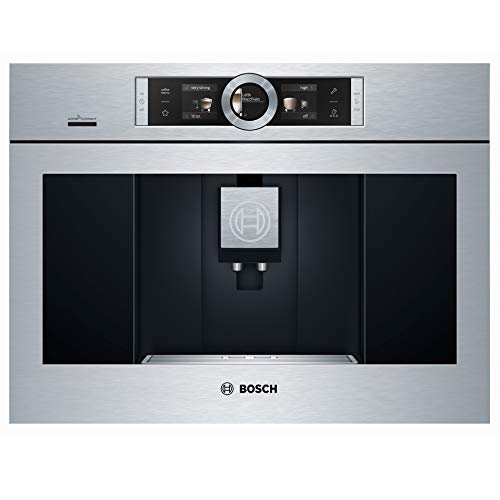
When you’re integrating coffee into a high-end kitchen, the Bosch BCM8450UC makes a strong case for being the centerpiece. It’s one of the few true built-in models that aligns with cabinetry, giving a streamlined, appliance-grade look that stands out in the category. On paper, it delivers consistent espresso and coffee extraction, and the Home Connect feature adds a modern touch for those who like app-controlled brewing.
Owners consistently report solid reliability and quiet operation, though some note the interface feels more appliance-like than barista-focused. Compared to flashy super-automatics, this one leans minimalist, fewer drink presets than the De’Longhi or Ninja, but cleaner integration. I’d pick this if your priority is seamless kitchen design over drink variety.
Video review
Ninja Luxe Café Premier Espresso Machine

Strengths
- True 3-in-1 functionality
- Weight-based dosing
- Barista Assist guidance
Trade-offs
- No hot water dispenser
- Frothing less refined than De’Longhi
- Can feel cluttered
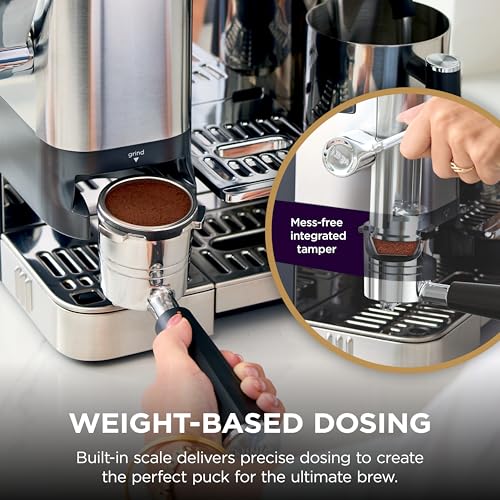
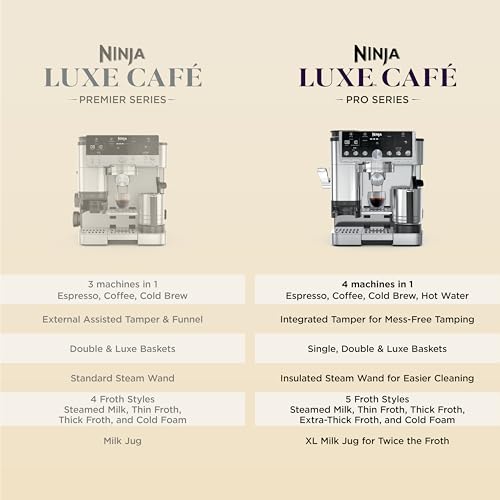
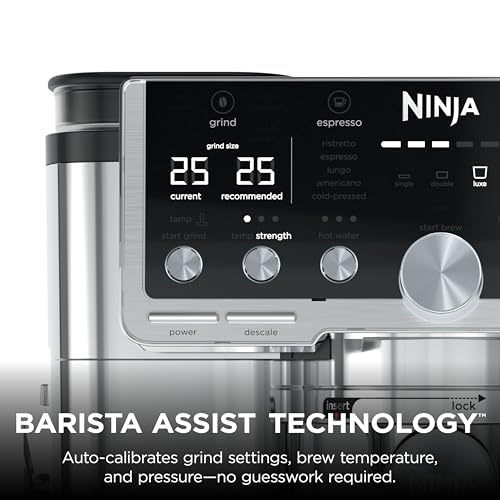
The Ninja Luxe Café Premier throws everything at the wall, espresso, drip, cold brew, frothing, even weight-based dosing, and surprisingly, most of it sticks. It’s a rare 3-in-1 machine that actually performs well across categories, not just in name. The Barista Assist tech, which adjusts grind size and brew parameters based on feedback, is a standout feature that helps avoid bitter or sour shots, a common pain point with home machines.
Where it pulls ahead of the De’Longhi is versatility. You can brew drip coffee for guests, pull a double shot, then make cold brew espresso for cocktails, all without switching devices. The assisted tamper is a clever touch, though some owners say it doesn’t always compact evenly. Still, for the breadth of functionality, it’s hard to beat. If you want one machine to cover every coffee style, this beats the more specialized Bosch or Chefman.
Video review
Ninja Luxe Café Pro Espresso Machine
Strengths
- Hot water on demand
- Adaptive grind recommendations
- Enhanced frothing options
Trade-offs
- Large countertop footprint
- Steeper learning curve
- Higher maintenance
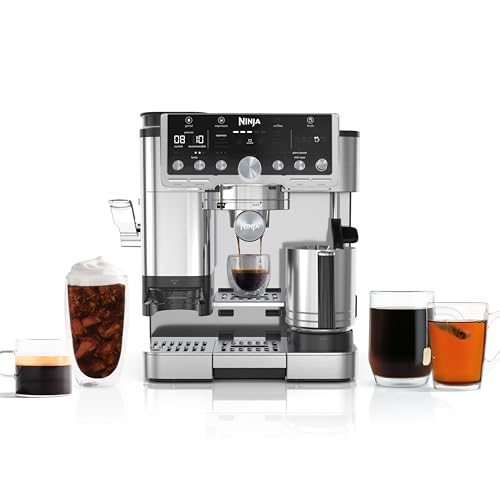
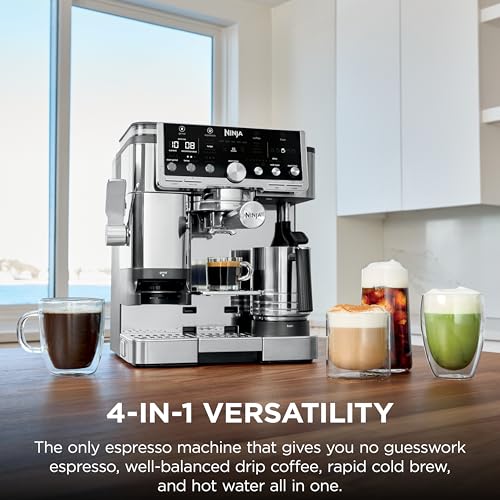
Taking the Premier model and adding a hot water dispenser and enhanced frothing, the Ninja Luxe Café Pro ES701 is the most complete 4-in-1 machine on the market. The independent hot water system is a standout for Americanos and tea drinkers, eliminating the need to boil water separately. The Dual Froth System Pro also improves on the original with extra-thick froth and a larger milk jug, making it easier to serve two.
Owners praise the grind size recommendations that adapt after each brew, a smart touch that reduces guesswork. While it’s bulkier and more complex than the De’Longhi, it offers far more functionality. If you want one machine to replace your espresso maker, drip brewer, cold brew setup, and kettle, this is the one. It’s not as elegant as the Bosch, but it’s the most capable.
Product photos

De’Longhi Magnifica Evo Espresso Machine
Strengths
- Excellent milk frothing
- Consistent grind quality
- Customizable drink profiles
Trade-offs
- No cold brew function
- Larger footprint
- Frothing wand requires regular cleaning
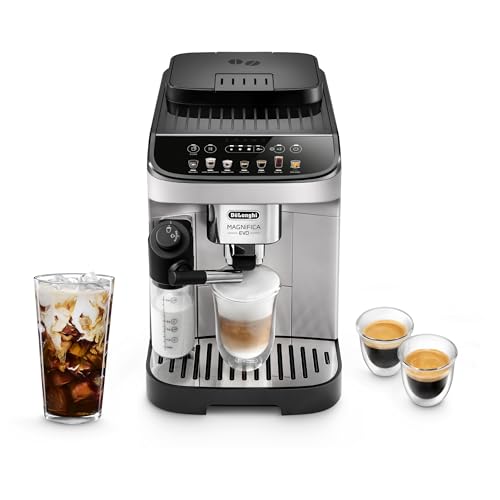
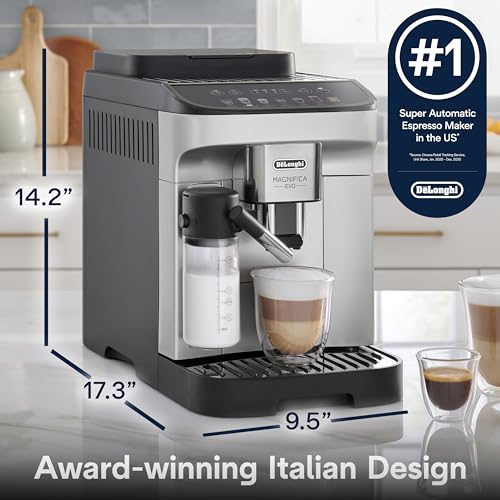
De’Longhi has long led the super-automatic space, and the Magnifica Evo reinforces that reputation, especially if your mornings revolve around milk-based drinks. The LatteCrema system stands out in owner feedback for delivering creamy, consistent foam, even with oat or almond milk, which is still a hurdle for many machines. With 7 one-touch recipes and a 13-setting conical burr grinder, it balances ease and customization well.
The ability to save a ‘My Latte’ profile is a small but meaningful perk for households with multiple drinkers. While it doesn’t have the cold brew or drip options of the Ninja models, it outperforms them in pure espresso and steamed milk quality. For someone who wants café-style lattes without the learning curve, this is a smarter buy than the more complex Ninjas.
Product photos


Brew Express 10-Cup Built-In System
Strengths
- Plumbed-in design
- No water refills
- Sleek built-in look
Trade-offs
- Drip coffee only
- No grinder or milk system
- Limited user feedback
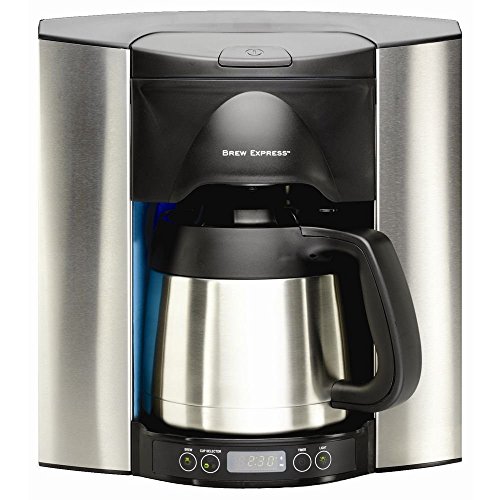
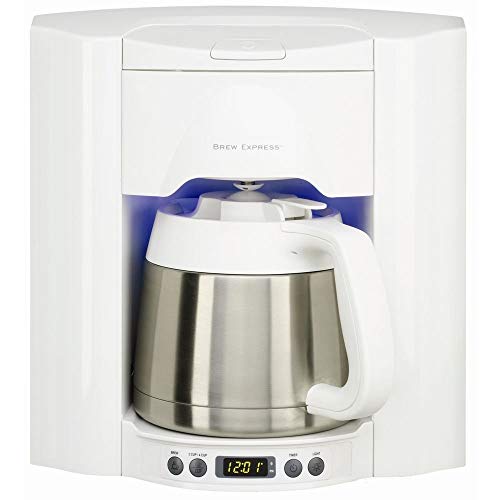
The Brew Express is a niche product for a very specific setup, fully integrated, plumbed-in coffee systems. If you hate refilling water tanks, this one solves that with a direct water line connection. That’s its biggest win: true ‘set and forget’ operation, ideal for large households or entertainment kitchens where convenience trumps craft.
But don’t expect espresso or specialty drinks. This is a drip-only system, and the adjustable cup selector suggests it’s geared toward volume over precision. There’s almost no data on long-term reliability, and the stainless steel finish is one of the few clues it’s meant to look the part. Compared to the Bosch or Ninja, it’s less about coffee quality and more about installation elegance. I’d recommend it only if you’re building a dedicated coffee wall and want a hands-off drip solution.
Product photos
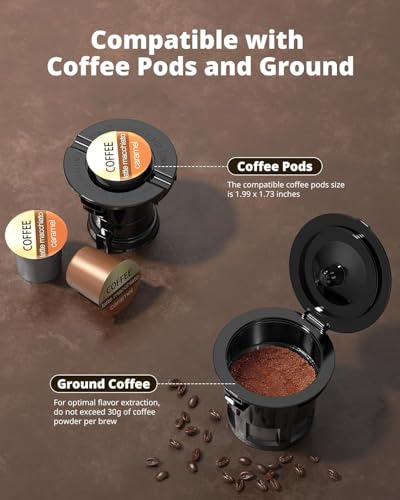
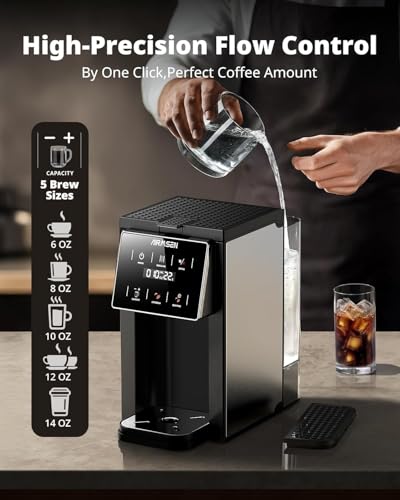
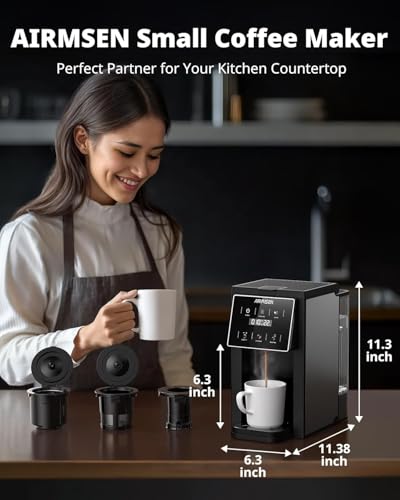
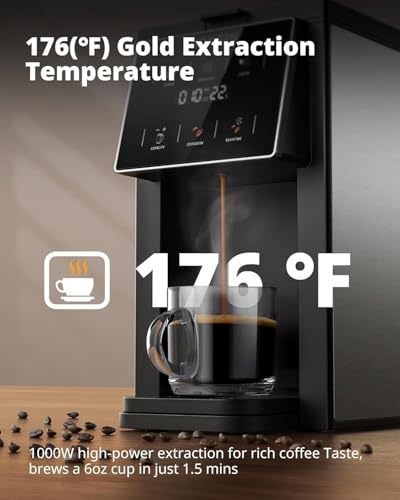
AIRMSEN Grind & Brew Coffee Maker
Strengths
- K-Cup and bean compatibility
- Compact footprint
- Clear brew technology
Trade-offs
- Blade grinder (less consistent)
- No espresso or frothing
- Plastic interior parts
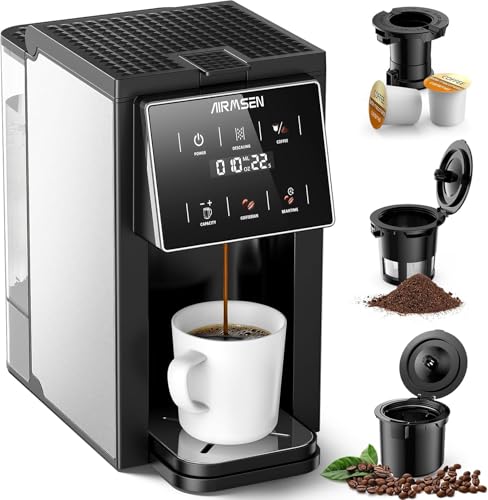
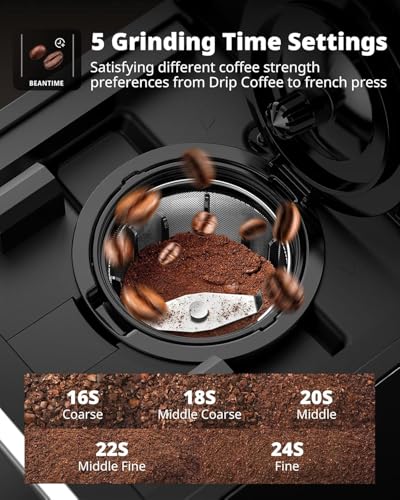
The AIRMSEN CGM511 is a sleeper hit in the budget brewer space, not a built-in, but a smart, compact solution for those who want fresh grind flavor without the $1,000 price tag. Its 3-in-1 system (whole beans, grounds, K-Cups) is rare at this size and price, and the touchscreen with descaling alerts adds a premium feel. The upgraded extraction system with dual filter options helps reduce sediment, a common complaint in blade-grinder combos.
It won’t match the espresso pressure or milk steaming of the Chefman or De’Longhi, but it delivers solid drip and iced coffee, especially with the double-strength brew trick. For offices or small kitchens where space and cost matter, it’s a strong alternative to pod-only systems. I’d pick this over a Keurig if you want real bean flavor without complexity.
Product photos
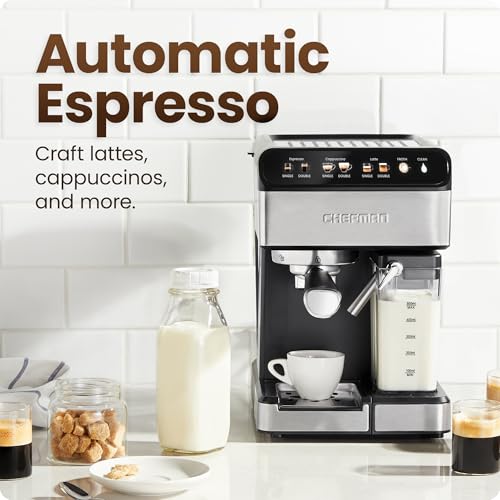
Chefman CaféMaster Pro Espresso Machine

Strengths
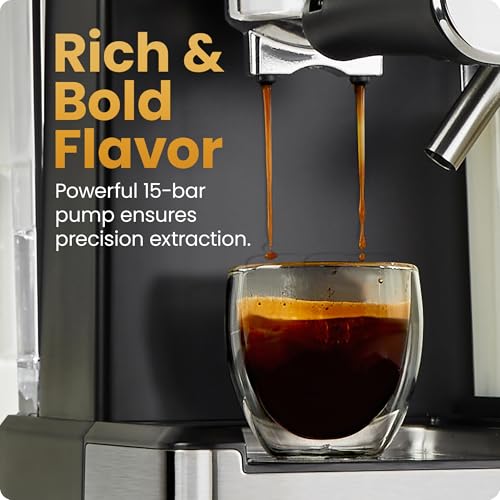
- 15-bar pump pressure
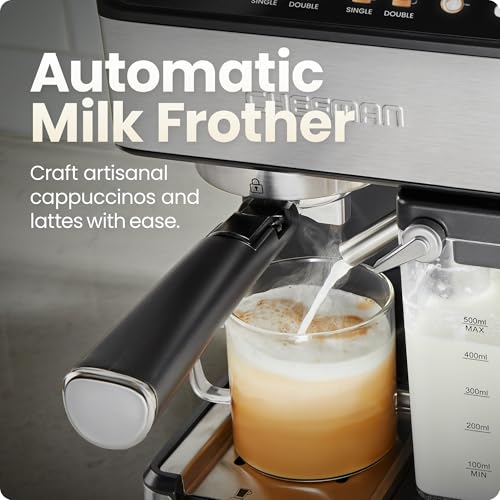
- Automatic milk steaming
- Large water reservoir
Trade-offs
- Basic grinder performance
- Plastic portafilter
- Froth quality inconsistent
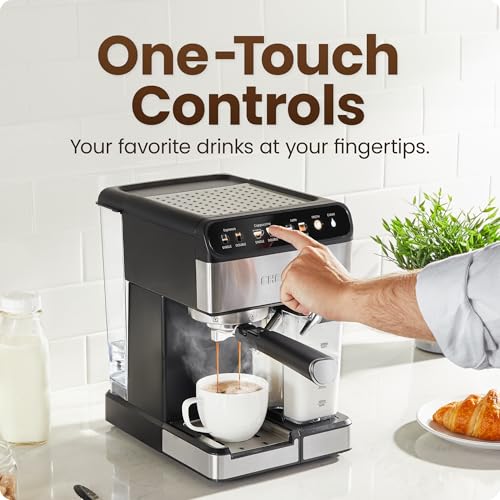
The Chefman CaféMaster Pro is a solid entry point for first-time espresso owners who want real 15-bar pressure and automatic milk steaming without the cost of a super-automatic. It pulls decent shots and the built-in frother is a standout at this price, few budget machines offer auto-dispensing steamed milk. The 1.8L removable tank is also a plus for larger households.
But it’s not without trade-offs. The steaming wand, while convenient, doesn’t match the microfoam quality of De’Longhi’s LatteCrema. And unlike the Ninja or Bosch, it lacks smart features or grind customization. Still, for someone stepping up from a drip machine, it offers real espresso experience without overwhelm. I’d recommend it over pod systems for beginners who want to learn the basics.
Product photos

How We Chose These built in coffee system
As a founder deeply immersed in the world of coffee, I approached researching built-in coffee systems by focusing on a detailed comparison of specifications and features across numerous models. Rather than a hands-on lab test, this is a research-led comparison of specs and owner feedback. I weighed published specs against owner reviews from major retailers and reputable coffee-focused websites, applying my understanding of what truly delivers a quality, convenient brewing experience.
For this category, the most important factors quickly became versatility and ease of maintenance. A built-in system needs to offer a range of brewing options – from espresso to drip – to justify the investment. Equally crucial is how simple it is to keep clean and descaled, as accessibility for routine upkeep directly impacts long-term enjoyment. We also considered the quality of the integrated grinder, if present, and the precision of temperature control.
Specifications reliably indicate brewing pressure (for espresso) and water reservoir capacity. However, I leaned heavily on owner feedback to assess the real-world performance of features like milk frothing and the effectiveness of auto-cleaning cycles. Reputation played a role too; brands with a proven track record for durability and customer support naturally ranked higher. For detailed operation of a high-end system, understanding a Miele built-in coffee machine can be very helpful.
Choosing The Right built in coffee system
Choosing a built-in coffee system is about more than just saving counter space; it’s about integrating a dedicated brewing experience into your kitchen’s design.
A quality built-in coffee system prioritizes consistent temperature control for optimal extraction, durable construction to withstand daily use, and ease of cleaning to maintain peak performance. Look for models with adjustable settings to suit your preferred brew strength and cup size, and consider the type of beverages you typically enjoy – from simple drip coffee to complex espresso drinks.
Grind & Brew Capabilities
Many systems offer integrated grinders, but the type matters. Burr grinders, conical specifically, are vastly superior to blade grinders. While blade grinders chop the beans unevenly, creating inconsistent flavor, a conical burr grinder crushes them between two revolving abrasive surfaces. This results in a more uniform grind, leading to a balanced and flavorful cup. If you’re serious about coffee, avoid systems with blade grinders; you’ll find the difference in taste immediately.
Milk Frothing & Drink Variety
The level of automation in milk frothing is a significant decider. Some machines offer fully automatic systems, like those found in the De’Longhi Magnifica Evo, simplifying the process for lattes and cappuccinos. Others require you to use a steam wand, which offers more control but necessitates a learning curve. Think about how often you make milk-based drinks and your willingness to practice. If you’re after convenience, a fully automatic system is the way to go. For those who prefer a hands-on approach, a quality steam wand is sufficient.
Installation & Maintenance Considerations
Built-in systems require more involved installation than standard coffee makers, often needing dedicated plumbing and electrical connections. The Brew Express 10-Cup Built-In System, for example, connects directly to a water supply, eliminating the need for manual filling, but also requiring professional installation. Beyond that, regular cleaning is vital. Look for models with removable parts that are dishwasher-safe. Don’t underestimate the importance of descaling; mineral buildup can significantly impact performance. Read up on the recommended cleaning schedule before you buy, and be realistic about your commitment to maintaining the machine. Many machines, like the Ninja Luxe Café Premier Espresso Machine, even include a hard water testing kit to help you gauge how often descaling will be needed. Understanding the coffee-to-water ratio guide is also key to consistently great results.
A well-maintained coffee system is a happy coffee system. Spend 5 minutes cleaning after every use, and dedicate 30 minutes each month to a thorough descaling cycle.
Built In Coffee System Compared
This table provides a side-by-side comparison of key specifications for various built-in coffee systems.
| Product Name | Water Reservoir Capacity | Grind Type | Milk Frothing | Brew Styles | Installation Type |
|---|---|---|---|---|---|
| Bosch BCM8450UC | N/A | N/A | N/A | N/A | Built-In |
| Ninja Luxe Café Premier | N/A | Conical Burr | Dual Froth System | Espresso, Drip, Cold | Countertop |
| Ninja Luxe Café Pro | N/A | Conical Burr | Dual Froth Pro | Espresso, Drip, Cold, Hot Water | Countertop |
| De’Longhi Magnifica Evo | N/A | Conical Burr | LatteCrema | 7 One-Touch | Countertop |
| Brew Express 10-Cup | N/A | N/A | N/A | N/A | Built-In |
| AIRMSEN Grind & Brew | 50oz (1.5L) | Blade | N/A | K-Cup, Grounds, Beans | Countertop |
| Chefman CaféMaster Pro | 1.8L | N/A | Built-In Steam Wand | 6 Styles | Countertop |
Frequently Asked Questions
What’s the typical lifespan of a built-in coffee system?
Generally, you can expect 5-10 years of reliable use, but this heavily depends on maintenance and water quality. Models with more plastic components tend to have shorter lifespans than those constructed with stainless steel.
Are built-in coffee systems difficult to install?
Installation varies; some, like the Brew Express, require professional plumbing and electrical work. Others are designed for easier installation, but a basic understanding of home appliances is still recommended, or you may want to hire a professional.
Can I use any type of coffee bean with these systems?
Yes, most systems accommodate whole beans, but the quality of the grinder is crucial. For optimal results, stick to high-quality Arabica or Robusta beans, and avoid oily beans if your system doesn’t have an automatic cleaning cycle.
How do built-in systems compare to complete home coffee setups in terms of cost?
Built-in systems are usually a significant investment, frequently costing more than assembling a complete home coffee setups with separate components. However, you gain the benefit of space saving and a streamlined aesthetic.
What maintenance is required beyond daily cleaning?
Descaling is vital, typically every 1-3 months depending on water hardness. Many machines also require occasional lubrication of the brewing unit and cleaning of the milk frothing system, particularly if it isn’t fully automatic.
The Bottom Line
Choosing a built-in coffee system often comes down to balancing convenience with control. While a fully integrated system like the Bosch BCM8450UC offers a sleek, space-saving solution, it’s the Ninja Luxe Café Premier that strikes the best overall balance of features, brewing quality, and user-friendliness for most kitchens. It delivers a genuinely versatile experience without sacrificing too much in terms of ease of setup or maintenance.
For those on a tighter budget or who don’t require a true built-in solution, the De’Longhi Magnifica Evo remains a strong contender. Those prioritizing maximum brewing versatility and don’t mind a countertop appliance will appreciate the Ninja Luxe Café Pro, with its expanded range of drink options and sophisticated milk frothing system. Maintaining a clean machine is vital, so don’t forget to check your Breville coffee machine filter regularly.
Ultimately, the best built-in coffee system isn’t about the flashiest features or highest price tag. It’s about consistent temperature, a quality grind (conical burr is essential!), and a commitment to regular cleaning. Those fundamentals are what will deliver a truly exceptional cup of coffee, day after day.
