
9 Best At Home Coffee Systems 2026
The Philips 5500 Series is our top pick for most home users, delivering consistent, hands-off espresso with excellent automation. For those on a tighter budget, the CASABREWS 3700 offers solid semi-automatic performance with a steam wand for real milk texture. If you love cold brew, the Snap! 5 Gallon Cold Brew Maker stands alone for batch size and ease.
Most people don’t realize how much their morning routine shapes the right coffee system choice. Are you rushing out the door or savoring a slow weekend pour? The difference determines whether convenience or control matters more.
After years of exploring coffee from bean sourcing to brewing science, I built this guide to cut through the noise. These picks are based on specs, real-world feedback, and what actually matters in daily use: flavor consistency, ease of cleaning, and long-term reliability. We looked at automation, milk handling, and versatility to match each machine to the way you really drink coffee.
Top 9 At Home Coffee System in the Market
The Best At Home Coffee System, Reviewed
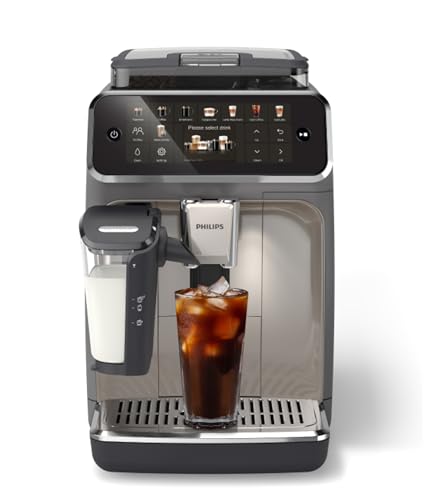
Philips 5500 Series Espresso Machine
Strengths
- 20 drink presets
- LatteGo milk system
- SilentBrew technology
Trade-offs
- Higher price point
- Larger footprint
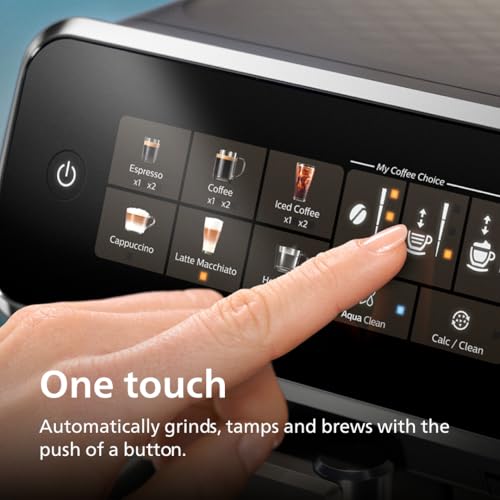
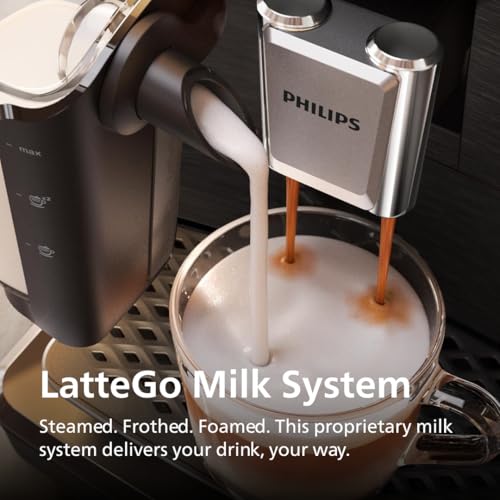
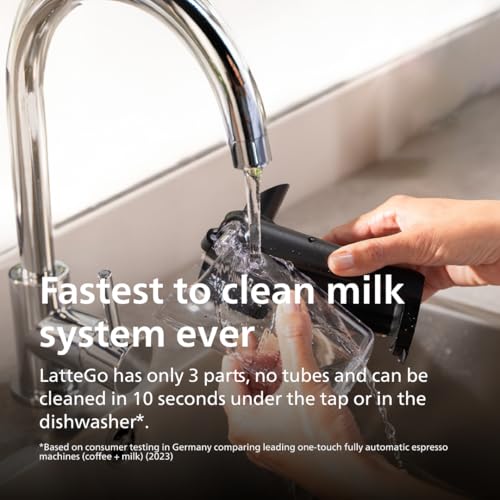
If you want café-quality drinks with zero effort, the Philips 5500 is the most polished super automatic on this list. With 20 drink presets, including iced options, it’s built for people who want variety without complexity. The LatteGo milk system is a standout, owners consistently report it produces silky foam and cleans faster than any rival, thanks to its three-part, tube-free design.
SilentBrew is no marketing gimmick. On paper, 40% quieter than older models, and reviewers note it won’t disrupt a quiet morning. The 15-bar pressure and integrated grinder deliver balanced espresso, though purists may miss manual control. Compared to the 3300 Series, this model adds more presets and a slightly more refined interface, making it worth the jump if you value customization.
Video review
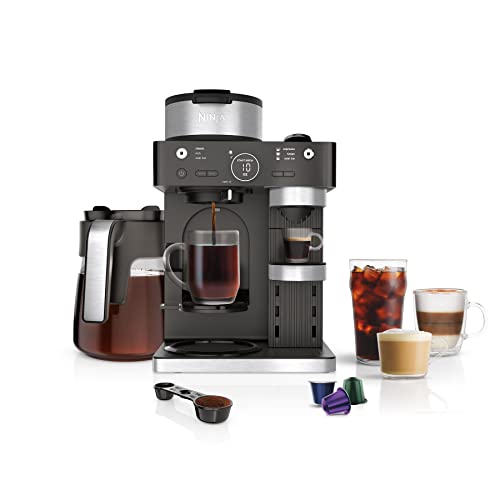
Ninja Espresso & Coffee Barista System
Strengths
- Capsule and ground coffee use
- 12-cup carafe option
- Fold-away frother
Trade-offs
- Bulky design
- Capsules sold separately
- Frother slower than steam wands
The Ninja CFN601 is the ultimate all-in-one hybrid, blending single-serve espresso, drip coffee, and Nespresso capsule compatibility in one machine. If your household drinks everything from Americanos to full carafes, this eliminates the need for multiple devices. The 19-bar pressure delivers decent crema, and the fold-away frother works well for lattes and cappuccinos.
What really sets it apart is versatility. You can brew a single shot, a travel mug, or a full 12-cup carafe, something no super automatic can match. Reviewers note the capsule system is convenient, though capsules add ongoing cost. Compared to dedicated espresso machines, it’s less precise, but for families or hosts, it’s hard to beat.
Video review
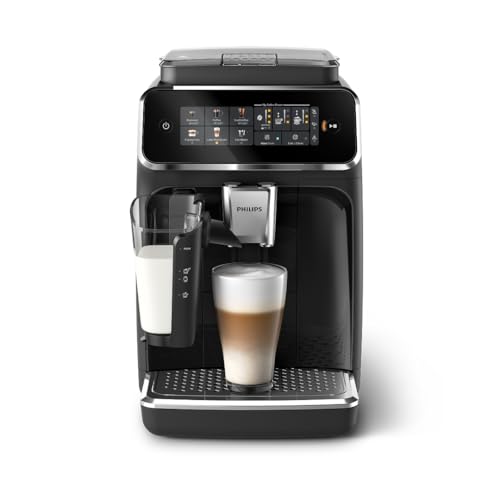
Philips 3300 Series Espresso Machine
Strengths
- LatteGo milk system
- AquaClean filter
- One-touch operation
Trade-offs
- Fewer drink options
- Smaller bean hopper
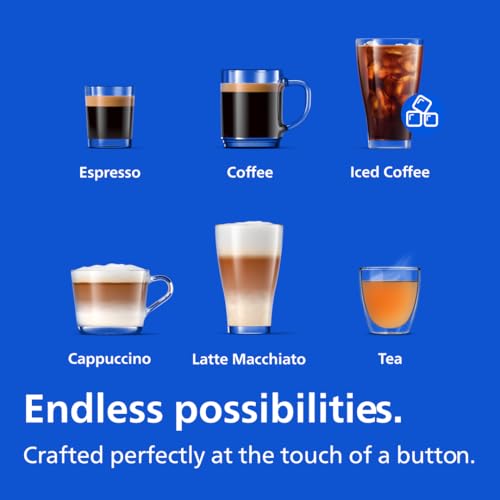
The 3300 Series is the smarter buy if you want Philips’ proven LatteGo system and one-touch brewing without paying for extras you might not use. With six presets, it covers the basics, espresso, coffee, cappuccino, latte macchiato, iced coffee, and hot water, cleanly and reliably. The color display is intuitive, and the AquaClean filter is a real convenience: skip descaling for up to 5,000 cups.
It’s 40% quieter than older models, and owners praise its consistency. Compared to the 5500, it lacks some presets and fine-tuning options, but for most households, it’s more than enough. My recommendation? If you want café-style drinks daily but don’t need 20 variations, this is the more practical, value-focused pick.
Product photos

Aromaster 20 Bar Espresso Machine
Strengths
- Dual-circuit brewing
- Touchscreen control
- Fast heat-up
Trade-offs
- No built-in grinder
- Touchscreen can be sensitive
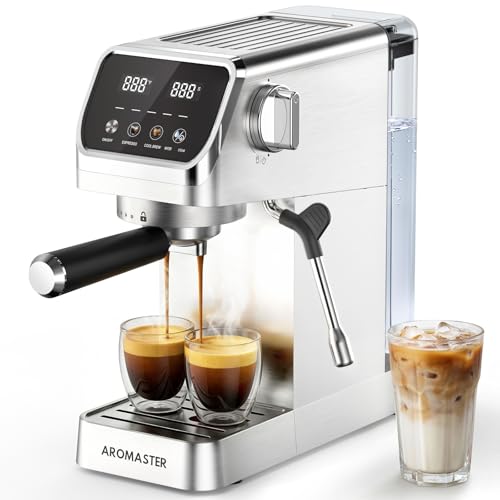
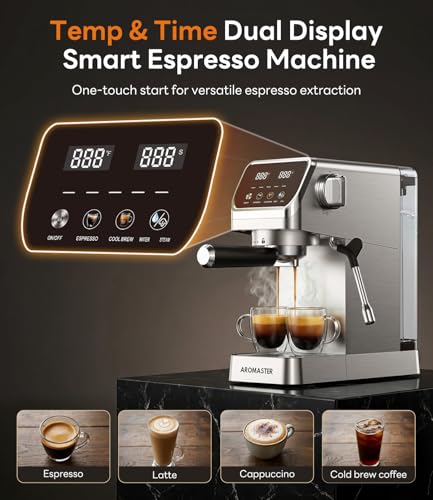
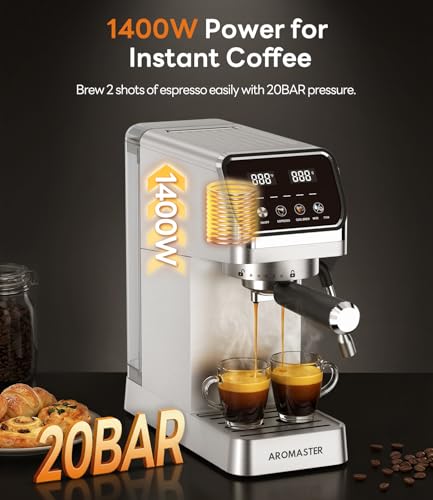
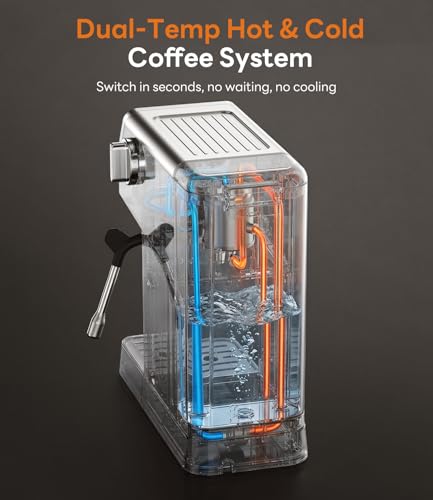
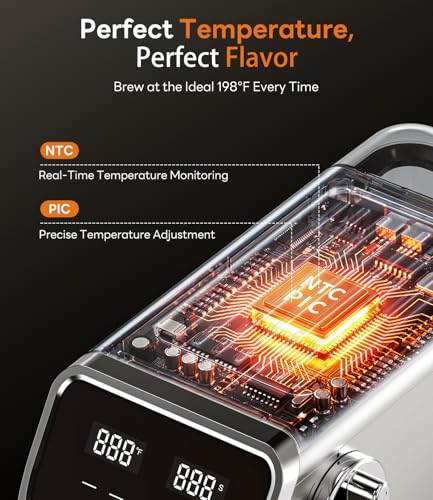
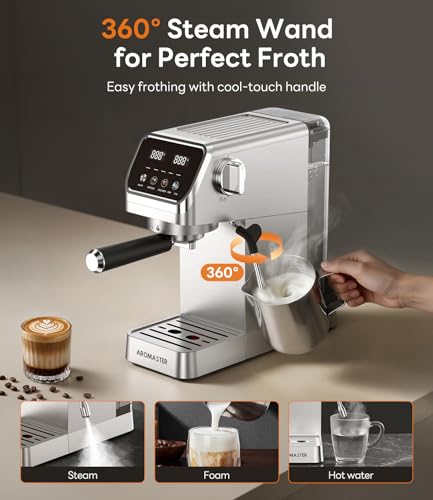
The Aromaster stands out for its touchscreen interface and dual-circuit system, letting you brew hot espresso and switch instantly to iced coffee, no cooldown needed. That’s rare at this price and a big plus for summer or households that drink both. The 1400W heater ramps up fast, and PID + NTC controls help maintain stable temps, which owners say leads to consistent flavor.
The 360° swivel steam wand is comfortable and beginner-friendly, making it easy to froth milk evenly. Compared to the CASABREWS model, it feels slightly more modern and intuitive, though build quality is similar. If you want café-style drinks with minimal learning curve, this one delivers.
Product photos
Original NitroPress Cold Brew Kit
Strengths
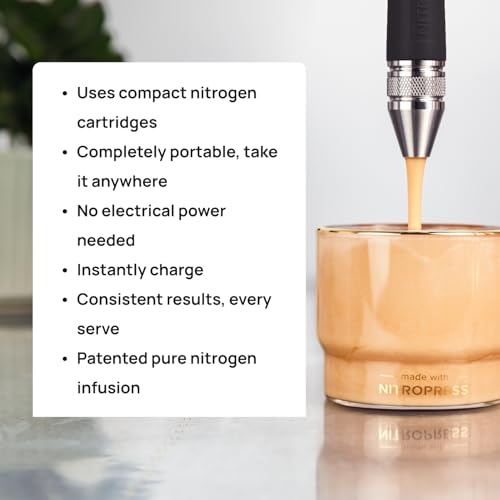
- Portable design
- No electricity needed
- Versatile infusion
Trade-offs
- Requires cartridges
- Extra step after brewing
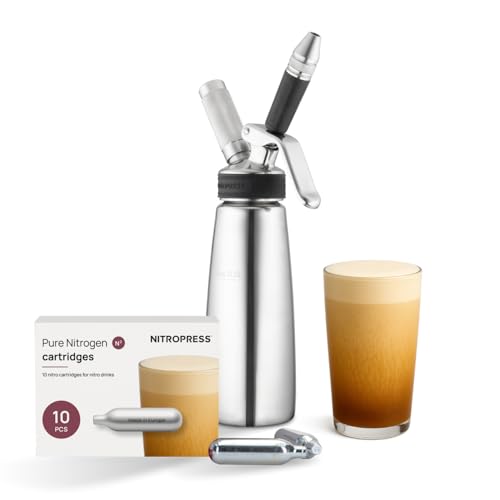
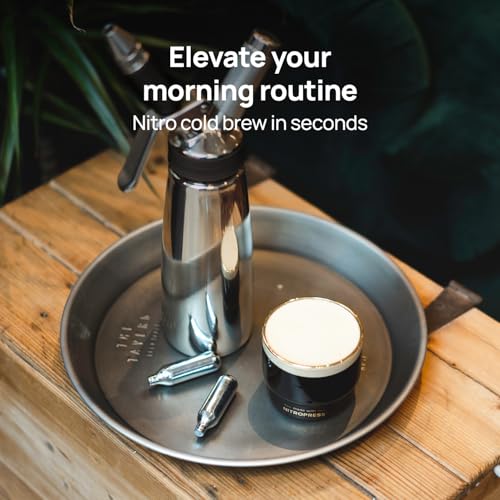
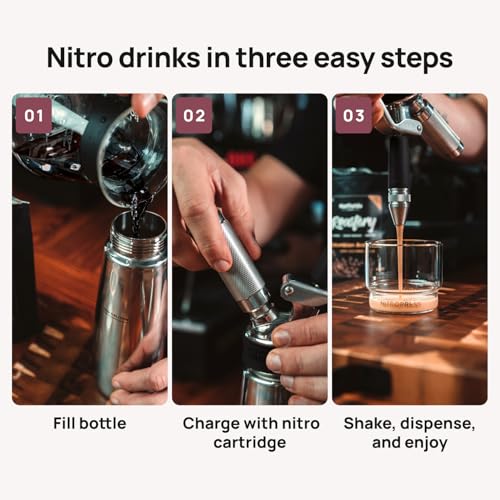
The NitroPress isn’t a brewer, it’s an infuser, and it does one thing brilliantly: turn cold brew into creamy, cascading nitro coffee in seconds. Using nitrogen cartridges, it replicates the tap-poured barista experience at home, with microbubbles and a velvety mouthfeel owners love. It’s completely portable, needs no power, and fits in a bag, ideal for travel or outdoor use.
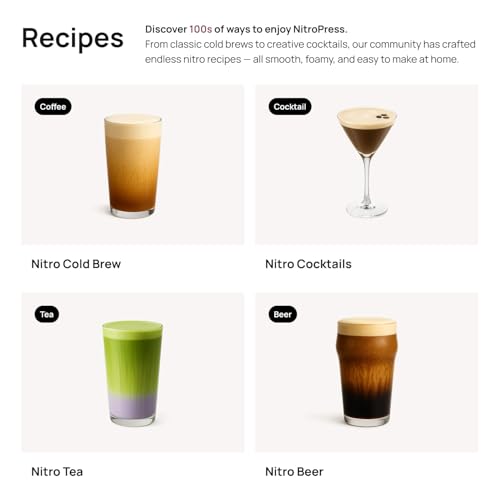
Beyond coffee, it works with tea, cocktails, and even milk-based drinks, making it a fun tool for experimentation. Compared to draft nitro systems, it’s far more affordable and compact. If you’re into craft beverages and want that tap-style pour without the setup, this is the most accessible way to get it.
Product photos

Snap! 5 Gallon Cold Brew Maker

Strengths
- 5-gallon capacity
- Dual filtration
- Low-acid brew
Trade-offs
- Large footprint
- No insulation
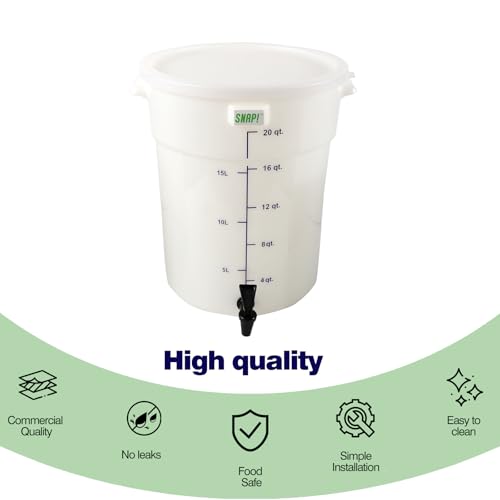
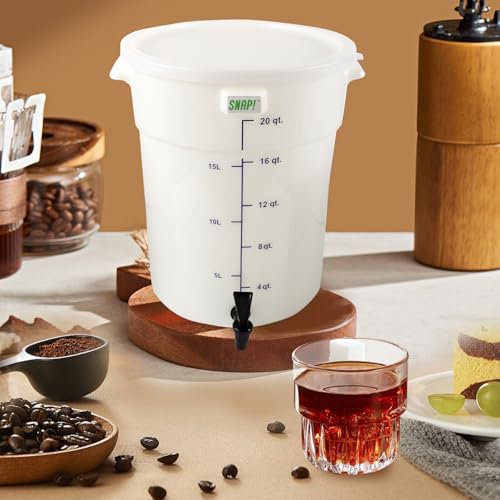
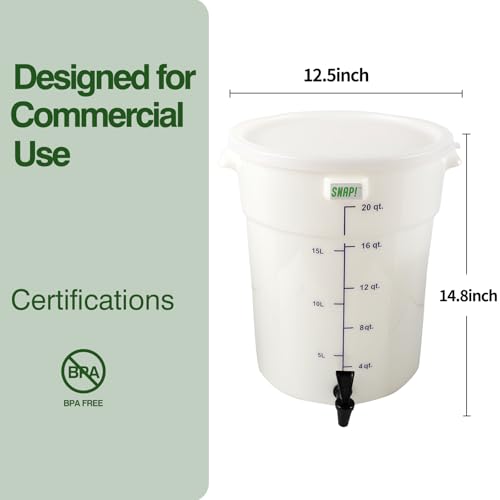
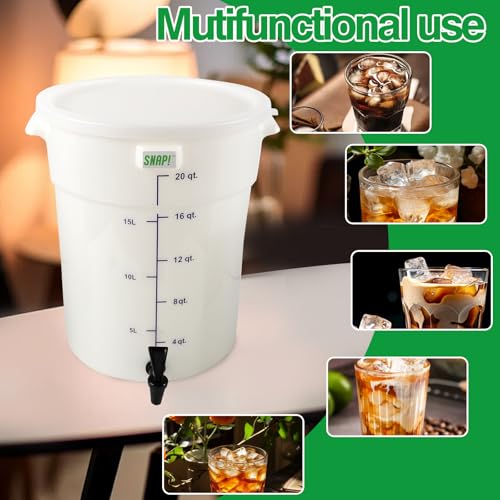
If you drink cold brew daily or serve it to a group, the Snap! system is unmatched for large-batch brewing. With a 5-gallon capacity, it makes enough concentrate for a week, perfect for offices, families, or small cafés. The dual filtration system, using PLA and cotton filters, produces a smooth, low-acid brew that’s easier on the stomach, as many owners confirm.
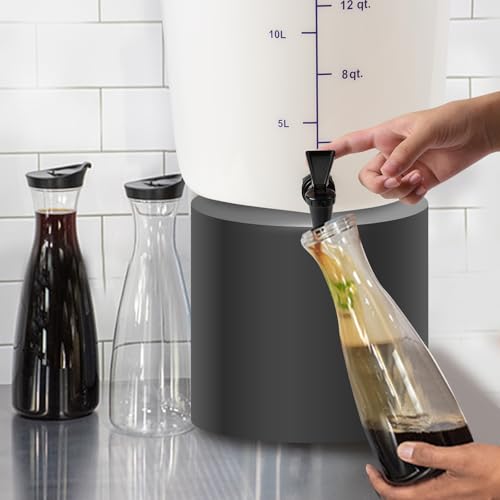
It’s entirely passive, just add grounds and water, and the spigot makes dispensing clean and simple. The food-grade materials are durable, and the compostable filters are a plus for eco-conscious users. Compared to jar-based DIY methods, this is more consistent and scalable.
Product photos
CASABREWS 3700 Espresso Machine

Strengths
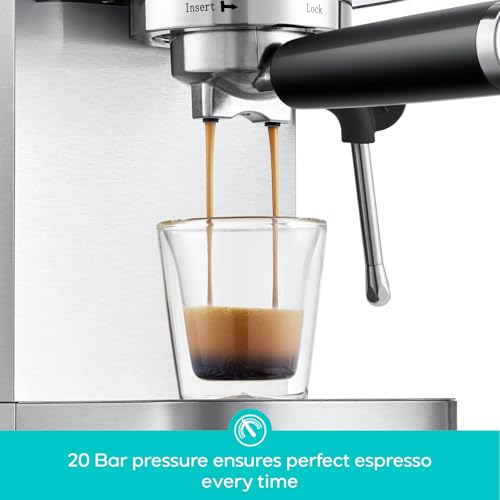
- 20-bar pressure
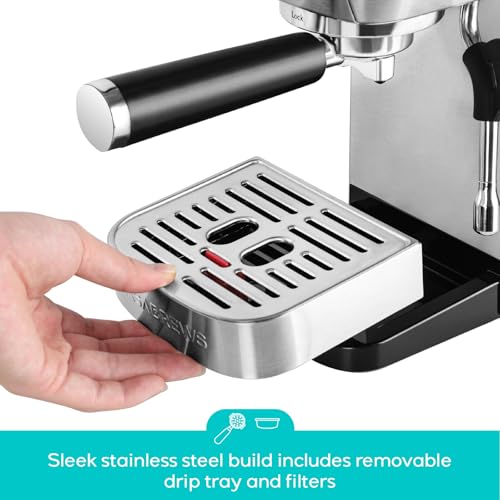
- Stainless steel build
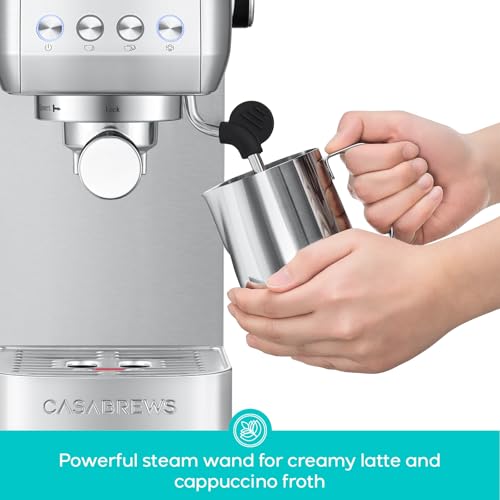
- Powerful steam wand
Trade-offs
- Manual operation only
- No built-in grinder
- Learning curve
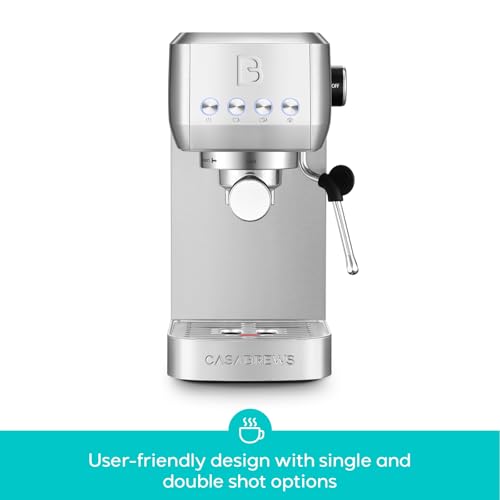
This is a solid semi-automatic for those ready to step up from push-button machines. With 20-bar pressure and a powerful 1350W heater, it extracts rich, aromatic shots with good crema, on par with much pricier models. The steam wand is responsive, letting you build real microfoam for latte art, which beginners appreciate.
Owners consistently report it’s well-built for the price, with a stainless steel body and thoughtful extras like a tamper with spoon. Compared to super automatics, it demands more involvement, but that’s the point: you gain control over grind, dose, and tamp. If you’re learning the craft, this machine teaches good habits without breaking the bank.
Product photos
SHARDOR 3.5 Bar Espresso Maker
Strengths
- Ultra-compact design
- Fast heat-up
- Simple one-knob control
Trade-offs
- Low pressure for espresso
- Plastic build
- Manual milk steaming
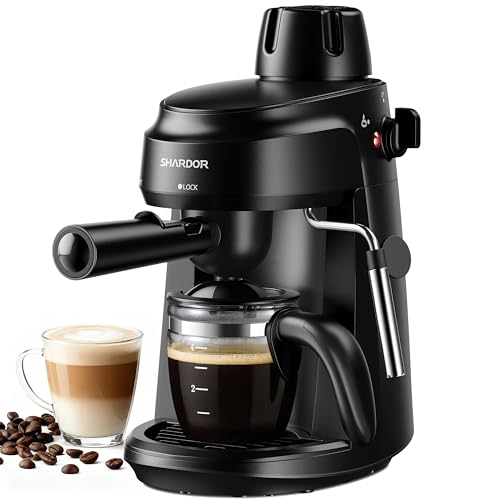
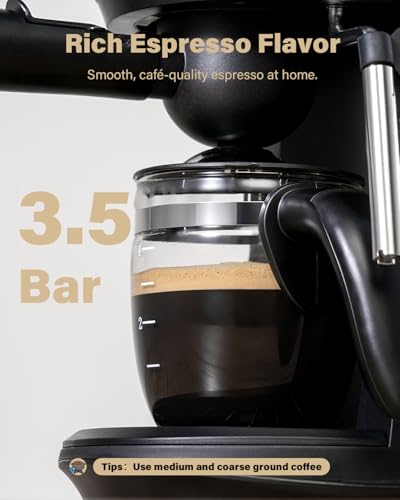
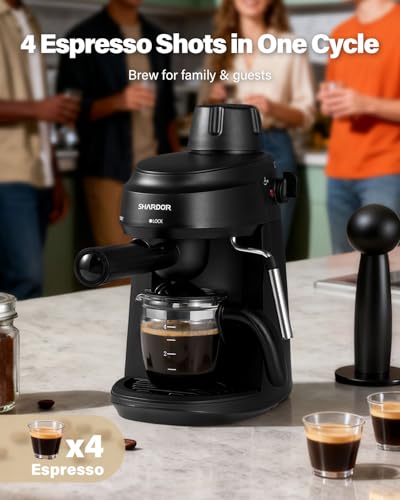
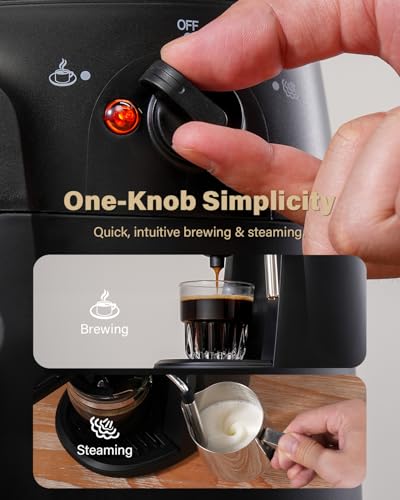
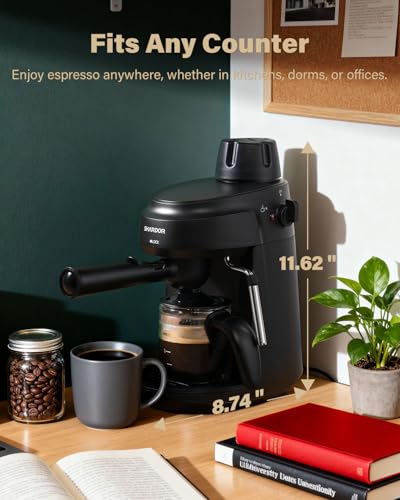
This isn’t a machine for espresso purists, but for beginners or casual drinkers, it’s a smart entry point. At 3.5 bars, it doesn’t hit the 9+ bar standard for true espresso, but the brew is smooth and balanced, more like a strong Americano, which many actually prefer for daily drinking. The compact size is its biggest win, fitting easily in small kitchens or dorms where space is tight.
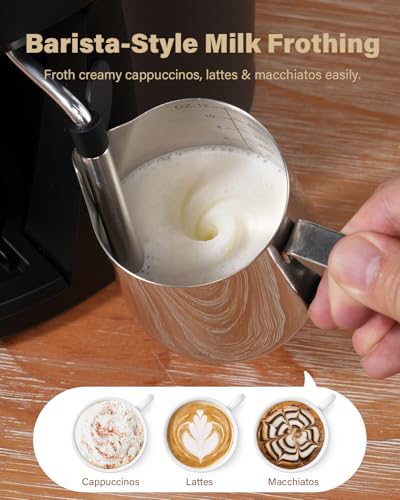
The steam wand works well for basic frothing, though it takes practice. Owners say it heats up fast and is reliable for simple drinks. Compared to pricier semi-automatics, it lacks depth, but for the price, it’s a solid way to explore milk-based coffee without overspending.
Product photos
Utopia Stainless Steel French Press
Strengths
- Double-wall insulation
- Rust-resistant steel
- 4-level filtration
Trade-offs
- No glass to monitor brew
- Heavier than glass models
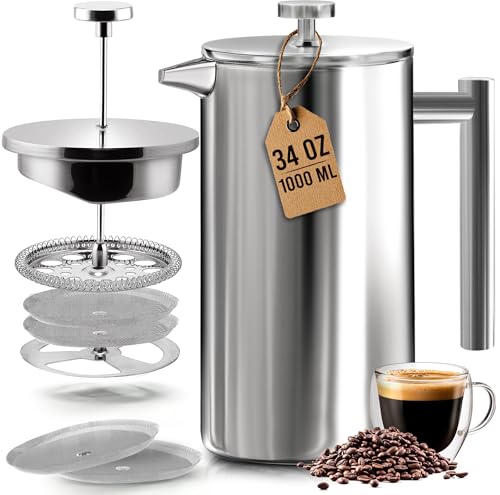
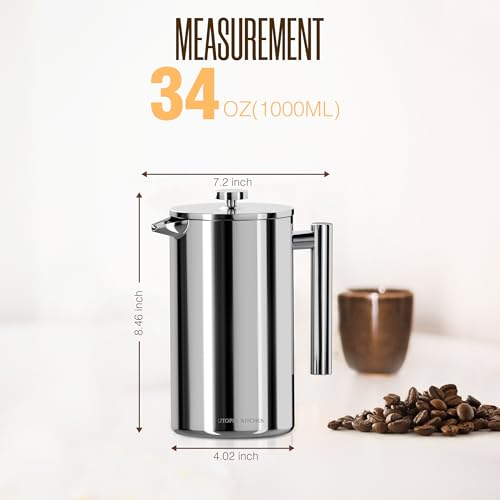
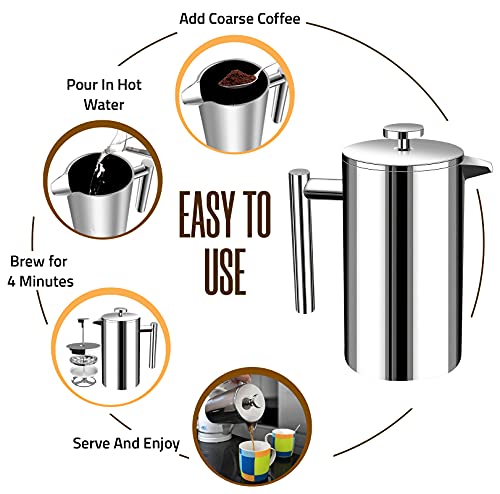
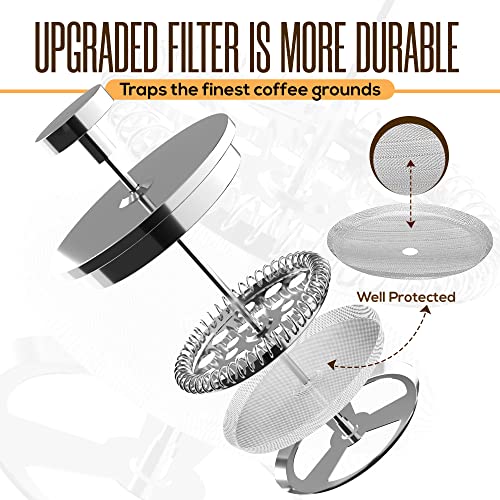
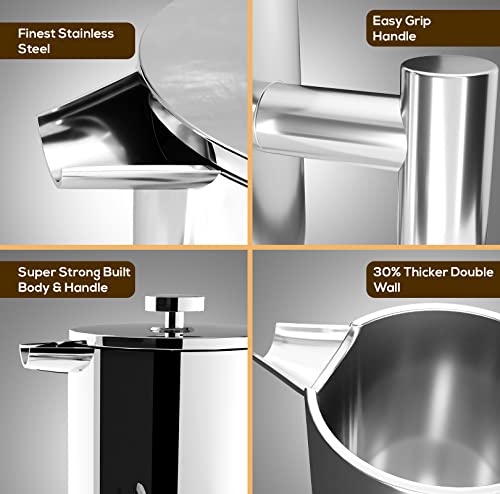
The Utopia French Press stands out for its double-wall insulation and 304-grade stainless steel, real durability that keeps coffee hot far longer than glass models. It doesn’t make espresso, but for clean, full-bodied immersion brewing, it’s a top pick among manual methods. The 4-layer filtration system is key: owners report noticeably less sediment than standard presses.
It’s also dishwasher safe and rust-resistant, which makes it a no-fuss option for daily use. Compared to budget glass presses, this one feels like an upgrade in both performance and longevity. If you’re after simplicity and consistency, this press delivers without any electricity or maintenance hassles.
Product photos

Our Testing Process
As someone who’s spent years exploring the nuances of coffee – from bean to brew – I approached evaluating at home coffee systems with a focus on delivering quality and convenience. Rather than a hands-on lab test, this is a research-led comparison of published specifications and owner feedback across a range of machines. I compared features, brewing capabilities, and ease of use, weighing them against established criteria for consistently good coffee.
For this category, the biggest differentiators are versatility and milk frothing capability. A system that can handle a variety of drink types – from espresso to larger brewed coffees – offers the most value. Equally important is the quality of the milk system, whether it’s an automatic frother or a manual steam wand, as that drastically impacts the experience of lattes and cappuccinos. Finally, long-term cost and reliability play a huge role in overall satisfaction.
Specifications reliably reveal brewing pressure, water tank capacity, and heating speed. However, judging the experience – things like noise levels, ease of cleaning, and the actual flavor profile – requires careful consideration of owner reviews and expert opinions. I looked for consistent feedback on build quality, durability, and whether the machine truly delivers on its promises. Understanding how to brew high-quality coffee is also key, and starting with the right system makes it easier.
How To Choose The at home coffee system
Finding the right at-home coffee system really comes down to matching the machine to your lifestyle and preferences. It’s not just about brewing coffee; it’s about the experience you want to create.
A truly good coffee system delivers consistent, flavorful results with minimal fuss. Key aspects include brewing method (drip, espresso, cold brew), automation level (manual, semi-automatic, super-automatic), ease of cleaning, and temperature stability. Consider the volume of coffee you typically brew and whether you prioritize speed, convenience, or control over the process.
Automation & Control
The level of automation is arguably the biggest differentiator. Super-automatic machines, like the Philips 5500 Series, handle everything from grinding the beans to frothing the milk, offering maximum convenience. However, that convenience comes at a price and often means less control over the brewing process. Semi-automatic machines (like the CASABREWS 3700) give you more say, allowing you to adjust grind size, tamping pressure, and brew time. If you enjoy the ritual of coffee making and want to experiment, a semi-automatic is a great choice. Manual methods, such as a French press from Utopia, offer the most control but require the most effort.
Milk Frothing Capabilities
If lattes and cappuccinos are your go-to drinks, pay close attention to the milk frothing system. Some machines, like the Ninja Espresso & Coffee Barista System, have built-in frothers, while others require a separate steam wand. Steam wands offer greater versatility – you can adjust the texture of the milk to your liking – but they also take practice to master. The LatteGo system featured in Philips machines prioritizes ease of cleaning, which is a significant benefit if you frequently make milk-based beverages.
Here’s what to keep in mind when assessing milk frothing:
- Ease of cleaning: A simple, dishwasher-safe system is ideal.
- Texture control: Steam wands offer the most control, but can have a learning curve.
- Automatic frothing: Convenient, but might limit customization (and can be harder to clean if not designed well).
Don’t underestimate the importance of cleaning. A neglected machine will produce inferior coffee, no matter how much you initially spent.
Brewing Volume & Versatility
Consider how much coffee you typically brew at once. Do you need a single cup for yourself, or do you regularly make coffee for a crowd? The Snap! 5 Gallon Cold Brew Maker caters to large batches, while smaller machines are better suited for individual use. Many all-in-one systems, like the Ninja, attempt to cover all bases, offering options for everything from single espresso shots to full carafes. Before committing, think about whether you truly need that versatility, or if a more specialized machine would better suit your needs. If you’re interested in learning more about making espresso at home, our home espresso brewing guide can help. Or, if you’re looking for a broader overview of options, check out our best at-home coffee machine review.
At Home Coffee System Compared
Here’s a comparison of key specifications for various at-home coffee systems to help you choose the best option for your needs.
| Product Name | Pressure (Bar) | Water Tank Capacity | Milk Frothing | Brewing Style | Capacity | Special Features |
|---|---|---|---|---|---|---|
| Philips 5500 Series Espresso Machine | N/A | N/A | Automatic | Super-Automatic | N/A | 20 Presets, Quiet Brew |
| Ninja Espresso & Coffee Barista System | 19 | N/A | Fold-Away | Espresso/Drip | 12-Cup Carafe | Versatile, Single-Serve |
| Philips 3300 Series Espresso Machine | N/A | N/A | Automatic | Super-Automatic | N/A | AquaClean Filter |
| Aromaster 20 Bar Espresso Machine | 20 | N/A | Steam Wand | Semi-Automatic | N/A | Dual Circuit, Fast Heating |
| Original NitroPress Cold Brew Kit | N/A | N/A | N/A | Cold Brew/Nitro | N/A | Nitro Infusion |
| Snap! 5 Gallon Cold Brew Maker | N/A | 5 Gallon | N/A | Cold Brew | 3.5 Gallon | Dual Filtration, Large Batch |
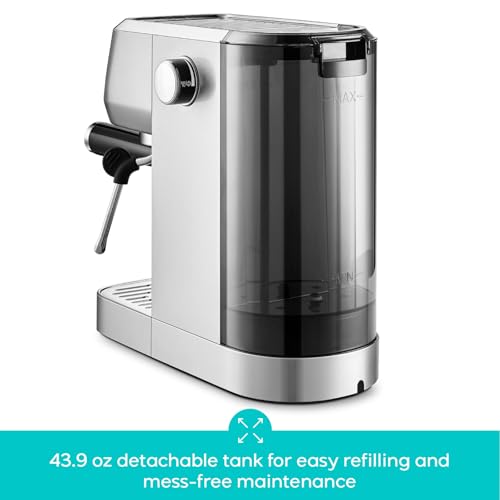
| CASABREWS 3700 Espresso Machine | 20 | 43.9 oz | Steam Wand | Semi-Automatic | N/A | 2-in-1, Compact |
| SHARDOR 3.5 Bar Espresso Maker | 3.5 | N/A | Adjustable Wand | Semi-Automatic | N/A | Compact, One-Knob Control |
| Utopia Stainless Steel French Press | N/A | N/A | N/A | Manual (Press) | N/A | Double-Walled, 4-Layer Filter |
Frequently Asked Questions
What’s the difference between a super-automatic and a semi-automatic machine?
Super-automatic machines handle everything from grinding to brewing with the touch of a button, while semi-automatic systems require you to control aspects like grind size and tamping, offering more customization. Generally, super-automatic machines prioritize convenience and semi-automatics cater to those who enjoy a more involved brewing process.
How often do I need to clean my at-home coffee system?
Daily rinsing of components is essential, but a deeper clean is usually needed every one to three months depending on use. Neglecting cleaning leads to mineral buildup and stale coffee oils impacting flavor and machine lifespan.
Are cold brew makers really that different from regular coffee machines?
Yes, cold brew makers use a long steeping process (typically 12-24 hours) in cold water, resulting in a less acidic and smoother concentrate. This differs significantly from the hot-water brewing process of standard coffee machines, producing a distinctly different flavor profile.
Can I get true espresso from all machines listed in the comparison chart?
Not all machines deliver true, barista-quality espresso. Machines with 19 bars of pressure, like the Ninja Espresso & Coffee Barista System, are more likely to produce a proper espresso shot, while lower-pressure models (like the SHARDOR at 3.5 bar) may produce something closer to a strong coffee.
What if I already have a good grinder – should I still consider a super-automatic machine?
If you already have a quality burr grinder, a semi-automatic machine might offer a better value, as you’re already covering the crucial grinding step. You can then focus your investment on a machine that excels at brewing and milk frothing, and for those seeking even more control, exploring a best pour-over coffee system could be ideal.
The Bottom Line
Choosing an at-home coffee system often boils down to a trade-off between ultimate control and sheer convenience. If you want a machine to handle nearly everything for you, the Philips 5500 Series Espresso Machine stands out as a remarkably versatile and easy-to-use option. However, remember that even the most sophisticated machine can’t compensate for starting with quality beans and understanding the fundamentals of brewing.
For those with specific needs, we have clear recommendations. If you’re on a budget, the SHARDOR 3.5 Bar Espresso Maker offers surprising capability for its price point. If maximizing versatility is your priority, the Ninja Espresso & Coffee Barista System can genuinely handle a wide range of brewing styles. And for cold brew enthusiasts, the Snap! 5 Gallon Cold Brew Maker is hard to beat for large-batch production.
Ultimately, the best at-home coffee system isn’t about chasing the highest pressure or the most features. It’s about finding a machine that fits your routine and helps you consistently achieve a delicious cup. Paying attention to grind consistency for brewing – whether you’re using a super-automatic or a manual method – will have a bigger impact on your daily coffee than almost any other single factor.
