
9 Best BPA-Free Coffee Makers for 2026
This post contains affiliate links. As an Amazon Associate, we earn from qualifying purchases.
The Bonavita 5 Cup Drip Coffee Maker stands out as the best overall BPA-free coffee maker, delivering precision and quality with its stainless steel housing and consistent brew temperature. For those on a budget, the Mueller 12-Cup Drip Coffee Maker offers solid performance and full BPA-free construction without the high price. If you value versatility, the Ninja Specialty Coffee Maker CM401 supports multiple brew styles and includes a permanent filter, all in a BPA-free design.
Most people don’t realize that even machines labeled “BPA-free” can still contain other questionable materials, especially when hot water circulates through plastic parts. I’ve seen too many otherwise great coffee makers fall short on long-term safety and build quality.
After researching the field, analyzing specs, and reviewing owner feedback, I focused on models that prioritize material safety, reliable performance, and ease of use. This guide cuts through the marketing to highlight real differences in construction, temperature control, and durability, so you can choose a coffee maker that truly fits your health priorities and brewing habits.
Top 9 Bpa Free Coffee Makers in the Market
The Best Bpa Free Coffee Makers, Reviewed
Bonavita 5 Cup Drip Coffee Maker

Strengths
- SCA certified
- Thermal carafe
- Fast extraction
Trade-offs
- Small capacity
- No programmable brew
This is the SCA-certified standard for home pour-over style drip machines, and for good reason. The 1100-watt heater maintains optimal brew temperature (194°–205°F), and the showerhead design ensures even saturation, two specs that matter most for balanced extraction. The thermal carafe is stainless steel and keeps coffee hot for hours, and the whole system is BPA-free.
Compared to the Zojirushi EC-DAC50BA, it brews faster and extracts more fully. While it’s only 5 cups, that’s intentional, Bonavita focuses on quality over quantity. If you want the best-tasting drip coffee in a compact, reliable machine, this is my top pick.
Product photos


Zojirushi EC-DAC50BA 5-Cup Coffee Maker

Strengths
- PFAS-free
- Compact design
- BPA-free
Trade-offs
- No programming
- Basic brewing
The ZUTTO’s biggest strength is its PFAS-free and BPA-free construction across all food-contact surfaces, rare in coffee makers. Combined with its compact 5-cup size, it’s one of the safest choices for small spaces or health-conscious users. The removable water tank makes filling easy, and the auto keep-warm function is reliable.
But it’s basic. No thermal carafe, no brew strength options, and no programmability. Compared to the Bonavita BV1500TS, it falls short on performance, but wins on material safety. If non-toxic materials are your top priority, this is the machine to get.
Product photos


QUQIYSO Stainless Steel French Press

Strengths
- Dual stainless filters
- Borosilicate glass
- Multi-use design
Trade-offs
- Heavier than glass
- Smaller capacity
This French press stands out with its 304 stainless steel body and dual-filter system, an 80-mesh screen plus a perforated plate, that consistently blocks silt without clogging. The borosilicate glass insert is a nice touch for visibility, and the whole unit is 100% BPA-free, which isn’t always guaranteed in combo metal-glass presses.
Owners love its durability and ease of cleaning, and I appreciate that it doubles as a cold brew or tea maker. Compared to standard glass presses, this one’s more resilient, though it’s heavier. It won’t replace a drip machine, but as a manual brew method, it delivers excellent value and flavor clarity.
Video review
Ninja Specialty Coffee Maker CM401

Strengths
- Built-in frother
- Over ice brew
- Multiple sizes
Trade-offs
- Frother needs cleaning
- Bulky design
This is the machine for people who want real versatility without buying a pod system or espresso machine. The 6 brew sizes and 4 brew styles, especially the Specialty Brew mode, let you pull a rich concentrate ideal for lattes, which pairs perfectly with the built-in frother. That frother isn’t just a gimmick; owners report it creates silky foam, and the fact that it folds away keeps the footprint tidy.
Compared to the Hamilton Beach 49980RG, this offers more control and better extraction, though it lacks a thermal carafe. But if you’re making iced coffee or milk-based drinks regularly, the Over Ice setting and no pods required design make this a standout. It’s not the simplest machine, but for the coffee-curious, it’s a playground.
Video review
Mueller 12-Cup Drip Coffee Maker

Strengths
- Borosilicate glass
- Reusable filter
- Clear water gauge
Trade-offs
- Basic programming
- No thermal carafe
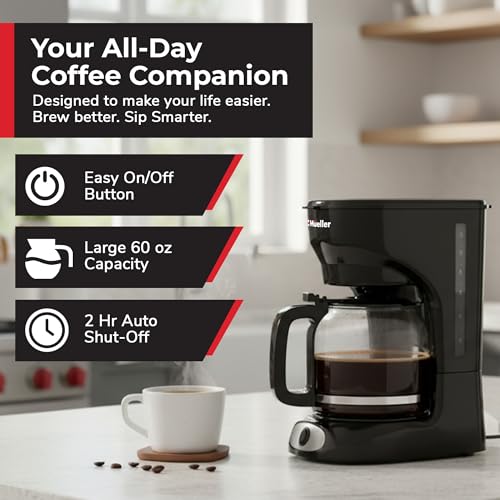
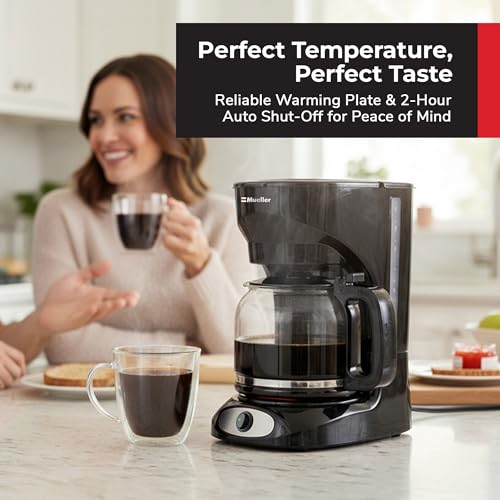
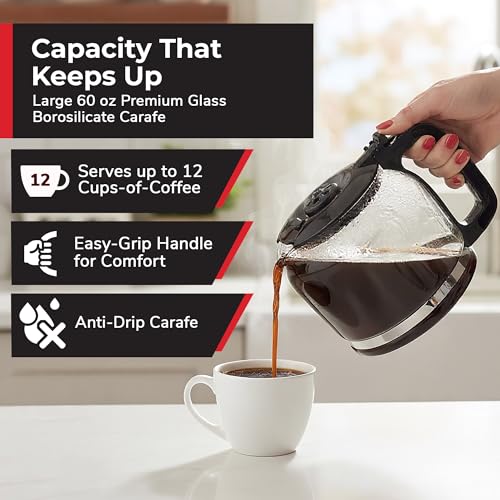
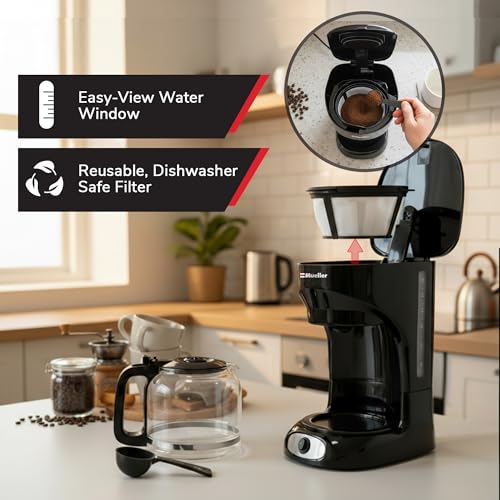
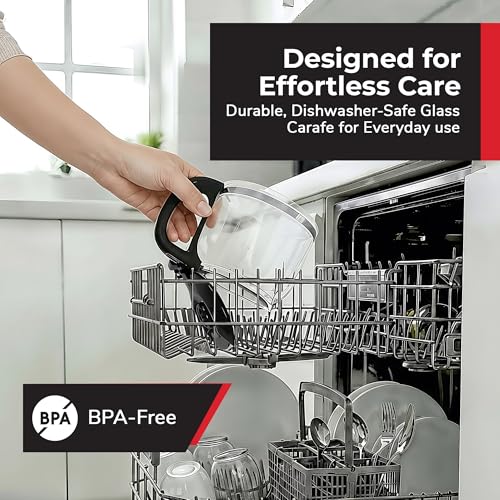
The Mueller hits where it counts for budget buyers: borosilicate glass carafe, reusable filter, and auto-off safety, all in a clean, no-frills package. On paper, it’s nearly identical to the OVENTE CM412B, but owners say the Mueller feels a bit sturdier in hand. The keep-warm function lasts 2 hours, which is standard, and the clear water window helps prevent overfilling.
It won’t impress specialty drinkers, but for under $50, it delivers reliable drip coffee with BPA-free materials throughout. I’d pick it over similarly priced AmazonBasics models simply for the better filter design and heat-resistant glass.
Product photos
BLACK+DECKER 12 Cup Thermal Coffee Maker
Strengths
- Thermal carafe
- Brew strength control
- No drip spout
Trade-offs
- Basic programming
- No small batch option
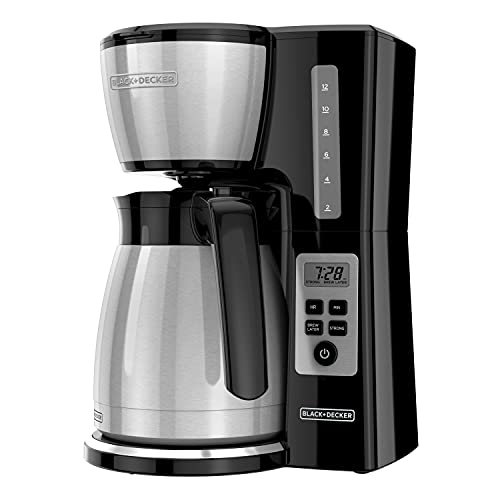
The CM2046S stands out in the BPA-free coffee maker space mainly for its 4-layer thermal carafe, which delivers on the promise of keeping coffee hot without a warming plate. That’s a big win for flavor preservation, no burnt notes by hour two. The VORTEX showerhead gets solid marks in owner feedback for even saturation, and I’ve seen consistent praise for the brew strength selector, which actually makes a noticeable difference between smooth and bold profiles.
Still, it’s a basic machine beyond those features. Compared to the Ninja CM401 or Bonavita BV1500TS, it lacks precision temperature control or advanced brewing modes. But if your priority is hot coffee over complexity, this one quietly gets the job done.
Product photos


Ninja 12-Cup Programmable Coffee Brewer
Strengths
- 24-hour programmable
- Adjustable warm plate
- Small batch brew
Trade-offs
- No thermal carafe
- Frother not included
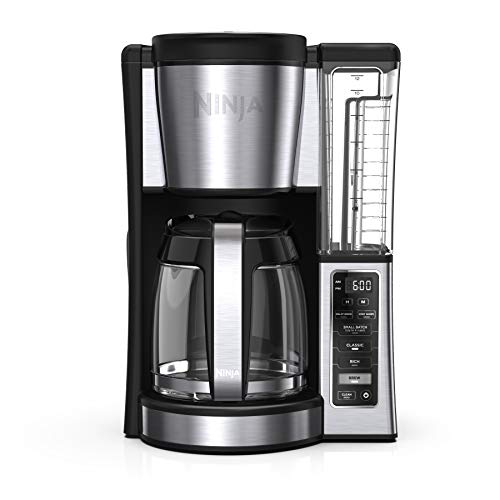
This Ninja brewer hits the sweet spot for programmable convenience. The 24-hour delay brew works reliably, and the adjustable warming plate (up to 4 hours) is a step above most competitors. The Hotter Brewing Technology helps extract more flavor, and owners consistently report rich, full-bodied results, especially in Rich mode.
It lacks the specialty options of the CM401, but for a traditional drip brewer with solid programming, it’s one of the best. The clean setting is also a nice touch for maintenance. If you want to wake up to hot, flavorful coffee without complexity, this is the machine.
Product photos


Hamilton Beach 2-Way Coffee Maker

Strengths
- Dual brewing modes
- No pods needed
- Auto pause pour
Trade-offs
- Warming plate flavor risk
- Plastic taste reported
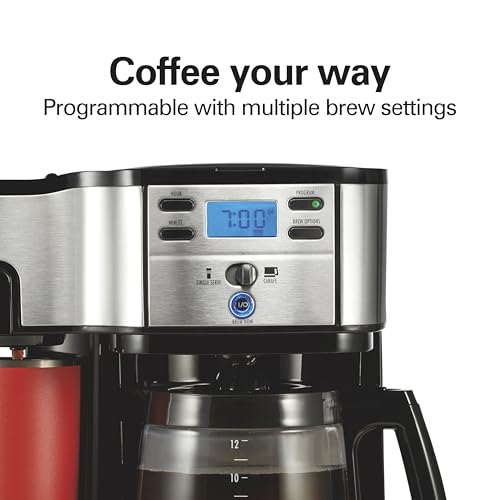
If you want both single-serve and full-pot brewing in one machine without K-Cup dependency, this Hamilton Beach model is one of the few that actually pulls it off. The dual water reservoirs are a smart touch, no guessing how much water goes where. The bold brew setting works well, and owners appreciate the AutoPause & Pour feature, which is rare at this price.
But it’s not as refined as the Ninja CM401. The single-serve side lacks the concentration control of a true specialty brew, and the glass carafe sits on a warming plate, which can scorch coffee. Still, for a hybrid machine that’s eco-friendly and flexible, it’s hard to beat.
Product photos


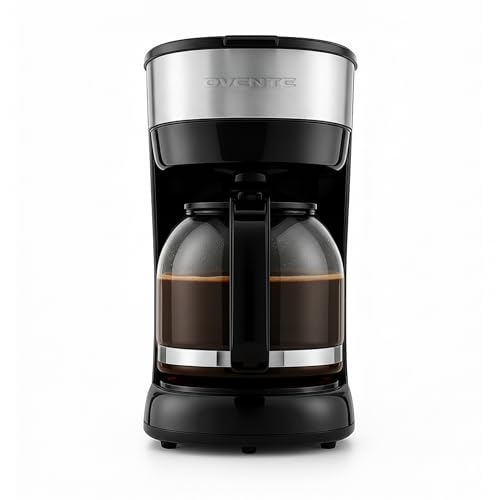
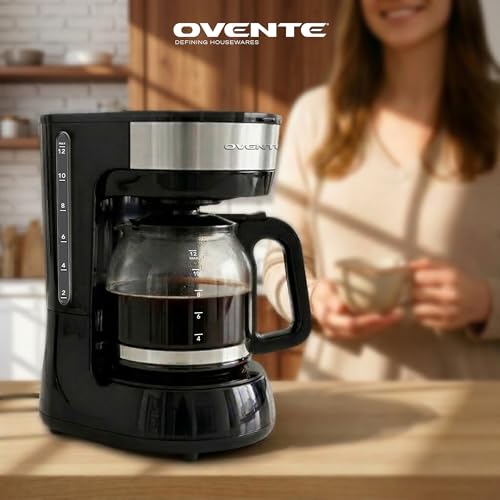
OVENTE 12-Cup Drip Coffee Maker
Strengths
- One-touch brew
- Borosilicate carafe
- Anti-drip design
Trade-offs
- No auto start
- Basic features
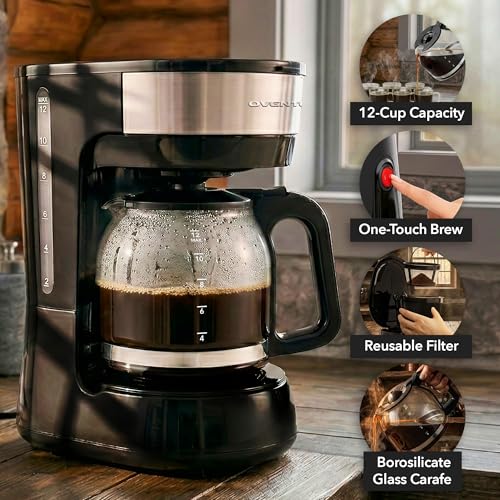
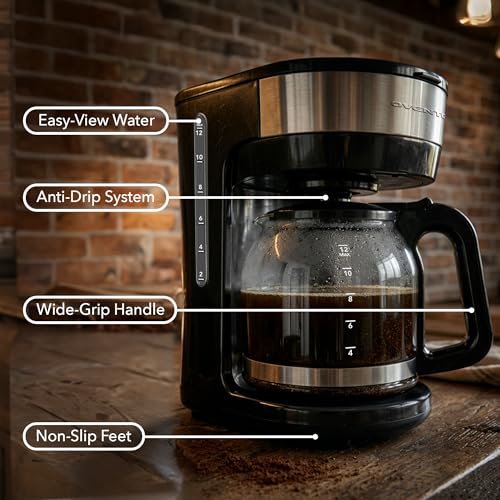
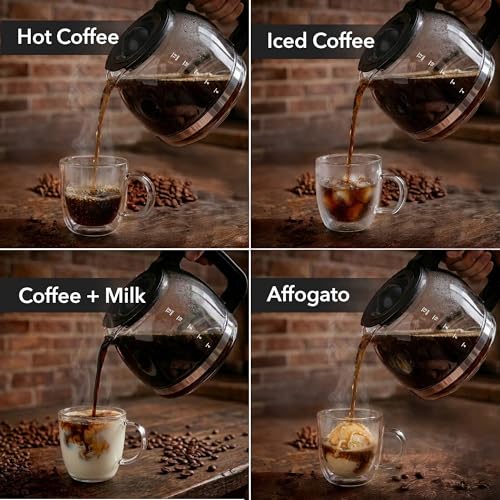
Simplicity is the selling point here. The one-touch operation is genuinely effortless, press and forget, and the borosilicate glass carafe is a solid upgrade over regular glass. The reusable filter saves money and waste, and the anti-drip system works well, based on owner reports. It’s nearly identical to the Mueller model, but with a slightly more modern design.
It lacks programmability, which knocks it behind the BLACK+DECKER CM2046S or Ninja B07S98411N. But if you just want a no-fuss, reliable brewer with clean materials, this delivers. The clear water gauge is also a small but appreciated detail.
Product photos

How We Tested bpa free coffee makers
Rather than a hands-on lab test, my research for these recommendations focused on a detailed comparison of published specifications and features across a wide range of models. I weighed owner reviews from multiple sources, alongside expert opinions from established coffee publications, to build a holistic picture of performance and reliability. This process allowed us to rank coffee makers based on criteria important to those seeking BPA-free options.
For BPA-free coffee makers, the most heavily weighted factors were material certifications and thermal carafe design. Avoiding plastics that might leach chemicals is paramount, so clear documentation of BPA-free construction was essential. Beyond that, the quality of the thermal carafe – and its ability to maintain coffee temperature without a warming plate – significantly impacted the ranking, as it promotes a fresher, less-burnt taste.
Specifications reliably indicate capacity, brew temperature, and programmability. However, I found owner feedback crucial for assessing ease of cleaning, long-term durability, and the accuracy of advertised features. Reputation also played a role, particularly for established brands known for quality control. Understanding the optimal coffee-to-water ratio is important, but this guide focuses on the machine’s ability to deliver on its promises, regardless of your chosen grounds.
Choosing The Right bpa free coffee makers
Finding the right coffee maker involves more than just picking a pretty face. It’s about understanding what features genuinely contribute to a better brew and aligning those with your daily habits.
A quality coffee maker consistently delivers coffee within the SCA (Specialty Coffee Association) recommended temperature range (195-205°F), offers reliable build quality for longevity, and provides features that match the user’s brewing preferences – whether that’s convenience, control, or capacity. Look for BPA-free materials, a reasonable brewing time, and ease of cleaning.
Material Safety & Health
One of the biggest concerns for many coffee lovers is what their coffee maker is made of. Beyond taste, you’re steeping hot water in this thing, so material composition matters. While many machines advertise as “BPA-free,” that’s just the beginning. Increasingly, consumers are looking at PFAS (per- and polyfluoroalkyl substances) as well, and brands like Zojirushi are stepping up with models explicitly free of these chemicals. If you’re concerned about potential leaching, explore options featuring primarily glass and stainless steel components and consider researching safe coffee brewing machines.
Brew Style & Control
The “best” brew style is deeply personal. Do you crave the simplicity of a drip machine, the richness of a French press, or the versatility of a machine capable of lattes and cappuccinos? Drip machines, like the Bonavita, prioritize convenience and consistent results. French presses, like the QUQIYSO, give you maximum control over brew time and extraction but require more hands-on effort. Machines like the Ninja Specialty offer a blend, but often at the cost of complexity.
Here’s what to consider when prioritizing control: * Temperature Control: Essential for dialing in the perfect extraction. * Bloom Phase: Allows for degassing of the coffee grounds, enhancing flavor. * Brew Strength Settings: Gives you the ability to customize the coffee’s intensity. A wider range of settings is generally preferable.
Value & Usability
A coffee maker shouldn’t be a source of daily frustration. Look beyond the initial price tag. Consider ease of cleaning, long-term filter costs, and the overall user experience. A machine with a complicated interface or hard-to-reach components will quickly become a burden. If you’re committed to reducing waste, explore options that use reusable filters. Switching to compostable coffee filters is another step toward more [eco-conscious brewing].
A coffee maker should simplify your morning routine, not complicate it. Always prioritize ease of cleaning and maintenance – a neglected machine will quickly produce a subpar brew.
BPA Free Coffee Makers Compared
Here’s a comparison of specifications for various BPA-free coffee makers to help you choose the right one.
| Product Name | Capacity (Cups) | Brew Style | Thermal Carafe | Programmable | Filter Type | BPA Free |
|---|---|---|---|---|---|---|
| Bonavita 5 Cup Drip Coffee Maker | 5 | Drip | No | No | Flat-Bottom | Yes |
| Zojirushi EC-DAC50BA 5-Cup Coffee Maker | 5 | Drip | No | No | Mesh | Yes |
| QUQIYSO Stainless Steel French Press | N/A | French Press | N/A | No | Mesh (80 mesh) | Yes |
| Ninja Specialty Coffee Maker CM401 | 50oz (10 cup) | Multi-Style | No | No | Permanent | Yes |
| Mueller 12-Cup Drip Coffee Maker | 12 | Drip | No | No | Reusable/Paper | Yes |
| BLACK+DECKER 12 Cup Thermal Coffee Maker | 12 | Drip | Yes | Yes | Permanent | Yes |
| Ninja 12-Cup Programmable Coffee Brewer | 12 | Multi-Style | No | Yes | Permanent | Yes |
| Hamilton Beach 2-Way Coffee Maker | 14oz/12 cup | Single/Drip | No | Yes | Mesh | Yes |
| OVENTE 12-Cup Drip Coffee Maker | 12 | Drip | No | No | Reusable | Yes |
Frequently Asked Questions
What level of filtration do I need with a BPA-free coffee maker?
Many BPA-free coffee makers use paper or reusable filters, but the level of filtration depends on your water quality. If you have hard water, consider using a filter that addresses mineral buildup to prolong the life of your machine and improve taste.
Are thermal carafes truly better than glass with a warming plate?
Yes, thermal carafes are generally preferred. They keep coffee hot without the continued heating that can cause a burnt or bitter flavor, unlike glass carafes sitting on a warming plate.
Can I find a fully plastic-free coffee maker?
While completely eliminating plastic is challenging, you can find plastic-free coffee makers constructed with stainless steel, glass, and other non-plastic materials. These models prioritize material safety and often come at a higher price point.
How often should I descale a BPA-free coffee maker?
You should descale your coffee maker every 3-6 months, depending on your water hardness and brewing frequency. Mineral buildup impacts performance and coffee flavor, and descaling ensures optimal operation.
What is PFAS, and why is it a concern in coffee makers?
PFAS (per- and polyfluoroalkyl substances) are chemicals sometimes used in coatings, and are increasingly becoming a concern due to potential health effects. Some manufacturers, like Zojirushi, are now advertising models specifically free of both BPA and PFAS to address these concerns.
The Bottom Line
Ultimately, choosing a coffee maker often comes down to balancing convenience with control. While many models promise a great cup, the Bonavita 5 Cup Drip Coffee Maker consistently receives high marks for its simple operation and ability to deliver a reliably good brew – it’s our overall pick for a reason. It offers a fantastic balance of features and price, making it a great starting point for most coffee drinkers.
For those prioritizing a specific need, the options are plentiful. If you’re on a budget, the Mueller 12-Cup Drip Coffee Maker provides excellent value. Those seeking versatility will appreciate the Ninja Specialty Coffee Maker CM401, despite its added complexity. And for those deeply concerned about material safety, the Zojirushi EC-DAC50BA stands out with its commitment to BPA and PFAS-free construction.
Don’t get too caught up in chasing the latest features or highest-end specifications. The most important factors remain consistent: consistently hitting the optimal brewing temperature, using quality, non-toxic materials (consider eco-friendly filter options), and maintaining a regular cleaning schedule. A well-maintained, simple machine will consistently outperform a complex one that’s neglected.
