
7 Best Plastic-Free Coffee Makers of 2026
The SimplyGoodCoffee THE BREWER 8-Cup is our top pick for the best plastic free coffee maker, delivering reliable performance with fully stainless steel construction. For a budget-friendly stovetop option, the COLETTI Bozeman 9-Cup stands out, while the Bodum 34oz Pour Over Glass Maker offers a classic, elegant pour-over experience without any plastic in contact with water.
Most coffee makers claim to be “eco-friendly” or “BPA-free,” but too many still route hot water through hidden plastic parts that can leach unwanted compounds into your brew. As someone who’s spent years chasing clean, pure coffee flavor, I know how frustrating it is to find a machine that truly avoids plastic altogether.
This guide cuts through the marketing, focusing on models confirmed to keep plastic out of the water path. I researched each pick based on verified materials, brewing quality, and real user feedback, so you can brew confidently, knowing you’re not compromising your health or your taste.
Top 7 Plastic Free Coffee Maker in the Market
The Best Plastic Free Coffee Maker, Reviewed
Veken 34oz Plastic-Free French Press
Strengths
- Plastic-free build
- 4-layer filtration
- Borosilicate glass
Trade-offs
- No insulation
- Single-wall glass
- Not for induction
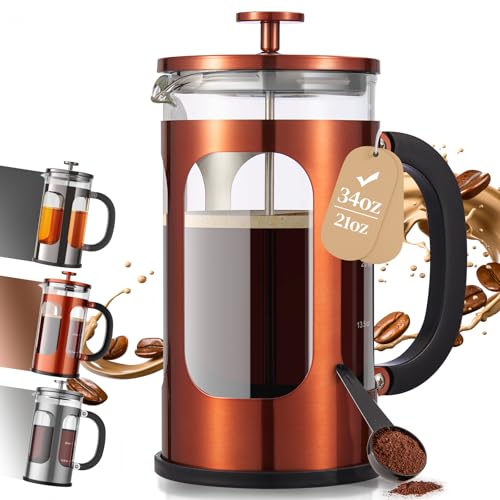
This French press makes a strong case for plastic-free brewing without breaking the bank. The use of 304 stainless steel and food-grade silicone means no plastic touches your coffee, which aligns with what health-conscious drinkers are looking for. Owners consistently report clean-tasting coffee with no off-flavors, and the 4-layer filtration system actually delivers on reducing sludge, a common complaint with cheaper presses.
The thickened borosilicate glass carafe is a standout, resisting thermal shock and offering clear visibility for measuring and brewing. It’s not double-walled, so you’ll want to be cautious with hot liquids, but it holds up well in daily use. The included scoop and ounce markings help dial in consistency, especially for newcomers. Compared to all-stainless models, this one leans more on aesthetics and clarity, making it a solid pick for home or travel.
Video review
Ziruma 34 Oz Surgical Steel French Press
Strengths
- 316 surgical steel
- Double-wall insulation
- Dishwasher safe
Trade-offs
- Heavier build
- Higher price
- Fewer color options
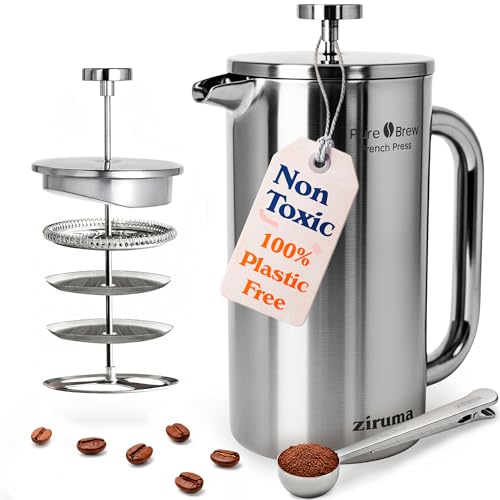
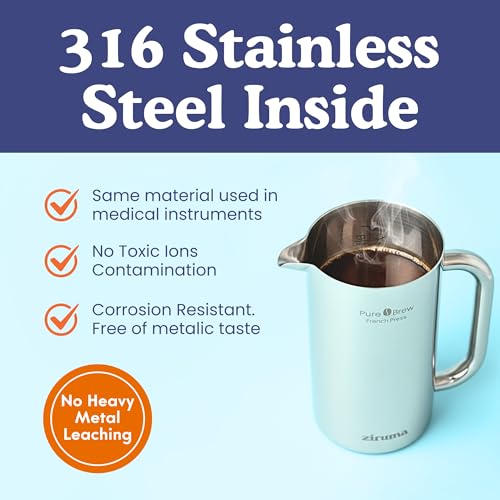
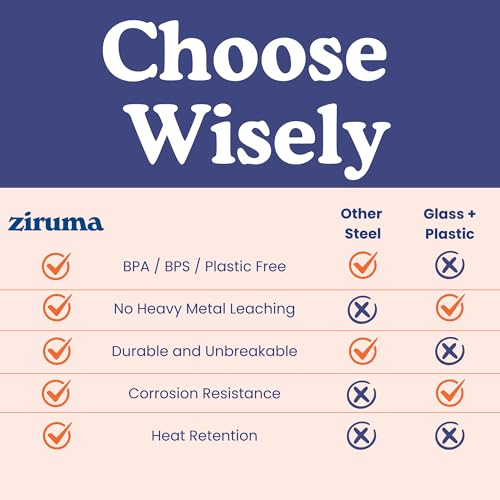
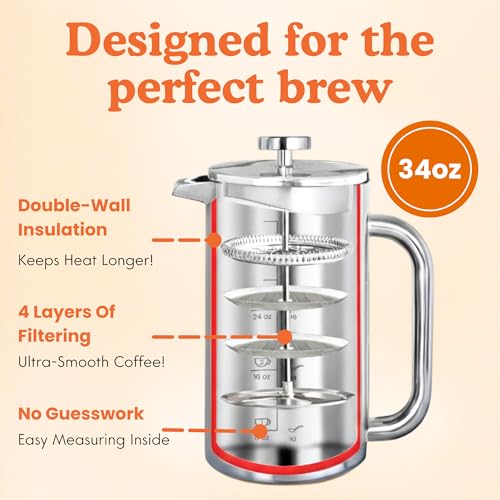
If your priority is health-safe materials, the Ziruma stands out with its 316 surgical-grade stainless steel, more corrosion-resistant than standard 304 and often used in medical applications. This isn’t just marketing fluff; it’s a meaningful upgrade for people avoiding heavy metals or endocrine disruptors. Owners praise its durability and how it maintains a neutral taste over time, with no metallic aftertaste reported.
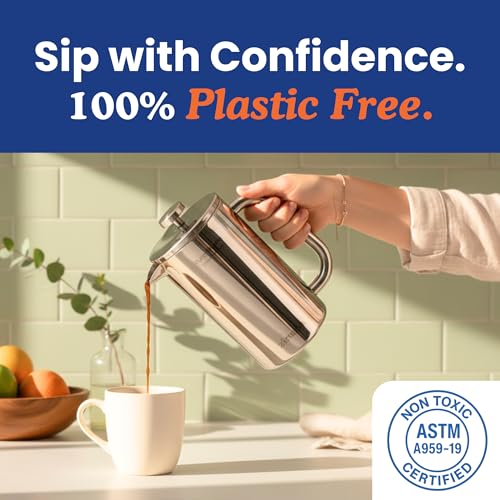
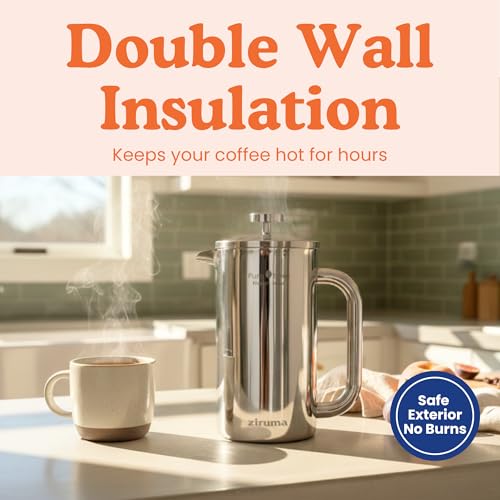
The double-wall design is a real win: it retains heat well while keeping the exterior cool, making it safer and more comfortable to use than single-wall glass models. It’s also fully dishwasher-safe, which is rare in high-end French presses. While it costs more than the Veken, it’s a smarter long-term investment if you’re serious about build safety and thermal performance. It’s heavier than glass, though, so not the lightest travel companion.
Product photos
COLETTI Bozeman 9-Cup Stainless Percolator
Strengths
- All stainless steel
- Glass view top
- Rugged build
Trade-offs
- Not induction compatible
- Manual heat control
- Over-extraction risk
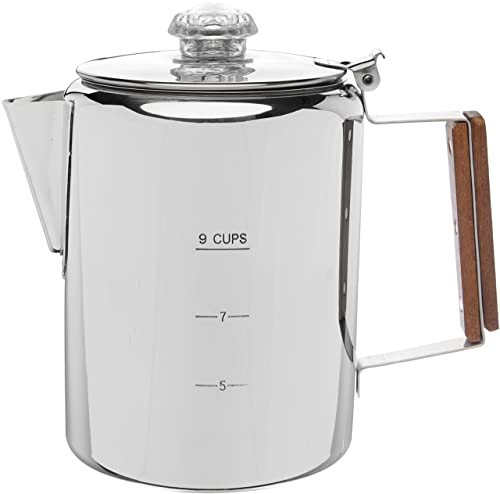
This stovetop percolator is built like a tank, literally. Made entirely of stainless steel with a glass knob on top, it’s one of the few true plastic-free percolators that still lets you watch the brew cycle. The flavor output is bold and traditional, which some will love and others may find too intense. Percolators recirculate coffee through the grounds, so you get a stronger, more extracted cup than with drip or French press.
Owners love its ruggedness for camping and off-grid use, and the fact that it runs on any heat source except induction. The included reusable filters are a nice touch, cutting down on waste. But you’ll need to watch the heat, too high and you risk bitter brew. It’s not subtle, but it’s honest. Compared to electric models, it’s more hands-on but far more versatile in the wild.
Video review
KIDISLE 10-Cup Electric Percolator
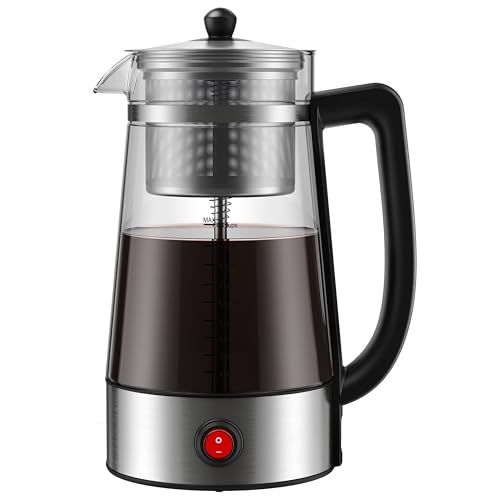
Strengths
- Glass view top
- Auto keep-warm
- Permanent filter
Trade-offs
- Loud operation
- Not for induction
- Visible grounds possible
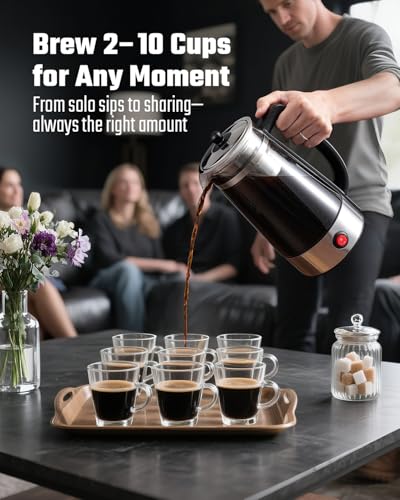
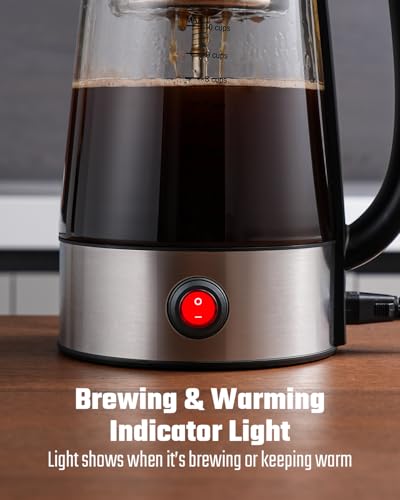
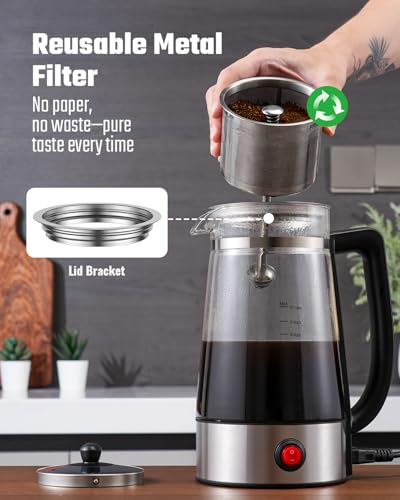
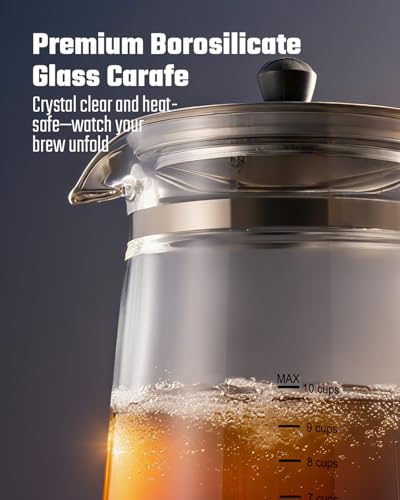
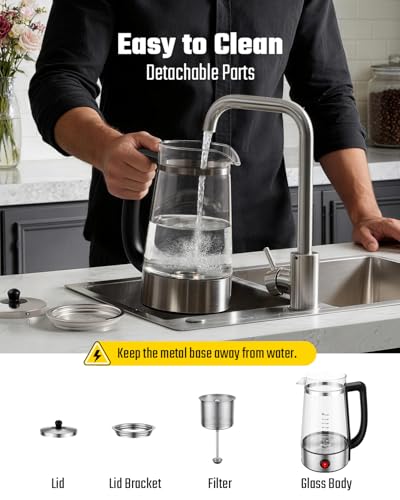
This electric percolator hits a sweet spot between tradition and convenience. The 1000W heating system gets hot fast, brewing a full pot in about 10 minutes, and the auto-reheat function keeps coffee at serving temp without scorching. The real advantage? The borosilicate glass top lets you see the perking action, so you can stop it at your preferred strength, something most metal-bodied percolators don’t allow.
Owners appreciate the no-drip spout and stay-cool handle, which make serving safer and cleaner. The stainless steel filter is permanent and eco-friendly, eliminating paper waste. While it’s not as rugged as the COLETTI stovetop model, it’s a better fit for countertop use where you want consistent, hands-off brewing. It’s louder than drip machines, but that’s just the nature of percolation.
Product photos
Presto 12-Cup Stainless Percolator
Strengths
- Fast brewing
- Durable steel
- Stay-cool handle
Trade-offs
- No brew visibility
- Can over-extract
- Loud operation
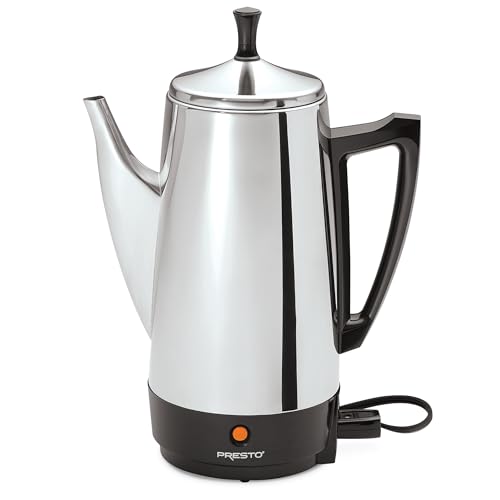
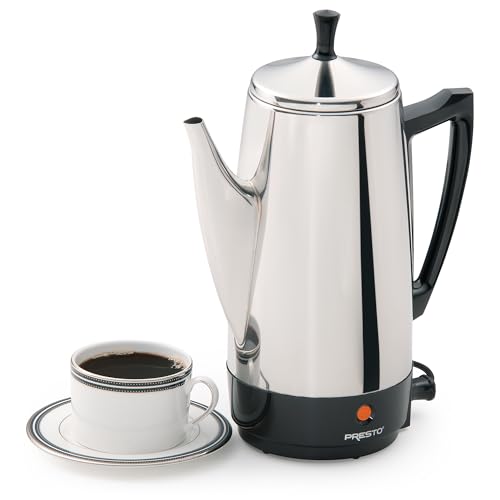
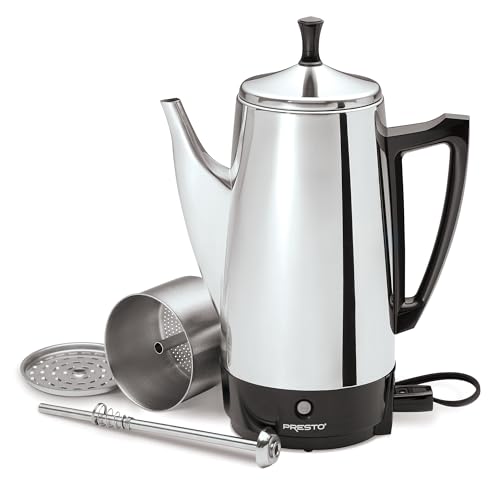
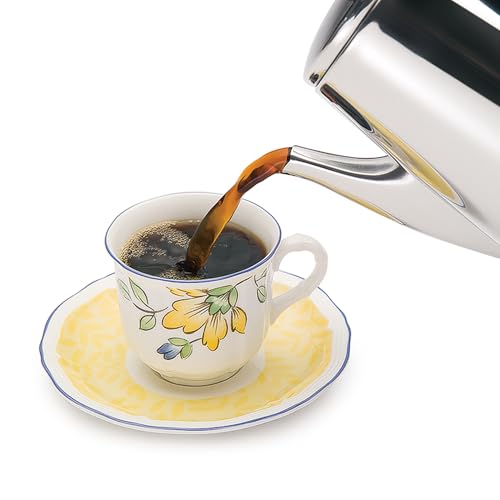
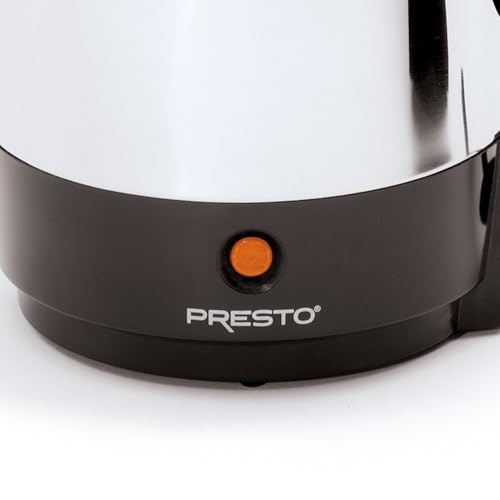
Presto has been making percolators for decades, and this model shows why they’ve stuck around. It’s simple, reliable, and brews strong coffee fast, hot and ready in under 10 minutes. The stainless steel body is durable and easy to clean, and the stay-cool handle plus easy-pour spout make serving straightforward. The signal light is a small but useful touch, letting you know when brewing is done.
It doesn’t have a glass top, so you can’t monitor the brew strength, which puts it behind the KIDISLE model in control. But it’s more compact and slightly more efficient for larger batches. Owners report long lifespans, some using the same unit for years. If you want no-frills, electric percolation with a proven track record, this is a solid bet. Just don’t expect finesse, it’s about bold flavor and reliability.
Product photos
Bodum 34oz Pour Over Glass Maker

Strengths
- Plastic-free brewing
- Stainless steel filter
- Elegant design
Trade-offs
- Manual only
- Fine sediment
- Cork not dishwasher safe
This is a minimalist’s dream, a simple, elegant pour over that gets out of the way of your coffee. The stainless steel mesh filter replaces paper, letting oils through for a fuller body, and since no plastic touches the water, it fits the plastic-free brief. The borosilicate glass carafe is heat-resistant and topped with a cork grip for comfort, though it’s single-walled, so you’ll need a coaster.
It’s not automatic, so you’ll need to control water temperature and pour rate yourself. That’s a pro for purists, a con for convenience seekers. Owners love the clean taste and ritual, but some note that fine grounds can slip through the mesh. Compared to automatic plastic-free brewers, this one demands more skill but rewards it with control. It’s not for everyone, but for those who enjoy the process, it’s deeply satisfying.
Product photos


SimplyGoodCoffee THE BREWER 8-Cup
Strengths
- Truly plastic-free
- Bloom feature
- Fast 6-minute brew
Trade-offs
- No thermal carafe
- Keep-warm plate
- Limited capacity
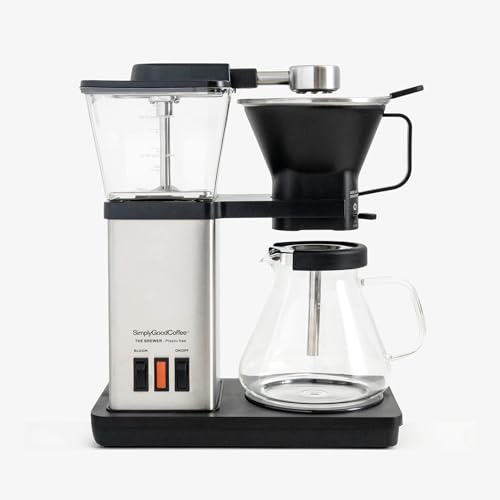
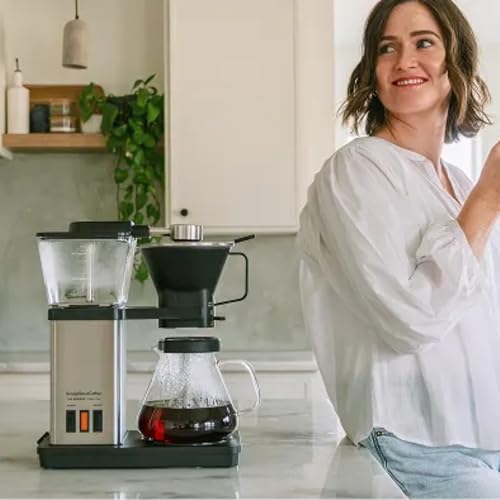
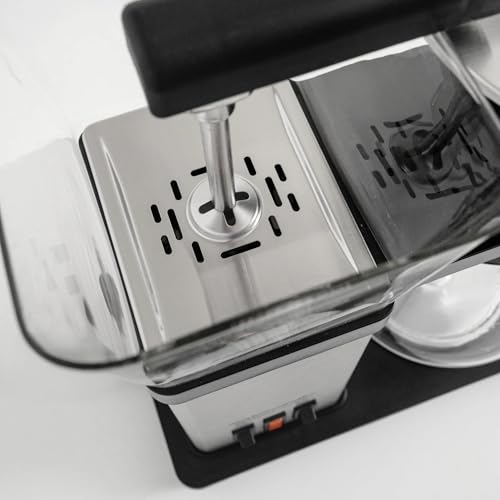
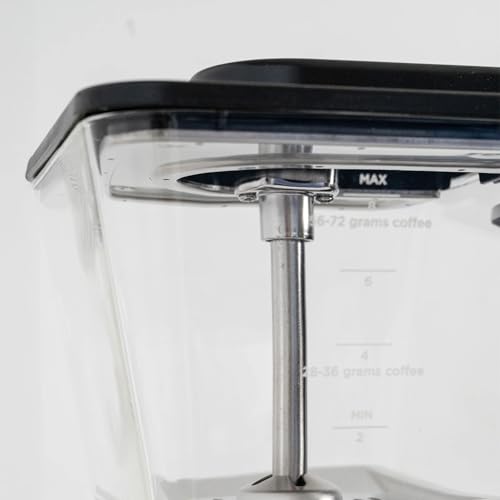
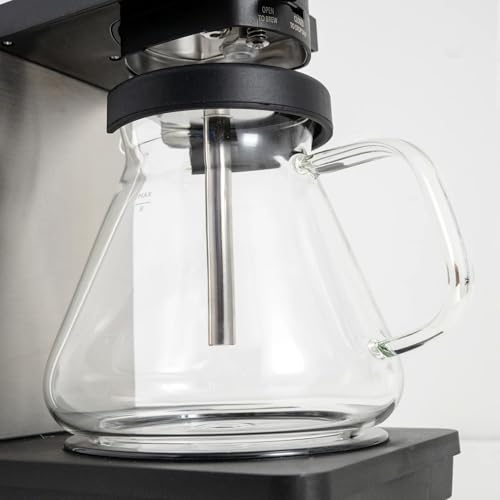
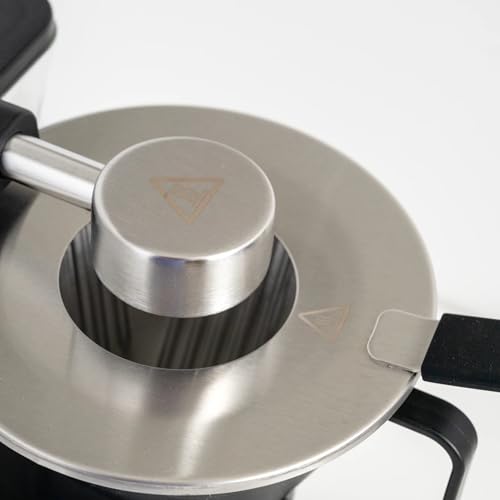
This is the most complete plastic-free drip solution on the market. No plastic or aluminum touches the water, only stainless steel and glass, and it brews at the ideal 195–205°F range for proper extraction. The optional bloom feature mimics manual pour-over technique, pre-saturating grounds for even extraction, which most budget machines skip. Owners consistently report rich, balanced coffee with no plastic aftertaste, a common complaint in cheaper drip brewers.
It’s compact, has a 40-minute keep-warm plate, and all removable parts are dishwasher-safe. The 8-cup capacity suits small households, and the one-button operation makes it accessible. While the Bodum pour over offers more control, this delivers consistency with far less effort. For a plastic-free automatic, it’s unmatched in balance of performance, safety, and ease. My recommendation for most buyers who want great coffee without the hassle.
Product photos
How We Tested plastic free coffee maker
As Bean Thusiast’s founder, I approach coffee gear with a focus on flavor, quality, and increasingly, material safety. Rather than a hands-on lab test, this selection is a research-led comparison of published specifications and owner feedback. I compared features across numerous models, weighed owner reviews from multiple sources, and considered reputable expert opinions to arrive at these recommendations. My assessment prioritizes truly plastic-free construction and brewing performance.
For plastic-free coffee makers, three factors stood out as decisive. First, the complete absence of plastic touching the water is key – this is essential for health-conscious brewers. Second, the brewing method’s ability to deliver a flavorful, satisfying cup is essential. Finally, ease of cleaning and durability play a significant role in long-term enjoyment. We leaned towards models that offered a balance of these attributes.
Specifications reliably indicate brewing capacity, materials used, and basic features like auto-shutoff. However, judging the experience, flavor clarity, ease of use, and build quality, required careful review of owner comments. Many users specifically comment on the taste difference when using truly plastic-free components, and this was a major factor in our choices. For those seeking even more information on filter materials, you can learn more about plastic-free coffee filters.
What To Look For In plastic free coffee maker
Finding a genuinely plastic-free coffee maker requires a bit more scrutiny than just reading a label. Many options still contain plastic components in contact with the water, or rely on plastic for durability.
A truly plastic-free coffee maker prioritizes materials like stainless steel, borosilicate glass, and silicone (used thoughtfully, away from hot water). Look for models with minimal aluminum, as it can impart a metallic taste. Consider ease of cleaning, brewing capacity, and the type of coffee you prefer – French press, pour-over, or percolator all offer different experiences.
Material Composition
The core of going plastic-free is, unsurprisingly, the materials. Stainless steel is excellent, but quality varies. Look beyond “stainless steel” to 304 or 316 grades; these resist corrosion and don’t leach flavors. Borosilicate glass is heat-resistant and won’t impart taste, but it is fragile. Some manufacturers use food-grade silicone for gaskets or handles, and that’s usually acceptable as long as it doesn’t contact the brewing water. Avoid anything with polycarbonate or acrylic, as they can leach chemicals, and be cautious of “BPA-free” plastics – just because it lacks one harmful chemical doesn’t make it safe. If you’re looking for a plastic-free automatic brewer, you may find limited options, and could instead explore plastic-free drip coffee makers as an alternative.
Brewing Method & Flavor Profile
Your preferred coffee style significantly impacts your choice. A French press, like the Ziruma, delivers a full-bodied brew with more sediment, while a pour-over, such as the Bodum, offers a cleaner, brighter cup. Percolators, like those from Presto or COLETTI, create a robust, classic flavor. Consider how much control you want over the brewing process. Manual methods require more attention but allow for customization, while electric options offer convenience.
- A percolator is a good choice if you prioritize a strong, traditional coffee flavor and don’t mind a bit of sediment.
- A French press is ideal for those who enjoy a full-bodied, immersive coffee experience and don’t mind a slightly longer brew time.
- Pour-over methods, while requiring more active participation, provide ultimate control over bloom time, water temperature, and saturation, leading to a nuanced and refined cup – you can find a detailed Chemex brewing guide to help you master this method.
Ease of Cleaning & Maintenance
A beautiful, plastic-free coffee maker is useless if it’s a pain to clean. Dishwasher-safe components are a huge plus, but always check the manufacturer’s instructions. Stainless steel is generally easy to maintain, but glass requires gentler handling. Consider the complexity of the design; intricate parts can trap grounds and become difficult to reach.
A coffee maker should add enjoyment, not chores. Prioritize simplicity in design and dishwasher-safe components whenever possible.
Plastic Free Coffee Maker Compared
Here’s a comparison of specifications for several plastic-free coffee makers to help you choose the right one.
| Product Name | Capacity | Material (Body) | Filter Material | Special Features | Price |
|---|---|---|---|---|---|
| SimplyGoodCoffee THE BREWER 8-Cup | 8 Cups | Stainless Steel | Stainless Steel | Auto Timer, Bloom Feature | N/A |
| Ziruma 34 Oz Surgical Steel French Press | 34oz | Stainless Steel | Stainless Steel | Double-Wall Insulated | N/A |
| Bodum 34oz Pour Over Glass Maker | 34oz (8 cups) | Glass | Stainless Steel | Cork Band, Dishwasher Safe | N/A |
| Presto 12-Cup Stainless Percolator | 12 Cups | Stainless Steel | Stainless Steel | Rapid Brewing, Auto-Reheat | N/A |
| KIDISLE 10-Cup Electric Percolator | 10 Cups | Stainless Steel | Stainless Steel | Glass View Top, Auto-Reheat | N/A |
| COLETTI Bozeman 9-Cup Stainless Percolator | 45oz (9 cups) | Stainless Steel | Stainless Steel | Stovetop, No Aluminum | N/A |
| Veken 34oz Plastic-Free French Press | 34oz | Stainless Steel | Stainless Steel | 4-Level Filtration | N/A |
Frequently Asked Questions
What’s the biggest drawback of plastic-free coffee makers?
The primary challenge is often price; truly plastic-free models typically cost more than conventional options due to the higher material and manufacturing costs. Glass components also present a fragility risk, requiring careful handling to avoid breakage.
Are there plastic-free electric coffee makers?
Finding a fully plastic-free electric coffee maker is difficult, but some models minimize plastic use. You’ll likely find options with stainless steel housings and glass carafes, though internal components may contain some plastic – explore coffee makers without plastic for the best available alternatives.
Can I really taste a difference with a plastic-free coffee maker?
Yes, many users report a cleaner, brighter flavor profile when brewing with a plastic-free coffee maker. Plastic can sometimes impart subtle off-flavors, and removing it allows the coffee’s true characteristics to shine through.
What’s better, stainless steel or glass for a plastic-free coffee maker?
Stainless steel offers greater durability and resistance to damage, while borosilicate glass doesn’t impart any taste to the coffee. Glass is more prone to breaking, but it’s also easier to visually inspect for cleanliness, making it a good choice if you prioritize purity of flavor.
Are there any plastic-free brewing options besides those listed in the article?
Absolutely. Beyond French presses, pour-overs, and percolators, consider traditional methods like cowboy coffee or Turkish coffee, which require no specialized equipment beyond a pot and heat source. If you are looking for more BPA-free coffee makers, you can find more options there.
The Bottom Line
Choosing a plastic-free coffee maker really comes down to balancing convenience with control. If you value a truly minimal approach and are willing to put in a bit of effort, the SimplyGoodCoffee THE BREWER 8-Cup offers excellent brewing features and a completely stainless steel water path. It’s a worthwhile investment for those seeking the purest flavor possible.
For readers prioritizing specific needs, the Ziruma 34 Oz Surgical Steel French Press stands out as the best for a full-bodied brew on the go, thanks to its durable, insulated design. If a classic, robust coffee is your preference, the COLETTI Bozeman 9-Cup Stainless Percolator delivers a stovetop experience free of plastic and aluminum. And for those interested in sustainable coffee brewing, exploring biodegradable coffee filters can further reduce your environmental impact.
Ultimately, the “best” coffee maker isn’t defined by fancy features or high price tags. It’s about using quality materials, understanding your preferred brewing style, and prioritizing a clean, flavorful cup. Focus on durable construction and a complete absence of plastic in the water path, and you’ll be well on your way to enjoying a healthier, more satisfying coffee experience.
