
Can You Freeze Coffee Creamer Successfully? Tips That Work
Yes, you can freeze coffee creamer. It is safe, but the texture often changes after thawing. Dairy-based creamers like half-and-half separate and become grainy. Non-dairy creamers, especially those with stabilizers like carrageenan, fare better. The most reliable method is to freeze creamer in ice cube trays for single-serving use.
The mistake is thinking the freezer is just a pause button for liquids. Creamer is an emulsion of fat, water, and proteins or thickeners. Freezing breaks that emulsion. Thawing it in the large bottle you bought almost guarantees a disappointing, clumpy mess in your morning cup.
This guide covers the specific science of what freezes well, the exact ice cube tray method that works, and what to expect from dairy versus the wide world of non-dairy creamer alternatives.
Key Takeaways
- Freezing is safe per USDA guidelines, but quality loss is almost certain for dairy creamers.
- Non-dairy creamers with stabilizers (carrageenan, gellan gum) resist separation better than plain dairy.
- The ice cube tray method is the only way to freeze creamer without repeatedly thawing and refreezing the entire batch.
- Never freeze creamer in its original sealed container, expansion can crack the plastic or pop the lid.
- Thawed creamer is best used in cooked applications like baked goods or sauces where texture matters less.
The Science Behind Freezing Creamer
Creamer is not just flavored milk. It’s a designed emulsion. Dairy creamers rely on milk proteins to hold fat globules in suspension. Non-dairy versions use vegetable oils and a cocktail of emulsifiers and stabilizers to mimic the mouthfeel of dairy. Freezing attacks both systems, but differently.
When water in an emulsion freezes, it forms ice crystals that physically push apart the fat and protein molecules. Upon thawing, these components often fail to recombine uniformly, leading to visible separation and a grainy or curdled texture.
The USDA’s Food Safety and Inspection Service states freezing preserves safety almost indefinitely, but it “may change the quality… of the food.” That’s the official way of saying your creamer won’t make you sick, but it might look broken.
TL;DR: Freezing breaks emulsions. Dairy separates badly; non-dairy with stabilizers holds up okay. Safety isn’t the issue, texture is.
Dairy vs. Non-Dairy: Which Freezes Better?
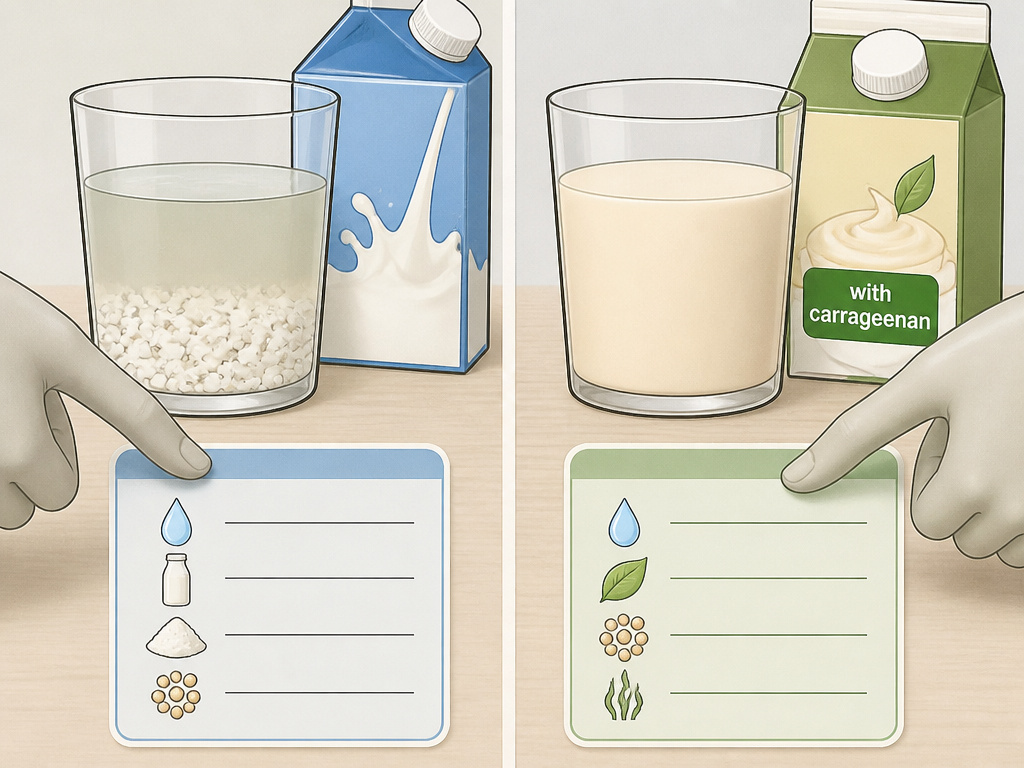
You have two basic categories sitting in the grocery aisle. Their freeze-thaw performance splits along ingredient lines.
Dairy-Based Creamers (Half-and-half, Whole Milk + Sugar)
These are the most problematic. The casein proteins in milk are sensitive to ice crystal damage. When you thaw a carton of frozen half-and-half, you’ll see a watery layer on top and a thick, clumpy sediment below. Stirring rarely fixes it. The fat has coalesced.
Non-Dairy Creamers (Oat, Soy, Almond, Coconut, “Coffee Mate” style)
These often contain hydrocolloid stabilizers like carrageenan, gellan gum, or cellulose gum. These ingredients are freeze-thaw stable. They act as a scaffold, helping the emulsion re-form after the ice melts. A Chobani creamer with carrageenan will look far more normal after thawing than a simple dairy creamer.
| Creamer Type | Freeze-Thaw Result | Best Use After Thawing |
|---|---|---|
| Dairy (Half-and-half) | Severe separation, grainy texture | Cooking, baking, not for coffee |
| Simple Non-Dairy (Oil, Sugar, Flavor) | Moderate separation, may be oily | Blended drinks, iced coffee |
| Stabilized Non-Dairy (with Carrageenan/Gum) | Minimal separation, slight texture change | Direct coffee use (stir well) |
The presence of a stabilizer is your best clue. Check the ingredient list. If you see carrageenan, xanthan gum, or gellan gum, that creamer has a fighting chance in the freezer. This principle also applies to other oil-based coffee additives which can solidify when cold.
Step-by-Step: The Ice Cube Tray Method
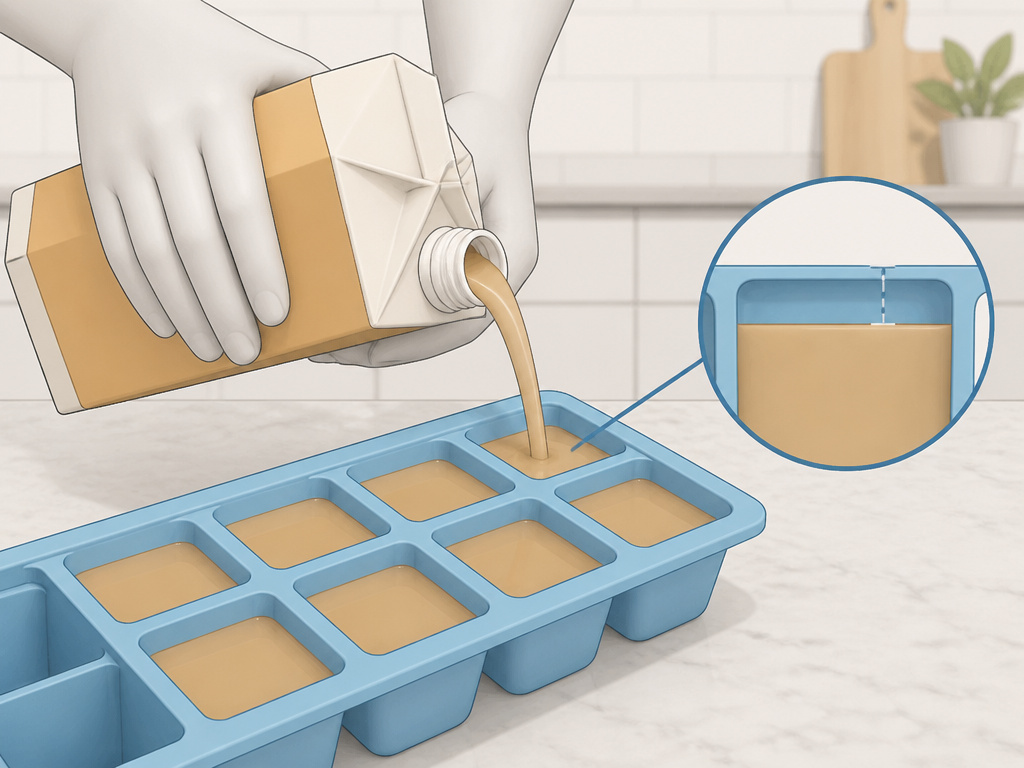
Freezing the entire bottle is a recipe for waste. You have to thaw it all at once, and you can’t refreeze what’s left. The solution is portion control before freezing.
Before you start: Work with clean equipment to prevent bacterial introduction. Use a silicone ice cube tray for easiest removal. Do not overfill, liquids expand when frozen.
Step 1: Choose your creamer.
Grab your nearly-full carton. This method is ideal for that large bottle you won’t finish before a trip. Non-dairy with stabilizers is the best candidate. If it’s a homemade creamer, like the Mason jar vanilla creamer recipe, note that its shelf life is shorter to begin with.
Step 2: Pour into trays.
Leave about a quarter-inch of headspace in each cube compartment. This allows for expansion without spillover. If you fill them to the brim, you’ll have creamer frozen to the shelf.
Step 3: Freeze solid.
Place the tray on a flat surface in the freezer. Let it freeze undisturbed for 4 to 6 hours, or until completely solid. A partially frozen cube will tear and leak when you try to pop it out.
Step 4: Transfer to storage.
Once solid, pop the cubes out. Transfer them immediately to a airtight freezer bag or container. Label it with the date and type of creamer. This prevents freezer burn and frees up your tray.
Step 5: Use directly.
Drop one or two frozen cubes directly into your hot coffee. Stir. It will melt in about a minute, chilling your coffee slightly. For iced coffee, this is perfect, it chills without diluting.
Common mistake: Thawing a whole bottle of creamer in the fridge and then refreezing what’s left. Each freeze-thaw cycle degrades the texture exponentially. The second thaw will be watery and almost certainly separated beyond use.
What to Expect: Texture and Taste Changes
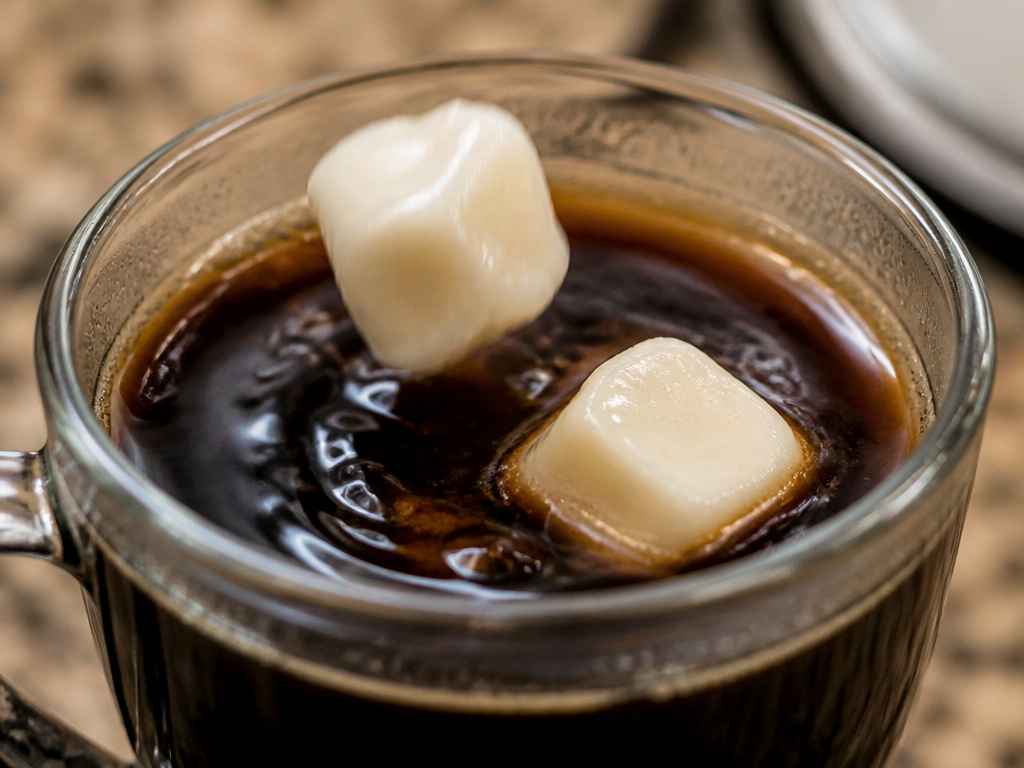
Manage your expectations. Even the best frozen creamer is not identical to fresh.
Visual Changes
You will likely see some separation. A thin, watery layer might form on a thawed cube. This is normal. Stirring it into hot coffee usually re-incorporates it adequately, especially with stabilized non-dairy versions. In your cup, it should look blended.
Mouthfeel Changes
The texture can become slightly thinner or, paradoxically, a bit slimy if certain gums are overworked by the ice crystals. The fat content still adds body, but the creamy “roundness” can diminish. This is less noticeable in a strongly flavored coffee or when used as a low-calorie coffee addition where you’re using less anyway.
Flavor Changes
The good news: flavor is largely preserved. Sweetness and vanilla notes remain intact. Freezing can mute very subtle, high-end flavor notes in artisan creamers, but for everyday use, the taste is fine. It won’t pick up off-flavors if stored properly in an airtight container.
I froze a carton of a popular oat milk creamer for a two-week vacation. The cubes looked fine. When I got back, I tossed two into my morning brew. The coffee tasted right, but the mouthfeel was just a hair thinner, a bit more like skim milk than cream. It worked, but I wouldn’t do it with my favorite luxury dairy creamer.
Safety First: How Long Does It Keep?
The freezer is a safe place. According to the USDA, frozen foods remain safe indefinitely. Quality, however, declines over time.
- For best quality: Use frozen creamer cubes within 1-2 months.
- Safe beyond that: Yes, but flavor and texture degradation becomes more pronounced.
- Freezer burn: If stored in a poor-quality bag, cubes can develop freezer burn, those white, dried-out patches. They’re safe but taste stale. Use airtight, thick plastic.
Always label your container. A “FEB 15” on a bag tells you it’s time to use it up. This practice is as important as knowing the caffeine content comparison of your brew, it’s about managing your ingredients for the best result.
When Freezing Creamer Makes Sense (And When It Doesn’t)
This isn’t a universal life hack. It solves specific problems.
Do Freeze Creamer If:
- You’re going out of town and have an almost-full carton.
- You found a great sale and want to stock up on a shelf-stable non-dairy creamer.
- You want pre-portioned creamer for iced coffee or smoothies.
- You use creamer infrequently and want to prevent spoilage.
Don’t Bother Freezing Creamer If:
- It’s a fresh dairy creamer with less than a week left on its date. Use it up or make a baked good.
- You’re a texture purist who notices every change in mouthfeel.
- You have less than a cup left, just use it over the next few days.
- The creamer is already past its printed date. Freezing doesn’t reverse spoilage that has already begun.
Think of it as a salvage operation, not a first-choice storage method. For daily use, the fridge is where your coffee flavor profiles are best supported by fresh ingredients.
Creative Uses for Thawed Creamer
If the texture isn’t perfect for your black coffee, don’t pour it out. Repurpose it.
- Baking: Use it in place of milk in muffins, pancakes, or coffee cake. The texture change is irrelevant once baked.
- Creamy Sauces: Add it to a pan sauce for pasta or a creamy soup. The heat and other ingredients will mask any graininess.
- Oatmeal or Cereal: Pour it over hot oatmeal. You won’t notice the slight separation.
- Smoothies: Toss a frozen cube directly into the blender with your fruit and yogurt. It adds creaminess and chill.
- Homemade Ice Cream: Use it as the dairy base for a small batch of ice cream. The freezing process is part of the recipe.
This approach turns a potential waste product into a functional ingredient, much like finding a new use for leftover coffee grind consistency from a failed grind setting.
Frequently Asked Questions
Can you freeze coffee creamer in its original container?
No. Liquid expands when frozen. In a sealed plastic bottle or carton, this expansion can crack the container or force the lid open, leading to leaks and freezer burn. Always transfer to a freezer-safe vessel like an ice cube tray.
Does frozen creamer taste different?
The core flavor, sweetness, vanilla, caramel, remains stable. The biggest difference is in texture (mouthfeel) and body. It may taste slightly “flatter” or less rich. Strong coffee or flavor enhancers for coffee like a pinch of salt can compensate.
How long does it take for a creamer cube to melt in coffee?
In a standard 8-ounce cup of hot coffee (around 90°C), a one-ounce cube will melt completely with steady stirring in about 60 seconds. It will cool your coffee down slightly, which can be a benefit in summer.
Can you refreeze thawed coffee creamer?
It is not recommended. Each freeze-thaw cycle further damages the emulsion. The quality degrades sharply after the first thaw. This is why the ice cube tray method is key, you only thaw what you need.
What about powdered coffee creamer?
Powdered creamer is already shelf-stable and does not need freezing. Store it in a cool, dry place. Freezing it could introduce moisture and cause clumping.
Is it safe to freeze homemade creamer?
Yes, but with caveats. A homemade creamer of half-and-half and sweetened condensed milk has a high dairy content and will separate. It also has a shorter fresh shelf life (about two weeks), so freezing soon after making it is wise. Portion it into cubes.
Before You Go
Freezing coffee creamer is a viable trick for preventing waste, but it’s a trade-off. You exchange some textural quality for extended shelf life and convenience. The method matters: skip the full bottle, reach for the ice cube tray.
Non-dairy creamers with stabilizers like carrageenan are your best bet for a result that still works well in your cup. For dairy, plan to use the thawed product in cooking, not coffee. Remember the USDA rule, safe forever, best within two months.
Keep a bag of creamer cubes in the freezer for iced coffee days or last-minute baking. It turns a potential fridge casualty into a handy, pre-portioned ingredient. Sometimes the best coffee brewing hack isn’t about the beans or the machine, but about managing what goes in it.
