
The Real Risk of Drinking Coffee With Braces: Stains & Sugar
You can drink coffee with braces, but you must manage three specific risks: staining of brackets and adhesive, sugar-fueled enamel demineralization around brackets, and acid erosion that can weaken orthodontic materials over time. The protocol changes completely if you wear clear aligners like Invisalign.
Most guides fixate on stained teeth. They miss the bigger problems. Coffee with sugar turns into a sticky film that pools around the tiny edges of your brackets. That film is a bacterial party spot, and it leads to white spot lesions, permanent marks on your enamel, within months, not years. The acid in coffee also interacts with the adhesive and the little rubber bands. A 2024 study in the Journal of Dental Research found that daily coffee exposure reduced the force exerted by elastomeric chains by roughly 15% over a four-week period. You adjust those chains every 4-6 weeks anyway, but the decay adds up.
This guide walks through the chemistry, not just the common advice. We’ll cover what your orthodontist likely didn’t explain about your morning cup.
Key Takeaways
- The primary threat isn’t yellow teeth; it’s sugar meeting acid around the brackets, which creates white spot lesions, permanent decalcification marks.
- Clear aligners like Invisalign require removal before drinking anything but water. Coffee trapped under a tray creates a concentrated acid bath against your enamel.
- A reusable straw is non-negotiable. Place it toward the back of your mouth to bypass the front brackets where staining and pooling are worst.
- Rinse with water immediately after your last sip, but wait at least 30 minutes before brushing to avoid damaging softened enamel.
- Black coffee or cold brew is significantly safer than sugary lattes or flavored drinks. Every gram of added sugar multiplies the cavity risk.
The Three Real Risks (Not Just Stains)
Coffee poses a triple threat to braces: visual staining, chemical interaction with materials, and a heightened cavity environment. Focusing only on the first one misses the point.
Staining is the most visible, but least damaging, issue. The tannins in coffee bind to the pellicle, a thin protein layer on your teeth and the orthodontic adhesive. Ceramic brackets stain less than the adhesive holding them. Once the adhesive yellows, it stays that way until your next adjustment, where the orthodontist might clean it. A 2022 NIH study on beverage staining of brackets confirmed coffee causes “significant color change” in both ceramic brackets and the adhesive, with the effect being more pronounced on the adhesive material.
Common mistake: Sipping a latte slowly over an hour, the sugar and acid have constant contact with every bracket edge, leading to demineralization marks within 3-4 months.
Demineralization is the silent, permanent damage. This is the white spot lesion. Brackets create tiny ledges and corners that trap plaque. Add sugar from a sweetened coffee, and the bacteria in that plaque produce acid as a byproduct. That acid leaches calcium and phosphate from the enamel right at the bracket’s edge. The result is a chalky white mark that remains after the braces come off. It’s not a stain you can polish away; it’s etched enamel.
Acid erosion weakens the system. Coffee’s pH typically sits between 4.5 and 5.5, which is acidic enough to soften enamel temporarily. More critically, that acidity may affect the orthodontic adhesive bond and the elastomeric chains (the little rubber bands) used for closing gaps. Another NIH study on hot drinks and elastic chains observed that “coffee immersion” contributed to force decay in these chains over time. Your orthodontist will tighten them regularly, but degraded elasticity means less consistent pressure between appointments.
TL;DR: Coffee stains brackets, but sugar + acid causes permanent white spots and can degrade rubber components. Black coffee is far less risky than a sweet, milky drink.
Your Defense Toolkit: Straw, Timing, and Rinse
You have three physical tools to manage the risks. They work together.
A straw is your first and most important filter. It’s not about sipping daintily. You need to position the straw past your front teeth, toward the back of your throat. This bypasses the incisors and canines where brackets are most visible and where liquid naturally pools. A silicone or metal reusable straw is best, bendable silicone lets you angle it correctly. Don’t just rest it on your lower lip.
| Tool | Why It Works | The Pitfall If Skipped |
|---|---|---|
| Reusable Straw (Silicone/Metal) | Directs liquid past front brackets, reduces contact with adhesive. | Coffee washes over all brackets, maximizing stain and acid exposure. |
| Timer (Phone or Watch) | Limits drinking window to under 30 minutes. | Slow sipping extends acid and sugar exposure, dramatically raising cavity risk. |
| Water Bottle | Enables immediate post-coffee rinse. | Residual sugar and acid sit against enamel and brackets, working for hours. |
Drink fast, not slow. Set a timer. Finish your coffee in 20 minutes, not two hours. Every minute that sugary, acidic liquid is in your mouth is another minute of attack on the enamel around your brackets. This is the single most overlooked factor. The goal is exposure minimization.
Rinse with water, immediately and aggressively. The second you swallow the last drop, take a mouthful of water and swish it forcefully for 30 seconds. Think of it as a flood wash. You’re physically ejecting coffee residues from around the brackets and diluting the acid. This isn’t a gentle sip. It’s a mandatory scrub with the only tool you can use right away.
Wait before brushing. This contradicts instinct. Your enamel is temporarily softened by the acid. Brushing within 30 minutes of drinking coffee can cause abrasive wear. Set a timer after you rinse. Brush properly with fluoride toothpaste once the half-hour is up. Fluoride helps remineralize those vulnerable spots.
The Clear Aligner Rule Is Different
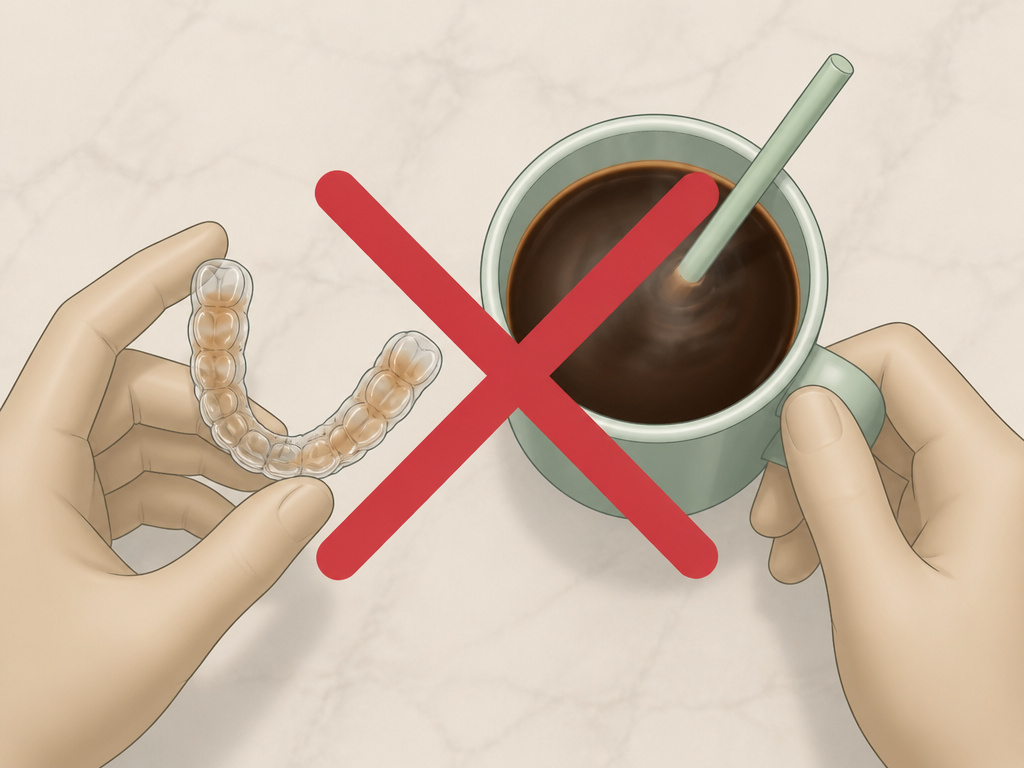
If you’re using Invisalign or another brand of clear aligners, the rules change completely. The standard “use a straw and rinse” advice fails here.
You must remove the aligners before drinking anything but water. Full stop. Coffee trapped between the plastic tray and your teeth creates a concentrated bath. The liquid has nowhere to go. It stews against your enamel, and the aligner material itself can stain and cloud. Your orthodontist will notice the discoloration, and clouded trays are more visible when you wear them.
I learned this the hard way with my first set of refinements. I drank iced coffee through a straw, aligners in, thinking I was clever. The trays developed a faint tan tint, and my dentist pointed out early demineralization spots on my lateral incisors at my next checkup. The straw didn’t matter, the liquid got underneath anyway.
The sequence matters. Take the aligners out, drink your coffee (using a straw is still wise), rinse your mouth with water, brush your teeth if possible, then put the clean aligners back in. If brushing isn’t an option, rinsing thoroughly is the absolute minimum. Putting aligners back over sugary or acidic residue is asking for trouble.
Clean aligners daily. Use the official cleaning crystals or a denture tablet in lukewarm water. Never use hot water, as it can warp the plastic. A cloudy, stained aligner is more visible and can harbor bacteria.
TL;DR: With clear aligners, take them out to drink coffee. There is no workaround. Trapped liquid causes concentrated damage and stains the trays.
What to Drink (And What to Avoid)
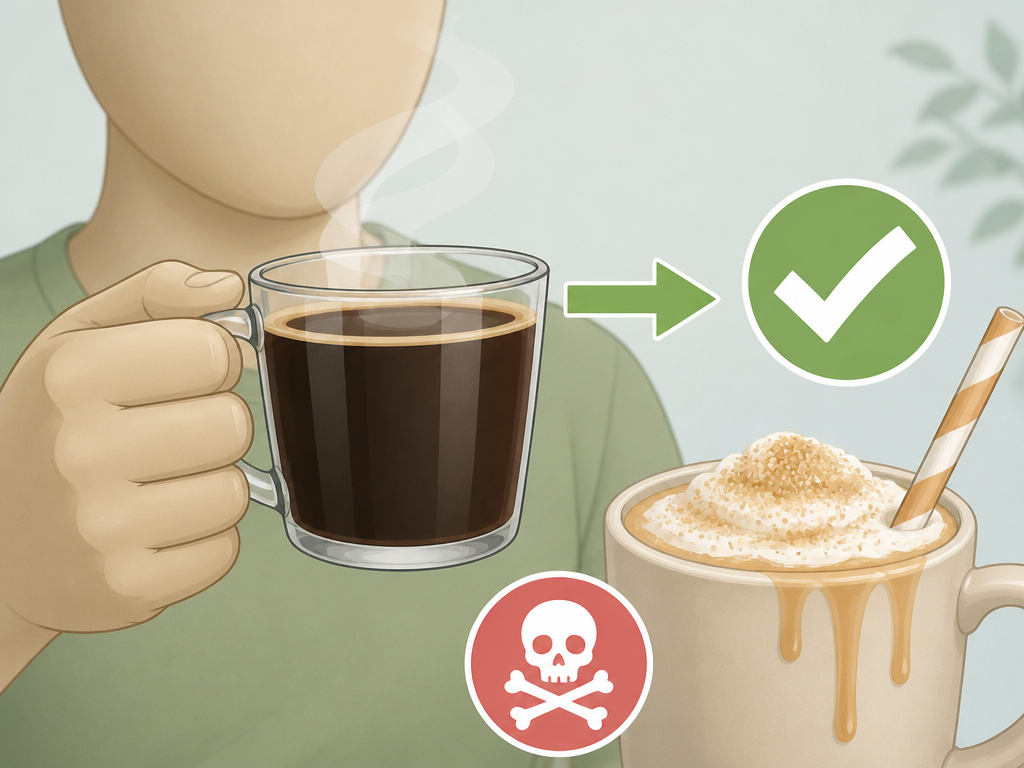
Not all coffee drinks are equal. The risk multiplier is added sugar.
Black coffee or cold brew is your safest bet. Cold brew is often less acidic than hot-brewed coffee, which is a slight advantage. Drink it black, or with a small amount of a non-sugar sweetener like stevia if you must. The goal is to eliminate the sugar that bacteria feast on. For a deeper dive on managing acidity in coffee, we have a full guide.
Americano, black tea, and green tea are lower-risk alternatives. An Americano is just espresso and hot water, no sugar default. Black tea has tannins but often less acidity than coffee. Green tea, as explored in our piece on green tea benefits, contains L-theanine which can smooth out caffeine’s effects, and it generally poses less of a staining threat. It’s a solid option for a gentler stimulant.
Avoid these drinks completely:
- Lattes, Cappuccinos, Mochas: Milk itself isn’t the enemy, but the sheer volume of milk often means more added sugar (or lactose) pooling around brackets. A cappuccino might have less milk than a latte, but the sugar risk remains if it’s sweetened.
- Flavored Syrups, Pumpkin Spice, Seasonal Lattes: These are sugar bombs with acidic flavorings. They are the worst possible combination for braces.
- Frappuccinos & Blended Drinks: They are essentially milkshakes with coffee. The sugar content is extraordinarily high, and their thick consistency clings to every bracket.
- Iced Coffee Pre-Mixed with Sugar: Many bottled or cafe iced coffees are pre-sweetened. Always check or assume they are until proven otherwise. For a comparison of cold coffee drinks, see our breakdown.
If you must have a milky drink, make it an occasional treat, drink it quickly with a straw, and rinse immediately. Do not make it a daily habit.
The 5-Step Protocol for a Safe Cup
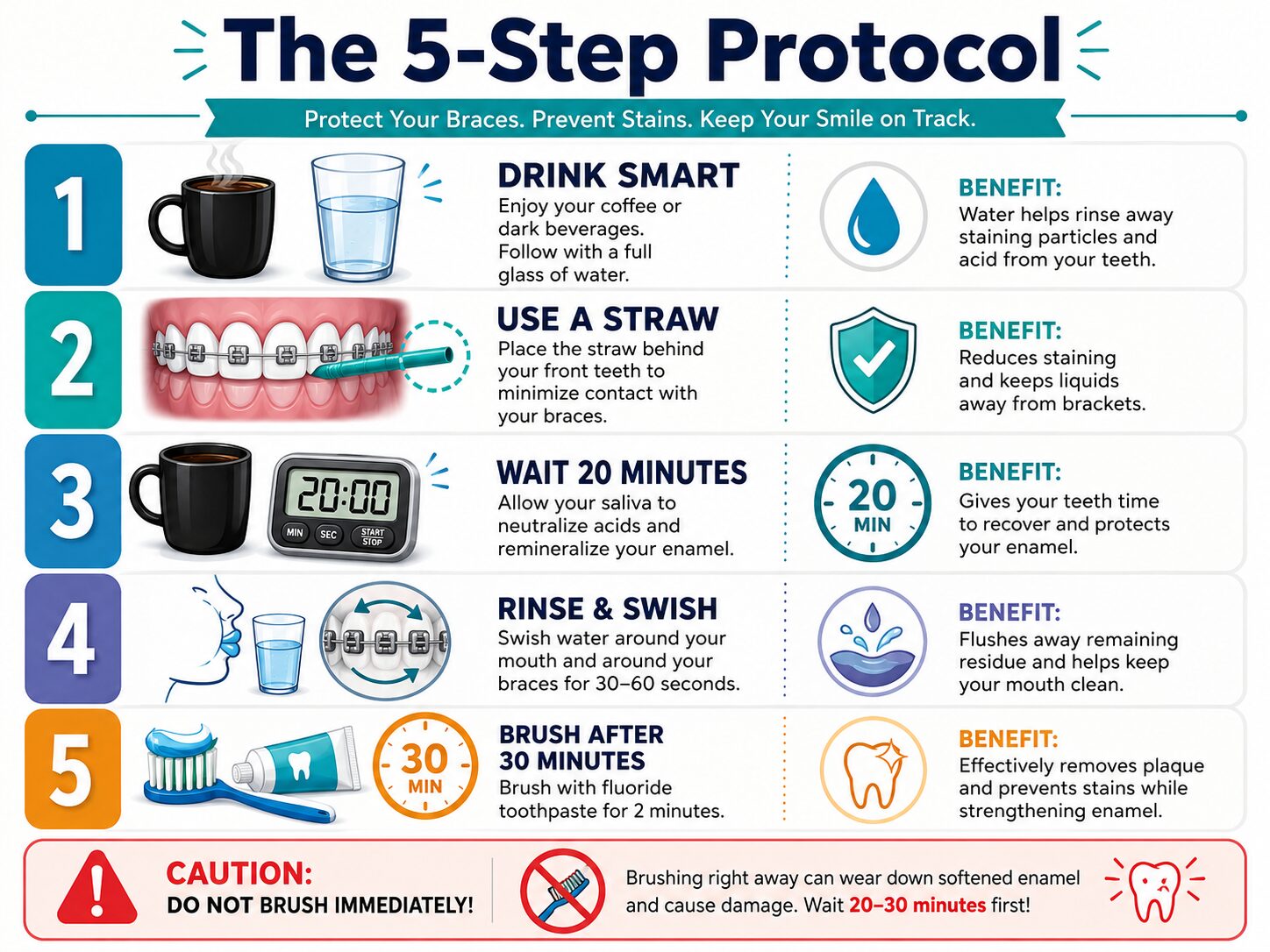
This is your non-negotiable routine. Skip a step, and you accept higher risk.
- Prepare your coffee. Brew it black. If you use sugar or syrup, measure it and use half what you normally would. Better yet, switch to a non-caloric sweetener. Have a full glass of water and your straw ready.
- Position the straw. Place a reusable silicone or metal straw toward the back of your mouth, aiming the liquid past your teeth toward your throat. Do not let it splash against your front teeth.
- Set a timer and drink. Give yourself 20 minutes. Drink the coffee within that window. Do not nurse it for an hour.
- Rinse aggressively. Immediately after your last sip, take a large mouthful of water. Swish it forcefully through your teeth for a full 30 seconds. Spit. Repeat once if you had a sweetened drink.
- Wait, then brush. Set another timer for 30 minutes. Then, brush your teeth thoroughly with fluoride toothpaste, paying extra attention to the areas around each bracket. Floss carefully.
Common mistake: Brushing immediately after drinking coffee, the abrasive toothpaste scrubs acid-softened enamel, leading to increased sensitivity and wear over time.
What happens if you skip the rinse? The sugar and acid residue sit in the nooks around your brackets. Saliva alone won’t clear it effectively. Within a few months, you may see the beginnings of white, chalky spots at the gumline next to the brackets. These are permanent.
Frequently Asked Questions
Does coffee loosen braces?
No, the adhesive bonding the brackets to your teeth is not directly dissolved by coffee. However, the acid can contribute to a marginally weaker environment over many months. The greater risk is to the elastomeric chains and the health of the enamel around the brackets, which if compromised, can affect treatment stability.
Can I drink iced coffee with braces?
Yes, but the same rules apply: use a straw, avoid added sugar, and rinse immediately. Iced coffee is often pre-sweetened, so ordering it black is crucial. Cold brew is a better choice as it’s typically less acidic.
How long after braces can I drink coffee normally?
Wait until after your orthodontist removes the brackets and cleans off the residual adhesive. Your enamel will also need a professional polish to remove surface stains. This usually happens at the same appointment. Once the brackets are off and your teeth are polished, you can return to your normal routine, though maintaining good oral hygiene after coffee is always wise.
What about decaf coffee?
Decaf poses the same staining and acidity risks as regular coffee. The primary difference is the caffeine content. If you’re managing caffeine intake for other reasons, decaf is a fine alternative, but you must still follow the straw-rinse-brush protocol.
Will my braces turn yellow?
The brackets themselves, especially ceramic ones, resist staining fairly well. The adhesive around them, however, will stain a yellowish-tan over time. This is usually cleaned off during adjustments. The bigger concern is your teeth underneath developing permanent white spots from decalcification, which is far more serious than a temporary adhesive stain.
The Bottom Line
You don’t have to quit coffee because you have braces. You do have to change how you drink it. The real enemy is the combination of sugar and acid sitting against the hardware. Black coffee, a straw, a 20-minute timer, and an aggressive water rinse will let you keep your ritual without sabotaging your smile. If you wear clear aligners, the rule is simpler: take them out. Every time. The few seconds of inconvenience beat months of corrective treatments for white spot lesions later. Your future self, looking at a braces-free smile without permanent marks, will thank you for the discipline.
{
“@context”: “https://schema.org”,
“@type”: “HowTo”,
“name”: “How to Drink Coffee Safely While Wearing Braces”,
“totalTime”: “PT5M”,
“tool”: [
{
“@type”: “HowToTool”,
“name”: “Reusable silicone or metal straw”
},
{
“@type”: “HowToTool”,
“name”: “Water bottle for rinsing”
},
{
“@type”: “HowToTool”,
“name”: “Fluoride toothpaste”
}
],
“step”: [
{
“@type”: “HowToStep”,
“name”: “Choose your drink carefully”,
“text”: “Opt for black coffee or cold brew with minimal added sugar. Sweeteners and flavored syrups dramatically increase cavity risk around brackets.”
},
{
“@type”: “HowToStep”,
“name”: “Use a straw positioned correctly”,
“text”: “Place the straw toward the back of your mouth, behind your teeth. This bypasses the front brackets and most adhesive surfaces.”
},
{
“@type”: “HowToStep”,
“name”: “Drink it quickly, don’t sip slowly”,
“text”: “Finish your coffee within 20-30 minutes. Prolonged exposure gives sugar and acid more time to work on the enamel and adhesive.”
},
{
“@type”: “HowToStep”,
“name”: “Rinse immediately with water”,
“text”: “Swish water vigorously in your mouth for 30 seconds after your last sip. This physically removes coffee residue and neutralizes acid.”
},
{
“@type”: “HowToStep”,
“name”: “Wait before brushing”,
“text”: “Wait at least 30 minutes after drinking coffee before brushing. Brushing softened enamel can cause micro-scratches and increase sensitivity.”
}
]
}
{
“@context”: “https://schema.org”,
“@type”: “FAQPage”,
“mainEntity”: [
{
“@type”: “Question”,
“name”: “Does coffee loosen braces?”,
“acceptedAnswer”: {
“@type”: “Answer”,
“text”: “No, the adhesive bonding the brackets to your teeth is not directly dissolved by coffee. However, the acid can contribute to a marginally weaker environment over many months. The greater risk is to the elastomeric chains and the health of the enamel around the brackets, which if compromised, can affect treatment stability.”
}
},
{
“@type”: “Question”,
“name”: “Can I drink iced coffee with braces?”,
“acceptedAnswer”: {
“@type”: “Answer”,
“text”: “Yes, but the same rules apply: use a straw, avoid added sugar, and rinse immediately. Iced coffee is often pre-sweetened, so ordering it black is crucial. Cold brew is a better choice as it’s typically less acidic.”
}
},
{
“@type”: “Question”,
“name”: “How long after braces can I drink coffee normally?”,
“acceptedAnswer”: {
“@type”: “Answer”,
“text”: “Wait until after your orthodontist removes the brackets and cleans off the residual adhesive. Your enamel will also need a professional polish to remove surface stains. This usually happens at the same appointment. Once the brackets are off and your teeth are polished, you can return to your normal routine, though maintaining good oral hygiene after coffee is always wise.”
}
},
{
“@type”: “Question”,
“name”: “What about decaf coffee?”,
“acceptedAnswer”: {
“@type”: “Answer”,
“text”: “Decaf poses the same staining and acidity risks as regular coffee. The primary difference is the caffeine content. If you’re managing caffeine intake for other reasons, decaf is a fine alternative, but you must still follow the straw-rinse-brush protocol.”
}
},
{
“@type”: “Question”,
“name”: “Will my braces turn yellow?”,
“acceptedAnswer”: {
“@type”: “Answer”,
“text”: “The brackets themselves, especially ceramic ones, resist staining fairly well. The adhesive around them, however, will stain a yellowish-tan over time. This is usually cleaned off during adjustments. The bigger concern is your teeth underneath developing permanent white spots from decalcification, which is far more serious than a temporary adhesive stain.”
}
}
]
}
