
Drinking Coffee While Nursing: Safe Limits and Best Timing
You can drink coffee while nursing by keeping your daily caffeine intake under 300 milligrams, which is about two to three cups of brewed coffee. The key is timing, drink it right after a feeding so the caffeine peak in your milk happens before the next session. Watch your baby for signs of fussiness or sleep disruption, especially if they are premature or under three months old.
Most advice stops at “moderation is okay.” That leaves you guessing about the actual cup count, the clock on the wall, and what to look for in your baby beyond generic “fussiness.” The problem isn’t the coffee itself, it’s not knowing the specific numbers and rhythms that turn a maybe into a confident yes.
This guide gives you those numbers. We’ll cover the exact safe limits from health authorities, the science of when caffeine actually enters your milk, and the real-world signs that tell you if your baby is sensitive. You’ll get a practical schedule to follow and learn when the standard rules don’t apply.
Key Takeaways
- The absolute safe ceiling is 300 mg of caffeine daily, but starting at 200 mg is wiser for newborns.
- Caffeine concentration in breast milk peaks 1 to 2 hours after you drink it. Drink right after a feed to miss the peak.
- A newborn metabolizes caffeine 3 to 4 times slower than you do. What’s a short buzz for you is a long alert for them.
- Watch for clenched fists, arched back, and frantic crying, not just general fussiness, as signs of caffeine sensitivity.
- Premature infants and babies with jaundice clear caffeine even slower. For them, halve the standard limit or skip coffee entirely.
Caffeine passes into human milk, with peak levels occurring 1-2 hours post-consumption. The estimated relative infant dose is typically less than 1% of the maternal dose. Maternal genetics influencing the CYP1A2 enzyme can affect transfer rates.
How Much Caffeine Is Safe While Nursing?
The consensus number is 300 milligrams. That’s the daily limit repeated by the CDC and major health organizations. It comes from the relative infant dose (RID) calculation, the amount of caffeine that actually reaches your baby through your milk is usually less than 1% of what you consume. At 300 mg, that’s a very small, generally safe exposure for a healthy, full-term infant.
But 300 mg is a ceiling, not a starting line.
One standard 8-ounce cup of home-brewed coffee contains about 95 mg of caffeine. A grande (16 oz) from a chain like Starbucks can deliver 310 mg alone, blowing your budget in one drink. You have to count milligrams, not cups.
| Beverage (8 oz serving) | Typical Caffeine Range (mg) | Notes |
|---|---|---|
| Brewed Coffee | 95–165 | Depends heavily on roast and brew method. Light roasts often have more. |
| Black Tea | 25–48 | Steeping time dramatically affects levels. 1 minute vs 5 minutes can double it. |
| Green Tea | 25–35 | Generally lower than black tea. |
| Decaf Coffee | 2–5 | Not completely caffeine-free. |
| Cola | 24–46 | Check the label; diet versions often have similar caffeine. |
TL;DR: Stick to 200-300 mg of total caffeine daily. Track your drinks, a single large coffee can exceed the limit.
When Does Caffeine Actually Reach Your Baby?
The timing matters more than most people think. Caffeine doesn’t instantly flood your milk. It takes time to absorb, circulate, and transfer.
The pharmacokinetics are clear: caffeine concentration in breast milk hits its highest point 1 to 2 hours after you finish your drink. Levels then gradually decline over the next several hours. This delay is your best tool for management.
If you nurse, then immediately have your coffee, the caffeine will be rising in your system during the next 2-3 hour gap until the next feeding. By the time you feed again, the concentration in your milk is already past its peak and on the way down. You’ve effectively given your baby a lower dose.
Common mistake: Drinking coffee while nursing, the infant gets the dose during the feeding and then receives the rising concentration in milk for the next hour, resulting in a double exposure that often leads to prolonged fussiness.
The half-life, the time it takes for the concentration to drop by half, is the other critical number. In a healthy adult, caffeine’s half-life is about 2.5 to 4.5 hours. In a newborn, it’s 2.6 to 10.4 hours. By 3-5 months, it shortens to 1.4 to 4.9 hours. That’s why a 3-month-old might handle a small amount fine, while the same amount leaves a 3-week-old alert and irritable for an entire day.
The Timing Strategy That Works
Use the clock, not guesswork. This turns the pharmacokinetics into a practical plan.
- Feed first. Complete a breastfeeding session.
- Drink your coffee immediately after. This starts the 1-2 hour clock to peak concentration when your baby isn’t feeding.
- Aim for a 2-3 hour gap before the next feed. This allows the caffeine level in your milk to move past its peak and begin declining.
- Keep a log for the first two weeks. Note the time of your coffee, the time of feeds, and any changes in your baby’s behavior over the next 6-8 hours.
This method minimizes the dose per feeding. It’s more effective than just cutting back to one cup, because that one cup timed poorly can still cause issues.
If your baby is on a predictable schedule, this is straightforward. If you’re feeding on demand, it requires a bit more attention, drink your coffee after you notice a good, full feed, not a quick snack.
What if you need coffee in the morning but your baby feeds then? This is the real-life wrinkle. In that case, the goal is to extend the gap as much as possible. Have your coffee right after the first morning feed, even if you suspect another feed is coming soon. The difference between a 1-hour gap and a 90-minute gap can be meaningful in peak concentration.
What To Watch For In Your Baby
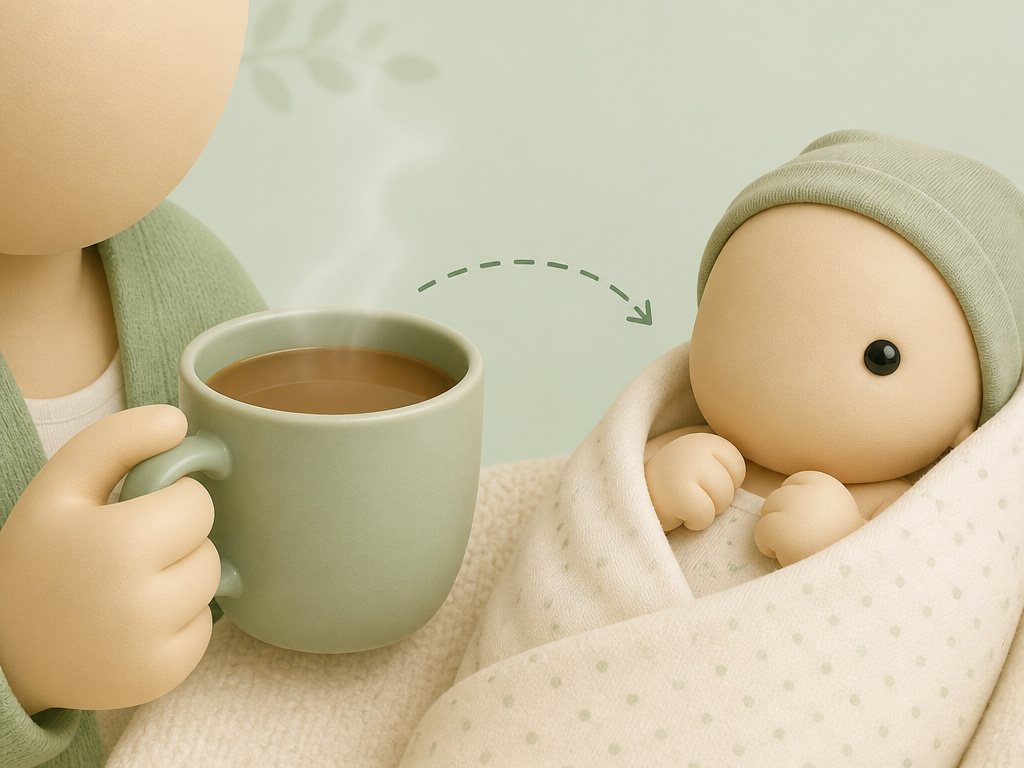
“Fussiness” is too vague. You need to know the specific signs of caffeine sensitivity in an infant so you don’t mistake normal baby behavior for a reaction.
Caffeine is a stimulant. In a baby, the effects aren’t about “energy”, they’re about an underdeveloped nervous system becoming over-alert and unable to settle. Look for these patterns:
- Difficulty falling asleep after a feed. Not just taking 20 minutes, but being wide-eyed and active for an hour or more when they normally drift off.
- Jitteriness or tremors. Small, quick movements in the arms or legs when they’re at rest.
- A distinctive, frantic cry. Different from their hungry or tired cry, it can sound more high-pitched and tense.
- Clenched fists and arched back. Signs of general discomfort and tension, often accompanied by the frantic crying.
- Unusually alert during typical sleep windows. Just staring intently, not drowsing.
These signs typically appear within 1-2 hours after a feeding where they ingested milk with higher caffeine content, and can persist for many hours due to their slow metabolism.
Common mistake: Assuming a reaction means quitting coffee entirely, first try adjusting the timing or reducing the dose by half. Often, moving your coffee by 30 minutes or switching from coffee to a caffeine content in tea option solves the problem.
If you see these signs, your first move isn’t necessarily to eliminate caffeine. Step one is to check your timing. Step two is to cut your dose in half. Step three is to consider a lower-caffeine source, like the black tea caffeine levels found in a properly steeped cup. Only if those steps fail should you consider cutting it out completely, and even then, the health benefits of tea might offer a suitable alternative without going to zero.
When The Standard Advice Doesn’t Apply

The 300 mg guideline assumes a healthy, full-term infant with no complicating conditions. Several specific situations change the math drastically.
Premature Infants: A preemie’s liver is profoundly underdeveloped. Their caffeine clearance is extremely slow, leading to easy accumulation. For preterm babies, many pediatricians recommend mothers avoid caffeine entirely for the first few months. The risk of apnea and other complications isn’t worth the coffee.
Neonatal Jaundice: Jaundice indicates the liver is already stressed and struggling to process bilirubin. Throwing caffeine into the mix can further impair function. If your baby is under phototherapy or has significant jaundice, treat caffeine like you would for a preemie, avoid it.
Maternal Genetics (CYP1A2): This is the hidden variable. The enzyme cytochrome P450 1A2 is responsible for metabolizing caffeine in your body. Some people are “slow metabolizers” due to genetic variations. If you are one, caffeine stays in your system longer and at higher concentrations, which means more transfers into your milk. If you’ve always felt like one cup of coffee affects you strongly for hours, you might be a slow metabolizer. In that case, the standard limit is too high for you. The research in the human milk caffeine content study highlights this genetic factor.
Baby’s Age: This is the most common variable. The half-life data tells the story. A newborn may struggle with a single cup, while a 5-month-old might handle two with no visible effect. Let your baby’s age guide your starting point. Start at 200 mg or less for the first 3 months, then reassess.
Managing Intake Beyond Coffee

Caffeine is in more than just your mug. To stay under your daily limit, you need to account for all sources.
- Tea: Black tea has less caffeine than coffee, but it’s not negligible. Green tea has less still. Herbal teas are generally safe, but always check the label, some “energy” or “detox” blends contain guarana or other stimulants.
- Soda: A can of cola has about 35 mg. Diet versions are similar.
- Chocolate: Dark chocolate has more caffeine than milk chocolate. An ounce of dark (70%) can have 20 mg.
- Over-the-Counter Medications: Some headache, migraine, and “stay awake” pills contain significant caffeine. Read the active ingredients list.
- Energy Drinks: These are a minefield. They often contain extremely high, unlabeled caffeine amounts along with other stimulants like taurine and guarana. The energy drink risks are higher, and they are not recommended while nursing.
If you’re trying to cut back, don’t just pour half a cup. Switch the beverage. Moving from coffee to black tea can cut your per-serving caffeine by two-thirds. Exploring low-acid beverage options can also help if reflux is a concern for you or your baby. For a comforting hot drink without the stimulant, consider the hot chocolate caffeine levels in a prepared mix.
Frequently Asked Questions
Can one cup of coffee really affect my baby?
Yes, especially if your baby is under 3 months old or if you drink it during a feeding. The dose is small, but a newborn’s slow metabolism can amplify the effects. Timing it after a feed reduces the risk significantly.
How long should I wait to breastfeed after drinking coffee?
The ideal is to wait 2-3 hours after drinking to breastfeed again, as this avoids the peak concentration period. If that’s not possible, feeding right before you drink is the next best strategy.
Is decaf coffee completely safe?
Decaf coffee is not 100% caffeine-free. It contains 2-5 mg per cup, which is trivial and considered safe. The switch to decaf is a very effective way to keep the ritual without the stimulant.
My baby is fussy. How do I know if it’s the coffee?
Look for the cluster of signs: jitteriness, a tense frantic cry, and unusual alertness during sleep windows, particularly 1-2 hours after a feed. Try eliminating caffeine for 3-5 days. If the fussiness pattern clearly improves, then returns when you reintroduce it, you have your answer. For more on balancing intake, see our guide on managing caffeine intake.
Are there any long-term effects on my baby from drinking coffee while nursing?
According to major reviews like the NIH caffeine lactation entry, there is no evidence that moderate caffeine consumption during breastfeeding causes long-term harm to infants. Studies have not linked it to developmental issues.
Where can I get the most reliable information on drugs and breastfeeding?
The LactMed drug safety database from the National Library of Medicine is the gold-standard, evidence-based resource for healthcare providers and mothers. For a patient-focused summary, the MotherToBaby caffeine fact sheet is excellent.
Before You Go
You don’t have to give up coffee. You just need to be smarter about it than you were before. The safe zone is defined by a number, 300 milligrams, and a rhythm, feed first, coffee after.
Start lower if your baby is new. Watch for the real signs, not just general fuss. Use the clock to your advantage. And know when the rules change, like with a preemie or if you’ve always been caffeine-sensitive yourself.
The goal is to enjoy that cup without the second-guessing. With the right timing and a little observation, you can have both the coffee and the calm.
{
“@context”: “https://schema.org”,
“@type”: “HowTo”,
“name”: “How to Safely Drink Coffee While Nursing”,
“totalTime”: “PT2M”,
“step”: [
{
“@type”: “HowToStep”,
“name”: “Know your daily limit”,
“text”: “Limit total caffeine intake to 200-300 milligrams per day. This is roughly two to three 8-ounce cups of standard brewed coffee.”
},
{
“@type”: “HowToStep”,
“name”: “Time your coffee after a feeding”,
“text”: “Drink your coffee immediately after a breastfeeding session. Caffeine concentration in breast milk peaks 1 to 2 hours later.”
},
{
“@type”: “HowToStep”,
“name”: “Observe your baby’s reaction”,
“text”: “Watch for signs of fussiness, jitteriness, or unusual wakefulness in your infant over the next 6-8 hours, especially if they are under 3 months old.”
},
{
“@type”: “HowToStep”,
“name”: “Adjust based on observation”,
“text”: “If you see negative effects, reduce your intake or shift your timing. Consider switching to a lower-caffeine option like black tea.”
}
]
}
{
“@context”: “https://schema.org”,
“@type”: “FAQPage”,
“mainEntity”: [
{
“@type”: “Question”,
“name”: “Can one cup of coffee really affect my baby?”,
“acceptedAnswer”: {
“@type”: “Answer”,
“text”: “Yes, especially if your baby is under 3 months old or if you drink it during a feeding. The dose is small, but a newborn’s slow metabolism can amplify the effects. Timing it after a feed reduces the risk significantly.”
}
},
{
“@type”: “Question”,
“name”: “How long should I wait to breastfeed after drinking coffee?”,
“acceptedAnswer”: {
“@type”: “Answer”,
“text”: “The ideal is to wait 2-3 hours after drinking to breastfeed again, as this avoids the peak concentration period. If that’s not possible, feeding right before you drink is the next best strategy.”
}
},
{
“@type”: “Question”,
“name”: “Is decaf coffee completely safe?”,
“acceptedAnswer”: {
“@type”: “Answer”,
“text”: “Decaf coffee is not 100% caffeine-free. It contains 2-5 mg per cup, which is trivial and considered safe. The switch to decaf is a very effective way to keep the ritual without the stimulant.”
}
},
{
“@type”: “Question”,
“name”: “My baby is fussy. How do I know if it’s the coffee?”,
“acceptedAnswer”: {
“@type”: “Answer”,
“text”: “Look for the cluster of signs: jitteriness, a tense frantic cry, and unusual alertness during sleep windows, particularly 1-2 hours after a feed. Try eliminating caffeine for 3-5 days. If the fussiness pattern clearly improves, then returns when you reintroduce it, you have your answer. For more on balancing intake, see our guide on managing caffeine intake.”
}
},
{
“@type”: “Question”,
“name”: “Are there any long-term effects on my baby from drinking coffee while nursing?”,
“acceptedAnswer”: {
“@type”: “Answer”,
“text”: “According to major reviews like the NIH caffeine lactation entry, there is no evidence that moderate caffeine consumption during breastfeeding causes long-term harm to infants. Studies have not linked it to developmental issues.”
}
},
{
“@type”: “Question”,
“name”: “Where can I get the most reliable information on drugs and breastfeeding?”,
“acceptedAnswer”: {
“@type”: “Answer”,
“text”: “The LactMed drug safety database from the National Library of Medicine is the gold-standard, evidence-based resource for healthcare providers and mothers. For a patient-focused summary, the MotherToBaby caffeine fact sheet is excellent.”
}
}
]
}
