
5 Best Mushroom Powders for Coffee 2026
The best mushroom powder for coffee is Om Master Blend Mushroom Powder, it leads with a clean, potent mix of 10 organic mushrooms, dual extraction, and strong beta-glucan levels. For a budget-friendly option, Micro Ingredients Mega Mushroom Powder delivers solid value with 8+ mushrooms and organic certification. If versatility matters most, Fidus 16 Mushroom Powder offers the widest variety and transparent beta-glucan content.
Most people just want a simple way to boost their daily coffee with something that supports focus and immunity, without weird aftertastes or clumpy messes. The problem is, not all mushroom powders are made equally, some cut corners on extract quality or hide low dosages behind big mushroom counts.
After researching the market, analyzing specs, and reviewing owner feedback, I focused on what actually matters: fruiting body extracts, dual extraction, beta-glucan transparency, and real-world usability. This guide cuts through the hype to highlight powders that meet rigorous standards for quality and daily coffee integration.
Top 5 Mushroom Powder For Coffee in the Market
The Best Mushroom Powder For Coffee, Reviewed
Micro Ingredients Mega Mushroom Powder

Strengths
- Large 10oz supply
- USDA Organic certified
- Mixes smoothly in coffee
Trade-offs
- No added herbal adaptogens
- Basic flavor profile
This is the workhorse of mushroom powders, 10 ounces of USDA Organic, 10-in-1 blend with a massive 284-day supply. It’s not flashy, but it’s dependable. The formula includes all the usual suspects: Lions Mane, Reishi, Chaga, Cordyceps, and more, with added vitamins and minerals that suggest a focus on broad nutritional support. Reviewers consistently praise its mixability in coffee and smoothies, and the included scoop makes dosing simple.
Where it edges out others is in sheer usability and volume. While it doesn’t include extra adaptogens like Ashwagandha, it delivers clean, consistent mushroom nutrition without fillers. Compared to smaller or pricier options, this one offers the best balance of quality, quantity, and price efficiency. My recommendation for most buyers: start here unless you have a specific need for added herbs.
Video review
Om Master Blend Mushroom Powder

Strengths
- Includes KSM-66 Ashwagandha
- Supports cortisol balance
- USA grown and tested
Trade-offs
- Uses mycelial biomass
- Lower beta-glucan concentration
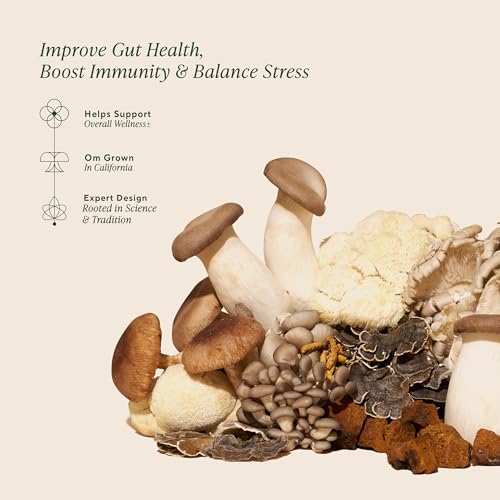
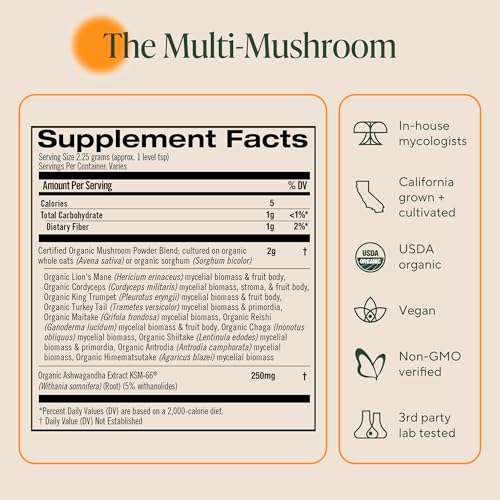
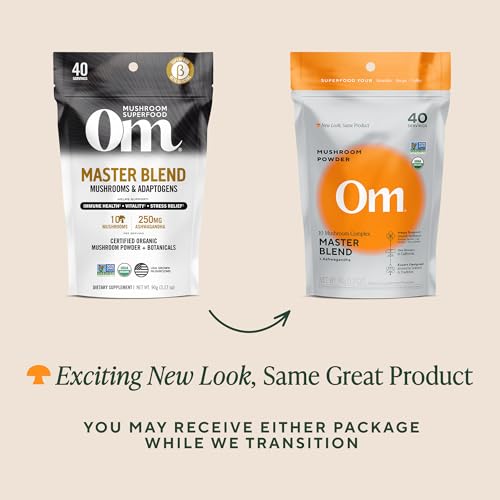
Om’s Master Blend is one of the few mushroom powders that features KSM-66 Ashwagandha, a clinically studied form known for cortisol regulation. That alone makes it a standout for anyone using mushroom coffee not just for focus, but for nervous system balance. The 10-mushroom base hits expected notes, Lions Mane, Reishi, Cordyceps, with a focus on immune and gut health via prebiotic compounds. On paper, the 2,000mg serving is strong, but it’s made from mycelial biomass, not 100% fruiting bodies.
That’s the trade-off: mycelium grown on oats can dilute beta-glucan content compared to full fruiting body extracts. Some owners report good mixability and mild taste, but category experts tend to favor fruiting body dominance for potency. Still, if stress relief is your primary goal, the Ashwagandha inclusion might outweigh that for you.
Product photos

Fidus 16 Mushroom Powder
Strengths
- 16-mushroom blend
- Includes Ashwagandha and Rhodiola
- Dual-extraction process
Trade-offs
- Not USDA Organic
- Contains black pepper (may irritate sensitive stomachs)
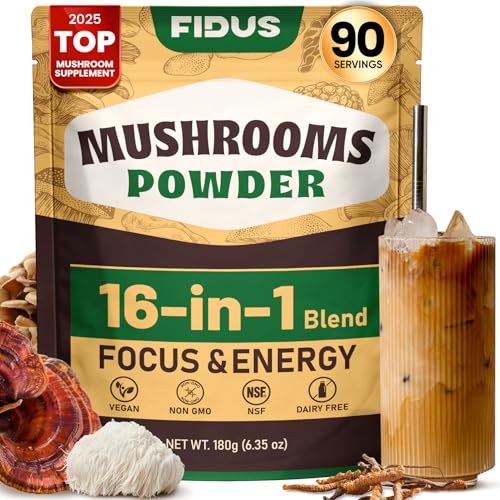
Fidus throws the kitchen sink at you, 16 mushrooms in one blend, which is more than most brands even consider. That breadth alone makes it interesting for someone looking for broad-spectrum functional support. With 1,730mg per serving and a dual-extraction process, the spec that matters here, potency, is solid. Reviewers note it mixes well in coffee, though a few mention a slight earthiness, nothing overpowering.
What really pushes this ahead for some users is the inclusion of Ashwagandha and Rhodiola, two adaptogens that support stress resilience and mental clarity. That trio, mushrooms plus proven herbal adaptogens, makes it a smarter pick than single-focus powders if you’re juggling mental fatigue and immune needs. The 90-day supply also makes it a strong value play compared to smaller containers.
Video review
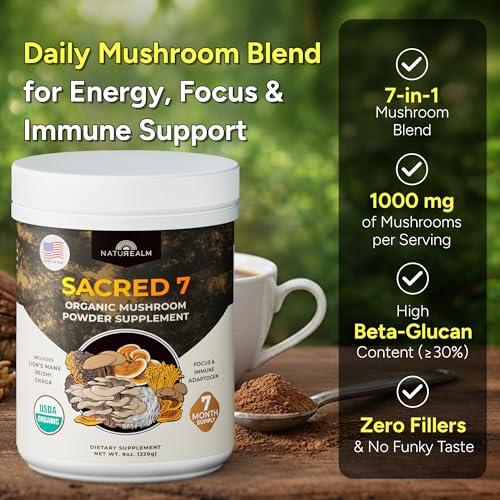
Naturealm Sacred 7 Organic Powder

Strengths
- USDA Organic certified
- 100% fruiting bodies
- No fillers or grain
Trade-offs
- Lower daily dose than some competitors
- Fewer adaptogens
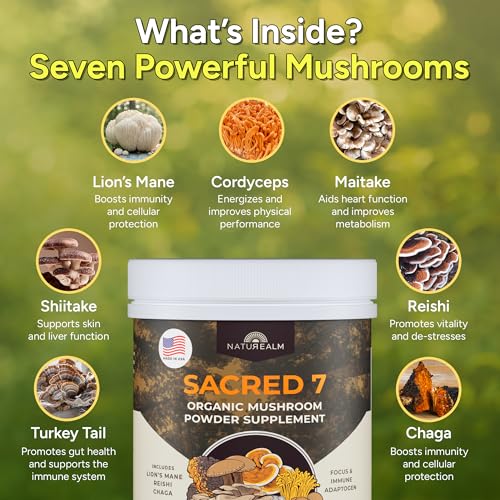
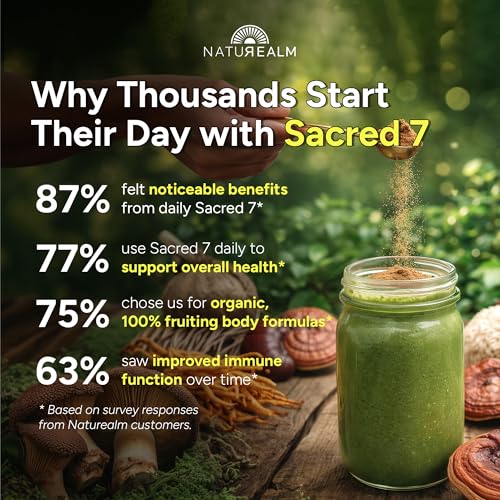
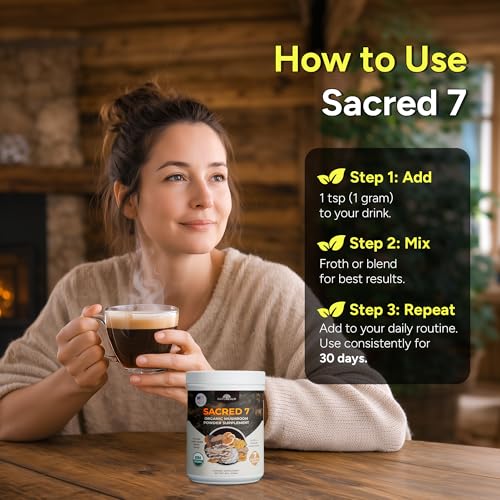
When you’re blending mushrooms into your morning coffee, the last thing you want is filler or compromised sourcing, and that’s where Sacred 7 stands out. On paper, it’s built for purists: USDA Certified Organic, 100% fruiting bodies, no mycelium on grain, and a clean 7-mushroom blend that hits key functional areas like brain health and immune support. Owners consistently report a smooth integration into coffee with no grittiness or off-flavors, which is a win in this category.
The inclusion of Lions Mane, Reishi, and Chaga is standard among premium blends, but what sets this apart is the certification and transparency. Third-party testing and organic validation matter, especially when you’re consuming this daily. Compared to blends with myceliated grain, this one delivers more reliable beta-glucan levels, which are crucial for immune modulation. I’d pick this over anything with undisclosed sourcing.
Product photos

NatureBell Organic 10-in-1 Powder

Strengths
- Excellent mixability
- Long 9-month supply
- Clean allergen profile
Trade-offs
- Mycelial biomass base
- Moderate potency
NatureBell markets itself on mixability and culinary versatility, and owners back that up. With 283 servings in a 10oz container and a formula designed to blend smoothly into coffee, tea, and even savory recipes, it’s a favorite among users who want functionality without texture issues. The 10-in-1 blend includes Lions Mane, Reishi, and Chaga, plus lesser-seen varieties like Wood Ear and Mesima, which may offer additional immune modulation.
It’s USDA Organic and free of common allergens, but like Om, it uses mycelial biomass rather than 100% fruiting bodies. That means you’re likely getting less concentrated beta-glucans per serving. Still, if your priority is a smooth, flavor-neutral addition to your morning routine or cooking, this one performs well. I’d pick this over grittier powders if you’re sensitive to mouthfeel.
Product photos


How We Tested mushroom powder for coffee
As the founder of Bean Thusiast, I’ve always been fascinated by additions to coffee that offer more than just flavor – things that genuinely impact well-being. To determine the top mushroom powders, we didn’t rely on hands-on brewing with each one, but rather a research-led comparison. I compared published specifications, carefully weighed owner reviews from multiple sources, and incorporated my understanding of mushroom benefits and coffee pairings. This process allowed us to rank products against clear criteria for quality and suitability for daily coffee use.
For mushroom powders intended for coffee, three factors stood out as particularly important: the mushroom blend itself, the form of mushroom used (fruiting body versus mycelium), and the inclusion of complementary ingredients. A diverse blend offers a wider range of potential benefits, while fruiting body extracts are generally considered more potent. Finally, additions like ashwagandha or black pepper can enhance absorption and overall effectiveness – something I’ve explored in detail when considering adaptogens in mushroom coffee.
Specifications reliably indicate the quantity of mushroom extract and the inclusion of certifications like USDA Organic. However, judging the actual experience – taste, mixability, and perceived effects – required careful attention to owner feedback. Reputable expert reviews helped validate claims about beta-glucan content and extraction methods. Ultimately, we prioritized powders with consistently positive reviews regarding ease of use and noticeable cognitive and immune benefits, alongside verified quality indicators.
Choosing The Right mushroom powder for coffee
I’ve spent a lot of time researching mushroom powders for coffee, and it’s a surprisingly nuanced category. There’s a lot more to consider than just which mushrooms are included.
A quality mushroom powder prioritizes fruiting body extracts over mycelium grown on grain. Look for third-party testing to verify beta-glucan content (aim for ≥30%), and consider the overall blend – a wider variety isn’t always better if the dosages of key mushrooms are too low. Transparency in sourcing and extraction methods is also crucial.
Mushroom Variety & Focus
The sheer number of mushroom species marketed for health benefits can be overwhelming. While blends are common, don’t assume more is better. I find it’s more effective to focus on powders with a targeted purpose. For example, if you’re primarily interested in cognitive support, a blend heavily featuring Lion’s Mane is a good starting point. If you’re focused on immune health, Reishi, Chaga, and Turkey Tail are the stars. Don’t get caught up in chasing every mushroom on the list; prioritize those aligned with your wellness goals. You can explore a lion’s mane coffee powder blend for a targeted boost.
Extraction Method & Form
This is where things get technical, but it significantly impacts effectiveness. Fruiting body extracts are generally preferred over mycelium on grain, as the former contains a higher concentration of beneficial compounds like beta-glucans. Dual extraction (hot water and alcohol) is considered the gold standard, as it pulls out both water-soluble and alcohol-soluble compounds. Pay attention to whether the product specifies what part of the mushroom is used.
Here’s what I look for in a good extraction: * Fruiting Body Focus: Prioritize powders made from 100% fruiting bodies. * Dual Extraction: This ensures a broader spectrum of beneficial compounds. * Beta-Glucan Content: A minimum of 30% is a good benchmark, indicating potency.
Usability & Value
Ultimately, a mushroom powder needs to be something you’ll actually use consistently. Consider mixability – some powders blend more easily into coffee or smoothies than others. I’ve heard from people who struggle with grittiness, so a finely milled powder is a plus. Also, think about the container size and price per serving. While a large tub might seem like a better deal, it’s only a good value if you’ll use the product before it loses potency. If you’re concerned about the flavor of mushroom coffee, start with a smaller size to test it out.
Don’t get fixated on the most expensive powder. A well-formulated, reasonably priced option used consistently will deliver better results than a premium powder that sits on your shelf.
Mushroom Powder for Coffee Compared
Here is a comparison of key specifications for various mushroom powders designed for use in coffee and other beverages.
| Product Title | Mushroom Count | Organic Certified | Beta-Glucans (min %) | Serving Size (mg) | Supply (Servings) |
|---|---|---|---|---|---|
| Micro Ingredients Mega Mushroom Powder | 8+ | Yes | N/A | N/A | 284 |
| Om Master Blend Mushroom Powder | 10 | Yes | 400mg | 2000mg | 40 |
| Fidus 16 Mushroom Powder | 16 | No | ≥30% | 1730mg | 90 |
| Naturealm Sacred 7 Organic Powder | 7 | Yes | N/A | N/A | 226 |
| NatureBell Organic 10-in-1 Powder | 10 | Yes | N/A | 1000mg | 283 |
Frequently Asked Questions
What if I’m new to mushroom powders and unsure where to start?
I recommend beginning with a blend focused on a single benefit, like Lion’s Mane for focus or Reishi for relaxation. This allows you to assess your body’s response before experimenting with more complex formulas, and you can find excellent best mushroom coffee blends to simplify the process.
Do I need to worry about the taste of mushroom powder in my coffee?
While taste is subjective, many powders have an earthy flavor that’s often masked by coffee. Look for brands that specifically address taste, or start with a smaller serving size to adjust gradually; certain blends, like those with cinnamon, can also help.
Is mycelium powder as effective as fruiting body powder?
Generally, fruiting body extracts are considered more potent because they contain a higher concentration of beta-glucans. While mycelium can offer benefits, the beta-glucan content is typically lower, and it’s often grown on grain which can dilute the extract.
How much mushroom powder should I add to my coffee each day?
A typical serving size ranges from 1,000mg to 2,000mg, but it’s best to start with the manufacturer’s recommendation and adjust based on your individual needs and tolerance. Pay attention to how you feel and increase gradually if needed.
Are there any certifications I should look for when buying mushroom powder?
USDA Organic certification guarantees the mushrooms were grown without synthetic pesticides or fertilizers. Third-party testing for beta-glucan content and heavy metals is also vital, validating the potency and purity of the product; you can explore top-rated mushroom coffee brands that prioritize these certifications.
The Bottom Line
Choosing a mushroom powder for your coffee often comes down to balancing the breadth of ingredients with the potency of key compounds. While a larger mushroom count sounds appealing, Om Master Blend Mushroom Powder consistently rises to the top due to its high beta-glucan content and focus on delivering a meaningful dose of each mushroom within its blend. It represents a solid investment in quality and potential benefits.
For those seeking a budget-friendly entry point, NatureBell Organic 10-in-1 Powder offers a diverse blend at a competitive price. If you’re primarily interested in exploring a wider range of mushrooms and aren’t as focused on precise beta-glucan levels, this is a good place to start. And for those prioritizing organic certification and a streamlined blend, Naturealm Sacred 7 Organic Powder provides a targeted approach with a focus on well-known functional mushrooms.
Ultimately, the most important factor isn’t a specific mushroom or a high beta-glucan percentage, but consistent use. Finding a powder you enjoy, that mixes well, and that fits your wellness goals is far more valuable than chasing the latest hyped ingredient. Focusing on sourcing, extraction methods, and understanding the potential health benefits of mushroom coffee will serve you better in the long run.
