
How Mushroom Coffee Really Tastes: An Honest Flavor Review
This post contains affiliate links. As an Amazon Associate, we earn from qualifying purchases.
Mushroom coffee tastes like regular coffee with added earthy, nutty, and sometimes chocolatey notes, creating a smoother, less acidic finish. The mushroom flavor itself is subtle, not like mushroom soup, because the functional parts are extracted and blended with coffee or coffee substitutes.
Most people expect a broth-like taste and are surprised by the mild earthiness. The real taste test isn’t about finding mushrooms in your cup. It’s about whether you like the specific blend of fungi and how it alters your standard coffee experience.
This guide breaks down the exact flavors by mushroom type, how processing changes the taste, and what you can do if your first sip isn’t what you hoped for.
Key Takeaways
- The dominant flavor is earthy and nutty, not mushroomy. Poor-quality blends or incorrect brewing can amplify bitter, medicinal notes.
- Chaga tastes the most robust and woody, Lion’s Mane is mildly sweet and seafood-like, and Cordyceps is often described as mildly mushroomy.
- Dual-extracted mushroom powders dissolve cleanly with minimal grit, while cheaper ground mushroom blends can leave a sandy texture and stronger flavor.
- You can completely control the taste by treating mushroom coffee as a base for customization with creamers, milks, and sweeteners.
- Brewing with water just off the boil (around 200°F) prevents scorching the extracts, which turns the cup acrid and bitter.
The Core Flavor Profile: Earthy, Nutty, Smooth
Forget the idea of drinking liquid mushrooms. The taste is far more approachable.
Processed mushroom coffee uses extracts. Manufacturers take mushrooms like Chaga or Lion’s Mane, steep them in hot water and sometimes alcohol, then remove the solid matter. What’s left is a concentrated powder of the beneficial compounds, which they mix with ground coffee or a coffee substitute like chicory. This means you’re tasting the essence of the mushroom, its earthy, woody, or nutty compounds, not the chewy, savory flesh.
A well-made mushroom coffee blend should taste slightly earthier and nuttier than your regular cup, with a noticeably smoother, less acidic finish. It should not taste strongly medicinal or like mushroom broth.
The earthiness is the most common descriptor. It’s the same note you get in a dark roast coffee or a pure cocoa powder. The nuttiness often leans toward almond or hazelnut. Some blends, especially those with Cordyceps or Reishi, carry a faint, almost chocolatey undertone. The biggest difference most people notice is the mouthfeel. The acidity is lower, so the coffee goes down smoother without that sharp tang on the back of your tongue.
TL;DR: Think of a dark roast coffee with a spoonful of cocoa powder and a dash of almond extract. That’s the ballpark.
Why Your First Sip Might Surprise You
You brew it expecting a funky, savory shock. You get a slightly different coffee.
The surprise isn’t that it’s bad. It’s that it’s not what you imagined. Your brain is primed for “mushroom” and prepares for a strong, savory, umami punch. When you get mild earthiness instead, the cognitive dissonance can be pleasant or disappointing. People who hate the idea of mushrooms might still enjoy the drink. People who love earthy flavors in their coffee might find it underwhelming.
The other variable is quality. A cheap blend using low-grade, ground mushroom instead of extract can taste gritty and more pungent. A high-quality dual-extracted powder blends in seamlessly, leaving only the flavor notes behind.
Not All Mushrooms Taste the Same
“Mushroom coffee” isn’t one flavor. It’s a category, and the specific fungi used change the profile dramatically. You wouldn’t expect a Portobello to taste like a Morel. The same rule applies here.
| Mushroom Type | Dominant Flavor Notes | Best Paired With | What Happens If You Use Too Much |
|---|---|---|---|
| Chaga | Woody, earthy, robust | Dark roast coffee, black, or with a strong creamer like oat milk | The cup becomes overly bitter and astringent, like over-steeped black tea. |
| Lion’s Mane | Mildly sweet, subtle seafood/umami, nutty | Light to medium roast coffee, honey, maple syrup | Can develop a faint, unpleasant fishy note that sweeteners can’t fully mask. |
| Cordyceps | Mildly mushroomy, slightly sweet, earthy | Any coffee roast, cinnamon, cocoa powder | Tastes overly medicinal and can leave a lingering, odd aftertaste. |
| Reishi | Bitter, earthy, woody | Strong flavors like chocolate, mocha mixes, or heavily sweetened coffee | Overpowers the coffee with a pronounced bitterness that requires a lot of sugar to balance. |
Chaga is the most common. It tastes like the inside of a damp forest, woody, earthy, and robust. It stands up well to a dark roast. Lion’s Mane is trickier. It has a unique, mild sweetness with a very subtle umami note that some people describe as seafood-like. It pairs beautifully with a light roast and a touch of honey. Cordyceps is often described as the most “mushroomy” of the common types, but it’s still mild. Reishi is notoriously bitter and is usually used in smaller amounts or in blends where other ingredients mask its punch.
Common mistake: Assuming all mushroom coffees taste the same, buying a Lion’s Mane blend when you hate any seafood-like notes guarantees disappointment. Read the label before you buy.
Your choice should start with which mushroom’s flavor profile you can tolerate or enjoy. Most commercial blends, like Four Sigmatic Mushroom Coffee Mix or Ryze Mushroom Coffee, use a combination to balance the flavors.
The Mushroom Matters, But So Does Everything Else
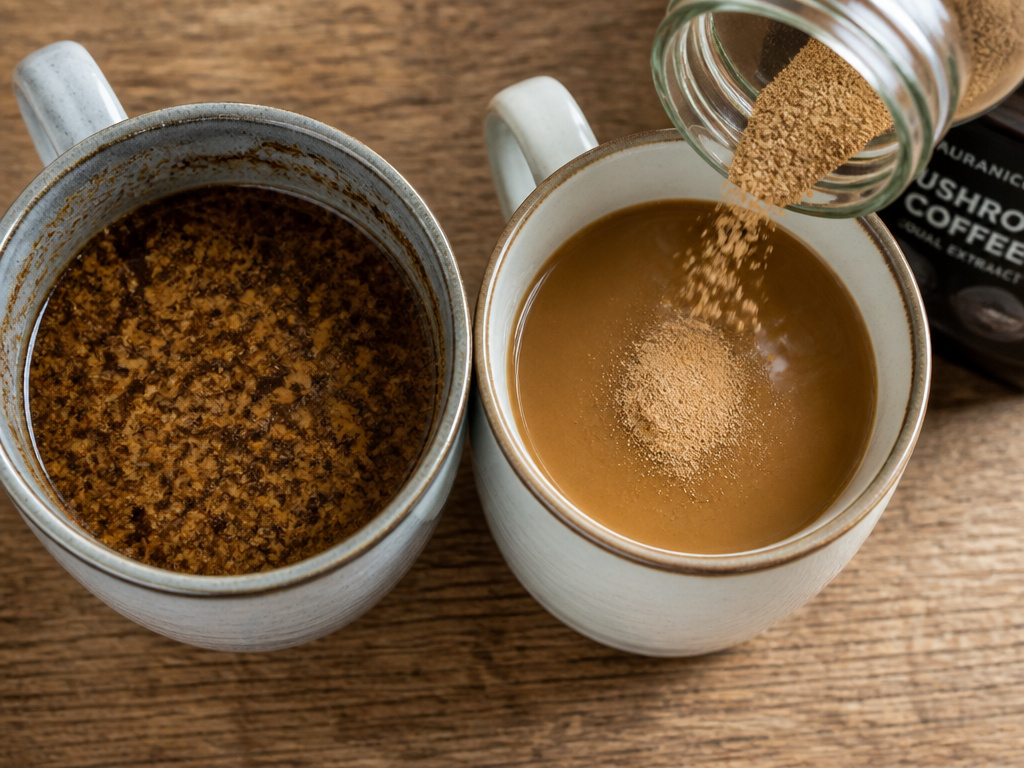
The mushroom type sets the stage, but three other factors decide the final taste in your cup: the base, the processing method, and what you add to it.
First, the base. Is it mixed with real coffee, or is it a coffee substitute? Many mushroom coffees use real Arabica or Robusta beans. The coffee’s roast profile (light, medium, dark) will shine through, with the mushroom notes layered on top. Other products are “coffee-free” and use roasted chicory, dandelion root, or barley. These bases are inherently more earthy and woody to begin with, which can amplify the mushroom taste.
Second, and most critical, is processing. There’s a massive gap between a dual-extracted mushroom powder and plain ground dried mushroom.
- Dual-extracted powder: This is the gold standard. The mushroom is processed with hot water and alcohol to pull out both water-soluble and alcohol-soluble compounds. The solids are removed, and the liquid is spray-dried into a fine powder. This powder dissolves almost completely in hot water. The flavor is clean, concentrated, and consistent. You’re left with the pure essence, not the fibrous grit.
- Simple ground mushroom: Some cheaper brands just grind dried mushrooms into a coarse powder and mix it with coffee grounds. This powder doesn’t dissolve. It settles at the bottom of your cup or passes through a French press filter. The taste is stronger, grainier, and can be unpleasant. You’re literally drinking ground-up mushroom bits.
I tried a budget brand that used ground Chaga. The first sip was like chewing on a piece of bark that had been soaked in coffee. Gritty, overwhelmingly woody, and it left a sediment layer in my mug I had to scrub out. I switched to a dual-extracted powder blend and the difference was night and day, just a smooth, earthy note.
Finally, what you add changes everything. Mushroom coffee is a canvas. Black coffee drinkers might appreciate the subtle shift. Everyone else will likely want a modifier.
How to Make Mushroom Coffee Taste Good to You
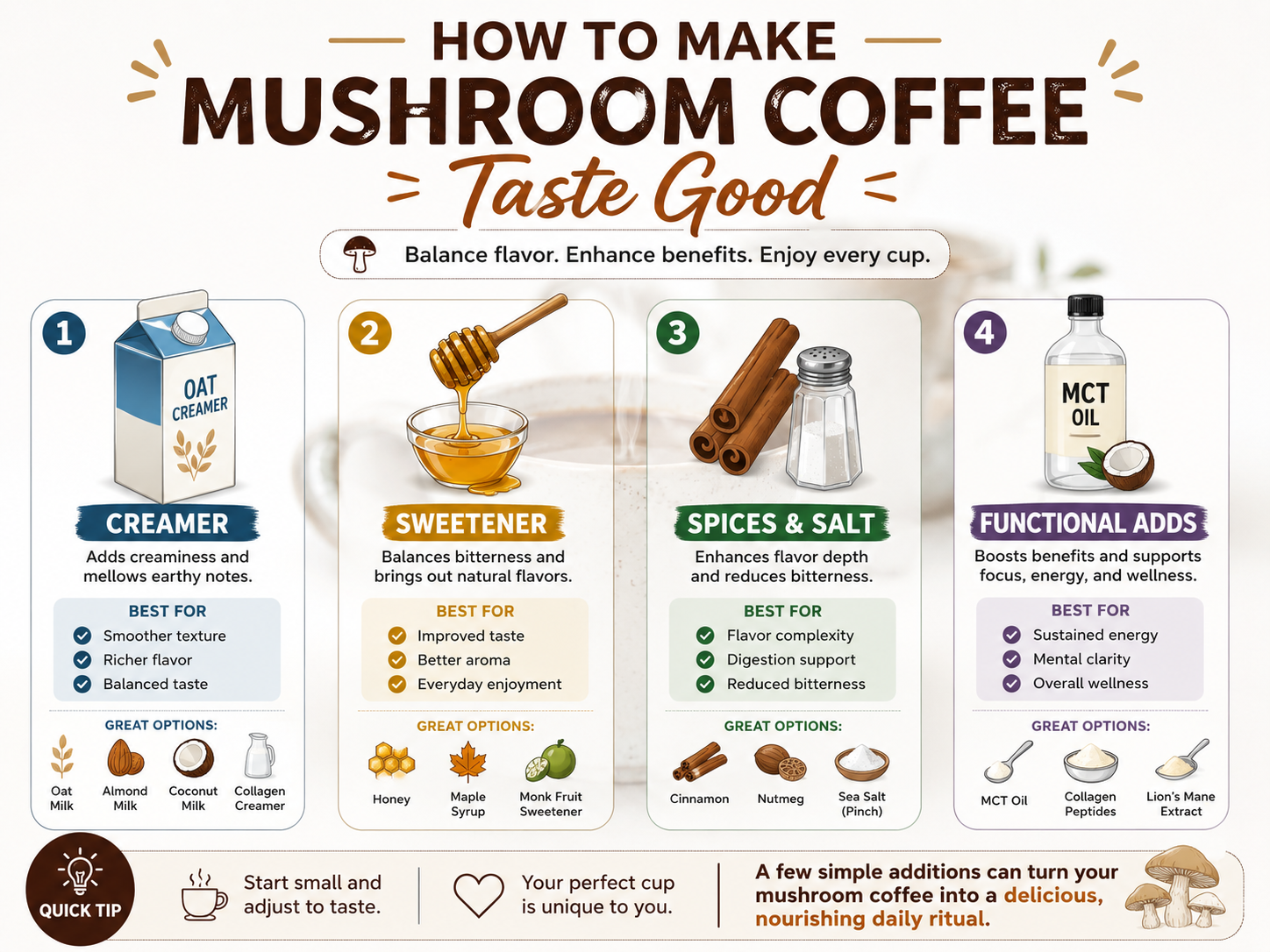
You control the final flavor. Think of the mushroom blend as a base ingredient, not a finished drink.
Start with the brew. Use water that’s hot but not boiling, around 200°F (93°C). Boiling water can scorch the delicate mushroom extracts and coffee, pulling out harsh, bitter compounds. If you’re using a single-serve packet or a teaspoon of powder, add it to your mug first, then pour the hot water over it. Stir vigorously for a good 15-20 seconds. Clumps of undissolved powder are flavor bombs of concentrated earthiness.
Now, the modifiers. This is where you personalize it.
- Dairy and Non-Dairy Creamers: Fat coats the palate and rounds out sharp, bitter notes. Whole milk, cream, or a rich oat milk like Planet Oat French Vanilla are excellent choices. The vanilla flavor in particular complements the nutty, earthy notes.
- Sweeteners: Sweetness directly counterbalances bitterness. Honey and maple syrup pair well with the natural earthiness. Regular sugar or a brown sugar coffee syrup also works.
- Spices and Flavors: Cinnamon, cocoa powder, or a pinch of salt can bridge the gap between the coffee and mushroom flavors. A pinch of salt in coffee is a known trick to reduce perceived bitterness.
- Other Functional Additives: Many people blend their mushroom coffee with other supplements. A teaspoon of MCT oil coffee or coconut oil coffee adds richness and can further mask any funky notes.
Your goal is to find a combination that makes the drink enjoyable for you. The functional benefits are irrelevant if you can’t stand the taste.
TL;DR: Brew it cool, stir it well, and don’t be shy with the cream and sugar, especially on your first try.
Mushroom Coffee vs. Your Regular Cup
So how does it stack up against your daily brew?
It’s less acidic and smoother. The caffeine content is often lower, sometimes half that of a regular cup, depending on the blend. This means you miss that sharp, bright “bite” of a high-acidity light roast. For people who get heartburn from regular coffee or who dislike bitter notes, this is a plus. For those who live for that bright, fruity acidity in their Ethiopian pour-over, mushroom coffee will taste flat and muted.
The body is different, too. Without the oils and fines from coffee grounds, some mushroom coffee blends can feel thinner in the mouth, especially the coffee-free versions. Adding a fatty coffee addition like cream or MCT oil can restore that mouthfeel.
It will never be a direct replacement for a high-quality, single-origin coffee. It’s a different product with a different goal. Compare it to a cafe Americano, it’s about dilution and a different kind of strength. Or think of it as a cousin to coffee with cinnamon, where an added ingredient changes the fundamental profile.
What If You Still Hate the Taste?
You gave it an honest try with cream and sugar, and it’s still not for you. That’s fine.
First, check your product. Are you using a pure, high-quality dual-extracted powder, or a cheap ground blend? The wrong product alone can ruin the experience. Second, try a different mushroom. If you started with a Chaga blend, order a sample pack of Lion’s Mane. The flavors are distinct.
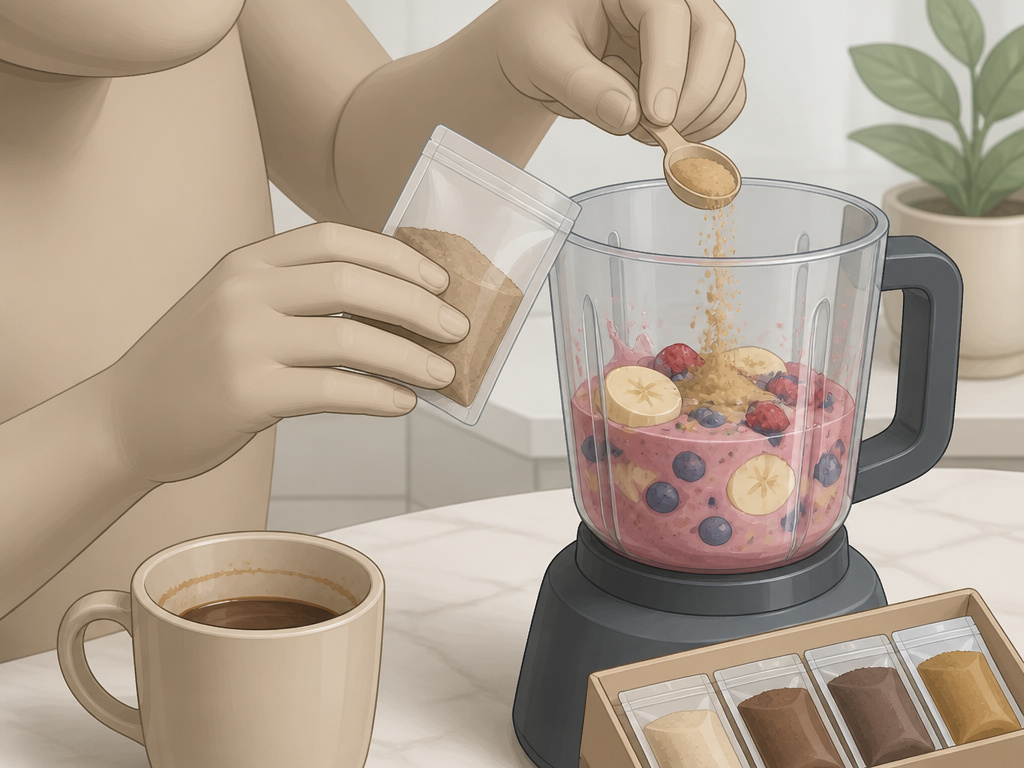
If you’ve ruled out product issues, consider the delivery method. Mixing the mushroom powder into a smoothie, protein shake, or even a strongly flavored soup can completely hide the taste while delivering the functional compounds. The powder is flavor-neutral enough when blended with bananas, berries, and protein.
Finally, ask what you’re really after. If it’s the proposed functional benefits, other delivery methods exist. If it’s just a lower-acid, lower-caffeine coffee alternative, there are excellent coffee substitutes and light roast beans that might suit you better without the earthy twist.
Frequently Asked Questions
Does mushroom coffee taste like regular coffee?
Yes, but with added layers. The primary taste is still coffee, but it’s modified by earthy, nutty, or woody notes from the mushroom extracts. The finish is smoother and less acidic than a straight cup of black coffee.
Can you make mushroom coffee taste less earthy?
Absolutely. Use a high-quality dual-extracted powder (not ground mushroom), brew with water just off the boil to avoid bitterness, and add a rich creamer and sweetener. Oat milk, honey, and a dash of cinnamon are particularly effective at masking the earthy notes.
What does Chaga coffee taste like?
Chaga coffee has a strong, woody, and earthy flavor, like a dark roast coffee combined with the scent of a damp forest. It’s the most robust-tasting mushroom coffee. It pairs best with dark roasts and strong creamers.
Is mushroom coffee bitter?
It can be, but it shouldn’t be overly bitter if made correctly. Bitterness comes from two sources: low-quality ground mushroom material or using boiling water which scorches the extracts. A well-made blend with dual-extracted powders and proper brewing should be smooth, with any bitterness balanced by the coffee itself.
How do you drink mushroom coffee if you don’t like the taste?
Treat it as a flavor base, not a finished drink. Mix the powder into a strongly flavored smoothie, protein shake, or even oatmeal. You can also use it in baking recipes that call for instant coffee or cocoa powder, like brownies or chili.
Before You Go
Mushroom coffee tastes like a earthier, nuttier, smoother version of your regular cup. The mushroom flavor itself is subtle, a background note rather than the main event. Your enjoyment hinges on three things: choosing a quality dual-extracted product, picking a mushroom type whose flavor profile you can live with (Chaga for boldness, Lion’s Mane for mild sweetness), and being willing to customize your cup with creamers and sweeteners.
Don’t force yourself to drink it black if you don’t enjoy it. The point is to get the potential benefits in a way you actually like. Start with a reputable sample pack, brew it right, and mix in your favorite plant-based milk in coffee or a dash of maple syrup. Your perfect cup is out there, it just might have a few more mushrooms in it than you’re used to.
{
“@context”: “https://schema.org”,
“@type”: “HowTo”,
“name”: “How to Make Mushroom Coffee Taste Good”,
“totalTime”: “PT5M”,
“tool”: [
{
“@type”: “HowToTool”,
“name”: “Kettle or coffee maker”
},
{
“@type”: “HowToTool”,
“name”: “Mug”
},
{
“@type”: “HowToTool”,
“name”: “Spoon”
}
],
“supply”: [
{
“@type”: “HowToSupply”,
“name”: “Mushroom coffee blend or mushroom extract powder”
},
{
“@type”: “HowToSupply”,
“name”: “Hot water”
},
{
“@type”: “HowToSupply”,
“name”: “Creamer or milk (optional)”
},
{
“@type”: “HowToSupply”,
“name”: “Sweetener (optional)”
}
],
“step”: [
{
“@type”: “HowToStep”,
“name”: “Measure the mushroom blend”,
“text”: “Use one teaspoon of mushroom coffee powder or a single serving packet per 8-10 ounces of water.”
},
{
“@type”: “HowToStep”,
“name”: “Combine with hot water”,
“text”: “Add the powder directly to your mug and pour in hot, not boiling, water. Boiling water can scorch the delicate mushroom extracts.”
},
{
“@type”: “HowToStep”,
“name”: “Stir thoroughly”,
“text”: “Mix aggressively for 15-20 seconds to fully dissolve any clumps of mushroom powder or extract.”
},
{
“@type”: “HowToStep”,
“name”: “Add your modifiers”,
“text”: “Stir in creamer, milk, or a sweetener like honey or maple syrup to mask any lingering earthiness.”
},
{
“@type”: “HowToStep”,
“name”: “Taste and adjust”,
“text”: “Take a sip. If the earthy flavor is too strong, add more creamer or a pinch of salt to counteract bitterness.”
}
]
}
{
“@context”: “https://schema.org”,
“@type”: “FAQPage”,
“mainEntity”: [
{
“@type”: “Question”,
“name”: “Does mushroom coffee taste like regular coffee?”,
“acceptedAnswer”: {
“@type”: “Answer”,
“text”: “Yes, but with added layers. The primary taste is still coffee, but it’s modified by earthy, nutty, or woody notes from the mushroom extracts. The finish is smoother and less acidic than a straight cup of black coffee.”
}
},
{
“@type”: “Question”,
“name”: “Can you make mushroom coffee taste less earthy?”,
“acceptedAnswer”: {
“@type”: “Answer”,
“text”: “Absolutely. Use a high-quality dual-extracted powder (not ground mushroom), brew with water just off the boil to avoid bitterness, and add a rich creamer and sweetener. Oat milk, honey, and a dash of cinnamon are particularly effective at masking the earthy notes.”
}
},
{
“@type”: “Question”,
“name”: “What does Chaga coffee taste like?”,
“acceptedAnswer”: {
“@type”: “Answer”,
“text”: “Chaga coffee has a strong, woody, and earthy flavor, like a dark roast coffee combined with the scent of a damp forest. It’s the most robust-tasting mushroom coffee. It pairs best with dark roasts and strong creamers.”
}
},
{
“@type”: “Question”,
“name”: “Is mushroom coffee bitter?”,
“acceptedAnswer”: {
“@type”: “Answer”,
“text”: “It can be, but it shouldn’t be overly bitter if made correctly. Bitterness comes from two sources: low-quality ground mushroom material or using boiling water which scorches the extracts. A well-made blend with dual-extracted powders and proper brewing should be smooth, with any bitterness balanced by the coffee itself.”
}
},
{
“@type”: “Question”,
“name”: “How do you drink mushroom coffee if you don’t like the taste?”,
“acceptedAnswer”: {
“@type”: “Answer”,
“text”: “Treat it as a flavor base, not a finished drink. Mix the powder into a strongly flavored smoothie, protein shake, or even oatmeal. You can also use it in baking recipes that call for instant coffee or cocoa powder, like brownies or chili.”
}
}
]
}
