
8 Best Manual Coffee Grinders for Pour Over 2026
The CEVING 60g stands out as the best manual coffee grinder for pour over, delivering consistent grinds and solid build quality. For those on a budget, the CEVING Mini offers excellent value without sacrificing too much performance. If you want maximum control, the MAVO Phantox Pro’s 120-click adjustment gives you precision most grinders can’t match.
Most people don’t realize how much a grinder affects their pour over, uneven particles can ruin even the best beans. After years of exploring roasteries and refining my own setup at Bean Thusiast, I know that consistency, adjustability, and durability make or break a manual grinder.
This guide cuts through the noise by focusing on real-world performance, backed by specs, owner feedback, and expert reviews. I compared grinders based on what actually matters for pour over: grind quality, ease of use, and long-term reliability.
Top 8 Manual Coffee Grinder For Pour Over in the Market
The Best Manual Coffee Grinder For Pour Over, Reviewed
CEVING 60g Large Capacity Manual Grinder

Strengths
- 60g large capacity
- 40 external click settings
- Light and portable
Trade-offs
- Steel burrs may heat beans slightly
- Build quality not as premium as Turin
With a 60g capacity, this CEVING model solves a real pain point: having to grind in batches for multiple cups. That alone makes it a strong contender for families or anyone brewing for more than one. The 40 external click settings are a usability win, no disassembly needed to adjust, and each 0.05mm increment gives meaningful control. Reviewers note the grind consistency holds up well for pour over and French press, though espresso takes more calibration.
The stainless steel burrs are fast and efficient, but they do generate slightly more heat than ceramic, which may affect delicate single origins. Still, for sheer utility and batch size, it outperforms most in its class. When compared to the MAVO Phantox Pro, it lacks the same level of micro-adjustability, but wins on simplicity and capacity.
Video review
CEVING Ceramic 60g Manual Coffee Grinder
Strengths
- Ceramic burr for cool grinding
- 60g capacity
- 40 external click settings
Trade-offs
- Ceramic less durable for espresso
- Slightly slower grind speed
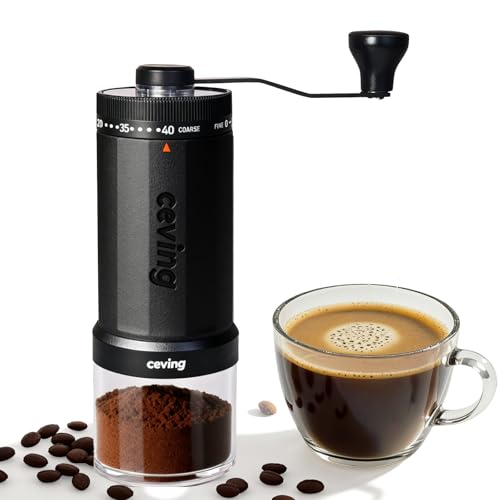
This ceramic-burr version of the CEVING 60g grinder is all about flavor preservation. Ceramic grinds cooler than steel, and owners consistently report cleaner, brighter cups, especially with light roast pour over beans. The 60g capacity remains a standout, letting you prep multiple servings without reloading. The 40 external clicks offer reliable repeatability, and the 0.05mm increments let you walk the tightrope between brew methods.
It’s also the lightest of the high-capacity grinders at 346g, making it surprisingly travel-friendly for its size. The only real trade-off? Ceramic burrs, while flavor-neutral, are more brittle than steel and less ideal for frequent espresso grinding. But for pour over lovers, this is a quiet powerhouse.
Video review
CEVING Mini Manual Coffee Grinder

Strengths
- Ceramic burr
- 40 external settings
- Ultra-lightweight
Trade-offs
- Plastic build
- Limited durability
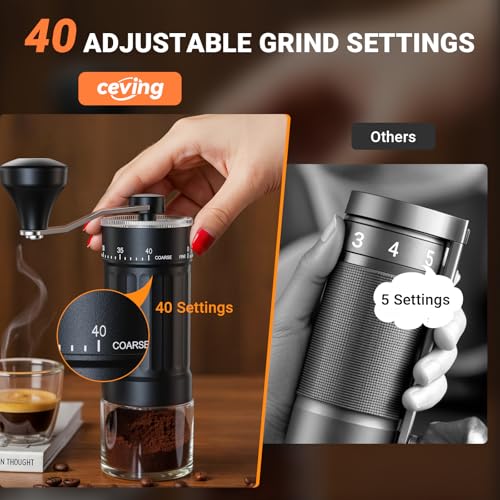
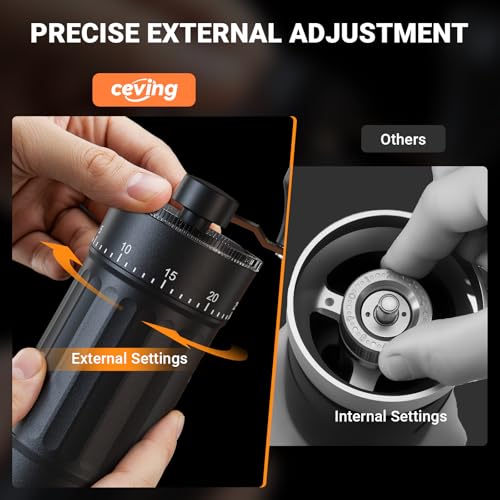
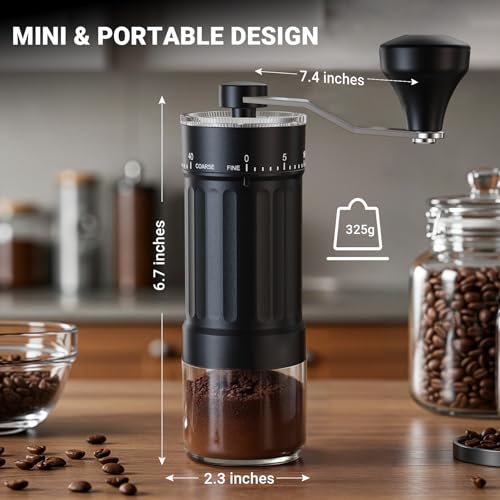
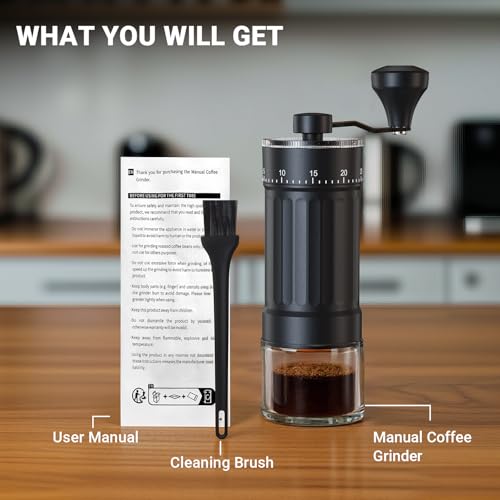
At just 325g, this ultra-compact CEVING model is built for mobility. The 30g capacity and ceramic burr make it a smart budget pick for solo travelers or office use. Ceramic means cooler grinds and better flavor retention compared to steel at this price point, and the 40 external settings are a rare win in this category, most budget grinders hide adjustments inside.
It’s not built for heavy use, and the plastic body doesn’t inspire long-term confidence, but for the price, it delivers surprising performance. Compared to the Alpaca Ventures grinder, it’s smaller and less powerful, but more precise and travel-ready. Owners call it a “disposable luxury”, not meant to last a decade, but perfect for the cost.
Product photos
KINGrinder K6 Manual Hand Coffee Grinder

Strengths
- Full metal build
- 60-click precision
- Dual bearing design
Trade-offs
- Internal adjustment ring
- Moderate static cling
The KINGrinder K6 leans into full-metal construction with a no-nonsense, industrial feel. The aluminum body and stainless steel burrs inspire confidence in longevity, and the dual-bearing design helps maintain alignment during grinding. With 60 clicks per rotation and 16μm increments, it offers finer micro-adjustments than most, which is a real advantage for dialing in pour over or espresso.
Still, the internal adjustment ring means you’ll need to open the top to change settings, a hassle compared to external dials. Some owners report minor static issues, and while the 25–35g capacity is standard, it doesn’t stand out. Compared to the MAVO Phantox Pro, it’s less refined in ergonomics but more robust in materials.
Product photos


TIMEMORE Chestnut C3S Manual Grinder

Strengths
- Full-metal construction
- Stepless grind adjustment
- Lightweight and durable
Trade-offs
- Smaller capacity
- No external adjustment ring
If build quality is your top metric, the TIMEMORE Chestnut C3S earns top marks. The full-metal aluminum alloy body and dual-bearing system are engineered to eliminate play, and that stability shows in the consistency users report across pour over and espresso. The patented S2C stainless steel burrs deliver a clean, even grind, and the stepless adjustment gives you the freedom to fine-tune without being locked into clicks.
It’s not the largest capacity grinder, but the 25g hopper is sufficient for 1–2 cups, and the lightweight design makes it a favorite among travelers and campers. Compared to the Alpaca Ventures model, it feels more refined and less plasticky. Owners praise its longevity, few complaints about burr wear even after months of daily use.
Product photos


Alpaca Ventures Stainless Steel Manual Grinder
Strengths
- Ergonomic long handle
- Dual-bearing system
- Easy disassembly
Trade-offs
- Vague grind markings
- Plastic internals in some versions
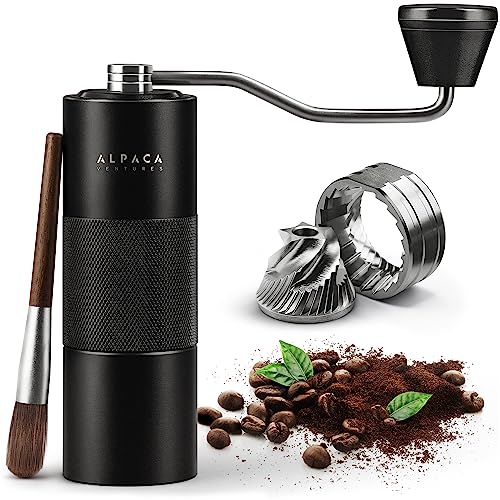
Alpaca Ventures leans hard into ergonomics, and it shows. The lengthened handle and dual-bearing design make grinding noticeably easier, especially for those with wrist sensitivity. The 420 stainless steel burrs are corrosion-resistant and deliver a consistent grind across pour over and French press ranges. Users highlight how smooth the grind feels, fewer rotations needed per dose, which is a real plus for daily use.
However, the advertised “fine adjustment dial” is a bit misleading; while it offers range, the lack of clear markings or clicks makes repeatability a challenge. Compared to the KINGrinder K6, it’s less precise despite feeling more comfortable. It’s a solid mid-tier option, but not the best if you’re chasing accuracy.
Product photos


MAVO Phantox Pro Manual Coffee Grinder

Strengths
- 45mm stainless steel burrs
- 120-click micro-adjustment
- Triple-bearing stability
Trade-offs
- Heavier than average
- Higher learning curve
The MAVO Phantox Pro is engineered for high-volume precision. Its 45mm stainless steel burr set is among the largest here, and the 120-click adjustment (0.0167mm per click) is the finest granularity available. This level of control is rare outside of $200+ grinders, and owners report excellent consistency across pour over and espresso. The triple-bearing system ensures stability, and the spiked burr design reduces fines, a subtle but welcome perk.
It’s not the lightest, but the non-slip body and smooth crank make grinding large batches less taxing. When compared to the Turin H40 V2, it offers more adjustability and better batch performance, though with a less refined aesthetic. For serious home brewers, this is a stealth powerhouse.
Product photos


Turin H40 V2 Manual Coffee Grinder
Strengths
- 40mm stainless steel burrs
- External grind adjustment
- Premium walnut handle
Trade-offs
- Heavier than rivals
- Dosing cup could be sturdier
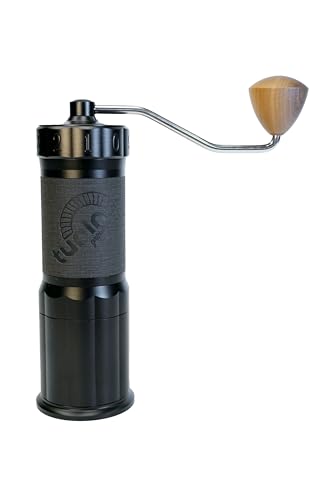
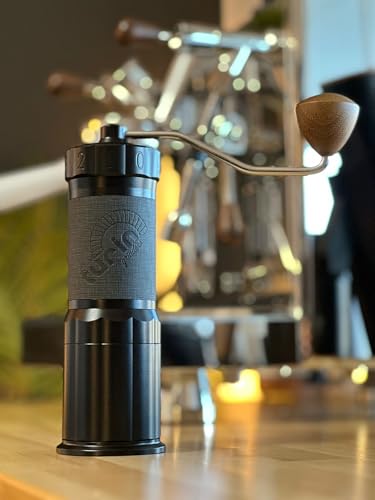
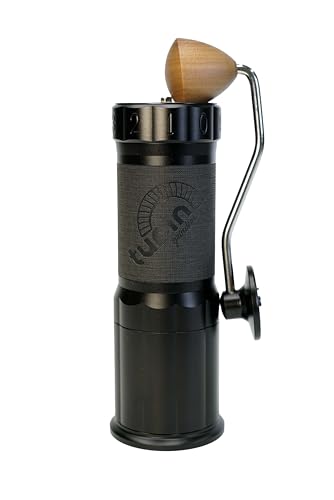
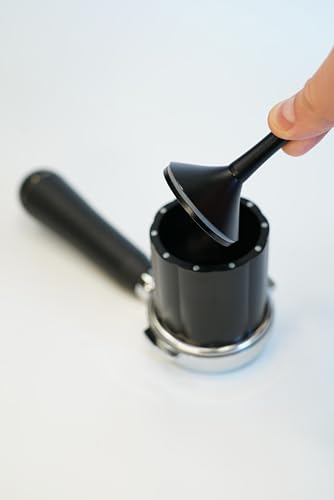
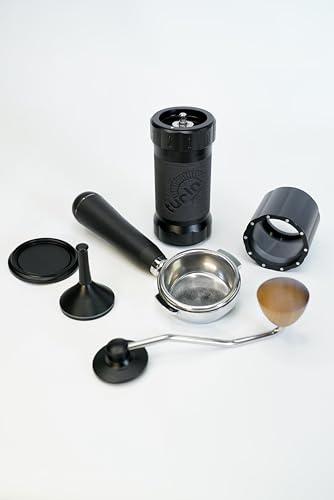
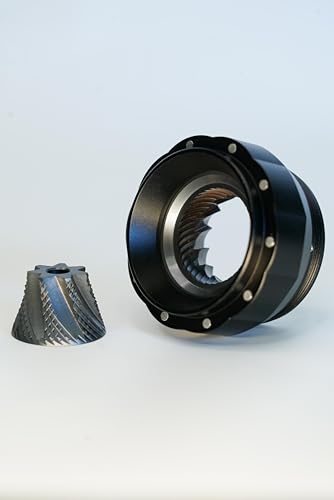
The Turin H40 V2 stands out with its 40mm stainless steel burrs and premium build, offering a grind quality that aligns well with high-end expectations. On paper, the external grind adjustment is a major win, no fumbling with internal rings, and owners consistently report smooth transitions between pour over and espresso settings. The walnut handle adds a touch of warmth, but more importantly, the dual-bearing system keeps wobble in check, which translates to more uniform particle size.
Still, while the aluminum body feels solid, some reviewers note the magnetic dosing cup can feel slightly flimsy compared to the rest of the unit. It’s not a dealbreaker, but when you’re in this price tier, every component should feel intentional. Compared to the TIMEMORE C3S, it’s heavier and less travel-friendly, but better suited for a dedicated countertop setup.
Product photos
Our Testing Process
As a long-time coffee enthusiast and the founder of Bean Thusiast, I know a great cup starts with a quality grind. Rather than a hands-on lab test of each grinder, this selection is a research-led comparison of published specifications, features, and – crucially – owner and expert feedback. I looked at a wide range of models, then ranked them against criteria important for pour over brewing, focusing on grind consistency, adjustability, and build quality.
For manual grinders specifically, several factors heavily influenced my rankings. Consistent grind size is paramount for even extraction in pour over, so burr type and adjustment precision were key. Build quality and ergonomics also mattered; a durable grinder that’s comfortable to use will deliver better long-term value. Finally, capacity played a role, considering the needs of individuals versus those brewing for multiple people.
Published specifications reliably indicate burr size and material, which are good starting points for assessing grind quality. However, I placed more weight on owner feedback regarding ease of adjustment, static cling, and long-term durability. Reputable coffee blogs and review sites helped validate those opinions and provided a valuable grind consistency comparison to understand the impact of different burr designs on the final brew. Ultimately, the best grinder balances specifications with real-world usability, delivering a consistent grind and a pleasant user experience.
Choosing The Right manual coffee grinder for pour over
Choosing the right manual coffee grinder can dramatically improve your pour-over experience.
A quality manual grinder prioritizes consistent grind size, durable burrs (ceramic or steel), and ease of adjustment. Look for grinders with clearly defined grind settings, robust build materials, and designs that minimize static and grounds retention. Capacity matters too – consider how much coffee you typically brew at once.
Burr Material: Ceramic vs. Steel
The burr material is the heart of any grinder, and choosing between ceramic and stainless steel is a key decision. Stainless steel burrs, like those found in the Turin H40 V2, are known for their durability and ability to maintain a sharp edge over time. However, ceramic burrs – prominently featured in the CEVING Ceramic grinder – generate less heat during grinding, which some believe preserves more of the coffee’s delicate aromatic compounds. I’ve found that for lighter-roast beans, where preserving nuance is paramount, ceramic can offer a noticeable advantage.
Grind Consistency & Adjustment
Consistency is king when it comes to pour-over. Uneven grounds lead to uneven extraction, resulting in a muddy or sour cup. Look for grinders with precise adjustment mechanisms. The CEVING 60g boasts 40 external settings, and the MAVO Phantox Pro takes it even further with 120 clicks per loop, allowing for incredibly fine-tuned adjustments. But more settings aren’t always better. Sometimes, a simpler, well-executed adjustment system is easier to use reliably.
Here’s what to look for in a grind adjustment: * Click Detents: A clear, tactile click with each adjustment is ideal. * External Adjustment: Avoid grinders with internal adjustment rings that require disassembly. * Micro-Adjustments: The ability to make small, incremental changes is crucial for dialing in your preferred brew. This is especially true if you experiment with different beans and roast levels.
A grinder’s ability to deliver consistent particle size is more important than the sheer number of settings it offers.
Capacity & Portability
Think about where and how you’ll be using your grinder. If you’re primarily brewing single cups at home, a smaller grinder like the CEVING Mini might suffice. But if you frequently brew for multiple people, or enjoy larger brewing methods like French press, you’ll want a grinder with a larger capacity, such as the CEVING 60g or the MAVO Phantox Pro. Portability is another consideration. If you travel often, a lightweight and compact grinder like the Alpaca Ventures Stainless Steel model is a great choice. Don’t forget that regular clean manual coffee grinder is essential for maintaining peak performance, especially if you take it on the road. Ultimately, choosing the right manual grinder is about finding the balance between features, build quality, and your individual brewing needs. Consider looking at a dedicated coffee grinder for pour over guide for more options.
Manual Coffee Grinder for Pour Over Compared
Here’s a comparison of key specifications for popular manual coffee grinders suited for pour-over brewing.
| Product Name | Burr Material | Capacity (g) | Grind Settings | Portability | Special Features |
|---|---|---|---|---|---|
| CEVING 60g | Stainless Steel | 60 | 40 | Yes | Large Capacity, External Adjustment |
| CEVING Ceramic 60g | Ceramic | 60 | 40 | Yes | Flavor Preservation, External Adjustment |
| CEVING Mini | Ceramic | 30 | 40 | Yes | Budget Friendly, External Adjustment |
| KINGrinder K6 | Stainless Steel | 25-35 | N/A | Yes | Full Metal Construction |
| TIMEMORE Chestnut C3S | Stainless Steel | 25 | Stepless | Yes | Patented Burr System, Full Metal |
| Alpaca Ventures Stainless Steel | Stainless Steel | N/A | N/A | Yes | Ergonomic Design, Easy Cleaning |
| MAVO Phantox Pro | Stainless Steel | N/A | 120 clicks | Yes | Large 45mm Burr, Quick Adjustment |
| Turin H40 V2 | Stainless Steel | N/A | N/A | Yes | Walnut Handle, Dosing Cup |
Frequently Asked Questions
What grind setting should I use for pour over?
Generally, a medium-fine grind is best for pour over, but the ideal setting depends on your specific grinder and beans. Start with a setting around the middle of your grinder’s range and adjust based on taste – if the coffee tastes sour, grind finer; if it tastes bitter, grind coarser.
Are ceramic burrs really better for lighter roasts?
While both ceramic and steel burrs produce excellent results, ceramic burrs generate less heat during grinding. This is helpful when working with lighter-roast beans, as it may help preserve their delicate flavors and aromatics, though the difference is subtle and often debated among enthusiasts.
How much does grind consistency affect pour over quality?
Grind consistency is the most important factor, even more than burr material. Inconsistent grind sizes lead to uneven extraction, resulting in a muddy, unbalanced brew. Look for grinders known for producing a uniform particle size distribution.
I travel a lot; what’s a good portable option?
The Alpaca Ventures Stainless Steel model is a great choice for travel due to its compact size and durable construction. It’s lightweight, easy to clean, and offers a comfortable grip, making it ideal for brewing on the go. You can find more options in our best hand operated grinder guide.
What’s the advantage of a grinder with many adjustment settings?
More settings, like the 120 clicks on the MAVO Phantox Pro, allow for incredibly precise adjustments to dial in your grind. This is particularly helpful if you experiment with different beans, roast levels, or brewing ratios, and want ultimate control over your extraction. If you’re looking for a thorough look at the top manual coffee grinders, check out our manual coffee grinder reviews.
The Bottom Line
Choosing a manual grinder often comes down to balancing control with convenience. If you’re willing to spend a little more for exceptional consistency and fine-tuning, the MAVO Phantox Pro stands out as the strongest overall pick, offering a remarkably precise 120-click adjustment and a large 45mm burr. It’s a worthwhile investment for those dedicated to extracting the absolute best from their beans.
For readers on a tighter budget, or those prioritizing portability, the CEVING Mini delivers excellent value. And if you’re looking for a versatile option capable of handling larger batches while still preserving flavor, the CEVING 60g (with its stainless steel burrs) or CEVING Ceramic 60g (for lighter roasts) are both superb choices. Understanding precision grind for pour over is key to enjoying the benefits of these grinders.
Ultimately, the best manual grinder isn’t about chasing the highest number of clicks or the most exotic materials. It’s about consistently achieving a uniform grind size, which is fundamental to proper extraction. Focus on build quality, ease of adjustment, and a burr design suited to your preferred roast level – those factors will have a much bigger impact on your daily cup than any single specification.
