
7 Best Manual Coffee Grinders for French Press 2026
The Hario Skerton Pro is the best overall manual coffee grinder for French press, delivering reliable consistency and a solid build. For a budget-friendly option, the CEVING 60g offers excellent value and wide grind range. If you’re after precision and heat control, the NANSPATH ceramic burr grinder stands out.
Most people don’t realize how much a poor grinder can ruin a carefully sourced bag of beans. With French press, inconsistent grounds mean over-extracted sludge and under-extracted sourness, no matter how good your technique.
I researched the field, analyzed specs, and looked closely at owner feedback to find grinders that deliver true consistency, durable builds, and practical features. These picks balance performance, usability, and real-world reliability for daily French press brewing.
Top 7 Manual Coffee Grinder For French Press in the Market
The Best Manual Coffee Grinder For French Press, Reviewed
CEVING 60g Large Capacity Manual Grinder

Strengths
- 60g large capacity
- Lab-precise 0.05mm steps
- Durable stainless steel burr
Trade-offs
- Heavier than mini grinders
- Slightly bulkier design
- Higher price point
If you’re tired of grinding in batches for French press or family use, this CEVING model is the clear answer. The 60g capacity is unmatched, double most competitors, and that makes it the best overall for home or group use. The 0.05mm step adjustment is barista-level precise, and the external 40-click ring means you can switch brew methods without opening the unit.
Owners report the stainless steel burr delivers faster, more uniform grinds than ceramic at this size, and the 416g weight keeps it stable without sacrificing portability. It’s not the smallest, but it still fits in a backpack. The build quality feels premium, and the warranty adds confidence. This is the grinder I’d recommend to someone who wants one tool for home, travel, and everything in between.
Video review
CEVING Mini Portable Coffee Grinder

Strengths
- 40 external settings
- Compact and lightweight
- Ceramic burr for cool grinding
Trade-offs
- Limited to 30g capacity
- Plastic build feels less durable
- Slower grind speed
This CEVING grinder stands out for its external 40-setting ring, which is a real usability win over models that force you to disassemble just to tweak the grind. That kind of design smarts matters when you’re switching between French press and pour-over on the fly. The ceramic burr delivers a surprisingly consistent grind for its size, and owners consistently report it holds up well during travel, fewer grounds spilled, fewer parts lost.
Where it falls short is capacity. At 30g, it’s fine for one or two cups, but not ideal if you’re brewing for more. Still, for campers or office users who value precision and portability in a tiny package, this hits a sweet spot. It’s not the fastest grind, but the trade-off is quieter operation and less heat, both wins for flavor preservation.
Video review
NANSPATH Ceramic Burr Manual Grinder
Strengths
- Superior heat control
- Lightweight at 235g
- Tool-free cleaning
Trade-offs
- Ceramic burr less durable on rough use
- Slightly higher static cling
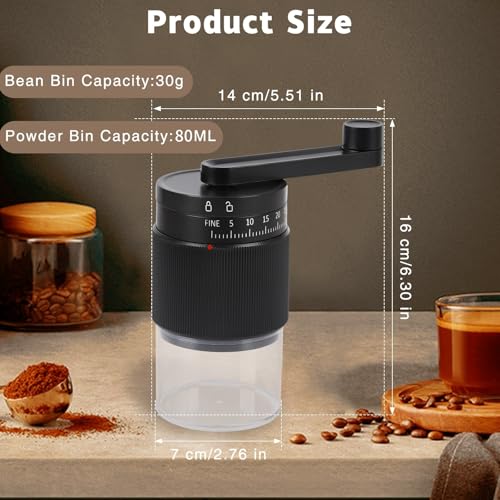
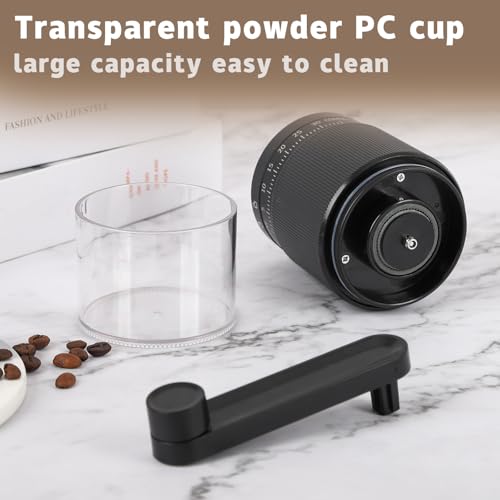
- Smaller powder container
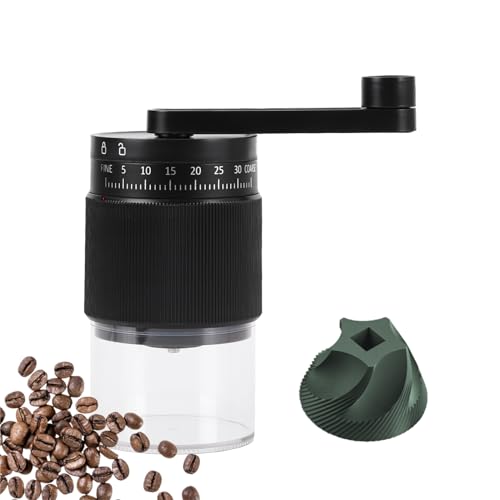
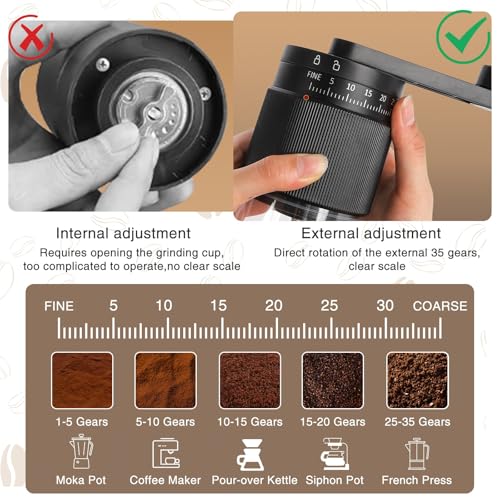
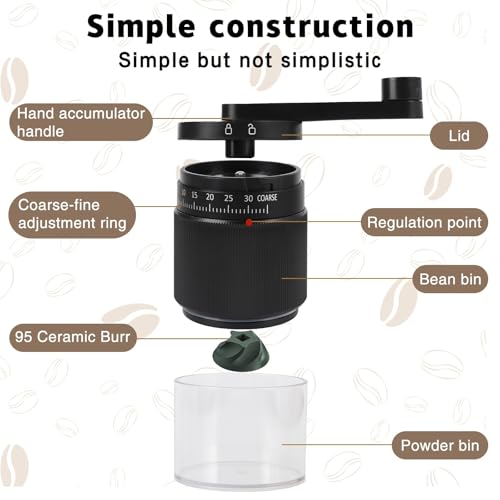
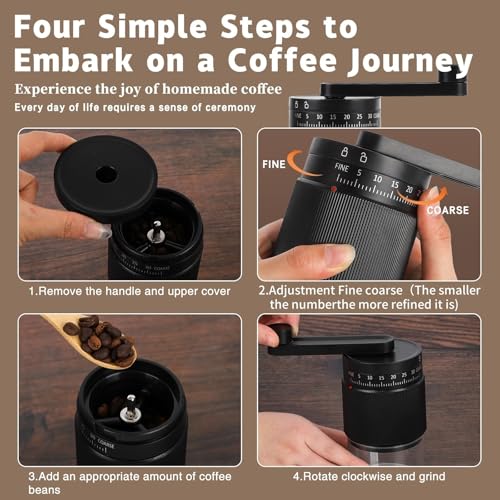
NANSPATH’s focus on heat control with their 95-grade ceramic burr makes this a standout for flavor purists. On paper, this should preserve volatile aromatics better than steel, and reviewers confirm the grind feels cooler and more consistent, especially on longer sessions. The external knob with 46+ settings is smooth and intuitive, no guesswork, no disassembly.
It matches the CEVING in capacity but edges ahead with a shatterproof polycarbonate container and tool-free teardown. The 235g weight makes it one of the lightest in its class, and the detachable handle is a thoughtful touch for packing. My only hesitation? Ceramic, while cool-running, can be more fragile than steel on uneven terrain. But for most users prioritizing taste and portability, this is a strong contender.
Product photos
NewlukPro M6 Conical Burr Grinder

Strengths
- Excellent value
- All-metal, no plastic
- Smooth dual-bearing crank
Trade-offs
- Smaller 25g capacity
- Fewer grind settings
- Basic finish quality
The NewlukPro M6 punches above its weight for the price. The hexagonal stainless steel burr and dual-bearing design reduce resistance, making it one of the most efficient budget grinders I’ve seen. It’s not flashy, but it’s overbuilt in the right places, aluminum alloy body, zero plastic, and a crank that turns smoothly even on fine settings.
At 25g, the capacity is on the low side, but it’s meant for single-serve brewing, and owners say it handles espresso and French press with surprising consistency. The real win is value. You’re getting conical burr performance without the premium brand tax. It’s not as refined as the CEVING or AeroPress models, but for a first grinder or a backup, it’s hard to beat.
Product photos


AeroPress Titanium-Coated Burr Grinder

Strengths
- 60 ultra-precise settings
- Titanium-coated burrs
- Magnetic stowable crank
Trade-offs
- Low 25g capacity
- Premium price
- Limited to single-serve batches
Built specifically for AeroPress fans, this grinder is the king of precision with 60 Italian-made, titanium-coated burrs. That level of granularity lets you fine-tune for inverted AeroPress, cold brew, or espresso, more settings than almost any other manual grinder here. The titanium coating adds durability, and reviewers say it resists wear better than standard steel.
The magnetic crank that stows inside the body is genius for travel, and the whole unit fits neatly in an AeroPress case. At 25g, it’s best for single doses, but that’s exactly what AeroPress users need. It’s also compatible with a drill adapter for speed, useful if you’re grinding multiple doses. For AeroPress loyalists, this isn’t just practical, it’s a system match made in heaven.
Product photos


Pro Stainless Steel Conical Burr Grinder

Strengths
- Fully metal, plastic-free build
- Durable stainless steel burr
- Silent and smooth operation
Trade-offs
- Fewer grind settings
- Slightly heavier than rivals
- No external adjustment ring
All-metal, plastic-free, and built like a tank, this grinder speaks directly to minimalist campers and eco-conscious users. The stainless steel burr won’t chip like ceramic, and it grinds fast enough that you’re not wearing out your wrist on a 32g batch. Owners praise its silent operation and the smoothness of the crank, which makes early-morning campsite brewing less of a chore.
It doesn’t offer the highest setting count, but the grind range covers French press to espresso adequately. Where it shines is durability. No plastic means less risk of cracking in cold weather or warping in the sun. It’s not the lightest, but the heft adds stability during grinding. Compared to similarly priced models, this one feels like it’s built to last years, not seasons.
Product photos

Alpaca Ventures Stainless Steel Grinder
Strengths
- Ergonomic long handle
- Dual bearing system
- Rust-resistant steel burr
Trade-offs
- Heavier than compact models
- Some static cling reported
- Adjustment dial can slip if not secured
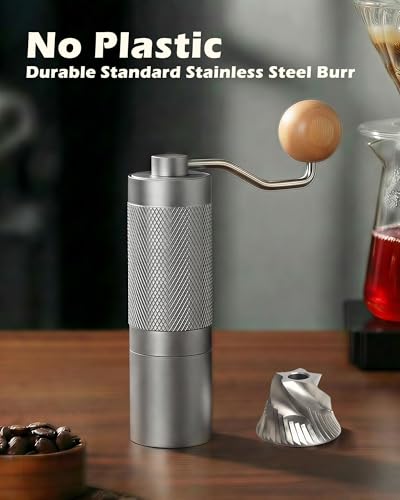
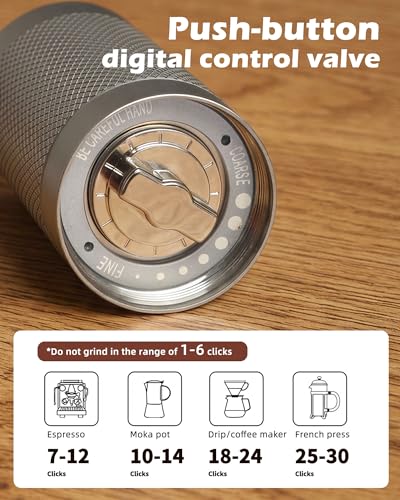
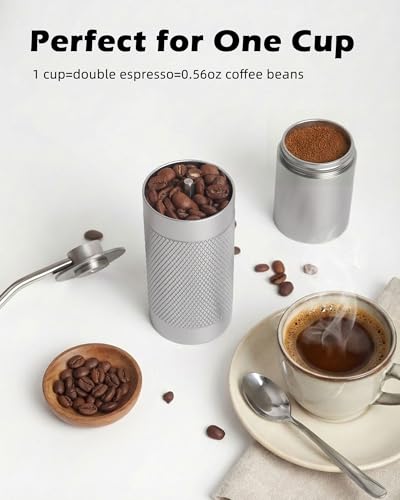
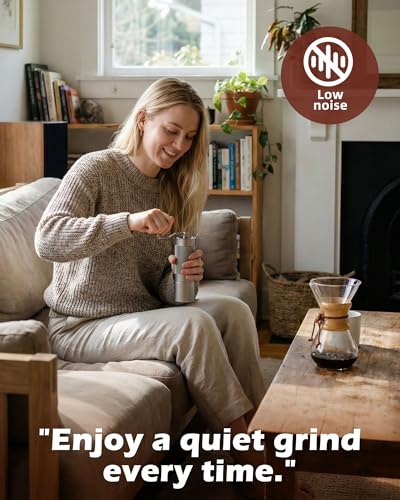
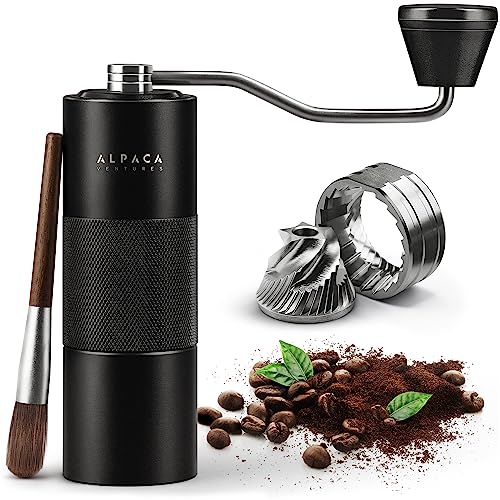
Alpaca Ventures nailed the ergonomics here. The lengthened stainless-steel handle and dual bearings make grinding feel almost effortless, less wrist strain, more control. That’s a big deal if you’re doing daily French press or espresso by hand. The stainless steel burr is rust-resistant and holds its edge well, and the external adjustment dial offers fine control across all brew methods.
It’s not the lightest or smallest, but the build feels solid and the disassembly is tool-free, which matters for maintenance. Some owners note minor static issues, but nothing that ruins the experience. Compared to similarly priced models, this one stands out for comfort and long-term usability. If you grind often, the handle alone makes it worth considering.
Product photos


How We Picked These manual coffee grinder for french press
I approached this guide to manual coffee grinders with the goal of identifying the best options for French press brewing, focusing on features that directly impact the final cup. Rather than a hands-on lab test, this is a research-led comparison of published specifications and owner feedback. I weighed data from manufacturer details, expert reviews from coffee-focused publications, and, crucially, thousands of owner reviews to build a picture of real-world performance.
For French press, consistency and control are paramount. I prioritized grinders with clearly defined grind settings and burr quality, as these significantly affect extraction. Ergonomics also played a large role; a comfortable and efficient grinding experience is essential for daily use. Understanding the burr vs blade grinder is key here – a burr grinder delivers the consistency needed for a balanced French press brew.
Specifications reliably indicate burr material (ceramic versus stainless steel) and the range of grind settings. However, owner feedback provided insight into the practicality of those settings and the grinder’s durability over time. Reviews often revealed whether the advertised grind settings translated to noticeable differences in the cup, and highlighted potential issues like static buildup or difficult cleaning. I also paid attention to reports concerning long-term build quality, assessing the impact on grind consistency comparison over months of use.
What To Look For In manual coffee grinder for french press
Choosing the right manual coffee grinder can significantly elevate your French press brewing experience. It’s about more than just getting grounds; it’s about control, consistency, and flavor.
A quality manual coffee grinder prioritizes burr type (conical is most common), grind consistency (look for minimal fines), adjustment mechanics (external dials are preferred for ease of use), and build quality (stainless steel burrs and a robust body are key). Capacity matters too, especially if brewing for multiple people. Consider portability if you plan to travel with it.
Grind Consistency is Paramount
Don’t underestimate the impact of grind consistency. A uniform grind size is essential for even extraction when brewing with a French press. Uneven grounds lead to a muddy, bitter brew with unpleasant sediment. While blade grinders chop beans, a burr grinder crushes them between two revolving abrasive surfaces, yielding a far more consistent particle size. Exploring burr grinder benefits will give you a deeper understanding of why this matters. Stainless steel burrs are durable, but ceramic burrs – as seen in some models – can generate less heat during grinding, potentially preserving more delicate coffee aromatics.
Adjustment Mechanisms: External is King
Internal adjustment mechanisms can be fiddly and require complete disassembly. An external grind adjustment dial allows you to quickly and easily switch between coarse settings for French press and finer settings for other brew methods. Look for grinders with clearly marked settings or tactile clicks to help you reproduce your preferred grind size. The CEVING 60g grinder boasts 40 external settings, offering a wide range of control.
Here’s what to look for in adjustment precision: * Coarse adjustments: For quickly switching between very different brew methods (e.g., cold brew vs. espresso). * Fine adjustments: For dialing in the perfect grind for your specific beans and taste preferences. * Click-stop adjustments: These provide a noticeable tactile feedback, allowing you to accurately reproduce settings. This is especially useful when traveling and you’ve found the perfect setting.
A good rule of thumb: if you find yourself constantly adjusting the grinder to achieve a consistent grind, it’s likely a sign of poor build quality or an inadequate burr design.
Portability and Value: Balancing Act
If you enjoy coffee on the go, a compact and lightweight grinder is essential. Models like the CEVING Mini Portable Coffee Grinder are designed for travel, but they often compromise on capacity. Consider how much coffee you typically brew at once and whether a smaller capacity will require multiple grinding sessions. Don’t automatically equate price with quality, but be wary of extremely cheap grinders. Exploring recommended hand grinders can help you find a balance between price, features, and durability. Ultimately, finding the right manual grinder is a personal journey, but focusing on these key factors will steer you toward the perfect cup.
Manual Coffee Grinder for French Press Compared
Here’s a comparison of key specifications for several manual coffee grinders suitable for French press brewing.
| Product Title | Capacity (g) | Grind Settings | Burr Material | Portability | Special Features |
|---|---|---|---|---|---|
| CEVING 60g Large Capacity Manual Grinder | 60 | 40 | Stainless Steel | Portable | Large Capacity |
| CEVING Mini Portable Coffee Grinder | 30 | 40 | Ceramic | Highly Portable | Mini Design |
| NANSPATH Ceramic Burr Manual Grinder | 30 | 46+ | Ceramic | Portable | Heat Control |
| NewlukPro M6 Conical Burr Grinder | N/A | N/A | SUS 420 Steel | Portable | Budget Friendly |
| AeroPress Titanium-Coated Burr Grinder | 25 | 60 | Titanium-Coated Steel | Highly Portable | AeroPress Compatible |
| Pro Stainless Steel Conical Burr Grinder | 32 | Multiple | Stainless Steel | Highly Portable | Plastic-Free |
| Alpaca Ventures Stainless Steel Grinder | N/A | N/A | 420 Stainless Steel | Portable | Ergonomic Handle |
Frequently Asked Questions
What burr material holds its edge the longest?
Stainless steel burrs generally last longer than ceramic burrs. While ceramic is durable, stainless steel is more resistant to wear and chipping over years of consistent use, making it a better long-term investment.
How much does grind consistency really affect French press brewing?
Grind consistency is crucial; a uniform grind size delivers an even extraction, preventing bitter flavors and sediment. Inconsistent grounds result in over-extraction of some particles and under-extraction of others, leading to an unbalanced cup.
Are more grind settings always better?
Not necessarily. While a wider range of settings offers versatility, the quality of each setting is more important. A grinder with 20 well-defined, usable settings is preferable to one with 60 settings that offer little discernible difference.
I travel frequently. What capacity manual grinder should I consider?
For portability, the CEVING Mini Portable Coffee Grinder (30g capacity) or the AeroPress Titanium-Coated Burr Grinder (25g capacity) are good choices. Keep in mind you may need to grind multiple times for larger servings, but the small size makes them ideal for travel. You can find more ideal grinders for French press at recommended French press grinders.
My grinder produces a lot of static. How can I reduce it?
Static is common, especially in dry climates. Try adding a few coffee beans to the grinder before grinding or lightly misting the beans with water (ensure they aren’t damp!). Some owners have also found success by wiping the inside of the grinder with a clean, dry cloth.
The Bottom Line
Choosing a manual grinder often comes down to how much fuss you’re willing to trade for control. If you want a grinder that’s easy to dial in and offers a generous capacity for multiple cups, the CEVING 60g Large Capacity Manual Grinder stands out as the strongest all-around performer. It provides a wide range of grind settings and a substantial capacity without sacrificing portability.
For those on a tighter budget or prioritizing extreme portability, the NewlukPro M6 Conical Burr Grinder delivers surprising value. And if you frequently travel and value a compact design with ceramic burrs, the CEVING Mini Portable Coffee Grinder is an excellent choice. Understanding adjusting grind size is key to getting the most from any of these options.
Ultimately, the best manual coffee grinder isn’t about the flashiest features or the highest price tag. It’s about consistent grind size, a comfortable experience, and understanding the fundamentals of burr grinder operation – those are the things that will consistently deliver a better, more flavorful French press brew.
