
8 Best Coffee Grinders for French Press 2026
The OXO Brew Conical Burr Grinder is our top pick for French press, delivering consistent coarse grinds and ease of use. For a budget-friendly option, the SHARDOR Conical Burr Coffee Grinder offers solid performance with precise settings. If you prefer manual control and portability, the CEVING 60g Manual Coffee Grinder stands out for its build and grind range.
French press demands a coarse, even grind, and the wrong grinder can leave your coffee bitter or muddy. Too many people overlook how much grind quality affects flavor, settling for blade grinders that create chaos instead of consistency.
I researched the best grinders for French press by analyzing specs, owner feedback, and expert insights, focusing on consistency, grind range, and practicality. These picks balance performance and value, helping you brew cleaner, richer coffee without guesswork.
Top 8 Coffee Grinder For French Press in the Market
The Best Coffee Grinder For French Press, Reviewed
KRUPS Silent Vortex Grinder

Strengths
- Whisper-quiet
- Dishwasher-safe bowl
- Good for spices
Trade-offs
- Blade grinder inconsistency
- Limited grind control
- Not for espresso
If quiet operation is your top priority, this KRUPS blade grinder makes a strong first impression. The patented Silent Vortex tech does deliver on its promise, owners consistently report it’s far less disruptive than typical grinders, which matters if you’re up before the rest of the house. On paper, the 3 oz capacity and 12-cup yield suit small gatherings, and the removable, dishwasher-safe bowl is a legit convenience most blade models lack.
But let’s be clear: this is a blade grinder, not a burr. That means inconsistency in grind size, especially for French press, where uniformity affects extraction and can lead to muddy or over-extracted coffee. Reviewers note it works fine for drip or casual French press use, but there’s a noticeable bumpiness in the grounds. For beginners or those who brew casually, it’s a decent space-saving pick. But if your French press ritual is serious, the grind quality won’t match your beans.
Video review
RIOSKY Electric Conical Burr Grinder

Strengths
- 60 precise settings
- Low-noise operation
- Anti-static tech
Trade-offs
- Plastic housing feels light
- Touch screen smudges easily
- Hopper not UV-protected
With 60 grind settings, this RIOSKY model stands out in a field where most grinders offer half that. That kind of granularity isn’t overkill, it’s useful, especially when dialing in the perfect coarse setting for French press without veering into uneven, chunky territory. Owners praise the low-speed conical burrs for reducing heat and static, and the 1-second timer increments give real control. The touch screen is clean and intuitive, and the 8.9-oz hopper is plenty for daily use.
Compared to similarly priced burr grinders, this one punches above its weight in precision. It’s not as polished as the OXO, but it offers more settings and a finer learning curve for tinkerers. The anti-static tech doesn’t eliminate cling completely, some users still tap the chamber, but it’s better than average. For French press lovers who want to explore subtle grind changes, this gives you room to experiment without stepping up to pro gear.
Video review
Cuisinart Automatic Burr Coffee Grinder
Strengths
- High capacity
- 18 grind settings
- One-touch operation
Trade-offs
- Generates heat on long grinds
- Noticeable static cling
- Bulky design
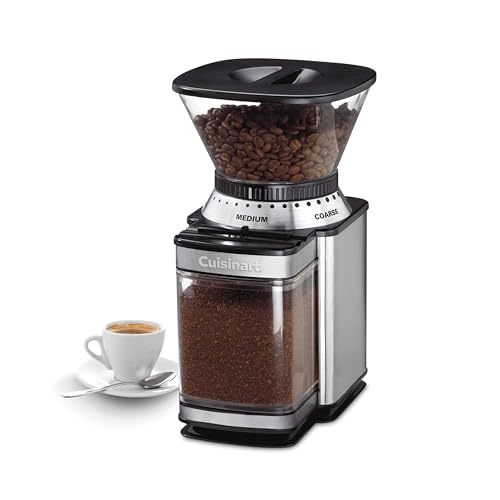
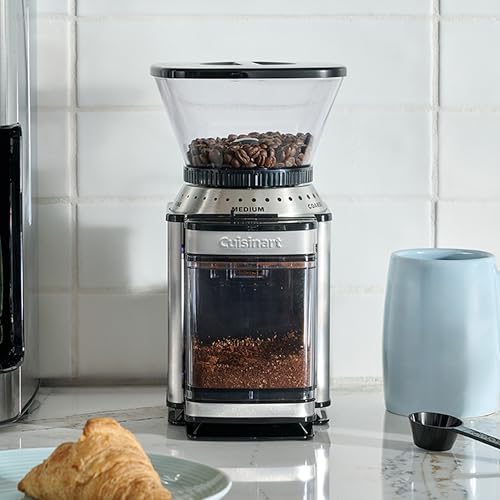
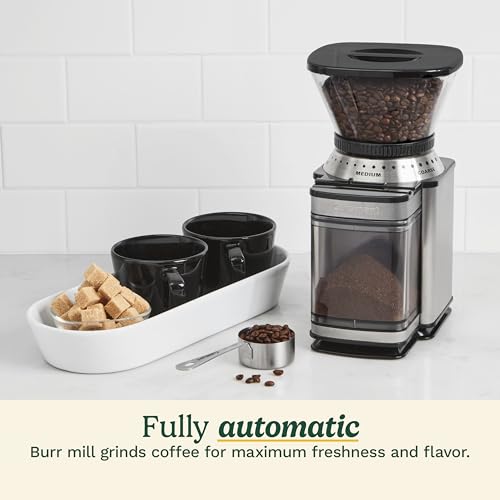
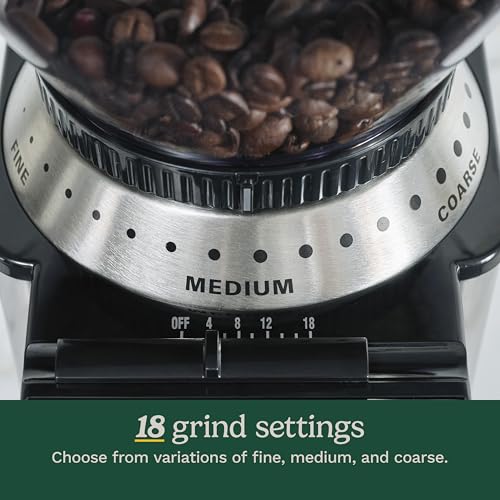
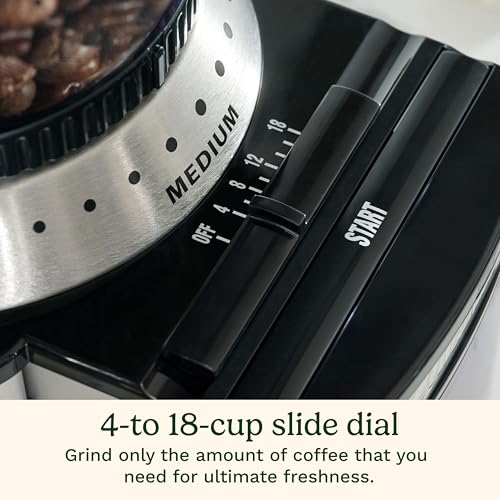
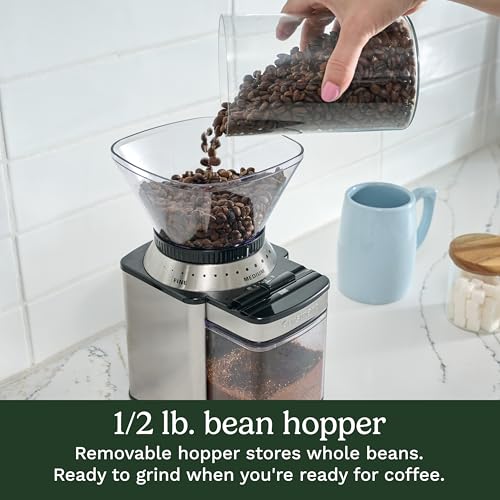
This Cuisinart is built for one thing: grinding a lot, all at once. With an 18-cup maximum and a wide 8 oz bean hopper, it’s a smart pick if you’re serving a group or prepping several French press carafes. The flat burrs deliver a consistent range from fine to coarse, and the 18-position grind selector gives solid control, though not as fine-tuned as the RIOSKY or SHARDOR models. The one-touch automatic grind with auto-shutoff is reliable, and the removable parts make cleaning manageable, though static can be an issue.
Where it falls short is in refinement. Flat burrs generate more heat than conical ones over time, and some reviewers note a slight scorching smell during long grinds. It’s also bulkier than most, so it eats counter space. But if your main goal is efficiency and volume, say, for weekend brunches or office use, this grinder clears the bar. Just don’t expect the silky consistency needed for espresso.
Product photos
SHARDOR Conical Burr Coffee Grinder
Strengths
- Excellent anti-static
- 48 grind settings
- Large hopper
Trade-offs
- No cup selection
- Timer maxes at 40s
- Basic exterior finish
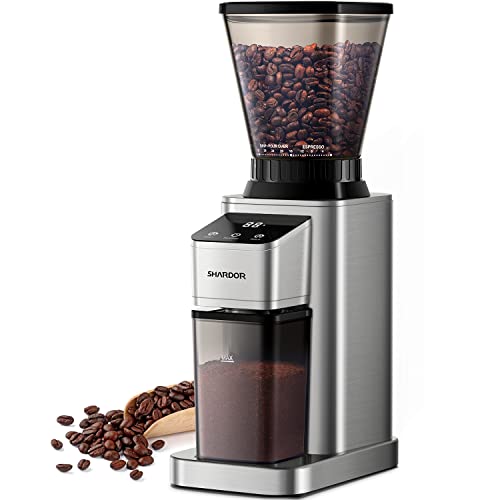
This SHARDOR model is where value meets performance for French press users. The 48 grind settings cover everything from espresso to coarse French press, and the low-speed conical burrs do a good job preserving volatile aromatics. Owners highlight the upgraded anti-static tech as a real improvement, less mess, more grounds actually making it into the pot. The 9.7 oz hopper is one of the largest in its class, and the 1-second timer increments add useful precision.
Compared to the RIOSKY, it has fewer settings but a more robust build and simpler interface. It lacks a cup selector, which some might miss, but the grind quality is consistently praised for French press and pour-over. It’s not as quiet as the KRUPS burr model, but it’s far from loud. For the price, it delivers burr grinder benefits without the premium tag, making it my top pick for most French press drinkers who want quality without overthinking it.
Product photos




KRUPS Precision Burr Coffee Grinder
Strengths
- Affordable burr grinder
- Auto-stop feature
- Decent capacity
Trade-offs
- Flat burrs heat up
- Plastic build
- Limited grind refinement
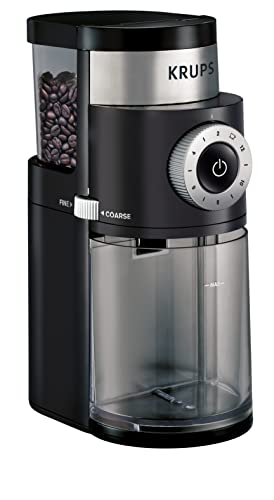
This KRUPS burr grinder is a solid entry-level option that doesn’t pretend to be more than it is. With 12 settings and flat stainless steel burrs, it covers French press, drip, and even cold brew adequately. The auto-stop feature based on cup selection (2–12 cups) is convenient, and the 8 oz hopper is decent for daily use. It’s one of the more affordable burr grinders out there, and that matters for budget-conscious buyers.
But you feel those savings in the details. The grind consistency isn’t as tight as conical burr models, especially toward the finer end, and the plastic housing feels thin. Owners report it works well for French press, where some inconsistency is forgivable, but it struggles with espresso. If you’re stepping up from a blade grinder, this is a real upgrade. But if you’re serious about French press clarity and body, spending a bit more for conical burrs like the SHARDOR or OXO is worth it.
Product photos


OXO Brew Conical Burr Grinder
Strengths
- Uniform coarse grind
- One-touch memory
- UV-protected hopper
Trade-offs
- Higher price point
- No 1-second timer
- Hopper not dishwasher-safe
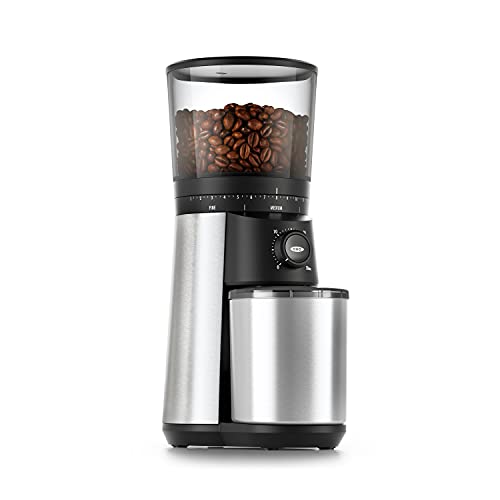
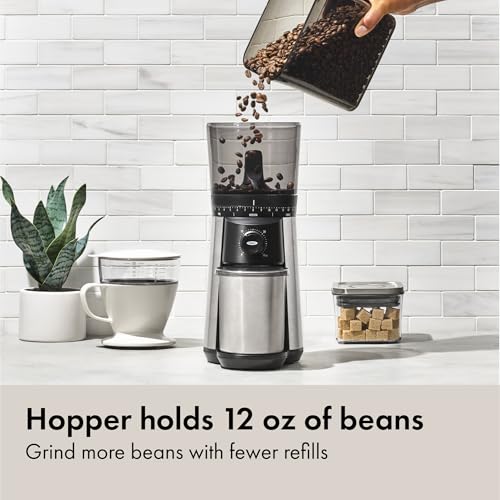
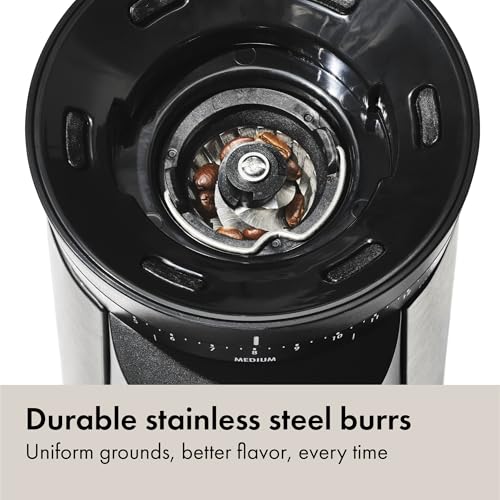
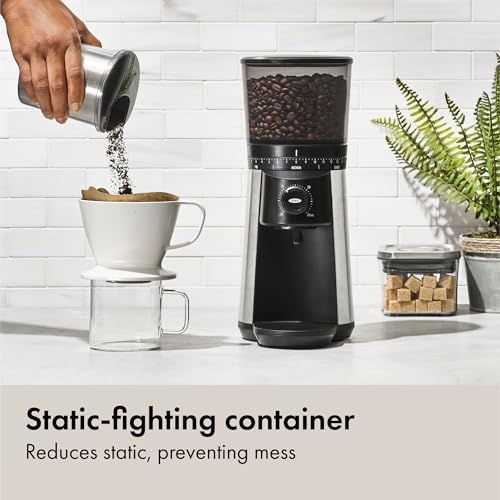
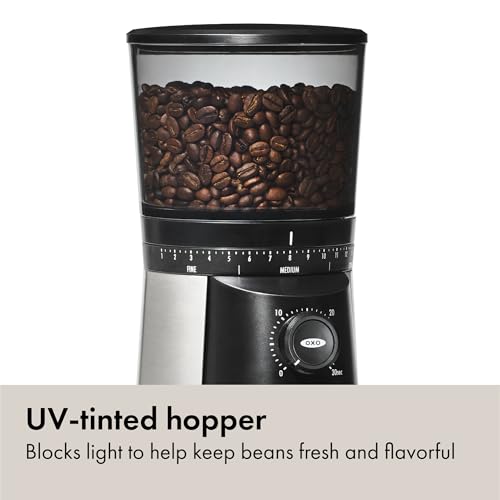
This is the grinder I’d recommend to a friend who wants one machine to do it all, especially for French press. The 15 grind settings (plus micro-adjustments) deliver impressively uniform grounds, and the conical stainless steel burrs stay cool, preserving delicate flavor notes. The one-touch start with memory function is a small luxury that adds up over time, and the UV-blocking hopper is a thoughtful touch for light-exposed kitchens. Reviewers consistently praise its consistency, ease of use, and clean grind delivery.
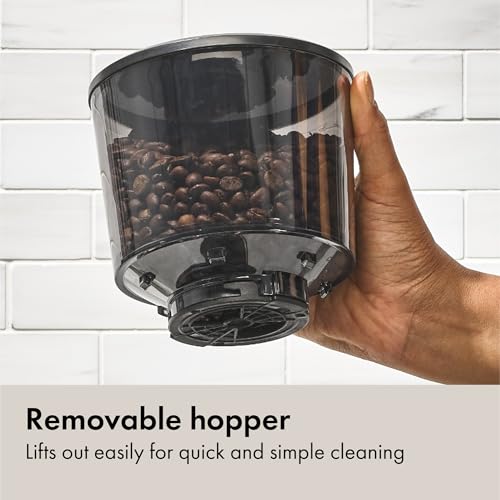
It’s also built well, the static-fighting container works as advertised, and the trap door prevents spills when removing the hopper. Compared to the RIOSKY and SHARDOR, it’s less about raw settings and more about refined execution. It’s pricier, but the Wirecutter endorsement isn’t fluff. For French press, it gives you that sweet spot: coarse enough to avoid sludge, uniform enough for balanced extraction. If you brew multiple methods, this is the most versatile pick.
Product photos
SHARDOR Super Silent Blade Grinder

Strengths
- Very quiet
- Timed knob control
- Removable bowl
Trade-offs
- Blade inconsistency
- No grind settings
- Static issues
This SHARDOR blade grinder wins on one thing: quiet operation. At 63 dB, it’s among the quietest electric grinders you’ll find, and the timing knob with visible marks makes repeatable coarse grinds possible. The 2.5 oz capacity handles up to 10 cups, which is solid for a blade model, and the removable stainless steel bowl is easy to clean. For travelers or apartment dwellers, that silence is a real perk.
But again, this is a blade grinder. No matter how quiet or well-marked, blades chop rather than crush, leading to uneven particles. French press needs consistency to avoid under- and over-extraction, and this model just can’t deliver it. Owners say it’s fine for drip or occasional use, but not for dialed-in brewing. If noise is your only concern, it’s a decent temporary fix. But for better coffee, even an entry-level burr grinder is a smarter long-term move.
Product photos


CEVING 60g Manual Coffee Grinder

Strengths
- Large 60g capacity
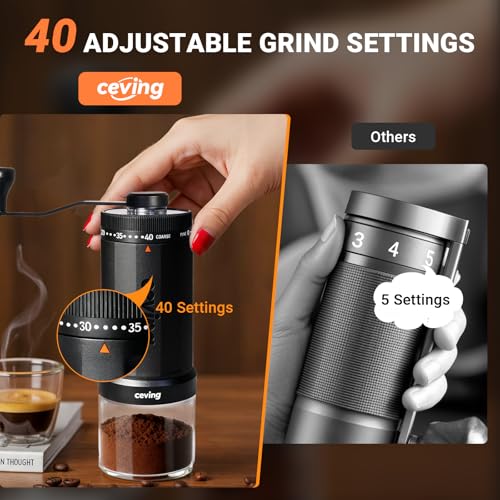
- 40 precise click settings
- Ultra-portable
Trade-offs
- Manual effort required
- No electric option
- Limited for large households
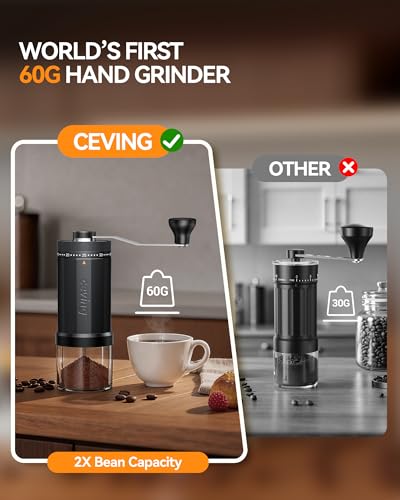
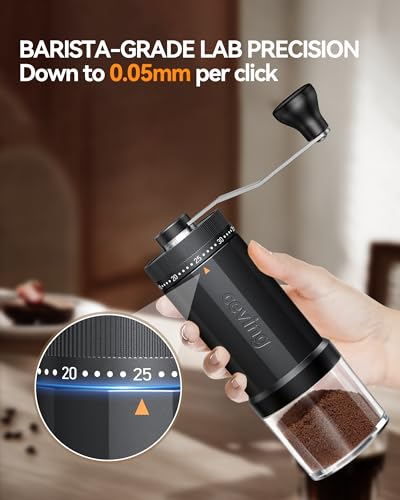
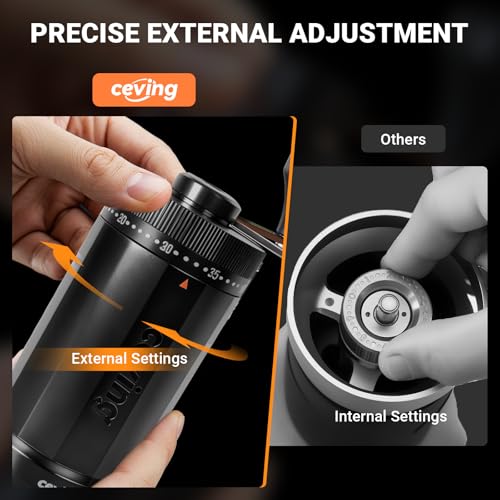
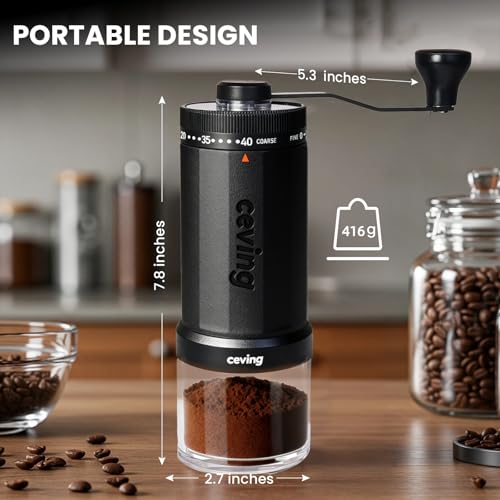
Manual grinders usually force a trade-off: portability or capacity. This CEVING model breaks that mold with a 60g hopper, double most manual grinders, making it ideal for French press without needing two grinds. The 40 external click settings are a standout for on-the-go adjustments, and the 0.05mm increments mean real precision. Stainless steel burrs deliver a surprisingly consistent coarse grind, and the compact, lightweight design makes it perfect for travel, camping, or small kitchens.
Owners love how fast it grinds relative to other hand mills, and the anti-static tip (a light water mist) actually helps. It’s not silent, expect some hand-cranking noise, but it’s whisper-quiet compared to electric models. For French press enthusiasts who value freshness and portability, this is the one to beat. It’s not for high-volume daily use at home, but for weekend trips or slow mornings, it’s unmatched.
Product photos
How We Picked These coffee grinder for french press
As Bean Thusiast’s founder, I’ve spent years immersed in the world of coffee, and choosing the right grinder is fundamental to a great French press brew. Rather than a hands-on lab test, this research was a comparison of published specifications and features across numerous models, combined with careful consideration of owner reviews and expert opinions. We ranked grinders based on how well they align with the needs of French press brewing, focusing on consistency, usability, and value.
For French press, grind size and consistency are paramount. We heavily weighted the ability to achieve a coarse, uniform grind – avoiding fines that slip through the filter – and the ease with which a grinder could reliably deliver that. Equally important was hopper capacity and overall build quality, as French press often involves brewing larger batches. Understanding the difference between a burr vs blade grinder is key to achieving a truly satisfying cup.
Specifications reliably indicate burr type (conical vs. flat) and grind settings, giving a baseline for potential performance. However, owner feedback proved crucial in assessing real-world consistency, noise levels, and long-term durability. Expert reviews helped validate claims around grind quality and identify models known for delivering a truly consistent French press grind. Ultimately, we prioritized grinders that consistently received positive feedback regarding grind quality for French press and offered a good balance of features for the price.
What To Look For In coffee grinder for french press
Choosing the right grinder is critical; a poor grind ruins a French press experience.
A quality coffee grinder for French press use should prioritize consistent, coarse grounds. Look for burr grinders (conical or flat) over blade grinders, adjustable grind settings specifically including coarse options, and a hopper capacity suitable for your typical batch size. Consistent particle size is paramount for even extraction, minimizing bitterness and maximizing flavor.
Grind Consistency Is Key
For French press, consistency is far more important than a super-fine grind. Unlike espresso, where tiny variations matter immensely, the larger particles in a French press grind need to be uniform to avoid over- and under-extraction happening simultaneously. Blade grinders simply can’t achieve this – they chop beans randomly, creating a mix of boulders and dust. Investing in a burr grinder, even a manual one, will unlock noticeably better flavor. A burr grinder for French press is the foundation of a good brew.
Hopper Size and Ease of Cleaning
Consider how much coffee you typically brew at once. A small hopper is fine for single servings, but a larger one (12 ounces or more) saves time if you’re brewing for a family or refilling frequently. Equally important is how easy the grinder is to disassemble and clean. Coffee oils build up and can go rancid, affecting flavor. Removable burrs and chambers are a huge plus.
- A small hopper (under 8oz) is best if you grind single cups regularly.
- A mid-size hopper (8-12oz) suits most households, offering a balance of convenience and freshness.
- Larger hoppers (over 12oz) are ideal for frequent, large-batch brewing, but require more attention to bean freshness and potential static buildup.
Balancing Features and Value
While high-end grinders offer incredible precision and features, you don’t need to spend a fortune for a great French press experience. Many excellent grinders strike a sweet spot between performance and price. Don’t get caught up in chasing every bell and whistle. Sometimes, a simpler grinder with reliable burrs and consistent settings is all you need. Finding the best burr grinder for French press doesn’t always mean buying the most expensive model.
Always err on the side of a coarser grind for French press. You can always adjust finer, but it’s difficult to recover from a grind that’s too fine and produces muddy, bitter coffee.
Coffee Grinder for French Press Compared
Here’s a comparison of key specifications for coffee grinders suited for French press brewing.
| Product Title | Grind Settings | Capacity (Beans) | Burr Type | Motor Type | Noise Level | Special Features |
|---|---|---|---|---|---|---|
| OXO Brew Conical Burr Grinder | 15 + Micro | 12 oz | Conical | DC | N/A | UV-Blocking Hopper |
| SHARDOR Conical Burr Coffee Grinder | 48 | 9.7 oz | Conical | N/A | N/A | Electronic Timer |
| CEVING 60g Manual Coffee Grinder | 40 | 60g | Stainless Steel | Manual | N/A | Large Capacity, Portable |
| RIOSKY Electric Conical Burr Grinder | 60 | N/A | Conical | N/A | N/A | Precise Timer |
| SHARDOR Super Silent Blade Grinder | Adjustable | 2.5 oz | Blade | N/A | 63 dB | Quiet Operation |
| KRUPS Silent Vortex Grinder | N/A | N/A | N/A | N/A | Quiet | 3-in-1 (Beans, Spices) |
| Cuisinart Automatic Burr Grinder | 18 | 8 oz | Flat | N/A | N/A | Large Batch (4-18 Cups) |
| KRUPS Precision Burr Coffee Grinder | 12 | 8 oz | Metallic | N/A | N/A | 2-12 Cup Capacity |
Frequently Asked Questions
What grind setting number should I start with for French press?
Begin with a setting around 15-18 on most burr grinders (if numbered). You’ll likely need to adjust from there, but this provides a good coarse starting point to avoid fine particles in your brew.
Are blade grinders completely unusable for French press?
While burr grinders are strongly recommended, a blade grinder can be used with careful pulsing. However, achieving a consistently coarse grind is extremely difficult, leading to uneven extraction and a less flavorful cup.
How often should I clean my coffee grinder?
You should thoroughly clean your grinder every 1-2 weeks for regular use (2-3 times per week). This prevents build-up of coffee oils, which can become rancid and negatively impact the taste of your coffee.
What’s the advantage of a conical burr grinder over a flat burr grinder for French press?
Conical burrs generally produce less heat and noise during grinding, which can help preserve the coffee’s aroma. For French press, where extremely fine particle control isn’t as crucial as with espresso, the difference is less pronounced, but conical burrs are often found in more affordable, quality grinders.
I travel frequently. What’s a good option for grinding coffee on the go?
If you need a truly portable solution, consider a portable press coffee grinder. These hand grinders are compact, don’t require electricity, and can deliver a surprisingly consistent coarse grind for French press when you’re away from home.
The Bottom Line
Choosing a coffee grinder for French press often comes down to balancing control with convenience. While some prefer the tactile experience and portability of a manual grinder, the consistency and ease of use of an electric burr grinder ultimately deliver the most reliable results. For overall performance and a fantastic cup, I recommend the OXO Brew Conical Burr Grinder.
If you’re on a tighter budget, the SHARDOR Conical Burr Coffee Grinder offers excellent value. For those needing maximum versatility, the Cuisinart Automatic Burr Grinder handles larger batches with ease. And for truly portable, off-grid brewing, the CEVING 60g Manual Coffee Grinder is a solid pick. Understanding proper coffee grinder usage is essential with any model.
Ultimately, the best grinder isn’t about chasing the highest number of settings or the quietest operation. It’s about achieving a consistent, coarse grind that unlocks the full flavor potential of your beans. Paying attention to grind quality and freshness – and mastering adjusting grind size for French press – will make a far bigger difference than any single “feature” ever could.
