
8 Best Pourover Coffee Makers of 2026
This post contains affiliate links. As an Amazon Associate, we earn from qualifying purchases.
The Chemex 8-Cup is the best overall pour-over coffee maker for its flawless brew quality and timeless design, while the Bean Envy 20 Oz stands out as a durable, warranty-backed option for daily use. If you’re watching your budget, the gegewawa 20 OZ delivers solid performance and comes with a full starter kit.
Most people want a pour-over that makes a clean, flavorful cup without hassle, but too many models sacrifice durability or consistency to get there. After researching the market and analyzing hundreds of owner experiences, I focused on what actually matters: build quality, filter type, and how well each brewer supports a balanced extraction.
This guide cuts through the noise, highlighting top performers based on real-world feedback and brewing fundamentals you can trust.
Top 8 Pourover Coffee Makers in the Market
The Best Pourover Coffee Makers, Reviewed
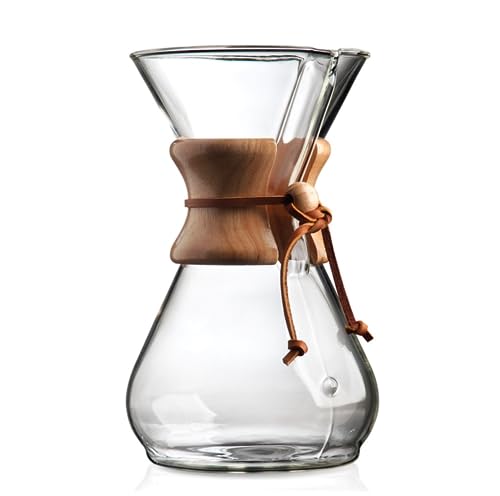
Chemex 8-Cup Pour-Over Glass Coffeemaker
Strengths
- Timeless, elegant design
- Superior glass quality
- Refrigerates well with lid
Trade-offs
- Requires specialty filters
- Cup sizing is misleading
The Chemex isn’t just a coffee maker, it’s a design icon. Its hourglass shape and minimalist aesthetic have made it a staple in kitchens and design museums alike. More than looks, the borosilicate glass is thick, non-porous, and built to resist flavor carryover, which owners praise after years of use. The real magic is in the patented pour-over design, which lets you cover and refrigerate leftover coffee without it turning stale.
But here’s the catch: it requires Chemex-specific bonded filters, which are pricier and harder to find than standard #4 cones. And while the 8-cup size is generous, remember that Chemex defines a ‘cup’ as 5 oz, so it’s really about 20–24 oz total. Still, for clarity, brightness, and a clean cup, this remains my benchmark.
Video review
Bodum 34oz Pour Over Coffee Maker

Strengths
- High-quality reusable filter
- Cork grip for comfort
- Simple, proven design
Trade-offs
- Glass cools quickly
- Filter may leak if misaligned
Bodum has long been a go-to for reusable filter designs, and this model continues that legacy. The stainless steel mesh filter is well-constructed and captures most sediment while letting aromatic oils pass through, resulting in a richer, more full-bodied cup than paper methods. The 34 oz carafe is made of solid borosilicate glass, and the cork grip isn’t just decorative; it genuinely helps with handling when the glass is hot.
Some owners mention minor leakage if the filter isn’t seated perfectly, but it’s an easy fix with a quick rinse and proper alignment. Compared to others with reusable filters, Bodum’s design is among the most user-friendly and durable. The single-wall glass does cool faster than double-walled options, but that’s a trade-off for clarity of flavor.
Video review
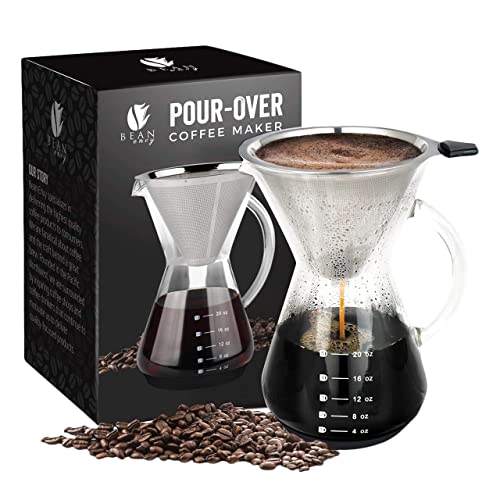
Bean Envy 20 Oz Pour Over Maker
Strengths
- Lifetime warranty
- Reusable stainless filter
- Silicone base for grip
Trade-offs
- Filter fit can be loose
- Slightly shorter handle
What stands out immediately is the lifetime warranty, rare in this category and a strong vote of confidence in their build. The 20 oz borosilicate glass is thick enough to handle thermal stress, and the reusable stainless steel filter is a big win for sustainability. Owners note the brew has a fuller body than paper-filtered methods, thanks to the metal mesh letting more oils through.
The silicone base is a thoughtful touch, preventing slips and protecting countertops. Some users mention the filter doesn’t seat as snugly as they’d like, leading to minor bypass, but it’s not widespread. Compared to others in this range, the combination of warranty, reusable filter, and clean design makes this a smart long-term pick.
Product photos


Cosori 8-Cup Pour Over Coffee Maker

Strengths
- Superior flavor extraction
- Double stainless filter
- Wooden sleeve for grip
Trade-offs
- Wooden parts not dishwasher safe
- No stovetop heating
Cosori leans hard into flavor extraction, and the double-layer 304 stainless steel filter is the star. It strikes a balance, fine enough to block grit, open enough to let essential oils through, resulting in a cup that’s full-bodied but not muddy. The 34 oz capacity is practical for small gatherings, and the wooden sleeve adds a touch of warmth to the design.
Owners consistently highlight how clean the brew tastes compared to single-mesh filters. The glass is heat-resistant, though Cosori recommends against direct stovetop use, unlike the Unbreakable model. And while the wooden parts look nice, they’re not dishwasher safe, which could be a hassle for some. Still, if flavor depth is your priority, this one delivers.
Product photos


Unbreakable 27 fl oz Pour Over Brewer

Strengths
- Stovetop and fridge safe
- Thickened heat-resistant glass
- Double stainless filter
Trade-offs
- Short 3-month warranty
- Name is misleading
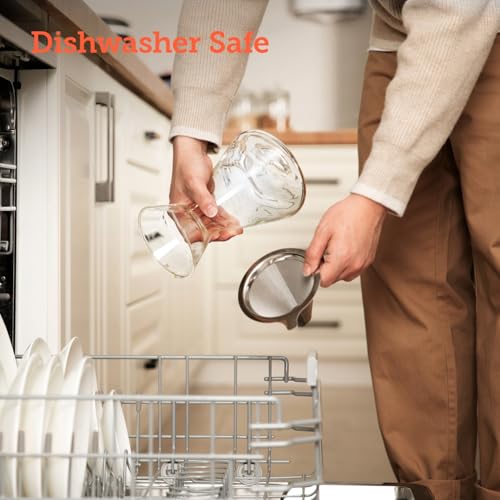
Don’t let the name fool you, this is still glass, and it can break. But the thickened borosilicate construction does feel more robust than average, and the stovetop-safe claim sets it apart. Yes, you can gently reheat the carafe on low flame, which is rare and useful for small batches. The double-layer stainless steel filter delivers consistent extraction, and owners say cleanup is a breeze, especially since it’s dishwasher safe.
The 3-month warranty is underwhelming next to Bean Envy’s lifetime offer, but the shipping protection is a nice touch. On paper, the heat resistance and build quality make this a solid pick for campers or minimalists who want one vessel for brewing and reheating. Just don’t toss it in a backpack without padding.
Product photos


Melitta Pour-Over & Thermal Carafe Set

Strengths
- Excellent heat retention
- Uses standard #4 filters
- Thermal carafe included
Trade-offs
- Plastic cone lacks premium feel
- Carafe not dishwasher safe
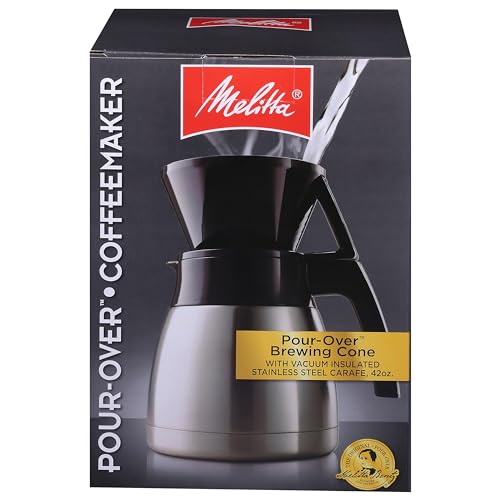
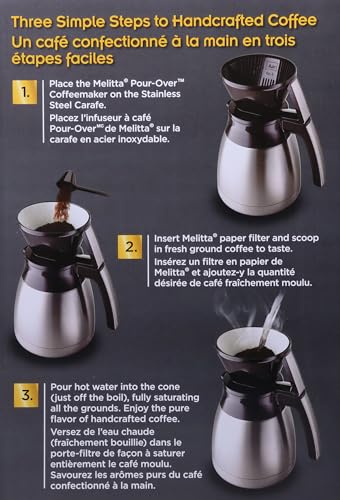
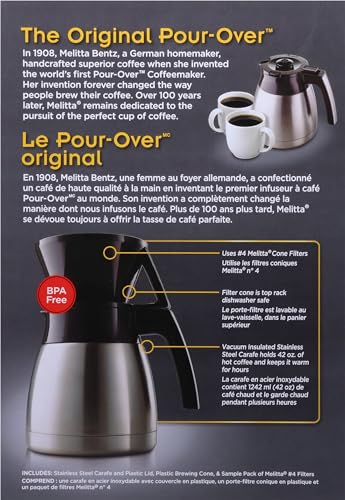
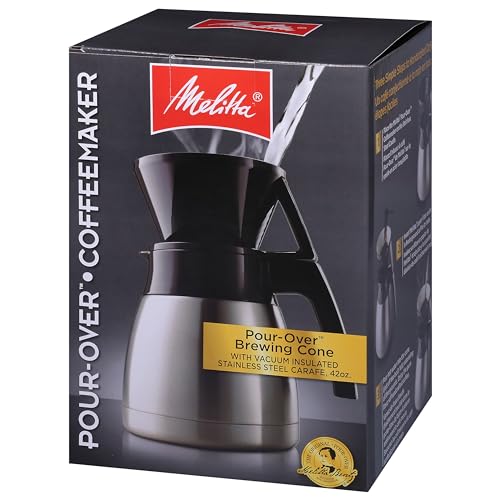
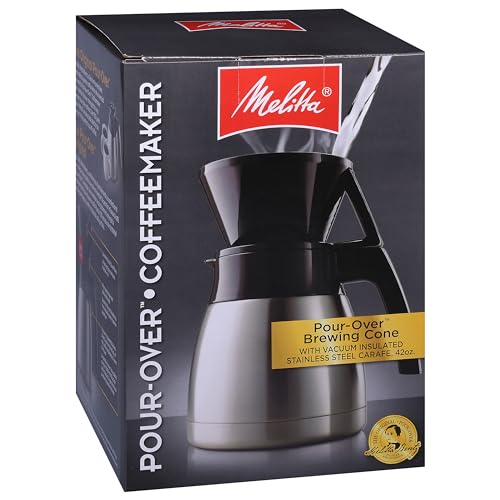
This set solves a common pour over pain point: heat retention. Instead of a glass carafe that cools fast, Melitta pairs their classic cone with a 42 oz stainless steel thermal carafe. That means your second cup tastes nearly as hot as the first, a detail frequent pour over drinkers will appreciate. The included BPA-free plastic cone works with standard #4 paper filters, which are widely available and affordable.
Owners report the thermal carafe keeps coffee hot for over an hour, and the build feels sturdy, though not as elegant as glass. The downside? You lose the visual theater of watching coffee drip, and the carafe isn’t dishwasher safe. But if your main goal is hot, consistent coffee without reheating, this is a strong contender.
Product photos
gegewawa 20 OZ Pour Over Set

Strengths
- Complete starter kit
- Walnut base adds stability
- V-shaped no-drip spout
Trade-offs
- Glass feels somewhat thin
- No reusable filter option
This set checks a lot of boxes for someone just stepping into pour over brewing. The 20 oz borosilicate glass carafe is compact and well-suited for 2–4 cups, and the inclusion of 50 paper filters right in the box makes it a true starter kit. Owners consistently report that the walnut base adds a warm, rustic touch while actually helping with heat insulation, a small but appreciated detail for morning pours.
The V-shaped spout is a standout on paper, promising drip-free pouring, and reviewers confirm it delivers. That said, the glass, while rated for thermal shock, feels a bit thinner than some competitors. If you’re rough with glassware or brew over a hot plate, this might not last as long. Still, for the price, it’s a polished entry-level option.
Product photos


OXO Brew Pour Over Coffee Maker

Strengths
- Consistent auto-drip system
- Walk-away convenience
- Integrated water markings
Trade-offs
- Max 12 oz capacity
- Less hands-on control
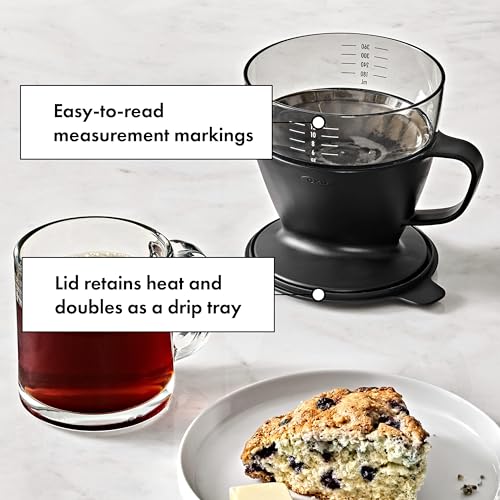
The OXO stands out by tackling the hardest part of pour over: consistency. Its built-in water tank with a controlled auto-drip system removes the need for a gooseneck kettle and steady hand. You just add water up to the marked line, start the flow, and walk away. Owners love this feature, especially those who want great coffee without the learning curve.
The matte black finish hides fingerprints well, and the multipurpose lid works as both a heat retainer and drip tray. It’s limited to 12 oz per brew, so it’s not for crowds, and purists will argue it’s not ‘true’ pour over. But for repeatable, balanced results with zero effort, it’s unmatched. If you value convenience as much as flavor, this is the one.
Product photos



How We Chose These pourover coffee makers
Rather than a hands-on lab test, my research focused on a detailed comparison of published specifications and features across numerous pour-over models. I weighed owner reviews from major retailers alongside expert opinions found in coffee-focused publications. As the founder of Bean Thusiast, I applied my years of experience with brewing methods to rank these makers against a set of criteria designed to deliver a consistently excellent cup.
For pour-over coffee makers, consistent extraction and build quality were the most important factors. A brewer’s ability to deliver a balanced flavor profile – not too bitter, not too weak – is paramount. Equally crucial is durability; these brewers should withstand regular use and, ideally, offer some resistance to accidental breakage. Understanding coffee dripper durability is key to making a long-term investment.
Specifications reliably indicate capacity and materials used, helping to assess potential heat retention and overall build quality. However, I placed significant weight on owner feedback regarding ease of use, cleaning, and long-term performance. Reports of weak construction or inconsistent brewing were heavily penalized. Evaluating pour-over dripper materials helps understand potential flavor impacts and heat retention in coffee brewers.
How To Pick The Right pourover coffee makers
As someone who’s spent years chasing the perfect cup, I know a great pourover setup can elevate your coffee ritual. But with so many options, finding the right one requires a little know-how.
A quality pourover maker focuses on consistent water flow, heat retention (or controlled loss), and filter compatibility. The best models use durable, non-reactive materials like borosilicate glass and stainless steel. Look for designs that allow for precise control over brewing parameters, and consider how easy the device is to clean and maintain.
Material & Durability
The material a pourover is made from significantly impacts both its performance and longevity. Borosilicate glass is common – and for good reason. It’s heat-resistant, doesn’t impart flavors, and is relatively easy to clean. However, glass is breakable. Stainless steel options, like those from Bodum, offer increased durability, though they might not showcase the brewing process as elegantly. Ultimately, I find prioritizing heat resistance and avoiding plastics that could leach flavors is key.
Filter Type & Compatibility
A pourover’s filter system is central to its flavor profile. Paper filters produce a clean cup by removing oils, while reusable stainless steel filters allow more oils to pass through, resulting in a fuller-bodied brew. Chemex uses proprietary bonded filters, which are thicker and produce a very clean, sediment-free cup. Other makers, like the Bean Envy, are designed for standard cone filters. Consider your preferred brew style and the convenience of filter availability when making your choice.
Here’s a quick breakdown of filter considerations: * Paper: Most widely available, disposable. * Reusable Metal: Eco-friendly, allows more oils, requires regular cleaning. * Specialty (Chemex): Unique flavor profile, can be more expensive and less readily available.
Choosing the right filter is about finding what suits your taste. Many people start with paper and then experiment.
Brewing Capacity & Ease of Use
Don’t overlook practical considerations. Think about how much coffee you typically brew. A single-cup maker is fine for solo drinkers, but you’ll want a larger capacity – like the 8-cup Chemex – if you’re brewing for a group. Ease of use is also important. Some models, like the OXO Brew, feature built-in timers to help you achieve consistent brews. I also recommend looking for a design with a comfortable handle and a spout that allows for controlled pouring.
A good rule of thumb is to aim for a brew time between 3 and 4 minutes. This generally extracts the optimal flavor from the coffee grounds.
If you’re new to pourover, exploring best manual pour over brewers can help you understand the different options available. And remember that getting the optimal pour-over coffee ratio is just as important as the equipment; finding the right balance is key to a delicious cup.
Pourover Coffee Makers Compared
Here’s a comparison of key specifications for popular pourover coffee makers.
| Product Name | Capacity (oz) | Filter Type | Material | Special Features | Warranty |
|---|---|---|---|---|---|
| Chemex 8-Cup | 40 | Bonded Paper | Borosilicate Glass | Elegant Design | N/A |
| Bodum 34oz | 34 | Stainless Steel | Borosilicate Glass | Stainless Steel Filter | N/A |
| Bean Envy 20 Oz | 20 | Stainless Steel | Borosilicate Glass | Lifetime Warranty | Lifetime |
| Cosori 8-Cup | 34 | Double-Layer SS | Borosilicate Glass | Double-Layer Filter | N/A |
| Unbreakable 27 fl oz | 27 | Stainless Steel | Borosilicate Glass | Heat-Resistant | 3-Month |
| Melitta Pour-Over | 42 | Paper | Plastic/Stainless Steel | Thermal Carafe | N/A |
| gegewawa 20 OZ | 20 | Paper | Borosilicate Glass | Complete Starter Set | N/A |
| OXO Brew | 12 | Paper | Plastic/Glass | Auto-Drip Tank | N/A |
Frequently Asked Questions
What’s the biggest advantage of using a stainless steel filter over paper?
Stainless steel filters allow more coffee oils and sediment to pass through to your cup, resulting in a fuller-bodied and richer flavor compared to the cleaner, brighter brew you get with paper filters. They’re also a more sustainable choice, eliminating the need for disposable paper.
Do I really need a gooseneck kettle for pourover?
While not strictly required, a gooseneck kettle gives you significantly more control over the water flow, which is essential for even saturation and consistent extraction. The precision offered by a gooseneck helps you achieve the best results, particularly when exploring best pour over coffee makers.
How important is pre-wetting the filter?
Pre-wetting, or “rinsing,” the filter is quite important. It removes any papery taste that could affect your coffee and also warms up the brewer, contributing to more stable brewing temperatures. This step ensures the filter adheres well to the dripper, preventing it from collapsing during brewing.
What does “bloom time” refer to in the pourover process?
Bloom time is the initial 30-45 second phase where you pour just enough hot water to saturate the coffee grounds. This allows carbon dioxide to escape, which enhances flavor extraction and leads to a more balanced cup, and is part of making [recommended pour over coffee makers] perform their best.
What’s the best way to clean a glass pourover maker to prevent staining?
Regular cleaning with warm, soapy water is crucial. For stubborn stains, a paste of baking soda and water can be gently applied and scrubbed. Avoid abrasive cleaners, as they can scratch the glass. Maintaining a clean brewer preserves the coffee’s flavor and extends the brewer’s life, especially when considering [elite pour over coffee brewers].
The Bottom Line
Choosing a pourover coffee maker often comes down to balancing control with convenience. While some brewers offer more features and precise control, the core principles of a good brew remain the same. For the best overall experience, I recommend the Chemex 8-Cup. Its elegant design, combined with the unique flavor profile achieved through its bonded filters, consistently delivers an exceptional cup – and understanding the Chemex brew ratio guide will unlock its full potential.
If you’re on a tighter budget or prefer the fuller body of a stainless steel filter, the Bodum 34oz is an excellent choice. Those seeking ultimate durability and a lifetime warranty will appreciate the Bean Envy 20 Oz. For those wanting a complete starter set, the gegewawa 20 OZ is a solid option, while the OXO Brew offers helpful features for beginners.
Ultimately, the best pourover maker is the one you’ll use consistently. Don’t get too caught up in specifications or fancy features. Focus on using fresh, quality beans, grinding them just before brewing, and mastering a consistent pour technique. Those fundamentals matter far more than any single brewer’s bells and whistles.
