
Choosing a Coffee Dripper: Ceramic vs Stainless Steel Guide
Choosing between a ceramic and stainless steel coffee dripper comes down to thermal mass. Ceramic, like the Hario V60 Ceramic 02, holds heat better for stable extraction temperatures. Stainless steel, like a Kalita Wave 185, heats and cools fast, offering speed and near-indestructible durability.
Most guides tell you ceramic is for heat retention and steel is for durability. That’s surface-level. The real split happens in the first ninety seconds of your brew and in how you handle the dripper after the last drop falls.
Let’s break down the physics, the practical trade-offs, and the few situations where the material genuinely changes your cup.
Key Takeaways
- Preheat ceramic, not steel. A ceramic dripper’s high thermal mass sucks heat from your water unless you preheat it thoroughly with 200°F water for at least 30 seconds. Skip this, and your brew temperature drops 5–10°F.
- Stainless steel is a tool, ceramic is a ritual. Steel drippers survive drops, dishwashers, and travel. Ceramic demands careful handling and hand-washing but offers a traditional, grounded brewing experience.
- Filter shape often outweighs material. A flat-bottom Kalita Wave filter in a stainless steel brewer creates a more consistent, sweeter cup for most people than a conical V60 filter in ceramic, regardless of the ceramic’s heat stability.
- Acidity vs. sweetness leans on material. The faster heat loss of stainless steel can slightly accentuate brighter, acidic notes in light roasts. Ceramic’s stability can promote more balanced sweetness.
- Your sink matters. Hard water leaves visible mineral spots on stainless steel. It stains lighter ceramic glazes over time. Consider your water’s chemistry in the long-term look of your gear.
Ceramic vs Stainless Steel: The Core Material Showdown
This isn’t about which looks better on your shelf. It’s about how each material interacts with energy, specifically, the heat from your water. Get this wrong, and you’re brewing with a variable you didn’t plan for.
Ceramic drippers, like the Hario V60 Ceramic 02 (model VDC-02), are made from clays like Arita-yaki and fired at high temperatures. This process creates a porous, dense structure with high thermal mass. Think of a brick in the sun, it takes a long time to get hot, but once hot, it stays hot. In brewing terms, that mass acts as a heat buffer. Once preheated, it helps maintain a stable slurry temperature, which is the cornerstone of even extraction. Authority figures like Scott Rao emphasize this thermal stability as critical for unlocking a coffee’s full sweetness and avoiding sour, under-extracted notes.
The thermal mass of ceramic brewers stabilizes slurry temperature, a key variable for even extraction. Preheating is non-negotiable to avoid the material acting as a heat sink during the initial pour phase.
Stainless steel is a different beast. It’s a metal alloy, typically from the ferritic or austenitic families, known for low thermal mass and high thermal conductivity. A stainless steel Kalita Wave 185 heats up almost instantly when you rinse it. It also cools down fast. This means it exerts almost no influence on your brew temperature, what you pour is what you get. The trade-off is that the slurry can lose heat slightly faster to the surrounding air, especially in a drafty kitchen or with a slow pour. For a full technical breakdown of these material properties, the WorldStainless ferritic steel datasheet provides the underlying science on conductivity and corrosion resistance.
The choice here is control versus consistency. Ceramic gives you a fighting chance at a rock-steady temperature, but you must manage its initial heat debt. Stainless steel removes that variable entirely, making your technique and environment the primary drivers.
TL;DR: Ceramic stabilizes temperature if preheated; stainless steel gets out of the way, making your kettle and pour the sole heat sources.
The Flavor Impact: Does Material Actually Change the Coffee?
Yes, but not in the way a new grinder or different water would. The material’s effect is indirect, mediated entirely through temperature. If you brew two cups side-by-side with identical grind, dose, water, and pour technique, the difference is subtle. Most people would struggle to pick it out in a blind tasting. But the conditions that highlight the difference are predictable.
Use a light roast, single-origin coffee from Ethiopia or Kenya, beans known for bright, acidic notes. Brew it in a stainless steel dripper on a cool morning. The faster heat loss might sharpen those acidic, tea-like qualities. Brew the same beans in a fully preheated ceramic dripper. The sustained heat can round out those sharp edges, allowing more sugary, caramelized notes to come forward. The difference isn’t “better” or “worse”, it’s a shift in balance.
For darker roasts or coffee bean blends designed for chocolatey, nutty flavors, the material matters less. The roast characteristics dominate. The thermal stability of ceramic might add a hint more body, but it’s marginal.
The bigger lever for flavor is your filter paper choice. A flat-bottom paper, like the Kalita Wave 185 filter, creates a more consistent, immersion-like extraction that favors sweetness and balance. A conical filter, like the V60, emphasizes clarity and acidity. This filter shape difference will swamp any flavor change caused by switching from a ceramic V60 to a stainless steel Wave. If you’re chasing a specific flavor profile, pick the filter shape first, then consider the material.
| Brewing Scenario | Ceramic Dripper Likely Outcome | Stainless Steel Dripper Likely Outcome |
|---|---|---|
| Light roast, fast pour | Balanced, slightly sweeter cup | Brighter, more acidic highlights |
| Dark roast, any method | Minimal difference from steel | Minimal difference from ceramic |
| Cold kitchen/drafty space | Better temperature defense | Faster heat loss, accentuates acidity |
| Beginner, still learning pours | Forgiving if preheated, punishing if not | Consistent baseline, less variable |
The Practical Reality: Cleaning, Durability, and Feel
You touch your dripper for five minutes a day. You clean it for thirty seconds. How it survives the other 23 hours matters.
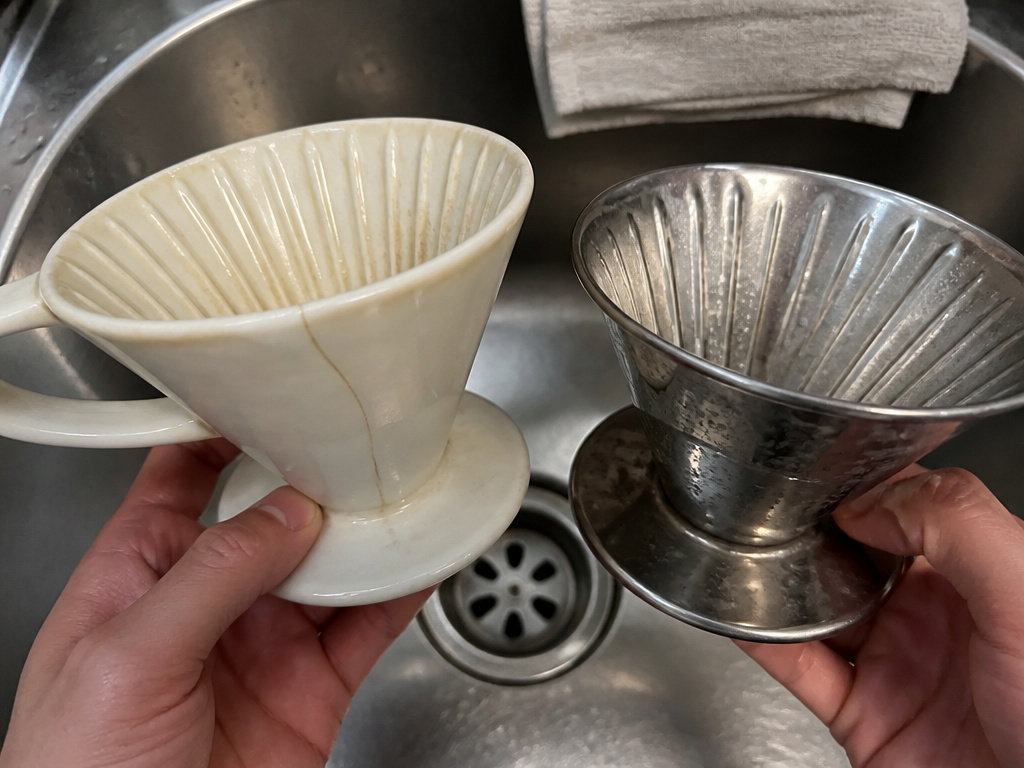
Stainless steel wins on brute-force durability. It doesn’t chip if you knock it against the faucet. It won’t crack from thermal shock if you rinse it with cold water while hot (though you shouldn’t make a habit of that). Most stainless steel brewers are dishwasher-safe, making cleanup of oily coffee residue trivial. The downside is that it shows every water spot. If you have hard water, you’ll be drying it with a cloth to avoid a polka-dotted finish.
Ceramic requires a gentle touch. The Hario V60 Ceramic’s glaze can stain over time, especially with dark-roast oils. You need to hand-wash it. The real risk is thermal shock, pouring boiling water into a cold ceramic dripper, or rinsing a hot one with cold tap water, can cause hairline cracks. It might not fail today, but it will fail. I’ve had a beautiful dripper split clean in half during a winter morning brew session because I didn’t preheat it long enough. The temperature differential between the inside and outside wall was too great.
Then there’s the feel. A ceramic dripper has heft. The 360-gram weight of the V60 02 feels substantial in your hand. It connects you to the process. A stainless steel dripper is light, almost clinical. It’s a tool, not a talisman. Which you prefer is personal, but it affects the daily ritual.
Common mistake: Putting a hot ceramic dripper under cold running water, the thermal stress creates micro-fractures that become a full break within a few months.
TL;DR: Stainless steel is for low-friction, durable daily use. Ceramic is for a deliberate, hands-on ritual, with the understanding it’s more fragile.
Which Popular Drippers Are Made of What?
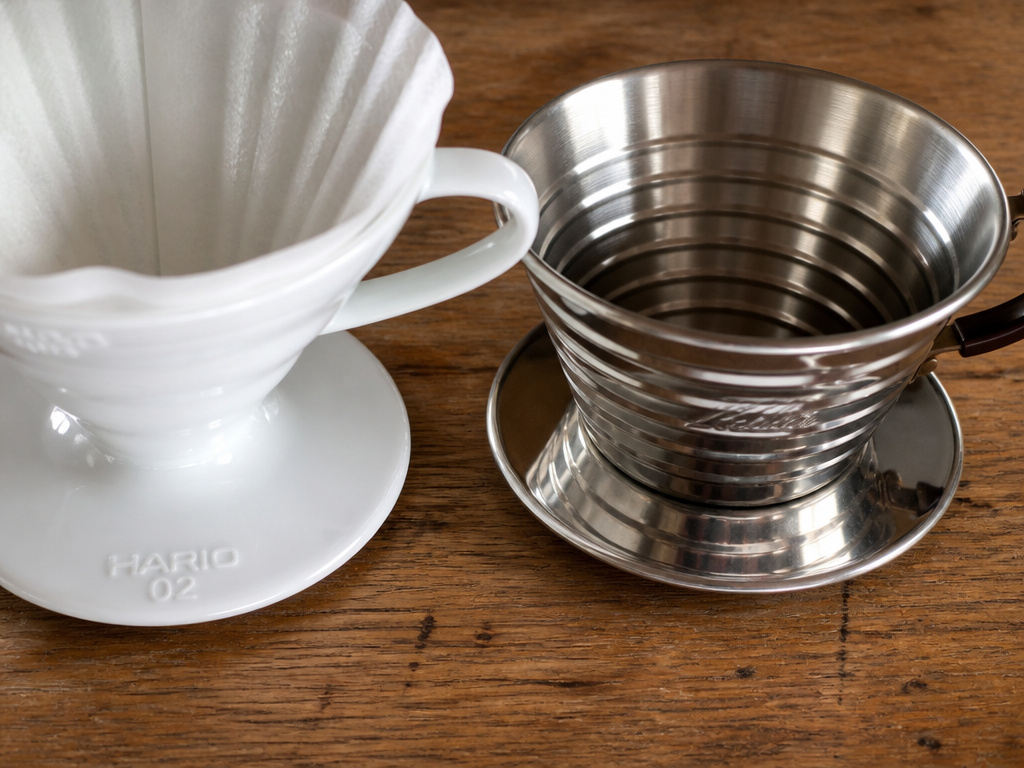
Not every model comes in both materials. Your choice often locks you into a specific brand and filter shape.
Ceramic Standouts:
- Hario V60 Ceramic (Size 01 & 02): The iconic conical brewer. Models VDC-01 and VDC-02. Requires specific V60 filter papers. The gold standard for high-clarity, acidic cups when mastered.
- Kalita Wave 185 Ceramic: The flat-bottom alternative. Promotes even extraction and is famously more forgiving than the V60 for beginners. Uses Kalita Wave 185 filters.
- Origami Dripper (Ceramic): A versatile newcomer. Its conical shape with ridges can accept both V60 and Kalita Wave filters, letting you experiment with shape independent of material.
Stainless Steel Standouts:
- Kalita Wave 185 (Stainless Steel): The most common version of the Wave. Identical performance to the ceramic version, but lighter and dishwasher-safe.
- Various Universal Stainless Cones: Many brands produce simple, inexpensive stainless cones designed for #2 or #4 paper coffee filters. They lack the brand-name design refinements but get the job done.
You’ll notice the Chemex isn’t on either list. That’s because its iconic brewer is glass, not ceramic or steel, though it uses a bonded paper filter that is its own major flavor factor. Similarly, the Aeropress is plastic. This comparison is specifically for pour-over drippers that rely on material for heat management.
So, Which Should You Buy?
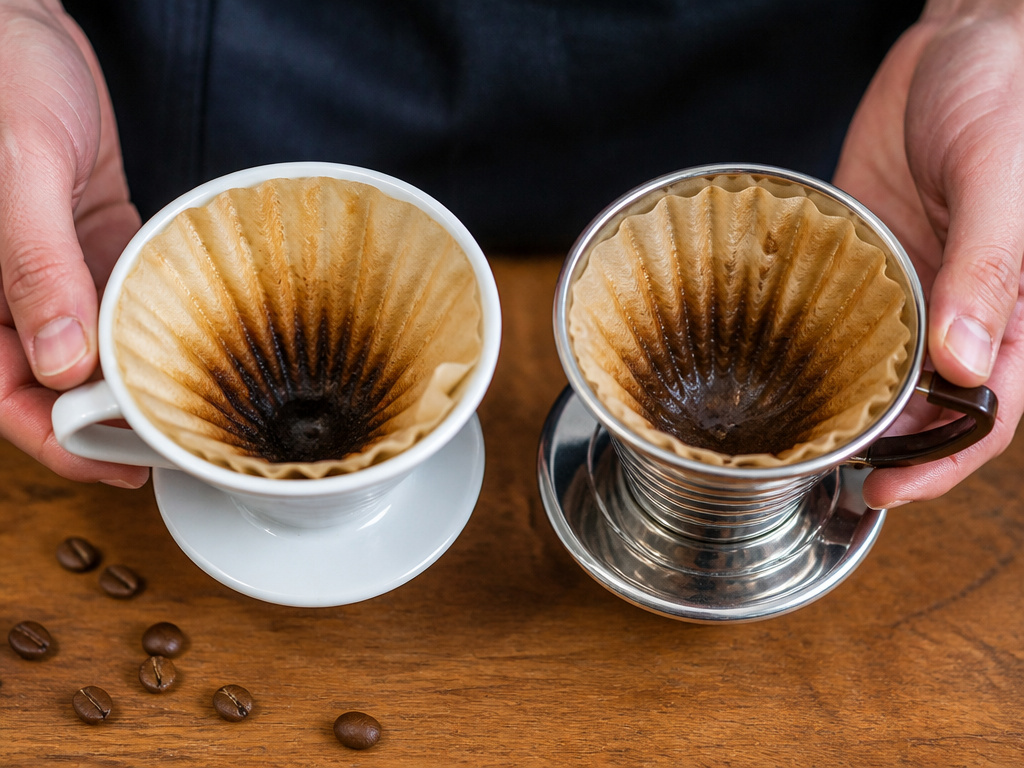
Stop looking for a “best” material. Look for the best fit for your habits, your kitchen, and your coffee.
Buy a ceramic dripper if:
- You preheat your equipment as a non-negotiable part of your routine.
- You value the tactile, traditional experience of brewing.
- Your kitchen is on the cooler side and you need help maintaining brew heat.
- You mostly brew light-roast single-origin coffees where thermal stability pays dividends.
- You are careful with your tools and don’t mind hand-washing.
Buy a stainless steel dripper if:
- You want a “rinse and go” workflow with no preheat fuss.
- Your gear gets knocked around, travels, or lives in a busy household.
- You want the option to use a dishwasher for cleaning.
- You brew a wide variety of beans and want a neutral material that doesn’t add a variable.
- You live with hard water and are willing to dry your gear to prevent spots.
For most people starting out, a stainless steel Kalita Wave 185 is the smarter choice. It’s forgiving, durable, and eliminates the preheating variable as you learn your pour technique. The flat-bottom filter paper is more consistent than a conical V60 filter. Once you have your technique dialed and know you’re committed to the ritual, then invest in a beautiful ceramic piece. The Origami Dripper in ceramic is a fantastic second dripper, its filter versatility lets you explore shape without buying another base.
Your grinder, your water, and your beans are vastly more important. A great cup from a stainless steel dripper beats a mediocre cup from ceramic every time. Choose the material that fits your life, then focus on the variables that actually move the needle.
Frequently Asked Questions
Does a ceramic dripper make coffee hotter?
No. It doesn’t add heat; it resists losing it. A properly preheated ceramic dripper helps keep the coffee slurry at a stable, target temperature (usually 195-205°F) throughout the brew. A stainless steel dripper allows the slurry to cool slightly faster.
Can you put a ceramic coffee dripper in the dishwasher?
It’s not recommended. The harsh detergent and high heat can degrade glazes over time, and the physical knocking can lead to chips or cracks. Hand-wash ceramic drippers with mild soap.
Which retains heat better: ceramic or stainless steel?
Ceramic has a higher thermal mass, meaning it retains heat better once warmed up. Stainless steel has high thermal conductivity (it transfers heat quickly) but low thermal mass (it doesn’t store much heat). For brewing, ceramic stabilizes, while steel neutralizes.
Why is my stainless steel dripper covered in spots?
Those are mineral deposits from hard water. The spots are harmless but can stain. To prevent them, dry your stainless steel dripper with a towel immediately after rinsing. A periodic wipe with a vinegar solution will remove existing spots.
Is a ceramic dripper worth the extra cost?
Only if you value the aesthetic and ritual. For pure brewing performance, a stainless steel version of the same dripper (like the Kalita Wave) will produce an identical cup. The extra cost buys tradition and feel, not inherently better coffee.
The Bottom Line
Chasing the perfect material is a distraction. The perfect cup comes from consistency, and you can achieve that with ceramic or steel. Ceramic asks for a preheat ritual and careful hands. Steel asks for a quick rinse and a drying cloth. Your daily routine will tell you which ask is easier to honor every single morning.
Pick the dripper shape that matches the flavor profile you want, conical for clarity, flat for sweetness. Then, let your lifestyle pick the material. Brew great coffee with what you have, and upgrade the material only when your technique has outgrown the convenience. The coffee doesn’t care if its path was through clay or metal. It only cares that the water was hot, the grind was right, and the pour was steady.
