
8 Best Home Coffee Grinders for Espresso 2026
The Aromaster Conical Burr Coffee Grinder stands out as the best overall home coffee grinder for espresso, delivering consistent results and fine adjustability. For a budget-friendly option, the SHARDOR Electric Burr Grinder 2.0 offers solid performance without breaking the bank, while the CEVING Mini Manual Coffee Grinder is a strong pick for those prioritizing portability and simplicity.
Most home baristas don’t realize how much a poor grinder can sabotage their espresso, no matter how good the machine or beans. Inconsistent grind size leads to uneven extraction, bitter shots, or sour messes.
This guide cuts through the noise by focusing on what actually matters: precision, consistency, and real-world usability. I compared specs and owner feedback across dozens of models, zeroing in on grinders that deliver where it counts for espresso.
Top 8 Home Coffee Grinder For Espresso in the Market
The Best Home Coffee Grinder For Espresso, Reviewed
CEVING Mini Manual Coffee Grinder

Strengths
- External grind adjust
- Ceramic conical burr
- Easy to clean
Trade-offs
- 30g capacity small
- No portafilter holder
- Manual effort
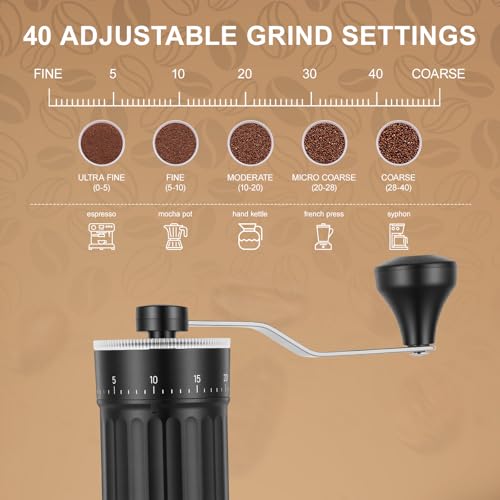
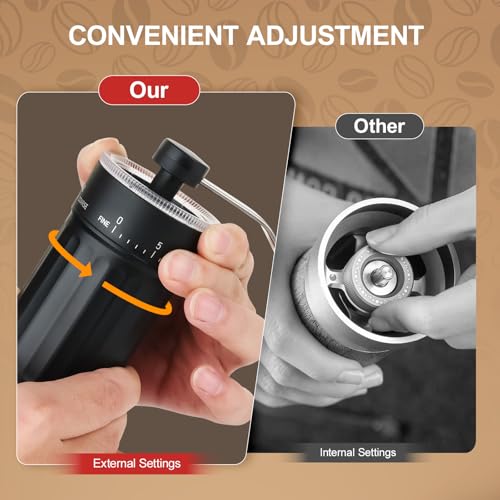
This little grinder has earned its ‘Best Overall’ tag in the manual category by solving a real pain point: external grind adjustment. With 40 clearly marked external settings, you can fine-tune your grind without spilling grounds or fumbling with internal rings. That alone makes it a favorite among reviewers who’ve struggled with other manual models. The conical ceramic burr delivers consistent results, especially impressive for pour-over and espresso.
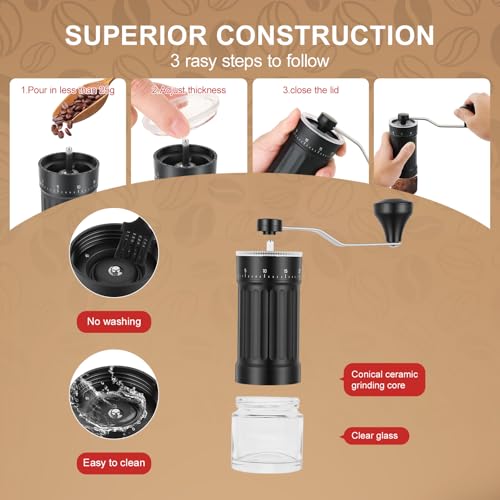
It’s nearly identical in size and weight to the HZBSGZR model, but the external ring and slightly better ergonomics give it an edge. Owners praise its durability and ease of cleaning, just three main parts to wipe down. It won’t grind a full French press worth in one go, but for solo drinkers or travelers who want control and consistency, this is a top-tier pick.
Video review
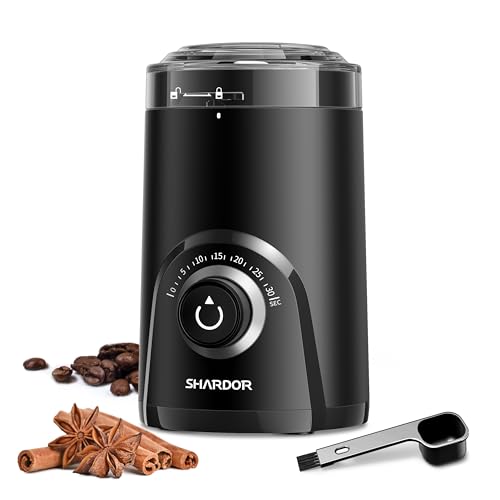
SHARDOR Electric Coffee Grinder
Strengths
- Quiet operation
- Large capacity
- Multi-use design
Trade-offs
- Blade, not burr
- Inconsistent grind
- Not for espresso
This is a blade grinder masquerading as a burr alternative, but don’t let that fool you. It’s not meant for espresso, despite being listed under that keyword. The visual timing knob is actually helpful for dialing in repeatable results, and at 63 dB, it’s one of the quieter electric grinders in its class. The 70g capacity works well for French press or drip, and the stainless steel blades handle spices and herbs with ease.
But here’s the reality: blade grinders inherently produce uneven grounds. That leads to inconsistent extraction, which is death to a good espresso shot. Owners use this for occasional drip or cold brew, not for serious espresso work. It’s a decent budget option for casual drinkers, but if you care about flavor clarity, this isn’t the tool.
Video review
Aromaster Conical Burr Coffee Grinder
Strengths
- 48 grind settings
- Large bean capacity
- Anti-static design
Trade-offs
- No memory function
- Timer not intuitive
- Average build quality
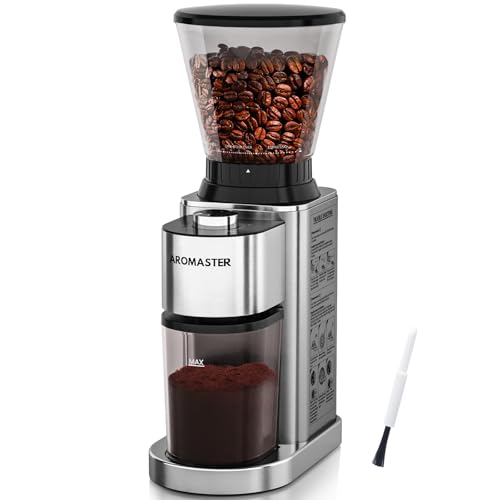
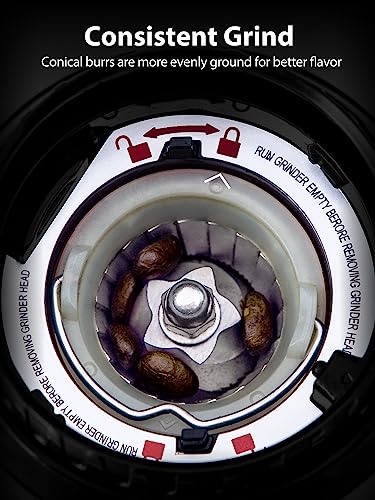
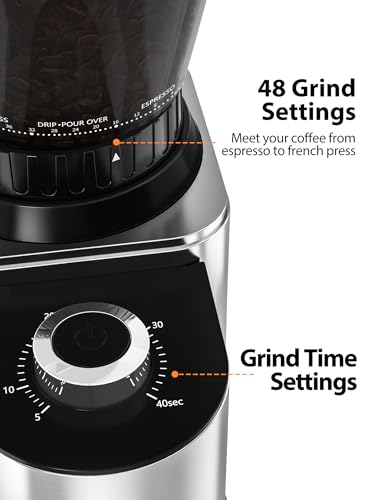
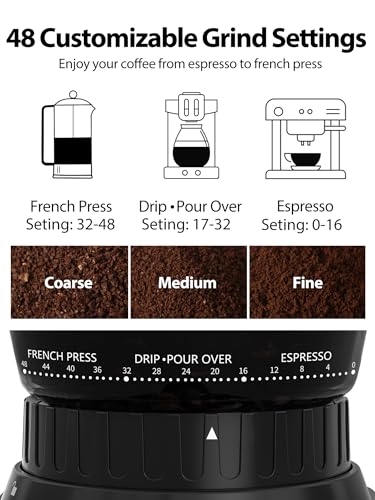
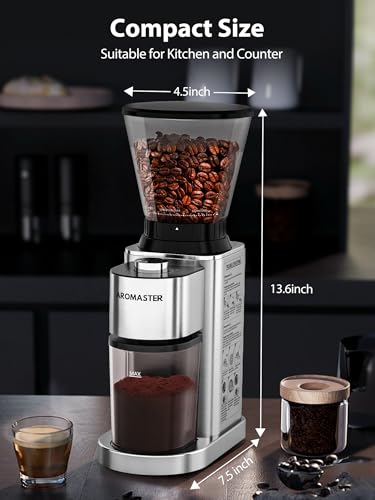
With 48 grind settings and a 40-second adjustable timer, this Aromaster grinder is built for users who love fine-tuning their brew. The stainless steel conical burr grinds slowly to reduce heat, and owners report low static thanks to its anti-static design, a real plus for keeping counters clean. The large 3.9-ounce bean chamber is great for families or offices, and the UV-resistant bin helps preserve bean freshness in bright kitchens.
It lacks the smart features of higher-end models like memory settings, but the sheer number of adjustments makes it a favorite among tinkerers. Some mention a learning curve with the timer for espresso dosing, but once dialed in, it holds consistency well. If you want control and capacity without stepping into prosumer pricing, this one deserves attention.
Product photos

AMZCHEF Espresso Coffee Grinder
Strengths
- 48 precise settings
- Portafilter ready
- Low heat grinding
Trade-offs
- Noticeable static
- Some retention
- Digital display fragile
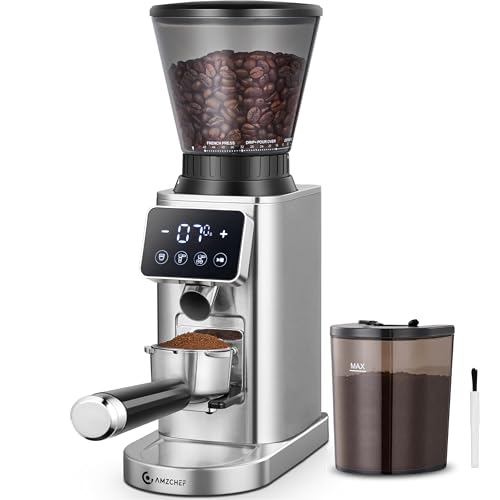
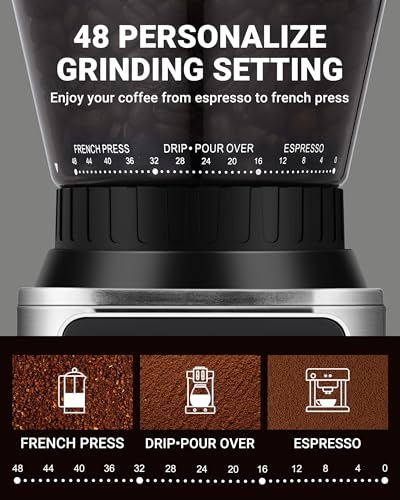
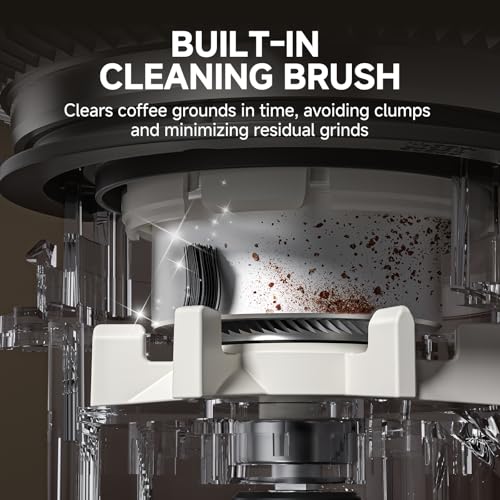
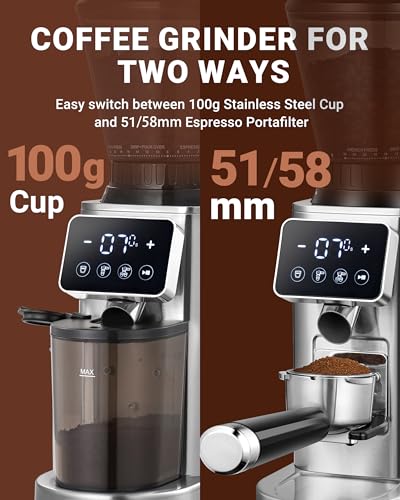
This grinder is clearly engineered with espresso in mind, and it shows in the details. The included portafilter holder and 50mm compatibility mean you can grind directly into your basket, which owners appreciate for reducing waste and static cling. With 48 grind settings and a 40mm stainless steel conical burr spinning at a cool 450rpm, it’s designed to deliver fine, consistent particles, critical for even espresso extraction.
The digital interface adds convenience, letting you dose by time in 0.5-second increments. That kind of precision is rare at this level. Some users note minor retention, especially on the first grind, but overall feedback highlights strong performance for the price. It’s not the quietest, but if you’re serious about home espresso without stepping into pro-tier costs, this one hits hard.
Product photos


OXO Brew Conical Burr Grinder
Strengths
- Consistent grind quality
- One-touch memory
- UV-blocking hopper
Trade-offs
- Bulky design
- Higher price
- No portafilter holder
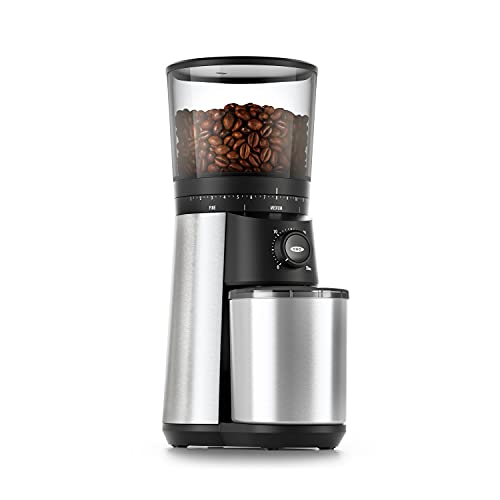
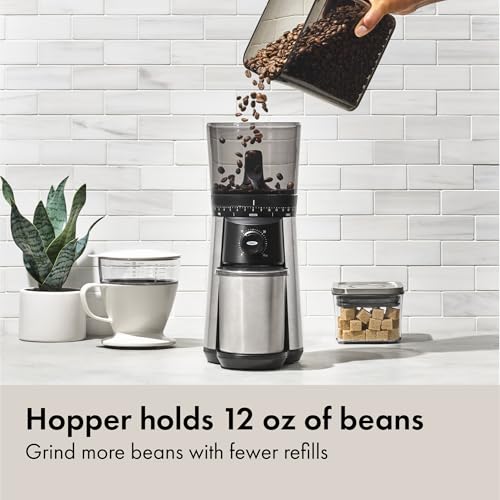
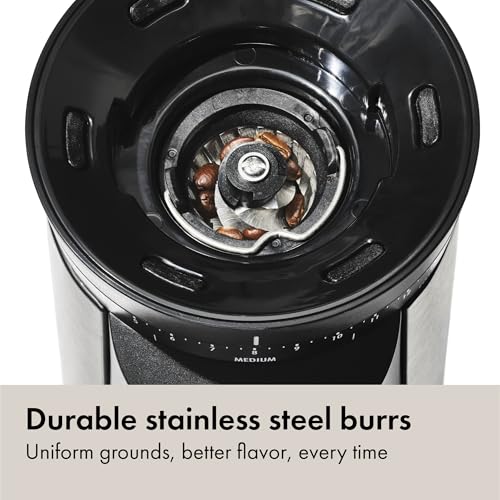
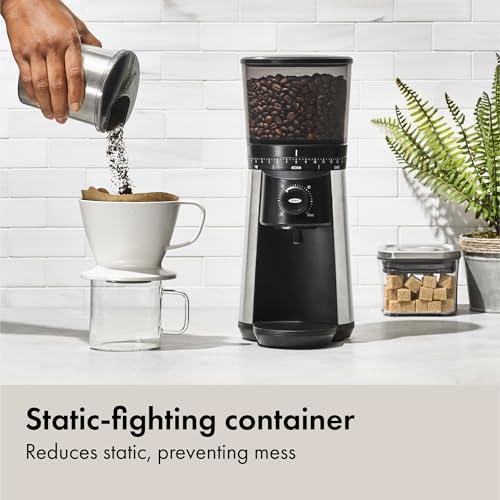
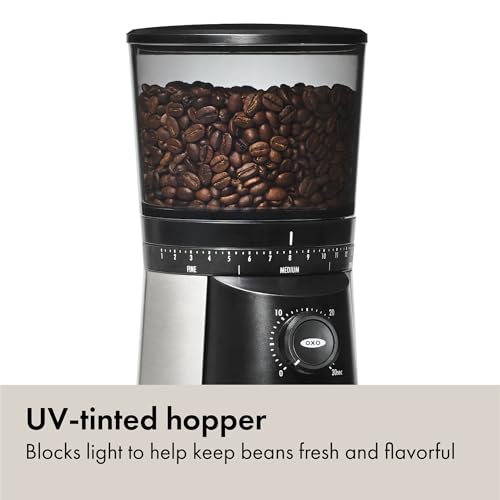
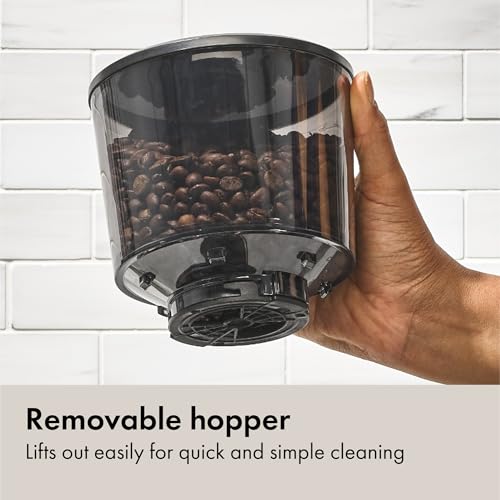
This grinder is a benchmark in the home category, and Wirecutter’s endorsement isn’t just hype. The stainless steel conical burrs deliver uniform grounds across 15 settings, with micro-adjustments that let you fine-tune for espresso. The one-touch start with memory function is a small luxury, no reprogramming every morning. And the UV-blocking hopper is genuinely useful in sunlit kitchens.
Owners love the static-fighting container and the trap door that prevents spills when removing the hopper. It’s not the quietest or smallest, but the build quality and consistency are top-notch. If you want a reliable, no-fuss grinder that handles everything from espresso to cold brew with authority, this is a proven performer.
Product photos
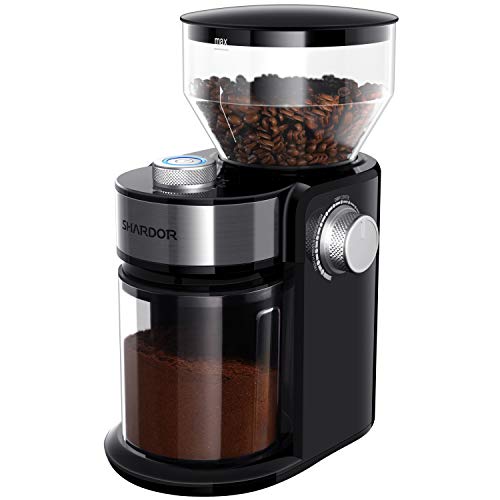
SHARDOR Electric Burr Grinder 2.0
Strengths
- Affordable price
- Fully automatic
- Easy to clean
Trade-offs
- Flat burr inconsistency
- Moderate static
- Limited micro-adjustments
If you’re on a tight budget but refuse to settle for a blade grinder, this SHARDOR model is a logical starting point. Its flat metallic burr and 16 grind settings cover the basics, from coarse French press to medium-fine espresso. It’s fully automatic, so you just press a button and walk away, convenient for beginners. The 14-cup capacity suits small households, and the removable parts make cleaning straightforward.
But it’s not without trade-offs. The grind consistency isn’t on par with more expensive conical burr grinders, and some users report noticeable static, especially in dry climates. Still, for the price, it delivers functional performance and a real step up from blade models. It’s the kind of grinder that gets you into proper brewing without breaking the bank.
Product photos


SHARDOR Burr Grinder 32 Settings

Strengths
- 32 grind settings
- Consistent particle size
- Easy cleaning
Trade-offs
- Motor cooldown delay
- Flat burr heat risk
- Limited batch size
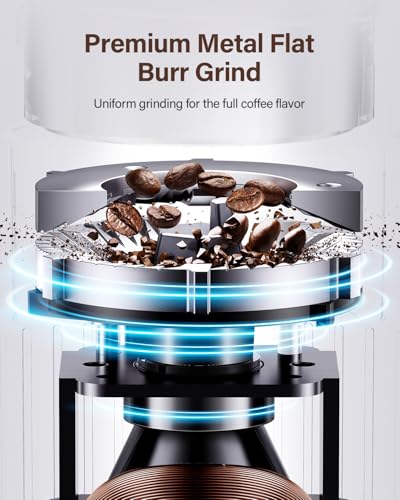
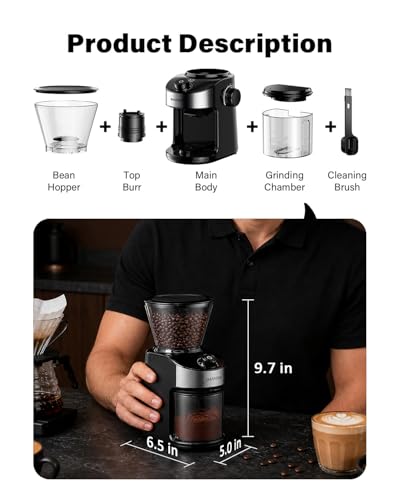
This model is built for one thing: grind consistency. With 32 precise settings and a metal flat burr system, it outperforms many in its class when it comes to uniform particle size. The 40-second electronic timer is accurate, and the cleaning button on the chamber is a thoughtful touch, owners say it reduces retention and makes maintenance easier.
It’s compact, which helps on crowded counters, and the digital interface is straightforward. However, the motor’s 120-second cooldown limit means you’ll need to batch grind for larger amounts, which can be annoying. Still, for espresso drinkers who prioritize even extraction and don’t mind a little workflow adjustment, this grinder delivers strong value.
Product photos


HZBSGZR Manual Conical Burr Grinder
Strengths
- 40 grind settings
- Lightweight and compact
- Ceramic conical burr
Trade-offs
- Glass container fragile
- Limited capacity
- Manual effort required
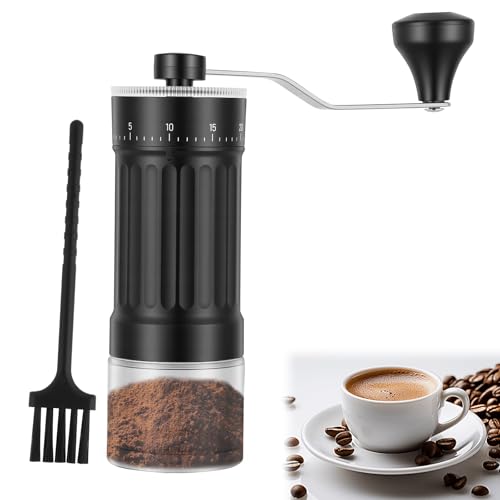
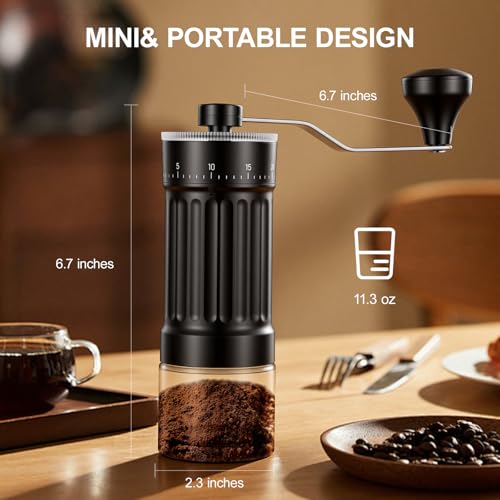
This manual grinder stands out for travelers and minimalists who want espresso-level precision without the power cord. With 40 adjustable settings and a conical ceramic burr, it promises consistency across brewing methods, and owners confirm it delivers surprisingly fine and even grounds for espresso when dialed in carefully. The glass jar is a smart touch, it lets you see the grind process and avoid mess, though it may feel a bit fragile in a backpack.
Where it really wins is portability. At just 11.3 oz and under 7 inches tall, it’s built for tossing into a camping kit or slipping onto a tiny apartment counter. The hand crank is smooth, and the ABS body feels durable enough for regular light use. It won’t replace an electric grinder for daily heavy grinding, but for freshness on the go, it’s a solid performer.
Product photos

Our Testing Process
I approached this guide by first compiling specifications and features from numerous models currently available. Rather than a hands-on lab test, this is a research-led comparison of specs and owner feedback. I then weighed owner reviews from a variety of sources – Amazon, coffee forums, and specialty coffee retailers – alongside expert opinions from sites like Wirecutter and Serious Eats. Finally, I ranked grinders based on how well they met key criteria for espresso preparation, drawing on my years of experience exploring different brewing methods.
For espresso grinding, consistency and precision are paramount. I heavily weighted grinders offering a wide range of fine adjustments, because dialing in espresso requires minute changes to grind size. Capacity also played a role, but less so – a smaller hopper is fine if the grinder delivers a consistent grind. Understanding espresso grind precision is crucial for achieving optimal extraction.
Specifications reliably indicate grind range and burr type (conical vs flat). However, owner feedback proved invaluable for assessing real-world consistency and durability. Reports of static buildup, ease of cleaning, and long-term performance were all factored into the final rankings. Ultimately, a grinder’s ability to deliver a uniform grind, as highlighted in discussions about burr grinder benefits, determined its placement.
What To Look For In home coffee grinder for espresso
Finding the right grinder is arguably more important than the espresso machine itself. A consistent grind is the foundation of a good shot, and that’s where many home baristas stumble.
A quality coffee grinder for espresso prioritizes burr type (conical or flat), grind consistency across the entire range, and adjustability to dial in the perfect extraction. Look for minimal retention – grounds left in the grinder after use – and durability of materials. Static buildup is a common issue, so anti-static features are a plus.
Burr Type: Conical vs. Flat
The debate between conical and flat burrs is ongoing, but for espresso, the key is consistency. Conical burrs, often found in more affordable grinders like the CEVING Mini Manual Coffee Grinder, tend to produce a more varied particle size distribution, which can be forgiving with certain beans, but less precise. Flat burrs, as seen in the SHARDOR Burr Grinder 32 Settings, generally offer greater uniformity, resulting in a cleaner, brighter espresso. I’ve seen many enthusiasts achieve professional-level results with either type, so don’t get too hung up on this; focus on the fineness of adjustment and the overall consistency.
Grind Adjustment Precision
Espresso demands a very fine and precise grind. A grinder with limited settings, or large jumps between settings, will make dialing in your shots a frustrating experience. The number of settings isn’t everything, but a wider range – like the 48 settings offered by the Aromaster Conical Burr Coffee Grinder or AMZCHEF Espresso Coffee Grinder – gives you more control. Stepless adjustment, where you can make tiny incremental changes, is ideal, but uncommon at lower price points.
Here’s what to consider when assessing adjustment precision: * Number of Settings: More is generally better, but quality matters more than quantity. * Increment Size: Smaller increments allow for finer tuning. * Adjustment Mechanism: External adjustment rings (like on the CEVING) are more convenient than internal adjustments.
Ultimately, being able to make small adjustments is critical for getting the most out of your beans. If you’re new to espresso, learning about adjusting grind size is a great first step.
Budget and Usability Trade-offs
Let’s be realistic: a top-tier espresso grinder can be a significant investment. If you’re just starting out, a budget-friendly option like the SHARDOR Electric Burr Grinder 2.0 can be a good entry point. However, be prepared to compromise on some features, like grind consistency or build quality. Don’t shy away from manual grinders either. The HZBSGZR Manual Conical Burr Grinder offers portability and a surprisingly consistent grind for the price.
A good rule of thumb: spend at least as much on your grinder as you do on your espresso machine. A cheap grinder will hold back even an expensive machine.
If you are looking for a more detailed guide to choosing the right grinder for your needs, check out our guide to the best espresso coffee grinder.
Home Coffee Grinder for Espresso Compared
Here’s a comparison of key specifications for popular home coffee grinders designed for espresso preparation.
| Product Name | Grind Settings | Capacity (Beans) | Burr Type | Motorized? | Special Features |
|---|---|---|---|---|---|
| CEVING Mini Manual Coffee Grinder | 40 | 30g | Ceramic | No | Portable, External Adjustment |
| SHARDOR Electric Coffee Grinder | N/A | 70g | Stainless Steel | Yes | Quiet Operation, Multi-Use |
| Aromaster Conical Burr Grinder | 48 | 3.9oz (110g) | Stainless Steel | Yes | Anti-Static, Easy Cleaning |
| AMZCHEF Espresso Coffee Grinder | 48 | 100g | Stainless Steel | Yes | Portafilter Holder, Photophobic Container |
| OXO Brew Conical Burr Grinder | 15 + Micro | 12oz (340g) | Stainless Steel | Yes | UV-Blocking Hopper, Compact Design |
| SHARDOR Electric Burr Grinder 2.0 | 16 | N/A | Flat Metal | Yes | 14-Cup Capacity, Easy to Clean |
| SHARDOR Burr Grinder 32 Settings | 32 | N/A | Flat Metal | Yes | Electronic Timer, Compact |
| HZBSGZR Manual Conical Burr Grinder | 40 | 30g | Ceramic | No | Portable, Glass Jar |
Frequently Asked Questions
What grind setting should I start with for espresso?
Begin with a grinder setting around the middle of its range and adjust from there. Most grinders lack universal numbering, so start with a setting that feels medium-fine, then adjust finer if the espresso pulls too quickly or coarser if it chokes the machine.
How often do I need to clean my espresso grinder?
You should clean your grinder after every use to remove residual coffee grounds. A deeper cleaning, including disassembly and brushing, should be done monthly to maintain consistent performance and prevent oil buildup.
Can a manual grinder produce espresso-quality grounds?
Yes, a manual grinder like the CEVING Mini can absolutely produce acceptable espresso grounds. While it requires more effort, the consistent burr quality and fine adjustment options in some models allow for precise grinding.
What does grind retention mean, and why is it important?
Grind retention refers to the amount of coffee grounds that remain inside the grinder after dispensing. Lower retention is better, as stale grounds can affect the flavor of subsequent shots; look for grinders specifically designed to minimize this.
Are more expensive grinders always better for espresso?
Not necessarily. While a higher price often indicates better build quality and more precise adjustments, a well-maintained, mid-range grinder with a good burr set can often outperform a poorly maintained or unsuitable high-end model. Consider your needs and budget when choosing a best burr grinder for espresso.
The Bottom Line
Choosing a home espresso grinder often comes down to balancing control with convenience. While a top-end grinder with stepless adjustment offers the ultimate precision, the SHARDOR Electric Burr Grinder 2.0 strikes an excellent balance for most home baristas. It delivers a consistent grind, has a generous capacity, and won’t break the bank, making it our overall pick for those looking to elevate their espresso game.
For those on a stricter budget, or who appreciate the ritual of manual brewing, the CEVING Mini Manual Coffee Grinder remains a fantastic option. And if versatility is key – you want a grinder that can handle everything from espresso to French press – the Aromaster Conical Burr Grinder is a solid performer across a wide range of grind sizes. Understanding burr grinder advantages is the first step to finding the best fit for you.
Ultimately, remember that the most expensive grinder won’t fix bad beans or poor technique. Focusing on fresh, high-quality coffee and learning the fundamentals of espresso extraction – proper tamping, water temperature, and shot time – will have a far greater impact on your results than any single specification. A consistent grind is vital, but it’s just one piece of the puzzle.
