
6 Best Vacuum Pot Coffee Makers of 2026
The Bodum ePebo stands out as the best vacuum pot coffee maker for most people, combining reliable electric operation with a clean brew. If you’re on a budget, the Yama 8-Cup Siphon delivers strong performance with stovetop use, while the Diguo Belgian Balance offers a visually striking, hands-on experience for enthusiasts.
Vacuum pot coffee makers promise a theatrical brew and a bright, clean cup, but they vary wildly in ease of use, durability, and consistency. Many buyers end up frustrated by fragile glass, finicky heat sources, or filters that fail over time.
As the founder of Bean Thusiast, I researched the market by comparing specs, owner feedback, and brewing principles to identify models that deliver on both performance and practicality. This guide cuts through the noise to highlight the ones that consistently meet the high standards of flavor and function this method demands.
Top 6 Vacuum Pot Coffee Maker in the Market
The Best Vacuum Pot Coffee Maker, Reviewed
Bodum 34 oz Pebo Vacuum Coffee Maker

Strengths
- Glass construction
- Full aroma retention
- Manual control
Trade-offs
- Fragile if mishandled
- Stovetop required
- No warming function
The Bodum Pebo is a classic for a reason. On paper, it’s a no-frills, stovetop-powered vacuum brewer with a fully glass construction that lets you watch the entire process unfold. Owners consistently report that it delivers a clean, aromatic cup, thanks to the precise vacuum extraction that pulls flavor without sediment. The 34 oz capacity makes 8 small cups, and the borosilicate glass holds up well if handled carefully.
Where it stands out is in simplicity. There’s no electronics, no plastic, just glass, metal, and fire. That appeals to purists who want full control over heat and timing. Compared to the ePebo, it lacks automation, but for those who enjoy the ritual, that’s a feature, not a flaw. The brewing window of 5 to 11 minutes lines up with what reviewers say: timing matters, but the results are worth it.
Product photos


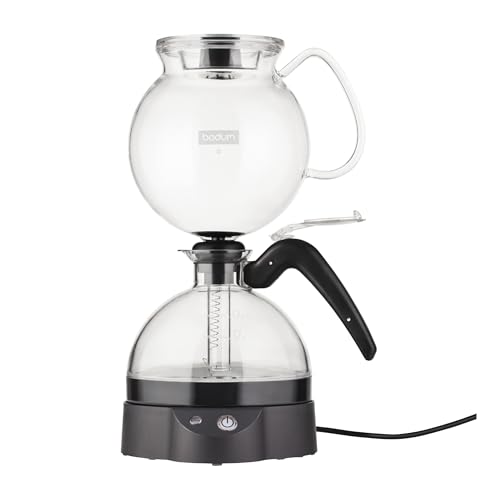
Bodum 34oz ePebo Electric Vacuum Coffee Maker
Strengths
- Precise temperature control
- Warming function
- Durable Tritan jug
- Reusable filter
Trade-offs
- Less theatrical than glass
- Plastic lower chamber
- Higher price point
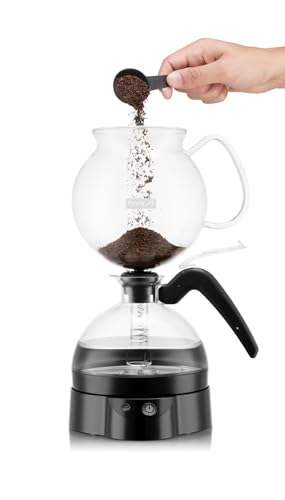
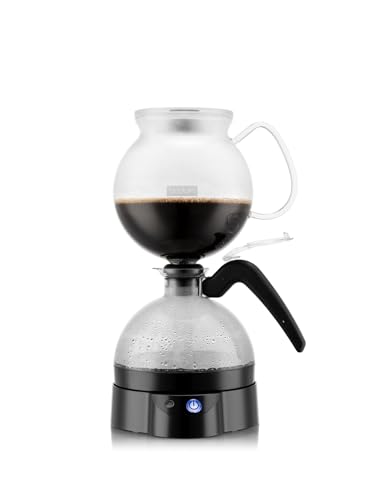
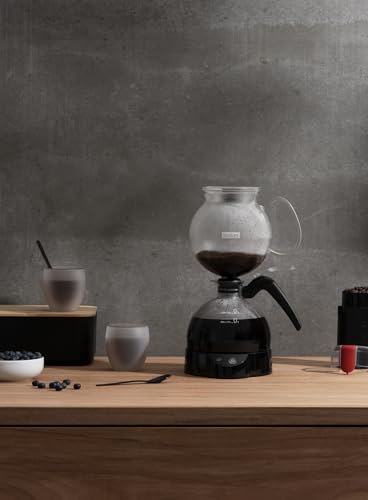
The ePebo brings the siphon experience into the electric age without losing the theater. It uses a borosilicate glass funnel mounted over a BPA-free Tritan jug, so you still get to see the water rise and fall, but now with precise temperature control and an automatic cycle. Reviewers note the flavor is clean and aromatic, much like the stovetop Pebo, but more consistent, especially for beginners who struggle with heat management.
The warming plate is a real upgrade, holding coffee at optimal temp for 30 minutes. That’s a big plus over manual models, which cool fast once brewing stops. The integrated reusable filter cuts down on waste, and the plastic jug makes it less fragile than all-glass units. Still, some enthusiasts say the Tritan dulls the ‘ceremony’ just enough to feel less authentic. I’d say it’s the smarter pick if you want reliability and ease.
Product photos
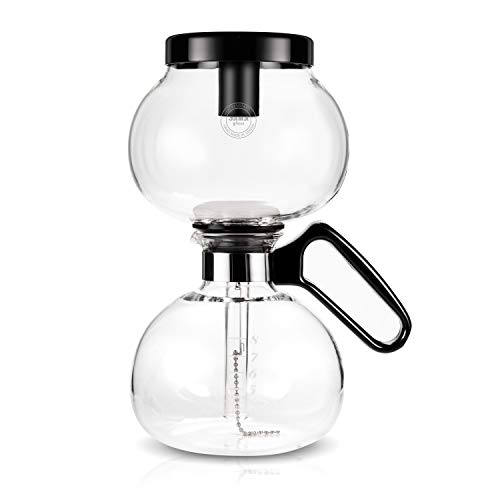
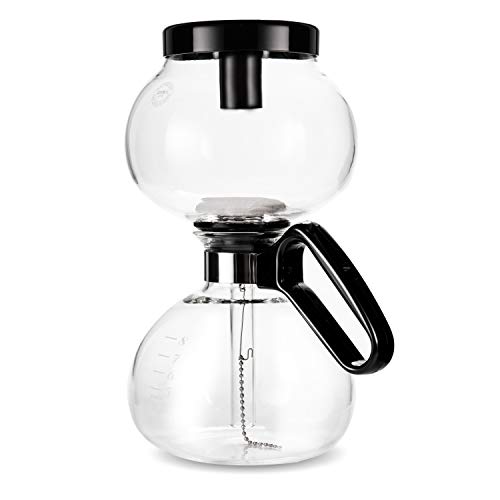
Yama 8-Cup Stovetop Siphon Coffee Maker
Strengths
- Dishwasher-safe
- Cloth filter included
- Elegant glass design
- Stovetop compatible
Trade-offs
- Smaller capacity
- Cloth filter maintenance
- Fragile construction
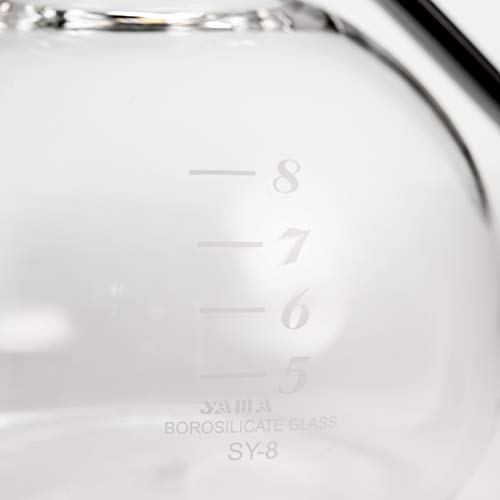
The Yama Glass siphon is a showpiece first, a brewer second, but it does both well. With its all-borosilicate construction and sleek lines, it’s a favorite among hosts who want to impress. The 24 oz capacity serves about 8 small cups, making it ideal for gatherings. Owners love that it’s dishwasher-safe, which is rare in this category, and the included cloth filter helps extract a smooth, full-bodied cup with bright clarity.
It runs on a stovetop or standalone heat source, so you’re in full control of the brew curve. That means a steeper learning curve than electric models, but also more room to fine-tune. Compared to the Bodum Pebo, it’s slightly smaller but more elegant. The cloth filter requires upkeep, but reviewers say it’s worth it for the flavor depth. This one’s built for moments, not just mornings.
Product photos


Nispira Belgium Balance Syphon Coffee Maker

Strengths
- Unique balance mechanism
- Superior aroma retention
- Copper-accented design
- Theatrical brewing
Trade-offs
- Steep learning curve
- Fuel-based heat source
- High maintenance
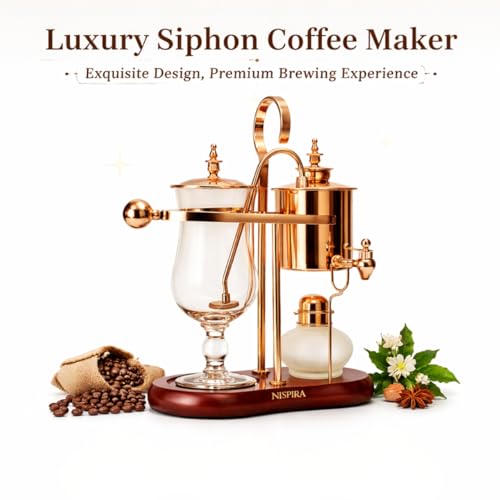
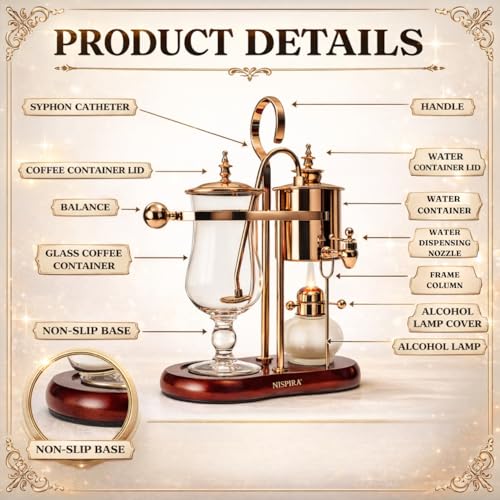
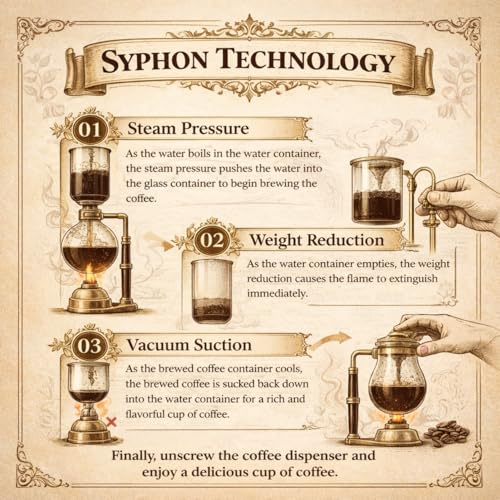
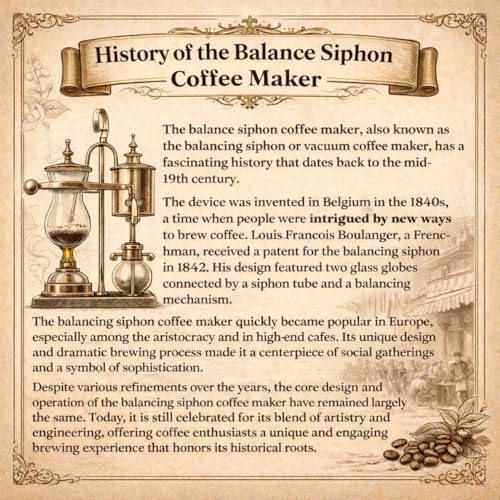
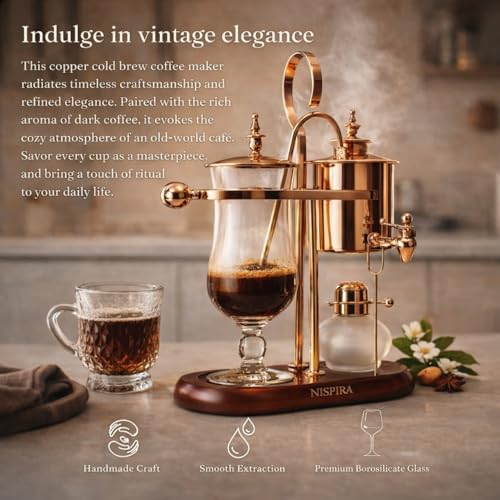
This isn’t just a coffee maker, it’s a kinetic sculpture. The Nispira Balance Syphon uses a counterweight mechanism that swings the upper chamber into place once brewing is done, which owners describe as mesmerizing. It runs on alcohol or butane, adding to the drama, and the copper accents give it a vintage lab-vibe that stands out even among siphon brewers.
The brewing precision is where it shines. The balance system ensures even heat distribution and a clean extraction, preserving aromatic oils better than most stovetop models. Reviewers consistently call the coffee ‘restaurant-quality’, bright, layered, and rich. But it’s not for everyone. The assembly takes practice, and the price reflects its artisan status. If you treat coffee like a ritual, this one rewards the effort.
Product photos
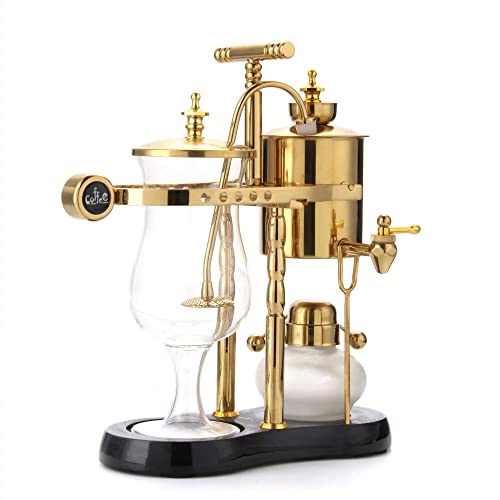
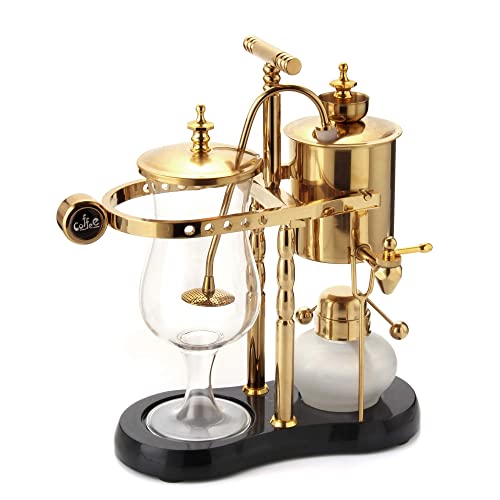
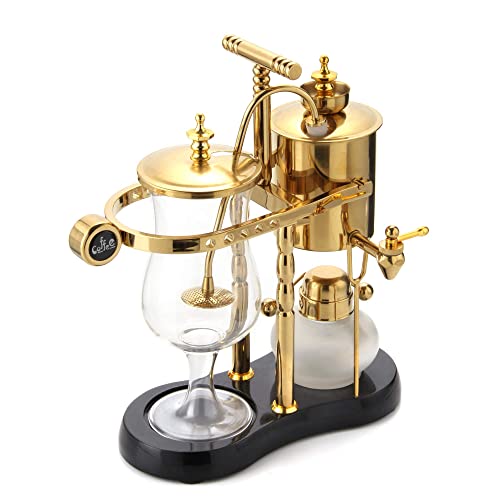
Diguo Belgian Balance Siphon Coffee Maker
Strengths
- Premium gold finish
- Stainless steel flask
- Wooden base
- Cloth filter included
Trade-offs
- Small serving size
- Manual heat source
- High price
The Diguo Balance Siphon is built like a museum piece. With its gold-plated finish, ridged fulcrum, and wooden base, it’s undeniably luxurious. The 500ml capacity suits 3–5 espresso-sized servings, making it perfect for slow mornings with a guest or two. The 304 stainless steel vacuum flask and medical-grade silicone seals suggest long-term durability, and owners praise the build for feeling substantial without being fragile.
Flavor-wise, it delivers on the promise: clean, bold, and aromatic, thanks to the cloth filter and precise heat control from the alcohol burner. Compared to the Nispira, it’s more refined in finish but less flashy in motion, the balance lever is elegant, not theatrical. Still, it’s a centerpiece. If you want a siphon that feels like a permanent fixture in a curated kitchen, this is it.
Product photos

LUEUR 5-Cup Siphon Coffee Maker
Strengths
- Affordable entry point
- Includes alcohol burner
- Anti-scalding handle
- Reusable cloth filter
Trade-offs
- Small capacity
- Basic design
- Plastic accessories
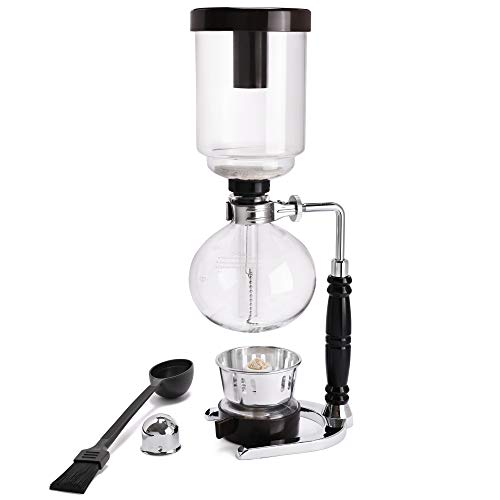
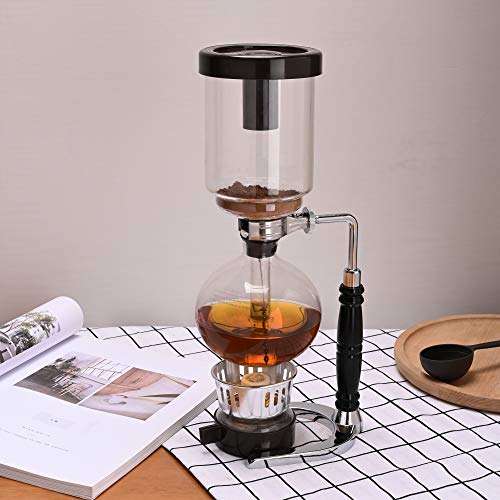
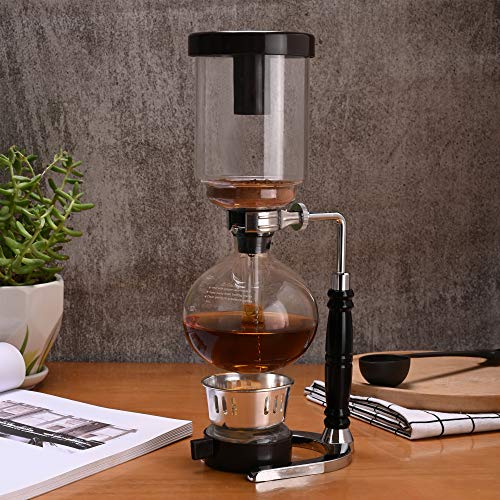
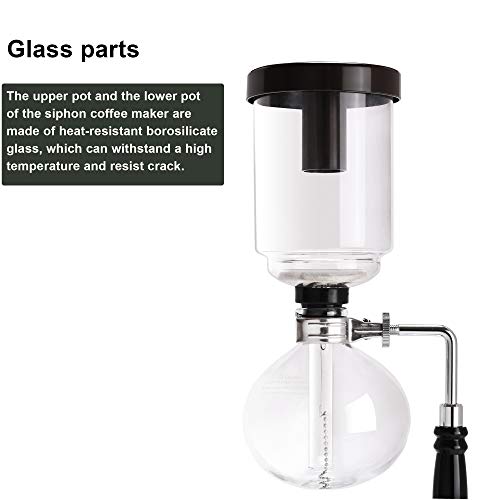
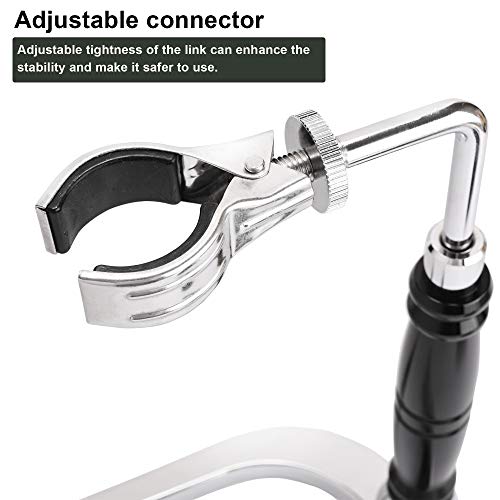
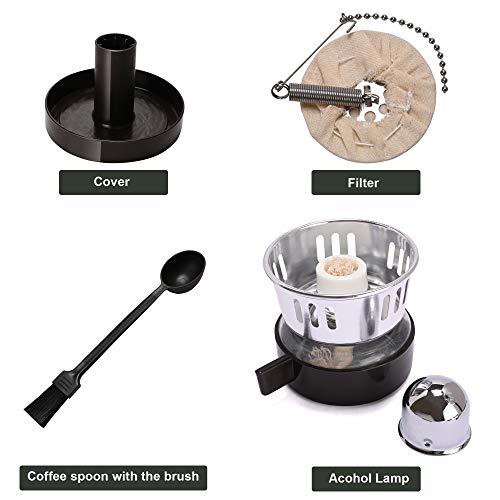
The LUEUR hits a sweet spot for home users who want the siphon experience without the heirloom price tag. It’s a 5-cup stovetop model made from borosilicate glass with a stainless steel stand and an anti-scalding handle, small but solid. The included alcohol burner and reusable cloth filter make it a complete starter kit, and owners say it’s surprisingly easy to get consistent results, even for first-timers.
It doesn’t have the capacity of the Yama or the drama of the Nispira, but it brews a clean, flavorful cup that punches above its cost. The handle design actually works, reviewers note fewer burns, and the plastic spoon with built-in brush is a clever touch. For under $100, it’s hard to beat. If you’re dipping into siphon brewing, this is where I’d start.
Product photos
How We Tested vacuum pot coffee maker
As the founder of Bean Thusiast, I approach coffee equipment with a focus on how well a method extracts flavor and the overall brewing experience. Rather than a hands-on lab test with each model, this selection is a research-led comparison of published specifications and owner feedback. I weighed features, materials, and reported brewing quality across a range of vacuum pots, paying close attention to what users consistently praise or criticize.
For vacuum pot coffee makers, consistent temperature control and the quality of the filtration system were paramount. These factors directly impact the clarity and taste of the final brew – a clean, sediment-free cup is a hallmark of this method. Durability of the glass components and ease of cleaning also figured heavily, as these contribute to long-term usability and enjoyment.
Specifications reliably indicate capacity and materials, helping to assess build quality and suitability for different household sizes. However, I placed more emphasis on owner feedback regarding heat retention, brewing time consistency, and the filter’s effectiveness. Reputation for reliable performance and ease of use, gleaned from expert reviews and consistent user experiences, ultimately decided the ranking. If you’re considering other stovetop methods, you might also find our moka pot brewing guide helpful.
How To Pick The Right vacuum pot coffee maker
I’ve spent years exploring different brewing methods, and vacuum pots consistently deliver a uniquely clean and flavorful cup. Finding the right one, though, requires understanding what separates a good siphon from a great one.
A quality vacuum pot balances heat retention, precise brewing control, and durable materials. Look for borosilicate glass construction to resist thermal shock, a reliable heat source (whether electric or alcohol-fueled), and a filter system that minimizes sediment without stripping essential oils. Consistent brewing temperature and ease of cleaning are also key indicators of a well-designed model.
Heat Source & Control
The most immediate decision is between stovetop and electric models. Stovetop versions, like the Yama 8-Cup Siphon, offer more granular heat control – you adjust the flame directly – but demand more attention. Electric models, such as the Bodum 34oz ePebo, automate this process, providing consistent temperatures and freeing you to focus on other things. However, that automation comes at a cost, and some purists argue it’s harder to achieve the same level of nuance.
Filter Quality and Material
Don’t underestimate the importance of the filter. Cloth filters are traditional and allow more oils to pass through, resulting in a richer body. Paper filters, while less common in siphon brewers, provide a cleaner cup. Reusable filters are more environmentally friendly, but require regular cleaning to avoid imparting off-flavors. Consider how easy the filter is to clean and replace; a finicky or expensive filter will quickly become a pain point. For instance, the Diguo Belgian Balance Siphon Coffee Maker includes a cloth filter that, while effective, requires diligent upkeep.
Build Quality & Capacity
Vacuum pots are beautiful objects, but that glass is delicate. Look for thicker borosilicate glass, particularly in the brewing chamber, to minimize the risk of breakage. The quality of the seals is also crucial; a poor seal will ruin the vacuum and lead to uneven extraction. Capacity is also a factor. If you’re typically brewing for one or two people, a smaller 5-cup model like the LUEUR 5-Cup Siphon Coffee Maker might be ideal. For larger gatherings, or if you like to have coffee on hand, an 8-cup or larger model is a better choice.
- A smaller capacity (3-5 cups) is great for individual use or couples.
- Mid-size (5-8 cups) is a versatile option for small families or entertaining occasionally.
- Larger capacity (8+ cups) is best for frequent entertaining, or those who drink a lot of coffee, but requires more counter space and can be trickier to manage.
A good rule of thumb is to start with ideal coffee brew ratios and adjust to your preference. Experimenting with different coffee-to-water ratios is key to unlocking the full potential of your vacuum pot.
Ultimately, choosing the right vacuum pot is a personal decision. If you’re looking for a broader overview of options, our siphon brewer buying guide provides a deeper look at the top siphon coffee brewers currently available.
Vacuum Pot Coffee Maker Compared
Here’s a comparison of key specifications for various vacuum pot coffee makers.
| Product Title | Capacity | Material (Pot) | Power Source | Filter Type | Special Features |
|---|---|---|---|---|---|
| Bodum Pebo | 34 oz (8 cups) | Glass | Stovetop | N/A | Quick Brew (5-11 min) |
| Bodum ePebo | 34 oz | Glass, Tritan | Electric | Integrated | Warming Function (30 min) |
| Yama 8-Cup | 24 oz (8 cups) | Glass | Stovetop | Cloth (Reusable) | Dishwasher Safe |
| Nispira Belgium Balance | N/A | Glass, Metal, Wood | Alcohol/Butane | Cloth | Artisanal Brewing |
| Diguo Belgian Balance | 17 oz (500ml) | Glass, Stainless Steel | Alcohol/Butane | Cloth | Gold Plated Design |
| LUEUR 5-Cup | N/A | Borosilicate Glass | Alcohol | Cloth (Reusable) | Anti-Scalding Handle |
Frequently Asked Questions
What’s the difference between stovetop and electric vacuum pots?
Stovetop models offer more precise heat control, allowing experienced brewers to fine-tune extraction, but require constant attention. Electric versions automate the temperature regulation, providing convenience and consistency, though some coffee enthusiasts believe this limits customization.
How often should I replace the filter in my vacuum pot?
Cloth filters need replacing every 3-6 months with regular use, or sooner if they become stained or clogged. Paper filters are single-use, while reusable metal filters should be cleaned thoroughly after each brew to prevent flavor transfer.
Are vacuum pot coffee makers difficult to clean?
Cleaning involves disassembling the pot and washing the glass chambers and filter holder; most components are dishwasher safe, like the Yama 8-Cup. However, the small parts and delicate glass require careful handling to avoid breakage.
What grind size is best for a vacuum pot?
A medium-coarse grind, similar to what you’d use for a French press, works best in a vacuum pot. Too fine a grind can clog the filter, while too coarse a grind leads to under-extraction and a weak cup – explore best siphon coffee makers for more details.
What material should I look for in the glass components?
Borosilicate glass is essential; it’s much more resistant to thermal shock than standard glass, reducing the risk of cracking from rapid temperature changes. Look for thicker glass, as it’s generally more durable and will better withstand regular use, especially when considering vacuum coffee pot reviews.
The Bottom Line
Choosing a vacuum pot really comes down to how much control you want versus how much convenience you’re willing to trade. If you appreciate the ritual of brewing and enjoy fine-tuning every parameter, the Yama 8-Cup Siphon stands out as a fantastic option, offering excellent heat control and a classic brewing experience.
For those prioritizing ease of use and consistency, the Bodum 34oz ePebo is an excellent choice. Similarly, if you want an eye-catching brewer with a traditional feel, the Nispira Belgium Balance Siphon Coffee Maker delivers a beautiful aesthetic alongside its brewing capabilities. And for single coffee drinkers on a budget, the LUEUR 5-Cup Siphon Coffee Maker offers a smaller capacity and affordable price point.
Ultimately, the specifications matter less than understanding your own preferences and establishing a good coffee-to-water ratio for pots. A consistent technique, quality beans, and a clean brewing setup are far more crucial to a delicious cup than any single feature or price point.
