
5 Best Vacuum Coffee Makers of 2026
The Yama 8-Cup Stovetop Siphon Maker stands out as the best overall vacuum coffee maker for its precise heat control and elegant borosilicate build, while the Bodum Pebo delivers solid performance at a lower price. For those who prefer electric convenience, the Bodum ePebo is a reliable choice, though it trades some brewing finesse for simplicity.
If you’re drawn to the theater of siphon brewing, you know the experience is about more than just coffee, it’s ritual, science, and art in one. But picking the right vacuum coffee maker means balancing performance, durability, and practicality without getting lost in the spectacle.
After researching the field and weighing specs against owner feedback, I focused on temperature control, build quality, and ease of use to find models that consistently deliver a clean, vibrant cup. This guide cuts through the noise to highlight the ones worth your time and counter space.
Top 5 Vacuum Coffee Maker in the Market
The Best Vacuum Coffee Maker, Reviewed
Nispira Balance Syphon Coffee Maker

Strengths
- Stunning visual design
- Precision brewing
- Superior aroma retention
Trade-offs
- Expensive setup
- Requires fuel source
- Complex cleaning
This isn’t just a coffee maker, it’s a centerpiece. The balance siphon design, with its gravity-driven return mechanism and copper accents, is a marvel of engineering and artistry. On paper, it delivers precise temperature control via alcohol or butane heat, and owners consistently report a rich, aromatic brew that rivals high-end pour-overs but with more body. The theatrical rise and fall of water between chambers never gets old.
I’d pick this over standard siphons for the sheer joy of the process. It’s slower, yes, and finicky to clean, but for those who treat coffee brewing like a ceremony, the Nispira offers an unmatched experience. It’s not the most practical, but it’s the one I’d recommend to someone who wants their kitchen to feel like a specialty café.
Video review
Bodum Pebo Vacuum Coffee Maker

Strengths
- Full flavor extraction
- Transparent glass design
- Excellent aroma retention
Trade-offs
- Requires external heat
- Fragile glass construction
- Manual timing needed
This is the classic siphon design done right, simple, transparent, and deeply satisfying for those who love watching every stage of the vacuum process. The high-heat borosilicate glass construction seals tightly, and owners praise how well it preserves the coffee’s aromatic oils, delivering a clean, bright cup that highlights origin characteristics. At 34 oz, it’s ideal for 6–8 small servings, making it practical for small gatherings.
Compared to electric models like the ePebo, the Pebo demands more attention: you’ll need a separate heat source, and timing is manual. But that’s the point. For me, the hands-on control is a feature, not a flaw. If you enjoy the ritual as much as the result, this is one of the most rewarding manual brewers under $100.
Product photos


Bodum ePebo Electric Vacuum Coffee Maker
Strengths
- Automated brewing
- Warming function
- Durable Tritan jug
Trade-offs
- Plastic lower chamber
- Less theatrical
- Higher price point
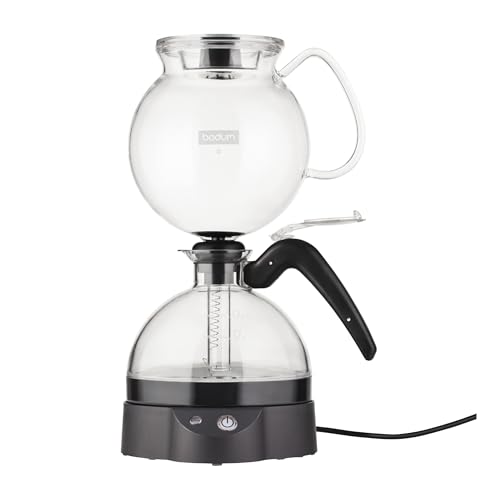
The ePebo is what happens when Bodum decides to make siphon coffee approachable. It automates the vacuum process with precise temperature control and adds a warming plate that keeps coffee at its peak for up to 30 minutes, something no manual siphon can do. The borosilicate glass funnel still gives you that mesmerizing view of the brew cycle, while the BPA-free Tritan plastic jug adds durability.
But let’s be honest: the plastic jug dulls the experience a little. Purists will miss the all-glass elegance and the ritual of flame-based brewing. Yet for daily use, I’d recommend the ePebo over the manual Pebo for most people. It delivers about 90% of the flavor with half the effort, and that warming function? A small luxury that makes a big difference in real life.
Video review
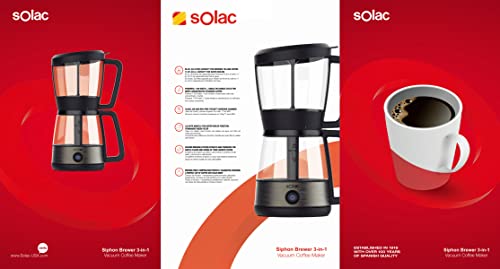
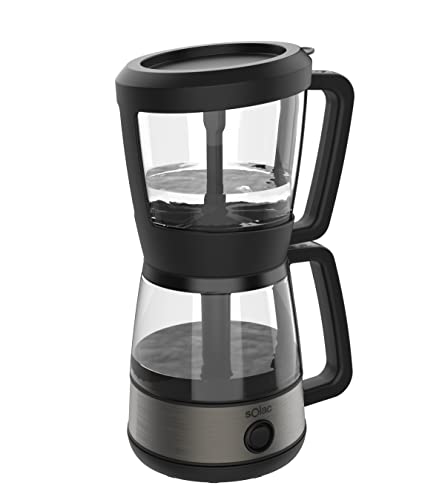
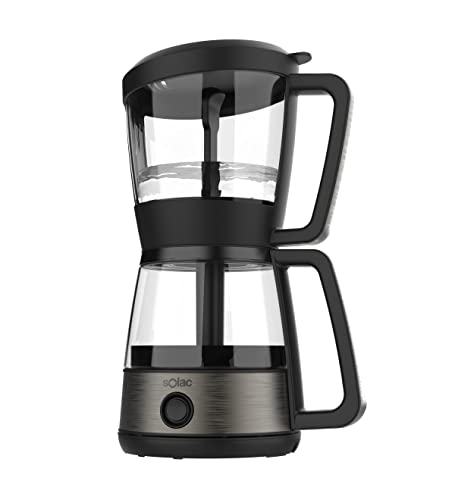
SOLAC 3-in-1 Vacuum Coffee Maker
Strengths
- Fast brewing
- Multi-function
- Stainless steel build
Trade-offs
- Less flavor clarity
- Plastic components
- Not true siphon ritual
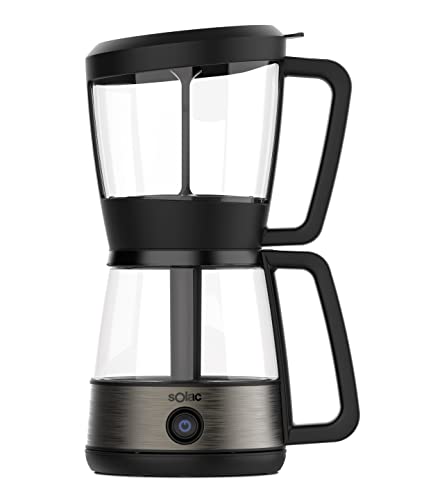
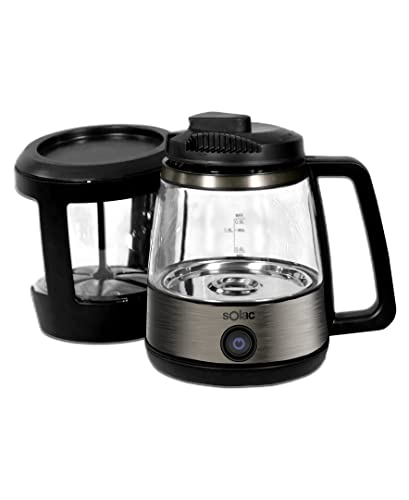
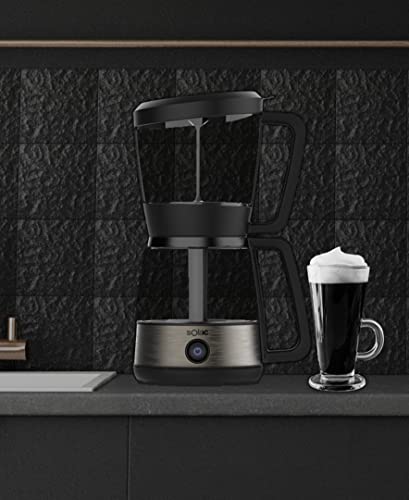
The idea of a 3-in-1 vacuum coffee maker that also boils water and brews tea sounds great on paper, and the 1,100-watt heating element does promise speed, owners consistently report coffee ready in under 7 minutes. That’s faster than most manual siphons, and the brushed stainless steel build gives it a more durable, modern kitchen presence than all-glass models.
But the versatility comes at a cost to focus: this isn’t a pure siphon experience. Reviewers note the flavor clarity isn’t quite at the level of traditional glass or balance siphons, likely because the materials and multi-function design compromise thermal stability. If you want convenience and don’t mind trading some nuance in aroma for multitasking, it’s a solid pick. But for purists, it’s a compromise.
Product photos
Yama 8-Cup Stovetop Siphon Maker
Strengths
- Dishwasher-safe parts
- Cloth filter included
- Stovetop compatible
Trade-offs
- Less brewing control
- Smaller capacity
- Glass still fragile
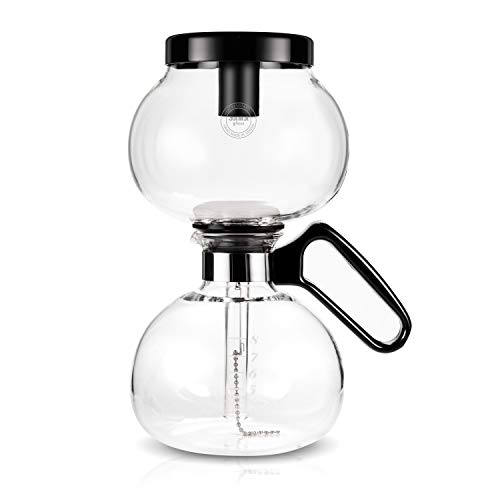
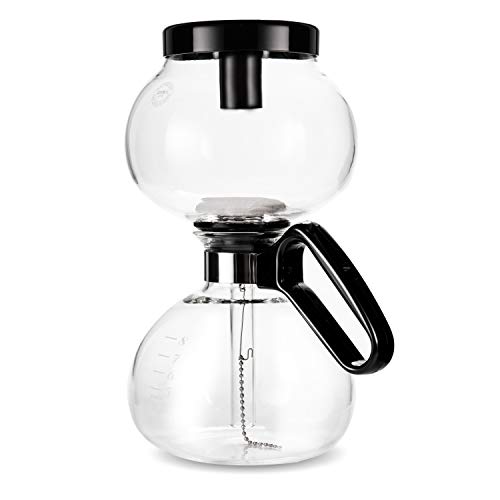
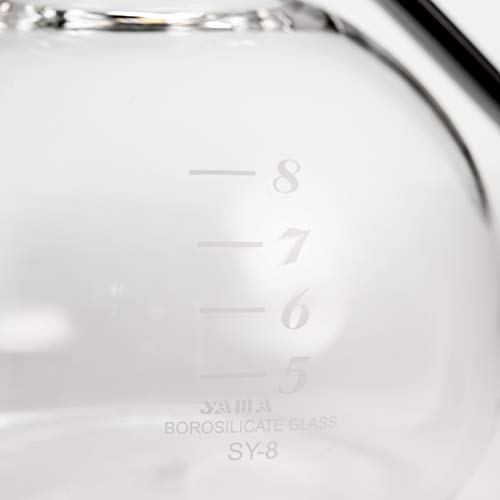
Brewing on the stovetop changes the siphon game, no open flame, no alcohol, just controlled heat from your burner. The Yama 8-cup model uses heat-resistant borosilicate glass and includes a reusable cloth filter, which many owners say brings out a smoother, more nuanced cup than paper-filtered methods. At 24 oz, it’s smaller than the Bodum Pebo but still serves 6–8 modest cups, making it ideal for small households or frequent solo brewing with leftovers.
It’s also one of the easiest siphons to clean, being dishwasher-safe, a rare plus in this category. But stovetop use means less visibility into the heat curve, and some reviewers note inconsistency if your burner doesn’t modulate well. Still, for its blend of tradition, ease, and reliability, it’s a quiet standout.
Product photos


How We Picked These vacuum coffee maker
As the founder of Bean Thusiast, I approached researching vacuum coffee makers by first compiling specifications and features from numerous models. I then weighed those details against extensive owner reviews and assessments from coffee-focused publications. Rather than a hands-on lab test, this is a research-led comparison of specs and owner feedback, informed by years of exploring different brewing methods. My goal was to identify which brewers consistently delivered on the promise of a unique and flavorful cup.
For vacuum coffee makers, brewing precision and build quality were the biggest deciding factors. The delicate nature of the siphon brewing process demands consistent temperature control and a tight seal to properly extract flavor. Durability matters too; these systems involve glass components, and owner reports on breakage heavily influenced my rankings. A visually appealing design also played a role, as many buyers are drawn to the theatrical aspect of siphon brewing.
Specifications reliably indicate brewing capacity and wattage (for electric models), but owner feedback proved crucial for assessing ease of cleaning and long-term durability. Reputation regarding consistent brew quality and the effectiveness of included filters was also heavily weighted. If you’re looking for other manual brewing techniques, you might find our Chemex step-by-step method helpful as well.
Choosing The Right vacuum coffee maker
As someone who’s spent years exploring the nuances of coffee brewing, I can tell you vacuum pots offer a uniquely satisfying experience. They’re as much about the ritual as they are the resulting cup.
Vacuum coffee makers, also known as siphon coffee makers, employ a full immersion brewing method that creates a clean, flavorful cup. Key considerations include the heat source (electric vs. stovetop), material quality (glass and seals), ease of cleaning, and batch size to suit your needs. Look for models with durable borosilicate glass and tight, reliable seals to maintain vacuum pressure.
Heat Source & Control
The first major decision revolves around the heat source. Stovetop models, like the Yama 8-Cup Stovetop Siphon Maker, offer more control over the brewing temperature, which is crucial for dialing in your preferred flavor profile. However, they require more attention and a consistent heat source. Electric models, like the Bodum ePebo, automate this process, offering convenience and consistent results, but you relinquish some control. I’ve noticed from owner feedback that electric models can sometimes struggle with temperature stability over longer brew times.
Material Quality & Build
Vacuum pots are beautiful objects, and a lot of that comes down to material quality. Borosilicate glass is a must for heat resistance and clarity. Pay close attention to the seals (typically rubber or silicone); these are the most common point of failure. A poorly sealed unit won’t maintain the necessary vacuum, resulting in a weak and under-extracted brew.
- Cheap plastic components will quickly degrade.
- Look for stainless steel accents, which add durability and a premium feel.
- A well-constructed filter holder and a robust frame are indicators of a quality build – a flimsy setup speaks to potential issues down the line.
Capacity & Usability
Consider how much coffee you typically brew. Some models, like the SOLAC 3-in-1 Vacuum Coffee Maker, offer versatility with multiple capacity options. However, larger capacity doesn’t always equate to better usability. Cleaning can become a chore with larger, more complex units. I recommend checking out recommended vacuum coffee makers to get a sense of which size fits your needs. Also, remember that getting the coffee-to-water ratios right is essential for a great brew; don’t overlook this foundational element.
A good rule of thumb: always preheat the water before adding it to the bottom chamber. This reduces the stress on the glass and speeds up the brewing process.
Vacuum Coffee Maker Compared
Here’s a comparison of key specifications for various vacuum coffee makers.
| Product Title | Capacity | Heat Source | Brewing Time | Material | Servings |
|---|---|---|---|---|---|
| Nispira Balance Syphon Coffee Maker | N/A | Alcohol/Butane | N/A | Glass/Metal | N/A |
| Bodum Pebo Vacuum Coffee Maker | 8 cups (4oz each) | Stovetop | 5-11 mins | Glass | 8 |
| Bodum ePebo Electric Vacuum Coffee Maker | N/A | Electric | N/A | Glass/Tritan | N/A |
| SOLAC 3-in-1 Vacuum Coffee Maker | 30oz (0.9L) | Electric | <7 mins | N/A | N/A |
| Yama 8-Cup Stovetop Siphon Maker | 24oz | Stovetop | N/A | Borosilicate Glass | 8 (3-4oz) |
Frequently Asked Questions
What water temperature should I use for vacuum brewing?
Around 200°F (93°C) is ideal. While stovetop models allow precise control, electric models typically reach this temperature automatically; however, checking with a thermometer can confirm consistent heat.
How often will I need to replace the rubber seals on my vacuum pot?
Expect to replace the rubber seals every 6-12 months, depending on frequency of use and cleaning habits. Owner feedback suggests silicone seals generally last longer than rubber ones, offering better durability.
Are vacuum coffee makers difficult to clean?
They require more attention than drip machines, but aren’t overly complex. Disassembling and rinsing all components immediately after brewing prevents coffee oil buildup, and a dedicated brush helps reach tight spaces. You can find siphon coffee maker reviews that discuss cleaning experiences.
Can I use any type of coffee grind for a vacuum coffee maker?
A medium-coarse grind is best. Finer grinds can pass through the filter and result in a muddy brew, while coarser grinds may lead to underextraction.
What’s the difference between stovetop and electric vacuum brewers?
Stovetop models offer greater temperature control, allowing for adjustments to brewing parameters, but demand more user involvement. Electric models provide convenience and consistent temperatures, but sacrifice some control; if you’re seeking top-rated siphon brewers, consider which aspect suits your preferences.
The Bottom Line
Choosing a vacuum coffee maker often comes down to how much control you want versus how much convenience you prefer. While the stovetop models demand more attention, the Yama 8-Cup Stovetop Siphon Maker consistently receives high marks for its ability to deliver a truly refined brew when you’re willing to dial in the process. It strikes a good balance between quality and a relatively approachable price point.
For those prioritizing ease of use, the Bodum ePebo Electric Vacuum Coffee Maker is a solid choice. If you’re looking for a versatile option that can handle different batch sizes, the SOLAC 3-in-1 Vacuum Coffee Maker seems to satisfy a lot of owners. However, if you’re still exploring different brewing methods, you might find our French press brewing steps a great place to start.
Ultimately, the “best” vacuum coffee maker isn’t about any single feature or specification. It’s about understanding the fundamentals: using quality beans, grinding them consistently, and paying attention to water temperature and brew time. These core elements will have a far greater impact on your cup than the most expensive or feature-rich machine.
