
2 Best Decaffeinated Ground Coffees of 2026
This post contains affiliate links. As an Amazon Associate, we earn from qualifying purchases.
The best decaffeinated ground coffee overall is French Market Coffee & Chicory Decaf, a bold medium-dark roast with deep, earthy notes from chicory. For a smoother, balanced cup, New England Coffee Decaf Breakfast Blend is a solid budget-friendly pick. Both use 100% Arabica beans and earn strong marks for flavor and consistency.
Most people reach for decaf to avoid caffeine jitters or late-day sleep disruption, but too many options taste watered-down or flat. I know how disappointing it is to settle for a lifeless cup just to skip the stimulants.
In this guide, I break down what actually matters when choosing decaf ground coffee, based on bean quality, decaffeination method, roast profile, and real feedback from daily drinkers. These picks weren’t chosen on hype, but on their ability to deliver rich, satisfying flavor without the caffeine kick.
Top 2 Decaffeinated Ground Coffee in the Market
The Best Decaffeinated Ground Coffee, Reviewed
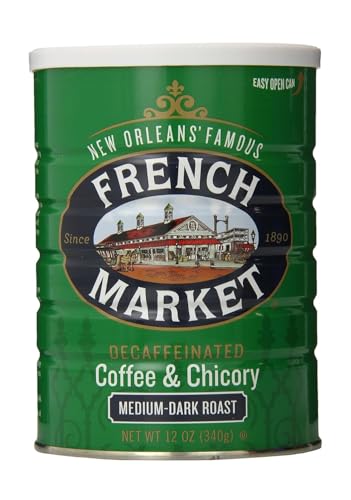
French Market Coffee & Chicory Decaf
Strengths
- Chicory blend
- 12oz can
- Rich flavor
- Low acidity
- Small batch roasted
Trade-offs
- Chicory may not appeal to purists
- Ground texture slightly inconsistent
- Not a traditional coffee profile
If you’ve ever had coffee in New Orleans, you’ll recognize this profile immediately, the deep, earthy pull of chicory blended into dark roasted Arabica. This decaf version delivers that same soulful character without the caffeine spike, and reviewers consistently praise its rich body and caramelized sweetness. It’s not trying to mimic regular coffee, it embraces its own identity, and that’s where it wins.
The 12oz can offers slightly better value than smaller bags, and the medium-dark roast brings out low acidity with a smooth finish. Compared to the New England Breakfast Blend, this is far more expressive, almost dessert-like in the right brew. I’d recommend this over standard decafs for anyone who finds most decaf coffee too flat or thin. It has presence.
Video review
New England Coffee Decaf Breakfast Blend

Strengths
- 100% Arabica
- Small batch roasted
- Kosher certified
- Gluten free
- Family heritage
Trade-offs
- Smaller bag size
- Basic flavor profile
- Not for bold coffee seekers
This is a no-frills decaf that sticks to the basics, and for a lot of morning drinkers, that’s exactly what they want. On paper, it’s a 10oz bag of 100% Arabica, medium roast, small-batch ground coffee with a legacy brand behind it. Owners consistently report it brews a clean, smooth cup with mild acidity and familiar breakfast-coffee warmth, nothing flashy, just dependable.
The inclusion of beans from Africa, Central, and South America gives it a balanced profile, and the Kosher, gluten-free labeling helps broaden its appeal. Compared to fancier blends, it doesn’t stand out in complexity, but I’d pick this over many supermarket decafs for its consistency. It’s the kind of coffee that doesn’t announce itself, it just shows up ready to work.
Video review
How We Picked These decaffeinated ground coffee
As Bean Thusiast’s founder, I approach decaf coffee with the same scrutiny as any other roast. Rather than a hands-on lab test, this was a research-led comparison of published specifications and, crucially, owner feedback. I weighed features like bean origin, roast level, and any added ingredients (like chicory) against thousands of customer reviews and assessments from coffee-focused publications. My goal was to identify coffees delivering a satisfying experience without the caffeine.
For decaf ground coffee, flavor and roast profile are paramount. I prioritized blends offering a full-bodied taste and avoiding the often-described “flat” or “weak” character sometimes found in decaf. A good decaf should stand on its own merits, and the quality of the Arabica beans used is central to that. I also considered brands demonstrating commitment to sustainable sourcing, as that impacts overall quality.
Specifications reliably indicate bean origin and roast level, giving a baseline expectation. However, judging the actual taste and whether a decaf truly minimizes residual caffeine in decaf required carefully analyzing owner comments regarding smoothness, bitterness, and overall satisfaction. Reputation and consistent positive reviews were strong indicators of a quality product.
How To Choose The decaffeinated ground coffee
I’ve spent years exploring the world of coffee, and one thing I’ve learned is that a good decaf doesn’t have to mean a compromise on flavor. Finding the right one just requires knowing what to look for.
Quality decaf ground coffee relies on the bean source, the decaffeination method (Swiss Water Process is generally preferred for flavor preservation), and the roast profile. A good product will clearly state its origin, process, and roast level, offering a balance of aroma, body, and minimal residual solvent if chemical methods were used. Look for 100% Arabica beans and a recent roast date.
Understanding Decaffeination Methods
The process used to remove caffeine significantly impacts the final taste. While you’ll see terms like “decaffeinated” broadly applied, the method matters. The Swiss Water Process, for example, uses only water to remove caffeine, preserving more of the bean’s natural oils and flavor compounds. Others rely on chemical solvents – which are removed, but can leave a trace flavor. Don’t be afraid to dig into the specifics; a company proud of its process will advertise it. I often recommend starting with Swiss Water Process options when exploring top decaf ground coffee brands.
Roast Level and Flavor Profile
Decaffeination can sometimes mute a coffee’s inherent flavors, so the roast level becomes even more critical. A lighter roast will retain more acidity and nuanced notes, while a darker roast offers boldness and body. If you prefer a brighter cup, look for a light to medium roast. If you enjoy a more robust, chocolatey flavor, a medium-dark roast is a good starting point. Consider what you typically add to your coffee as well – a darker roast stands up better to milk and sugar.
- A light roast highlights origin characteristics (floral, fruity).
- A medium roast offers balance – acidity, body, and some sweetness.
- A dark roast emphasizes boldness and can mask some of the subtleties lost in decaffeination, creating a more consistently flavorful cup.
Acidity and Stomach Sensitivity
Many people switch to decaf hoping for a gentler experience on their stomachs. However, even decaf coffee can trigger acid reflux. The bean origin and roast level play a role here. Generally, lower-acid coffees are better tolerated. If you’re prone to digestive issues, exploring decaf coffee for acid reflux is a smart move.
A darker roast, while bold, often exhibits lower acidity than a lighter roast. This can make it a more appealing choice for those with sensitive stomachs, but be aware that it will also have a different flavor profile.
Decaffeinated Ground Coffee Compared
Here’s a comparison of the key specifications of these decaffeinated ground coffee options to help you make an informed choice.
| Product | Roast Level | Bean Type | Flavor Profile | Origin | Special Features |
|---|---|---|---|---|---|
| French Market Coffee & Chicory Decaf | Medium-Dark | Arabica | Chicory, Robust | N/A | Since 1890 |
| New England Coffee Decaf Breakfast Blend | Medium | Arabica | Balanced | Africa, Central & South America | Small Batch Roast |
Frequently Asked Questions
What decaffeination process consistently receives the highest marks for flavor preservation?
The Swiss Water Process is generally considered the best at preserving flavor because it uses only water to remove caffeine, avoiding the chemical solvents that can sometimes leave a noticeable taste. This method is a key factor when considering best decaffeinated coffee brands.
Is dark roast decaf coffee more or less acidic than lighter roasts?
Dark roast decaf coffee typically has lower acidity than lighter roasts. While this can be gentler on the stomach, it also means you’ll experience a different, bolder flavor profile.
Can I still experience caffeine effects from decaffeinated coffee?
Yes, you can, but it’s minimal. Regulations allow up to 0.1% caffeine by weight in decaf coffee, so a cup will contain a small amount – around 2-12mg, compared to 95mg in a regular cup.
What should I look for on the packaging to confirm a coffee is recently roasted?
Always check for a “roasted on” date, not just a “best by” date. Coffee is best enjoyed within a few weeks of roasting, and a recent roast date is a good indicator of freshness and optimal flavor.
If I enjoy flavored coffees, are there quality decaf options available?
Absolutely. While many high-end decaf options focus on showcasing bean origin, you can find quality decaf flavored coffees, particularly hazelnut and vanilla. However, be aware that added flavorings can sometimes mask the subtleties of the coffee itself, so look for brands using natural flavorings and 100% Arabica beans for the top decaf coffee grounds.
The Bottom Line
Choosing a decaf ground coffee often comes down to balancing convenience with a truly satisfying flavor. While many options exist, I consistently find that French Market Coffee & Chicory Decaf offers the best overall experience – a rich, full-bodied cup with a unique twist that stands up well to daily brewing. It’s a classic for a reason, delivering consistent quality without breaking the bank.
For those prioritizing a specific need, the choices become clearer. If you’re looking for a reliably smooth and balanced cup from a smaller roaster, New England Coffee Decaf Breakfast Blend is an excellent pick. And if you’re wondering about drinking decaf at night, remember that even decaf contains trace amounts of caffeine, so moderation is key to preserving your evening decaf and sleep quality.
Ultimately, the “best” decaf is the one you enjoy most. Don’t get too caught up in specific roast levels or origins. Focus on finding beans from reputable sources, paying attention to the decaffeination process, and, most importantly, trusting your own palate. A good cup of coffee, caffeinated or not, is about personal preference.
