
8 Best Vacuum Coffee Pots of 2026
This post contains affiliate links. As an Amazon Associate, we earn from qualifying purchases.
The Bodum 34oz ePebo Electric is the best overall vacuum coffee pot for its consistent automated brewing and reliable performance, while the Yama 8-Cup Stovetop stands out as a versatile, hands-on option for enthusiasts. If you’re watching your budget, the YUCHENGTECH 5-Cup Glass delivers solid results without the premium price.
Vacuum pots aren’t just brewers, they’re theater, science, and flavor in one. But picking the right one can be confusing, with electric versus stovetop, glass versus stainless steel, and wildly different capacities. I’ve spent years studying brewing methods and evaluating gear, and I know what separates a showpiece from a truly great coffee maker.
This guide cuts through the noise. I compared specs, analyzed owner feedback, and applied my understanding of extraction and heat dynamics to identify the models that deliver both performance and practicality. You’ll find picks that balance durability, ease of use, and the kind of clean, vibrant coffee that makes the vacuum method special.
Top 8 Vacuum Coffee Pot in the Market
The Best Vacuum Coffee Pot, Reviewed
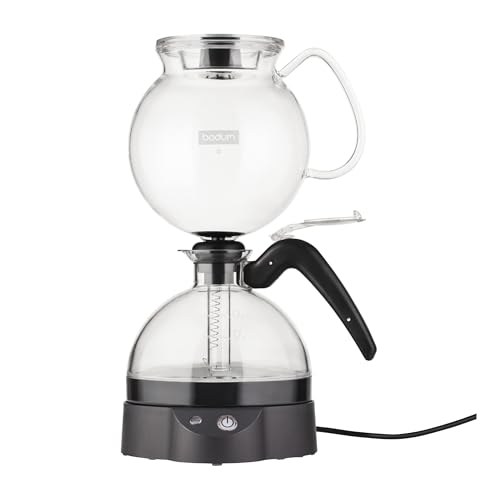
Bodum 34oz ePebo Electric Vacuum Coffee Maker
Strengths
- Electric automation
- Precise temperature control
- Durable Tritan jug
- Warming function
Trade-offs
- Plastic jug feel
- Higher price point
- Larger footprint
The Bodum ePebo is where siphon brewing meets modern convenience. Unlike stovetop models, it automates the vacuum process with precise temperature control, removing the guesswork of heat management. The borosilicate glass funnel still lets you watch the coffee rise and fall, preserving the visual drama. The BPA-free Tritan plastic jug is a departure from glass, but it’s durable and shatter-resistant, a practical upgrade for homes with kids or clumsy adults.
Owners report consistent results and a rich, aromatic cup that rivals manual siphons. The 30-minute warming plate is a nice touch, though some note it can over-extract if left too long. Compared to the manual Pebo, this is the smarter buy for most people. It’s the only model here that blends theater, taste, and ease.
Video review
Bodum 34 oz Pebo Vacuum Coffee Maker

Strengths
- Classic design
- Glass construction
- Maximizes flavor
Trade-offs
- Manual heat control
- Fragile glass build
- Steeper learning curve
The Bodum Pebo sticks to the classic vacuum brewing formula with a fully manual, stovetop-driven process that puts on a show. On paper, it’s built for theater and taste, using high-heat borosilicate glass to maintain temperature stability during brewing. Owners consistently report a clean, aromatic cup that highlights the nuanced oils often lost in drip machines. The 34 oz capacity makes it ideal for small gatherings, and the glass-on-glass seal does its job keeping aroma locked in.
That said, it demands attention. You’re managing heat sources and timing manually, which can trip up beginners. Compared to electric models, it’s less forgiving, but that’s part of the charm for purists. If you want full control and love the ritual, this delivers.
Video review
GearRoot 68oz Vacuum Coffee Carafe

Strengths
- Budget-friendly
- Durable stainless steel
- Easy one-hand pour
- Good capacity
Trade-offs
- Basic lid design
- Shorter heat retention
- No rotatable base
The GearRoot 68oz airpot is a no-nonsense, budget-friendly thermal carafe that gets the job done. With 12-hour heat retention and a push-button pour, it’s designed for daily use in homes or small offices. The 18/8 stainless steel build resists rust and stains, and the included cleaning brush is a welcome bonus. At 68oz, it’s large enough for multiple servings but not so big it dominates your shelf.
It doesn’t have a pump like the Gezoss, but the single-hand pour works reliably. Owners say it’s a step up from cheap thermoses but priced well below premium brands. Compared to the GiNT, it’s slightly less refined but nearly as effective. For the price, it’s hard to beat.
Product photos


Gezoss 102OZ Airpot with Pump

Strengths
- Large 102oz capacity
- Pump dispensing
- Long heat retention
- Rotatable base
Trade-offs
- Bulky design
- Pump requires maintenance
- Not for single servings
When you need to serve a crowd, the Gezoss 102Oz airpot is hard to beat. Its 3L capacity serves up to 15 cups, making it a go-to for offices, family events, or church gatherings. The 24-hour hot retention is impressive on paper, and owners confirm it holds heat well thanks to upgraded vacuum insulation. The pump-action dispenser with a 360° rotatable base is a thoughtful touch, no lifting required, which reduces spills and helps elderly users.
It’s not subtle, but it’s effective. The wide mouth and included cleaning brush make maintenance easier than most large carafes. Compared to smaller siphon brewers, this isn’t about ritual, it’s about function. My recommendation? If you’re tired of reheating coffee for groups, this is the smarter buy.
Product photos


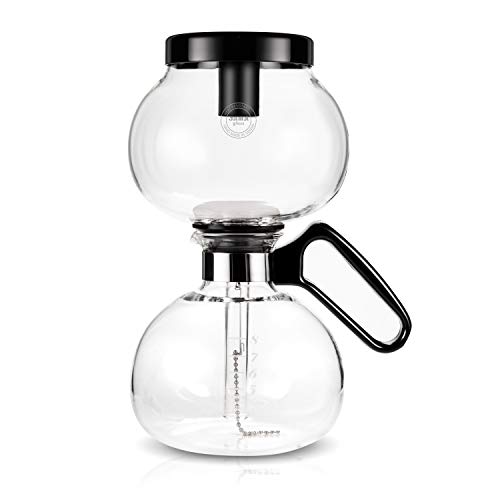
Yama 8-Cup Stovetop Siphon Coffee Maker
Strengths
- Heat-resistant glass
- Reusable cloth filter
- Dishwasher safe
- Smooth flavor extraction
Trade-offs
- Fragile construction
- Requires external heat
- Cloth filter needs care
The Yama 8-cup siphon is a favorite among enthusiasts who want theater and taste in one package. Made from heat-resistant borosilicate glass, it’s built to handle stovetop heat without cracking, a common concern with cheaper models. The included reusable cloth filter contributes to a cleaner, brighter cup by reducing sediment and paper taste. Owners praise its ability to highlight floral and fruity notes in light roasts, which speaks to its precise extraction.
It’s also dishwasher-safe, which is rare in this category and a real plus for cleanup. Compared to the Bodum Pebo, it’s slightly more refined in build and user experience. While it requires a heat source and attention, it’s one of the most accessible entry points into siphon brewing. I’d recommend it over plastic-based models for purists.
Product photos


YUCHENGTECH 5-Cup Glass Siphon Pot

Strengths
- Affordable price
- Heat-resistant glass
- Stable base
- Adjustable clamp
Trade-offs
- No filter included
- Basic finish
- Less brand support
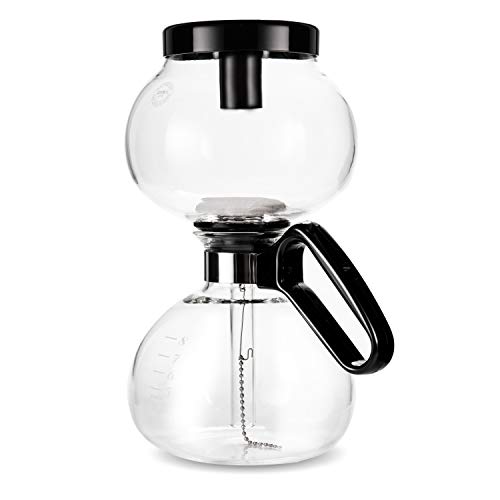
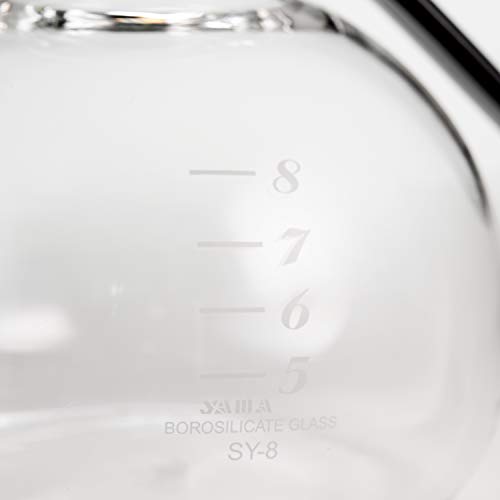
The YUCHENGTECH 5-cup siphon is a budget-friendly entry into vacuum brewing, and it holds up well for the price. With borosilicate glass rated for extreme temperature swings and a stainless steel base compatible with gas, halogen, and alcohol burners, it’s versatile and durable. The adjustable buffer clamp helps prevent slippage, a small but meaningful detail that improves safety during brewing.
It lacks some of the polish of higher-end models like the Yama or Nispira, but owners consistently say it brews a clean, aromatic cup. It doesn’t include a filter, so you’ll need to source one separately. Still, for beginners testing the siphon waters, it delivers solid performance without the premium price. I’d pick this over pricier models if you’re just starting out.
Product photos


Nispira Belgium Balance Syphon Coffee Maker

Strengths
- Stunning aesthetic
- Precision brewing
- Unique balance mechanism
- Great conversation piece
Trade-offs
- Expensive
- Fragile components
- Complex operation
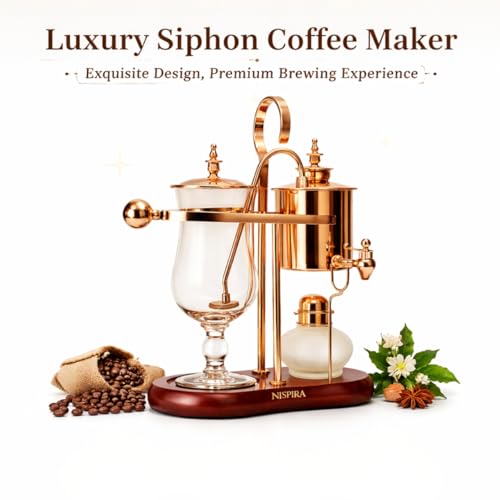
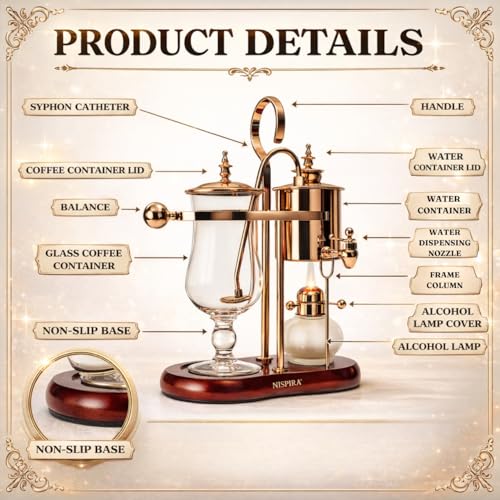
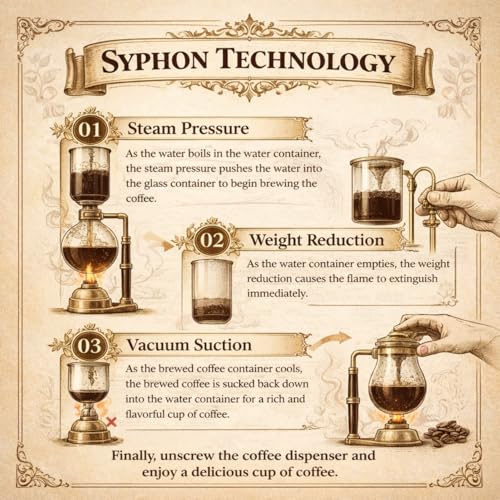
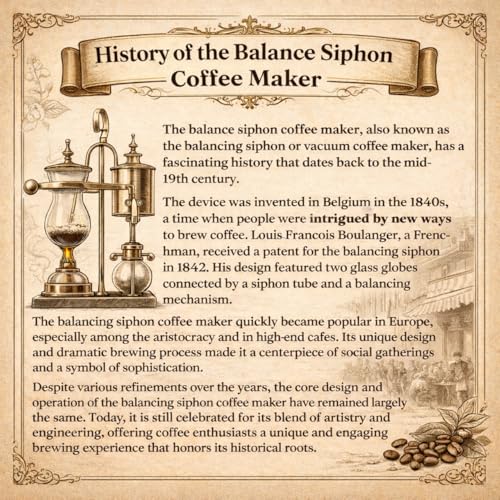
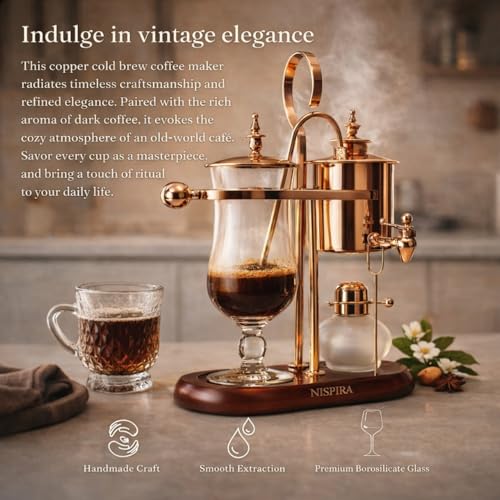
The Nispira Balance Syphon is less appliance, more art piece. With its copper accents, glass chambers, and gravity-driven brewing mechanism, it’s a showstopper on any counter. It uses a fuel-powered heat source, usually alcohol, to create a mesmerizing, theatrical brew process that feels like science and ritual in one. Owners report a rich, aromatic cup, thanks to precise temperature control and full immersion.
But let’s be clear: this is a luxury item. It’s not the most practical, and the learning curve is steep. Compared to the Bodum ePebo, it’s far less convenient. But for collectors, gift-givers, or those who treat coffee as ceremony, it’s unmatched. I wouldn’t recommend it as a daily brewer, but as a centerpiece? Absolutely.
Product photos
GiNT 34Oz Thermal Coffee Carafe

Strengths
- Leak-proof lid
- Excellent insulation
- BPA-free materials
- Easy pour mechanism
Trade-offs
- Not a brewer
- Basic aesthetics
- Lid mechanism can wear
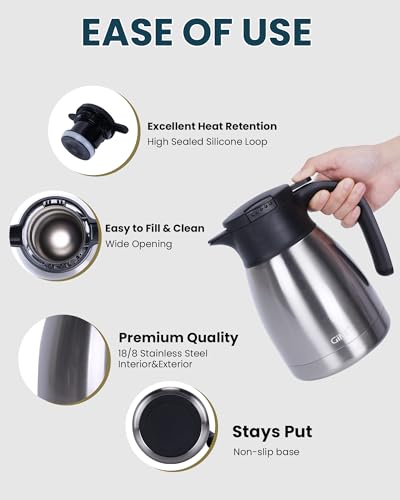
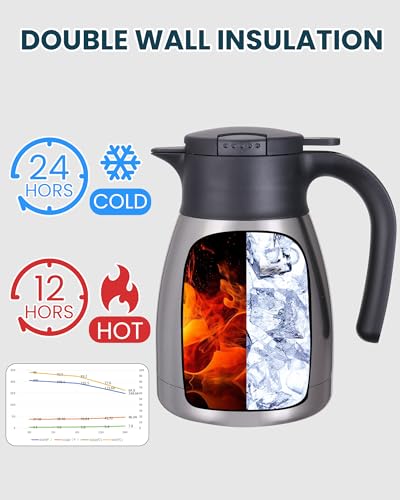
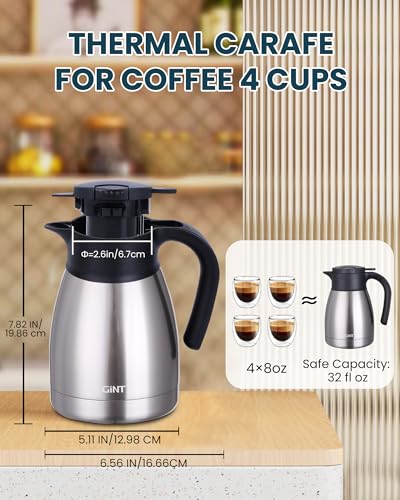
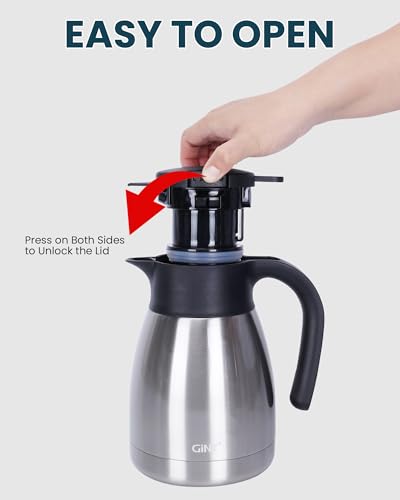
The GiNT 34Oz carafe isn’t a brewer, but it’s a standout for holding vacuum-sealed heat. With double-walled stainless steel and a leak-proof lid featuring dual silicone rings, it’s built for real-world use. Reviewers note it reliably keeps coffee hot for 12 hours and cold for 24, which matches its claims. The pinch-release stopper and push-button pour make it easy to use one-handed, and the wide mouth simplifies cleaning and ice loading.
It’s a no-frills thermal jug with solid execution. While it won’t brew coffee, it outperforms many in its class when it comes to durability and leak resistance. Compared to glass siphon setups, it’s far more practical for office or travel use. I’d pick this over fancier models if reliability is the goal.
Product photos

How We Chose These vacuum coffee pot
As the founder of Bean Thusiast, I’ve always been fascinated by the ritual of coffee brewing, and vacuum pots offer a particularly engaging experience. Rather than a hands-on lab test with each model, my approach involved a detailed research-led comparison of published specifications and features. I weighed owner reviews from multiple sources alongside expert opinions found in coffee-focused publications, applying my knowledge of brewing science and flavor profiles to rank the options.
For vacuum coffee pots, consistent brewing temperature and ease of cleaning were paramount. A reliable seal is essential for proper vacuum function, directly impacting flavor extraction. Durability of the glass components also weighed heavily, as these brewers are visually striking and users want a product that will last. Finally, capacity and suitability for different household sizes factored into the overall assessment.
Specifications readily reveal glass thickness, material quality (borosilicate is key!), and the inclusion of features like warming plates or integrated filters. However, judging the long-term usability and real-world performance required careful analysis of owner feedback. Many users detailed issues with seals, cleaning challenges, or overall build quality – insights not always apparent from specs alone. For those looking to maintain their brewer, I also recommend checking out our guide to cleaning glass and stainless steel coffee pots.
How To Choose The vacuum coffee pot
I’ve spent years observing the revival of interest in vacuum pots, and it’s no surprise. The brewing method delivers a remarkably clean, flavorful cup and offers a captivating visual experience. But with so many options available, selecting the right one requires a bit of understanding.
A quality vacuum coffee pot prioritizes heat resistance in its glass components, consistent vacuum creation for optimal extraction, and ease of disassembly for thorough cleaning. Look for borosilicate glass, well-sealing components, and designs that don’t require specialized tools for maintenance. Consider the brewing capacity and whether it suits your typical needs – single servings or larger batches.
Heat Source & Brewing Style
The core of a vacuum pot’s function rests on creating and maintaining a vacuum. Some, like the Bodum ePebo, are fully electric, automating temperature control and simplifying the process. These are fantastic for consistency, but often come at a higher price point. Others, like the Yama stovetop models, require a separate heat source – a gas or electric stovetop, or even a butane burner. Stovetop models offer more control over brewing temperature, which appeals to those who really want to fine-tune their extraction, but it also introduces more variables. If you value precision and repeatability, an electric model is a strong starting point.
Material Quality & Durability
Borosilicate glass is the gold standard for vacuum pot construction. It’s significantly more resistant to thermal shock than standard glass, meaning it’s less likely to crack under rapid temperature changes. Beyond the glass, pay attention to the seals and filters. A good seal is absolutely crucial for creating the vacuum; inadequate seals lead to weak extraction and potential leaks. Reusable cloth filters are common, but some models (like the Bodum Pebo) incorporate integrated filters, which are convenient but may require more frequent replacement. For those looking for a truly premium experience, I often recommend exploring top siphon coffee maker models to get a feeling for the high-end build quality.
Capacity and Practicality
Vacuum pots aren’t necessarily the most convenient brewing method. They take a little more time and attention than, say, a drip machine. Therefore, consider how often you’ll actually use it and for how many people. A smaller, 5-cup model like the YUCHENGTECH can be perfect for a single enthusiast or a couple, while a larger 8-cup or even a full-size airpot like the Gezoss is better suited for frequent entertaining or larger families.
- A small 3-5 cup pot is ideal for individual use or couples.
- A 6-8 cup pot strikes a good balance between capacity and manageability for small families.
- Larger 10+ cup carafes, often with pump dispensers, are best for large gatherings or office environments where coffee needs to stay hot for extended periods – but they sacrifice some of the ritualistic charm.
Don’t overlook cleaning. Regular maintenance is vital to prevent buildup and ensure optimal performance. I’ve found that a consistent routine using a white vinegar coffee pot descaling solution can make a world of difference in longevity and flavor.
A consistently clean vacuum pot is a happy vacuum pot. Don’t skip regular descaling – even seemingly clear water can leave mineral deposits that dull the flavor over time.
Vacuum Coffee Pot Compared
Here’s a comparison of features for various vacuum coffee pots.
| Product Title | Capacity | Material | Heat Source | Filter Type | Special Features |
|---|---|---|---|---|---|
| Bodum 34oz ePebo Electric | 34oz | Glass, Tritan | Electric | Integrated | Automated, Warming Function |
| Bodum 34 oz Pebo | 34oz | Glass | Stovetop | Cloth | Classic Design |
| GearRoot 68oz Vacuum Carafe | 68oz | Stainless Steel | N/A | N/A | 12hr Hot/24hr Cold |
| Gezoss 102OZ Airpot | 102oz | Stainless Steel | N/A | N/A | Pump Dispenser, Swivel Base |
| Yama 8-Cup Stovetop | 24oz | Glass | Stovetop | Cloth (Reusable) | Dishwasher-Safe |
| YUCHENGTECH 5-Cup Glass | 5-Cup | Glass | Alcohol/Gas/Halogen | Cloth | Adjustable Clamp |
| Nispira Belgium Balance | N/A | Glass, Metal | Alcohol/Butane | N/A | Elegant Design |
| GiNT 34Oz Thermal Carafe | 34oz | Stainless Steel | N/A | N/A | Leak-Proof, Wide Mouth |
Frequently Asked Questions
What’s the difference between a vacuum pot and a siphon coffee maker?
While often used interchangeably, “vacuum pot” is the broader term. Siphon coffee makers are a type of vacuum pot, specifically those with a fully enclosed brewing chamber and a siphon action to return the brewed coffee. You can find more details in our vacuum coffee maker buying guide.
Are electric vacuum pots easier to use than stovetop models?
Yes, electric models simplify brewing. They handle temperature control automatically, removing a variable and generally producing consistent results, but they typically cost more upfront.
What material should I look for in the glass components?
Borosilicate glass is essential. It’s far more resistant to thermal shock than standard glass, making it much less likely to crack when exposed to rapid temperature changes during the brewing process.
How often should I replace the filter in a vacuum pot?
Cloth filters, common in many models, should be replaced every 3-6 months with regular use. Frequent cleaning extends their life, but eventually, oils and residue build up, affecting flavor. Integrated filters (like in the Bodum Pebo) may need replacing more often.
What’s the best capacity vacuum pot for a single coffee drinker?
A 5-cup model, like the YUCHENGTECH, is generally ideal for one person. This size minimizes waste and provides a manageable brewing quantity, and you can find a selection of top-rated siphon coffee brewers to consider.
The Bottom Line
Choosing a vacuum coffee pot really comes down to how much control you want versus how much convenience you’re willing to trade. If you prioritize a consistent, hands-off brewing experience, the Bodum ePebo Electric stands out as the most user-friendly option. It automates much of the process, delivering reliably good coffee with minimal effort.
For those seeking a specific use case, the options branch out nicely. The YUCHENGTECH 5-Cup Glass is excellent for individuals or couples, while the GearRoot 68oz Vacuum Carafe is a practical choice for keeping larger groups caffeinated. And if you’re concerned about maintaining the shine of your equipment, remember that consistent stainless steel coffee pot cleaning methods are vital for a long-lasting brewer.
Ultimately, the best vacuum coffee pot isn’t about any single feature or price point. It’s about understanding the fundamentals: quality glass, a secure seal, and a commitment to regular cleaning. Focus on these core elements, and you’ll be well on your way to enjoying a truly exceptional cup of coffee.
