
How to Clean a Stainless Steel Coffee Pot & Avoid Common Damage
Cleaning a stainless steel coffee pot requires matching three things: the type of stain (coffee oils, limescale, or exterior fingerprints), the correct non-abrasive cleaner (baking soda for inside, Bar Keepers Friend for outside), and the right motion (circular inside, with-the-grain outside). Vinegar etches the interior finish over repeated uses, and abrasive scrubbers leave permanent scratches.
Most guides get the first part right but miss the second. They tell you to soak with vinegar or scrub with steel wool because it works once. What they don’t mention is the cloudiness that shows up after the third clean, or the fine scratches that catch the light every time you pour.
Here’s how to clean the carafe from a drip machine, espresso machine steam wand, or thermal carafe without damaging the 304-grade stainless steel.
Key Takeaways
- Vinegar and lemon juice are acidic enough to etch the interior stainless steel surface over time, leaving a permanent cloudy finish.
- For interior coffee stains, a baking soda paste and a soft bottle brush lifts oils without scratching. For exterior fingerprints and water spots, use Bar Keepers Friend powder with a microfiber cloth, always wiping with the grain.
- Descale the entire machine, including the carafe’s internal pathways, every 3-6 months using the manufacturer’s solution, not DIY vinegar mixes.
- Never use steel wool, scouring pads, or magic erasers on any part of a stainless steel coffee pot. They leave micro-scratches that trap dirt and become more visible.
- Dry the pot completely after every wash. Letting water air-dry causes spotty mineral deposits, especially on the exterior.
The Vinegar Etching Problem (And What to Use Instead)
White vinegar is a terrible choice for cleaning the inside of a stainless steel coffee pot. It works once. The acidity cuts through the coffee oils and dissolves some mineral deposits. After that first success, you’ll see a recommendation to use it monthly.
Common mistake: Using vinegar to clean a stainless steel carafe monthly, the acetic acid reacts with the chromium oxide layer that gives stainless steel its corrosion resistance. After three or four uses, the interior develops a permanent cloudy, etched appearance that no amount of polishing can fix.
The cloudiness isn’t a stain you can scrub off. It’s the surface of the steel itself, chemically altered. You can feel the difference with your fingernail, a smooth, polished interior turns slightly rough and matte. That etched surface then holds onto coffee oils and tannins more aggressively the next time you brew.
For interior stains, you need an alkaline cleaner that breaks down oils without attacking the metal. Baking soda is the right tool. Mix two tablespoons with just enough warm water to make a thick paste. Spread it around the inside with your fingers or a soft-bristled brush. Let it sit for fifteen minutes, then scrub with the brush and rinse. The paste clings to vertical surfaces better than liquid, and the mild abrasive action is gentle enough for daily-use 304 stainless.
TL;DR: Ditch the vinegar. A baking soda paste cleans interior coffee stains without etching the steel.
How to Clean the Exterior Without Scratching It
Exterior cleaning is about fingerprints, water spots, and heat discoloration from sitting on a warmer. The goal is to restore the shine without leaving swirl marks.
You need two things: Bar Keepers Friend powder (the original oxalic acid formula, not the cream) and a soft, clean microfiber cloth. Do not use the green side of a sponge or a Scotch-Brite pad. They contain aluminum oxide abrasives harder than the steel’s surface, guaranteeing scratches.
Sprinkle a dime-sized amount of Bar Keepers Friend onto a damp section of the cloth. Wipe the exterior in straight lines, following the grain of the stainless steel. Most carafes have a brushed finish running vertically or horizontally, your wiping motion should match that direction. Going against the grain will leave visible cross-hatch scratches. Rinse the area immediately with clean water and dry it with a separate microfiber cloth. Leaving any cleaner residue to dry will itself cause spots.
For a thermal carafe with a mirrored finish, the same rule applies but with even lighter pressure. Use a brand-new microfiber cloth to ensure no embedded grit.
| Cleanser | Best For | Risk If Used Wrong |
|---|---|---|
| Bar Keepers Friend powder | Exterior fingerprints, water spots, light heat discoloration | Leaves swirl scratches if rubbed in circles or against the grain. |
| Baking soda paste | Interior coffee oil stains and tannin buildup | Can leave a gritty film if not rinsed thoroughly with hot water. |
| Dish soap & warm water | Daily wipe-down of both interior and exterior | Ineffective on set-in stains or limescale. |
| Manufacturer descaling solution | Internal limescale in carafe and machine lines | Using vinegar instead voids some warranties and damages internal seals over time. |
Descaling the Carafe and Machine
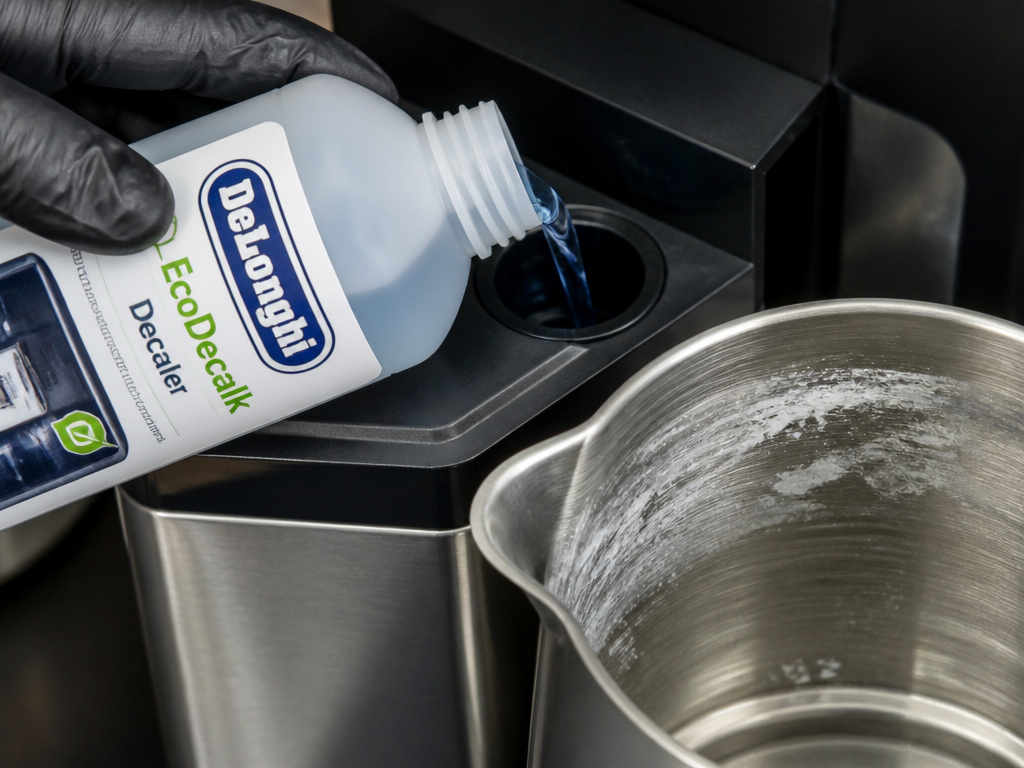
Coffee oils stick to the interior. Minerals from your water, calcium and magnesium, build up on the heating element, in the water lines, and on the inside walls of the carafe itself. This is limescale. It feels rough, looks chalky white or off-white, and reduces heating efficiency.
Descaling is a chemical process, not a mechanical one. You cannot scrub limescale off. You must dissolve it.
The Breville BES870XL manual says to use their Breville BES007 cleaning tablet and run the cleaning cycle when the “CLEAN ME” light comes on. The Keurig K-Elite manual instructs a 45-minute process using their Keurig Descaling Solution. These are not suggestions. Using a generic or DIY descaler like straight vinegar can damage internal seals and sensors not rated for high acidity. The machine might work for six months, but the rubber gaskets and plastic valves become brittle and crack.
The process always follows a rinse-descale-rinse pattern. You fill the reservoir with the solution, run a brew cycle without coffee, let it sit, then run multiple clear-water cycles to flush. For a standalone carafe, you’d fill it with the descaling solution, let it soak for the time specified on the bottle (usually 30 minutes), then rinse repeatedly.
If your steam wand becomes blocked, soak the steam wand in hot water for 5 minutes, then unscrew the tip and clean with a pin or the cleaning tool provided.
That quote from the Breville manual highlights the secondary benefit of descaling. It clears the tiny orifices in things like steam wands and water outlets that coffee particles and scale clog. A blocked wand sprays unevenly and loses pressure.
The Right Tools for the Job
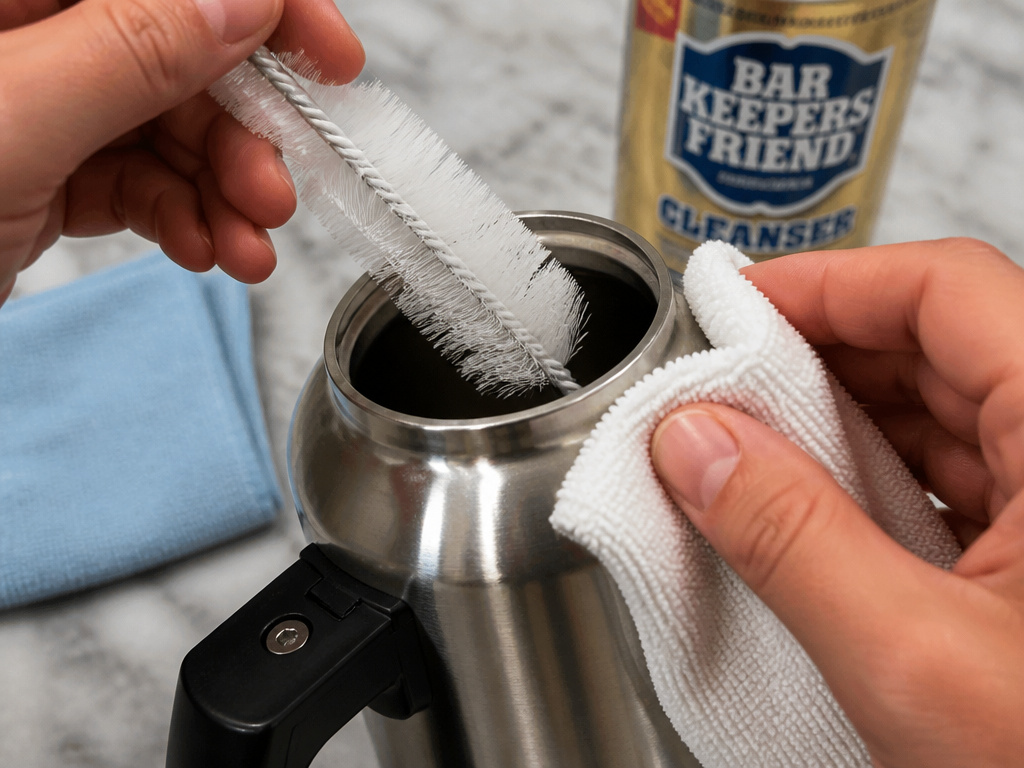
Using the wrong tool guarantees a damaged finish. This isn’t about buying specialty gear. It’s about avoiding common household items that are too aggressive.
You need a soft-bristled bottle brush designed for stainless steel. The bristles are usually white nylon. A hard-bristled brush or one with a wire core will scratch. For the exterior, your only tool should be a microfiber cloth. Keep one cloth dedicated to applying Bar Keepers Friend and another, clean one for drying.
Steel wool and magic erasers are banned. Steel wool particles can embed in the steel surface and rust, creating tiny orange specks. Magic erasers are melamine foam, a micro-abrasive that acts like ultra-fine sandpaper. They will dull a brushed finish in one pass and ruin a mirrored finish permanently.
For drying, a lint-free tea towel or another dry microfiber cloth works. The goal is to leave zero water droplets. Water droplets dry into spotty mineral rings, especially if you have hard water. If you see spots after drying, dampen the cloth with a bit of distilled water and wipe again, the pure water will redissolve the minerals without adding more.
TL;DR: A soft bottle brush for inside, a microfiber cloth for outside, and a dedicated drying cloth. That’s the entire toolkit.
Daily and Weekly Maintenance Routine
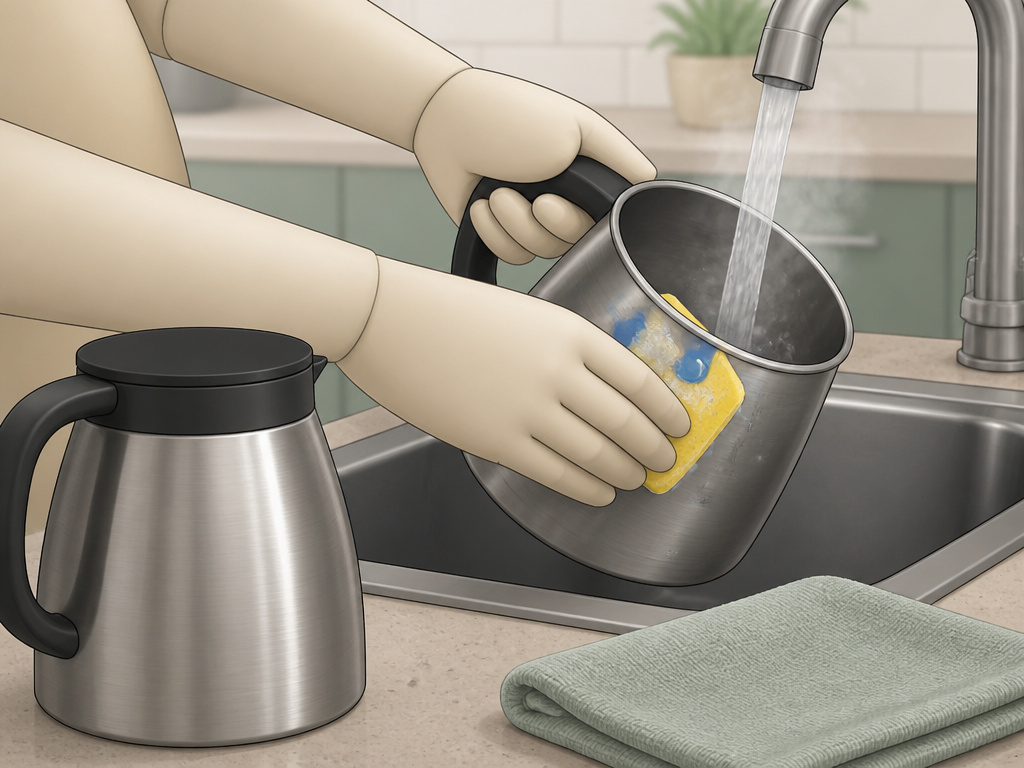
A clean carafe makes better coffee. Oils from previous brews go rancid and impart bitter, off flavors to fresh coffee. A simple daily habit prevents the need for deep cleans.
After each use, dump the grounds and rinse the carafe with the hottest water from your tap. Give it a quick scrub with a soft sponge and a drop of dish soap. Rinse thoroughly until the soap smell is gone. Dry it completely with a towel before storing or putting it back on the warmer. That last step is non-negotiable. Letting it air-dry invites water spots.
Once a week, do the baking soda paste treatment described earlier. This tackles any oil buildup the daily rinse missed. It takes five minutes. If you have a machine with a built-in hot water dispenser, like many Braun coffee maker models, use it to fill the carafe with near-boiling water for the weekly rinse, the heat helps dissolve oils.
Monthly, check for scale. Fill the carafe with clean water and look at the interior under a bright light. If you see a white, cloudy film or feel a rough texture, it’s time for a descaling cycle with the manufacturer’s solution. Refer to your Braun coffee maker manual or Black & Decker coffee maker manual for the specific descaling instructions for your model. The frequency depends entirely on your water hardness.
Troubleshooting Stubborn Stains and Discoloration
Some stains won’t budge with baking soda. A brown, cooked-on ring at the water line or a cloudy interior from vinegar etching needs a stronger approach.
For the cooked-on ring, make a thicker paste of baking soda and a few drops of hydrogen peroxide (3% solution). Apply it only to the stained ring, let it sit for thirty minutes, then scrub gently with the bottle brush. The peroxide provides a mild bleaching action. Rinse like crazy afterward, any residue will taste terrible.
For an already-etched interior, you can’t restore the original polish. You can, however, improve its appearance and make it less prone to staining. Use a stainless steel polish meant for cookware, like Weiman Stainless Steel Polish. Apply a small amount to a clean microfiber cloth and rub the interior in a circular motion with moderate pressure. Buff it out with a second clean cloth until no haze remains. This fills the microscopic pores left by the etching with a protective wax, making the surface smoother and easier to clean next time. It’s a repair, not a restoration.
I used vinegar on my favorite thermal carafe for a year because every blog said it was safe. By month ten, the interior looked like frosted glass. Polishing with Weiman helped, but I can still see the cloudiness when I hold it up to the light. Now I tell everyone to skip the vinegar step entirely.
For exterior heat stains from a warming plate, Bar Keepers Friend usually works. If the discoloration is blue or purple (a sign of extreme overheating), the metal’s oxide layer has changed. You can try a paste of baking soda and water, applied with a microfiber cloth in the direction of the grain, but this is often permanent. The best fix is prevention, don’t leave an empty carafe on a hot warming plate for hours.
Frequently Asked Questions
Can you use baking soda and vinegar together to clean a coffee pot?
No. This creates a neutralization reaction that produces salt water and carbon dioxide foam. The fizzing action does nothing for cleaning, and you’re still exposing the stainless steel to acetic acid. Use the baking soda paste alone.
How do you remove black marks from the bottom of a stainless steel coffee pot?
Black marks are usually carbonized coffee oils or metal-on-metal scuffs from a rough brush. For carbon, make a paste with baking soda and a drop of dish soap, let it sit overnight, then scrub gently. For scuffs, try the Weiman polish. If the mark is a deep scratch, it’s likely permanent.
What is the best thing to clean the outside of a stainless steel coffee maker?
For the machine body, not just the carafe, use a solution of 1:1 distilled water and isopropyl alcohol in a spray bottle. Spray it on a microfiber cloth, not directly on the machine, and wipe with the grain. This removes fingerprints and grease without streaking and evaporates quickly, minimizing water spots.
Can you use Bar Keepers Friend on the inside of a coffee pot?
It’s not recommended for regular interior cleaning. Bar Keepers Friend contains oxalic acid, which is effective on mineral stains (like hard water spots) on the exterior but is unnecessarily harsh for daily coffee oil removal inside. Stick with baking soda for the interior.
Why does my stainless steel coffee pot smell like metal?
metallic smell usually means the protective passive layer on the stainless steel has been compromised, often by acidic cleaners or abrasive scouring. Brew a pot of water with two tablespoons of baking soda, let it cool completely, then rinse thoroughly. If the smell persists, the pot may be low-quality stainless or damaged.
Before You Go
Skip the vinegar. It etches. Skip the steel wool. It scratches. Your stainless steel coffee pot needs an alkaline paste inside, a specialized powder outside, and a manufacturer-specific solution for descaling. The baking soda scrub is a weekly ritual, the Bar Keepers Friend polish is for fingerprints, and the descale cycle runs every three to six months depending on your water. Dry the thing completely after every wash. That’s the whole system. It keeps the carafe clean, the coffee tasting right, and the machine from dying an early death from limescale.
{
“@context”: “https://schema.org”,
“@type”: “HowTo”,
“name”: “How to Clean a Stainless Steel Coffee Pot”,
“totalTime”: “PT30M”,
“tool”: [
{
“@type”: “HowToTool”,
“name”: “Soft microfiber cloths”
},
{
“@type”: “HowToTool”,
“name”: “Soft-bristled bottle brush”
},
{
“@type”: “HowToTool”,
“name”: “Dish soap”
},
{
“@type”: “HowToTool”,
“name”: “Bar Keepers Friend powder”
},
{
“@type”: “HowToTool”,
“name”: “Manufacturer descaling solution”
}
],
“supply”: [
{
“@type”: “HowToSupply”,
“name”: “Warm water”
},
{
“@type”: “HowToSupply”,
“name”: “Baking soda”
}
],
“step”: [
{
“@type”: “HowToStep”,
“name”: “Rinse with hot water”,
“text”: “Empty the cold pot and rinse it thoroughly with the hottest tap water you have to loosen surface oils.”
},
{
“@type”: “HowToStep”,
“name”: “Mix a baking soda paste”,
“text”: “Combine two tablespoons of baking soda with just enough water to form a thick, spreadable paste.”
},
{
“@type”: “HowToStep”,
“name”: “Scrub the interior”,
“text”: “Apply the paste inside the carafe, especially on stained areas. Use a soft bottle brush and scrub in a circular motion for two minutes.”
},
{
“@type”: “HowToStep”,
“name”: “Soak and rinse”,
“text”: “Fill the carafe with hot water and let it sit for 15 minutes. Pour out the water and rinse until the water runs clear with no grit.”
},
{
“@type”: “HowToStep”,
“name”: “Polish the exterior”,
“text”: “For the outside, sprinkle a dime-sized amount of Bar Keepers Friend powder on a damp microfiber cloth. Wipe with the grain of the steel, then rinse and dry immediately.”
}
]
}
{
“@context”: “https://schema.org”,
“@type”: “FAQPage”,
“mainEntity”: [
{
“@type”: “Question”,
“name”: “Can you use baking soda and vinegar together to clean a coffee pot?”,
“acceptedAnswer”: {
“@type”: “Answer”,
“text”: “No. This creates a neutralization reaction that produces salt water and carbon dioxide foam. The fizzing action does nothing for cleaning, and you’re still exposing the stainless steel to acetic acid. Use the baking soda paste alone.”
}
},
{
“@type”: “Question”,
“name”: “How do you remove black marks from the bottom of a stainless steel coffee pot?”,
“acceptedAnswer”: {
“@type”: “Answer”,
“text”: “Black marks are usually carbonized coffee oils or metal-on-metal scuffs from a rough brush. For carbon, make a paste with baking soda and a drop of dish soap, let it sit overnight, then scrub gently. For scuffs, try the Weiman polish. If the mark is a deep scratch, it’s likely permanent.”
}
},
{
“@type”: “Question”,
“name”: “What is the best thing to clean the outside of a stainless steel coffee maker?”,
“acceptedAnswer”: {
“@type”: “Answer”,
“text”: “For the machine body, not just the carafe, use a solution of 1:1 distilled water and isopropyl alcohol in a spray bottle. Spray it on a microfiber cloth, not directly on the machine, and wipe with the grain. This removes fingerprints and grease without streaking and evaporates quickly, minimizing water spots.”
}
},
{
“@type”: “Question”,
“name”: “Can you use Bar Keepers Friend on the inside of a coffee pot?”,
“acceptedAnswer”: {
“@type”: “Answer”,
“text”: “It’s not recommended for regular interior cleaning. Bar Keepers Friend contains oxalic acid, which is effective on mineral stains (like hard water spots) on the exterior but is unnecessarily harsh for daily coffee oil removal inside. Stick with baking soda for the interior.”
}
},
{
“@type”: “Question”,
“name”: “Why does my stainless steel coffee pot smell like metal?”,
“acceptedAnswer”: {
“@type”: “Answer”,
“text”: “metallic smell usually means the protective passive layer on the stainless steel has been compromised, often by acidic cleaners or abrasive scouring. Brew a pot of water with two tablespoons of baking soda, let it cool completely, then rinse thoroughly. If the smell persists, the pot may be low-quality stainless or damaged.”
}
}
]
}
