
8 Best At Home Coffee Roasters of 2026
The Fresh Roast SR800 stands out as the best overall at-home coffee roaster for its precise temperature control and consistent results, while the Fresh Roast SR540 offers a smart budget-friendly option. For those wanting larger batches and automated profiles, the 500g Automatic Coffee Roaster brings serious versatility to the table.
Home coffee roasting isn’t just about freshness, it’s about control. You want to pull flavor from the bean exactly how you like it, without smoke filling your kitchen or uneven roasts ruining a batch. Most beginners don’t realize how much technique and equipment design matter until they’re stuck with scorched beans or a chaff mess.
This guide cuts through the noise. I focused on machines that deliver repeatable roasts based on temperature accuracy, chaff management, and real-world user feedback. These picks reflect what actually works in home setups, from small apartments to dedicated roasting spaces.
Top 8 At Home Coffee Roaster in the Market
The Best At Home Coffee Roaster, Reviewed
Fresh Roast SR800 Coffee Roaster
Strengths
- 226g max capacity
- Adjustable fan and heat
- Improved control board
- Real-time temperature display
- Speed roast system
Trade-offs
- No automatic mode
- Smoke management needed
- Higher learning curve
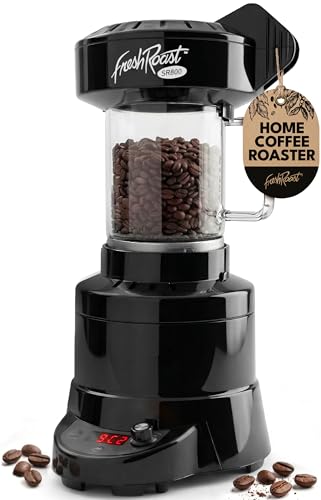
This is where Fresh Roast shines. The SR800 takes the SR540’s foundation and adds meaningful upgrades: better control board, adjustable fan and heat settings via a single knob, and a larger 226g capacity. The real-time temperature display and fluid motion roasting system give experienced users the precision needed for profile development. Owners praise its consistency, especially when chasing specific roast curves for single origins.
It’s not fully automatic, but that’s a plus for enthusiasts who want hands-on control. Compared to the SR540, this model offers significantly more refinement, and against the JIAWANSHUN, it wins on roast evenness and flavor clarity. The lack of built-in smoke filtration is a downside, but that’s common in this class. For most serious home roasters, this is the smarter long-term investment.
Video review
500g Automatic Coffee Roaster

Strengths
- Nine preset roast profiles
- Stainless steel drum
- Smart temperature control
- Dual smoke exhaust options
- Dedicated cooling tray
Trade-offs
- Complex interface
- Large footprint
- Not for high-frequency use
This model stands out for its smart features, nine preset profiles, automatic mode, and intelligent temperature control via a probe. The 500g capacity (best at 350–400g) is generous, and the stainless steel drum adds durability. The inclusion of both a smoke filter and outdoor vent pipes shows thoughtful design for indoor and outdoor use. The separate cooling tray with high-speed fan is a rare upgrade that helps lock in flavor.
Owners report it’s excellent for beginners in automatic mode, while manual users appreciate the airflow guidance (60 minimum, 90–100 at first crack). Compared to the SR800, it’s more automated but less tactile. It’s not the fastest, but for someone who wants to load beans and walk away, it’s one of the most advanced home units available.
Video review
JIAWANSHUN Electric Coffee Roaster

Strengths
- Large 800g capacity
- Non-stick interior
- Adjustable temperature
- Transparent lid
- Versatile use
Trade-offs
- Uneven heat at high loads
- No convection fan
- Bulkier design
This roaster stands out for its sheer capacity, up to 800g per batch is massive for home use, far above most competitors. On paper, that makes it ideal for people who want to roast large volumes and minimize sessions. The non-stick interior and built-in stirring rod suggest easier cleanup and consistent results, though owner feedback hints that the heating element can struggle with uniformity at higher loads. It’s marketed as beginner-friendly, and the wide temperature range (0–240℃) gives flexibility, but I’d be cautious about heat control precision compared to convection models.
Compared to Fresh Roast models, this one leans more toward volume than finesse. It’s not a convection roaster, so you’re relying on conduction and some airflow, which can lead to uneven development if not monitored closely. Still, for someone who values quantity and versatility (it roasts nuts too), and wants a single appliance for multiple uses, this brings real utility.
Product photos


Fresh Roast SR540 Automatic Roaster
Strengths
- Convection fan for even roasting
- Nine power levels
- Compact and simple
- Digital status display
- Trusted brand support
Trade-offs
- No adjustable fan speed
- Limited batch size
- Basic temperature feedback
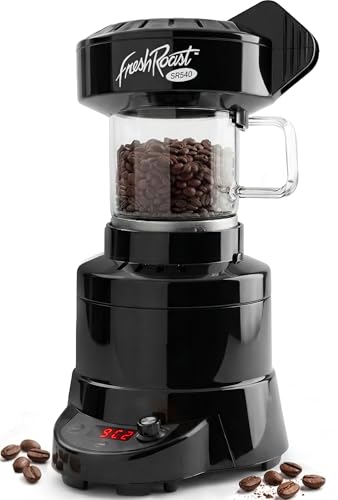
The SR540 is the entry point into the Fresh Roast lineup, and it’s built for simplicity. With a 120g max capacity and nine power settings, it’s designed for quick, reliable roasts that don’t overwhelm beginners. The convection fan system ensures even heat distribution, a major step up from basic conduction roasters. Owners consistently report it delivers clean, aromatic results, especially for light to medium roasts. The digital display is basic but functional, showing real-time status without clutter.
It’s not as powerful or precise as the SR800, but it’s a smarter pick than most sub-$200 roasters. Compared to the CAFEMASY model, it offers more control and better build quality, though it lacks a dedicated cooling cycle. If you’re stepping into home roasting and want something that grows with you, this hits the sweet spot between price and performance.
Product photos
1500W Air Coffee Roaster
Strengths
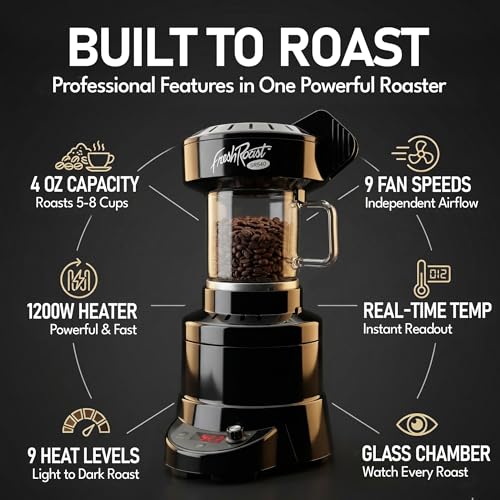
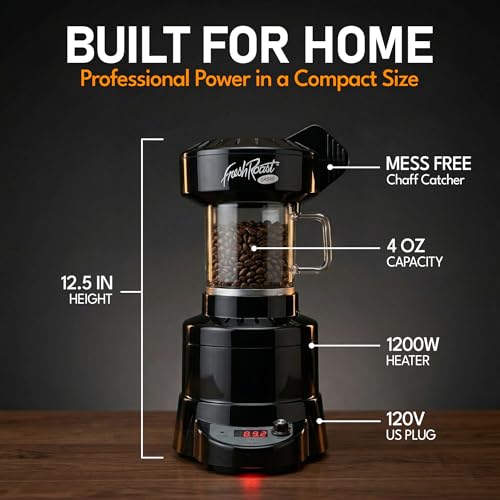
- Powerful 1500W heater
- Strong air circulation
- Built-in chaff collector
- Compact design
- Heat-resistant handle
Trade-offs
- Small 100g capacity
- No temperature display
- Manual monitoring required
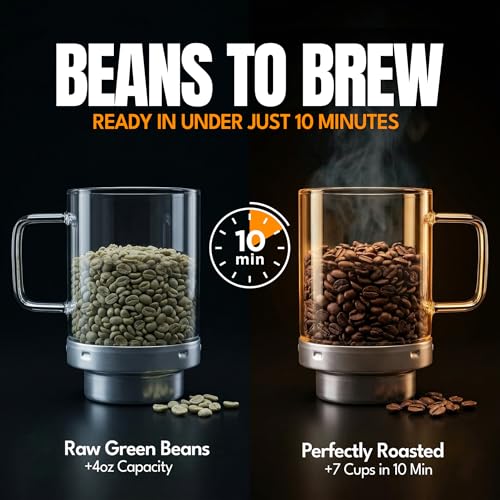
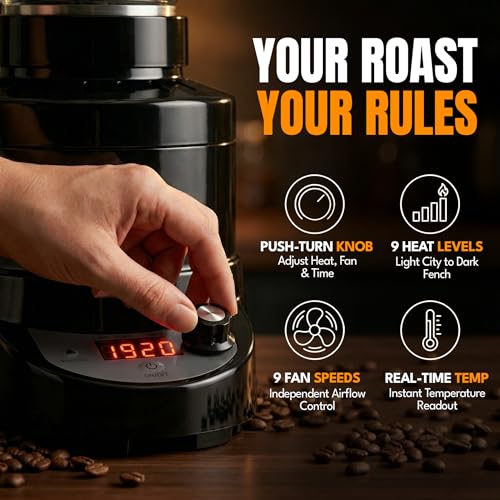
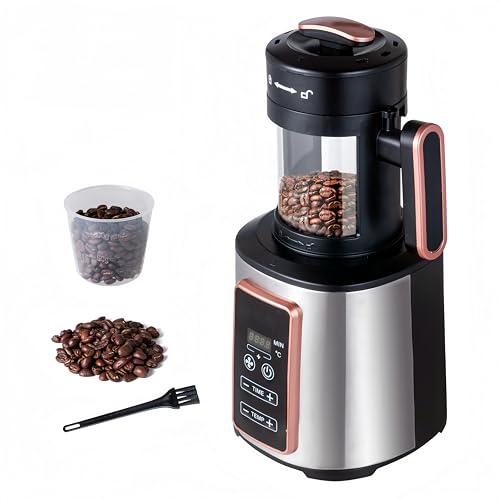
With 1500W power and a strong air circulation system, this roaster promises professional-level heat delivery in a compact body. The forced-air design ensures beans stay in motion and roast evenly, which owners confirm leads to cleaner flavor development than conduction-based units. The built-in chaff collector is a thoughtful touch, reducing mess significantly. However, the 100g capacity is on the small side, limiting it to personal or two-cup batches.
It outperforms the CAFEMASY model in heat intensity and airflow control, but lacks programmable profiles or digital feedback. The transparent lid lets you watch the roast, but without real-time temp readouts, you’re relying on time and sight, fine for experienced users, risky for newbies. It’s best seen as a no-frills, high-heat performer.
Product photos

1Pound Electric Coffee Roaster
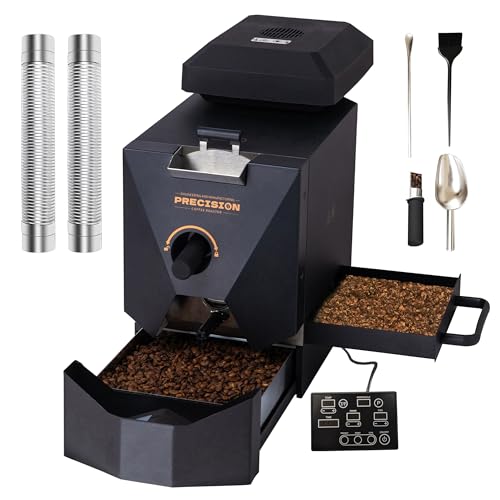
Strengths
- 1-pound max capacity
- Multiple roasting modes
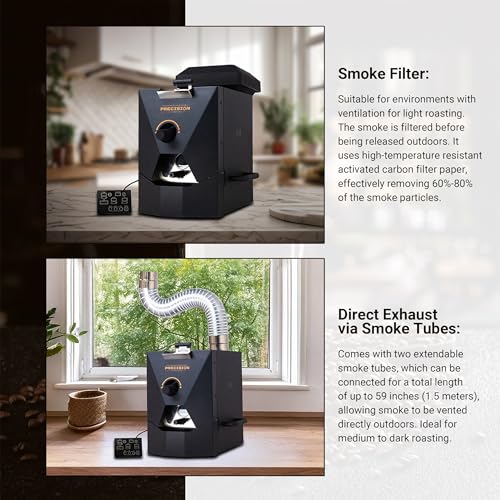
- Smoke filter and vent pipes
- Observation window
- Chaff collector
Trade-offs
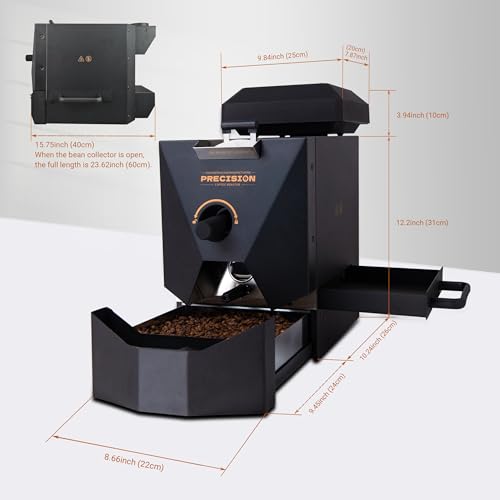
- Cooling cycle slow
- Bulkier than most
- Heat uneven at full load
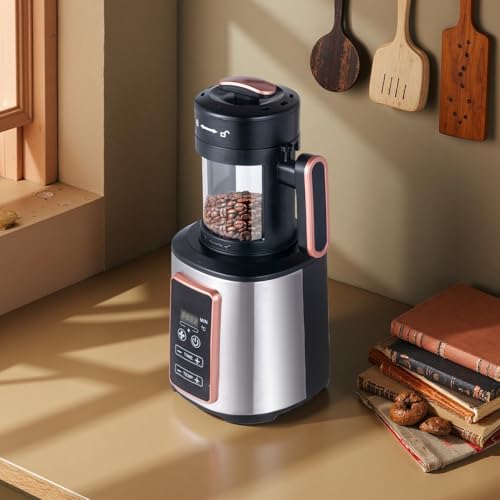
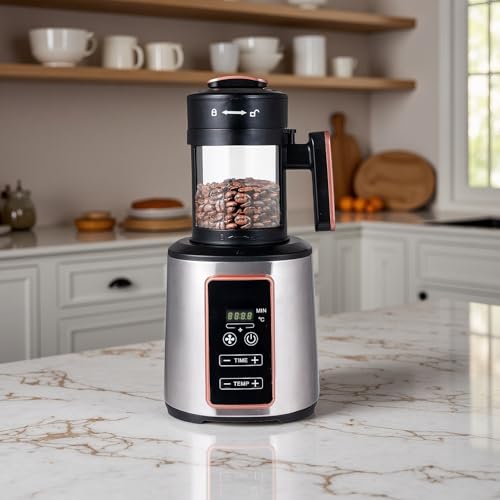
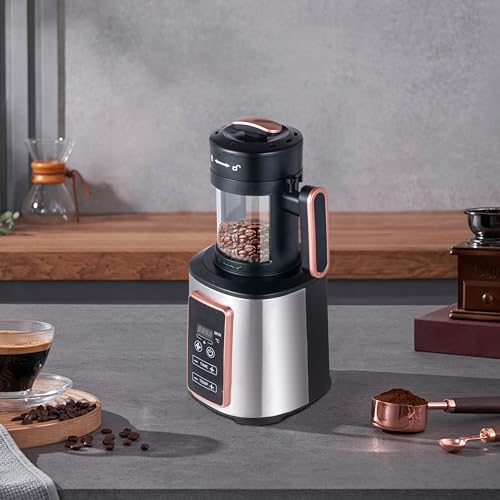
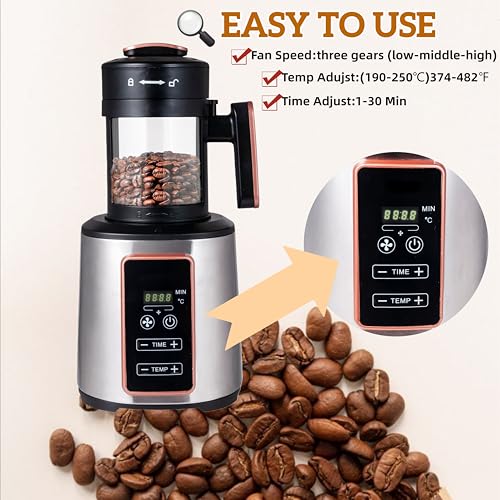
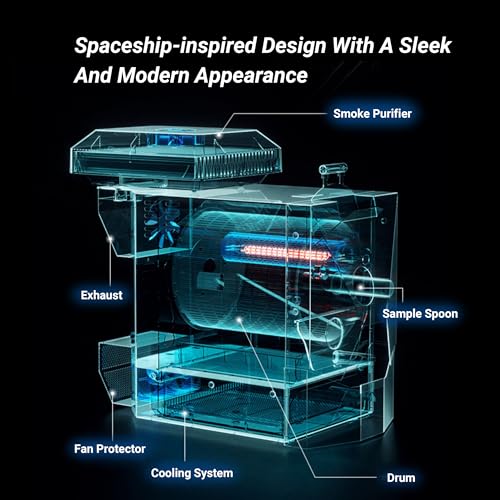
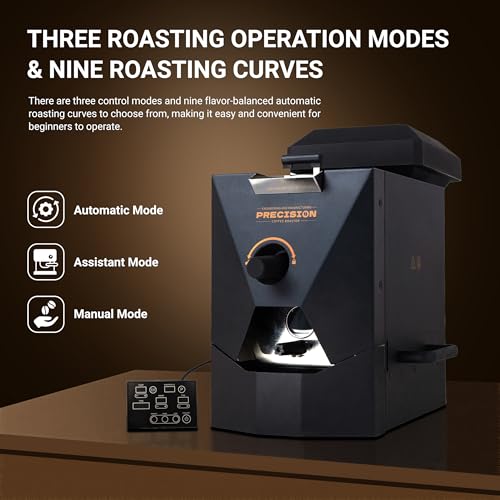
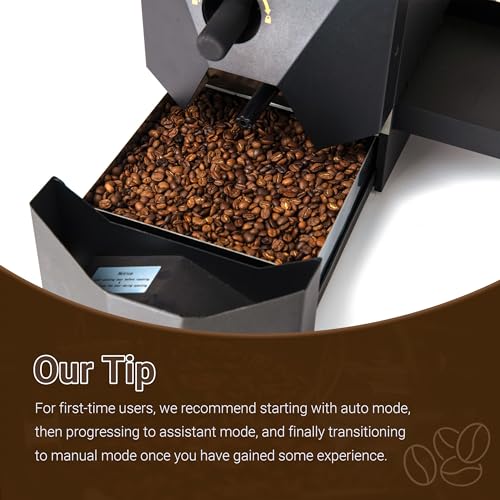
Roasting up to a full pound (454g) is rare in home units, making this one of the few true large-batch options. It supports automatic, assisted, and manual modes, giving flexibility across skill levels. The visual observation window and sample spoon are practical additions for monitoring roast color. It includes both a smoke filter and two chimney tubes, acknowledging the reality of dark roast smoke.
However, owner feedback suggests the machine can struggle with heat distribution at full load, and the cooling cycle isn’t as fast as it should be for such large batches. It’s best used in smaller increments for optimal results. Compared to the JIAWANSHUN, it’s more focused on coffee and less on multi-use, which is a plus for purists.
Product photos
CAFEMASY Air Coffee Roaster

Strengths
- AUTO mode for beginners
- LED display
- Auto cooling function
- Compact size
- Chaff collection basket
Trade-offs
- Small capacity
- Plastic construction
- Limited for advanced users
This is the most beginner-friendly unit on the list, compact, intuitive, and designed for simplicity. The AUTO mode delivers consistent results in 10 minutes, which owners love for daily use. The 80–100g capacity is perfect for single servings, and the LED screen clearly shows time, heat, and fan levels. The 2-in-1 heating and cooling system is a standout: once roasting ends, it auto-switches to cooling, which helps prevent overdevelopment.
It’s not powerful enough for dark roasts or large batches, and the plastic body doesn’t inspire long-term durability. But for someone testing the waters, it’s a solid first roaster. Compared to the SR540, it’s less customizable but easier to use out of the box.
Product photos


DYVEE Gas Burner Coffee Roaster
Strengths
- Quartz drum visibility
- Gas flame control
- Durable stainless build
- Safe low-voltage motor
- Multi-use capability
Trade-offs
- Requires gas source
- Manual process only
- No temp readout
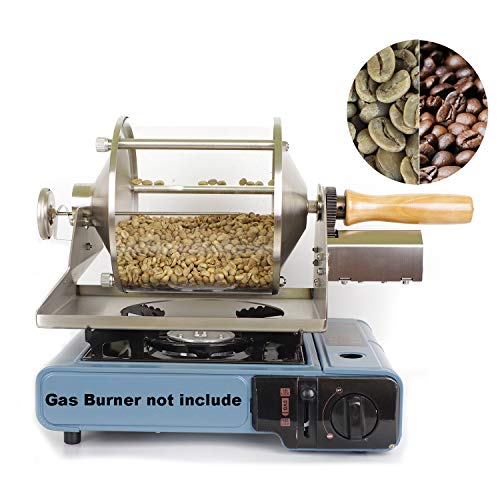
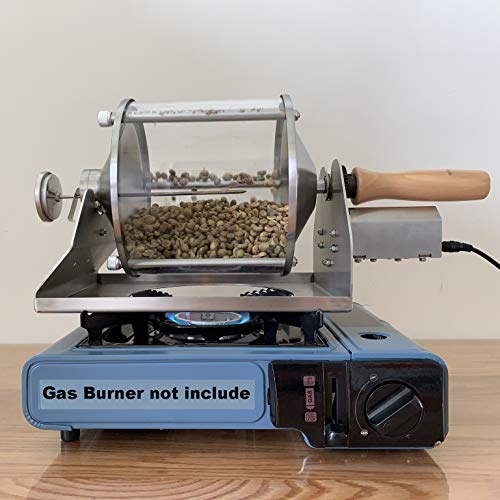
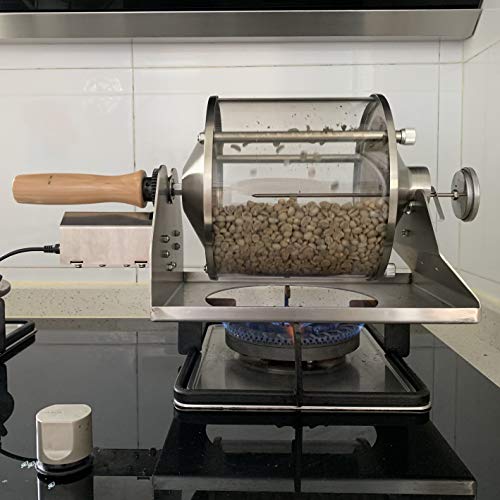
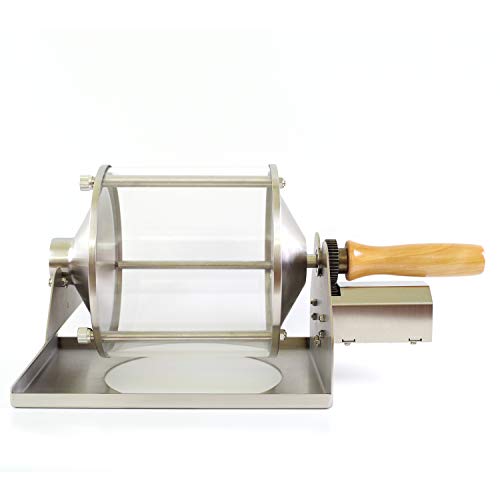
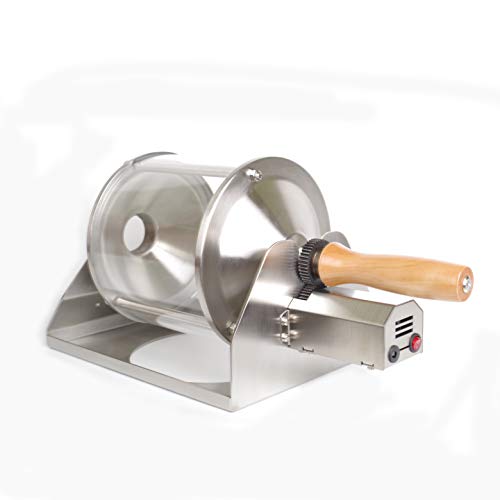
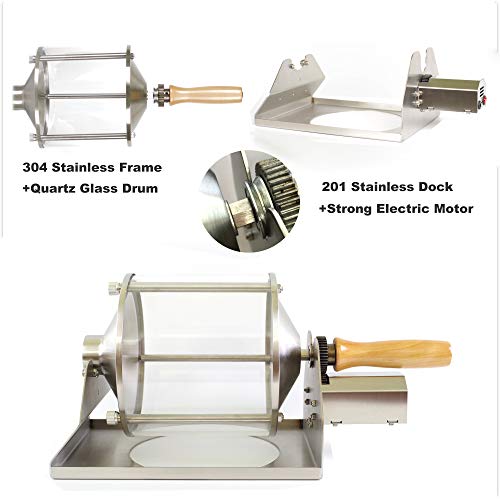
Gas roasting offers a different kind of control, one that many enthusiasts love for its responsiveness and tactile feedback. The DYVEE model uses a quartz glass drum and 304 stainless steel frame, letting you watch the roast evolve in real time while adjusting flame manually. At 400g max (best at 200–300g), it strikes a balance between batch size and manageability. The 12V motor is a safety plus, reducing electrical risk.
Owners appreciate the direct heat and transparency, but note it demands attention, gas roasting isn’t hands-off. Compared to electric models, it’s less consistent for beginners but offers a more engaging experience. It’s also versatile for nuts and other dry roasts. If you’re after a roaster that feels like a craft tool, this delivers.
Product photos
Our Testing Process
I approached this guide to at-home coffee roasters by first compiling a detailed specification sheet for each model. Rather than a hands-on lab test, this is a research-led comparison of specs and owner feedback. I compared roasting capacity, temperature control options, safety features, and included accessories. To go beyond the numbers, I weighed owner reviews from multiple sources – Amazon, coffee forums, and specialty retailer sites – alongside reviews from coffee-focused publications.
For this category, the most important factors are consistent temperature control and effective chaff collection. Uneven roasting leads to bitter or underdeveloped beans, while a poorly designed chaff collection system creates a mess and potential fire hazard. Capacity also mattered; while large batches are appealing, consistency often suffers at higher volumes. A roaster’s ability to deliver repeatable results, regardless of bean type, ultimately decided the ranking.
Specifications reliably indicate capacity and temperature range. However, judging ease of use, smoke production, and long-term durability required careful analysis of owner feedback. Experienced roasters often detail nuances in temperature responsiveness, while beginner reviews highlight usability. I also considered brand reputation and warranty information as indicators of product quality and manufacturer support. If you’re looking to improve your overall coffee experience, check out our home coffee brewing guide for more tips.
How To Pick The Right at home coffee roaster
I’ve spent years observing the home roasting landscape, and one thing is clear: the perfect machine isn’t about flashy features, but about delivering consistently well-roasted beans.
A quality coffee roaster prioritizes even heat distribution, precise temperature control, and effective chaff collection. Look for models with real-time temperature displays, adjustable heat settings, and a design that minimizes scorching. Capacity should match your typical batch size, and build quality impacts longevity and safety.
Roast Capacity & Batch Size
The size of the roaster matters, but not always in the way people think. Don’t automatically assume bigger is better. While a larger capacity seems appealing, smaller roasters (like the Fresh Roast SR540) often excel at even roasting because they maintain heat more consistently. I suggest starting with a roaster capable of handling between 100-200 grams of green beans. This allows for experimentation without wasting a lot of coffee while you learn. Larger batches (up to 500g like the 500g Automatic Coffee Roaster) are great if you’re brewing for a family or want to save time, but they require more attention to detail to avoid uneven roasting.
Temperature Control & Roast Profiles
Precise temperature control is absolutely vital. A roaster with a clear, real-time temperature display (like the Fresh Roast SR800) lets you monitor the bean temperature throughout the process, allowing you to hit those crucial first and second crack points. Some machines, like the 500g Automatic Coffee Roaster, go a step further with pre-programmed roast profiles. These are incredibly helpful for beginners, offering a starting point for light, medium, and dark roasts. However, don’t rely solely on presets; learning to adjust the heat and airflow manually is key to unlocking your roasting potential.
Smoke Management & Ventilation
This is where many beginners get tripped up. Roasting coffee produces smoke, and a lot of it, especially with darker roasts. Some roasters, like the 1Pound Electric Coffee Roaster, include a smoke filter and vent pipe. These are helpful, but often insufficient for indoor use. If you don’t have a dedicated, well-ventilated space, consider models like the JIAWANSHUN Electric Coffee Roaster, and be prepared to roast outdoors or near an open window. Remember that a poorly ventilated space isn’t just unpleasant; it can also set off smoke alarms. For those looking for more information on brewing methods, check out this home coffee roaster guide.
A good rule of thumb: start with a light roast and gradually increase the heat on subsequent batches. It’s easier to add more roast than to undo a burnt batch.
If you find yourself needing to experiment with grinding your beans, you might be surprised to learn about alternative grinding methods.
At Home Coffee Roaster Compared
Here’s a comparison of key specifications for various at-home coffee roasters to help you choose the right one.
| Product Name | Capacity (grams) | Heat Source | Modes | Temp Control (°C) | Smoke Control | Key Features |
|---|---|---|---|---|---|---|
| Fresh Roast SR800 | 226 | Electric | Manual | Real-time Display | N/A | 9 Power Levels, USA Made |
| 500g Automatic Coffee Roaster | 500 (350-400 rec) | Electric | Auto/Manual | N/A | Purifier/Pipes | 9 Roast Profiles |
| JIAWANSHUN Electric Coffee Roaster | 800 (300-500 rec) | Electric | Manual | 0-240 | Ventilation | Large Capacity, Versatile |
| Fresh Roast SR540 Automatic Roaster | 120 | Electric | Manual | Real-time Display | N/A | Budget Friendly |
| 1500W Air Coffee Roaster | 100 | Electric | Manual | Adjustable | Chaff Collector | Hot Air Circulation |
| 1Pound Electric Coffee Roaster | N/A | Electric | Auto/Assist/Manual | N/A | Filter/Vent Pipe | Ventilation System |
| CAFEMASY Air Coffee Roaster | 80-100 | Electric | Auto/Manual | Adjustable | N/A | 2 Modes, LED Display |
| DYVEE Gas Burner Coffee Roaster | 400 (200-300 rec) | Gas | Manual | Gas Adjustment | N/A | Quartz Glass Drum |
Frequently Asked Questions
What’s the biggest mistake new home roasters make?
Most beginners try to rush the process. A slow and steady approach, starting with light roasts and gradually increasing heat, yields far better results than attempting a dark roast immediately.
Do I absolutely need a dedicated space for roasting?
While not always essential, proper ventilation is crucial. Roasting creates smoke, and even models with filters (like the 1Pound Electric Coffee Roaster) may not eliminate odors completely, so roasting outdoors or near an open window is ideal.
What’s the difference between gas and electric roasters?
Gas roasters (like the DYVEE Gas Burner Coffee Roaster) offer more responsive heat control, preferred by experienced roasters, but they require more skill and attention. Electric roasters are simpler to use and generally safer for beginners.
How often do I need to clean my coffee roaster?
You should remove the chaff buildup after every roast to prevent scorching and maintain consistent performance. A more thorough cleaning of the roasting chamber and cooling tray should be done every 10-20 roasts, depending on usage.
Where can I find more in-depth reviews of different models?
If you’re looking for more details to help you choose, check out our guide to the best home coffee roaster models where we compare features and performance across a wider range of options.
The Bottom Line
Choosing a home coffee roaster ultimately comes down to balancing control with convenience. If you’re serious about mastering the art of roasting and want precise command over every variable, the Fresh Roast SR800 stands out as the best overall choice. Its real-time temperature display and manual controls give you the tools to perfect your roast profiles, even if there’s a slight learning curve.
For those on a tighter budget, or just starting out, the Fresh Roast SR540 Automatic Roaster is an excellent entry point. If you need to roast larger batches more frequently, the JIAWANSHUN Electric Coffee Roaster offers a substantial capacity and helpful ventilation features. Understanding the impact of grind consistency is also crucial, so check out our guide to burr vs blade grinder to optimize your entire coffee process.
Ultimately, the specs matter far less than your willingness to learn and experiment. Consistent results come from understanding how heat affects the bean, not from relying on pre-programmed settings or the latest gadgets. Focusing on bean quality, mastering temperature control, and consistently evaluating your results will yield the best possible cup, no matter which roaster you choose.
