
How Do You Make Good Coffee at Home: The 3-Part Fix Guide
To make good coffee at home, you must control three variables: grind size, water temperature, and coffee-to-water ratio. The SCA Golden Cup Standard targets 18-22% extraction and 1.15-1.35% brew strength. Missing any one of these three pillars guarantees a mediocre cup, no matter your beans.
Most people buy nice beans and then pulverize them in a blade grinder. The result is a mix of dust and boulders that brews simultaneously bitter and sour. Your expensive single-origin beans deserve better.
This guide walks through the non-negotiable equipment, the precise measurements, and the common failure points that turn a simple morning ritual into a frustrating experiment. We’ll cover why your grinder matters more than your brewer, how to fix water that’s working against you, and how to choose a method that fits your routine.
Key Takeaways
- A blade grinder will sabotage any brewing method more advanced than a French press. Invest in a burr grinder first.
- Water is not just a solvent; its mineral content (hardness, alkalinity) directly controls extraction. Filtered tap water is the bare minimum.
- The “best” brewing method is the one you’ll use consistently. A $20 pour-over cone you master beats a $200 espresso machine you dread.
- Coffee stales fastest after grinding. Never buy pre-ground if you can avoid it. Whole beans stay fresh for weeks.
- Your taste buds are the final judge. Numbers and ratios are starting points, not finish lines.
The Non-Negotiable Starting Point: Your Grinder
Your grinder is the most important piece of equipment on your counter. It is not an accessory. Brewers heat water and hold filters. The grinder creates the surface area that water extracts flavor from. Get this wrong and nothing you do afterward will fix it.
A burr grinder uses two abrasive surfaces to crush beans into particles of a consistent size. The Baratza Encore, for example, uses 40mm conical burrs spinning at 550 RPM to produce a grind range from 250 to 1200 microns. Consistency is the goal. Every particle of a similar size extracts at roughly the same rate.
A blade grinder is a propeller that chops beans randomly. It produces a wide spectrum of particle sizes. The finest particles (fines) over-extract, releasing bitter, astringent compounds. The largest particles (boulders) under-extract, leaving sour, grassy notes behind. This mismatch creates a muddy, confused cup where no single flavor shines through.
Grind size dictates extraction speed. Finer grinds offer more surface area, extracting faster. Coarser grinds extract slower. Matching grind size to your brewer’s contact time is the first step toward balance.
The consequence of using a blade grinder with a precision brewer like a Chemex or Hario V60 is immediate and unrecoverable. You can perfect your pour technique, use water straight from a glacier, and weigh every gram, the cup will still taste simultaneously bitter and weak. This is the most common equipment mismatch in home coffee.
TL;DR: Buy a burr grinder before you buy a fancy brewer. A blade grinder makes consistent good coffee impossible.
How Often Should You Clean Your Grinder?
Manufacturers like Baratza suggest cleaning every few months. Coffee professionals cleaning daily grinders do it weekly. The reason is oil buildup. Coffee beans contain oils that go rancid. These stale oils coat fresh grounds, transferring off-flavors into your cup.
For a home user brewing daily, a monthly deep clean is a good rhythm. Use a brush to dislodge grounds and a grinder cleaning pellet or dry rice to absorb oils. Neglect this, and by the third month your morning cup will carry a faint, stale bitterness no amount of fresh beans can mask.
The Water You Use Isn’t Just H2O
Water is 98% of your cup. Its mineral content acts as a catalyst, pulling flavors from the coffee grounds. Using hard tap water full of calcium or soft distilled water with no minerals at all will both give you flat, unbalanced coffee.
The Specialty Coffee Association has a water standard for a reason. They recommend water with 150 mg/L total dissolved solids, a neutral pH of 7.0, and specific levels of hardness and alkalinity. This isn’t coffee snobbery, it’s chemistry. Minerals like magnesium enhance sweetness and clarity. Carbonates (alkalinity) buffer against acidity.
If your tap water tastes good, it’s probably fine for coffee. If it’s heavily chlorinated or very hard, a basic carbon filter pitcher makes a noticeable difference. The goal is clean, odor-free water with some mineral content.
| Water Issue | Effect on Coffee | Simple Fix |
|---|---|---|
| High Chlorine | Medicinal, chemical taste | Carbon filter pitcher |
| Very Hard (High Calcium) | Flat, dull, muted flavors | Dilute with some distilled water |
| Very Soft (Low Minerals) | Thin, sour, under-extracted | Add a pinch of baking soda (literally a pinch) |
| High Alkalinity | Over-buffered, tastes bland | Use a lower brew temperature |
TL;DR: Your coffee is mostly water. If your water tastes bad, your coffee will too. Filter it.
Method Matters, But Not How You Think
The “best” brewing method is a myth. The correct method is the one that fits your taste, your budget, and your morning routine. A rushed espresso shot on a machine you hate using is worse than a carefully made cup from a simple pour-over.
Each method manipulates time, temperature, and agitation differently. A French press immerses grounds for several minutes, extracting fully and including oils. A paper filter pour-over, like with a Chemex, brews quicker and traps oils and sediment, yielding a clean, bright cup.
Common mistake: Choosing a brewer based on price or prestige alone, a $200 espresso machine demands daily cleaning, descaling, and a learning curve. If you just want a reliable cup before work, an SCA-certified automatic drip machine like the Bonavita BV1901TS is a better fit.
The real choice is between immersion (all water and grounds together) and percolation (water flowing through a bed of grounds). Immersion methods like the French press or Clever Dripper are forgiving. Percolation methods like pour-over or batch brew require more technique but offer more control.
The Forgotten Factor: Brew Ratio
This is simple math that most people eyeball. Brew ratio is the weight of coffee to the weight of water. A common starting point is 1:16, one gram of coffee to sixteen grams of water. For a single mug using 20g of coffee, you’d use 320g of water.
Deviating from this ratio has direct consequences. A stronger ratio (1:14) brews a more intense, potent cup but risks bitterness if the grind isn’t adjusted. A weaker ratio (1:18) tastes thin and tea-like. Use a digital scale. Measuring by volume (“two scoops”) is wildly inconsistent.
The Step-by-Step Routine for a Perfect Cup
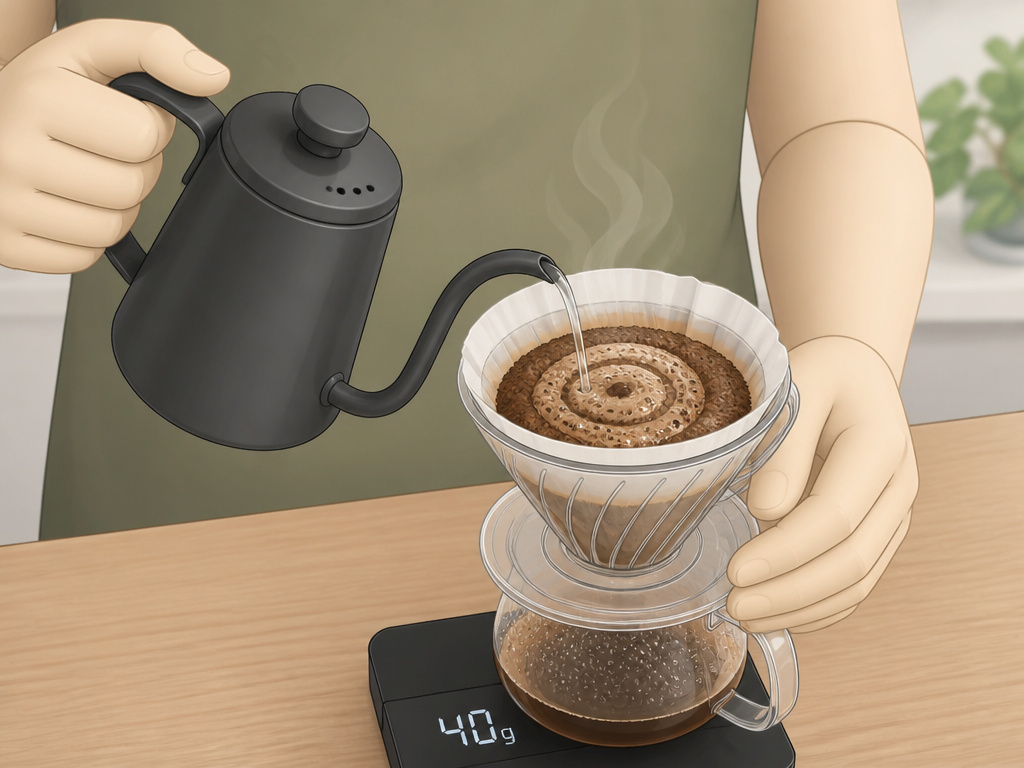
Follow this sequence exactly once. After that, adjust one variable at a time based on taste.
- Weigh your whole bean coffee. Start with 20 grams for a standard mug. Pour the beans into your grinder hopper.
- Grind immediately. Set your burr grinder to the correct setting for your brewer, medium for pour-over, coarse for French press. Grind directly into your brewer’s filter or basket.
- Heat your water. Bring filtered water to 200°F (93°C). If you don’t have a thermometer, bring it to a boil and let it sit for 30 seconds.
- Pre-wet the filter. Place your filter in the brewer and pour a small amount of hot water through it. This rinses paper taste and preheats the vessel. Dump this water out.
- Add grounds and start the timer. Put the ground coffee into the rinsed filter. Start your timer.
- Bloom the coffee. Pour just enough water (about 40g) to saturate all the grounds. Let it sit for 30 seconds. This allows carbon dioxide to escape; skipping it leads to uneven extraction.
- Pour the remaining water. Slowly pour the rest of your water in a spiral, keeping all grounds submerged. Aim to finish pouring by 1:30 on your timer.
- Let it drain. Allow all water to pass through the grounds. Total brew time should be between 2:30 and 3:30. Much faster means your grind is too coarse; much slower means it’s too fine.
- Serve immediately. Coffee begins to degrade as soon as it’s brewed. Pour it into your mug and enjoy.
TL;DR: Weigh everything, grind fresh, bloom your grounds, and time your brew. This routine eliminates guesswork.
When Good Coffee Goes Bad: Troubleshooting
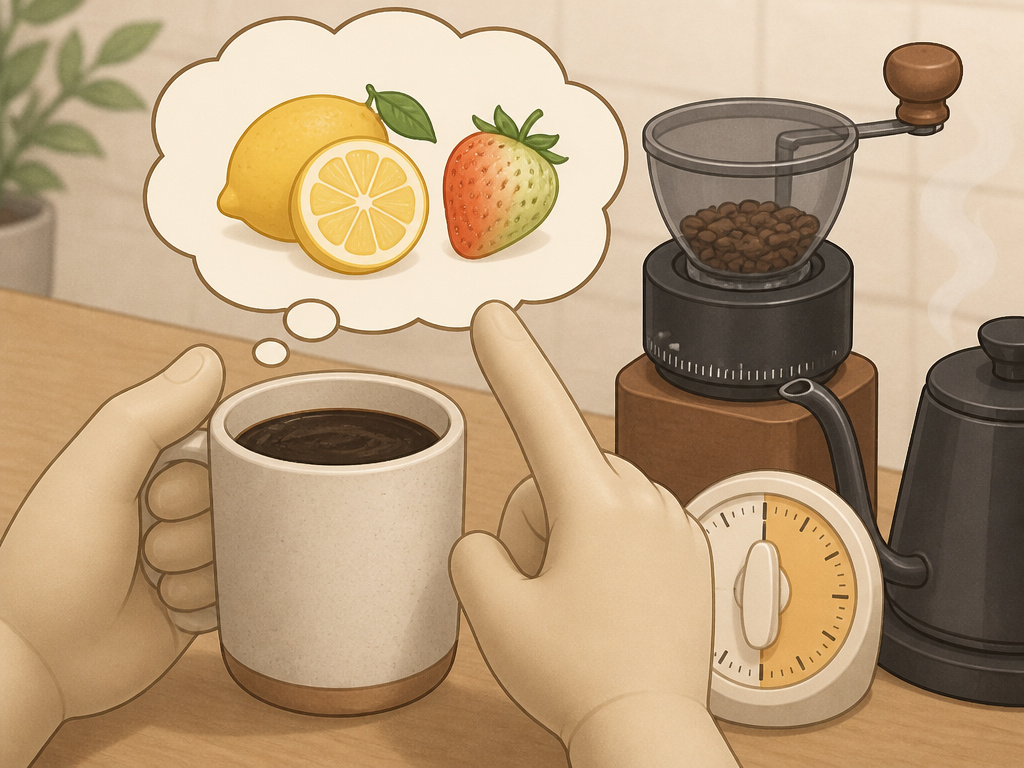
Your coffee tastes sour (like under-ripe fruit). This is under-extraction. The water didn’t pull enough sweetness from the beans. Fix it by using a finer grind, increasing brew time, or using hotter water.
Your coffee tastes bitter and drying (like over-steeped tea). This is over-extraction. The water pulled too many harsh compounds. Fix it by using a coarser grind, decreasing brew time, or using slightly cooler water.
Your coffee tastes flat and bland. This is often a water problem. The water may lack the necessary minerals to facilitate extraction. Try using a different water source or adjusting the brew ratio to be stronger.
I once spent a week confused why my coffee tasted simultaneously weak and bitter. I was using a blade grinder with a V60. Switching to a Baratza Encore was like wiping a foggy window. The flavors in the bag finally showed up in the cup.
Advanced Tweaks: Once You’ve Mastered the Basics

After you can consistently brew a balanced cup, these adjustments let you fine-tune.
Water Chemistry: For the curious, products like Third Wave Water Mineral Packets let you build your brewing water from distilled water, dialing in exact mineral profiles to highlight sweetness or acidity.
Manual Pre-Infusion on Home Machines: If you have an espresso machine like a Breville Barista Express, try manually controlling the pre-infusion. Hold the shot button for 5-10 seconds at low pressure before letting the pump ramp up to 9 bars. This more even saturation can reduce channeling.
High-Altitude Brewing: If you live above 5,000 feet, water boils below 200°F. This lowers extraction power. Compensate by grinding finer than standard recommendations to increase surface area.
Frequently Asked Questions
Can I make good coffee without a grinder?
You can make okay coffee. Pre-ground coffee begins staling the moment it’s exposed to air. For the best flavor, grind whole beans immediately before brewing. If you must use pre-ground, buy it in small quantities and store it in an airtight container.
What’s the best coffee-to-water ratio?
ratio of 1:16 (one part coffee to sixteen parts water) is a reliable starting point. For example, 20 grams of coffee to 320 grams of water. Adjust stronger (1:15) or weaker (1:17) to suit your taste.
Is filtered water really necessary?
If your tap water has a strong taste (chlorine, minerals), then yes. Since coffee is mostly water, any off-flavors will come through. A simple carbon filter pitcher is sufficient for most people.
How fine should I grind for a French press?
Use a coarse grind, similar to breadcrumbs. If your grind is too fine, it will pass through the metal filter and make your coffee muddy and over-extracted.
Why does my automatic drip coffee taste bad?
Check three things: your grinder (blade grinders ruin drip coffee), your water (hard water flattens flavor), and your machine’s cleanliness. Old coffee oils and mineral scale inside the machine impart terrible flavors. Descale regularly.
Can I reheat coffee?
Reheating accelerates staling and often creates a burnt, bitter taste. It’s better to brew a fresh cup. If you must, reheat gently on a stovetop; avoid the microwave which can scorch the coffee.
The Bottom Line
Good home coffee isn’t about buying the most expensive machine. It’s about controlling the fundamentals. A Baratza Encore burr grinder and a digital scale will improve your coffee more than any brewer upgrade. Remember that water is an ingredient, not just a tool. And finally, choose a brewing method you enjoy using, consistency beats complexity every single morning.
Your daily cup should be a highlight, not a puzzle. Start with fresh, well-chosen beans, grind them well, and brew with intention. The rest is just refinement.
