
8 Best Coffee Bean Storage Containers 2026
The Fellow Atmos Electric Vacuum Canister is the best overall for locking in freshness with its active vacuum seal, while the Veken 39OZ Large offers a smart budget-friendly option with a reliable CO2 valve and date tracker. For those who prefer manual control, the AirScape Kilo is a strong versatility pick thanks to its plunger-based air removal system.
Most coffee lovers don’t realize how quickly beans lose their magic once exposed to air and light. Even high-end beans can taste flat and stale within days if stored poorly.
In this guide, I break down the top containers based on what actually matters, real airtightness, material quality, and usability, not just looks. These picks come from analyzing specs, owner experiences, and the science behind coffee degradation.
Top 8 Coffee Bean Storage Container in the Market
The Best Coffee Bean Storage Container, Reviewed
Fellow Atmos Electric Vacuum Canister

Strengths
- True vacuum seal
- High-quality stainless steel
- Simple, elegant design
Trade-offs
- No window or date tracker
- Manual operation
This is the gold standard for electric vacuum storage, and for good reason. The manual twist-to-vacuum mechanism is smooth, effective, and doesn’t rely on batteries or sensors, just physics. It creates a real vacuum seal, and on paper, that dramatically slows staling. The 304 stainless steel body feels premium, and the minimalist matte finish fits modern kitchens without screaming ‘gadget’.
Owners note it’s especially effective for whole beans, which is exactly what it’s designed for. While it lacks a window or digital display, that simplicity is part of its appeal. Compared to the flashy automatic models, this one wins on reliability and design integrity. The smarter buy if you want pro-level freshness without gimmicks.
Product photos


Automatic Vacuum Coffee Canister 1.3L
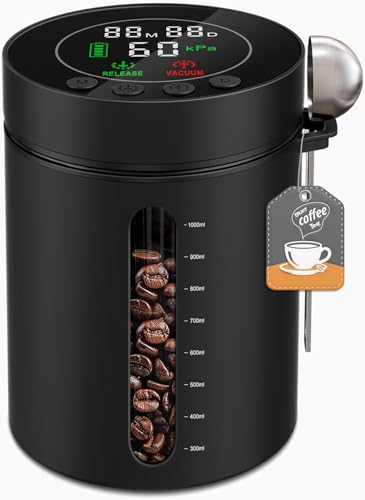
Strengths
- Auto-reseal sensor
- LED display
- Glass window
Trade-offs
- Electronic dependency
- Plastic parts
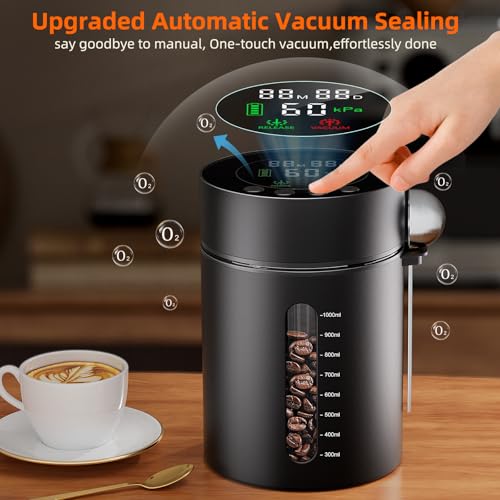
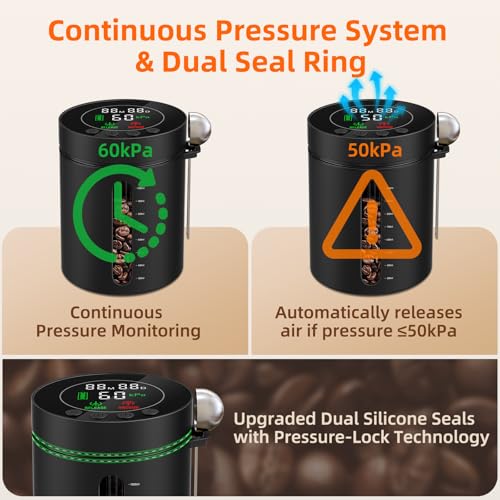
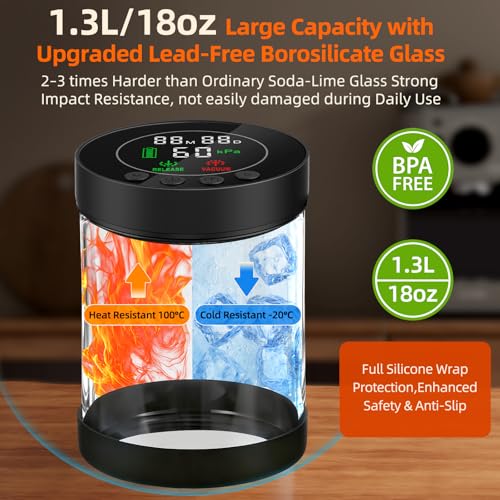
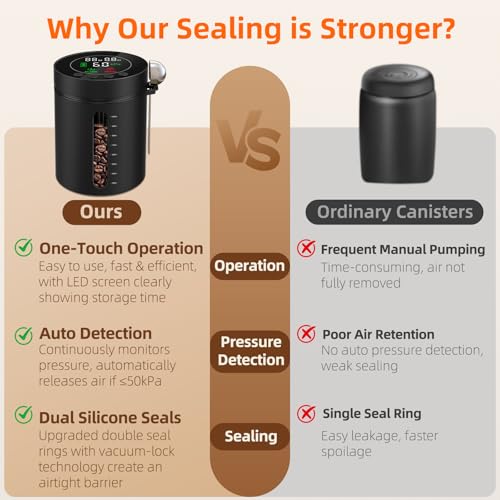
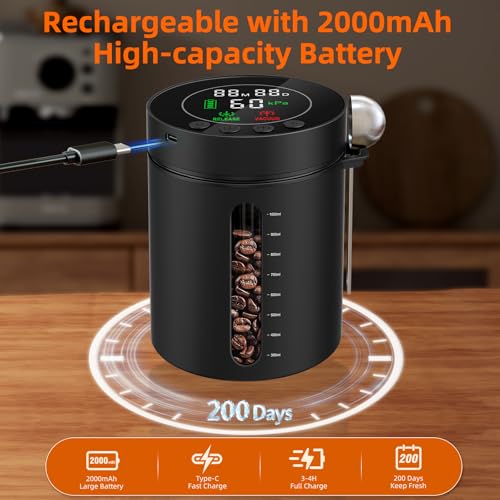
This is the most high-tech option here, with a smart pressure sensor that auto-reseals when oxygen creeps back in, something no other model does. The LED display shows vacuum status, battery, and date tracking, while the glass window lets you see contents without breaking the seal. On paper, this is the ultimate set-and-forget system.
But complexity has trade-offs. It’s rechargeable, yes, but reliant on electronics that could fail. Owners report mixed experiences with long-term reliability, and the plastic components don’t feel as premium as all-metal builds. Still, for tech-forward users who love data and automation, it’s unmatched. I’d recommend it to gadget lovers, not purists.
Product photos
AirScape Stainless Steel Canister Medium
Strengths
- Removes oxygen actively
- Blocks UV light
- Durable stainless build
Trade-offs
- Manual plunger action
- No date tracker
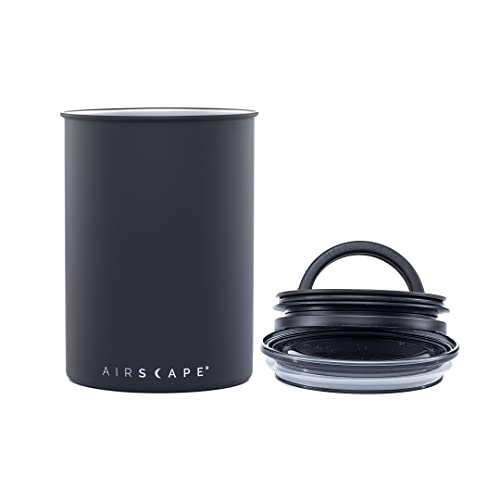
The medium AirScape stands out for its patented plunger system, the only one here that physically removes oxygen rather than just sealing it out. That active de-aeration is why reviewers consistently say their beans taste fresher, longer. The stainless steel body is dent-resistant, and the lack of a window protects against UV degradation, which matters more than most realize.
It holds about a pound of beans, making it ideal for those who buy in standard 12oz or 16oz bags. The swoosh sound when pressing the lid is oddly satisfying and confirms the seal. While it requires a bit more effort than twist-top jars, the payoff is real. I’d pick this over standard airtight models any day for its superior preservation science.
Video review
AirScape Kilo Coffee Storage Canister

Strengths
- Holds full 2.2lb bags
- Patented plunger removes oxygen
- Blocks UV light
Trade-offs
- Large footprint
- Requires manual pressing
If you regularly buy 2.2lb bags of freshly roasted beans, this is one of the few canisters that can actually hold them all, no transferring or clipping half-empty bags. The patented plunger lid doesn’t just seal, it actively pushes oxygen out, creating an airless environment that reviewers say keeps beans vibrant for weeks. That ‘swoosh’ sound when pressing down isn’t just satisfying, it’s functional feedback that the system is working.
The all-stainless, windowless design blocks UV light completely, which aligns with what we know about coffee degradation. While it’s bulky, that’s the trade-off for its capacity and method. Compared to standard airtight jars, this one is in a different class. My recommendation for serious coffee drinkers who hate waste and prioritize longevity over countertop minimalism.
Video review
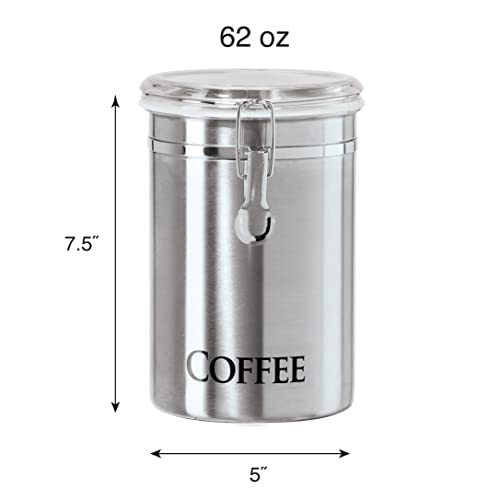
Oggi Stainless Steel Coffee Canister 62 fl oz
Strengths
- Low cost
- Clear top for visibility
- Sturdy clamp lid
Trade-offs
- No CO2 valve
- Light exposure through lid
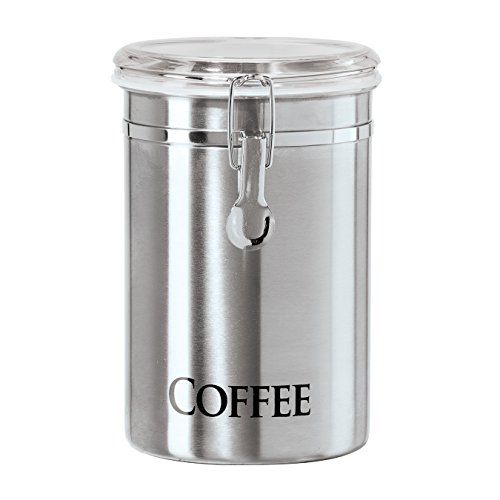
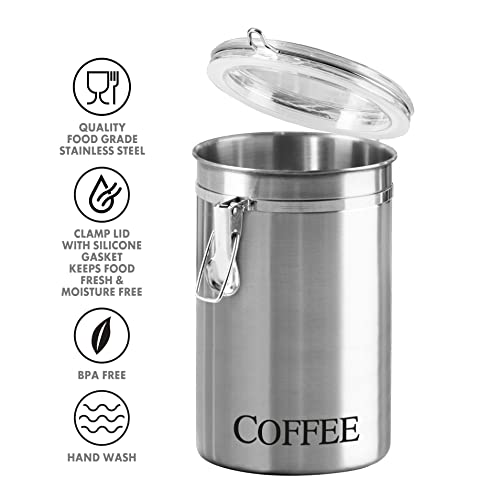
This is the most affordable stainless steel option here, and it delivers exactly what it promises: a basic, durable, airtight container with a clear top. The clamp lid feels sturdy, and the silicone gasket does its job keeping moisture out. The visibility helps, it’s convenient to see when you’re running low. But that window is a double-edged sword, letting in light that can degrade beans over time.
It’s a solid pick if you’re on a tight budget and want something better than a plastic tub. But compared to models with one-way valves or oxygen removal, it’s a step down in preservation tech. Still, for casual drinkers who go through beans in a week or two, it’s perfectly adequate. I’d recommend it as a starter canister, not a final one.
Product photos

Veken Coffee Canister with Window 22OZ
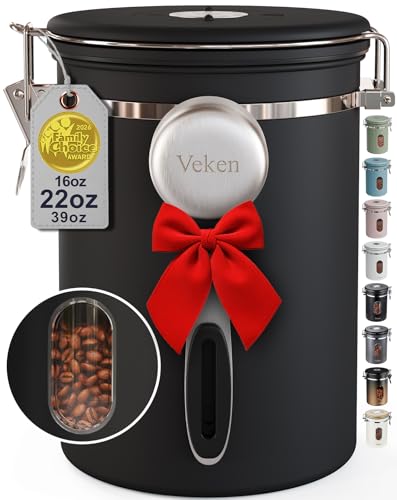
Strengths
- Clear window
- Date tracker
- Affordable price
Trade-offs
- Light exposure risk
- Smaller capacity
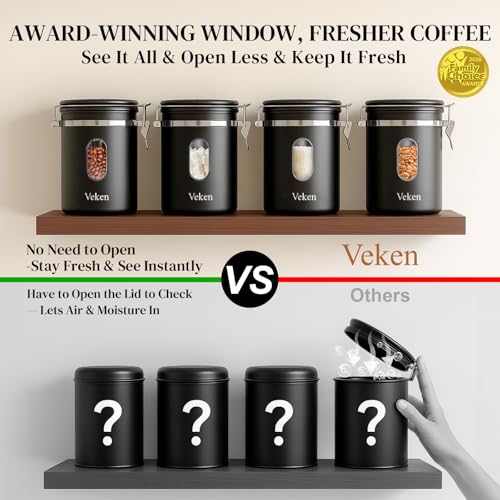
This 22oz model trades UV protection for convenience, the clear window lets you check bean levels without opening, which is handy, but at the cost of exposing contents to light. That’s a real downside if you’re storing beans longer than a week. Still, the one-way CO2 valve and silicone seal do help maintain freshness, and the included scoop with hook adds practical value.
It’s priced competitively, and the date tracker is a useful addition. Owners appreciate the balance of function and cost. Compared to the windowless Veken, this one is better for quick access and visual management, but worse for long-term preservation. My take: it’s the best value if you brew daily and prioritize convenience over absolute freshness.
Product photos


Veken Coffee Canister 39OZ Large
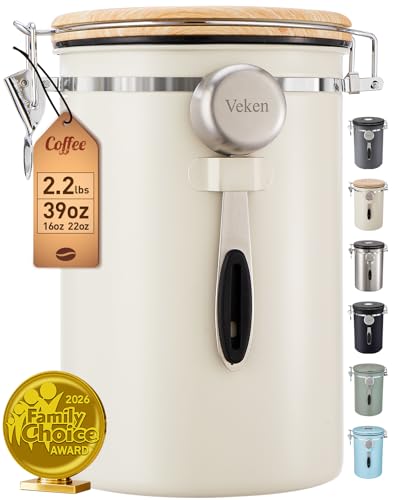
Strengths
- Fits 2.2lb bags
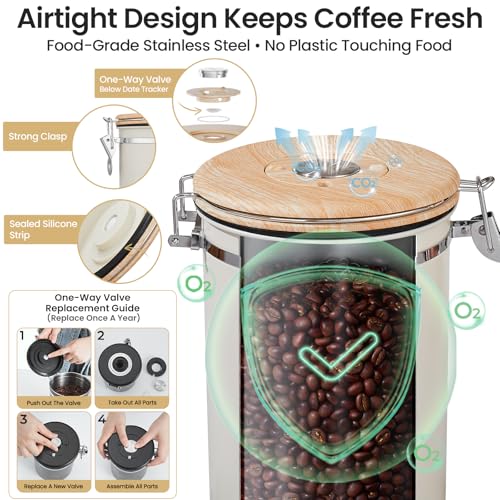
- CO2 valve + seal
- Date tracker and scoop
Trade-offs
- No oxygen removal
- Manual seal only
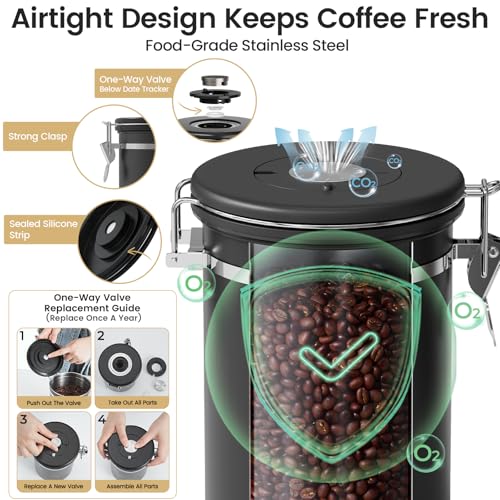
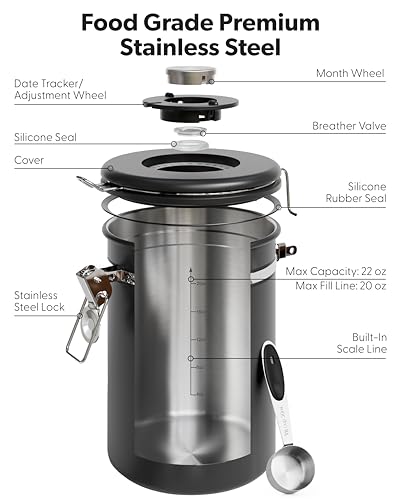
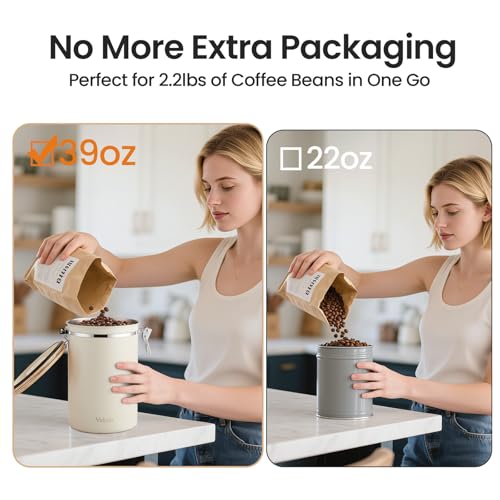
This 39oz canister is built for one thing: fitting a full 2.2lb bag without compromise. Like the AirScape Kilo, it solves the real pain point of leftover beans in oversized packaging. The windowless design with a one-way CO2 valve means it takes freshness seriously, blocking light and managing off-gassing effectively. Owners report beans tasting bright even after 10–14 days.
It also includes a date tracker and a hanging scoop, features usually found on pricier models. The 304 stainless steel feels durable, and the build is consistent with what you’d expect in the mid-tier market. While it doesn’t remove oxygen like the AirScape plunger, it’s a strong contender for those who want capacity and core freshness features without stepping into premium pricing.
Product photos


Kirecoo Stainless Steel Coffee Canister 22OZ

Strengths
- Double silicone seals
- Date tracker dial
- Includes stainless scoop
Trade-offs
- No vacuum function
- Smaller capacity
This 22oz canister hits a sweet spot for daily drinkers who want solid freshness without overspending. On paper, the dual silicone seals and one-way valve should do a decent job limiting oxidation, and owners consistently report their beans staying aromatic for over a week. The date tracker is a small but meaningful touch, helping users manage rotation without guesswork.
Where it stands out is the included stainless steel scoop and its thoughtful hang hook, something not all budget builds offer. While it won’t match vacuum systems in oxygen reduction, it’s a reliable airtight option for those who brew daily and value organization. I’d pick this over cheaper knockoffs for its build quality and attention to detail.
Product photos
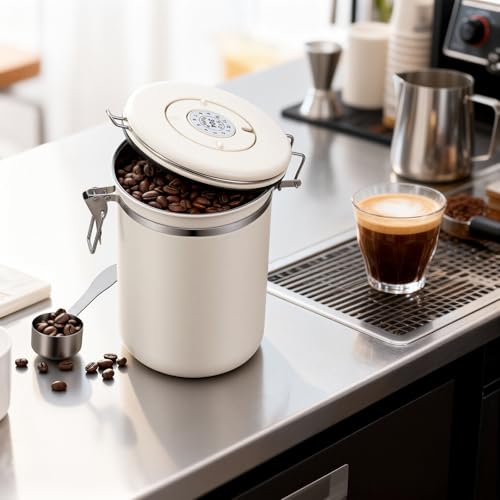


How We Picked These coffee bean storage container
As a dedicated coffee enthusiast, I know firsthand how crucial proper storage is to maintaining a great cup. Rather than a hands-on lab test, this assessment is a research-led comparison of published specifications and owner feedback across a range of coffee bean storage containers. I analyzed features, materials, and sealing mechanisms, and then weighed those against what current owners are saying about real-world performance and durability. Expert reviews from coffee-focused publications were also considered.
For this category, airtightness and material quality were the most heavily weighted factors. Preserving volatile aromatics requires a truly effective seal to block oxygen and humidity. Beyond that, the material, stainless steel versus plastic, plays a big role in blocking light, which also degrades beans. Capacity was also a consideration, as different households have different consumption habits. Knowing signs of stale coffee helped me assess how well each container aimed to prevent that.
Published specs reliably indicate capacity, material construction, and the presence of features like one-way valves or date trackers. However, I placed more emphasis on owner reports regarding the effectiveness of the seal over time and how easy the containers are to clean. Reputation and brand trust also factored in, as established companies often have more consistent quality control. Understanding best practices for coffee storage informed my assessment of whether these containers delivered on their promises.
How To Choose The coffee bean storage container
Finding the right container is crucial for keeping your coffee tasting its best.
A good coffee bean storage container prioritizes an airtight seal to minimize oxygen exposure, blocks light to prevent degradation, and is made from food-safe materials. Look for features like one-way valves to release CO2, and consider capacity based on your consumption habits. Stainless steel is generally preferred over plastic for durability and lack of flavor transfer.
Airtightness and CO2 Release
The biggest enemy of fresh coffee is oxygen. While a truly airtight seal sounds ideal, coffee beans naturally release carbon dioxide after roasting. Trapping that CO2 actually hurts the flavor. Look for containers with a one-way valve – these let CO2 escape without letting oxygen in. The Fellow Atmos and Veken canisters both incorporate this vital feature, though the Atmos achieves it mechanically, while Veken uses a dedicated valve. Don’t assume “airtight” automatically means “best”; it’s the controlled release of gas that’s key.
Material and Light Protection
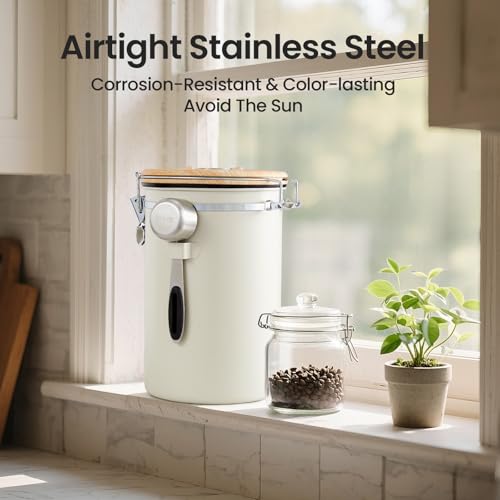
Stainless steel is the gold standard for coffee storage, and for good reason. It’s durable, doesn’t impart flavors, and is opaque, blocking out harmful light. Clear glass containers look nice, but require storage in a dark place to prevent light-induced staling. Many containers, like the Oggi Stainless Steel Canister, feature a clear lid, which is acceptable if the bulk of the container is light-blocking steel. If you’re considering a clear container, ensure you store it in a pantry or cupboard. For those interested in other ways to extend the life of your coffee, exploring freezing ground coffee tips can be a helpful supplement.
Capacity and Usability
Don’t overbuy on capacity. A huge canister is useless if you’re constantly pulling beans out to fill it, exposing the rest to air. Consider how much coffee you typically buy at a time. The Veken 39oz canister is well suited for 2.2lb bags, which is a popular size, but if you tend to buy smaller amounts, a medium-sized option like the AirScape Stainless Steel Canister might be more practical.
- A smaller canister (around 1 lb capacity) is ideal for single-origin or specialty beans you consume quickly.
- A medium canister (1-1.5 lbs) works well for regular daily drinkers who buy coffee weekly.
- A larger canister (2+ lbs) is best for bulk buyers or families who go through a lot of coffee; however, be aware that frequently opening and closing a larger container increases air exposure.
A container that’s easy to clean and use will get used more often. Don’t overthink it – find something that fits your routine.
If you’re still unsure, checking out a list of top coffee storage containers is a great starting point to see what other options are available and read more detailed reviews. Ultimately, the best container is the one you’ll consistently use to keep your beans fresh and maximize flavor. I also recommend checking out recommended coffee freshness containers for more options.
Coffee Bean Storage Container Compared
Here’s a comparison of key specifications for popular coffee bean storage containers to help you choose the right one for your needs.
| Product Name | Capacity | Material | Airtight Seal | Date Tracker | Includes Scoop |
|---|---|---|---|---|---|
| Fellow Atmos Electric Vacuum Canister | N/A | Stainless Steel | Vacuum | No | No |
| Automatic Vacuum Coffee Canister 1.3L | 1.3L | N/A | Electric | Yes | Yes |
| AirScape Stainless Steel Canister Medium | 500g (1lb) | Stainless Steel | Plunger | No | No |
| AirScape Kilo Coffee Storage Canister | 2.2lbs | Stainless Steel | Plunger | No | No |
| Oggi Stainless Steel Coffee Canister 62 fl oz | 62 fl oz | Stainless Steel | Silicone Gasket | No | No |
| Veken Coffee Canister with Window 22OZ | 22OZ | Stainless Steel | CO2 Valve | Yes | Yes |
| Veken Coffee Canister 39OZ Large | 39OZ (2.2lbs) | Stainless Steel | CO2 Valve | Yes | Yes |
| Kirecoo Stainless Steel Coffee Canister 22OZ | 22OZ | Stainless Steel | CO2 Valve | Yes | Yes |
Frequently Asked Questions
What’s the deal with one-way valves, and are they really necessary?
Yes, one-way valves are beneficial. They allow carbon dioxide released by the beans to escape without letting oxygen in, which prevents staling and preserves flavor – a feature found in containers like the Veken canisters.
How important is the material of the container, specifically stainless steel versus plastic?
Stainless steel is generally superior to plastic. It’s non-reactive, won’t impart flavors, and most importantly, blocks light which degrades coffee quality, unlike many plastics.
I already have an airtight container; is that enough to keep my beans fresh?
Not necessarily. While airtightness is vital, simply being airtight can trap CO2. Look for containers with a one-way valve or a system (like the Fellow Atmos’ vacuum seal) that manages gas release for optimal preserving coffee flavor and aroma.
What capacity container should I get if I only buy small amounts of coffee at a time?
A smaller container, around 1 lb capacity, is best. This minimizes the amount of air in the container after each use, preserving freshness and preventing those beans from going stale before you finish them.
Are clear glass coffee containers a good option, even though light can degrade the beans?
Clear glass can work, but only if you store the container in a dark, cool place. Otherwise, the light exposure will negatively impact the beans’ flavor and aroma, making stainless steel a more reliable choice for optimal coffee bean storage methods.
The Bottom Line
Choosing a coffee bean storage container often comes down to balancing control with convenience. You can spend more for features like vacuum sealing (the Fellow Atmos) and precise date tracking, but a well-designed canister with a reliable valve can deliver excellent results without the fuss. Ultimately, the goal is to minimize exposure to air, light, and moisture – and the Atmos strikes a really strong balance of those features for serious coffee drinkers.
For those on a tighter budget, or who simply want a reliable and versatile option, the Veken canisters are excellent choices. The Veken 39oz canister is perfectly sized for standard 2.2lb bags, while the 22oz Kirecoo Stainless Steel Coffee Canister is ideal if you prefer buying smaller quantities more frequently. Both offer the crucial CO2 valve and are made from quality stainless steel, proving you don’t have to spend a fortune to protect your beans.
More than any specific feature, consistently storing your beans correctly is what truly matters. Whether you opt for a simple canister or a high-tech system, remember the fundamentals: airtightness, light protection, and appropriate capacity. Learning about freezing coffee beans properly can also supplement your storage efforts, particularly if you like to stock up on your favorites.
