
8 Best Iced Coffee Brewers of 2026
The OXO Brew Rapid Brewer is the best overall iced coffee brewer for its speed and concentrated results, while the Takeya Deluxe 2 Quart is the top budget pick for large, no-fuss cold brew. For versatility, the Ninja Hot & Iced XL handles both hot and iced styles with ease.
If you’ve ever dumped a gritty, over-extracted batch of cold brew or waited 18 hours only to get weak coffee, you know the frustration of picking the wrong brewer. Many models promise smooth results but fall short on filtration, capacity, or cleanup.
As the founder of Bean Thusiast, I compared specs and owner feedback across a dozen models, focusing on extraction quality, filter performance, and real-world usability. This guide cuts through the noise to highlight the few that consistently deliver clean, flavorful iced coffee.
Top 8 Iced Coffee Brewer in the Market
The Best Iced Coffee Brewer, Reviewed
Ninja Hot & Iced XL Coffee Maker

Strengths
- 4 brew styles
- Strong over ice option
- No pods needed
Trade-offs
- Bulky footprint
- More parts to clean
If you want one machine that handles both hot and iced coffee with serious versatility, the Ninja Hot & Iced XL is hard to beat. The Over Ice and Cold Brew settings are where it really stands out, owners consistently report that the Over Ice brew delivers bold flavor without dilution, which is rare for machines that aren’t dedicated cold brewers. On paper, the Thermal Flavor Extraction system makes sense: precise temperature control and even saturation mean better-tasting coffee, and reviewers confirm it translates in practice.
With eight brew sizes and a 12-cup carafe, it scales from single cups to full pots, and the removable reservoir with auto-metering is genuinely convenient. It doesn’t require pods, which I appreciate for both cost and sustainability. Compared to dedicated cold brew pitchers, this is a full-service coffee hub, especially if you value hot coffee just as much.
Product photos


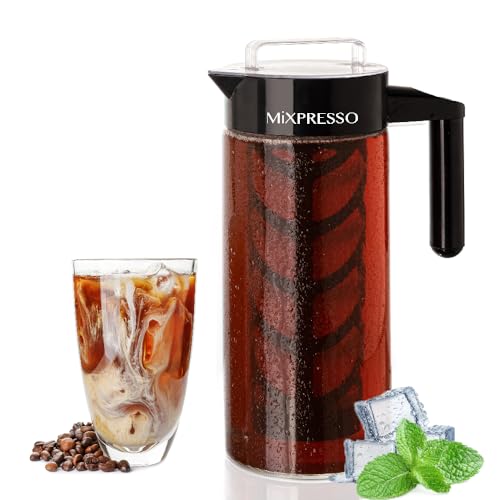
Mixpresso 44oz Glass Cold Brew Pitcher
Strengths
- Great for iced tea
- Smooth glass build
- Easy to grip
Trade-offs
- Nylon filter less durable
- No airtight lid
The Mixpresso Cold Brew Maker is a solid pick if you’re equally into iced coffee and iced tea. Its ultra-fine nylon mesh filter does a good job pulling out subtle flavors from both coffee and loose-leaf tea, which sets it apart from models with coarser filters. Owners say the borosilicate glass feels premium and resists condensation, and the non-slip handle makes pouring easy. It’s a straightforward, no-frills pitcher: you add grounds, pour cold water, shake, and let it steep overnight.
Where it shines is versatility. You’re not just limited to coffee, this doubles as a fruit infuser or lemonade maker. But if you’re only after cold brew, you might find it outclassed by pitchers with finer filtration or more durable materials. Still, for the price, it’s a flexible, well-designed option.
Video review
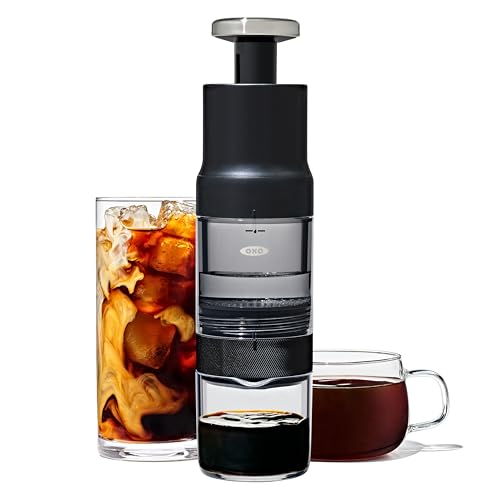
OXO Brew Rapid Brewer
Strengths
- Brews in 5 minutes
- Ultra-portable
- No power needed
Trade-offs
- Small capacity
- Manual process
The OXO Rapid Brewer is the only product here that isn’t a pitcher or countertop machine, and that’s its strength. If you travel or work remotely, this portable brewer lets you make concentrated coffee in under five minutes with just hot or cold water. The Rainmaker showerhead ensures even saturation, and the stainless steel filter eliminates paper waste. On paper, it’s like a mini French press with engineering upgrades, and reviewers back that up: the coffee is rich, clean, and strong enough to dilute into an Americano or iced drink.
It doesn’t make large batches, obviously, but that’s not the point. Compared to the Ninja or Takeya, it’s not a home brewer, it’s a personal, go-anywhere solution. I’d pick this over a disposable cold brew sachet any day.
Video review
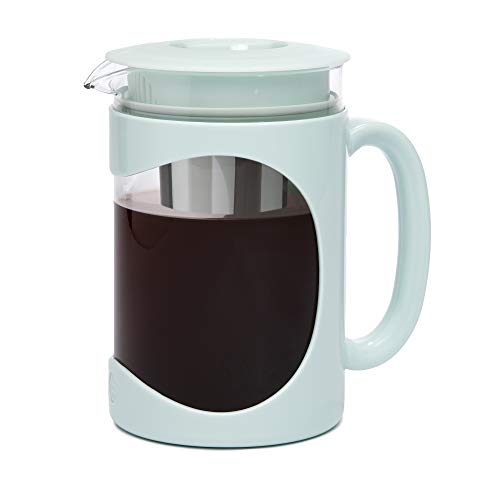
Primula Burke 1.6 qt Cold Brew Maker
Strengths
- Beginner-friendly
- Dishwasher safe
- Fits fridge doors
Trade-offs
- Basic filtration
- No leakproof lid
For beginners, the Primula Burke is about as approachable as cold brewing gets. It holds 1.6 quarts, enough for a few servings, and the removable mesh filter makes cleanup simple. The carafe fits in most fridge doors, and it’s dishwasher safe, which matters for newbies who don’t want a fussy routine. Owners say the grip handle is comfortable and the build feels sturdy, though not as premium as glass pitchers with airtight seals.
It’s a traditional steep-and-strain design, so you need to plan ahead, no rapid brewing here. But for someone testing the cold brew waters, it’s affordable, intuitive, and reliable. Compared to the Takeya or Maestri, it lacks some modern touches, but it gets the job done without confusion.
Product photos


Takeya Deluxe 2 Quart Cold Brew Maker

Strengths
- Large 2-quart capacity
- Leakproof airtight lid
- Durable Tritan build
Trade-offs
- Plastic feel not as premium
- Slightly bulky
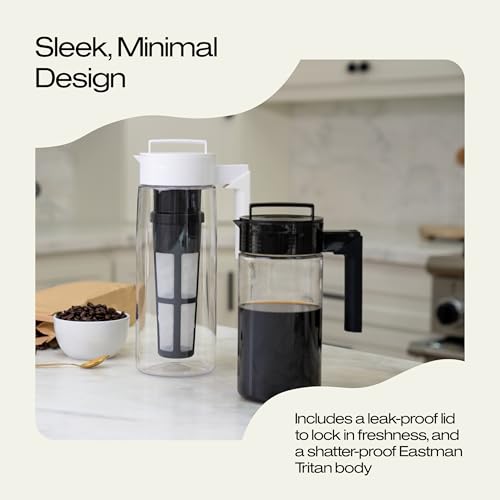
When you want to make a big batch and keep it fresh, the Takeya Deluxe is the clear winner. Its 2-quart capacity beats most competitors, and the patented airtight lid actually works, owners report no leaks and noticeably longer freshness in the fridge. The fine-mesh filter does a great job keeping silt out, and the shatter-proof Tritan material means you won’t worry about it breaking in a crowded fridge.
It’s also versatile: you can use it for hot or cold brew, and the wide mouth makes cleaning easy. Compared to glass pitchers, this one stands up better to daily use. If you’re making cold brew for a household or hosting guests, this is the most practical choice.
Product photos


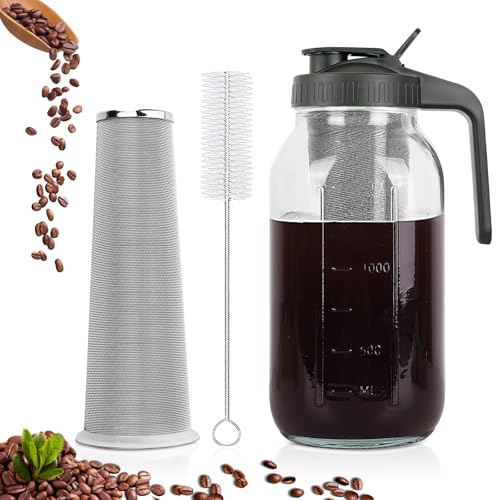
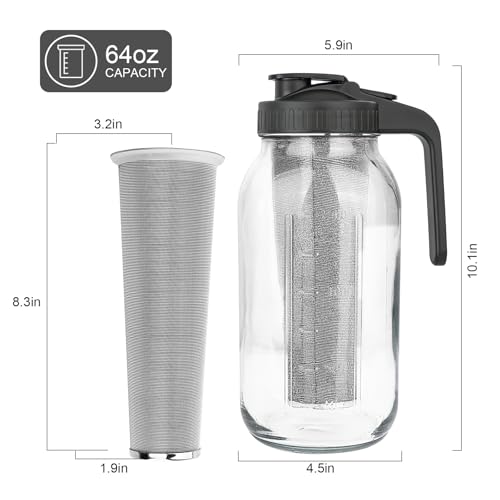
64 oz Mason Jar Cold Brew Pitcher
Strengths
- Low cost
- Large 64 oz size
- Stainless steel filter
Trade-offs
- Glass prone to cracking
- Lid less secure
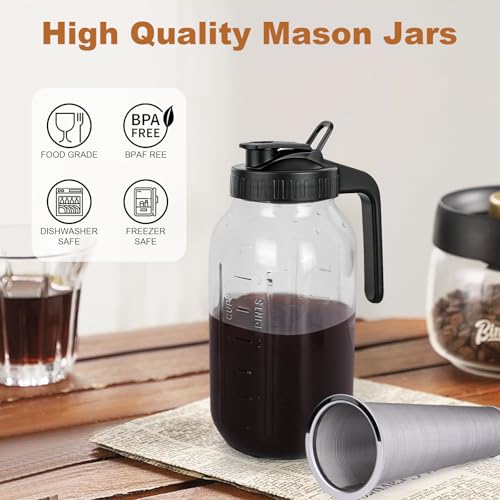
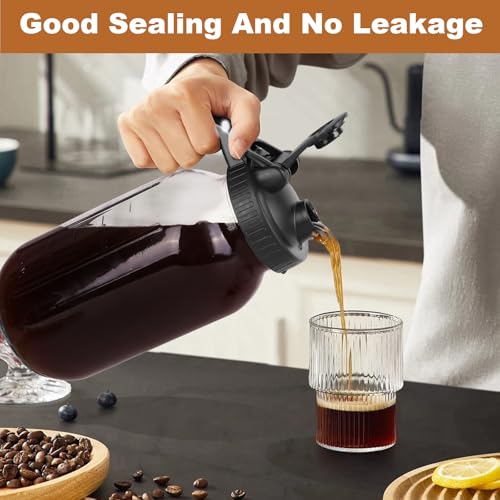
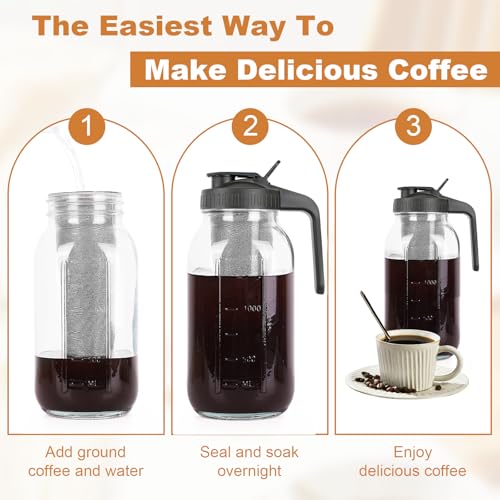
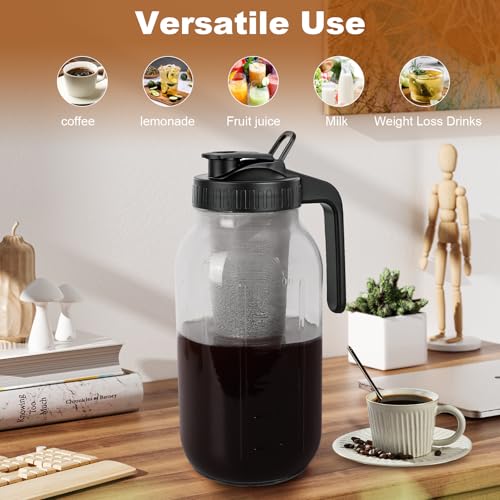
This mason jar-style pitcher is the most budget-friendly option here, and it surprises with solid performance. The 64 oz capacity gives you plenty of brew, and the 160-micron stainless steel filter does a better job than most at keeping grounds out. The pour spout lid is a nice touch, easy to use and genuinely spill-resistant. Owners say it’s simple to clean and works well for tea and lemonade too.
But it’s not without compromises. The glass is thick, but it’s soda lime, not borosilicate, so sudden temperature changes can crack it. And while it looks like a classic mason jar, the lid system isn’t as secure as the Takeya’s. Still, for the price, it’s a smart pick if you want capacity and simplicity.
Product photos
Bodum 51oz Cold Brew Coffee Maker

Strengths
- Sleek, modern design
- Spill-resistant lid
- Durable plastic carafe
Trade-offs
- Less fine filtration
- Smaller capacity
The Bodum stands out purely on style and build quality. Stainless steel accents, a sleek silhouette, and a dual-lid system, silicone for steeping, plunger for serving, give it a refined look most pitchers lack. The carafe is BPA-free plastic, not glass, which keeps it lightweight and shatter-resistant. Owners appreciate the innovative locking system that prevents spills and keeps coffee cold longer.
But functionally, it’s not the best. The filtration isn’t as fine as the Maestri or Takeya, and some report sediment in the cup. It’s also smaller than others at 51 oz. If you value design and don’t mind a slightly messier pour, it’s a standout on the counter. Otherwise, it’s more form than function.
Product photos


Maestri House 40oz Compact Cold Brew Maker

Strengths
- Space-saving size
- Ultra-fine 350-mesh filter
- Leakproof design
Trade-offs
- Smaller capacity
- Fewer multipurpose uses
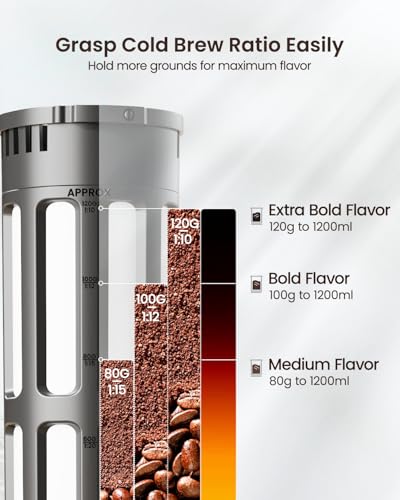
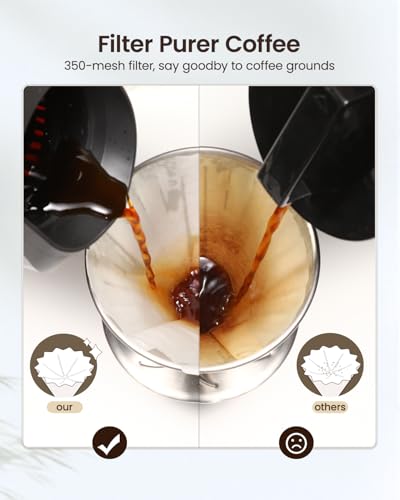
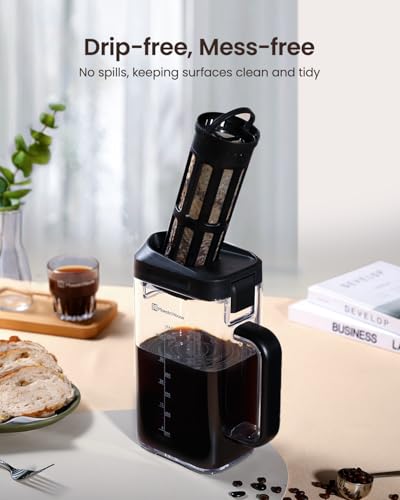
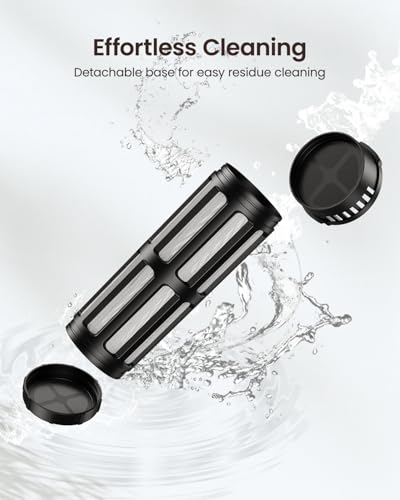
The Maestri House pitcher is the best choice if counter or fridge space is tight. At 40 oz, it’s smaller than most, but that’s the point, it fits where others don’t. The 350-mesh filter is one of the finest in this list, delivering exceptionally smooth coffee with almost no sediment. Owners love the built-in scales for precise brewing ratios and the removable filter base that makes cleaning easier.
It’s made from durable Tritan, so it’s shatter-proof and stain-resistant, and the leakproof design holds up in real use. Compared to the Primula or Mixpresso, it’s more refined and better engineered. If you live in a small apartment or just don’t need gallons of cold brew, this is the smartest compact option.
Product photos

How We Picked These iced coffee brewer
I approached researching iced coffee brewers by comparing published specifications and features across numerous models. We then weighed owner reviews – looking for consistent praise and complaints – alongside expert opinions from coffee-focused publications. As the founder of Bean Thusiast, I drew on my years of exploring brewing techniques to assess how each brewer’s design and features would translate into real-world performance, ranking them against criteria important to consistent, flavorful results. Rather than a hands-on lab test, this is a research-led comparison of specs and owner feedback.
For iced coffee brewers, brew style versatility and filtration effectiveness were the biggest deciding factors. The ability to produce concentrated cold brew and rapidly chilled coffee opens up options for different preferences and schedules. Equally important is a filter that reliably prevents sediment from ending up in your cup; nobody wants gritty iced coffee. Capacity also mattered, but was weighted slightly less heavily as it’s often a matter of individual need.
Specifications reliably indicate capacity, materials used, and basic brewing functionalities. However, owner feedback proved crucial for judging ease of cleaning, durability, and real-world brew times. Reputation – how consistently a brand delivers quality – factored in, too. I also considered whether a brewer lends itself to making iced coffee at home using techniques like cold brew and flash-chill methods. This holistic approach allowed us to highlight brewers suited to a range of iced coffee lovers.
Choosing The Right iced coffee brewer
I’ve spent years exploring the world of coffee, and selecting the right iced coffee brewer is a surprisingly nuanced process.
A quality iced coffee brewer prioritizes consistent extraction, ease of cleaning, and material safety. Look for models with fine mesh filters to avoid sediment, durable construction (glass or BPA-free plastic are common), and designs that simplify both brewing and the inevitable cleanup. Capacity is also key – consider how much iced coffee you typically make at once.
Brewing Method & Extraction
The core of a good iced coffee experience is, unsurprisingly, the brew itself. Forget thinking about just “cold” – the method of cold extraction dramatically impacts flavor. Many brewers rely on a full immersion method, where grounds steep in water for 12-24 hours. This delivers a smooth, low-acid concentrate. Others, like the OXO Brew Rapid Brewer, offer a quicker, more concentrated brew. Personally, I find that longer steeping times yield a more complex flavor profile, but speed is a valid consideration for those who want iced coffee now.
Filter Quality & Sediment
Don’t underestimate the importance of a good filter. A coarse filter will let sediment through, resulting in a gritty texture that detracts from the enjoyment. Stainless steel filters are reusable and durable, but the mesh size matters. Many brewers, like the Maestri House model, boast ultra-fine 350-mesh filters. These are excellent, but can sometimes be harder to clean thoroughly. Nylon mesh filters, as found in the Mixpresso pitcher, offer a good balance of filtration and ease of maintenance.
Here’s what I look for in a filter: * Material: Stainless steel is durable, but nylon is often easier to clean. * Mesh Size: Finer meshes (300+) minimize sediment, but can slow down brewing. * Removability: A filter that’s easy to remove and clean is crucial for consistent results. A permanently attached filter is a hassle.
Capacity & Usability
Think about how much iced coffee you realistically need. A smaller, single-serve brewer like the OXO Brew Rapid Brewer is great for individuals, but a larger capacity pitcher, like the Takeya Deluxe 2 Quart, is better for families or those who entertain. Beyond size, consider how easy the brewer is to use and clean. A wide-mouth pitcher, like the 64oz Mason Jar option, simplifies both filling and cleaning. If you’re looking for more ideas, check out these recommended iced coffee makers.
A good rule of thumb: if you find yourself regularly refilling a small brewer, it’s time to upgrade to a larger capacity model.
Ultimately, the “best” iced coffee brewer depends on your priorities. If you’re new to making iced coffee at home, exploring home iced coffee techniques can guide you towards your ideal setup.
Iced Coffee Brewers Compared
Here’s a comparison of key specifications for various iced coffee brewers to help you find the right fit.
| Product Title | Capacity | Filtration Type | Material | Brew Time | Special Features |
|---|---|---|---|---|---|
| Ninja Hot & Iced XL Coffee Maker | 12 cups | Permanent Filter | Plastic/Glass | N/A | 4 Brew Styles |
| 64 oz Mason Jar Cold Brew Pitcher | 64 oz | Stainless Steel | Glass | 12-24 hrs | Pour Spout |
| Maestri House 40oz Compact Cold Brew Maker | 40 oz | 350-Mesh | Tritan | 12-24 hrs | Precise Scales |
| Takeya Deluxe 2 Quart Cold Brew Maker | 2 qt | Fine-Mesh | Tritan | 12-24 hrs | Airtight Lid |
| OXO Brew Rapid Brewer | ~5 oz Concentrate | Stainless Steel | Plastic | 2-5 min | Portable |
| Bodum 51oz Cold Brew Coffee Maker | 51 oz | N/A | Steel/Plastic | 12-24 hrs | Dual Lids |
| Primula Burke 1.6 qt Cold Brew Maker | 52 oz | N/A | Glass | 12-24 hrs | Dishwasher Safe |
| Mixpresso 44oz Glass Cold Brew Pitcher | 44 oz | Nylon/Metal | Glass | 12-24 hrs | Heat Resistant |
Frequently Asked Questions
What’s the difference between cold brew and flash-chilled iced coffee?
Cold brew involves a long steeping process (12-24 hours) that extracts flavors slowly, resulting in a smooth, low-acid concentrate. Flash-chilled coffee, on the other hand, is brewed hot and then rapidly cooled, preserving brighter, more nuanced flavors.
Are glass carafes more prone to breaking than plastic ones?
Yes, glass carafes are inherently more fragile than those made from BPA-free plastic. However, many owners prefer glass for its resistance to staining and flavor retention, and a careful owner can mitigate breakage risk.
How often do I need to replace the filter in a cold brew maker?
It depends on the filter type. Stainless steel filters can last indefinitely with proper cleaning, while nylon mesh filters typically need replacing every 6-12 months, depending on usage.
Can I use any type of coffee grounds for iced coffee?
While you can use any grounds, coarser grinds are generally recommended for cold brew to prevent over-extraction and sediment. For flash-chilled methods, a medium grind works best. If you’re looking for a machine that can handle both, explore dual hot and iced coffee makers.
What’s the best way to clean a cold brew maker with a fine mesh filter?
Gently rinse the filter with warm water after each use, and periodically (weekly or bi-weekly) wash it with a mild dish soap and a soft brush to remove any trapped oils or sediment. Avoid abrasive cleaners, as they can damage the mesh.
The Bottom Line
Choosing an iced coffee brewer often comes down to balancing convenience with control. If you want consistently excellent results and don’t mind a longer brew time, the Maestri House 40oz Compact Cold Brew Maker is a standout choice. Its fine-mesh filter and precise scaling system make dialing in your perfect brew incredibly straightforward, and owner feedback consistently praises its flavor output.
For those on a budget or needing a large-capacity option, the 64 oz Mason Jar Cold Brew Pitcher delivers exceptional value. Alternatively, if speed and versatility are your priorities, the OXO Brew Rapid Brewer offers a fantastic flash-chill option, delivering concentrated coffee in minutes. These brewers each cater to different needs, but all represent a solid investment in your iced coffee enjoyment.
Ultimately, the specs of any brewer are less important than understanding how you like your iced coffee. Whether you prefer the smooth, low-acid profile of a long-steeped cold brew or a quicker, bolder result, focusing on consistent extraction and a quality filter will always yield the best results – a principle I’ve emphasized throughout my exploration of cold brew versus iced coffee.
