
8 Best Decaffeinated Instant Coffees of 2026
The best decaffeinated instant coffee overall is Mount Hagen Organic Decaf, hands down. For a budget-friendly option that still delivers solid flavor, 365 by Whole Foods Decaf is a smart pick. If you value convenience and portability, Nescafe Taster’s Choice Decaf Packets make life easier without a major drop in taste.
Most decaf instant coffees taste flat or thin, like they’re missing something essential. Too many rely on low-grade beans or harsh decaffeination methods that strip away flavor along with caffeine.
As the founder of Bean Thusiast, I looked beyond the label and dug into sourcing, processing, and real-world feedback to find decaf instant coffees worth your morning routine. These picks balance quality, taste, and ethics, because skipping caffeine shouldn’t mean settling for less.
Top 8 Decaffeinated Instant Coffee in the Market
The Best Decaffeinated Instant Coffee, Reviewed
Community Coffee Cafe Special Decaf

Strengths
- Smooth medium-dark roast
- 100% Arabica beans
- Trusted family-owned brand
Trade-offs
- Basic flavor profile
- Not freeze-dried
- Not organic
This is a straightforward, no-frills decaf instant that leans on tradition and a century-long reputation. On paper, it’s built for drinkers who want a medium-dark roast profile without caffeine, using 100% Arabica beans sourced from Central and South America. Owners consistently report it delivers a clean, familiar taste, nothing flashy, but dependable for a quick cup.
Where it stands out is its heritage and sourcing ethics, which Bean Thusiast appreciates. The brand’s long-standing relationships with farms and community initiatives add quiet value, even if the flavor itself doesn’t punch above its weight. Compared to premium freeze-dried options, it’s less nuanced, but it’s a solid pick for those who prioritize brand integrity and a classic roast profile.
Video review
Mount Hagen Organic Decaf Instant Coffee

Strengths
- Freeze-dried for better flavor
- Organic and Fair Trade certified
- Dissolves in cold liquid
- Single-serve convenience
- CO2 decaffeination
Trade-offs
- Higher price per serving
- Smaller quantity per pack
If you’re after decaf instant that actually tastes like proper coffee, Mount Hagen is where I’d start. The freeze-drying process here locks in aroma and depth in a way most instant coffees fail to match. Owners praise how well it dissolves, even in cold water, making it ideal for iced coffee on the fly. The use of USDA Organic and Fair Trade certified Arabica beans, decaffeinated via CO2 process, means you’re getting purity and ethics in every stick.
It’s not the cheapest, but the value shows. Compared to mass-market brands, this one delivers a noticeably smoother, more balanced cup with low acidity and no chemical aftertaste. The single-serve format is a win for travelers or office use, and the ethical sourcing is a big plus. For a decaf that doesn’t feel like a compromise, this is my top recommendation.
Video review
Maxwell House Original Roast Decaf

Strengths
- High cup yield
- Strong, full-bodied flavor
- Low cost
- Easy-to-open jar
Trade-offs
- Contains Robusta beans
- Less refined taste
- Not organic
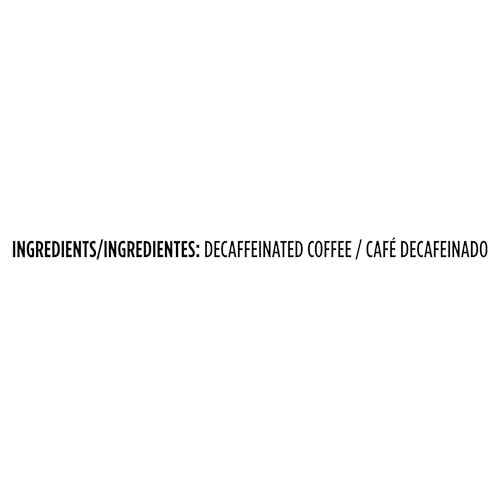
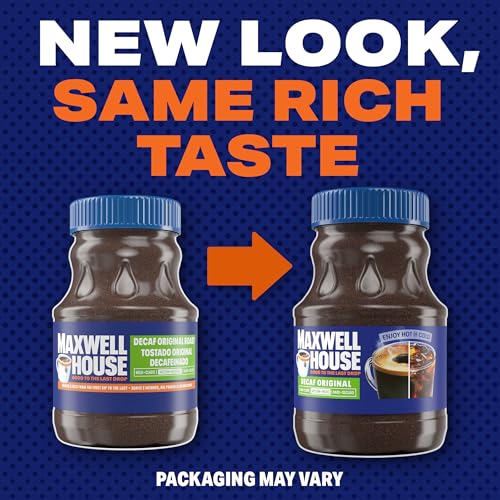
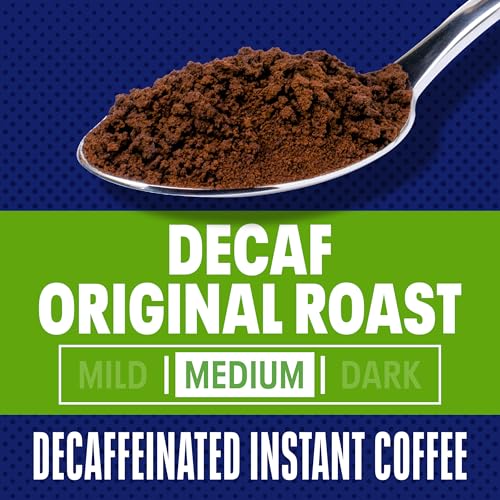
This is the definition of a workhorse decaf instant, affordable, widely available, and built for volume. It makes 120 cups from one jar, and owners confirm it delivers a consistent, full-bodied taste that’s more robust than many expect from decaf. The 99.7% caffeine-free claim holds up, and the EZ-Open jar is a small but appreciated touch.
Still, it’s made with a blend that includes Robusta, which can show in a slightly harsher finish compared to 100% Arabica options. It’s not refined, but it’s reliable. When stacked against pricier freeze-dried or organic picks, it loses on nuance, but for someone who just wants a strong, hot cup without caffeine and without spending much, this remains a smart, no-drama option.
Product photos

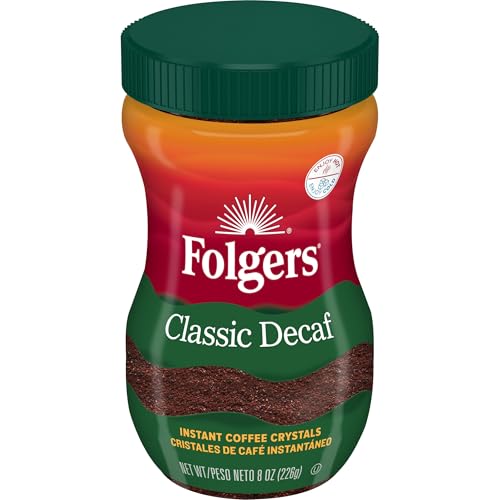
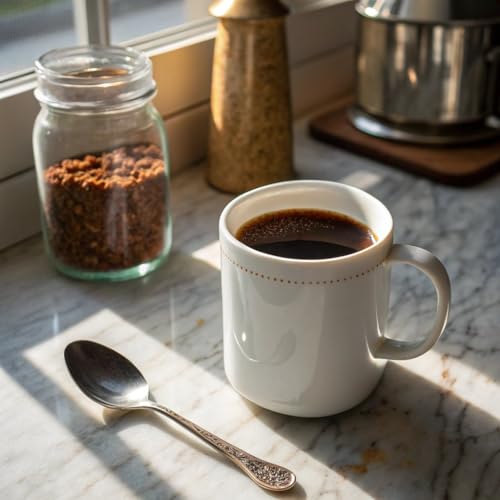
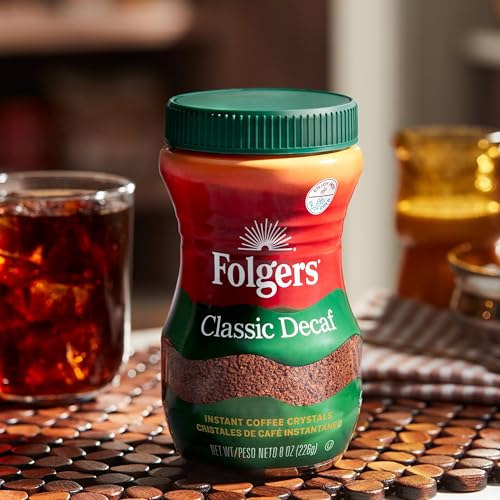
Folgers Classic Decaf Instant Coffee
Strengths
- Instant dissolution
- Hot or cold prep
- Low price
Trade-offs
- Flat, one-dimensional flavor
- No organic or Fair Trade claims
- Basic packaging
Folgers Classic Decaf is the bare-minimum solution for decaf instant, simple, fast, and cheap. It dissolves instantly in hot or cold water, which owners love for quick prep, and the 99.7% caffeine-free label makes it reliable for late-day sipping. But let’s be honest: the flavor is thin and generic, even by instant standards.
It’s essentially the same profile as their regular instant, just decaf. Compared to Mount Hagen or even Community Coffee, it lacks depth and smoothness. That said, if you’re stocking a vacation cabin, dorm room, or emergency kit where coffee is more ritual than ritual experience, this gets the job done. Just don’t expect anything close to craft-level taste.
Product photos


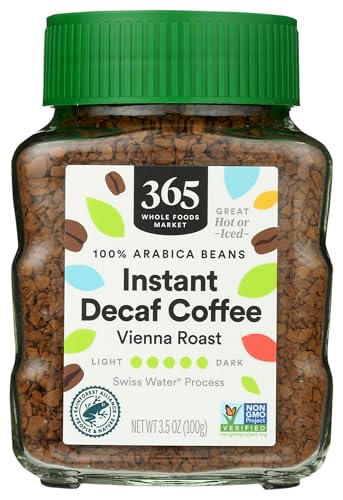
365 by Whole Foods Decaf Coffee
Strengths
- Swiss Water Process decaf
- 100% Arabica beans
- Organic certified
- Smooth, rich flavor
Trade-offs
- Small jar size
- Limited availability
- Higher cost per ounce
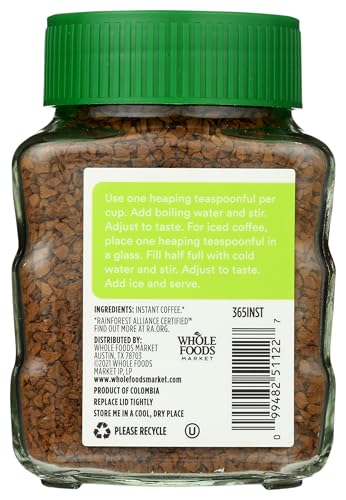
This one’s a stealth standout for organic seekers. Made with 100% Arabica beans and decaffeinated via the Swiss Water Process, it avoids chemicals entirely, a big win for clean-label fans. The Dark Vienna roast brings a deeper, slightly smoky profile that’s richer than most instant decafs, and owners note it holds up well in both hot and iced formats.
It’s small in size, just 3.5 oz, but the quality per gram is high. Compared to Folgers or Maxwell House, it’s smoother and more aromatic, though not quite as full-bodied as Mount Hagen. Where it wins is purity and process: if you shop at Whole Foods and care about sourcing transparency, this fits smoothly into that lifestyle.
Product photos

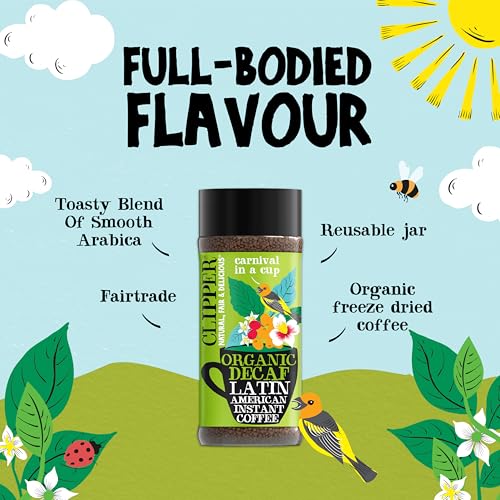
Clipper Latin American Decaf Coffee

Strengths
- Ethically sourced beans
- Chemical-free decaf process
- Reusable jar
- Fair Trade certified
Trade-offs
- Subtle flavor
- Smaller quantity
- Limited roast depth
Clipper’s decaf instant is a quiet achiever in the ethics department. The beans are Fairtrade and ethically sourced, decaffeinated using CO2 and spring water, no chemicals, and the brand’s commitment to fair wages and environmental care is well-documented. Owners appreciate the toasty, smooth flavor, which leans medium and approachable, not bold.
It’s not the most intense cup, and the 3.53 oz size means it won’t last long in a high-use home. But the reusable jar and eco-conscious packaging add long-term value. Compared to Nescafe or Maxwell House, it’s less about power and more about principle. If your morning ritual includes a side of conscience, this is a strong contender.
Product photos
Nescafe Taster’s Choice Decaf Packets

Strengths
- Single-serve convenience
- 60 portable packets
- Smooth, balanced taste
- Freeze-dried granules
Trade-offs
- Not organic
- Smaller cup size per packet
- Plastic waste from packets
The single-serve format is the star here. With 60 packets, this is built for on-the-go use, toss a few in your bag, desk, or carry-on and you’re set. Owners consistently report that the flavor is smoother than most instant decafs, with a balanced, medium-light roast that avoids bitterness. The freeze-dried granules dissolve quickly and deliver a clean finish.
It’s not specialty-grade, but for a mass-market brand, it performs above expectations. Compared to the jar versions, this pack offers better portion control and freshness per cup. If you’re in and out of offices, hotels, or shared spaces, this is the most practical premium-ish decaf instant you can carry. Just don’t expect origin-specific complexity.
Product photos


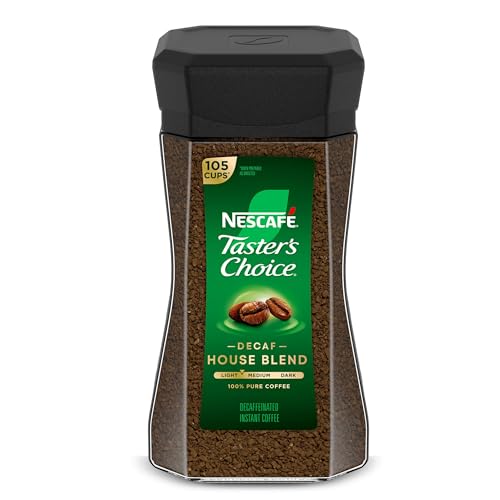
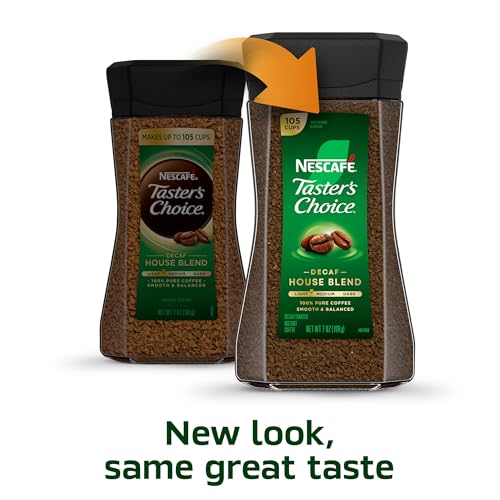
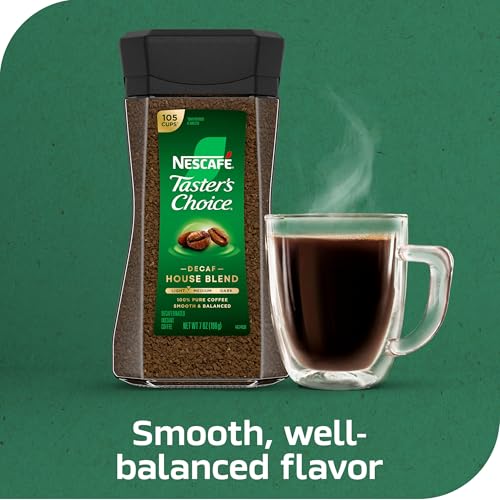
Nescafe Taster’s Choice Decaf House Blend
Strengths
- High yield (210 cups)
- Smooth, balanced flavor
- Freeze-dried for quality
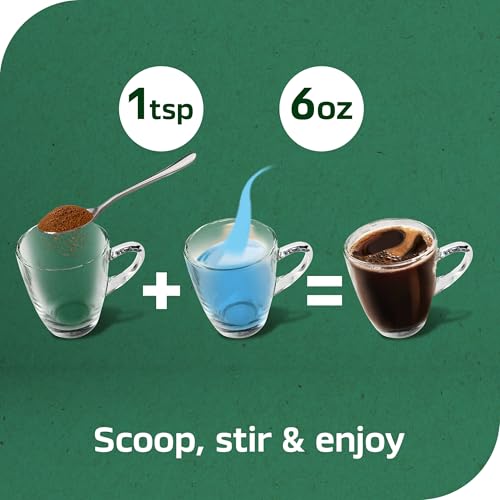
- Easy to measure and mix
Trade-offs
- Not organic or Fair Trade
- Large footprint
- Plastic jars
This two-jar set is all about volume and smoothness. With up to 210 cups total, it’s built for households or offices where decaf is a daily habit. The flavor is where it shines, owners describe it as smoother and more rounded than standard instant, with a light-to-medium roast that’s easy on the stomach. The freeze-dried crystals reconstitute well and lack the chalky aftertaste some budget brands leave behind.
Compared to the single-serve version, this is better for home use but less portable. It doesn’t carry organic or Fair Trade labels, so it’s not a values-driven pick, but as a high-volume, high-smoothness decaf, it’s hard to beat. For families who want a drinkable decaf without daily brewing, this is the go-to.
Product photos

How We Picked These decaffeinated instant coffee
As the founder of Bean Thusiast, I approach coffee with a deep appreciation for both quality and convenience. Rather than a hands-on lab test, this selection is a research-led comparison of published specifications, features, and – crucially – owner and expert reviews. I weighed factors like flavor profiles, convenience, organic certifications, and ethical sourcing to arrive at these recommendations. My goal was to identify options that deliver a genuinely satisfying decaf experience, not just a caffeine-free one.
For decaffeinated instant coffee, taste and convenience are paramount. I prioritized coffees that consistently receive positive marks for flavor – avoiding that often-present “instant” taste – and those offering easy preparation. Ethical sourcing and organic certifications also played a significant role, reflecting a growing consumer demand for responsible coffee production. These elements ultimately decided which products rose to the top.
Specifications reliably indicate caffeine content (though variations exist, as explored in articles about instant coffee caffeine content), and organic/Fair Trade certifications. However, flavor descriptions and overall satisfaction levels are best gleaned from owner feedback. I carefully analyzed reviews to identify recurring themes regarding smoothness, bitterness, and overall enjoyment, and cross-referenced those with assessments from reputable coffee reviewers.
Choosing The Right decaffeinated instant coffee
Finding a decaf instant coffee that doesn’t taste like a compromise can be tricky, but a few key factors separate the truly enjoyable options from the disappointing ones.
Quality decaffeinated instant coffee prioritizes bean origin (100% Arabica is a good sign), employs a careful decaffeination process (CO2 is preferred to chemical solvents), and uses advanced freeze-drying techniques to preserve flavor and aroma. Look for brands transparent about their sourcing and processing methods, and don’t shy away from paying a little more for noticeable improvements in taste.
Bean Quality & Roast Level
I often tell people that the foundation of any good coffee, even instant, is the quality of the bean. Don’t automatically assume all “instant coffee” beans are low grade. Many brands are now using 100% Arabica beans – a significant step up from Robusta which can contribute to bitterness. The roast level also matters; lighter roasts tend to retain more of the bean’s original flavor profile (fruity, floral) while darker roasts deliver a bolder, more chocolatey experience. Consider what you generally prefer in a traditionally brewed cup and look for similar descriptors on the packaging.
Decaffeination Process
The method used to remove caffeine dramatically impacts the final flavor. The gold standard is the Swiss Water Process or CO2 decaffeination. These methods use water or carbon dioxide to extract caffeine without harsh chemicals, preserving more of the bean’s inherent flavors. You’ll often find this information prominently displayed on the packaging if a brand is using a premium method. Cheaper processes using solvents like methylene chloride can leave trace residues (though deemed safe by regulatory bodies) and often result in a noticeably different, sometimes metallic, taste. If you’re looking for premium instant decaffeinated coffee, prioritizing the decaffeination process is essential.
Convenience & Packaging
Instant coffee is, by its nature, about convenience, but even here, there are distinctions to be made. * Single-serve packets (like those from Nescafe Taster’s Choice) are fantastic for portability and portion control. * Jars offer better value per ounce, but require a scoop and can lose freshness more quickly. * Resealable pouches are a good compromise, balancing cost and preservation.
Beyond that, think about how you intend to use the coffee. If you’re primarily making iced coffee, a brand that dissolves easily in cold water (Mount Hagen is often praised for this) is crucial. And if you want to improve instant coffee flavor, remember that even small additions – a pinch of salt, a dash of cinnamon – can make a big difference.
A little goes a long way. Start with the manufacturer’s recommended amount of coffee per cup and adjust to your taste. Don’t be afraid to experiment.
Decaffeinated Instant Coffee Compared
Here’s a comparison of key specifications for various decaffeinated instant coffee options.
| Product Name | Caffeine Free (%) | Format | Jar Size (oz) | Bean Type | Fair Trade |
|---|---|---|---|---|---|
| Mount Hagen Organic Decaf | 99.99 | Single-Serve | N/A | Arabica | Yes |
| 365 by Whole Foods Decaf | N/A | Jar | 3.5 | Arabica | Yes |
| Maxwell House Original Roast Decaf | 99.7 | Jar | 8 | N/A | No |
| Folgers Classic Decaf | 99.7 | Jar | 8 | N/A | No |
| Nescafe Taster’s Choice Decaf | N/A | Jar | 7 | N/A | No |
| Nescafe Taster’s Choice Decaf Packets | N/A | Packets | N/A | N/A | No |
| Clipper Latin American Decaf | N/A | Jar | N/A | Arabica | Yes |
| Community Coffee Cafe Special Decaf | N/A | Jar | N/A | Arabica | No |
Frequently Asked Questions
What caffeine level can I realistically expect in “decaf” instant coffee?
While labeled “decaf,” instant coffee isn’t entirely caffeine-free. Regulations typically allow up to 0.1% caffeine by weight, meaning a cup might contain 2-12mg; Mount Hagen consistently tests at 99.99% caffeine removal, making it a good choice for those very sensitive to caffeine.
Is Swiss Water Process decaf really better tasting?
Yes, the Swiss Water Process generally results in a better-tasting coffee. It uses only water to remove caffeine, preserving more of the bean’s original flavor compounds compared to methods using chemical solvents, which can strip away those desirable notes.
How does the packaging type affect the freshness of instant decaffeinated coffee?
Jars offer good protection but can lose freshness quickly once opened. Resealable pouches help maintain freshness, while single-serve packets are ideal for individual servings and preserving flavor over time as they limit exposure to air.
What should I look for if I’m trying to find ethically sourced decaf instant coffee?
Look for certifications like Fair Trade, which guarantees farmers receive a fair price for their beans. Brands transparent about their sourcing practices and relationships with coffee growers, like Clipper, are also a good indicator of ethical commitment.
I generally prefer a strong, bold coffee. Which instant decaf should I try?
If you like a bolder flavor, consider Maxwell House Original Roast Decaf or Community Coffee Cafe Special Decaf. While not always using 100% Arabica, these brands are often favored by those seeking a robust, classic coffee taste, and can be a good starting point to discover best-tasting instant decaf brands.
The Bottom Line
Choosing a decaf instant coffee often comes down to balancing convenience with a truly enjoyable flavor. While many options exist, I believe Mount Hagen Organic Decaf consistently delivers the best overall experience – its commitment to organic beans, the Swiss Water Process, and the praise for its smooth taste make it a standout. It’s a bit more of an investment, but the quality shines through.
For those seeking affordability, Maxwell House Original Roast Decaf provides a reliable and accessible option. If portability is your priority, the Nescafe Taster’s Choice Decaf Packets are hard to beat for single-cup convenience. And for those who prefer to explore the nuances of freeze-dried instant coffee benefits, Mount Hagen uses that method to excellent effect.
Ultimately, remember that the “best” coffee is the one you enjoy most. Don’t get too caught up in chasing specific percentages or fancy processes. Prioritize bean quality – 100% Arabica is a great starting point – and look for brands that are transparent about their sourcing. A little experimentation will help you discover your perfect decaf cup, and that’s what truly matters.
