
Your Brain on Coffee: What Does Coffee Actually Do to It?
Coffee alters your brain function through a dual mechanism: caffeine provides an immediate, deceptive energy boost by blocking sleep signals, while other bioactive compounds in the brew offer genuine, long-term protection against cognitive decline and neurodegenerative diseases.
Most people think coffee’s brain power is just about the caffeine buzz. They miss the deeper story. The initial alertness is a chemical trick, a borrowed energy that comes with a cost. The real, sustained brain benefits come from a different cast of characters in your cup, working over years.
This guide breaks down both the immediate neurological hijack and the long-term shield, using specific studies and numbers you won’t find in a generic listicle.
Key Takeaways
- Caffeine doesn’t give you energy; it impersonates adenosine, a sleep-promoting neurotransmitter, blocking its signals and creating a temporary state of forced alertness.
- Observational studies link regular, moderate coffee drinking to up to a 65% lower risk of Alzheimer’s disease and a 29% lower risk of Parkinson’s disease.
- Benefits peak at 2-4 cups per day (under 400mg caffeine). More than five cups shows no added benefit for Parkinson’s risk reduction.
- Unfiltered coffee contains diterpenes that can raise LDL cholesterol, potentially harming brain vasculature over time, stick with paper-filtered methods.
- The cognitive benefits are a team effort: caffeine provides the short-term lift, while polyphenols and trigonelline contribute to long-term neuroprotection.
The Immediate Chemical Trick: How Caffeine Blocks Adenosine
Your brain accumulates a chemical called adenosine the longer you are awake. It binds to specific receptors, slowing neuronal firing and making you feel tired. Sleep clears adenosine, resetting the system.
Caffeine is an almost perfect molecular mimic of adenosine.
Caffeine’s primary effect on the central nervous system is by interacting with adenosine receptors. It has a similar molecular structure to adenosine and competes with it to bind to these receptors, preventing adenosine from slowing neural activity.
When you drink coffee, caffeine crosses into your brain and occupies those adenosine receptors. It’s a case of mistaken identity at a cellular level. Because caffeine isn’t adenosine, it doesn’t trigger the slow-down signal. The result? The brain’s brake pedal is blocked, even though the foot (adenosine) is still pressing down.
That’s the buzz. You haven’t added energy; you’ve disabled the fatigue signal.
This blockade has a domino effect. With the primary inhibitory system muted, your brain releases other stimulatory neurotransmitters like noradrenaline, dopamine, and serotonin. Your heart rate increases, airways open slightly, and mood can lift, a full-body response to a neural impersonation.
TL;DR: Caffeine is a molecular impostor that blocks adenosine receptors, temporarily silencing fatigue signals and triggering a secondary stimulant cascade.
The Crash and The Compensation
The half-life of caffeine is about six hours. After that time, half the caffeine has left the receptors, and adenosine starts reclaiming its seats. You feel the drag.
Your brain adapts to chronic caffeine use. It creates more adenosine receptors to try to restore balance. This is tolerance. You now need more caffeine to block the greater number of receptors to feel the same effect. It also means that when you stop, all those extra receptors are wide open for adenosine binding, leading to intense withdrawal fatigue and headaches.
That afternoon slump isn’t just in your head. It’s a pharmacokinetic certainty.
Beyond the Buzz: Coffee’s Real Brain-Boosting Compounds
Focusing solely on caffeine is like crediting the conductor for the entire symphony. The short-term stimulant effect is just one movement. The long-term protective benefits come from a broader ensemble of bioactive compounds.
While caffeine itself is studied for neuroprotective effects, other components like polyphenols (e.g., chlorogenic acid, caffeic acid) and trigonelline are also believed to contribute significantly. Chlorogenic acid, for instance, has shown neuroprotection in models of Parkinson’s disease.
| Bioactive Compound | Primary Role in Coffee | Proposed Neuroprotective Mechanism |
|---|---|---|
| Caffeine | Adenosine receptor antagonist | Increases alertness; may protect dopamine-producing neurons. |
| Chlorogenic Acid | Major polyphenol antioxidant | Reduces oxidative stress in brain tissue; may influence glucagon-like peptide-1. |
| Trigonelline | Alkaloid, precursor to vitamin B3 | Considered promising for neuroprotection in both Alzheimer’s and Parkinson’s models. |
| Caffeic Acid | Polyphenol | Anti-inflammatory and antioxidant properties that may support brain cell health. |
The research on these other compounds is still evolving, but the epidemiological signal is strong. The NIH PMC review on coffee and brain longevity notes that while caffeine is key, the contribution of these other components cannot be dismissed. It’s likely a synergistic effect.
This is why switching to pure caffeine pills or synthetic caffeine sources misses the point for long-term health. You get the trick without the shield.
The Long-Term Brain Shield: Reducing Neurodegenerative Risk
This is where coffee transitions from a daily crutch to a potential long-term health strategy. The data isn’t about feeling sharp for a meeting; it’s about preserving cognitive function decades from now.
A 2017 study following 676 elderly men for ten years found coffee drinkers experienced less cognitive decline. The strongest effect was at three cups per day. This aligns with the general recommendation of two to four cups for maximizing brain benefits.
The more striking figures concern specific diseases.
Alzheimer’s Disease Defense
Observational studies have linked regular, moderate coffee consumption to up to a 65% lower risk of developing Alzheimer’s disease. The mechanisms are thought to involve reduced amyloid-beta plaque formation, decreased brain inflammation, and improved insulin sensitivity in the brain.
Parkinson’s Disease Defense
The data here is also compelling. A review study reported a 29% lower risk of Parkinson’s disease in individuals consuming three cups of coffee per day. Notably, the study found no significant additional benefit at five cups. There’s a sweet spot.
Common mistake: Chasing extreme intake for more protection, drinking more than five cups daily shows no added benefit for Parkinson’s risk reduction and increases side effects like anxiety and sleep disruption.
The protective effect for Parkinson’s is particularly linked to caffeine’s role in safeguarding dopamine-producing neurons, which degenerate in the disease. It’s a direct pharmacological guardrail for a specific brain system.
| Condition | Risk Reduction Linked to Coffee | Peak Benefit Intake | Key Mechanism (Theorized) |
|---|---|---|---|
| Alzheimer’s Disease | Up to 65% lower risk | 3-5 cups/day | Anti-amyloid, anti-inflammatory effects of polyphenols. |
| Parkinson’s Disease | 29% lower risk | 3 cups/day | Caffeine’s protection of dopaminergic neurons. |
| General Cognitive Decline | Significant reduction | 3 cups/day | Combined antioxidant, anti-inflammatory, and vascular benefits. |
TL;DR: Habitual coffee consumption at 2-4 cups daily is associated with dramatically lower risks of Alzheimer’s and Parkinson’s, with benefits plateauing beyond that amount.
How Coffee Reshapes Your Brain’s Wiring
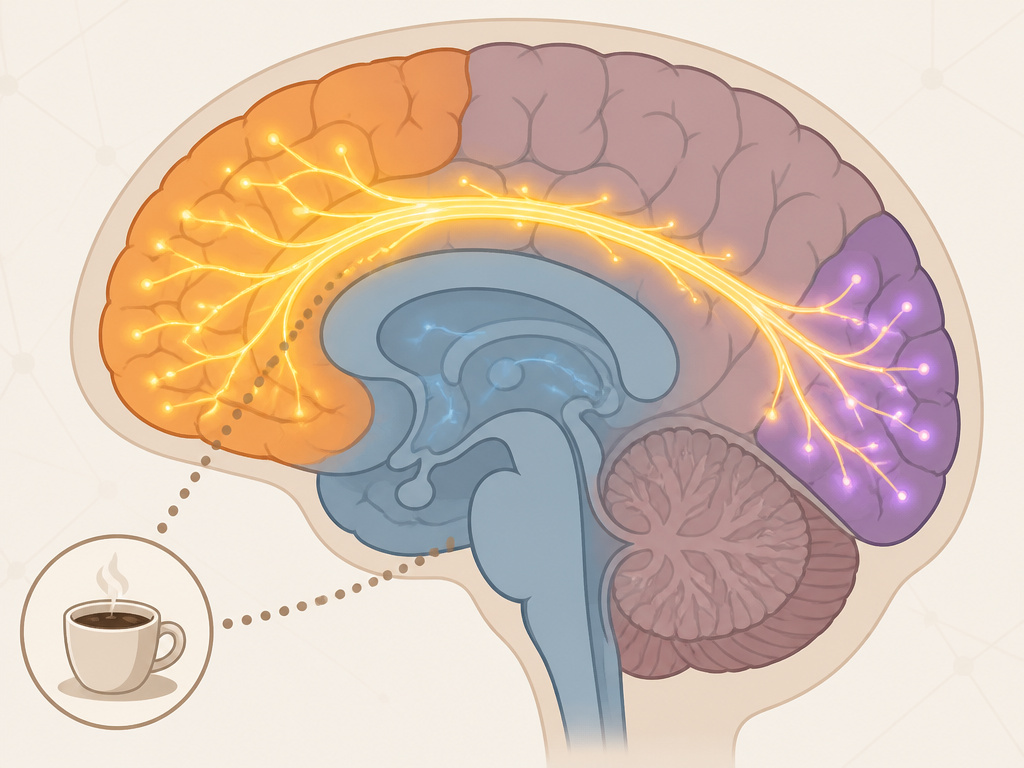
Modern neuroimaging shows coffee’s effect isn’t just chemical; it’s topological. It changes how different brain regions communicate with each other.
Research indicates coffee consumption increases connectivity in the higher visual network and the right executive control network. These networks are crucial for working memory, cognitive control, and goal-directed behavior. Simply put, coffee helps your brain’s command centers talk to each other more efficiently.
Simultaneously, it decreases connectivity in the posterior Default Mode Network (DMN). The DMN is active during mind-wandering and passive rest. Quieting it suggests the brain is moving from a resting state to a task-ready state. It’s a neural shift from “daydream” mode to “focus” mode.
This isn’t just about feeling awake. It’s about your brain reorganizing its resources to prioritize active, external tasks over internal narration. The effect is a more efficient, task-oriented machine for several hours post-consumption.
The Gut-Brain Axis: An Unexpected Pathway
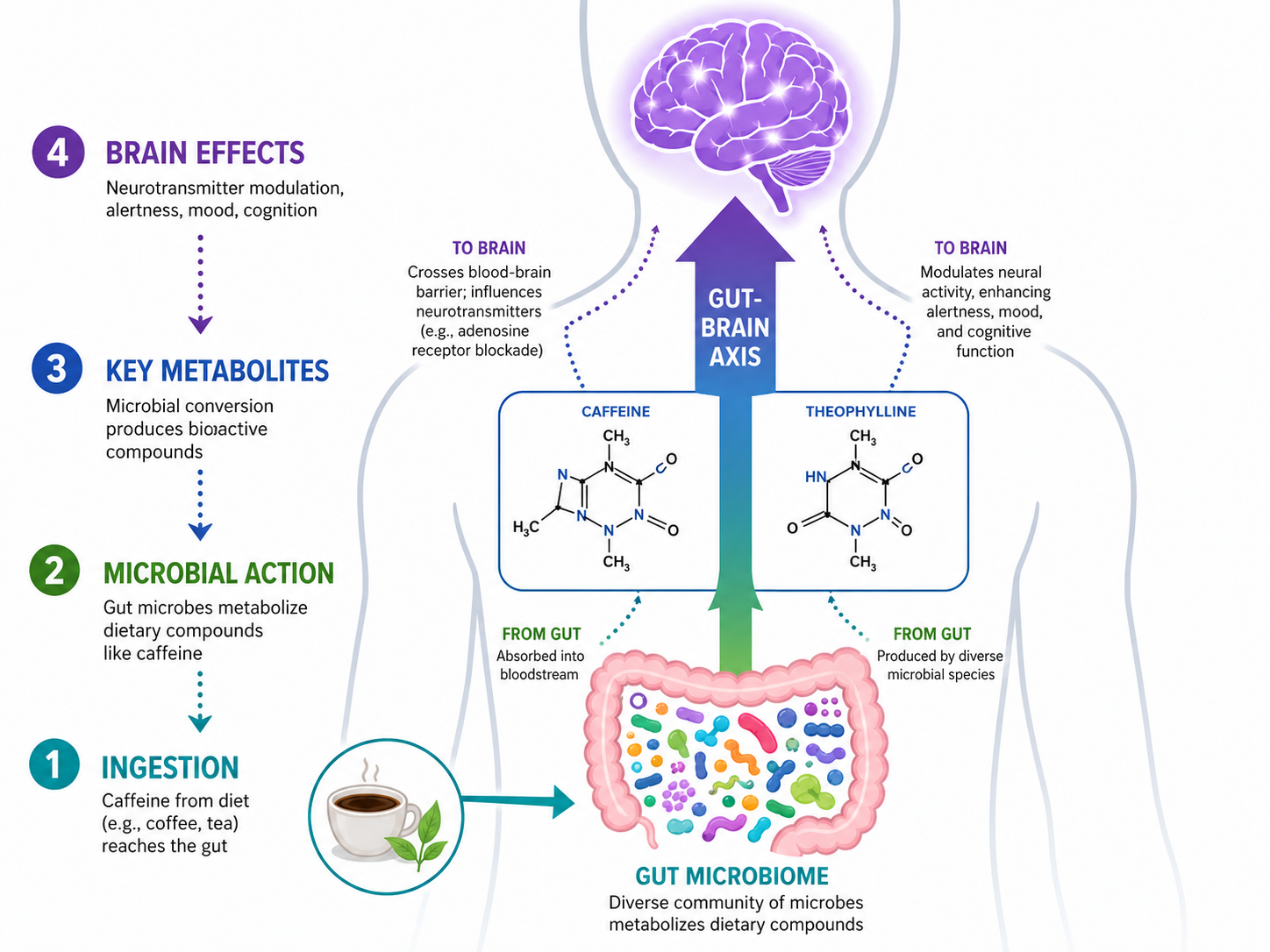
The latest frontier in coffee research looks at the gut. A study published in Nature Communications investigated coffee’s impact on the microbiota–gut–brain axis. It found significant differences in the gut microbiome of coffee drinkers, including increased Cryptobacterium and Eggerthella species.
More importantly, the study used an integrated model to identify nine key metabolites, including theophylline, caffeine, and specific phenolic acids, that were strongly connected to both microbial species and cognitive/behavioral measures. This Nature Communications study on coffee and cognition provides direct evidence that coffee’s compounds influence the gut ecosystem, which in turn sends signals that affect brain function and resilience.
This gut-brain pathway may be a fundamental reason why the whole coffee bean is more beneficial than isolated caffeine. You’re not just dosing your brain; you’re feeding a microbiome that talks back to it.
Optimizing Your Intake for Brain Health
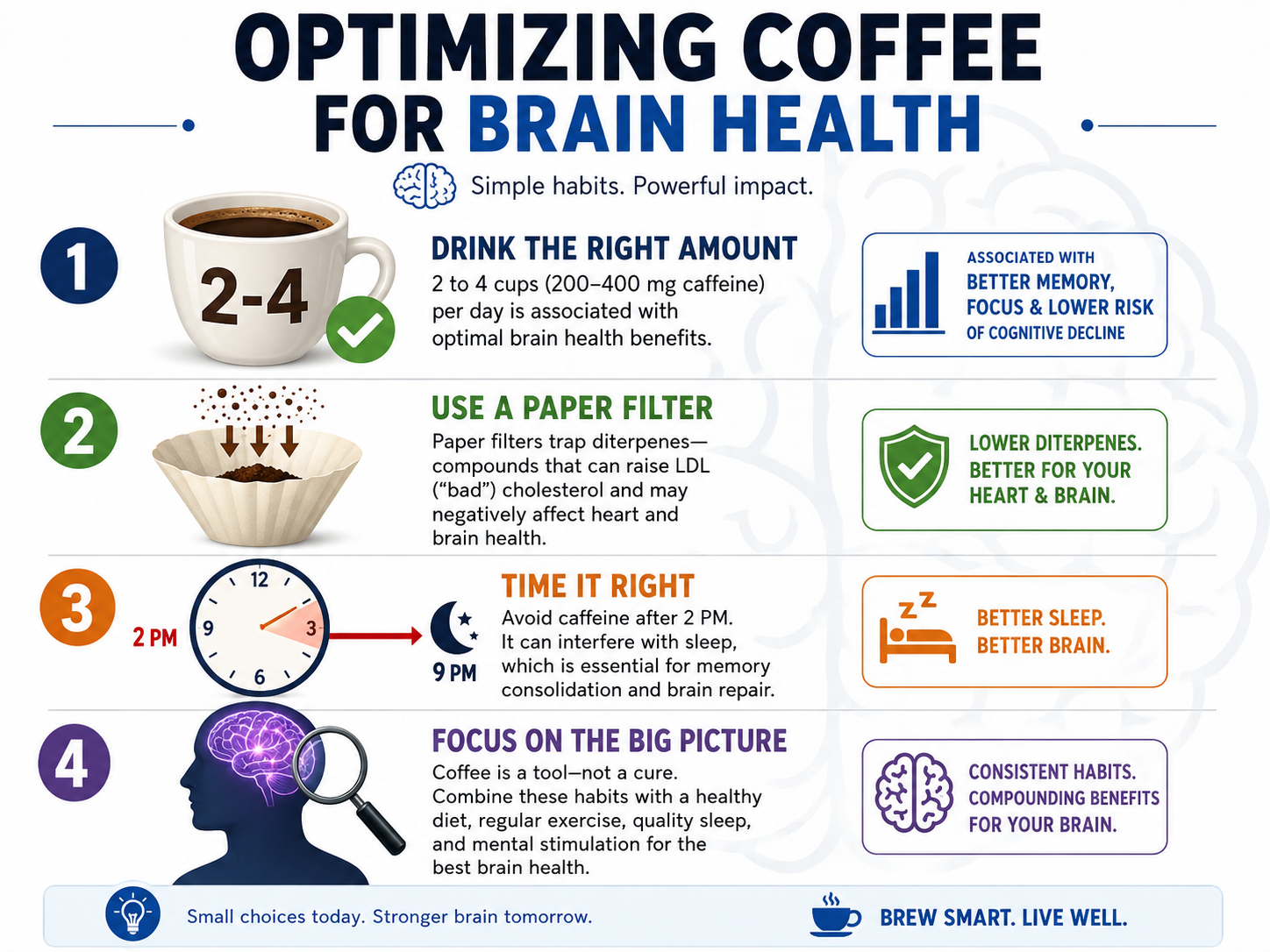
More is not better. The goal is to harness the long-term shield without letting the short-term trick cause collateral damage. Your brewing method and timing are critical levers.
- Stick to 2-4 Cups Daily. This keeps you under the 400 mg caffeine safety threshold and aligns with the intake linked to the strongest cognitive benefits. Exceeding this consistently can trigger anxiety, disrupt sleep architecture, and lead to tolerance that dulls the very effect you’re after.
- Choose Filtered Brewing Methods. Unfiltered coffee (French press, Turkish, boiled) contains diterpenes like cafestol. These compounds can raise LDL cholesterol levels, potentially leading to the thickening and hardening of artery walls, including those supplying the brain. A paper filter traps them. This is a non-negotiable for long-term vascular brain health.
- Cut Off Caffeine by Early Afternoon. Caffeine has a 6-hour half-life. A cup at 3 PM means half that caffeine is still active at 9 PM, competing with adenosine as your brain tries to initiate sleep. Poor sleep quality directly impairs memory consolidation and brain detoxification, erasing coffee’s daily benefits. For a calmer caffeine buzz later in the day, consider alternatives.
- Listen to Your Body. The effects of coffee vary wildly. If it makes you jittery, anxious, or disrupts your sleep, its net brain benefit for you is likely negative. Genetics affect how fast you metabolize caffeine. Your brain health strategy should respect your personal physiology, not just population studies.
Experiment with additives that may synergize with coffee’s effects. Some find that adding coconut oil or MCT oil in coffee provides sustained energy that complements the caffeine spike. Others manage their overall stimulant load by understanding the caffeine in tea for a slower-release option.
The Other Side of the Coin: When Coffee Hurts Your Brain
Coffee is a tool, and every tool has a misuse case. Ignoring these negates the benefits.
- Sleep Disruption is a Deal-Breaker. Consuming coffee late in the day impairs sleep depth and REM cycles. Chronic sleep deprivation increases amyloid-beta accumulation, a key Alzheimer’s pathology. You cannot caffeine your way out of a sleep debt and expect long-term brain health.
- Anxiety and Dependency. High doses exacerbate anxiety. The subsequent crash can worsen mood and focus. Needing coffee to function normally or avoid withdrawal headaches signals a dependency that overshadows any hypothetical long-term gain.
- Individual Negative Reactions. For some, coffee causes tachycardia, digestive distress, or migraine. In these cases, the systemic stress likely outweighs any neuroprotective potential. Don’t force it.
It’s also wise to contextualize coffee within your total stimulant intake. The espresso caffeine content is more concentrated than drip, and stacking it with high-caffeine content comparison energy drinks can easily push you into the jittery, anxious zone that harms performance.
Frequently Asked Questions
Does decaf coffee offer the same brain benefits?
Decaffeinated coffee retains most of the polyphenols and antioxidants. A study found that while caffeinated coffee reduced anxiety and improved attention, decaf enhanced sleep, physical activity, and memory. Both types improved mood and lowered stress, indicating distinct but complementary effects. Decaf is a valid tool for the long-term shield without the short-term stimulant.
How does coffee compare to other caffeine sources for brain health?
Coffee appears uniquely beneficial due to its complex blend of bioactive compounds beyond caffeine. Pure caffeine pills or synthetic caffeine sources lack these. Tea, particularly green tea, offers a different profile with L-theanine that promotes calm focus, making it a strong alternative brain booster. The sugar and additives in many energy drinks likely negate any cognitive benefits from their caffeine.
Can coffee help if I already have mild cognitive impairment?
The research is primarily on prevention, not treatment. However, the biological mechanisms, reduced inflammation, antioxidant activity, improved vascular health, are theoretically supportive. It would be a component of a broader brain-healthy lifestyle, not a cure. Always consult a neurologist for personalized advice.
I get jittery from coffee. Does that mean I miss out on the long-term benefits?
Not necessarily. The jitters are a response to caffeine sensitivity. You can try switching to a half-caf blend, opting for a slow-release caffeine source like tea, or ensuring you drink coffee with a meal to slow absorption. The goal is to find a way to incorporate the polyphenol-rich beverage without the adverse stimulant side effects. If even decaf causes issues, the benefits may not be accessible to you.
Is there a difference between light and dark roast for the brain?
Dark roast has slightly less caffeine due to the longer roasting process. Some studies suggest dark roast generates more specific antioxidants like N-methylpyridinium. The polyphenol content changes but isn’t necessarily depleted. Choose the roast you enjoy and will drink consistently; the biggest factor is regular, moderate consumption of filtered coffee.
The Bottom Line
Coffee’s effect on your brain is a tale of two timelines. In the short term, caffeine performs a clever, slightly deceptive hijack of your fatigue signals. It’s a useful trick, but one with diminishing returns and a potential crash.
The profound story is in the long term. Habitual, moderate consumption of the whole coffee beverage, not just its caffeine, is linked to substantial protection against our most feared neurodegenerative diseases. This shield is built on antioxidants, anti-inflammatory compounds, and gut-brain interactions that work silently over decades.
Respect the limits. Two to four filtered cups, finished before the afternoon, is the reliable pattern. Beyond that, you’re trading the shield for the side effects. Your brain doesn’t need more coffee. It needs the right amount, consistently, for a very long time.
{
“@context”: “https://schema.org”,
“@type”: “HowTo”,
“name”: “How Coffee Affects Your Brain: From Immediate Buzz to Long-Term Protection”,
“totalTime”: “PT10M”,
“tool”: [
{
“@type”: “HowToTool”,
“name”: “A cup of brewed coffee (filtered recommended)”
},
{
“@type”: “HowToTool”,
“name”: “Understanding of personal caffeine tolerance”
}
],
“step”: [
{
“@type”: “HowToStep”,
“name”: “Understand the adenosine blockade”,
“text”: “Caffeine enters your brain and binds to adenosine receptors, blocking the sleep-signaling chemical and temporarily increasing alertness.”
},
{
“@type”: “HowToStep”,
“name”: “Recognize the neurotransmitter surge”,
“text”: “The blockade triggers a cascade, increasing adrenaline, dopamine, and noradrenaline, which elevates mood, focus, and heart rate.”
},
{
“@type”: “HowToStep”,
“name”: “Consider the long-term neuroprotective effects”,
“text”: “Regular, moderate consumption of coffee is linked to a significantly reduced risk of Alzheimer’s and Parkinson’s diseases through compounds beyond caffeine.”
},
{
“@type”: “HowToStep”,
“name”: “Optimize intake for brain health”,
“text”: “Aim for 2-4 cups daily, preferably filtered, and avoid late-day consumption to prevent sleep disruption that negates benefits.”
}
]
}
{
“@context”: “https://schema.org”,
“@type”: “FAQPage”,
“mainEntity”: [
{
“@type”: “Question”,
“name”: “Does decaf coffee offer the same brain benefits?”,
“acceptedAnswer”: {
“@type”: “Answer”,
“text”: “Decaffeinated coffee retains most of the polyphenols and antioxidants. A study found that while caffeinated coffee reduced anxiety and improved attention, decaf enhanced sleep, physical activity, and memory. Both types improved mood and lowered stress, indicating distinct but complementary effects. Decaf is a valid tool for the long-term shield without the short-term stimulant.”
}
},
{
“@type”: “Question”,
“name”: “How does coffee compare to other caffeine sources for brain health?”,
“acceptedAnswer”: {
“@type”: “Answer”,
“text”: “Coffee appears uniquely beneficial due to its complex blend of bioactive compounds beyond caffeine. Pure caffeine pills or synthetic caffeine sources lack these. Tea, particularly green tea, offers a different profile with L-theanine that promotes calm focus, making it a strong alternative brain booster. The sugar and additives in many energy drinks likely negate any cognitive benefits from their caffeine.”
}
},
{
“@type”: “Question”,
“name”: “Can coffee help if I already have mild cognitive impairment?”,
“acceptedAnswer”: {
“@type”: “Answer”,
“text”: “The research is primarily on prevention, not treatment. However, the biological mechanisms, reduced inflammation, antioxidant activity, improved vascular health, are theoretically supportive. It would be a component of a broader brain-healthy lifestyle, not a cure. Always consult a neurologist for personalized advice.”
}
},
{
“@type”: “Question”,
“name”: “I get jittery from coffee. Does that mean I miss out on the long-term benefits?”,
“acceptedAnswer”: {
“@type”: “Answer”,
“text”: “Not necessarily. The jitters are a response to caffeine sensitivity. You can try switching to a half-caf blend, opting for a slow-release caffeine source like tea, or ensuring you drink coffee with a meal to slow absorption. The goal is to find a way to incorporate the polyphenol-rich beverage without the adverse stimulant side effects. If even decaf causes issues, the benefits may not be accessible to you.”
}
},
{
“@type”: “Question”,
“name”: “Is there a difference between light and dark roast for the brain?”,
“acceptedAnswer”: {
“@type”: “Answer”,
“text”: “Dark roast has slightly less caffeine due to the longer roasting process. Some studies suggest dark roast generates more specific antioxidants like N-methylpyridinium. The polyphenol content changes but isn’t necessarily depleted. Choose the roast you enjoy and will drink consistently; the biggest factor is regular, moderate consumption of filtered coffee.”
}
}
]
}
