
Is Matcha Better Than Coffee? The Data on Energy & Health
Matcha is better than coffee for sustained, calm energy because its caffeine (35-50mg per serving) is paired with L-theanine, creating a 4-hour focus lift without jitters. Coffee provides a faster, more intense spike (60-75mg per shot). The “better” choice depends on your priority: immediate intensity or prolonged, stable alertness.
Matcha is not inherently better than coffee; the “better” drink depends on whether you prioritize a rapid, intense caffeine spike (coffee) or a sustained, focused energy lift without jitters or a crash (matcha). The decision hinges on three measurable factors: caffeine delivery profile, antioxidant density, and your personal tolerance for acidity and preparation ritual. A 1.5g serving of ceremonial matcha delivers about 35-50mg of caffeine paired with L-theanine, while a single espresso shot (7g) delivers 60-75mg of pure caffeine.
Most comparisons stop at “matcha has calm energy.” They miss the specific numbers that dictate your real-world experience: the 30-minute onset delay, the four-hour duration, and the fact that cheap, oxidized matcha powder will taste bitter and provide none of the celebrated benefits. The ritual itself becomes a filter. If you won’t whisk, you won’t get the creamy texture. If you hate the earthy flavor, no antioxidant count will convince you.
This guide breaks down the matcha versus coffee debate with the specific data points that matter, caffeine milligrams, cost per cup, antioxidant ratios, and the physical reasons behind each drink’s effect. You will know which one to reach for tomorrow morning.
Key Takeaways
- Matcha’s caffeine works differently because of L-theanine, an amino acid that promotes alpha brain waves for focused calm, delaying the stimulant’s onset by about 15 minutes compared to coffee.
- A single serving of matcha (1.5g) contains significantly more antioxidants, specifically EGCG catechins, than a typical cup of coffee, one gram of matcha powder has over 10 times the antioxidant potential of one gram of brewed coffee in lab tests.
- Ceremonial-grade matcha costs $1.25 to $2.50 per prepared cup, making it 3 to 5 times more expensive per serving than home-brewed specialty coffee.
- Coffee’s higher acidity (pH around 5) can trigger heartburn or stomach discomfort for many people; matcha is less acidic and is often better tolerated.
- Low-quality, stale matcha oxidizes, turning brownish and bitter, which ruins the flavor and degrades the beneficial compounds, always check for a vibrant green color and a packed-on date.
Caffeine and Energy: The Jolt vs. The Glide
Is matcha better than coffee for energy? It depends on what you need the energy to do. Coffee is a sprint. Matcha is a paced hike.
The numbers are clear. A standard 1.5-gram serving of ceremonial-grade matcha contains 35 to 50 milligrams of caffeine. A single espresso shot, using 7 grams of coffee, delivers 60 to 75 milligrams. A 240-milliliter cup of drip coffee, however, is the heavyweight, ranging from 95 to 165 milligrams. On pure caffeine content, coffee wins. But caffeine content is only the first line on the spec sheet.
Matcha provides a sustained and focused energy boost without the jitters or the crash associated with coffee. The combination of caffeine and L-theanine offers a sense of alertness and clarity without the roller coaster effect.
The mechanism is why matcha feels different. Matcha contains a high concentration of L-theanine, an amino acid rarely found in coffee beans. L-theanine crosses the blood-brain barrier and promotes the production of alpha brain waves, which are associated with a state of relaxed alertness. It moderates the stimulant effect of caffeine. Think of it as a governor on an engine. The caffeine still provides power, but the L-theanine prevents the RPMs from spiking into anxiety.
This changes the timeline. Coffee’s caffeine hits your bloodstream quickly, often within 15-30 minutes. You feel a pronounced peak around 45-60 minutes, followed by a decline that can lead to a crash 3-5 hours later. Matcha’s onset is slower, around 30-45 minutes, because the L-theanine modulates the absorption. The peak is less sharp, and the decline is a gentle slope over 4-6 hours. There is no crash because there was no dramatic spike.
TL;DR: For a quick, intense jolt, choose coffee. For hours of steady, jitter-free focus, choose matcha. The L-theanine in matcha acts as a neurological buffer.
Health and Antioxidants: The Numbers Behind the Hype
The health argument for matcha centers on antioxidants, specifically a catechin called epigallocatechin gallate (EGCG). The claims are big, and some are backed by measurable differences.
One laboratory analysis cited in our research notes states that one gram of matcha has 1,031% more antioxidant potential than the resulting brew from one gram of coffee bean. This is a lab measure (ORAC value), not a direct body benefit, but it illustrates the density gap. You are consuming the entire ground tea leaf, so you ingest all the compounds it contains. With coffee, you extract compounds into water, leaving the fiber and many antioxidants behind in the spent grounds.
| Compound | Matcha (1.5g serving) | Coffee (240ml drip) | Why It Matters |
|---|---|---|---|
| Caffeine | 35-50 mg | 95-165 mg | Drive alertness; coffee’s dose is higher and faster. |
| L-theanine | 20-40 mg (estimated) | Trace amounts | Promotes alpha waves for calm focus; unique to tea. |
| Antioxidants (EGCG) | Very High | Moderate | Linked to cellular health; matcha’s concentration is superior. |
| Chlorophyll | High (from shading) | None | Supports detoxification pathways; gives matcha its color. |
| Acidity | Low (higher pH) | High (pH ~5) | Matcha is gentler on the stomach for most people. |
Coffee has its own beneficial compounds, like chlorogenic acids, which are antioxidants linked to blood sugar regulation. But the sheer volume of catechins in matcha is its standout feature. These antioxidants are why matcha is studied for things like supporting heart health and reducing inflammation.
The other non-caffeine component is chlorophyll. The tea plants for matcha are shaded for about three weeks before harvest. This stress causes the leaves to produce more chlorophyll, the pigment that makes them vividly green. Chlorophyll has detoxifying properties and supports liver function. It is also why high-quality matcha is such a bright green. A dull, brownish-green powder has oxidized, meaning the chlorophyll and catechins have degraded. That powder will be bitter and less beneficial.
TL;DR: Matcha wins on antioxidant density, especially EGCG, because you consume the whole leaf. Its chlorophyll content, a result of the shading process, adds a detoxification element coffee lacks.
Flavor, Ritual, and Daily Practicality
You can have the perfect physiological profile, but if you hate the taste or the routine, you won’t drink it. The experience at the counter matters as much as the compounds in the cup.
Matcha tastes green. It has an earthy, vegetal, sometimes umami-rich flavor that can be an acquired taste. High-quality ceremonial matcha should have a slight natural sweetness and a creamy mouthfeel, especially when whisked properly. Low-quality culinary matcha is bitter and astringent, it’s meant for baking where sugar masks it. Coffee offers a wider spectrum: bright acidity, chocolatey depth, fruity notes, or roasty bitterness, depending on the bean and roast.
The ritual is a feature or a barrier. A proper matcha preparation is a small ceremony:
1. Sift 1.5 grams of powder into a bowl to break clumps.
2. Add about 60ml of hot water (175°F / 80°C, not boiling).
3. Whisk vigorously in a “W” or “M” motion with a bamboo chasen until frothy.
This takes 3-5 minutes. It is meditative for some, a hassle for others. Coffee preparation ranges from the 30-second espresso pull to the hands-off drip machine. The convenience factor leans heavily toward coffee for most fast-moving mornings.
Then there is cost. A 30-gram tin of good ceremonial matcha runs $25 to $50. At 1.5g per serving, that’s 20 cups, costing $1.25 to $2.50 per cup. A bag of specialty coffee beans might cost $20 for 340 grams. At 18 grams per pour-over, that’s about 19 cups, costing roughly $1.05 per cup. Espresso is cheaper per shot on a home machine. The health benefits of green tea are real, but they come at a premium.
TL;DR: Matcha demands a ritual and has a distinct, acquired taste. Its per-cup cost is higher than specialty coffee. If you won’t enjoy the process, the health benefits are irrelevant.
Who Should Choose Matcha? Who Should Stick with Coffee?

This is not a tie. Your lifestyle and physiology dictate a winner.
Choose matcha if:
* You need sustained focus for deep work without anxiety or a mid-afternoon crash.
* You have a sensitive stomach and coffee’s acidity causes reflux or discomfort. The acidity of tea is generally lower.
* You want to maximize your antioxidant intake from your beverages.
* You enjoy a mindful morning ritual and don’t mind the prep time.
* You are sensitive to caffeine jitters but still want an energy lift.
Choose coffee if:
* You want a rapid, potent wake-up effect within minutes.
* You love the vast world of flavor profiles from different coffee origins and roasts.
* Convenience and speed are non-negotiable for your morning routine.
* You are on a budget and the per-cup cost of ceremonial matcha is prohibitive.
* You simply don’t like the earthy, vegetal taste of green tea.
For those curious about other tea comparisons, the black tea vs coffee debate has its own nuances, particularly regarding caffeine release rates. And if you’re comparing stimulants beyond these two, understand that energy drinks vs coffee is a different conversation entirely, often involving sugar and other additives.
The Common Mistakes That Ruin the Experience
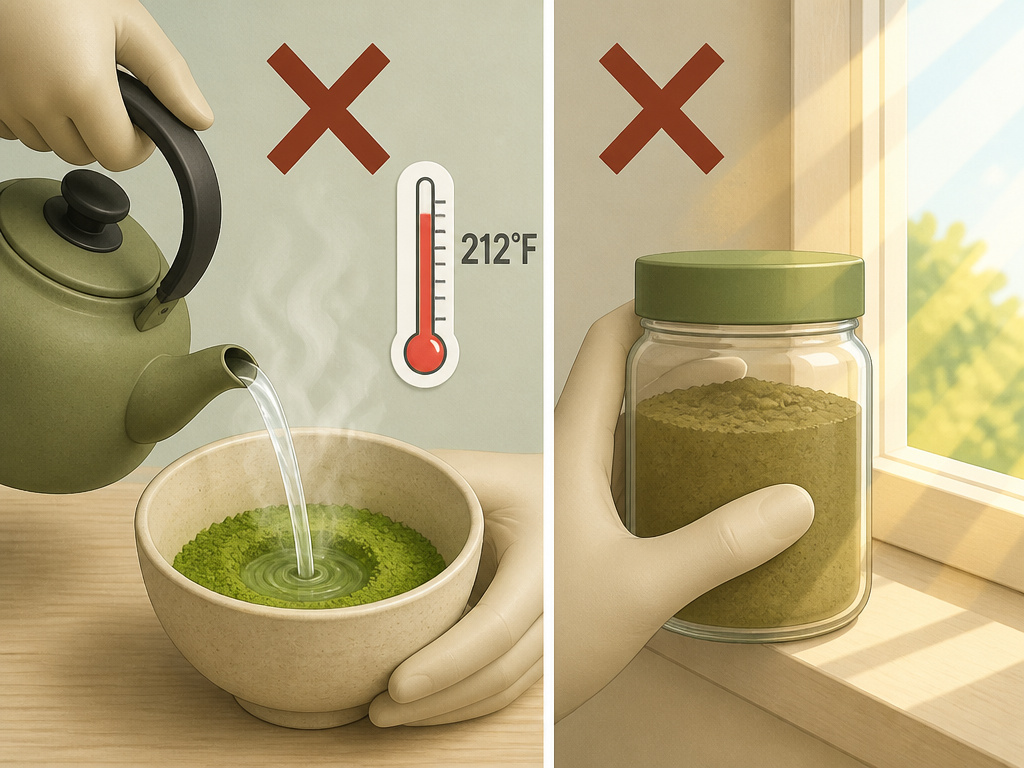
You can buy the right product and still have a bad time by missing a few details.
Common mistake: Using boiling water for matcha, it scalds the leaves, extracts excessive bitterness, and destroys delicate L-theanine. Always use water between 160°F and 175°F (70°C–80°C).
Common mistake: Storing matcha in a clear jar or in a warm pantry, light and heat accelerate oxidation. Within a month, the powder loses its vibrant color, turns bitter, and its antioxidant value plummets. Keep it sealed in the fridge.
Not weighing your matcha is another error. A “spoonful” is not a measurement. Too little powder (under 1g) and you get a weak, insipid drink with negligible effects. Too much (over 2g) and the bitterness overwhelms, and the caffeine dose might be higher than you want. Use a cheap 0.1g-resolution kitchen scale. It is the single best investment for consistency, just like it is for brewing methods for tea and coffee.
On the coffee side, the parallel mistake is using stale beans or the wrong grind. Coffee beans are at their peak for about 3-4 weeks after roasting. Pre-ground coffee loses most of its aromatic complexity in minutes. Grind fresh, every time. The difference is not subtle.
Frequently Asked Questions
Does matcha have more caffeine than coffee?
No, by volume, it has less. A typical serving of matcha (1.5g) has 35-50mg of caffeine. A typical cup of drip coffee (240ml) has 95-165mg. However, matcha’s caffeine is released slowly due to the presence of L-theanine, so its effect can feel more sustained and less jittery.
Can matcha help with weight loss better than coffee?
Matcha contains EGCG, a catechin shown in some studies to boost metabolism and increase fat oxidation. Coffee can also boost metabolism via caffeine. The edge goes to matcha because it combines caffeine with EGCG, but neither is a magic weight-loss solution without diet and exercise.
Why is matcha so expensive compared to coffee?
The production is labor-intensive. Tea plants are shaded for weeks, only the youngest leaves are hand-picked, and the leaves are stone-ground into an ultra-fine powder. This process yields far less finished product per acre than coffee cultivation. The tea vs coffee benefits debate often overlooks this agricultural reality.
I tried matcha and it was bitter. Did I do something wrong?
Probably. Bitterness comes from three sources: using low-quality “culinary” matcha (meant for baking), using water that’s too hot, or not whisking it properly into a smooth emulsion. Try a ceremonial-grade matcha, water at 175°F, and a proper whisk. The difference is night and day.
Is it okay to drink both matcha and coffee in the same day?
It is physically okay, but be mindful of your total caffeine intake. The caffeine content in energy drinks is often much higher and more dangerous. If you have a matcha in the morning for sustained focus and an espresso after lunch for a pick-me-up, you’re likely fine. Just add up the milligrams, staying under 400mg total for the day is a common guideline for healthy adults.
The Bottom Line
Matcha is not a wholesale replacement for coffee. It is a different tool. It provides a smoother, longer-lasting energy lift packed with antioxidants, but it demands more money, more time, and an appreciation for its unique flavor. Coffee is the efficient, potent, and versatile classic.
The answer to “is matcha better than coffee” lives in your own body and routine. Need a fast, cheap, strong kick with a world of flavor options? Coffee is your drink. Value calm focus, stomach comfort, and are willing to pay for a ritual? Matcha wins. Try a week of each, using good quality ingredients and proper technique. Your own energy levels and taste buds will give you the only verdict that matters.
{
“@context”: “https://schema.org”,
“@type”: “HowTo”,
“name”: “How to Choose Between Matcha and Coffee”,
“totalTime”: “PT10M”,
“tool”: [
{
“@type”: “HowToTool”,
“name”: “Kitchen scale (0.1g precision)”
},
{
“@type”: “HowToTool”,
“name”: “Matcha sifter (optional)”
},
{
“@type”: “HowToTool”,
“name”: “Bamboo whisk (chasen) or small frother”
}
],
“step”: [
{
“@type”: “HowToStep”,
“name”: “Identify your energy goal”,
“text”: “Decide if you need a rapid, intense focus spike (coffee) or a sustained, jitter-free alertness lasting hours (matcha).”
},
{
“@type”: “HowToStep”,
“name”: “Measure your caffeine”,
“text”: “Weigh your matcha to 1.5g for ~50mg caffeine, or measure 7g of coffee for a single espresso shot (~70mg). Drip coffee is variable—a 240ml cup can range from 95mg to 165mg.”
},
{
“@type”: “HowToStep”,
“name”: “Consider stomach sensitivity”,
“text”: “If coffee acidity causes discomfort, matcha’s higher pH is the default choice. Its preparation consumes the whole leaf, which buffers the stomach.”
},
{
“@type”: “HowToStep”,
“name”: “Factor in preparation time”,
“text”: “A proper matcha ritual with sifting and whisking takes 3-5 minutes. An espresso shot takes 30 seconds once the machine is hot. Drip coffee is hands-off but has cleanup.”
},
{
“@type”: “HowToStep”,
“name”: “Taste test with quality ingredients”,
“text”: “Try a ceremonial-grade matcha and a freshly roasted, lightly acidic coffee side-by-side. Low-quality, oxidized matcha tastes bitter and will not provide an accurate comparison.”
}
]
}
{
“@context”: “https://schema.org”,
“@type”: “FAQPage”,
“mainEntity”: [
{
“@type”: “Question”,
“name”: “Does matcha have more caffeine than coffee?”,
“acceptedAnswer”: {
“@type”: “Answer”,
“text”: “No, by volume, it has less. A typical serving of matcha (1.5g) has 35-50mg of caffeine. A typical cup of drip coffee (240ml) has 95-165mg. However, matcha’s caffeine is released slowly due to the presence of L-theanine, so its effect can feel more sustained and less jittery.”
}
},
{
“@type”: “Question”,
“name”: “Can matcha help with weight loss better than coffee?”,
“acceptedAnswer”: {
“@type”: “Answer”,
“text”: “Matcha contains EGCG, a catechin shown in some studies to boost metabolism and increase fat oxidation. Coffee can also boost metabolism via caffeine. The edge goes to matcha because it combines caffeine with EGCG, but neither is a magic weight-loss solution without diet and exercise.”
}
},
{
“@type”: “Question”,
“name”: “Why is matcha so expensive compared to coffee?”,
“acceptedAnswer”: {
“@type”: “Answer”,
“text”: “The production is labor-intensive. Tea plants are shaded for weeks, only the youngest leaves are hand-picked, and the leaves are stone-ground into an ultra-fine powder. This process yields far less finished product per acre than coffee cultivation. The tea vs coffee benefits debate often overlooks this agricultural reality.”
}
},
{
“@type”: “Question”,
“name”: “I tried matcha and it was bitter. Did I do something wrong?”,
“acceptedAnswer”: {
“@type”: “Answer”,
“text”: “Probably. Bitterness comes from three sources: using low-quality \”culinary\” matcha (meant for baking), using water that’s too hot, or not whisking it properly into a smooth emulsion. Try a ceremonial-grade matcha, water at 175°F, and a proper whisk. The difference is night and day.”
}
},
{
“@type”: “Question”,
“name”: “Is it okay to drink both matcha and coffee in the same day?”,
“acceptedAnswer”: {
“@type”: “Answer”,
“text”: “It is physically okay, but be mindful of your total caffeine intake. The caffeine content in energy drinks is often much higher and more dangerous. If you have a matcha in the morning for sustained focus and an espresso after lunch for a pick-me-up, you’re likely fine. Just add up the milligrams, staying under 400mg total for the day is a common guideline for healthy adults.”
}
}
]
}
