
How to Make Bulletproof Coffee: The Official Recipe Guide
To make bulletproof coffee, blend 1 cup of hot coffee with 1-2 tablespoons of grass-fed butter and 1-2 tablespoons of C8 MCT oil for 20-30 seconds until frothy. This specific method, from patent US8962058B2, creates an emulsified drink that delivers cognitive and metabolic benefits without separation or digestive upset.
To make bulletproof coffee, blend 1 cup of hot coffee with 1-2 tablespoons of grass-fed butter and 1-2 tablespoons of C8 MCT oil for 20-30 seconds until frothy. The patent US8962058B2 specifies this exact method and ingredient ratio for cognitive and metabolic benefits. Skipping the blender or using the wrong oil type results in a greasy, separated drink that won’t deliver the intended energy boost.
Most guides treat bulletproof coffee like a simple keto hack. They list butter and any MCT oil. They tell you to stir it with a spoon. The result is a slick of oil floating on your coffee that tastes like a mistake. You get none of the frothy texture and your stomach might rebel within an hour.
This guide follows the original patent recipe, explains why each step matters, and shows you how to adapt it for dairy-free or cold brew versions without losing the functional benefits.
Key Takeaways
- Use a high-speed blender, not a spoon or frother, to properly emulsify the fats into the coffee. This creates the signature frothy texture and prevents an oily mouthfeel.
- Start with 1 tablespoon of C8 MCT oil (like Brain Octane Oil) and work up slowly. Pure C8 is potent and can cause digestive distress if you begin with the full 2-tablespoon dose.
- Grass-fed butter is non-negotiable for its higher concentration of omega-3s and fat-soluble vitamins compared to regular butter. Ghee is the best dairy-free alternative.
- The coffee must be hot, not just warm, when it hits the blender. Heat below 160°F (71°C) won’t melt the butter fully, leading to clumps and separation.
- If your blend separates within minutes, your blender isn’t powerful enough or you’re not blending long enough. A Vitamix or Blendtec is ideal; a Nutribullet is the minimum.
The Original Patent Recipe (and Why It Works)
The formula isn’t a random internet trend. It’s detailed in patent US8962058B2, filed by Dave Asprey. The patent claims a “method and composition for weight loss and cognitive improvement.” The specific ratios and ingredients are the point.
The patent calls for 1 cup (8-12 fl oz) of brewed coffee, 1-2 tablespoons of a source of medium chain triglycerides (MCTs), and 1-2 tablespoons of butter or ghee, blended until frothy. It emphasizes “low-toxin” coffee beans to avoid mycotoxins, though this is a point of contention among users.
The patent specifies using a source of MCTs that is at least 50% caprylic acid (C8). Brain Octane Oil, the branded product, is 100% C8. This is critical because C8 is rapidly converted by the liver into ketones, providing a quick energy source for the brain without being stored as body fat.
Blending is the non-negotiable step. Stirring with a spoon leaves the fats suspended, not emulsified. You need the shear force of a blender blade to break the butter and oil into microscopic droplets that disperse evenly throughout the coffee. This creates a stable emulsion, a texture like a latte, and ensures the fats are bioavailable.
TL;DR: Follow the patent: 1 cup hot coffee, 1-2 tbsp grass-fed butter, 1-2 tbsp C8 MCT oil, blended 30 seconds. The C8 oil and emulsification are what make it “bulletproof.”
Tools You Actually Need
You need three things. A standard drip machine won’t cut it for the best flavor base, and a milk frother fails at emulsification.
| Tool | Why It’s Non-Negotiable | What Happens If You Skip It |
|---|---|---|
| High-speed blender | Creates the necessary emulsion. | Fats separate, leaving an oily film. The drink tastes greasy and can cause stomach upset. |
| French press or pour-over brewer | Produces a full-bodied, oily coffee that emulsifies better than paper-filtered coffee. | Paper filters strip out coffee oils, resulting in a thinner, less stable emulsion. |
| Kitchen scale or measuring spoons | Ensures the 1:1:1 ratio of coffee to butter to oil by volume. | Eyeballing leads to a ratio that’s too fatty (gut rot) or too weak (no sustained energy). |
The blender is the cornerstone. I used a cheap personal blender for my first attempt. It chugged, stalled, and left a half-inch of unmixed butter at the bottom of the cup. Upgrading to a Vitamix was a revelation—the vortex it creates pulls everything into the blades for a perfect, homogenous mix every time. A Nutribullet or high-powered immersion blender can work, but you must blend for a full 45 seconds to compensate for the lower power.
Your choice of coffee grinders matters less than the brew method. A French press or metal-filter pour-over like an AeroPress lets the natural coffee oils through. These oils help bind the butter and MCT oil into the emulsion. A paper filter, like in a V60 or Chemex, traps these oils, making the final blend more likely to separate.
The 5-Step Process Most People Overcomplicate
The procedure is simple. Overthinking it leads to the most common errors: cold coffee, wrong fat order, and under-blending.
- Brew 8-12 oz of strong coffee. Use beans you enjoy. The patent suggests “low-toxin” or “Upgraded” beans, but any high-quality, freshly ground coffee works. The water should be just off the boil (200-205°F / 93-96°C) when it hits the grounds. Let it brew. This isn’t the step to use cold brew—that requires a different method covered later.
- Measure 1-2 tbsp of unsalted, grass-fed butter. Unsalted is crucial. Salted butter will make your coffee taste like a weird soup. Grass-fed butter has a better fatty acid profile (more omega-3s, vitamin K2) and a richer flavor. Kerrygold is the standard. If you’re dairy-free, use the same amount of ghee.
- Measure 1-2 tbsp of C8 MCT oil. Start with 1 tbsp. Brain Octane Oil is the patent-specified product, but any pure C8 MCT oil works. Do not use a blended MCT oil or coconut oil for your first week. The higher C12 (lauric acid) content in blends and coconut oil is processed differently and can cause more pronounced digestive issues for newcomers.
- Combine everything in the blender. Pour the hot coffee in first. Add the butter and oil. The heat of the coffee will begin melting the butter immediately, which helps the blending process.
- Blend on high for 20-30 seconds. You’re listening for the sound to change from a chunky slosh to a smooth, high-pitched whirl. The mixture will double in volume and turn a pale, creamy tan. Stop when you see a thick layer of microfoam on top, like a latte.
Common mistake: Adding butter and oil to the blender first, then pouring hot coffee on top — the splash of hot liquid can force steam and splash back out the lid, creating a burn risk and a mess. Coffee first, always.
TL;DR: Brew hot, measure fats, add coffee to blender first, blend until the sound goes smooth and the color is a uniform pale tan.
Grass-Fed Butter vs. Everything Else

Not all butter is equal here. The nutritional claim of bulletproof coffee hinges on the quality of the fats.
Grass-fed butter, like Kerrygold or Anchor, contains higher levels of conjugated linoleic acid (CLA), omega-3 fatty acids, and vitamin K2 compared to butter from grain-fed cows. These nutrients contribute to the anti-inflammatory and satiety effects. The flavor is also richer and less greasy.
Ghee is clarified butter, with the milk solids and water removed. It’s pure butterfat. It’s a perfect substitute if you’re lactose-intolerant or avoiding dairy, as it contains no lactose or casein. It has a higher smoke point and a nuttier flavor. For a dairy-free milk options approach, ghee is the only one that maintains the original fat profile.
Regular, grain-fed supermarket butter will work in a pinch, but you’re missing the targeted nutritional benefits. Margarine or plant-based “butter” spreads are terrible substitutes. They often contain hydrogenated oils, additives, and water, which will ruin the emulsion and the health profile.
| Fat Source | Best For | Drawback |
|---|---|---|
| Grass-fed butter | Authentic recipe, maximum nutrient intake. | Contains dairy (lactose/casein). |
| Ghee | Dairy-free, high-heat stable, rich flavor. | More expensive than regular butter. |
| Coconut oil | Dairy-free, adds mild coconut flavor. | High in C12 MCT, which is slower to convert to ketones than C8. |
| Regular butter | Emergency use only. | Lower nutrient profile, can taste greasier. |
If you explore other fats, know that coconut oil in coffee offers a different experience. It’s solid at room temperature, so it requires a very hot blend, and its energy release is slower than pure C8 MCT.
C8, C10, C12: Picking the Right MCT Oil

The “MCT” in MCT oil stands for Medium-Chain Triglyceride. But not all MCTs are created equal, and the difference matters for how you feel an hour after drinking.
C8 (Caprylic Acid) is the star of the patent. It’s the shortest chain, going directly to the liver for rapid conversion into ketones. This is the “clean energy” and cognitive boost people report. Brain Octane Oil is 100% C8.
C10 (Capric Acid) is a bit slower to metabolize but still a good energy source. Many “MCT oils” are a 50/50 blend of C8 and C10.
C12 (Lauric Acid), which makes up about 50% of coconut oil, behaves more like a long-chain fat in the body. It’s still an MCT, but it’s processed more slowly and is more likely to be stored than immediately used for energy.
I started with a C8/C10 blend because a friend warned me about “MCT gut rot.” It was fine. Then I switched to pure C8 Brain Octane Oil and took the full 2-tablespoon dose on day one. Bad idea. The cramping hit 45 minutes later. I now tell everyone to start with 1 teaspoon of pure C8 and increase by half a teaspoon every three days.
For the patent-defined benefits, you want an oil high in C8. A 2019 review in the Journal of the American College of Nutrition notes that “MCTs are rapidly absorbed and transported directly to the liver, where they are preferentially oxidized for energy rather than stored as fat.” C8 does this fastest.
If you’re new to MCT oil in coffee, begin with a blended oil or a very small dose of C8. Your digestive system needs to upregulate the enzymes to handle it. Going straight to 2 tbsp of pure C8 is a recipe for discomfort.
Dairy-Free and Cold Brew Adaptations
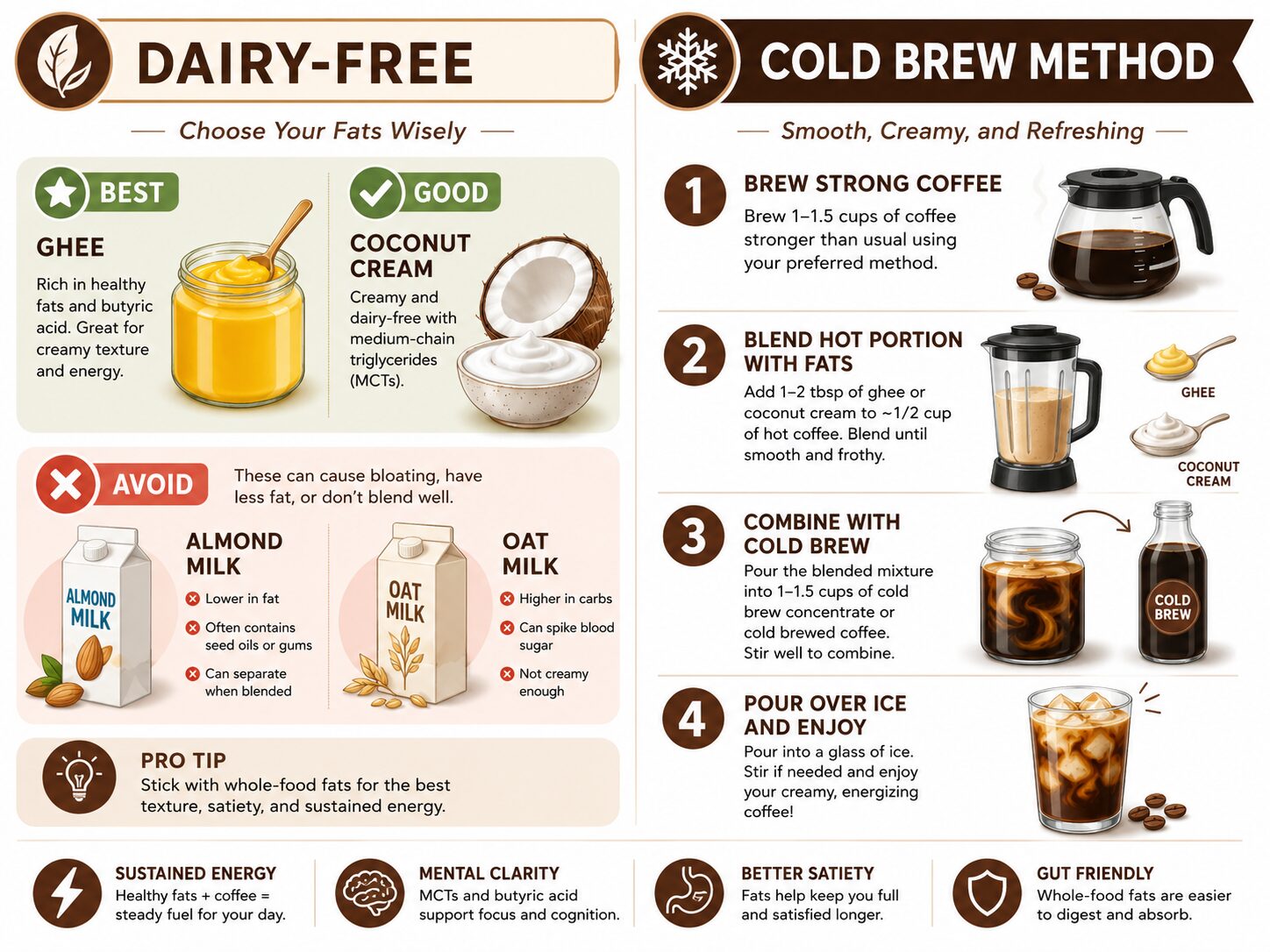
The standard recipe assumes hot coffee and dairy. You can adapt it, but the method changes.
For a dairy-free version, ghee is your first and best substitute. It maintains the pure butterfat profile. If you avoid all dairy, coconut cream is the next best option. It’s high in fat and will emulsify, but it adds a distinct coconut flavor and contains more C12 MCTs. Avoid almond milk or oat milk straight in the blender—they’re too high in water and carbs, and they’ll dilute the fat ratio, breaking the emulsion and leaving a thin, separated drink.
For cold brew bulletproof coffee, you cannot just blend cold brew with solid fats. The butter and MCT oil will seize up. Here’s the workaround:
1. Brew your coffee strong, as usual.
2. Take a small amount (about 2 oz) of the hot brew and blend it with the butter and MCT oil first. This creates a hot, concentrated emulsion.
3. Pour that emulsion into your full cup of cold brew. Give it a quick blend (5-10 seconds) or shake vigorously in a sealed jar.
4. Pour over ice if desired.
The initial hot blend is non-negotiable. It melts and emulsifies the fats. Adding them directly to cold liquid results in a chunky, greasy mess that no amount of blending will fix.
Common Mistakes and Fixes
Your bulletproof coffee failed if it looks oily, tastes bland, or upsets your stomach. Here are the fixes.
Problem: An oily slick floats on top after blending.
Cause: Under-blending or a weak blender. The emulsion broke.
Fix: Blend longer (45+ seconds) or upgrade your blender. Ensure your coffee is piping hot when it goes in.
Problem: It tastes bitter or flat.
Cause: Low-quality coffee beans or using paper-filtered coffee which strips oils.
Fix: Use a fuller-bodied brew method like a French press. Consider a pinch of salt to counteract bitterness without adding sweetness.
Problem: Stomach cramps or nausea within an hour.
Cause: Too much MCT oil, too fast, or using pure C8 before your body is adapted.
Fix: Scale back to 1 teaspoon of MCT oil. Use a C8/C10 blend for a week before trying pure C8 again. Always have it with food initially.
Problem: The butter won’t fully incorporate, leaving small chunks.
Cause: Coffee isn’t hot enough to melt the butter fully before blending.
Fix: Ensure your brew water is at least 200°F (93°C). Let the hot coffee sit with the butter for 30 seconds before blending to start the melting process.
Common mistake: Using flavored coffee creamers or sweeteners with the butter and oil — the added emulsifiers and sugars can cause the fats to separate and the drink to taste overly sweet and artificial. Stick to plain coffee, butter, and oil.
If you’re tracking intake, remember that this drink is calorie-dense. Two tablespoons each of butter and oil add roughly 400 calories. It’s a meal replacement, not a snack. Understanding the calories in milk and other add-ins helps contextualize this.
Frequently Asked Questions
Can I make bulletproof coffee without a blender?
You can, but you won’t get bulletproof coffee. Stirring or shaking will mix the ingredients, but it won’t create an emulsion. You’ll drink separated butter and oil floating on coffee, which is harder to digest and misses the textural point. A handheld immersion blender is the bare minimum tool.
What’s the best coffee to use?
The patent emphasizes “low-toxin” beans, but any fresh, high-quality coffee works. A medium or dark roast from a single-origin coffee or a well-crafted blend provides a robust flavor base that stands up to the fats. Light roasts, like blonde roast beans, can taste too acidic when combined with the rich fats.
Can I add sweetener or flavors?
Technically, yes, but it deviates from the original functional recipe. If you must, add a teaspoon of brown sugar sweetener or a drop of vanilla extract after blending. Adding them before can interfere with the emulsion process.
Is bulletproof coffee just for keto diets?
It was popularized within the keto community because the high fat, very low carb profile supports ketosis. However, anyone looking for a high-satiety, caffeine-smoothing breakfast replacement can benefit. The fats slow the absorption of caffeine, preventing a jittery spike and crash.
Can I use pre-ground coffee?
Yes, but freshly ground coffee from a burr grinder benefits are significant. Pre-ground coffee loses volatile aromatics quickly. Since the butter and oil mellow the coffee’s flavor, starting with the freshest, most flavorful beans you have makes a noticeable difference.
Before You Go
The goal is a frothy, emulsified drink that tastes creamy and rich, not oily. That requires a blender, hot coffee, and the right fats. Start with 1 tablespoon of each fat to assess your tolerance. Use grass-fed butter or ghee and a C8-focused MCT oil. The difference between a greasy failure and the sustained, jitter-free energy people rave about is in those specifics. Skip the shortcuts. Your first properly made cup will show you why the patent exists.
{
“@context”: “https://schema.org”,
“@type”: “HowTo”,
“name”: “How to Make Bulletproof Coffee”,
“totalTime”: “PT5M”,
“tool”: [
{
“@type”: “HowToTool”,
“name”: “High-speed blender”
},
{
“@type”: “HowToTool”,
“name”: “French press or coffee maker”
},
{
“@type”: “HowToTool”,
“name”: “Kitchen scale or measuring spoons”
}
],
“step”: [
{
“@type”: “HowToStep”,
“name”: “Brew the coffee”,
“text”: “Brew 1 cup (8-12 fl oz) of coffee using a French press or drip method. Use freshly ground, low-toxin beans for the best flavor and health profile.”
},
{
“@type”: “HowToStep”,
“name”: “Measure the fats”,
“text”: “Measure 1-2 tablespoons of unsalted grass-fed butter or ghee and 1-2 tablespoons of C8 MCT oil, like Brain Octane Oil.”
},
{
“@type”: “HowToStep”,
“name”: “Combine and blend”,
“text”: “Pour the hot coffee into the blender. Add the butter and MCT oil. Secure the lid tightly.”
},
{
“@type”: “HowToStep”,
“name”: “Blend until frothy”,
“text”: “Blend on high for 20-30 seconds, until the mixture is completely emulsified and has a frothy, latte-like texture with no oil slick on top.”
}
]
}
{
“@context”: “https://schema.org”,
“@type”: “FAQPage”,
“mainEntity”: [
{
“@type”: “Question”,
“name”: “Can I make bulletproof coffee without a blender?”,
“acceptedAnswer”: {
“@type”: “Answer”,
“text”: “You can, but you won’t get bulletproof coffee. Stirring or shaking will mix the ingredients, but it won’t create an emulsion. You’ll drink separated butter and oil floating on coffee, which is harder to digest and misses the textural point. A handheld immersion blender is the bare minimum tool.”
}
},
{
“@type”: “Question”,
“name”: “What’s the best coffee to use?”,
“acceptedAnswer”: {
“@type”: “Answer”,
“text”: “The patent emphasizes \”low-toxin\” beans, but any fresh, high-quality coffee works. A medium or dark roast from a single-origin coffee or a well-crafted blend provides a robust flavor base that stands up to the fats. Light roasts, like blonde roast beans, can taste too acidic when combined with the rich fats.”
}
},
{
“@type”: “Question”,
“name”: “Can I add sweetener or flavors?”,
“acceptedAnswer”: {
“@type”: “Answer”,
“text”: “Technically, yes, but it deviates from the original functional recipe. If you must, add a teaspoon of brown sugar sweetener or a drop of vanilla extract after blending. Adding them before can interfere with the emulsion process.”
}
},
{
“@type”: “Question”,
“name”: “Is bulletproof coffee just for keto diets?”,
“acceptedAnswer”: {
“@type”: “Answer”,
“text”: “It was popularized within the keto community because the high fat, very low carb profile supports ketosis. However, anyone looking for a high-satiety, caffeine-smoothing breakfast replacement can benefit. The fats slow the absorption of caffeine, preventing a jittery spike and crash.”
}
},
{
“@type”: “Question”,
“name”: “Can I use pre-ground coffee?”,
“acceptedAnswer”: {
“@type”: “Answer”,
“text”: “Yes, but freshly ground coffee from a burr grinder benefits are significant. Pre-ground coffee loses volatile aromatics quickly. Since the butter and oil mellow the coffee’s flavor, starting with the freshest, most flavorful beans you have makes a noticeable difference.”
}
}
]
}
