
How to Make Dairy-Free Coffee | Avoid the Curdling Mistake
This post contains affiliate links. As an Amazon Associate, we earn from qualifying purchases.
To make dairy-free coffee that doesn’t curdle, match three things: a high-protein milk (like barista oat milk with ~3g/100ml), a gentle warming step for the milk, and a slow pour into the coffee. This prevents the acidic coffee (pH ~5) from clashing with cold, low-protein alternatives.
To make dairy-free coffee, you need three things: a dairy-free milk with enough protein and fat to withstand coffee’s acidity, a gentle warming step before mixing, and a slow, steady pour. The protein content, around 3g per 100ml in a barista oat milk, is what prevents the milk from curdling when it hits the coffee’s acidic pH of 4.85 to 5.10. Skip the warming step with a light roast, and you’ll get a cup of separated, grainy coffee within seconds.
Most people grab the first carton of almond milk from the fridge, pour it straight into their piping-hot light roast, and wonder why it looks like cottage cheese floated to the top. They blame the milk. The milk is fine. The problem is the sudden, violent clash between a cold, low-protein liquid and a hot, acidic one. It’s a chemistry problem disguised as a barista problem.
This guide walks through that chemistry, then gives you the tools and sequence to make a dairy-free coffee that actually works. We’ll cover the milks that survive the pour, the one warming trick baristas use but manuals never mention, and a homemade creamer recipe that sidesteps the curdle altogether.
Key Takeaways
- Barista-specific dairy-free milks like Oatly Barista Edition are engineered with higher protein (around 3g/100ml) and fat to resist curdling in acidic, hot coffee.
- Always pre-warm your dairy-free milk before adding it to hot coffee. A temperature shock is the fastest route to a separated, grainy cup.
- High-acidity coffee beans, like many light roasts, will curdle even pre-warmed standard almond or soy milk. Use cold brew or a barista blend for these.
- Making a simple, three-ingredient homemade dairy-free creamer with sweetened condensed coconut milk and oat milk completely avoids the curdling reaction.
- If your dairy-free milk does curdle, the fix is often as simple as letting the coffee cool slightly or using a less acidic brew method next time.
Why Dairy-Free Milk Curdles (And How to Stop It)
Coffee is acidic. Its pH typically sits between 4.85 and 5.10. Dairy-free milks, particularly ones lower in protein like many almond or rice milks, have proteins that are sensitive to both heat and acidity. When cold, low-protein milk hits hot, acidic coffee, the proteins denature, they unravel and clump together. You see that as curds.
Common mistake: Pouring cold almond milk directly into a freshly brewed light roast, the proteins shock and clump instantly, leaving a grainy film on the surface and settled bits at the bottom of the cup.
The fix isn’t a secret. It’s matching three things: the milk’s protein shield, the temperature gap, and the coffee’s acid level.
First, pick a milk built for the job. A 2022 study in the Journal of Food Science and Technology confirmed that protein content and pH are the key factors in plant-based milk stability in coffee. Barista editions are formulated specifically for this. Oatly Barista Edition, for example, lists about 3g of protein per 100ml. That extra protein acts as a buffer against the coffee’s acid. Standard oat milk might have half that.
Second, close the temperature gap. You wouldn’t pour a cold egg into a hot pan and expect a smooth scramble. The same principle applies here. Gently warming the milk in a saucepan or microwave for 30-45 seconds takes the chill off. You’re not trying to steam it, just bring it closer to the coffee’s temperature to avoid thermal shock.
Third, know your coffee’s acidity. A bright Ethiopian light roast will be far more acidic than a dark Sumatran brew. If you’re married to high-acidity beans, your milk choice narrows. You either need a barista blend with high protein and stabilizers, or you switch to cold brew. Cold brew coffee has a higher pH (less acidic) and is served cold, which eliminates the curdling problem entirely for most milks.
TL;DR: Curdling is a protein reaction to heat and acid. Fight it with a high-protein barista milk, pre-warming, and less acidic coffee.
The Dairy-Free Coffee Toolbox
Not all dairy-free milks are created equal, especially for coffee. Your choice determines whether you get a smooth latte or a cup of soup.
| Milk Type | Best For | Watch Out For |
|---|---|---|
| Oat (Barista Edition) | All hot coffee, especially lattes & cappuccinos | Higher calorie count than nut milks |
| Soy (Barista Blend) | High-acidity coffee, strong espresso | Can have a distinct “beany” flavor if overheated |
| Almond (Unsweetened) | Iced coffee, cold brew | Almost always curdles in hot, acidic coffee |
| Coconut (Canned/Blend) | Rich, creamy texture in medium-dark roasts | Overpowering coconut flavor in light roasts |
| Cashew | Minimalist creaminess, neutral flavor | Thin texture, poor frothing |
Oat milk, specifically the barista versions, is the consensus winner for versatility. The fat and protein content is engineered to steam well and resist separation. Soy milk is the workhorse, it has the highest natural protein content of the common alternatives, which makes it stable. The trick is finding a brand without a strong aftertaste.
Almond milk is where most first attempts fail. It’s low in protein and fat. Even pre-warmed, it often breaks in hot coffee. Reserve it for iced drinks or cold brew where the temperature and acidity are lower.
Homemade nut milks, like the almond milk from the YouTube transcript, are a special case. They’re pure and fresh, but they lack the stabilizers (like gellan gum) that commercial barista blends use. The creator there warns explicitly: “if you put it on high flame the milk may sometimes curdle.” You must warm it gently on medium-low heat.
I tried frothing homemade oat milk once. It was a disaster. The lack of stabilizers meant it wouldn’t hold any foam, and when I added it to my morning pour-over, it separated into faint whitish streaks. Now I keep a carton of Oatly Barista for weekday coffee and reserve homemade stuff for baking.
Your choice of coffee bean types plays a role here too. A bold, chocolatey blend is more forgiving than a bright, fruity single-origin.
The Step-by-Step Method That Actually Works
Follow this sequence. Swapping steps is what leads to the grainy, separated cup.
- Brew your coffee. Use your preferred method, but note the roast. Light roasts are more acidic and riskier.
- Pour your dairy-free milk into a small saucepan. You need about 1/4 to 1/3 cup per mug of coffee. Turn the heat to medium-low.
- Heat the milk gently until it’s just warm to the touch. Do not let it simmer or boil. This takes 60-90 seconds. If you see steam or bubbles, it’s too hot.
- Pour the warm milk slowly into your hot coffee. Stir with a spoon as you pour. The gradual incorporation is key.
- Sweeten or flavor as desired. Add your brown sugar sweetener, a pinch of salt, or a dash of cinnamon.
Skipping step three, the warming, is the most common error. The temperature difference shocks the proteins. You might get away with it using a barista oat milk and a dark roast, but with a standard almond milk and a light roast, it’s a guaranteed fail.
What about frothing? If you have a steam wand or a frother, you can froth barista oat or soy milk. The commercial stabilizers help create microfoam. Don’t expect the thick, velvety foam of whole dairy milk, though. As the YouTube creator noted, “when you try to froth oat anything it’s not going to get froth like the whole milk will.”
TL;DR: Warm the milk first, pour slowly, stir as you go. It’s a tempering process, not a dump-and-stir.
When the Standard Method Fails (The Edge Cases)
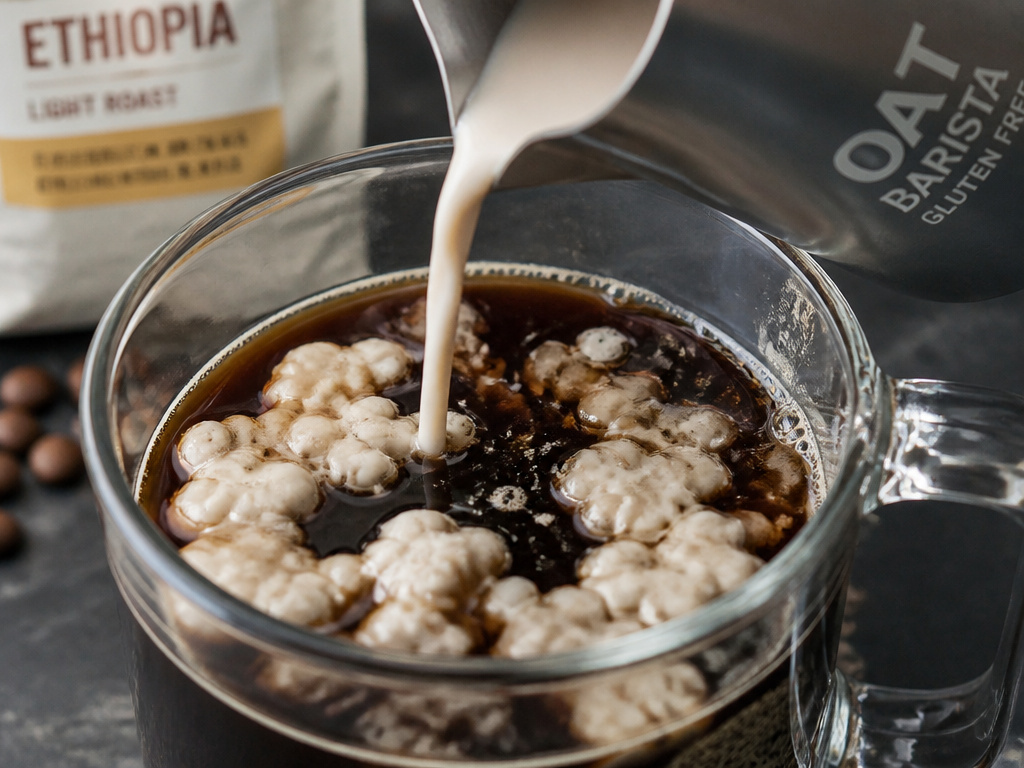
Sometimes you do everything right, barista milk, gentle warming, slow pour, and it still curdles. You’ve hit an edge case.
High-Acidity Coffee Beans are the main culprit. A light roast Ethiopian or a natural-processed bean can have a pH low enough to overwhelm even the hardiest barista blend. If you love these coffees, you have two paths: switch to cold brew, or embrace the curdle and stir it back in. The curds are harmless, just texturally unpleasant.
I pre-warmed my barista oat milk perfectly and poured it into a gorgeous light roast Ethiopian. It still separated. The problem wasn’t the milk or my technique, it was the bean. Now I either use that bean for cold brew or choose a more chocolatey, less acidic blend for my hot milk drinks.
Old or Improperly Stored Milk is another. Once opened, dairy-free milks start to break down. After about 7-10 days in the fridge, even a barista blend can lose its stability. If your milk is near its use-by date or has been open for a while, it’s more likely to curdle.
Specific Stabilizers can backfire. Some additives like carrageenan, used for texture, can react poorly with coffee acids over time, leading to a slimy separation rather than curds. If you notice a weird texture, check the ingredient list.
The ultimate bypass? Cold brew. Its brewing process results in a pH typically between 5.0 and 5.2, less acidic than hot coffee, and it’s served cold. This double-whammy eliminates the heat and acid triggers. You can use almost any dairy-free milk, even the thin, low-protein ones, without fear.
Make Your Own Dairy-Free Coffee Creamer
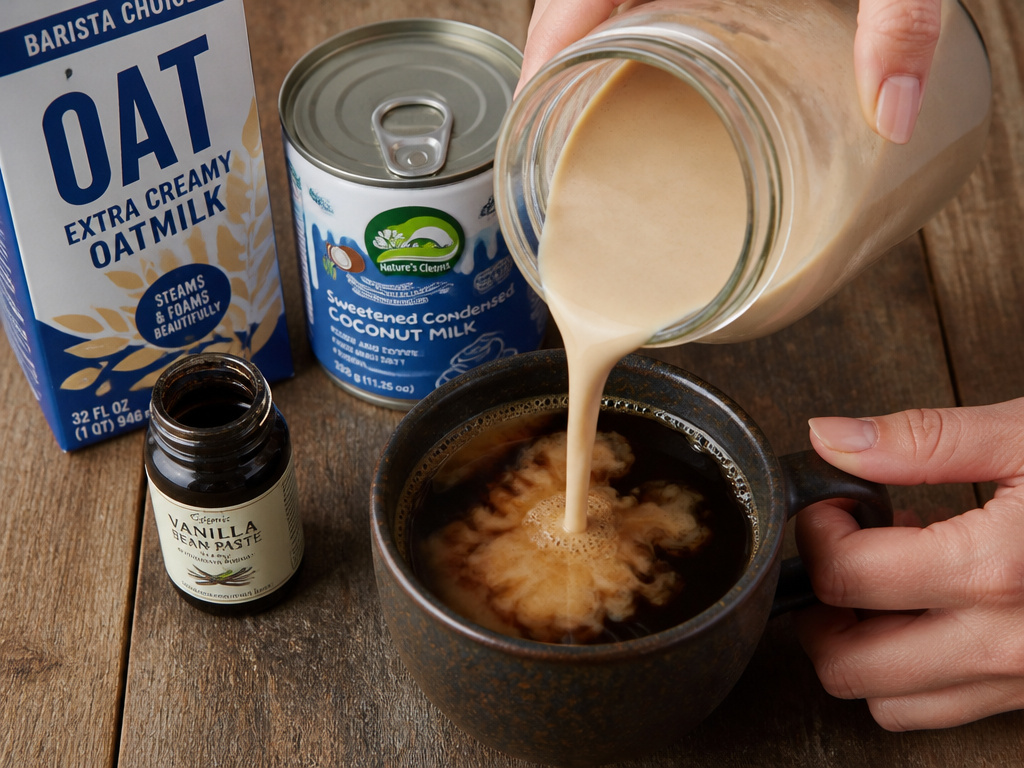
If store-bought milks keep failing you, or you just want to control the ingredients, making a creamer is straightforward. It sidesteps the curdling issue entirely because the base is already emulsified and stable.
The YouTube recipe for homemade creamer uses three ingredients: a can of sweetened condensed coconut milk, a tablespoon and a half of vanilla bean paste (or extract), and extra-creamy oat milk to fill a mason jar. The condensed coconut milk is thick, sweet, and stable. Mixing it with oat milk creates a homogeneous, rich liquid that won’t separate when hit with coffee acid.
You can customize it endlessly. Swap the vanilla for caramel extract. Use almond milk instead of oat for a nuttier flavor. Add a spoonful of coconut oil or MCT oil for a richer texture and sustained energy. This creamer will keep in the fridge for up to two weeks.
Why does this work when plain milk doesn’t? The sugar and fat in the condensed milk act as stabilizers, and the whole mixture is already at a uniform temperature and consistency. You’re adding a stable, room-temperature emulsion to your coffee, not a sensitive, cold liquid.
This approach is perfect for those who take their coffee black but want a splash of flavor and creaminess without the fuss. It also lets you control the calories in milk alternatives more precisely than a pre-made carton.
Frequently Asked Questions
Why does my almond milk always curdle in coffee?
Almond milk is very low in protein and fat compared to dairy or barista blends. When the cold, thin liquid hits hot, acidic coffee, the proteins denature and clump almost instantly. Pre-warming helps, but a high-acidity coffee will often curdle it anyway.
Can you froth dairy-free milk for a latte?
Yes, but only certain kinds. Barista-formulated oat and soy milks contain stabilizers like gellan gum that allow them to hold a foam. Even then, the foam will be looser and less velvety than dairy milk foam. Homemade or standard carton almond milk will not froth.
Is curdled dairy-free milk safe to drink?
Yes, it’s perfectly safe. Curdling is just a physical change where the proteins clump together. It doesn’t indicate spoilage. The texture is unpleasant, but it won’t make you sick.
What’s the best dairy-free milk for coffee with no curdling?
Barista edition oat milk is the most reliable all-rounder. It has the right balance of protein, fat, and stabilizers to withstand heat and acidity. For high-acidity coffees, a barista soy milk is an even safer bet due to its higher natural protein content.
Can I make dairy-free iced coffee without curdling?
Absolutely. Iced coffee and cold brew are much easier for dairy-free milks because the coffee is cooler and often less acidic. You can use almost any milk alternative without issue. This is why many people prefer using almond milk in their iced drinks.
Before You Go
Making a dairy-free coffee that doesn’t curdle comes down to managing a chemical reaction. You need a milk with enough protein to act as a shield, you need to minimize the temperature shock, and you need to respect the acidity of your beans. Barista blends, pre-warming, and cold brew are your best tools.
If you’re tired of the chemistry experiment, make a batch of homemade creamer. It’s foolproof. And if you’re chasing the perfect home latte, invest in a good burr grinder for consistent beans and experiment with different brewed coffee methods to find your favorite base. The goal is a cup you enjoy, not a science project you have to fix.
{
“@context”: “https://schema.org”,
“@type”: “HowTo”,
“name”: “How to Make a Dairy-Free Coffee That Doesn’t Curdle”,
“totalTime”: “PT5M”,
“tool”: [
{
“@type”: “HowToTool”,
“name”: “Coffee maker or brewing device”
},
{
“@type”: “HowToTool”,
“name”: “Small saucepan or microwave-safe vessel”
},
{
“@type”: “HowToTool”,
“name”: “Frother (optional)”
}
],
“supply”: [
{
“@type”: “HowToSupply”,
“name”: “Freshly brewed coffee”
},
{
“@type”: “HowToSupply”,
“name”: “Barista-style oat or soy milk”
},
{
“@type”: “HowToSupply”,
“name”: “Sweetener of choice (optional)”
}
],
“step”: [
{
“@type”: “HowToStep”,
“name”: “Select the right milk”,
“text”: “Choose a barista-specific dairy-free milk with higher protein and fat content, like Oatly Barista Edition or a barista soy milk.”
},
{
“@type”: “HowToStep”,
“name”: “Pre-warm the milk”,
“text”: “Gently warm your chosen milk in a saucepan or microwave before adding it to hot coffee. Aim for a temperature just below steaming.”
},
{
“@type”: “HowToStep”,
“name”: “Pour milk into coffee slowly”,
“text”: “Pour the warmed milk slowly into your hot coffee, stirring gently as you go to temper the mixture and prevent a sudden temperature or pH shock.”
},
{
“@type”: “HowToStep”,
“name”: “Adjust for high-acidity coffee”,
“text”: “If using a light roast or high-acidity coffee bean, consider switching to cold brew or a more pH-stable milk alternative to avoid curdling.”
}
]
}
{
“@context”: “https://schema.org”,
“@type”: “FAQPage”,
“mainEntity”: [
{
“@type”: “Question”,
“name”: “Why does my almond milk always curdle in coffee?”,
“acceptedAnswer”: {
“@type”: “Answer”,
“text”: “Almond milk is very low in protein and fat compared to dairy or barista blends. When the cold, thin liquid hits hot, acidic coffee, the proteins denature and clump almost instantly. Pre-warming helps, but a high-acidity coffee will often curdle it anyway.”
}
},
{
“@type”: “Question”,
“name”: “Can you froth dairy-free milk for a latte?”,
“acceptedAnswer”: {
“@type”: “Answer”,
“text”: “Yes, but only certain kinds. Barista-formulated oat and soy milks contain stabilizers like gellan gum that allow them to hold a foam. Even then, the foam will be looser and less velvety than dairy milk foam. Homemade or standard carton almond milk will not froth.”
}
},
{
“@type”: “Question”,
“name”: “Is curdled dairy-free milk safe to drink?”,
“acceptedAnswer”: {
“@type”: “Answer”,
“text”: “Yes, it’s perfectly safe. Curdling is just a physical change where the proteins clump together. It doesn’t indicate spoilage. The texture is unpleasant, but it won’t make you sick.”
}
},
{
“@type”: “Question”,
“name”: “What’s the best dairy-free milk for coffee with no curdling?”,
“acceptedAnswer”: {
“@type”: “Answer”,
“text”: “Barista edition oat milk is the most reliable all-rounder. It has the right balance of protein, fat, and stabilizers to withstand heat and acidity. For high-acidity coffees, a barista soy milk is an even safer bet due to its higher natural protein content.”
}
},
{
“@type”: “Question”,
“name”: “Can I make dairy-free iced coffee without curdling?”,
“acceptedAnswer”: {
“@type”: “Answer”,
“text”: “Absolutely. Iced coffee and cold brew are much easier for dairy-free milks because the coffee is cooler and often less acidic. You can use almost any milk alternative without issue. This is why many people prefer using almond milk in their iced drinks.”
}
}
]
}
